Hopi, Arizona
Circa 1930
Cottonwood, pigment, feathers, hair
Height 11 in (27.9 cm)
Provenance: Albert Rettig, Los Angeles, CA; Tiqua Gallery, June 2, 1990 (with original paperwork and appraisal); Charles Cannedy, Trinidad, NM
The Ogre Katsinam, known as Soyok Wuhti and her companions, occupy a distinct role in Hopi ceremonial life as figures of discipline and moral instruction. They accompany Soyok Wuhti on her annual visit to collect food from the children of the Pueblo, threatening to swallow those who have not behaved, and are ultimately driven away by the community, a ritual dramatization that reinforces collective responsibility and the Hopi way of life. The figure is carved in the fully three-dimensional style of the 1930s, with articulated stance, green painted mask, goggle eyes, and an elaborate headdress of natural feathers and long hair.
The surface retains original polychrome pigment with well-developed wear consistent with age and handling. The green mask, open mouth, and expressive facial treatment are characteristic of Ogre Katsina figures from this period of Hopi carving. Original paperwork and appraisal from Tiqua Gallery accompany the piece, providing a documented collecting history from 1990.
We ship free anywhere in the world, fully insured, packed by hand.
Hopi, Arizona
Circa 1930
Cottonwood, pigment, feathers, hair
Height 11 in (27.9 cm)
Provenance: Albert Rettig, Los Angeles, CA; Tiqua Gallery, June 2, 1990 (with original paperwork and appraisal); Charles Cannedy, Trinidad, NM
The Ogre Katsinam, known as Soyok Wuhti and her companions, occupy a distinct role in Hopi ceremonial life as figures of discipline and moral instruction. They accompany Soyok Wuhti on her annual visit to collect food from the children of the Pueblo, threatening to swallow those who have not behaved, and are ultimately driven away by the community, a ritual dramatization that reinforces collective responsibility and the Hopi way of life. The figure is carved in the fully three-dimensional style of the 1930s, with articulated stance, green painted mask, goggle eyes, and an elaborate headdress of natural feathers and long hair.
The surface retains original polychrome pigment with well-developed wear consistent with age and handling. The green mask, open mouth, and expressive facial treatment are characteristic of Ogre Katsina figures from this period of Hopi carving. Original paperwork and appraisal from Tiqua Gallery accompany the piece, providing a documented collecting history from 1990.
We ship free anywhere in the world, fully insured, packed by hand.


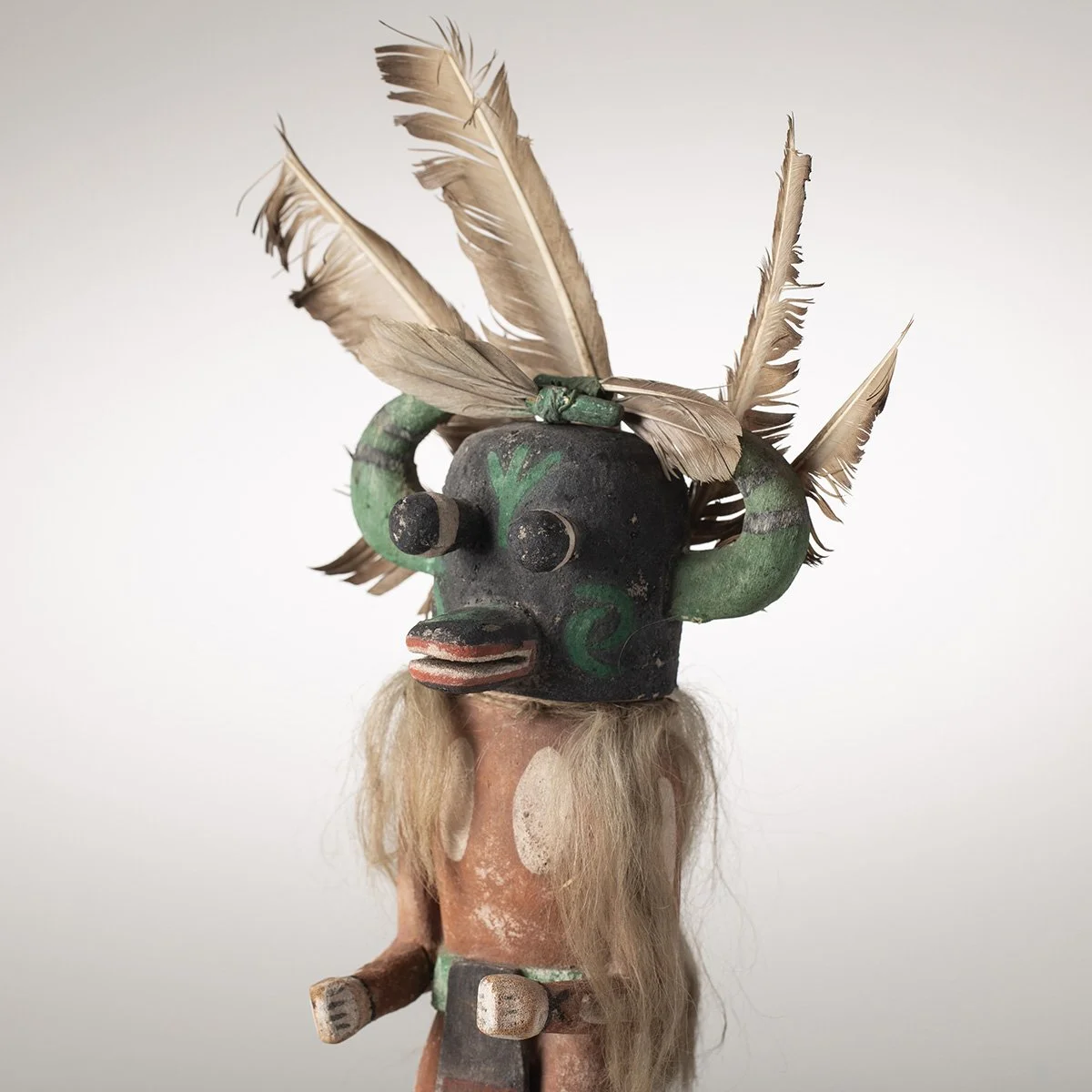 Image 1 of 6
 Image 2 of 6
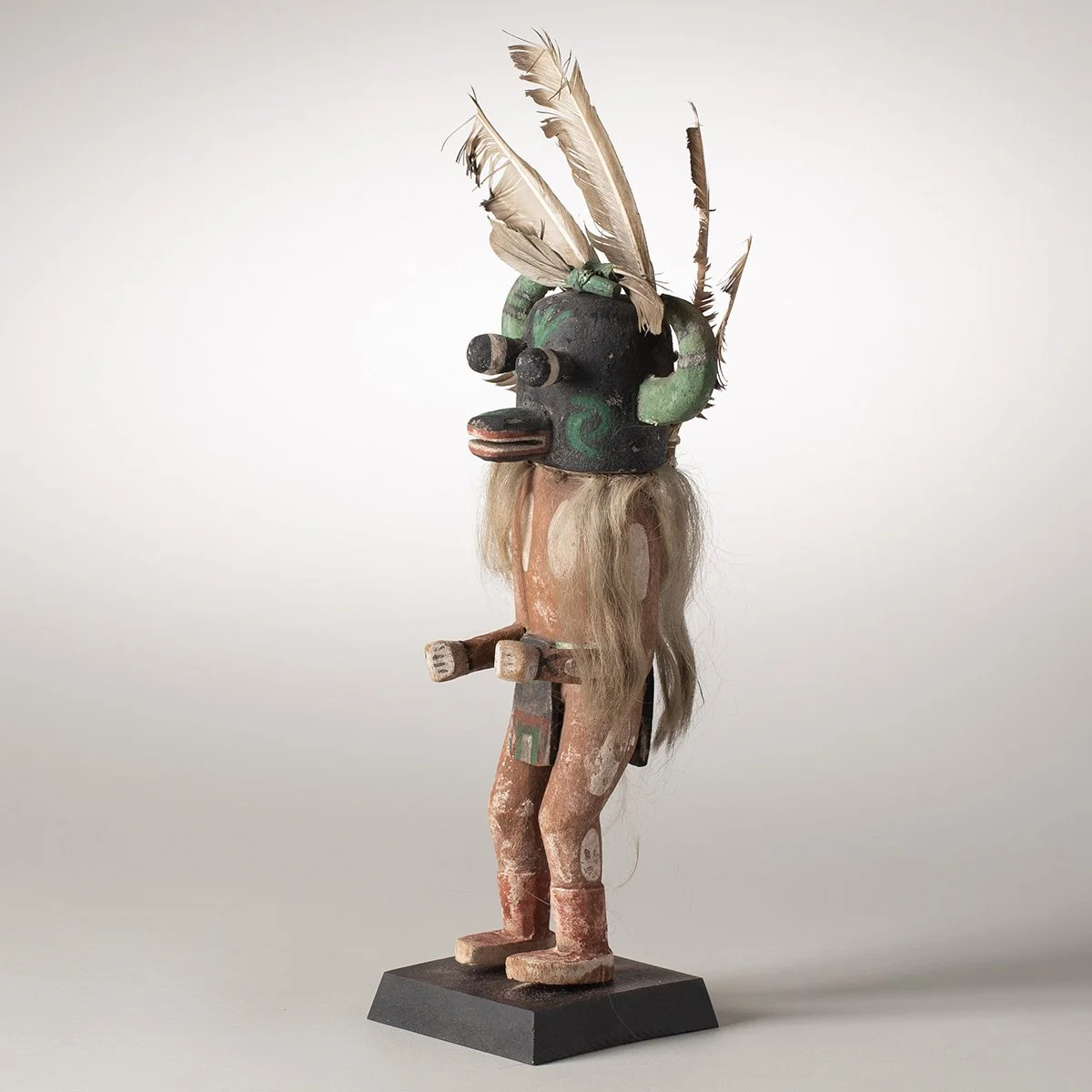 Image 3 of 6
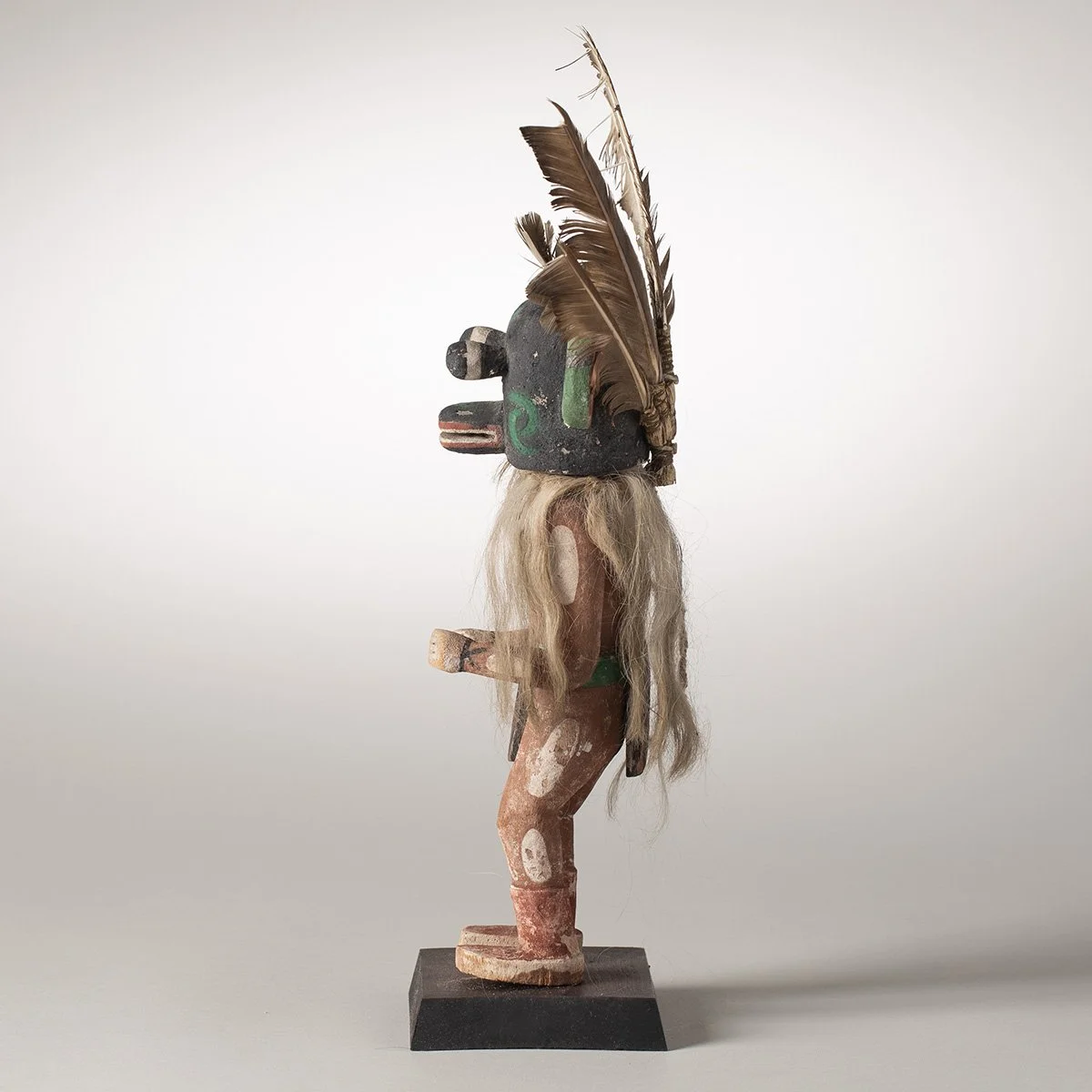 Image 4 of 6
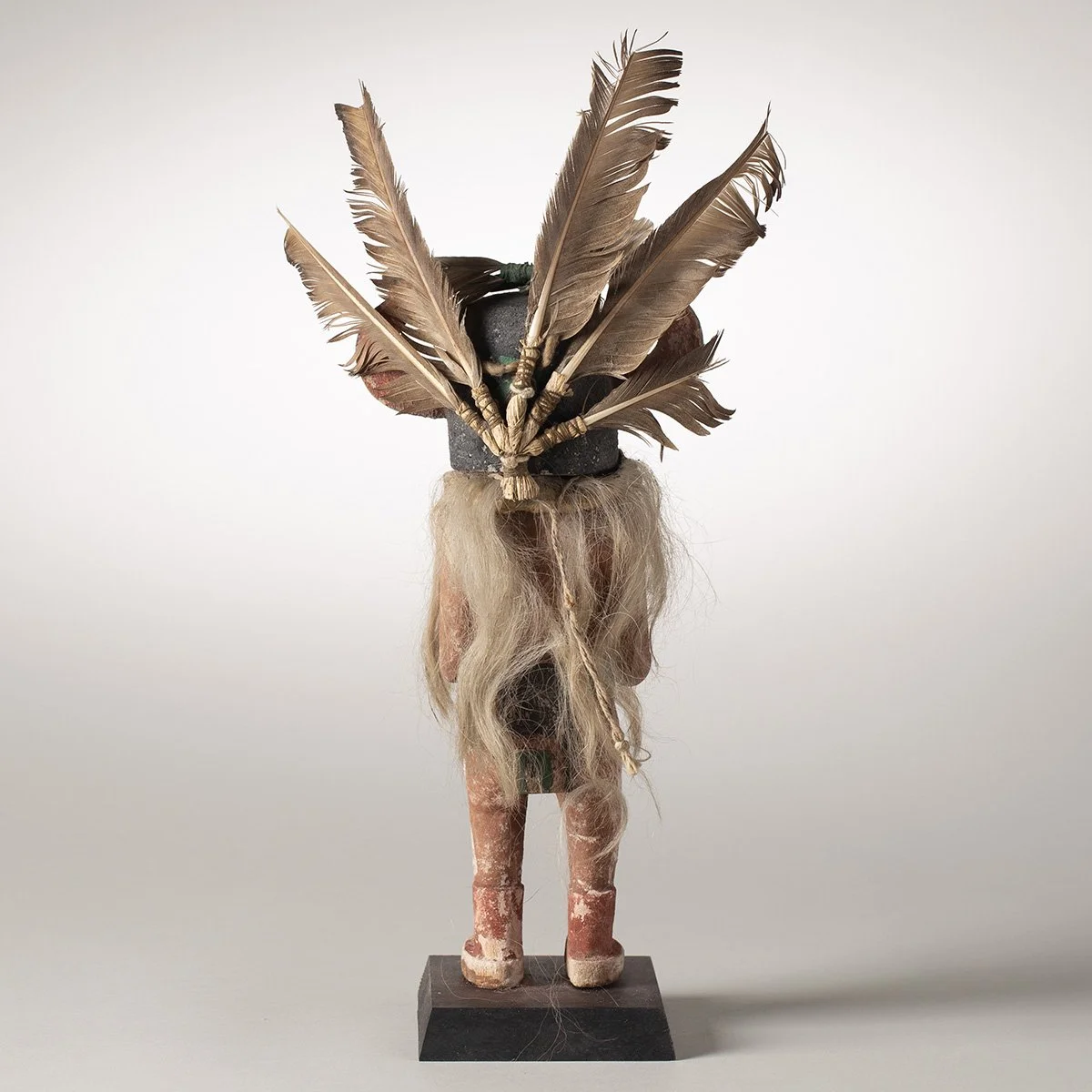 Image 5 of 6
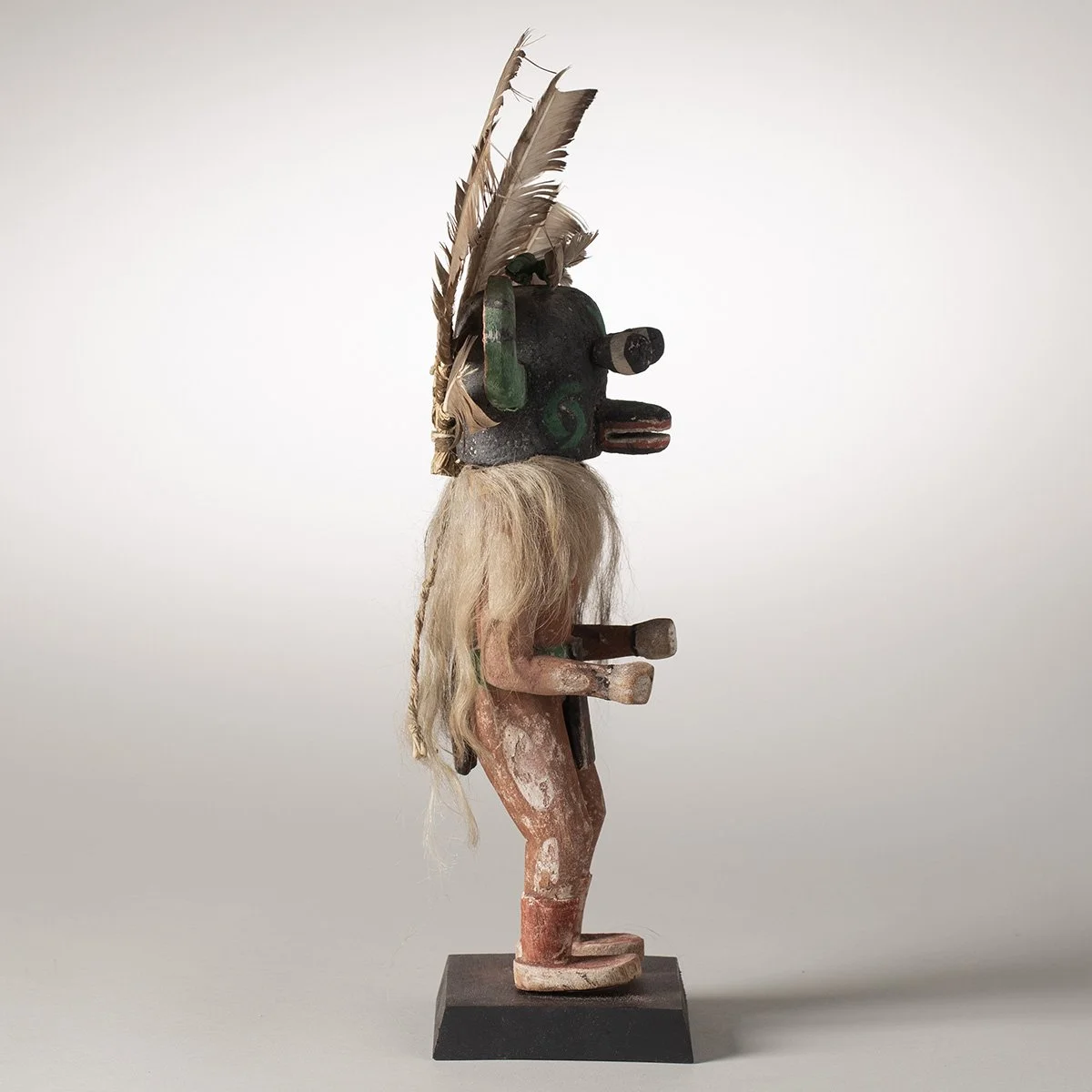 Image 6 of 6