

 Image 1 of 4
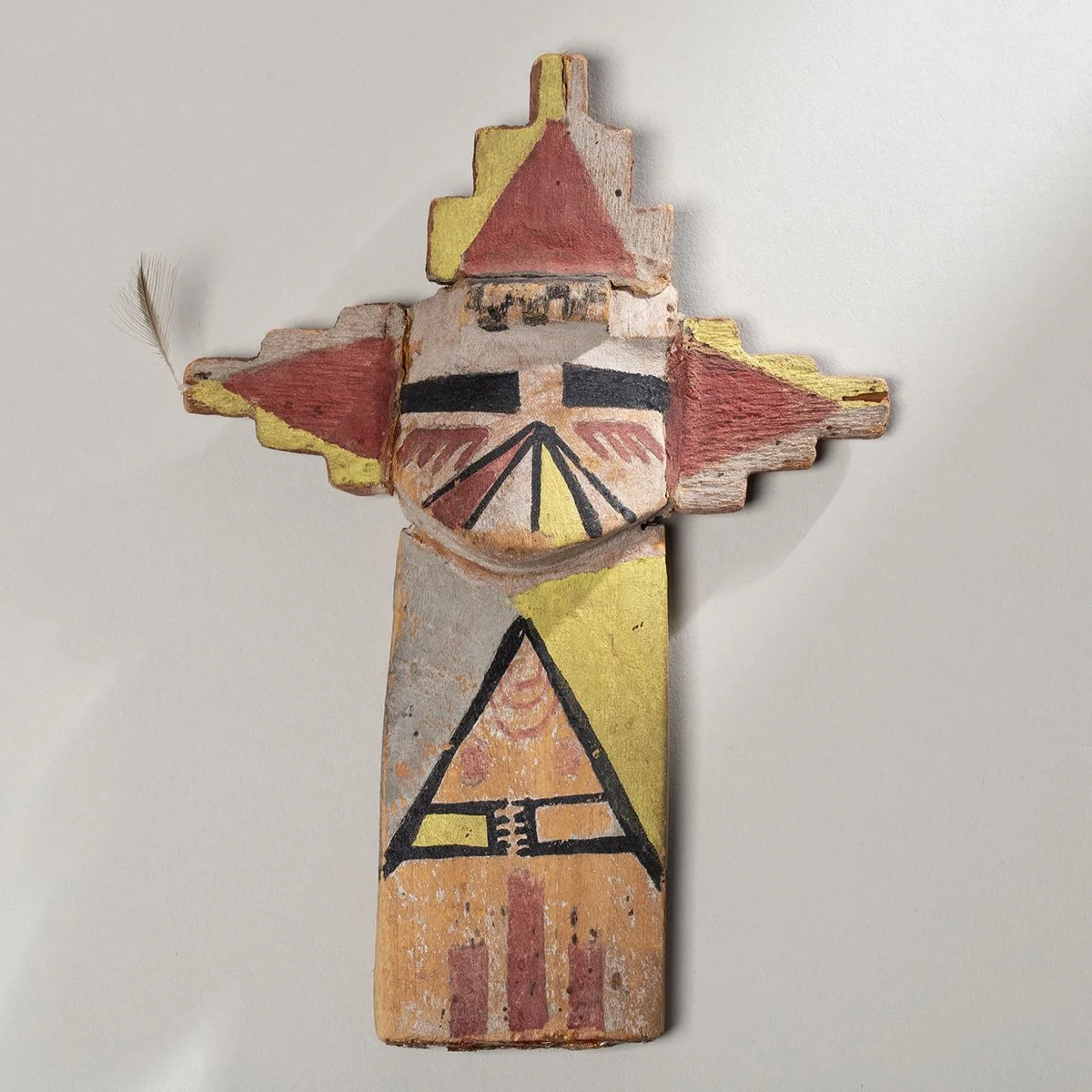 Image 2 of 4
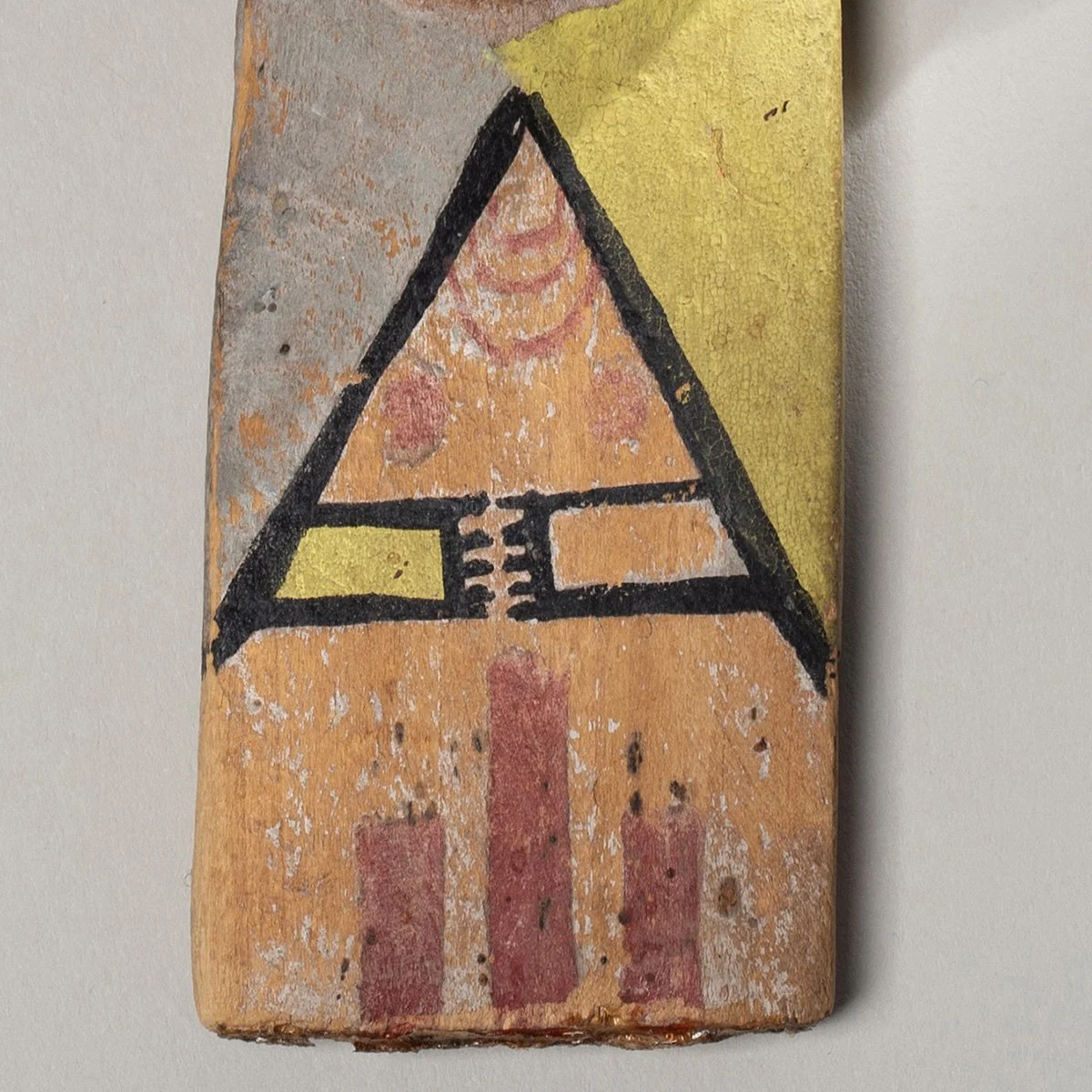 Image 3 of 4
 Image 4 of 4
Hopi, Arizona
Circa 1890
Cottonwood, natural mineral pigments
Height 6¾ in (17.1 cm)
Provenance: Private Southwest collection
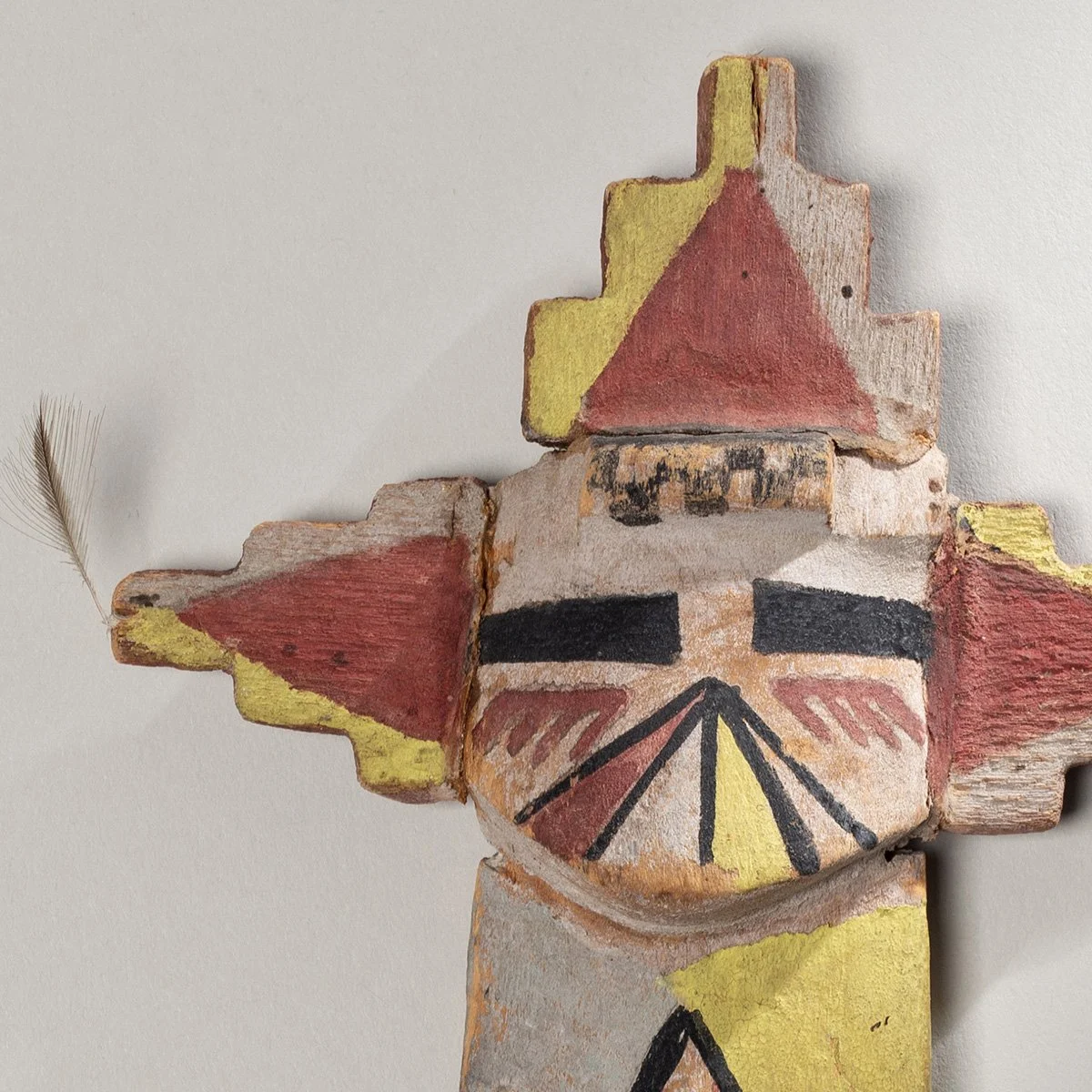
The Palhik Mana, or Butterfly Maiden, is one of the most recognized figures in the Hopi katsina pantheon, associated with the abundance of crops, the beauty of the natural world, and the spiritual importance of the butterfly in Hopi seasonal ceremony. This example dates to circa 1890 and is carved in the flat tablet style characteristic of the earliest surviving Hopi tihu, with the distinctive stepped and winged headdress rendered directly in cottonwood and painted in red, yellow, and black mineral pigments. The compact scale and restrained carving reflect the traditional practice of the late nineteenth century, before elaborated three-dimensional forms became standard.
The surface retains its original painted decoration with the geometric patterning of the headdress and body clearly intact, showing the honest wear and tonal variation consistent with mineral pigments of this period. Figures of this type were given to young girls during seasonal ceremonies as objects of spiritual instruction, connecting the recipient to the katsina's role in Hopi communal and agricultural life. Examples in this flat old style with undisturbed original surfaces and secure provenance are seldom available outside of museum collections.
We ship free anywhere in the world, fully insured, packed by hand.
Hopi, Arizona
Circa 1890
Cottonwood, natural mineral pigments
Height 6¾ in (17.1 cm)
Provenance: Private Southwest collection
The Palhik Mana, or Butterfly Maiden, is one of the most recognized figures in the Hopi katsina pantheon, associated with the abundance of crops, the beauty of the natural world, and the spiritual importance of the butterfly in Hopi seasonal ceremony. This example dates to circa 1890 and is carved in the flat tablet style characteristic of the earliest surviving Hopi tihu, with the distinctive stepped and winged headdress rendered directly in cottonwood and painted in red, yellow, and black mineral pigments. The compact scale and restrained carving reflect the traditional practice of the late nineteenth century, before elaborated three-dimensional forms became standard.
The surface retains its original painted decoration with the geometric patterning of the headdress and body clearly intact, showing the honest wear and tonal variation consistent with mineral pigments of this period. Figures of this type were given to young girls during seasonal ceremonies as objects of spiritual instruction, connecting the recipient to the katsina's role in Hopi communal and agricultural life. Examples in this flat old style with undisturbed original surfaces and secure provenance are seldom available outside of museum collections.
We ship free anywhere in the world, fully insured, packed by hand.