Hopi
Arizona, Southwest
Circa 1920s
Carved cottonwood with pigment and feathers
15 inches high, tableta 10 1/2 inches wide (38.1 cm, tableta 26.7 cm)
Provenance:
Collected in the 1920s by Edward and Deborah Sera, Grants, New Mexico
Caleb Caulkin collection, Chicago
Private dealer, Oklahoma
Ed Garrett collection, Loveland, Colorado
Terry Schurmeier and Jan Duggan, Two Star Trading, Santa Fe
Salveson collection, Findlay, Ohio, April 2008
John Hill, Scottsdale, Arizona, and John Molloy, Santa Fe and New York
Ed Garrett collection, Loveland, Colorado
Salveson collection, Findlay, Ohio, October 2012
Exhibited:
Molloy Gallery, New York
Published:
Gregory Schaaf, Hopi Katsina, American Indian Art Series volume seven, Center for Indigenous Arts and Cultures Press, Santa Fe, New Mexico, page 25
A standing figure carved from cottonwood, wearing a black manta bordered in pink and green over a white shoulder cloth crossed at the chest, with a sash and belt at the waist and white legs below. The head is surmounted by a large rectangular tableta painted with three stepped cloud terraces in yellow, white, and pink, flanked by terraced wings and two black discs enclosing yellow rosettes. The face is white with narrow black eyes and a lower field of concentric arcs in red, yellow, and blue, with small feathers set at each side of the head.
Palhik Mana, the water drinking maiden, appears in Hopi ceremony as a figure associated with water, corn, and the growth of crops, and the tableta carries the cloud and rain imagery that identifies her. The carving is columnar with the arms held close to the body, a static treatment characteristic of earlier tihu made within the pueblo rather than for the trade. The color is strong throughout, the yellow and pink of the tableta set against the black of the manta below.
We ship free anywhere in the world, fully insured, packed by hand.
Hopi
Arizona, Southwest
Circa 1920s
Carved cottonwood with pigment and feathers
15 inches high, tableta 10 1/2 inches wide (38.1 cm, tableta 26.7 cm)
Provenance:
Collected in the 1920s by Edward and Deborah Sera, Grants, New Mexico
Caleb Caulkin collection, Chicago
Private dealer, Oklahoma
Ed Garrett collection, Loveland, Colorado
Terry Schurmeier and Jan Duggan, Two Star Trading, Santa Fe
Salveson collection, Findlay, Ohio, April 2008
John Hill, Scottsdale, Arizona, and John Molloy, Santa Fe and New York
Ed Garrett collection, Loveland, Colorado
Salveson collection, Findlay, Ohio, October 2012
Exhibited:
Molloy Gallery, New York
Published:
Gregory Schaaf, Hopi Katsina, American Indian Art Series volume seven, Center for Indigenous Arts and Cultures Press, Santa Fe, New Mexico, page 25
A standing figure carved from cottonwood, wearing a black manta bordered in pink and green over a white shoulder cloth crossed at the chest, with a sash and belt at the waist and white legs below. The head is surmounted by a large rectangular tableta painted with three stepped cloud terraces in yellow, white, and pink, flanked by terraced wings and two black discs enclosing yellow rosettes. The face is white with narrow black eyes and a lower field of concentric arcs in red, yellow, and blue, with small feathers set at each side of the head.
Palhik Mana, the water drinking maiden, appears in Hopi ceremony as a figure associated with water, corn, and the growth of crops, and the tableta carries the cloud and rain imagery that identifies her. The carving is columnar with the arms held close to the body, a static treatment characteristic of earlier tihu made within the pueblo rather than for the trade. The color is strong throughout, the yellow and pink of the tableta set against the black of the manta below.
We ship free anywhere in the world, fully insured, packed by hand.


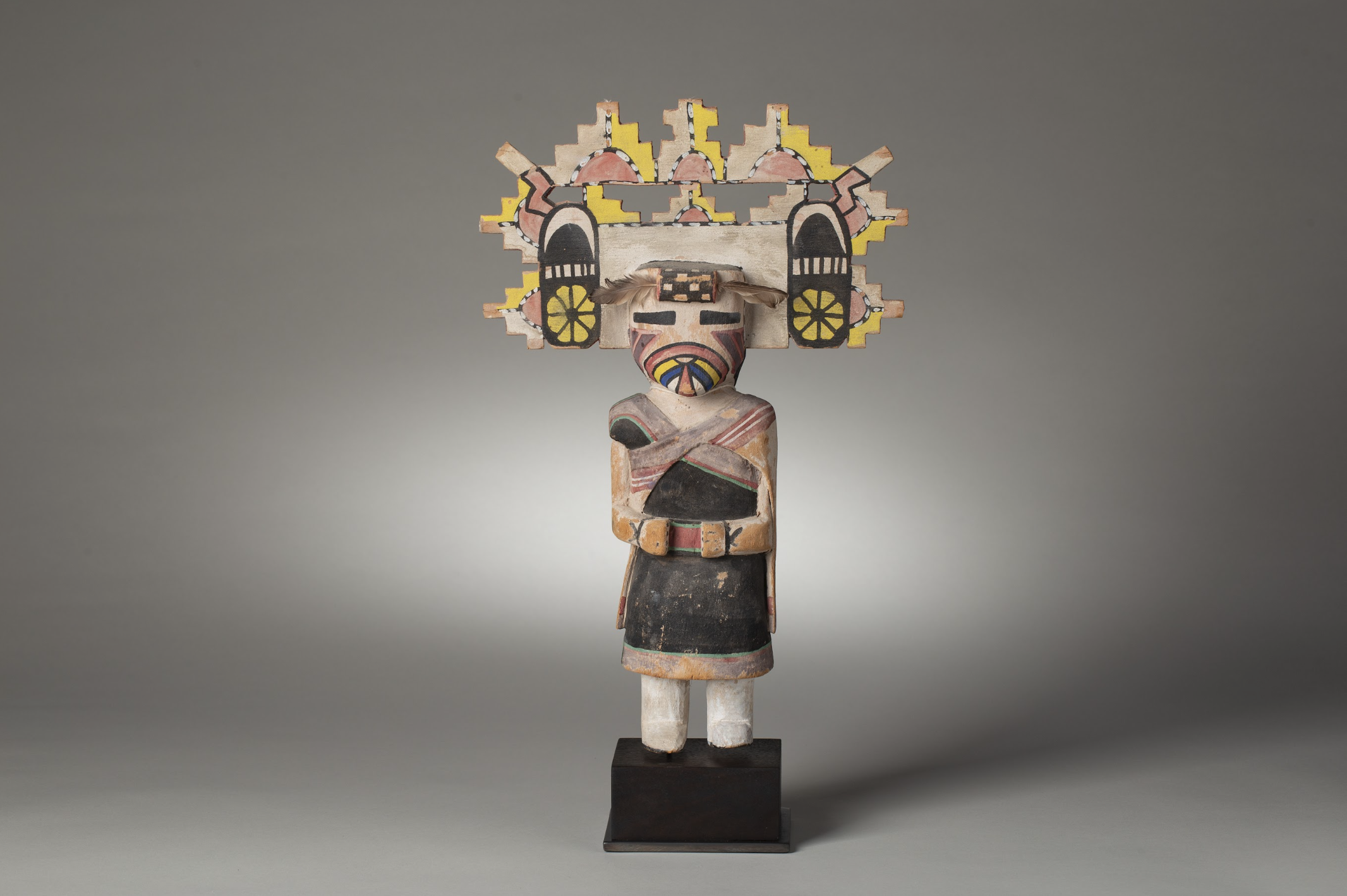 Image 1 of 6
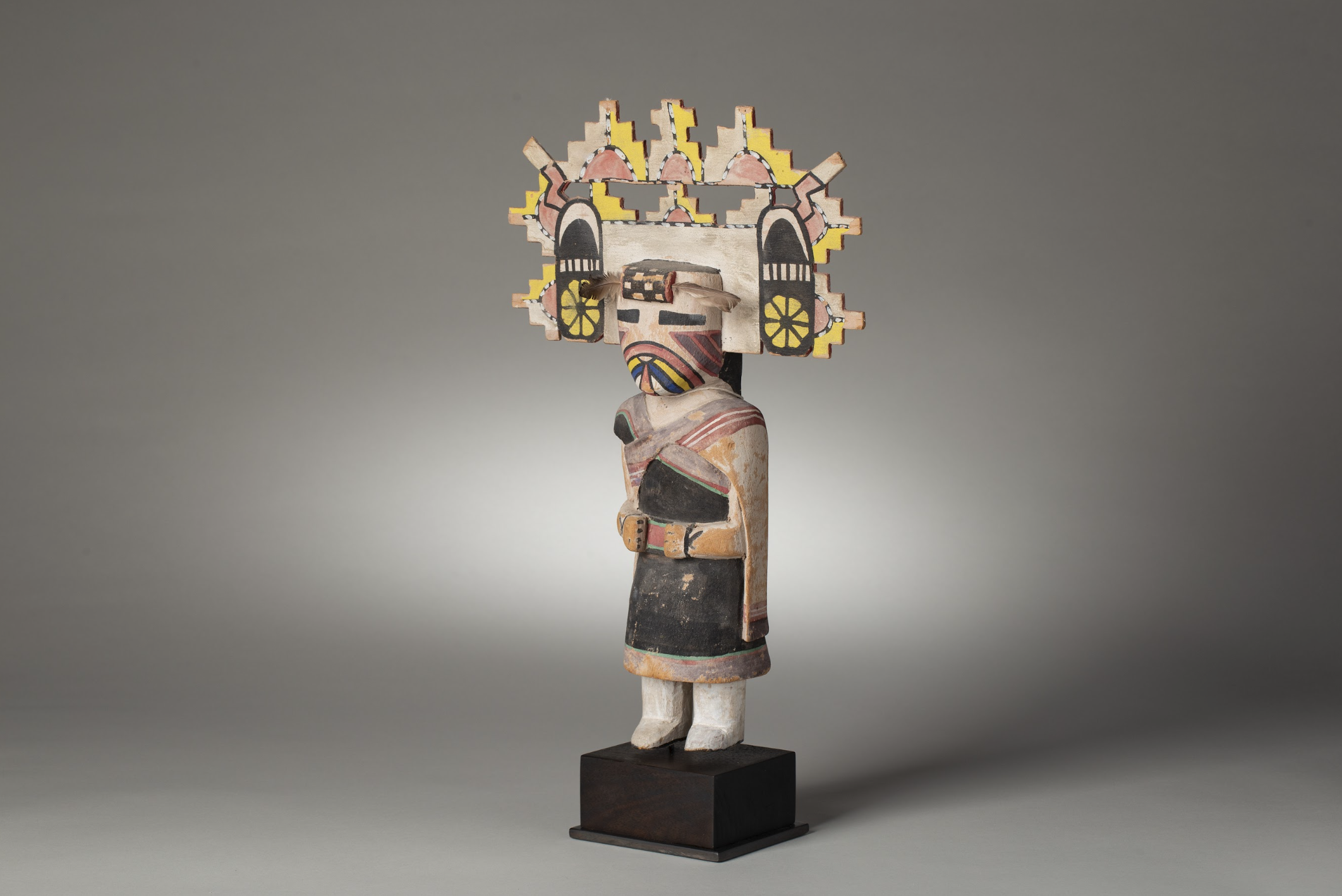 Image 2 of 6
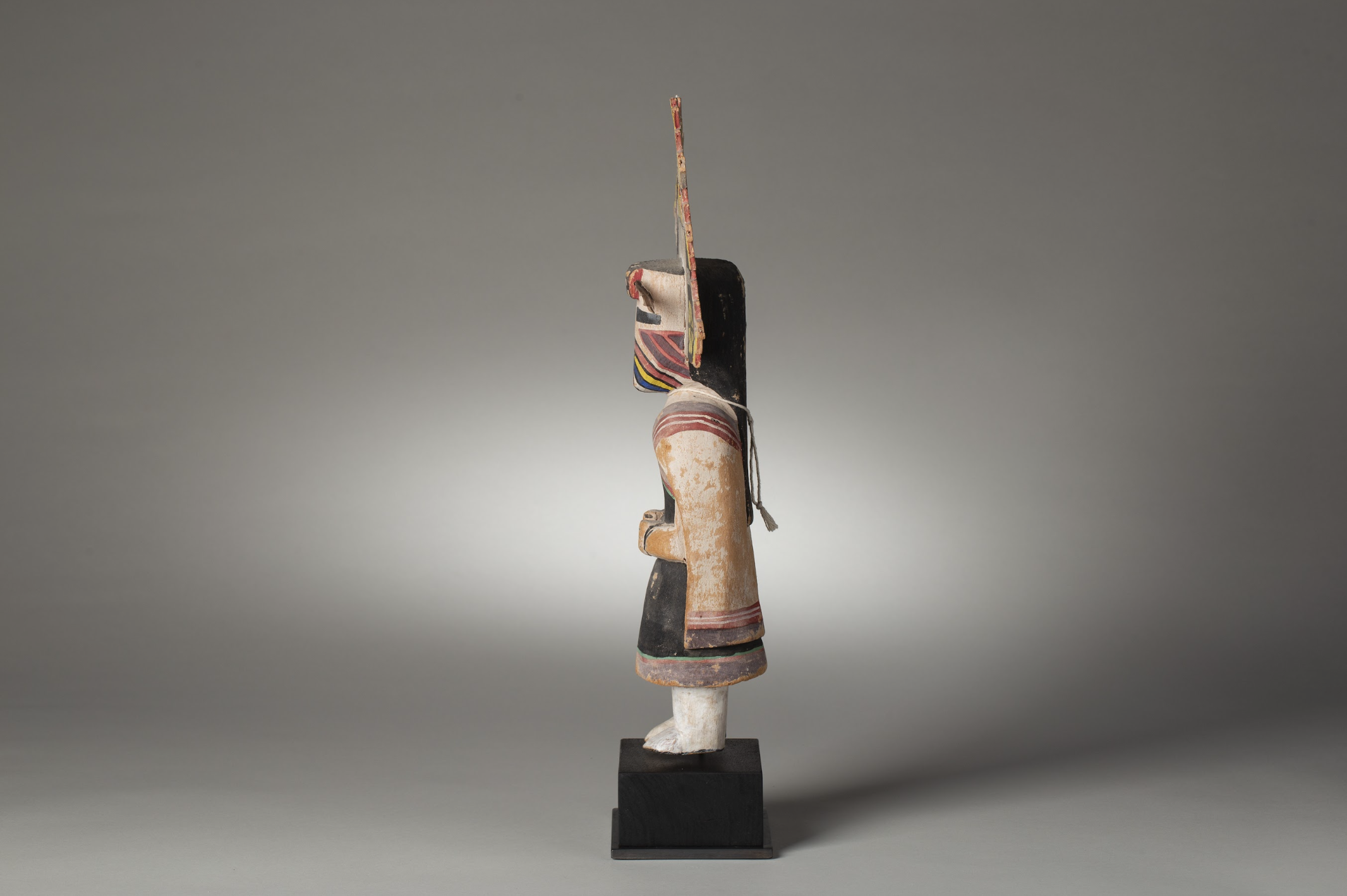 Image 3 of 6
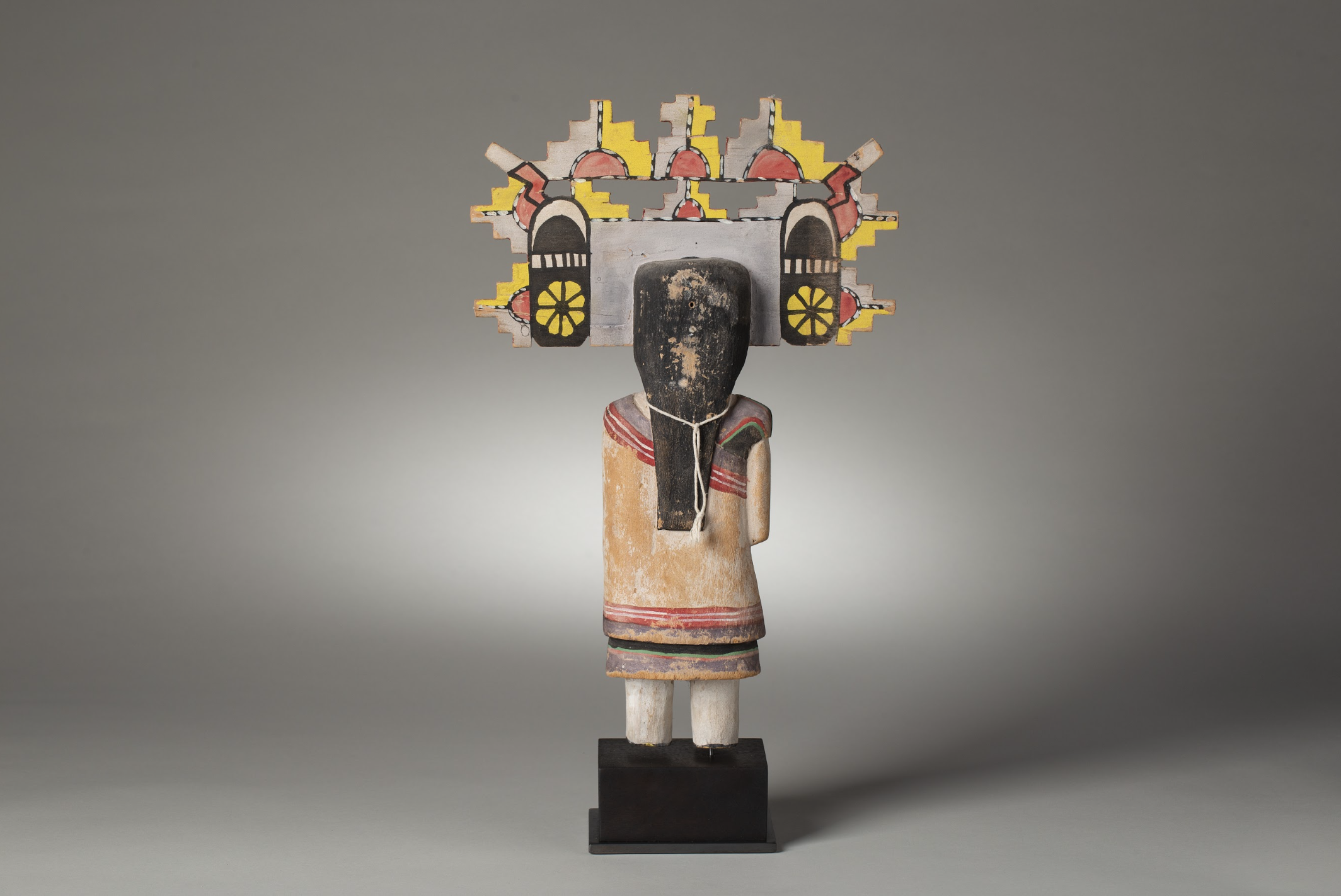 Image 4 of 6
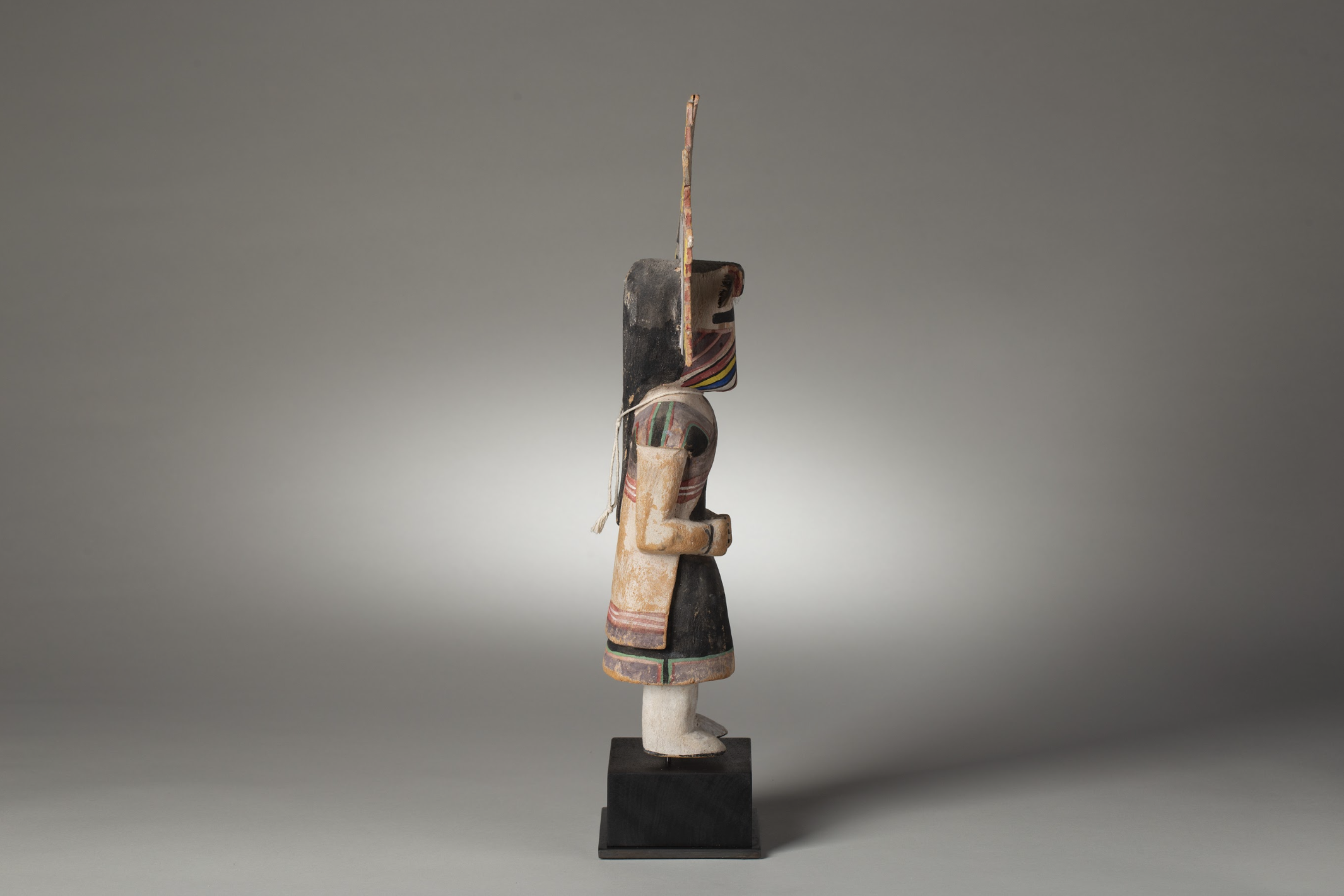 Image 5 of 6
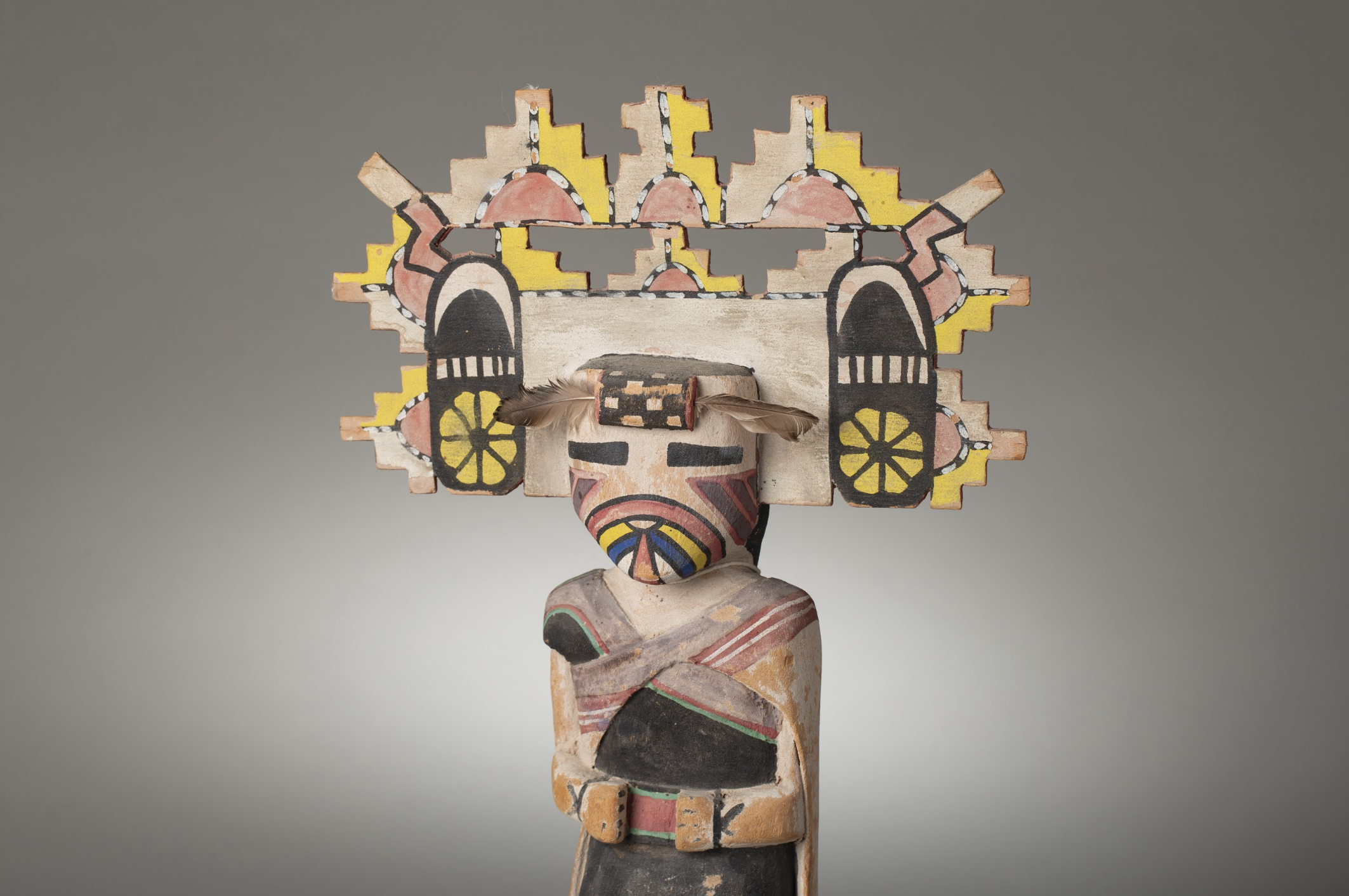 Image 6 of 6