Hopi, Arizona
1930
Cottonwood, pigment
Height 19½ in (49.5 cm); width 13 in (33 cm)
Provenance: Salveson Collection, Ohio; private collection, Santa Fe, NM; private collection, Hawaii; Owings Dewey Gallery, Santa Fe, NM (with original gallery label, inventory #ODN4)
The Palhik Mana, or Butterfly Maiden, is among the most visually commanding figures in the Hopi katsina tradition, identified by her large flat tablita headdress representing the geometric abundance of corn, clouds, and the natural world. This example, dating to 1930, is notable for its scale, nearly twenty inches in height with a thirteen-inch-wide headdress, and for the precision of its painted decoration, with stepped geometric patterning in white, red, and black covering the full surface of the tablita. The checkered face mask, composed standing posture, and black dress with diagonal red and blue sash are rendered with the formal confidence characteristic of Hopi carving at its most accomplished.
The figure carries a documented provenance through multiple respected private collections in Ohio, Santa Fe, and Hawaii before passing through Owings Dewey Gallery in Santa Fe, one of the most regarded dealers in historical Native American art, whose original gallery label remains affixed. The breadth of collecting history and the retention of the original label give this piece an unusually well-documented record for a work of this period. At this scale and with this provenance, the Palhik Mana represents a significant example of 1930s Hopi katsina carving.
We ship free anywhere in the world, fully insured, packed by hand.
Hopi, Arizona
1930
Cottonwood, pigment
Height 19½ in (49.5 cm); width 13 in (33 cm)
Provenance: Salveson Collection, Ohio; private collection, Santa Fe, NM; private collection, Hawaii; Owings Dewey Gallery, Santa Fe, NM (with original gallery label, inventory #ODN4)
The Palhik Mana, or Butterfly Maiden, is among the most visually commanding figures in the Hopi katsina tradition, identified by her large flat tablita headdress representing the geometric abundance of corn, clouds, and the natural world. This example, dating to 1930, is notable for its scale, nearly twenty inches in height with a thirteen-inch-wide headdress, and for the precision of its painted decoration, with stepped geometric patterning in white, red, and black covering the full surface of the tablita. The checkered face mask, composed standing posture, and black dress with diagonal red and blue sash are rendered with the formal confidence characteristic of Hopi carving at its most accomplished.
The figure carries a documented provenance through multiple respected private collections in Ohio, Santa Fe, and Hawaii before passing through Owings Dewey Gallery in Santa Fe, one of the most regarded dealers in historical Native American art, whose original gallery label remains affixed. The breadth of collecting history and the retention of the original label give this piece an unusually well-documented record for a work of this period. At this scale and with this provenance, the Palhik Mana represents a significant example of 1930s Hopi katsina carving.
We ship free anywhere in the world, fully insured, packed by hand.


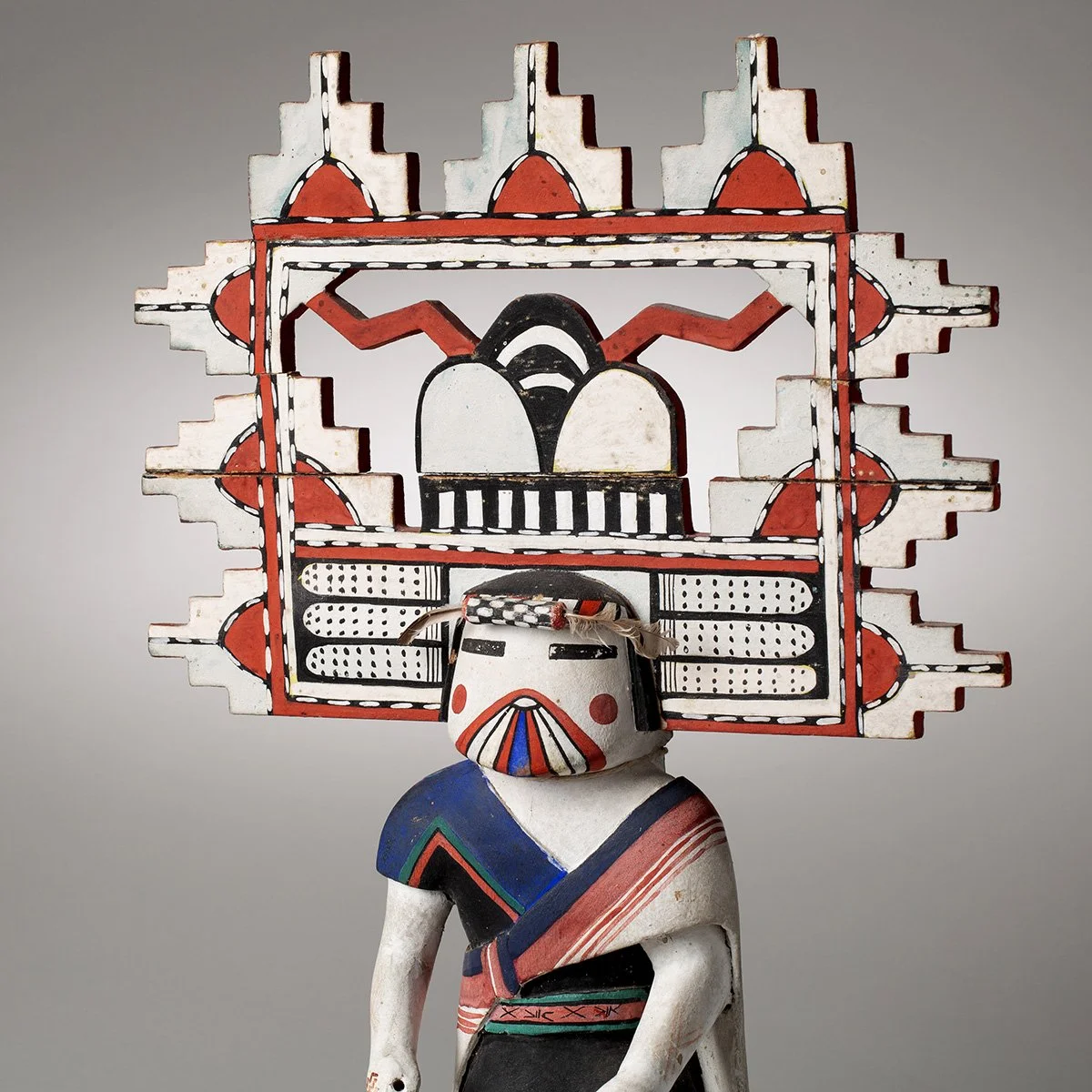 Image 1 of 8
 Image 2 of 8
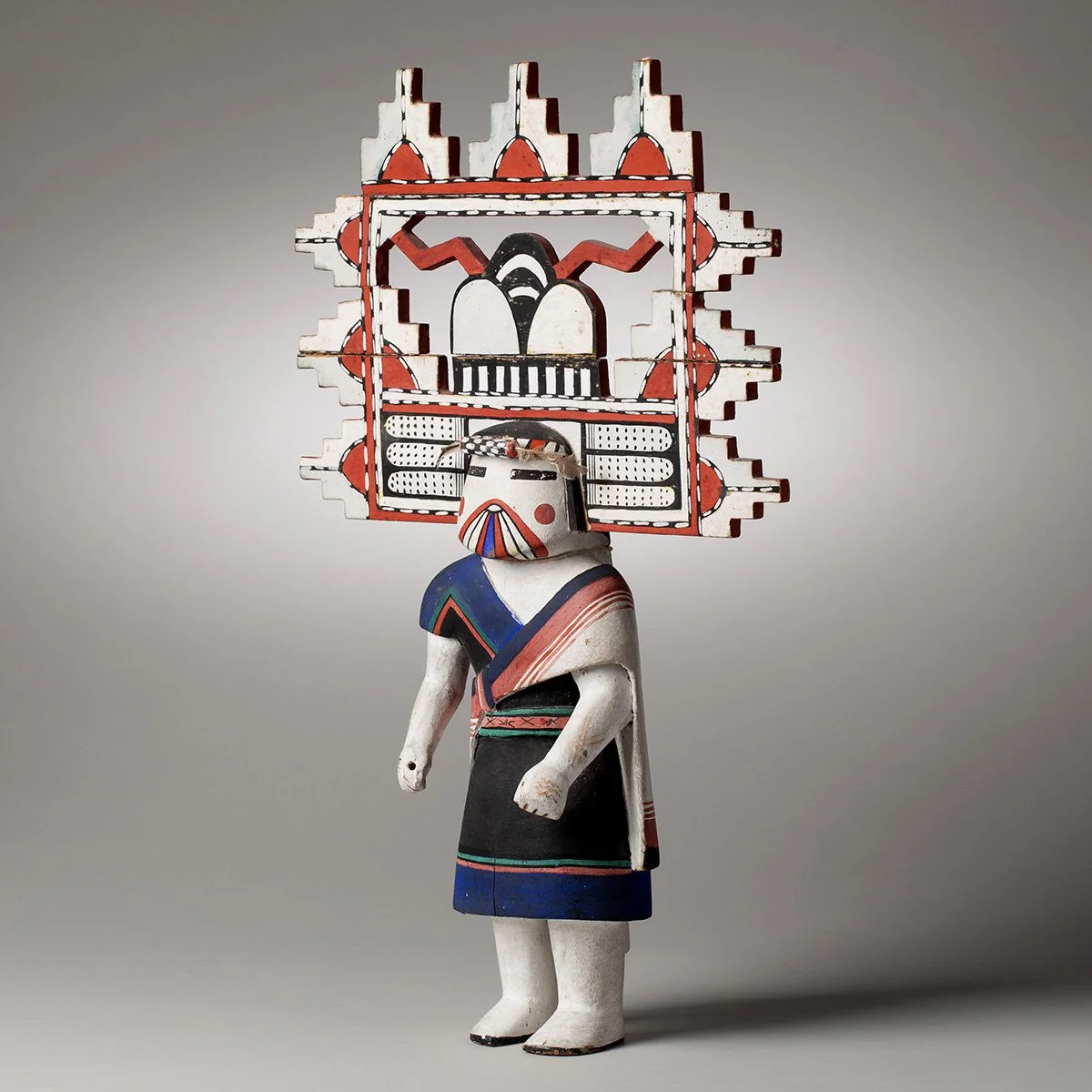 Image 3 of 8
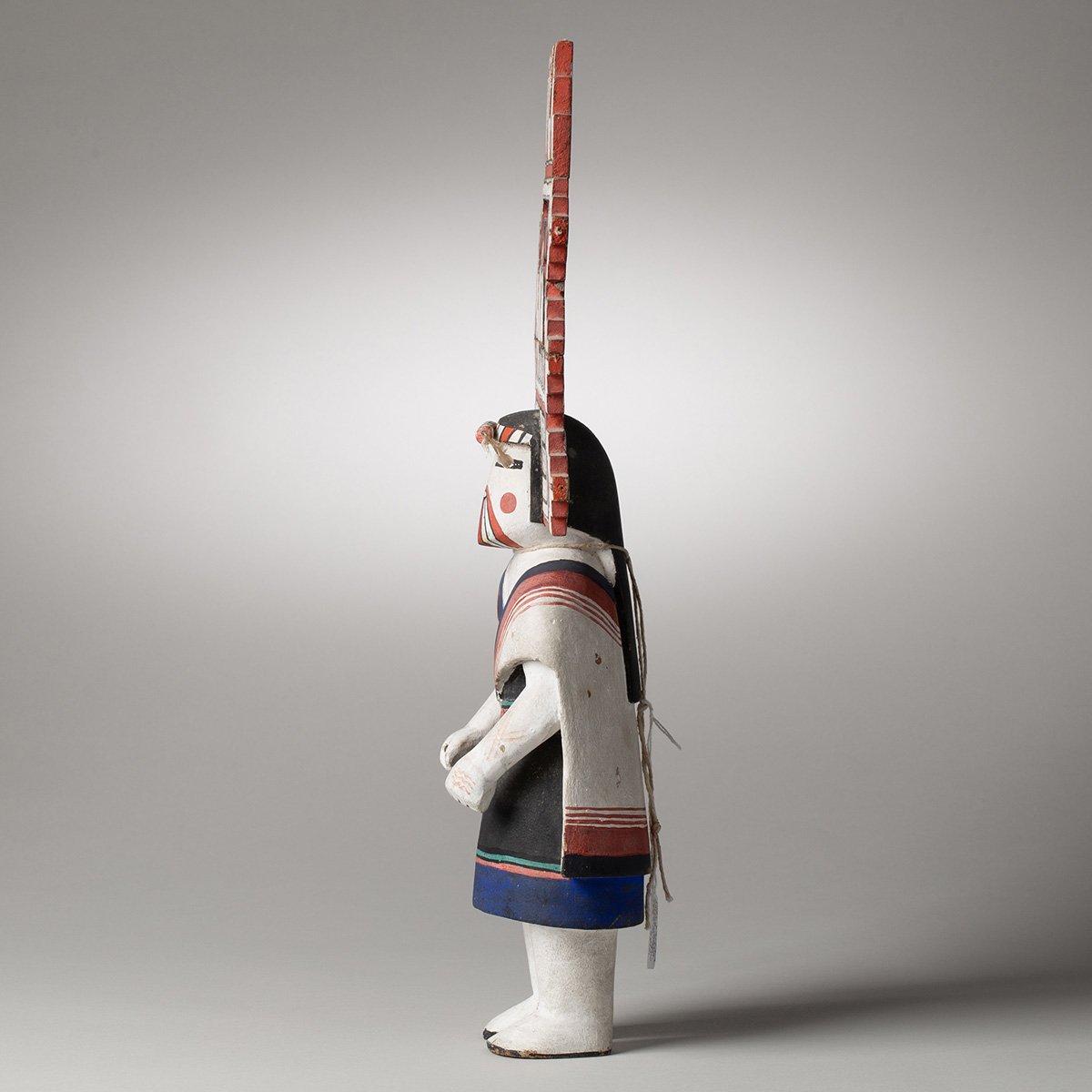 Image 4 of 8
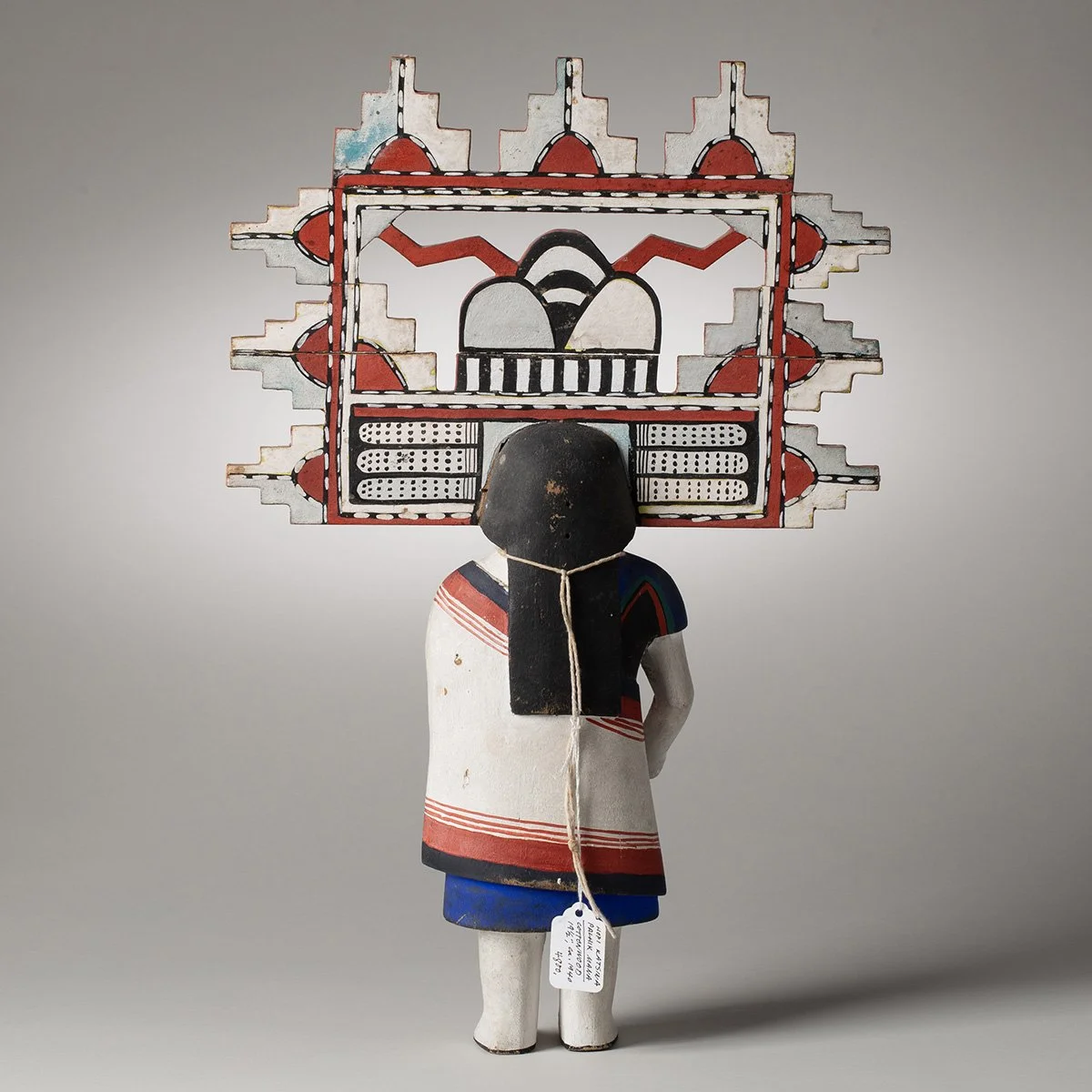 Image 5 of 8
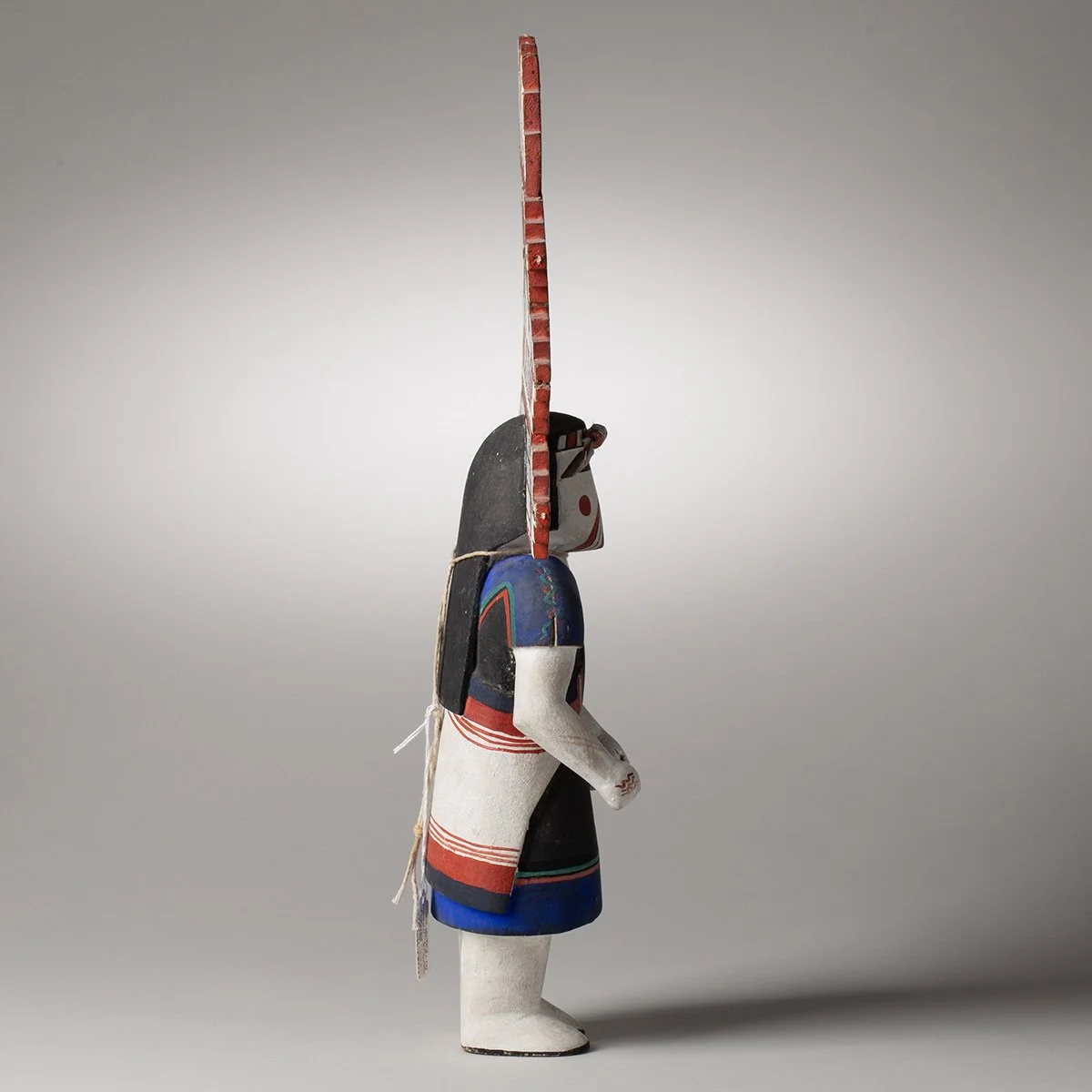 Image 6 of 8
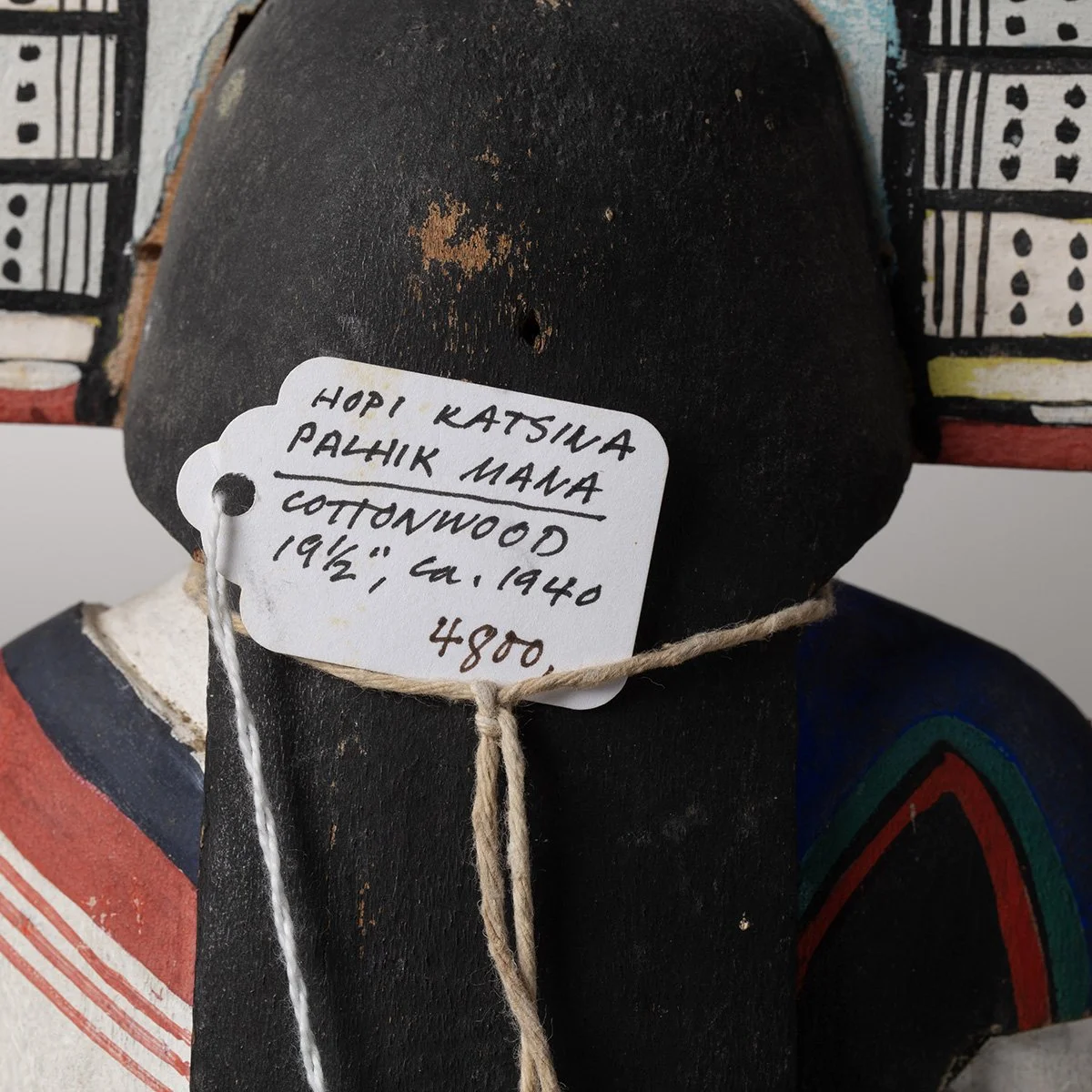 Image 7 of 8
 Image 8 of 8