Hopi, Arizona
1930s
Ceramic, white slip, mineral pigment
Height 3 in (7.6 cm); diameter 11½ in (29.2 cm)
Provenance: Private Northwest collection
Hopi polychrome bowls of the 1930s represent a period of sustained ceramic production on First Mesa, when potters working in the tradition established by Nampeyo of Hano continued to develop the figurative and geometric vocabulary of Sikyatki revival ware for both ceremonial use and the growing collector market. This wide, shallow bowl carries two facing eagle or bird figures rendered in black and red-orange mineral pigment on a cream white slip ground, positioned symmetrically on the interior with their wings spread and beaks meeting at the center of the composition. The figurative treatment reflects the Hopi tradition of depicting Kwahu, the eagle, as a sacred messenger between the human and spirit worlds.
The wing and body feather work is executed with careful detail, the overlapping feather forms rendered in both solid black and stippled texture that gives each figure a sense of movement and presence. A terracotta red band encircles the rim, framing the interior composition with the warm polychrome palette characteristic of Hopi bowl production of this period. The facing eagle composition, with its bilateral symmetry and central focal point, is among the most accomplished figurative arrangements in Hopi ceramic painting of the 1930s.
We ship free anywhere in the world, fully insured, packed by hand.
Hopi, Arizona
1930s
Ceramic, white slip, mineral pigment
Height 3 in (7.6 cm); diameter 11½ in (29.2 cm)
Provenance: Private Northwest collection
Hopi polychrome bowls of the 1930s represent a period of sustained ceramic production on First Mesa, when potters working in the tradition established by Nampeyo of Hano continued to develop the figurative and geometric vocabulary of Sikyatki revival ware for both ceremonial use and the growing collector market. This wide, shallow bowl carries two facing eagle or bird figures rendered in black and red-orange mineral pigment on a cream white slip ground, positioned symmetrically on the interior with their wings spread and beaks meeting at the center of the composition. The figurative treatment reflects the Hopi tradition of depicting Kwahu, the eagle, as a sacred messenger between the human and spirit worlds.
The wing and body feather work is executed with careful detail, the overlapping feather forms rendered in both solid black and stippled texture that gives each figure a sense of movement and presence. A terracotta red band encircles the rim, framing the interior composition with the warm polychrome palette characteristic of Hopi bowl production of this period. The facing eagle composition, with its bilateral symmetry and central focal point, is among the most accomplished figurative arrangements in Hopi ceramic painting of the 1930s.
We ship free anywhere in the world, fully insured, packed by hand.


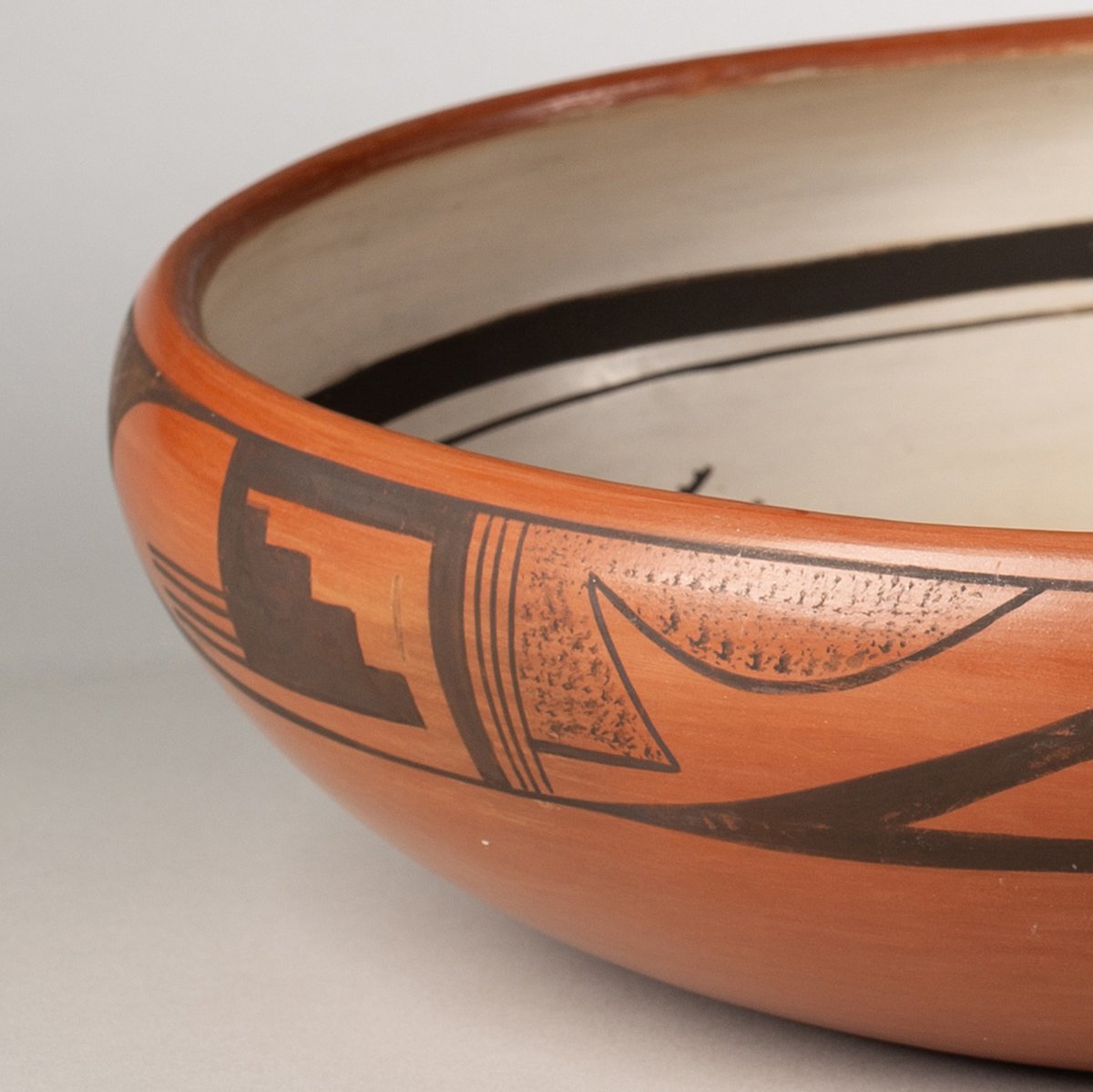 Image 1 of 7
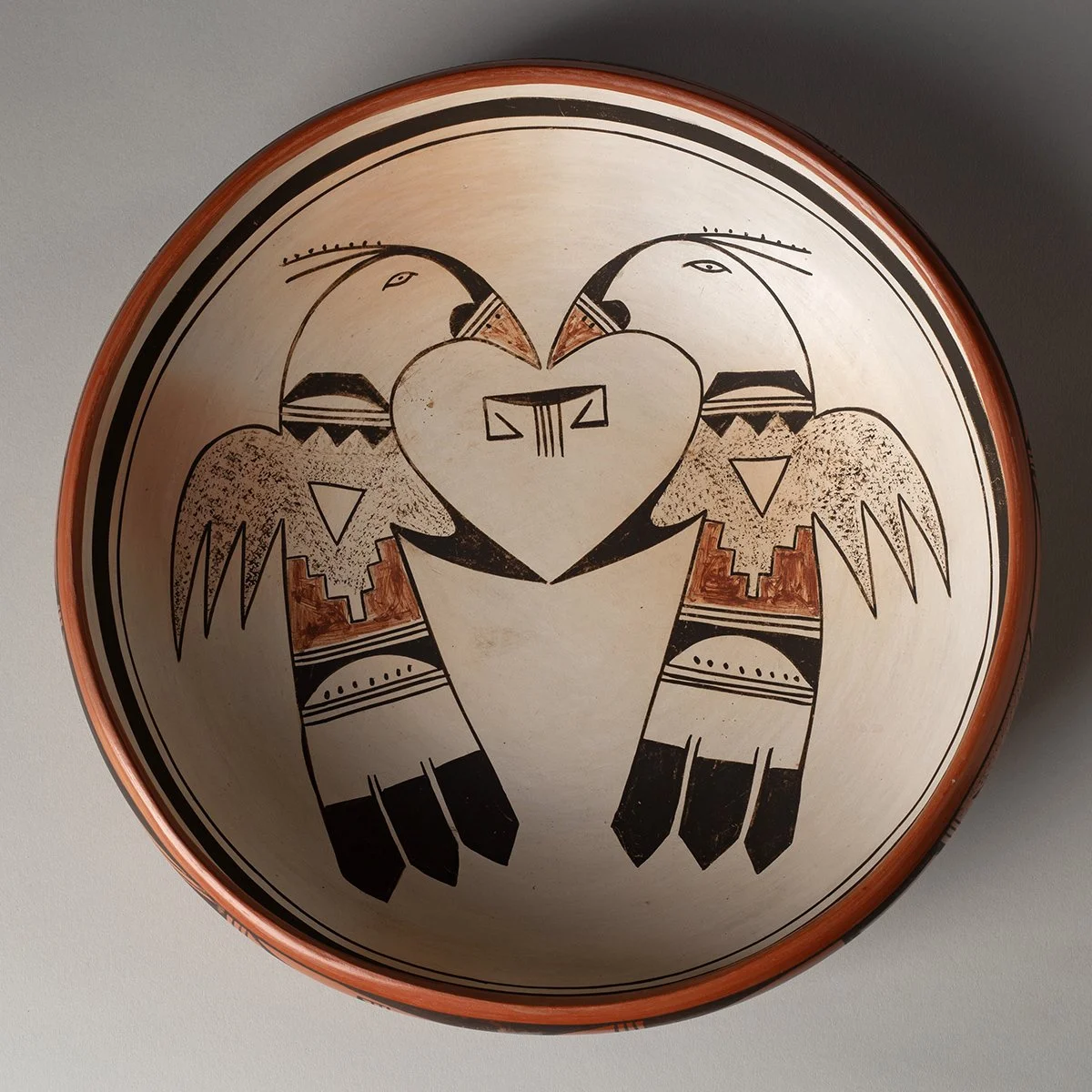 Image 2 of 7
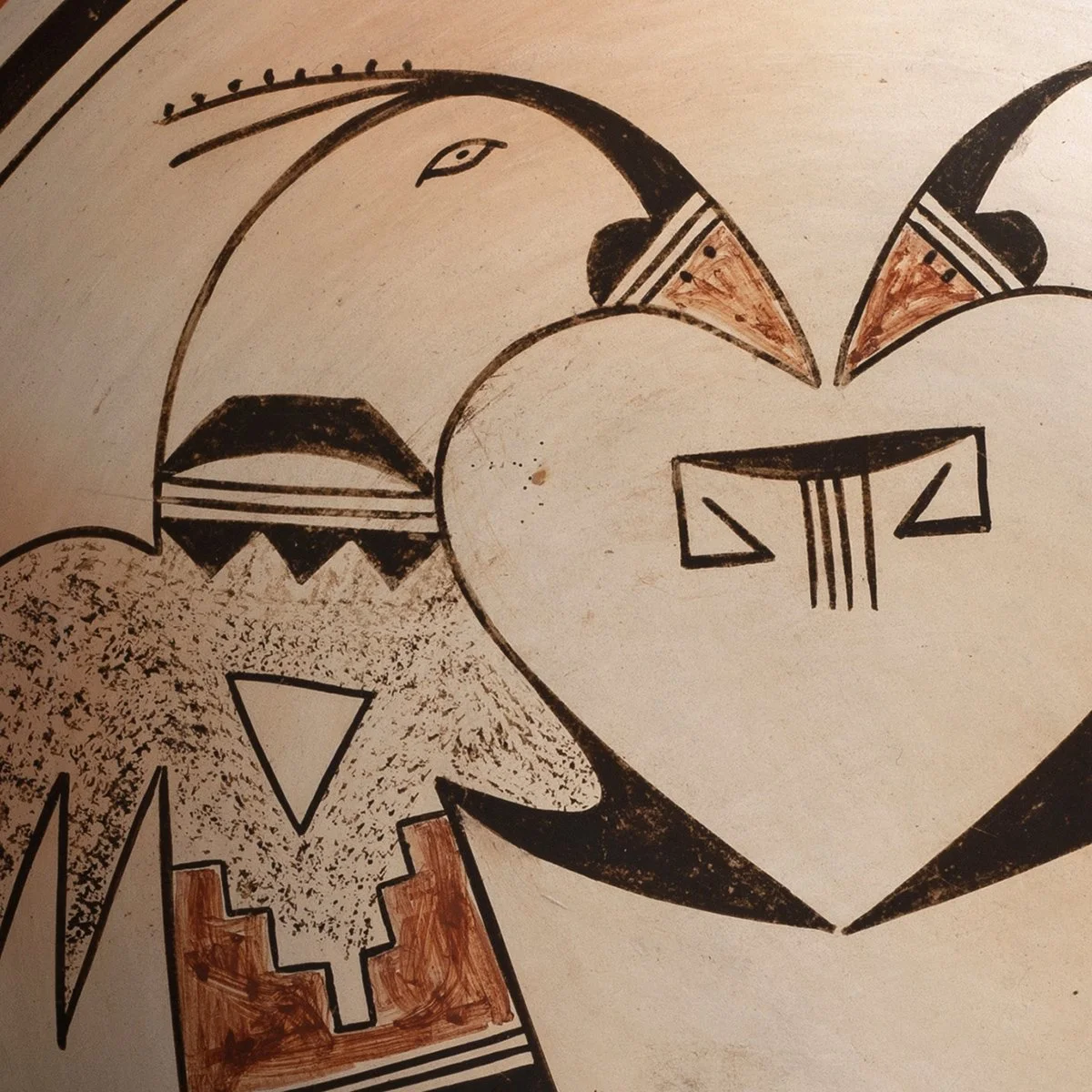 Image 3 of 7
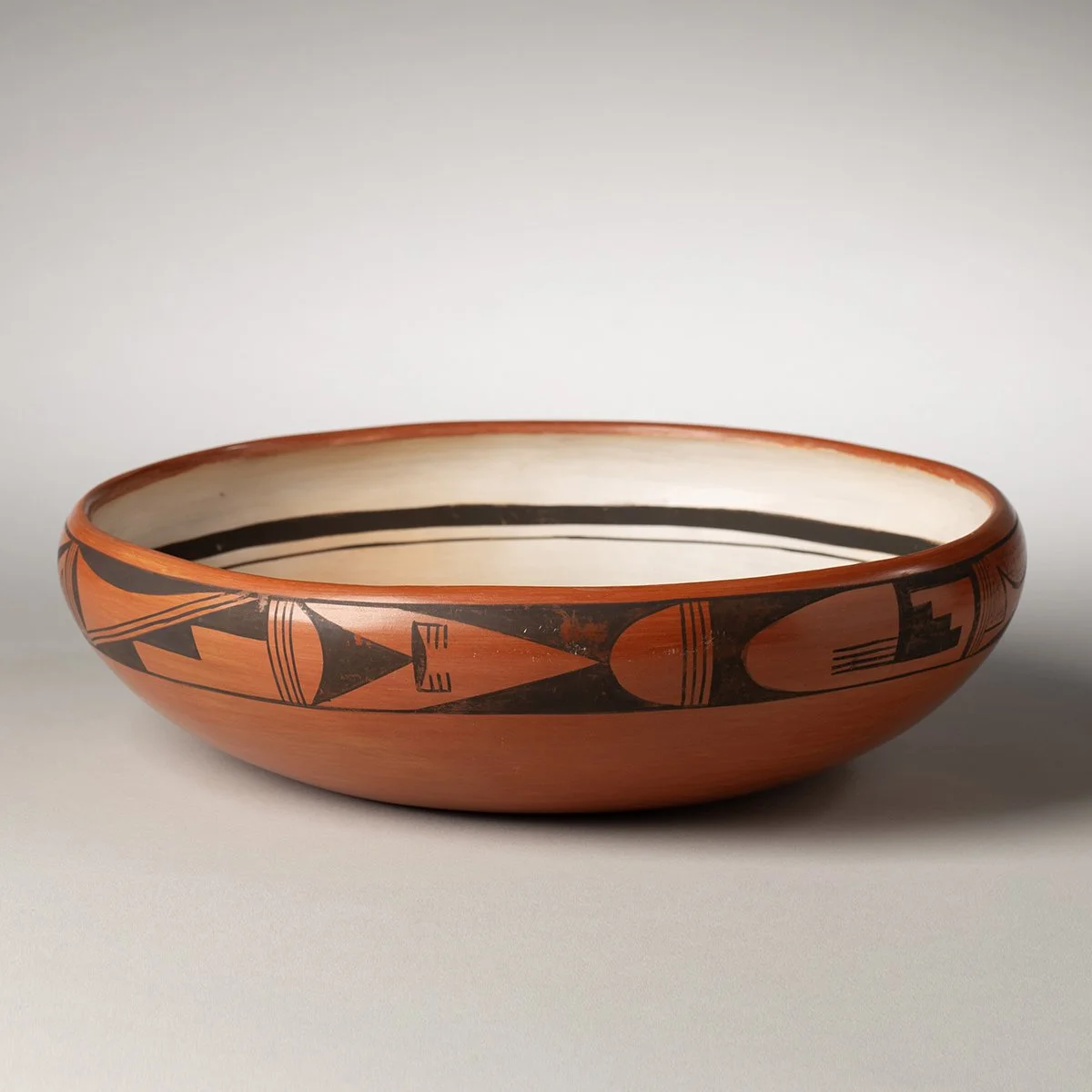 Image 4 of 7
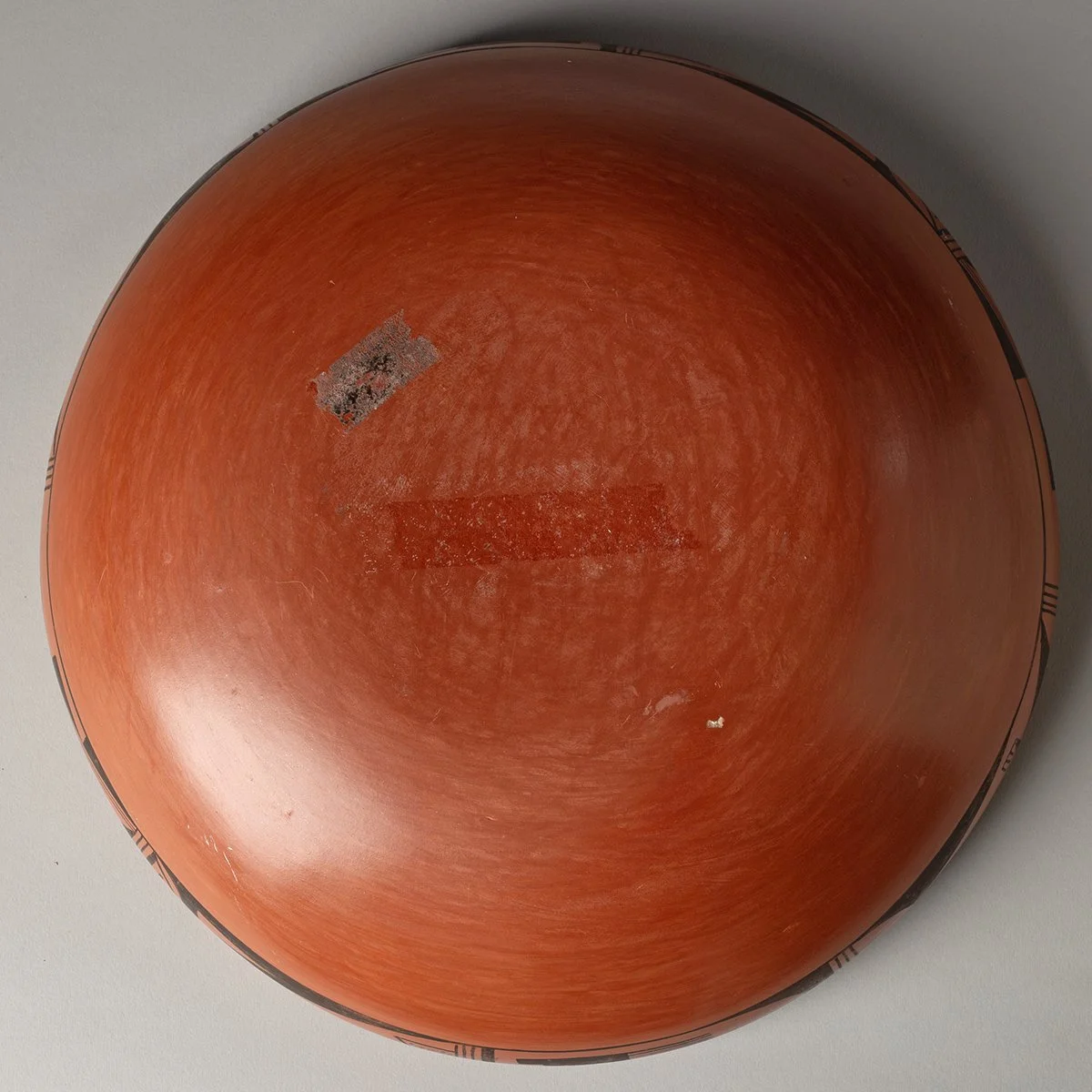 Image 5 of 7
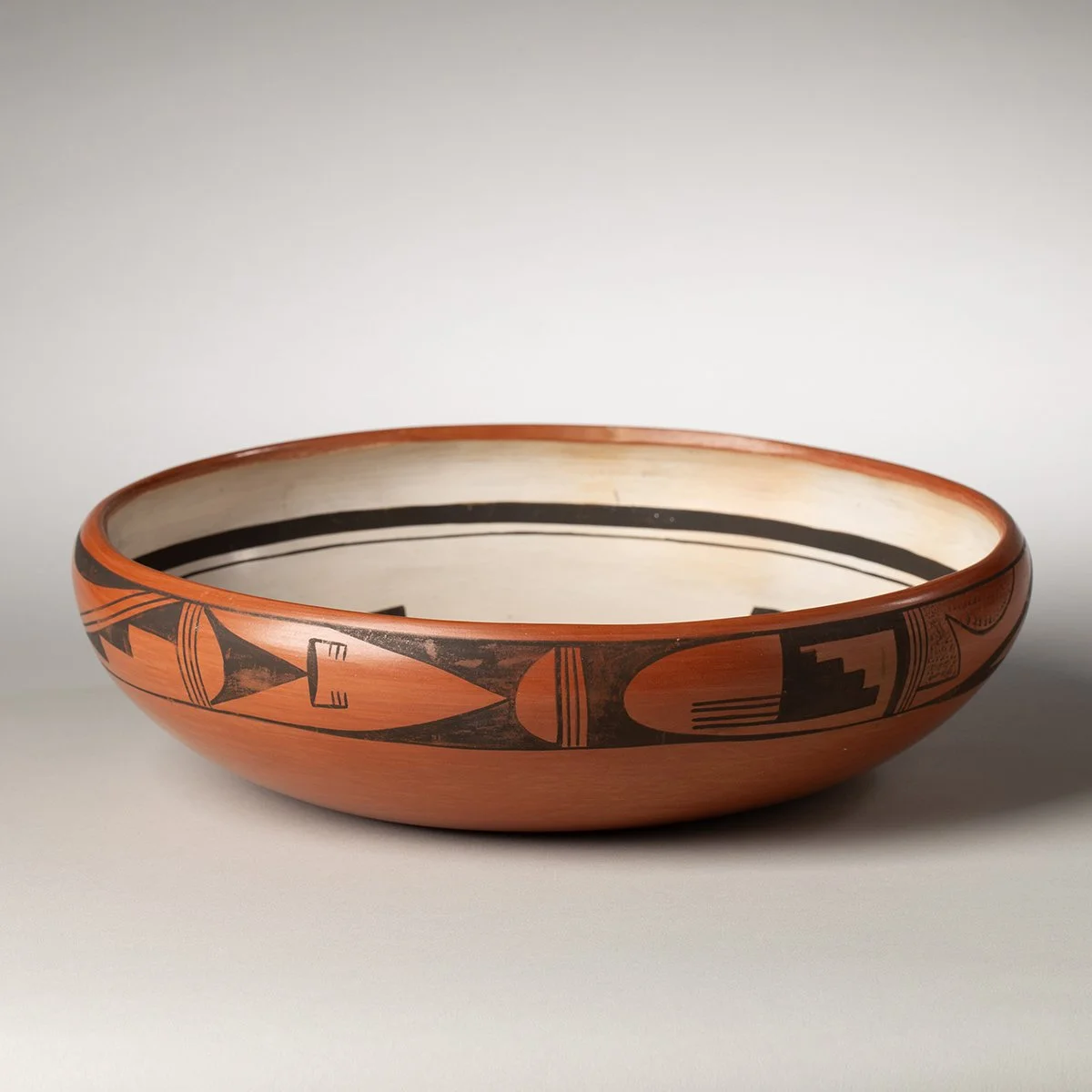 Image 6 of 7
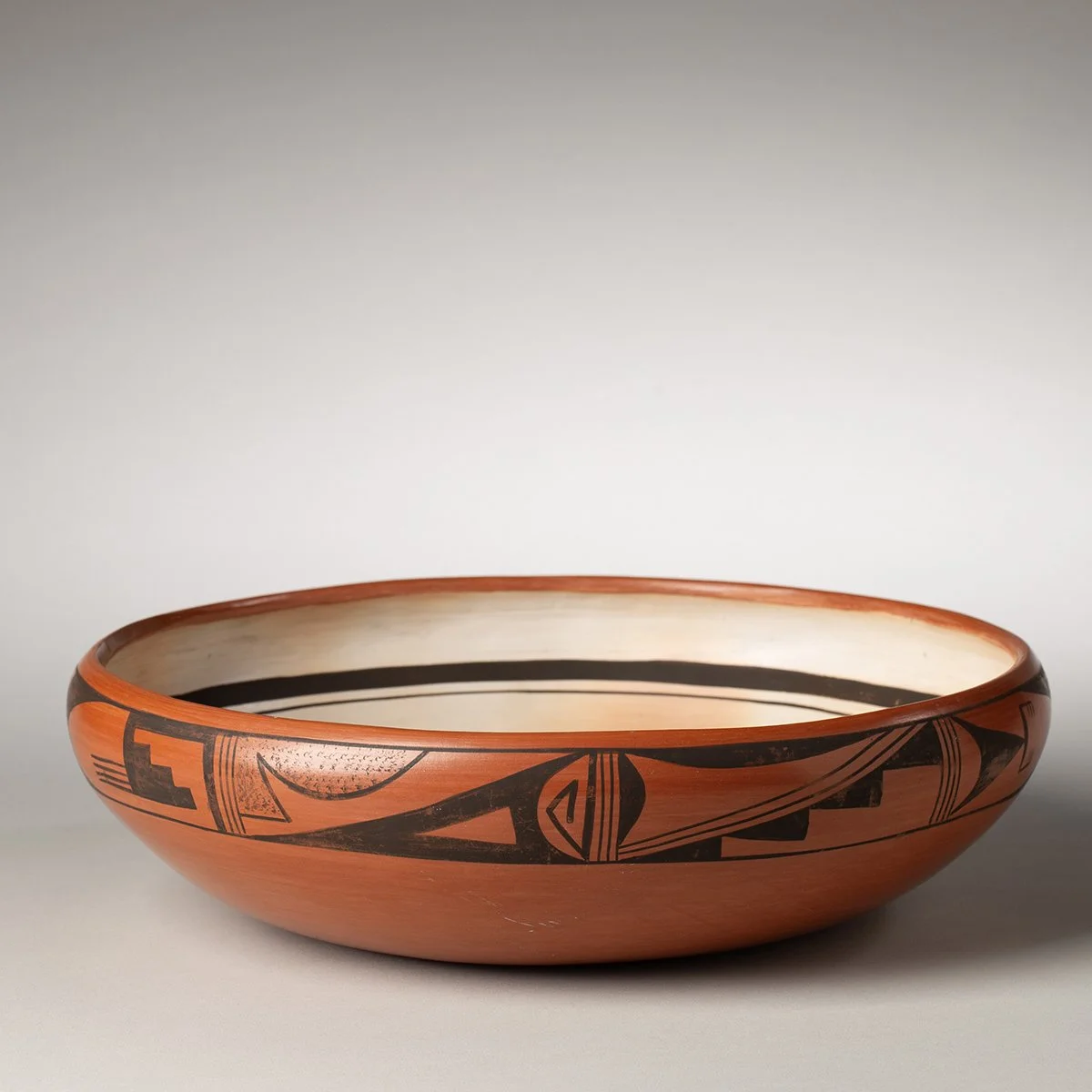 Image 7 of 7