Hopi, Arizona
1890s
Ceramic, slip, mineral pigment
Length 8¼ in (21 cm)
Provenance: Private collection, Phoenix, AZ; Allard Auctions, March 15, 1991, Lot #162
Ceremonial pipes of this type are among the less commonly encountered forms in Hopi ceramic production, distinct from the utilitarian and storage vessels that make up the majority of surviving nineteenth century Hopi pottery. This example is decorated in the style associated with Nampeyo of Hano and the revival of ancient Sikyatki Polychrome motifs she pioneered on First Mesa beginning in the 1890s, characterized by bold geometric panels, curvilinear and hatched forms, and the use of black and red mineral pigment on a cream slip ground. The elongated stem and rounded bowl form are consistent with pipes produced for ceremonial use within Hopi communities during the late nineteenth century.
The decoration is organized in confident geometric panels around the stem and bowl, incorporating forms reminiscent of migration patterns, bird imagery, and the abstract geometric vocabulary of the Sikyatki revival tradition. The surface retains original pigment with the matte finish and tonal variation characteristic of mineral-based paints of this period. The auction provenance from Allard Auctions in 1991, a respected house for Native American material, provides a documented collecting history of over thirty years.
We ship free anywhere in the world, fully insured, packed by hand.
Hopi, Arizona
1890s
Ceramic, slip, mineral pigment
Length 8¼ in (21 cm)
Provenance: Private collection, Phoenix, AZ; Allard Auctions, March 15, 1991, Lot #162
Ceremonial pipes of this type are among the less commonly encountered forms in Hopi ceramic production, distinct from the utilitarian and storage vessels that make up the majority of surviving nineteenth century Hopi pottery. This example is decorated in the style associated with Nampeyo of Hano and the revival of ancient Sikyatki Polychrome motifs she pioneered on First Mesa beginning in the 1890s, characterized by bold geometric panels, curvilinear and hatched forms, and the use of black and red mineral pigment on a cream slip ground. The elongated stem and rounded bowl form are consistent with pipes produced for ceremonial use within Hopi communities during the late nineteenth century.
The decoration is organized in confident geometric panels around the stem and bowl, incorporating forms reminiscent of migration patterns, bird imagery, and the abstract geometric vocabulary of the Sikyatki revival tradition. The surface retains original pigment with the matte finish and tonal variation characteristic of mineral-based paints of this period. The auction provenance from Allard Auctions in 1991, a respected house for Native American material, provides a documented collecting history of over thirty years.
We ship free anywhere in the world, fully insured, packed by hand.


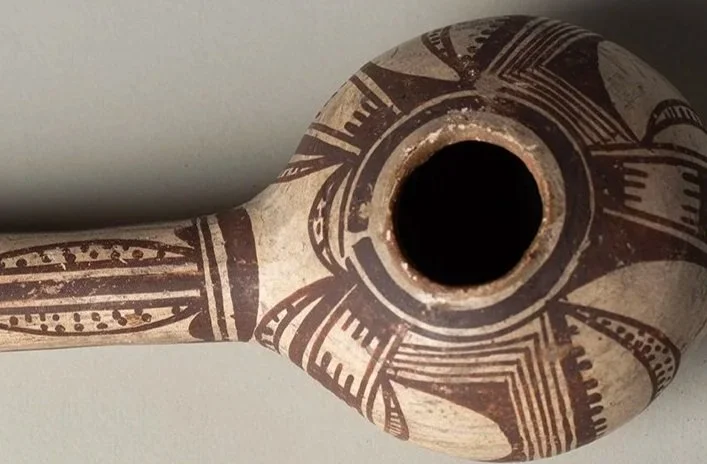 Image 1 of 6
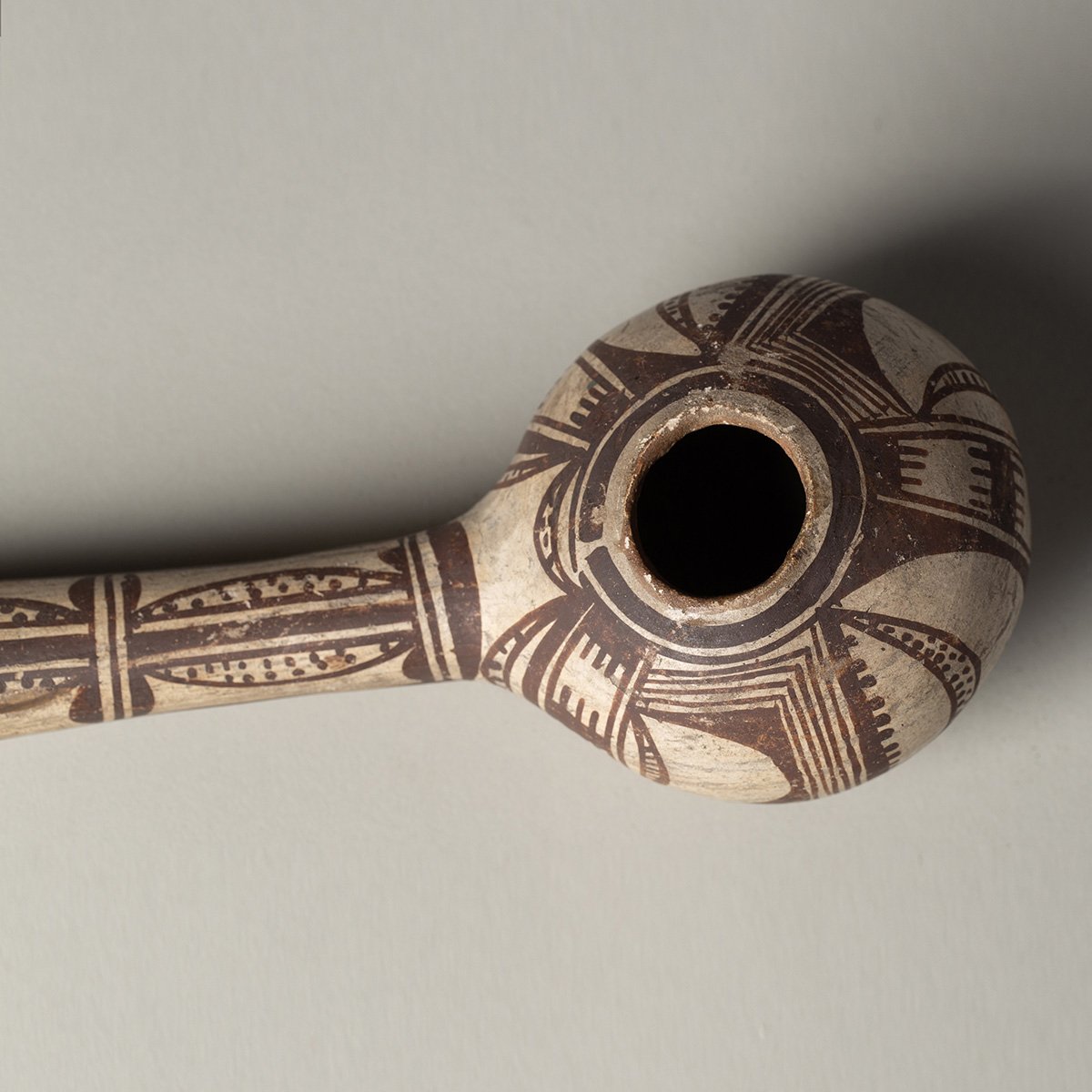 Image 2 of 6
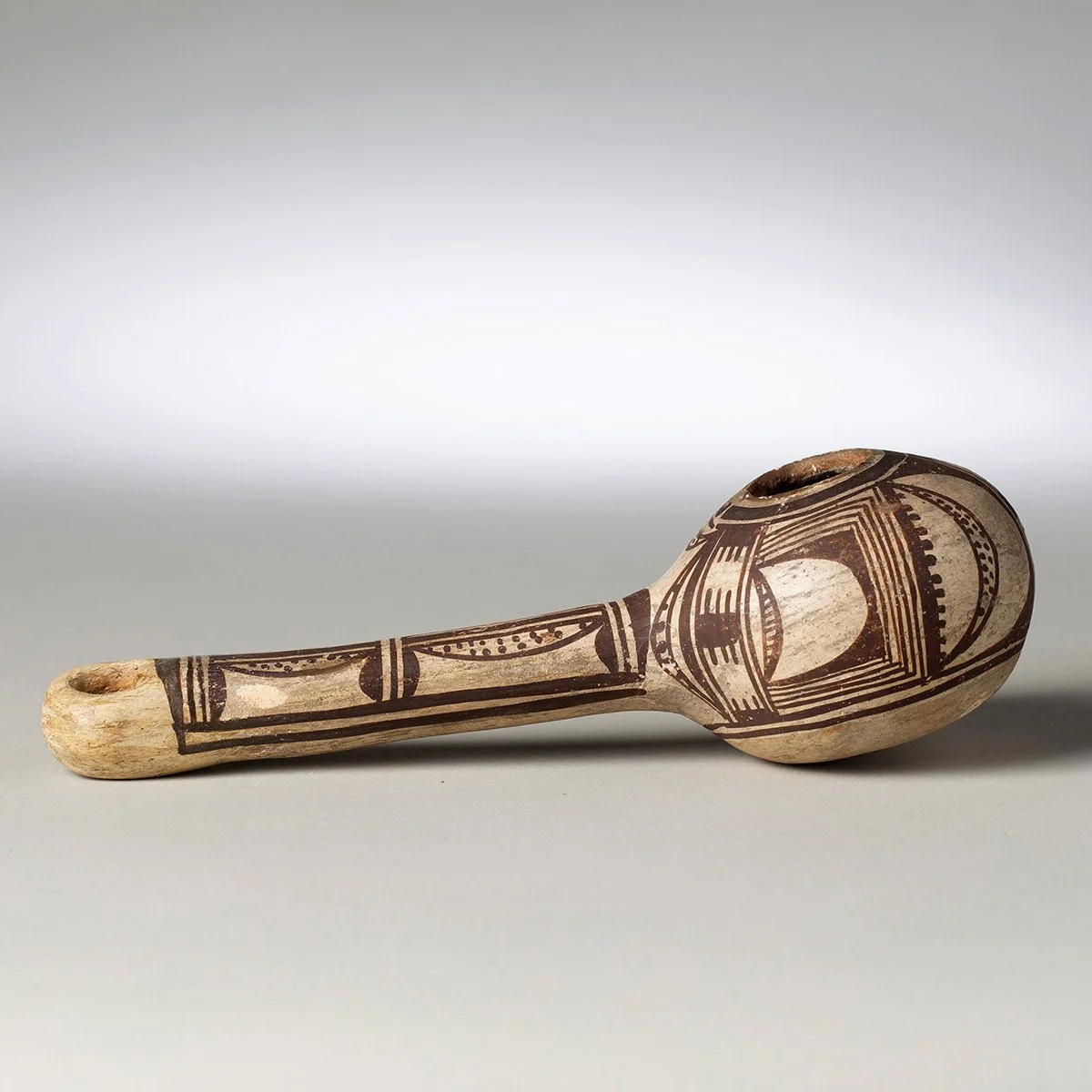 Image 3 of 6
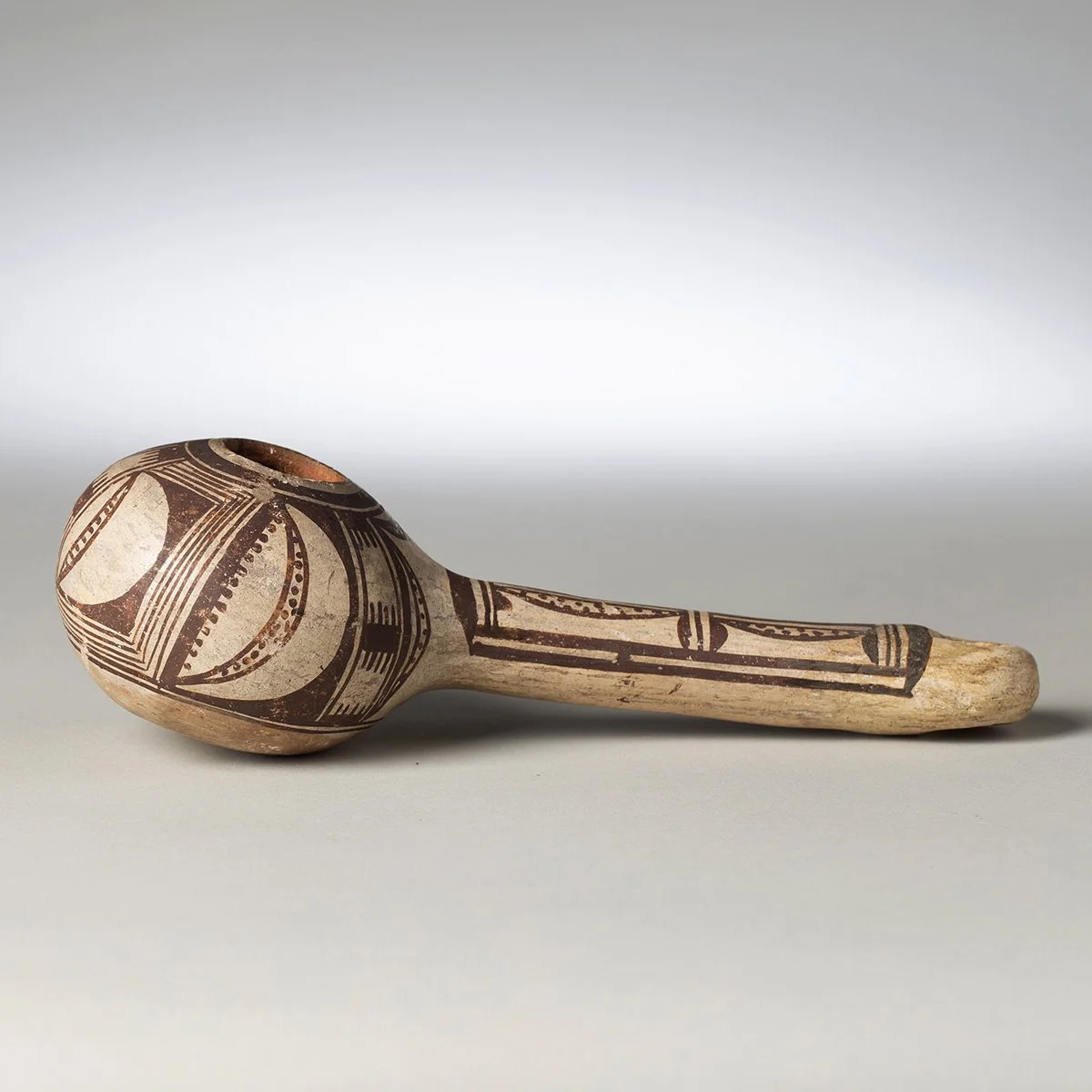 Image 4 of 6
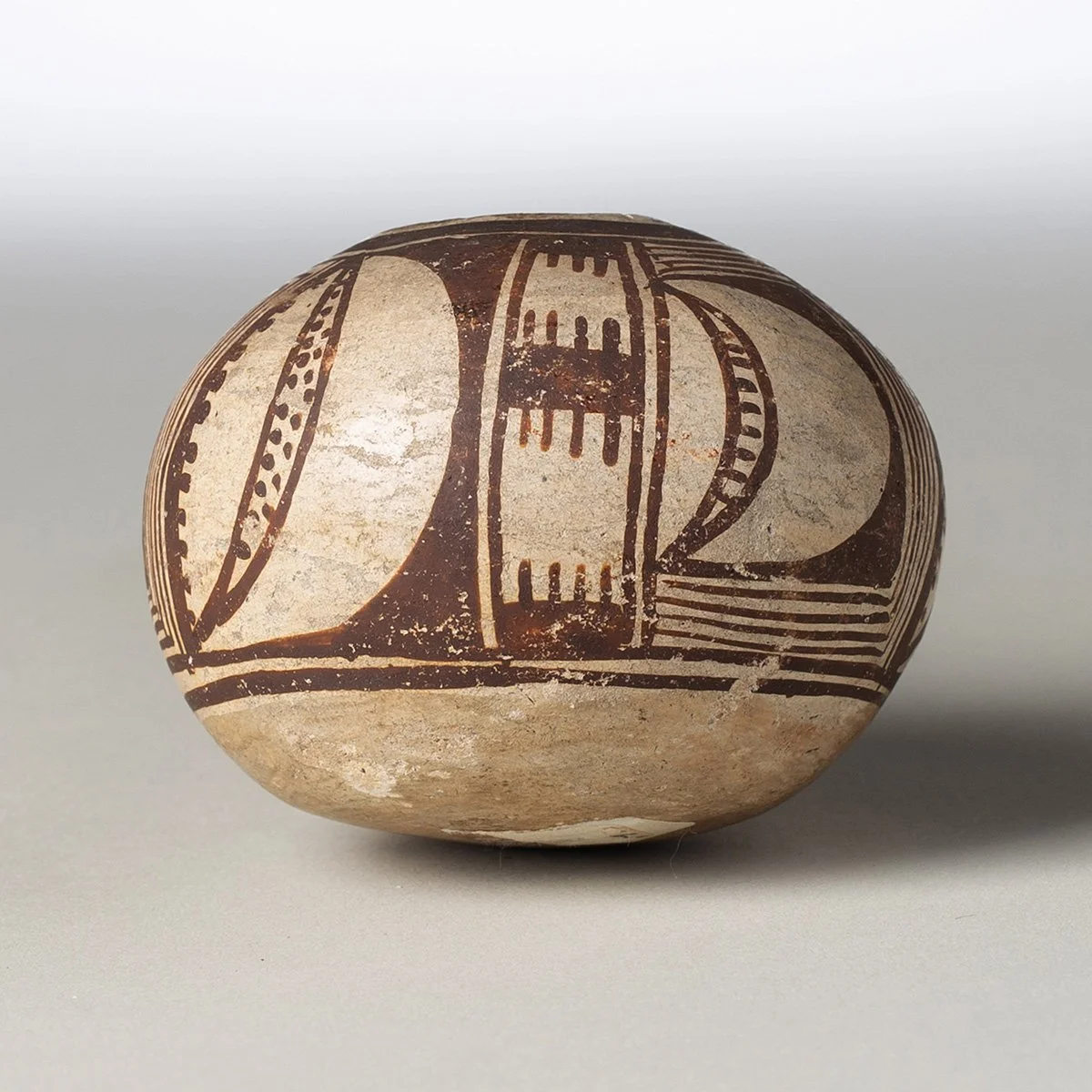 Image 5 of 6
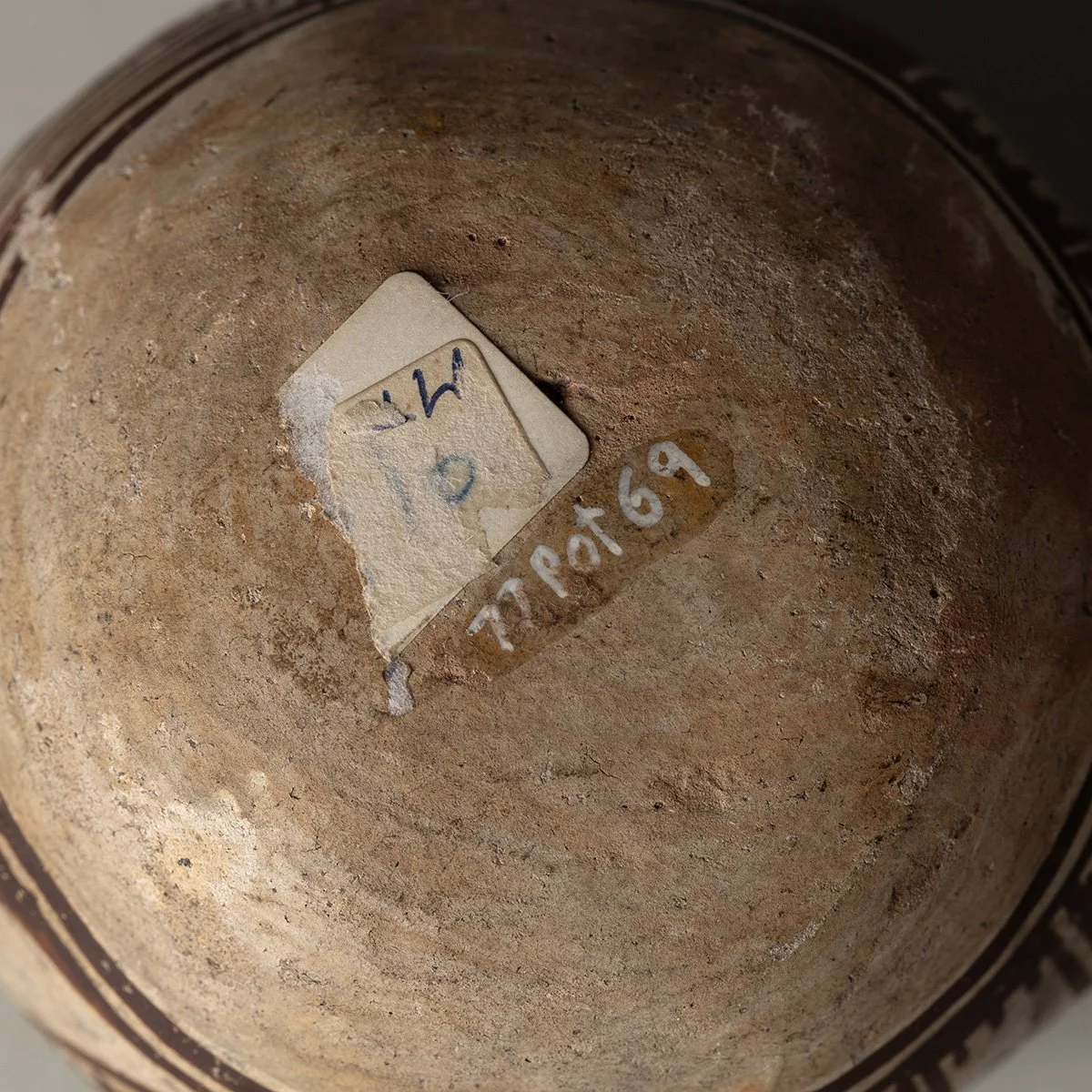 Image 6 of 6