Hopi, Arizona
Circa 1890
Cottonwood root, natural pigments
Height 14 3/8" (36.5 cm)
Provenance: Pennsylvania private collection; Northern California private collection
Wutaka, known also as Pipta-ka on Third Mesa, is one of the chief wuya katsinas of the Hopi ceremonial tradition, appearing across all mesas but most frequently on First Mesa as a side dancer. He is depicted as an elderly man and typically carries a cane in one hand and a bag of corn seeds in the other, reflecting his identity as an elder figure associated with agricultural abundance and generational knowledge. His appearances at summer plaza dances and the Bean Dance connect him to the seasonal ceremonial cycle central to Hopi community life.
At 14 3/8 inches, this figure is carved at a scale above the typical Early Traditional period example, and the circa 1890 date places it within the late phase of that period and made for traditional use, not for the marketplace. The carving is executed from a single piece of cottonwood root, the standard material for all Hopi katsina figures, chosen for its lightness and workability. The painted surface retains the characteristic earth pigments of late 19th century production.
Piptuka katsinas as a category are improvised figures, assembled only a night or two before their ceremonial appearance, and any community member may take on the role, a quality that gives them a spontaneous and socially responsive character within the dance context. The Wutaka figure within this tradition embodies the elder's authority and his role as a giver of gifts and seeds to spectators and children. Examples of this subject from the 1890s are encountered with decreasing frequency in the market, as early Hopi katsina figures have moved steadily into institutional and private collections.
We ship free anywhere in the world, fully insured, packed by hand.
Hopi, Arizona
Circa 1890
Cottonwood root, natural pigments
Height 14 3/8" (36.5 cm)
Provenance: Pennsylvania private collection; Northern California private collection
Wutaka, known also as Pipta-ka on Third Mesa, is one of the chief wuya katsinas of the Hopi ceremonial tradition, appearing across all mesas but most frequently on First Mesa as a side dancer. He is depicted as an elderly man and typically carries a cane in one hand and a bag of corn seeds in the other, reflecting his identity as an elder figure associated with agricultural abundance and generational knowledge. His appearances at summer plaza dances and the Bean Dance connect him to the seasonal ceremonial cycle central to Hopi community life.
At 14 3/8 inches, this figure is carved at a scale above the typical Early Traditional period example, and the circa 1890 date places it within the late phase of that period and made for traditional use, not for the marketplace. The carving is executed from a single piece of cottonwood root, the standard material for all Hopi katsina figures, chosen for its lightness and workability. The painted surface retains the characteristic earth pigments of late 19th century production.
Piptuka katsinas as a category are improvised figures, assembled only a night or two before their ceremonial appearance, and any community member may take on the role, a quality that gives them a spontaneous and socially responsive character within the dance context. The Wutaka figure within this tradition embodies the elder's authority and his role as a giver of gifts and seeds to spectators and children. Examples of this subject from the 1890s are encountered with decreasing frequency in the market, as early Hopi katsina figures have moved steadily into institutional and private collections.
We ship free anywhere in the world, fully insured, packed by hand.


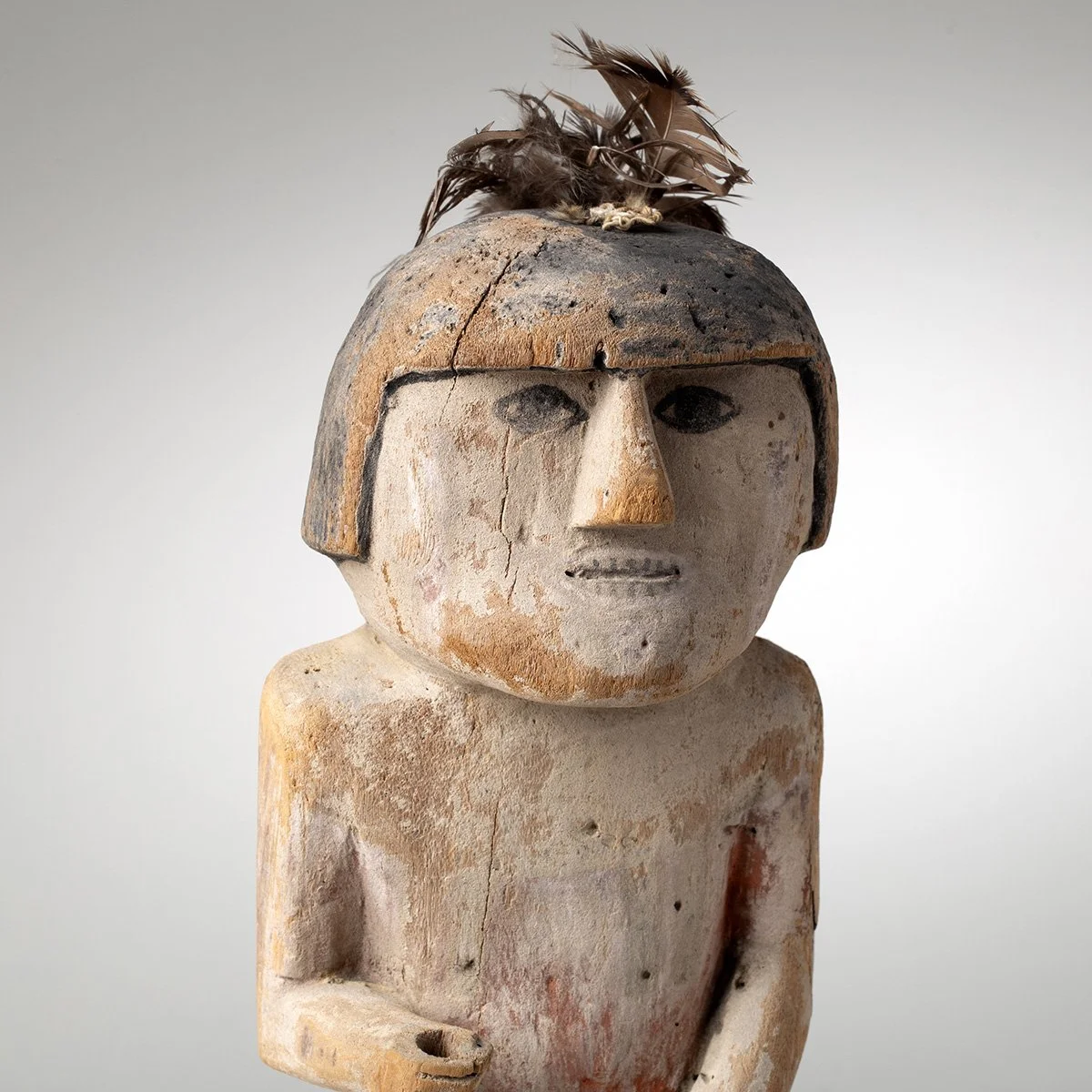 Image 1 of 7
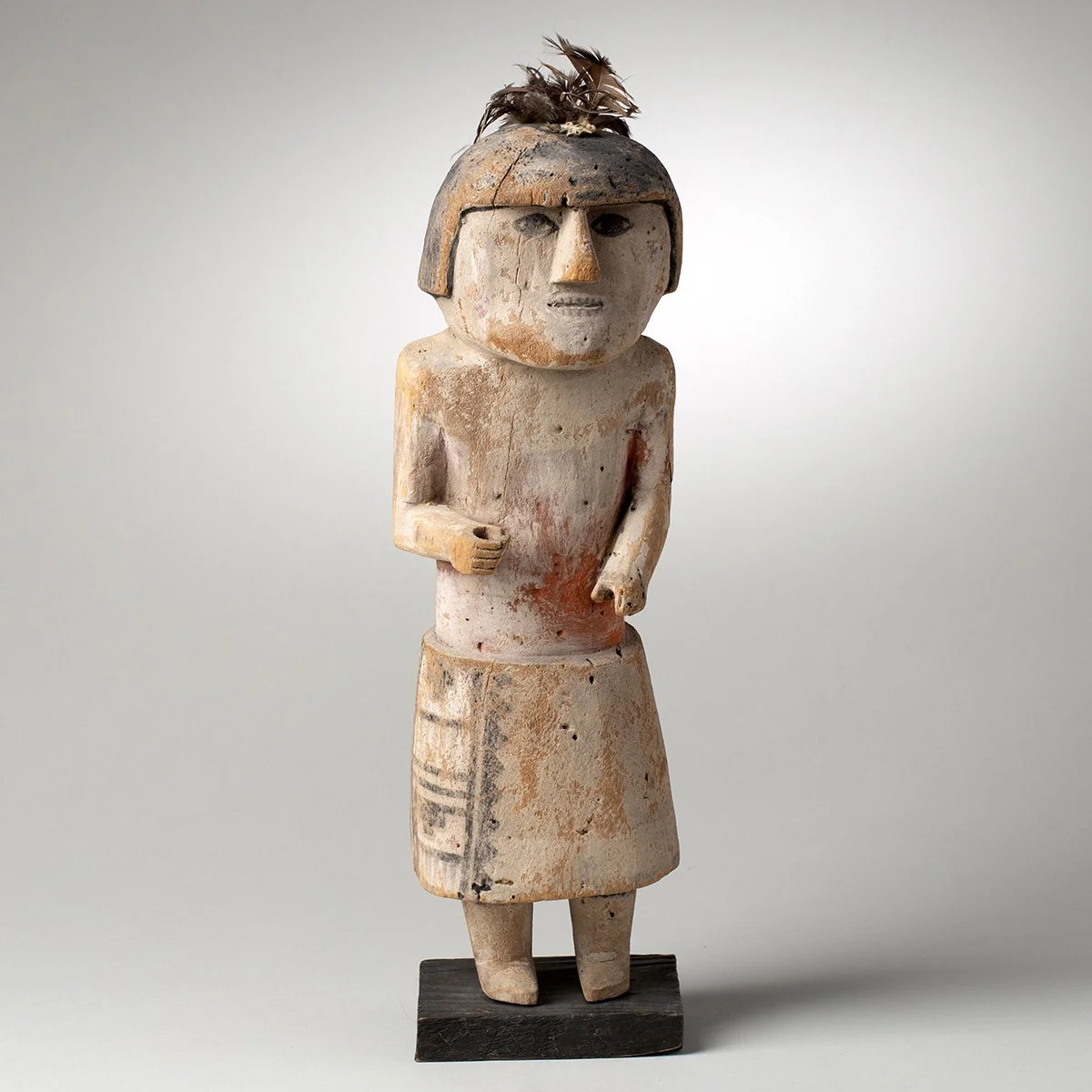 Image 2 of 7
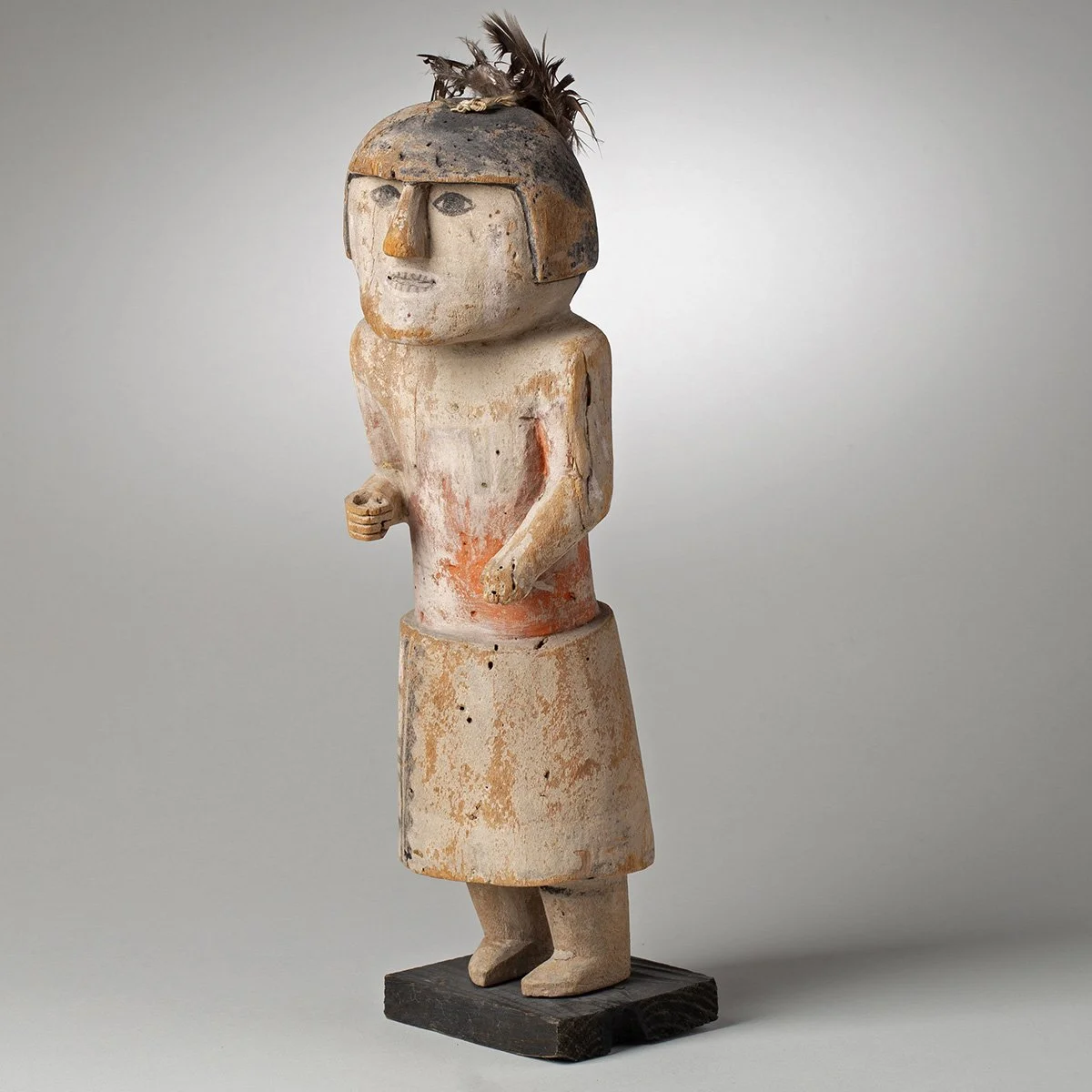 Image 3 of 7
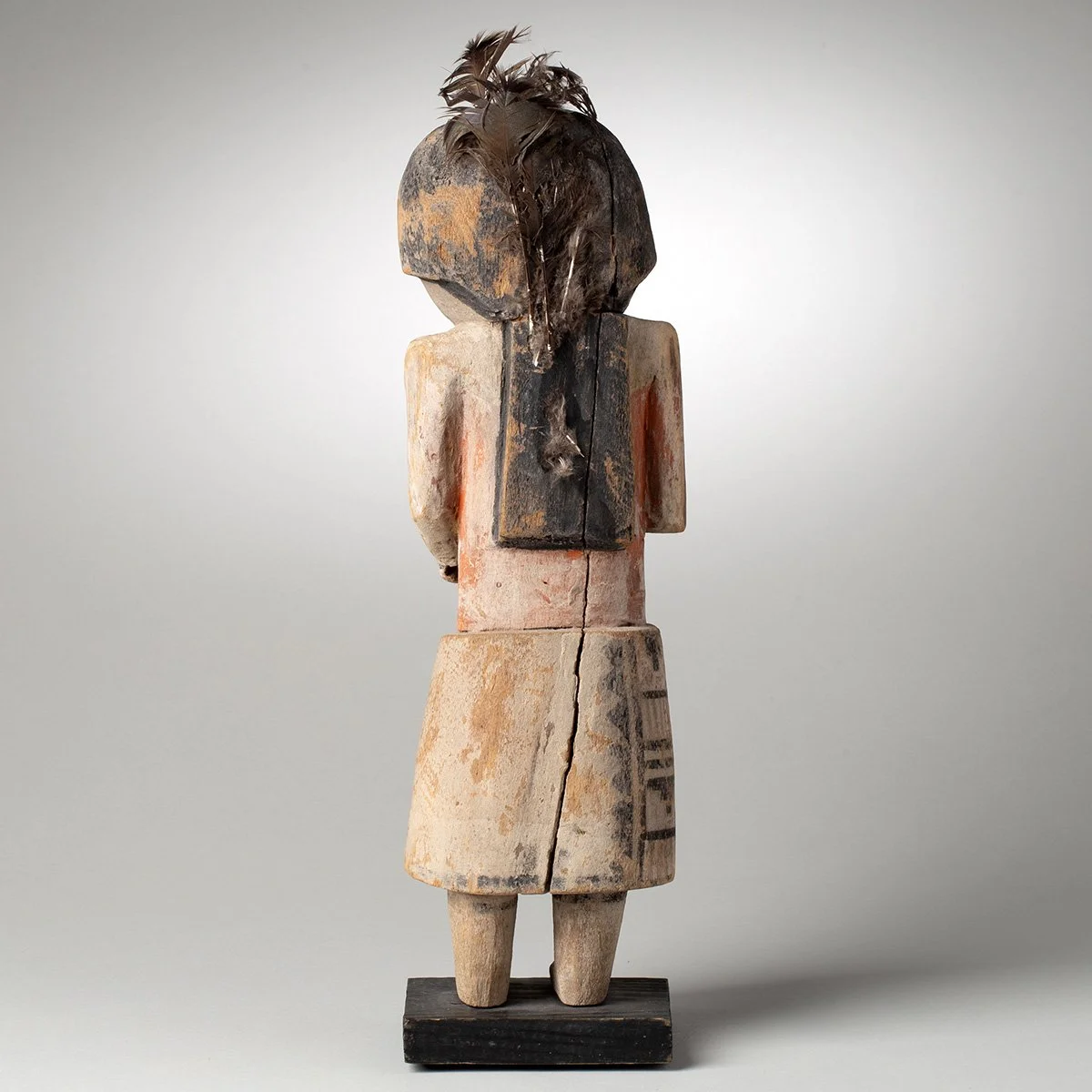 Image 4 of 7
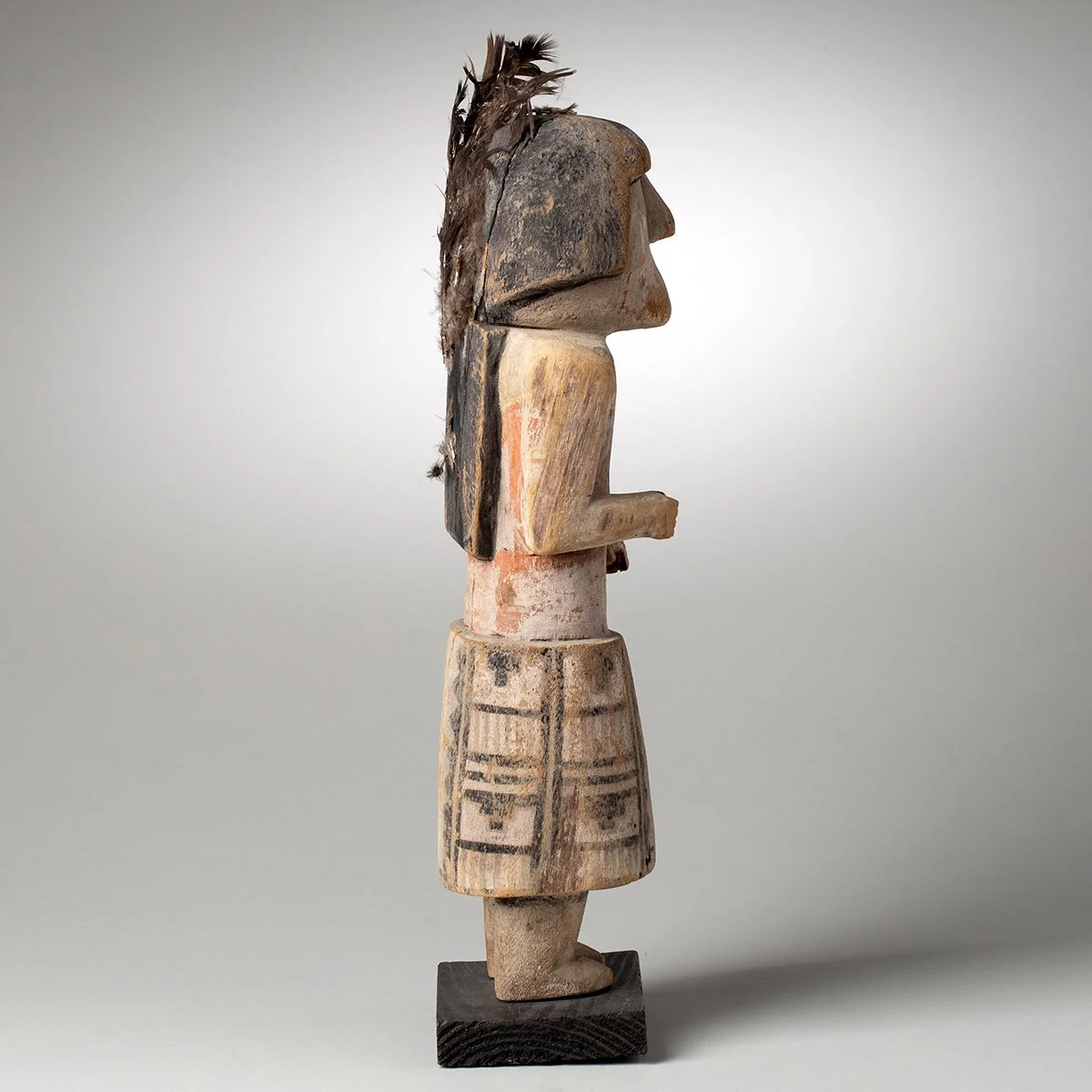 Image 5 of 7
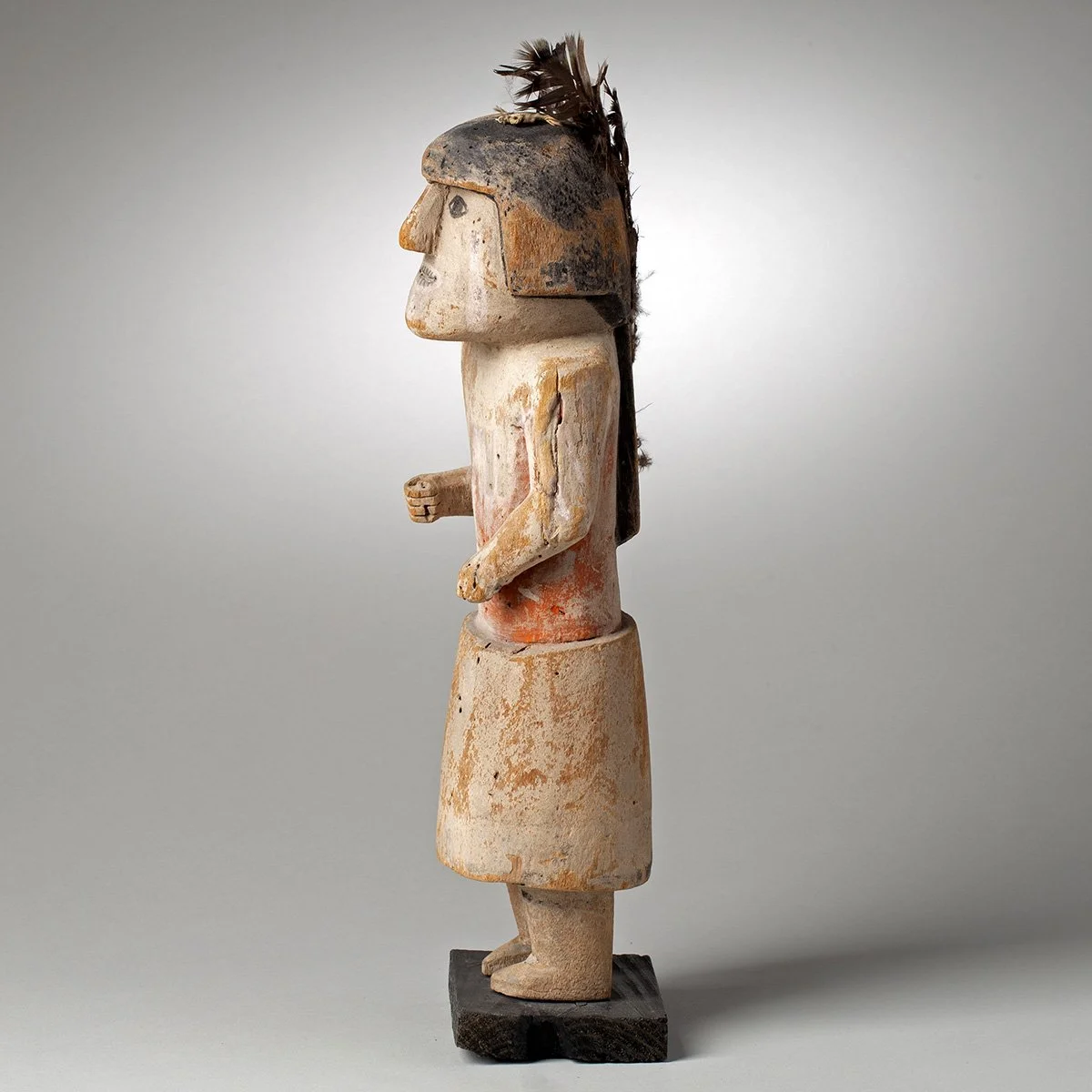 Image 6 of 7
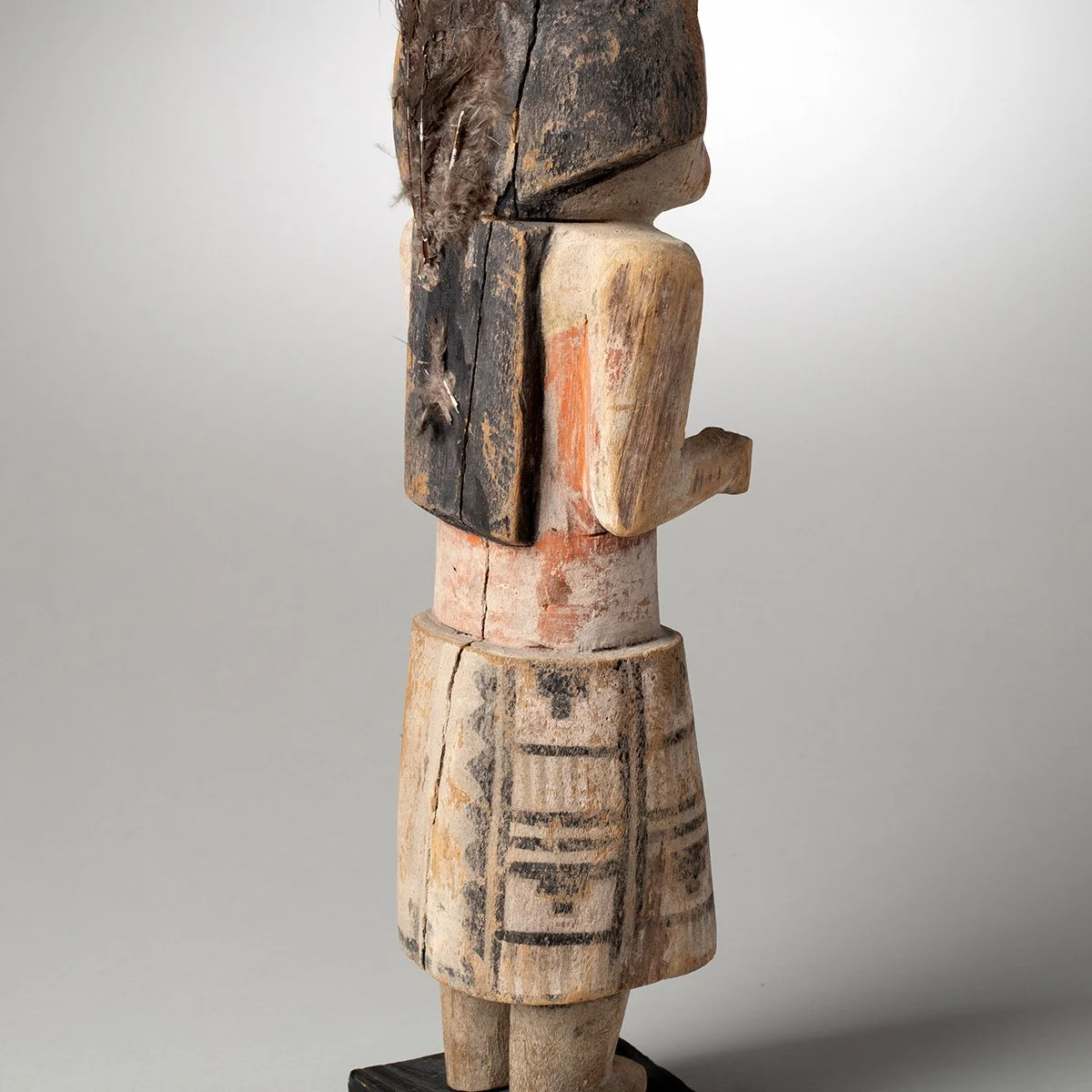 Image 7 of 7