Hopi, Arizona
Circa 1940
Wood, pigment, original attachments
Height 13 1/2 in. (34.3 cm)
Provenance: Private collection, Tucson, Arizona
The Wupamo katsina is a water drinking figure, one of the named Hopi forms associated with the ceremony of the same name performed during the winter solstice season. This example dates to circa 1940, a period when Hopi carvers were producing figures for both ceremonial instruction and the growing collector market, and retains its original attachments, which contribute to the completeness and legibility of the piece. The case mask, formed as a cylinder of painted wood enclosing the face, is the defining feature of this katsina type and is preserved here in good condition.
The figure stands 13 1/2 inches in height, consistent with the mid-20th-century production scale for Hopi katsina carvings, and is painted in the polychrome pigments characteristic of the period. The retained attachments are significant, as accessories and applied elements are frequently missing from examples that have passed through multiple collections. The piece comes from a private Tucson collection.
We ship free anywhere in the world, fully insured, packed by hand.
Hopi, Arizona
Circa 1940
Wood, pigment, original attachments
Height 13 1/2 in. (34.3 cm)
Provenance: Private collection, Tucson, Arizona
The Wupamo katsina is a water drinking figure, one of the named Hopi forms associated with the ceremony of the same name performed during the winter solstice season. This example dates to circa 1940, a period when Hopi carvers were producing figures for both ceremonial instruction and the growing collector market, and retains its original attachments, which contribute to the completeness and legibility of the piece. The case mask, formed as a cylinder of painted wood enclosing the face, is the defining feature of this katsina type and is preserved here in good condition.
The figure stands 13 1/2 inches in height, consistent with the mid-20th-century production scale for Hopi katsina carvings, and is painted in the polychrome pigments characteristic of the period. The retained attachments are significant, as accessories and applied elements are frequently missing from examples that have passed through multiple collections. The piece comes from a private Tucson collection.
We ship free anywhere in the world, fully insured, packed by hand.


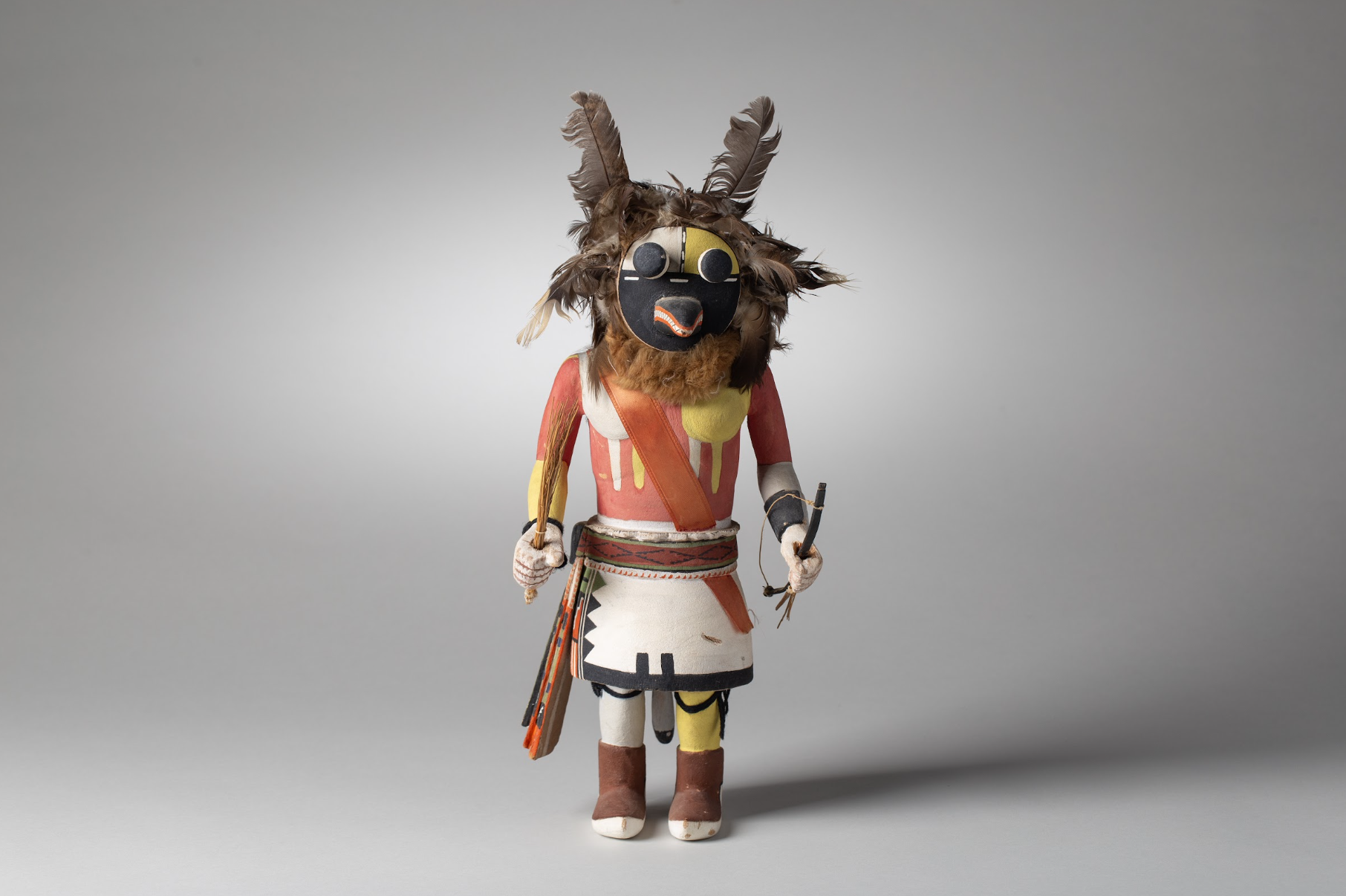 Image 1 of 6
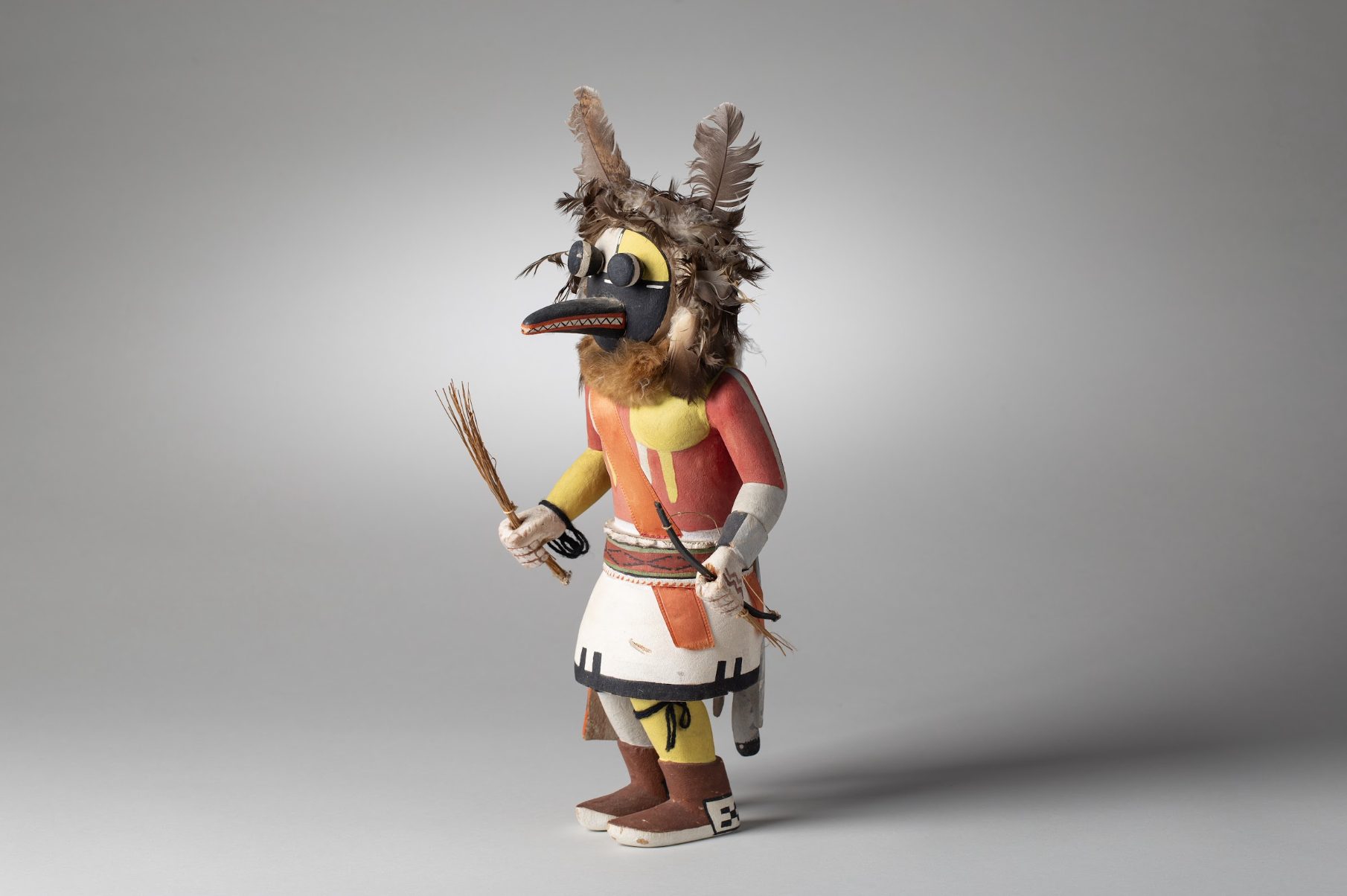 Image 2 of 6
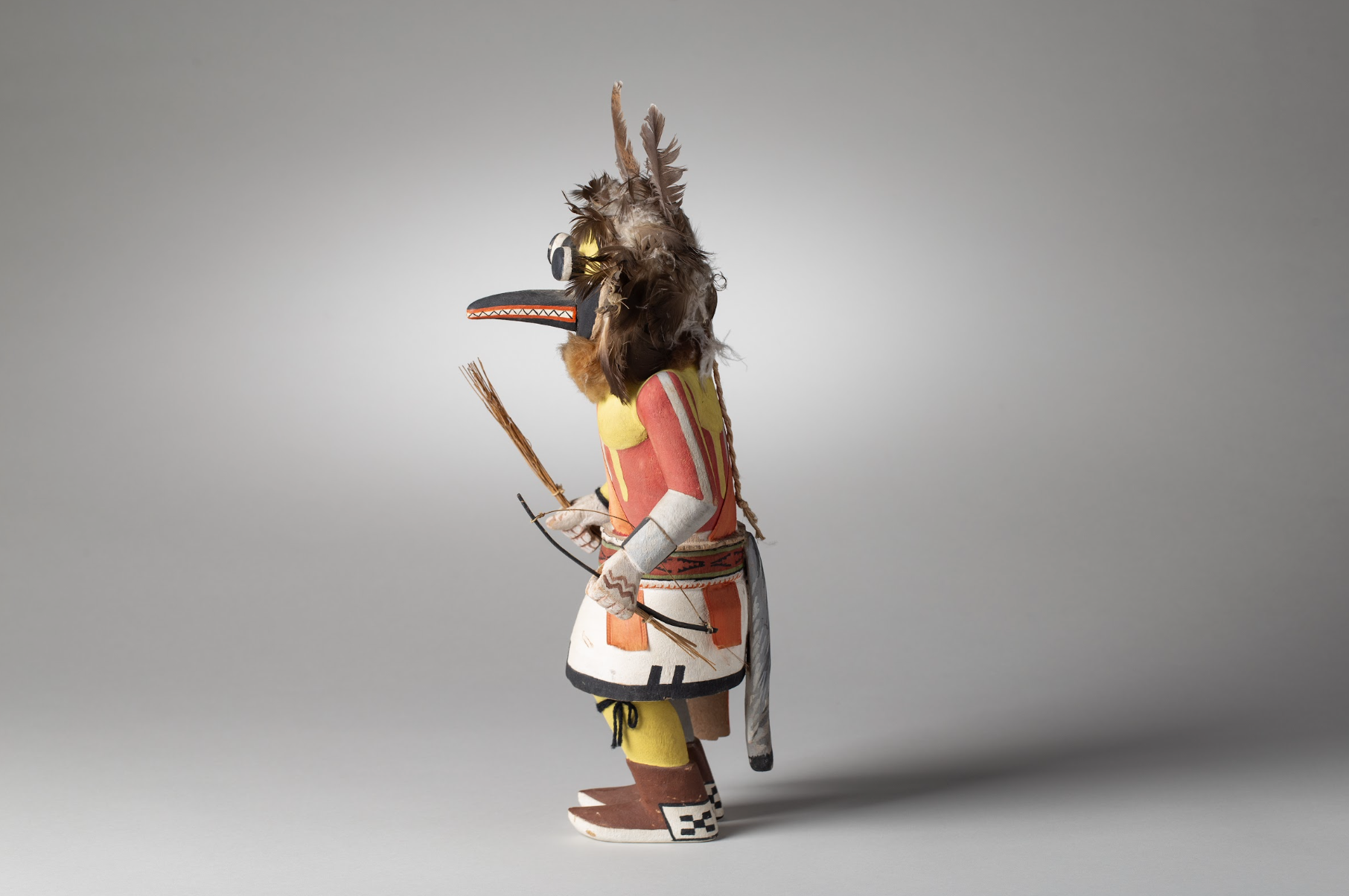 Image 3 of 6
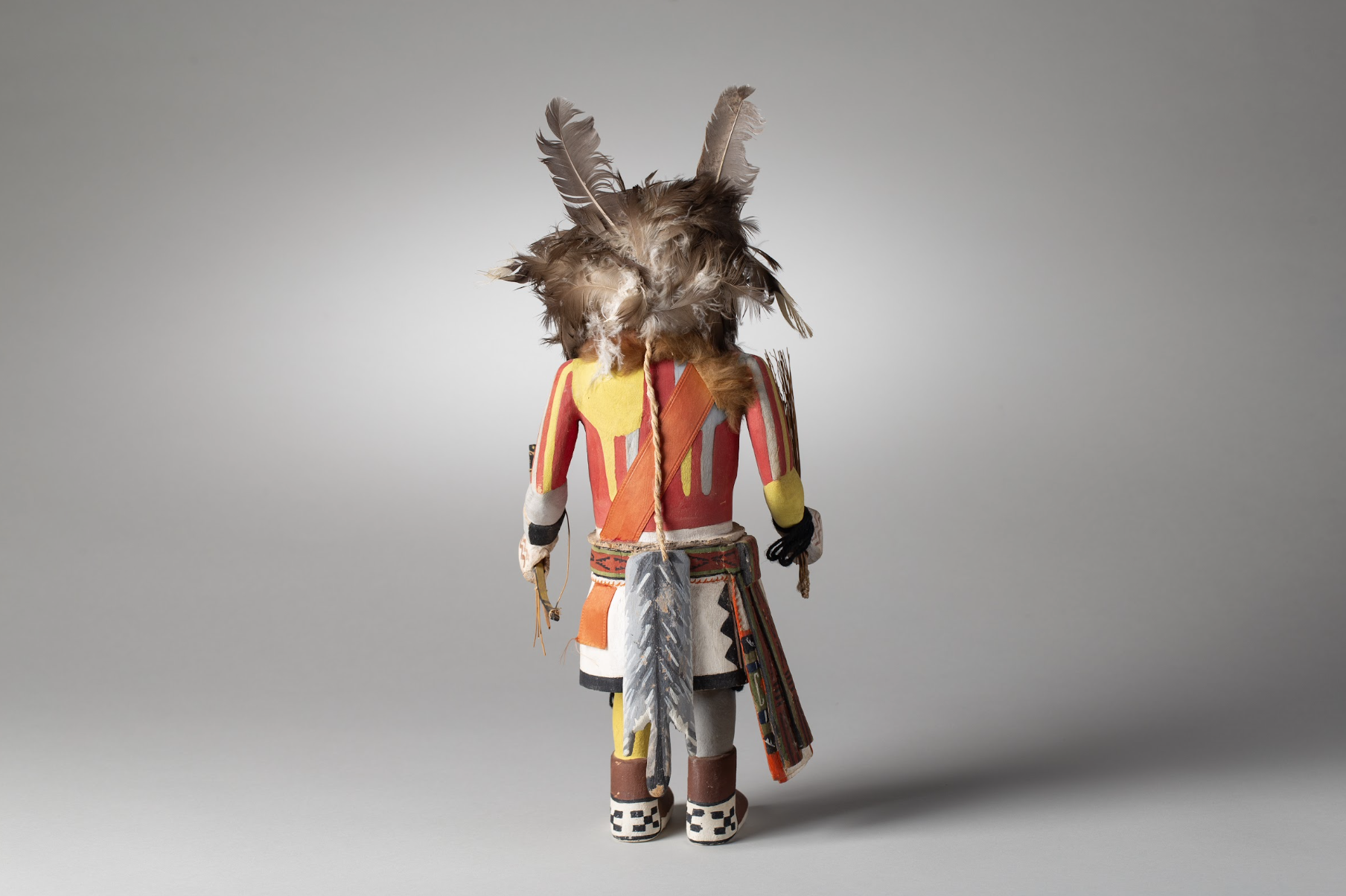 Image 4 of 6
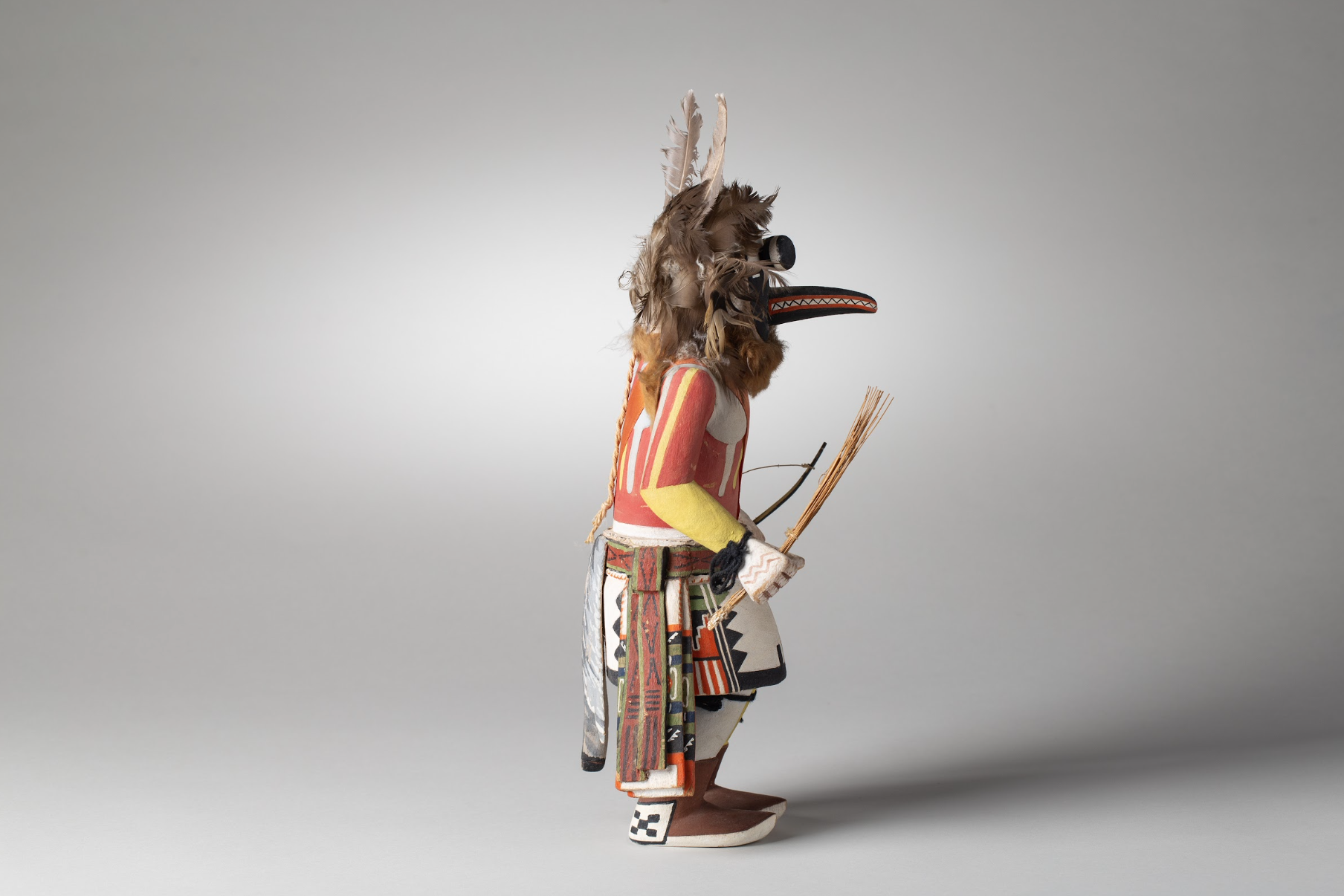 Image 5 of 6
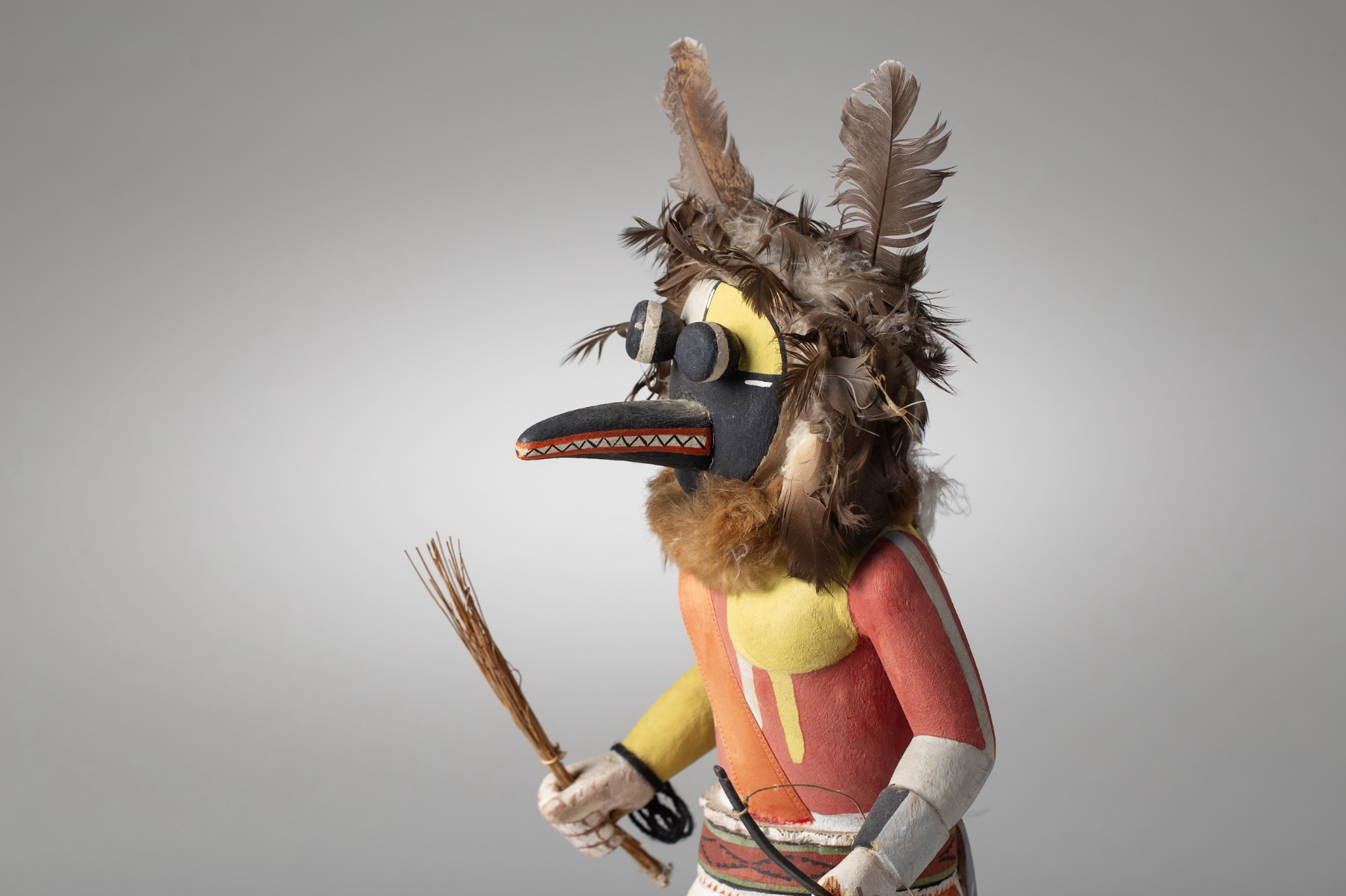 Image 6 of 6