United States, Hopi
Circa 1930
Carved and painted wood with feathers
Height: 10⅜ in (26.4 cm)
Provenance: James and Marlene Henerson, Santa Monica, California
Katsina figures (tithu) carved by Hopi artists represent the spiritual beings central to Hopi ceremonial life, given to women and children as devotional objects and as vehicles for transmitting knowledge of the katsina pantheon across generations. The Zuni Warrior katsina, known in Hopi as Salimopalyakkya or Sipikne, is a borrowed figure introduced into the Hopi ceremonial cycle from Zuni, one of several inter-pueblo exchanges that enriched both traditions. Early twentieth century examples are distinguished by their relatively austere carving and direct painted decoration, before the more elaborate tourist-market style developed in later decades.
This figure displays the characteristic black helmet mask with orange goggle eyes associated with the Zuni Warrior type, with carved and painted body details and attached feather elements consistent with carving practice of the period. The form and surface treatment reflect early 1930s Hopi workshop conventions, when figures were carved primarily for ceremonial use rather than the commercial market. The Santa Monica provenance through the Henerson collection gives the piece a clear single-owner collecting history.
We ship free anywhere in the world, fully insured, packed by hand.
United States, Hopi
Circa 1930
Carved and painted wood with feathers
Height: 10⅜ in (26.4 cm)
Provenance: James and Marlene Henerson, Santa Monica, California
Katsina figures (tithu) carved by Hopi artists represent the spiritual beings central to Hopi ceremonial life, given to women and children as devotional objects and as vehicles for transmitting knowledge of the katsina pantheon across generations. The Zuni Warrior katsina, known in Hopi as Salimopalyakkya or Sipikne, is a borrowed figure introduced into the Hopi ceremonial cycle from Zuni, one of several inter-pueblo exchanges that enriched both traditions. Early twentieth century examples are distinguished by their relatively austere carving and direct painted decoration, before the more elaborate tourist-market style developed in later decades.
This figure displays the characteristic black helmet mask with orange goggle eyes associated with the Zuni Warrior type, with carved and painted body details and attached feather elements consistent with carving practice of the period. The form and surface treatment reflect early 1930s Hopi workshop conventions, when figures were carved primarily for ceremonial use rather than the commercial market. The Santa Monica provenance through the Henerson collection gives the piece a clear single-owner collecting history.
We ship free anywhere in the world, fully insured, packed by hand.


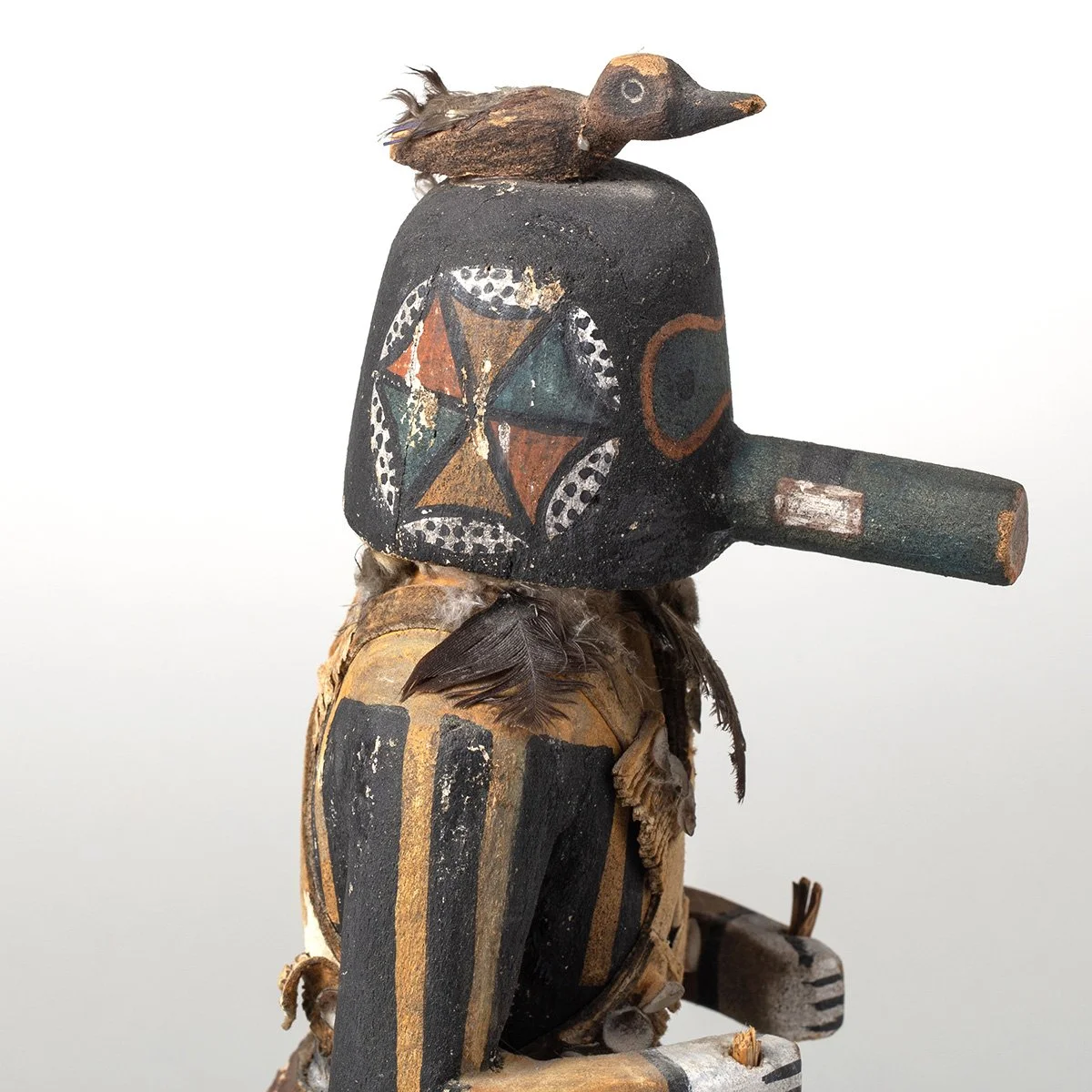 Image 1 of 8
 Image 2 of 8
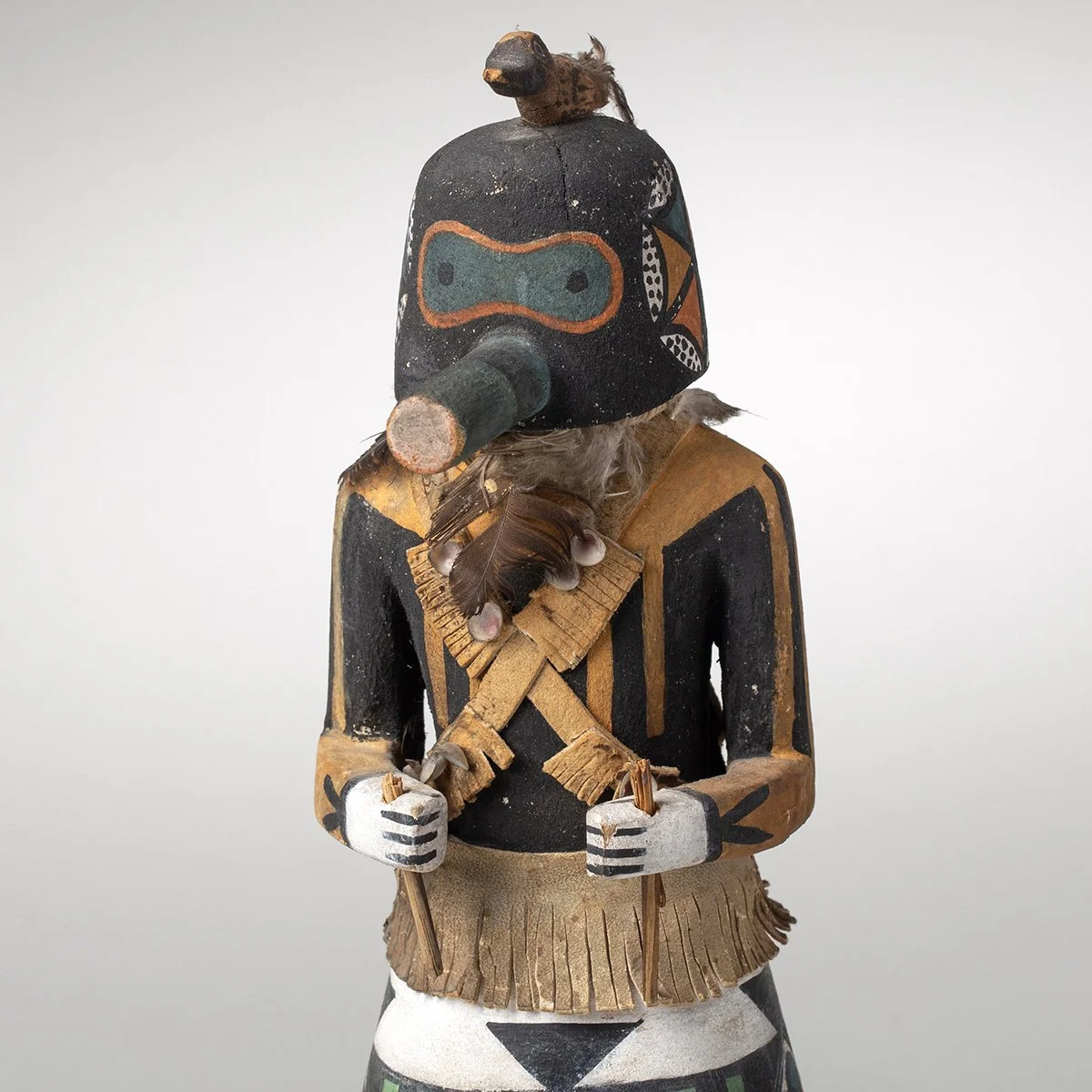 Image 3 of 8
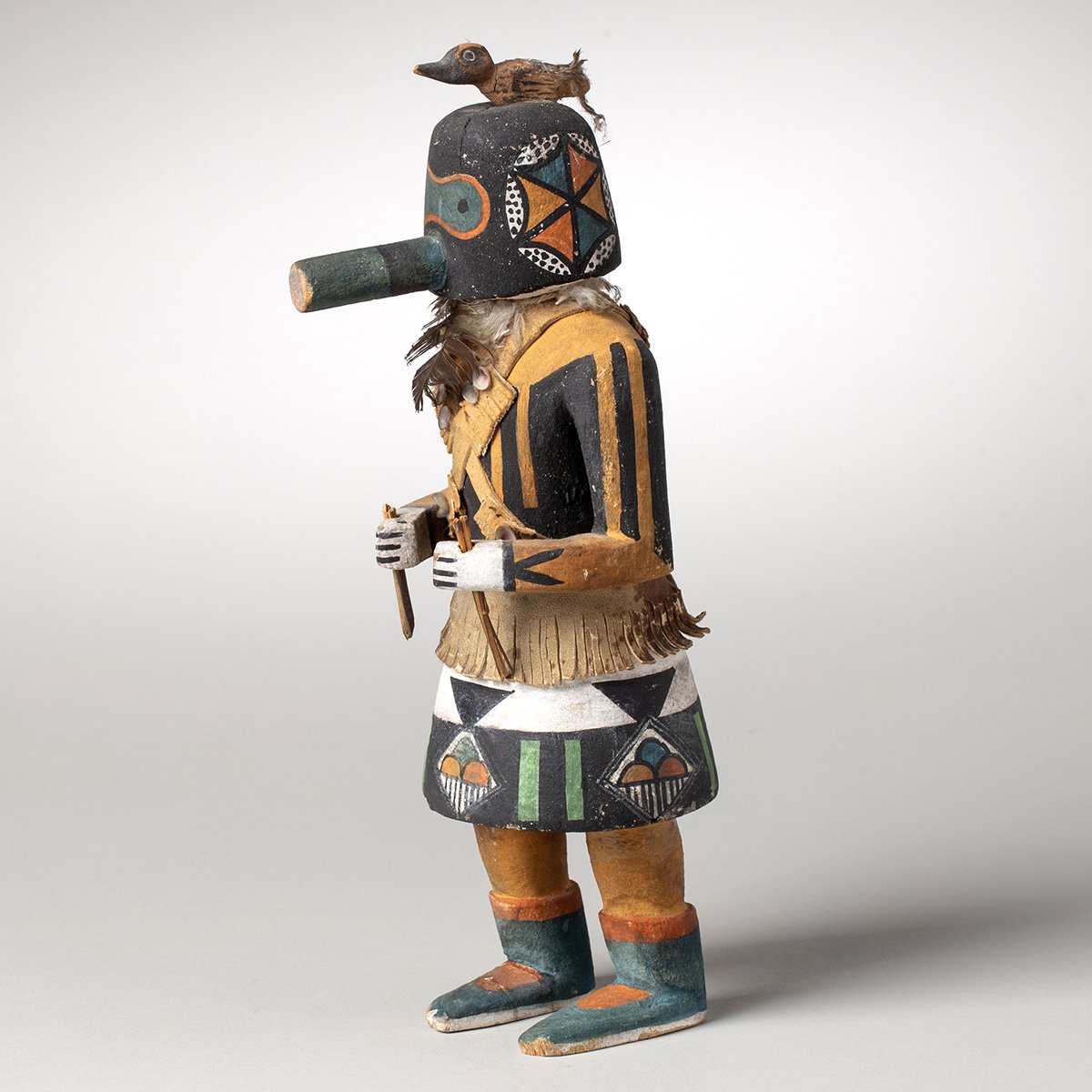 Image 4 of 8
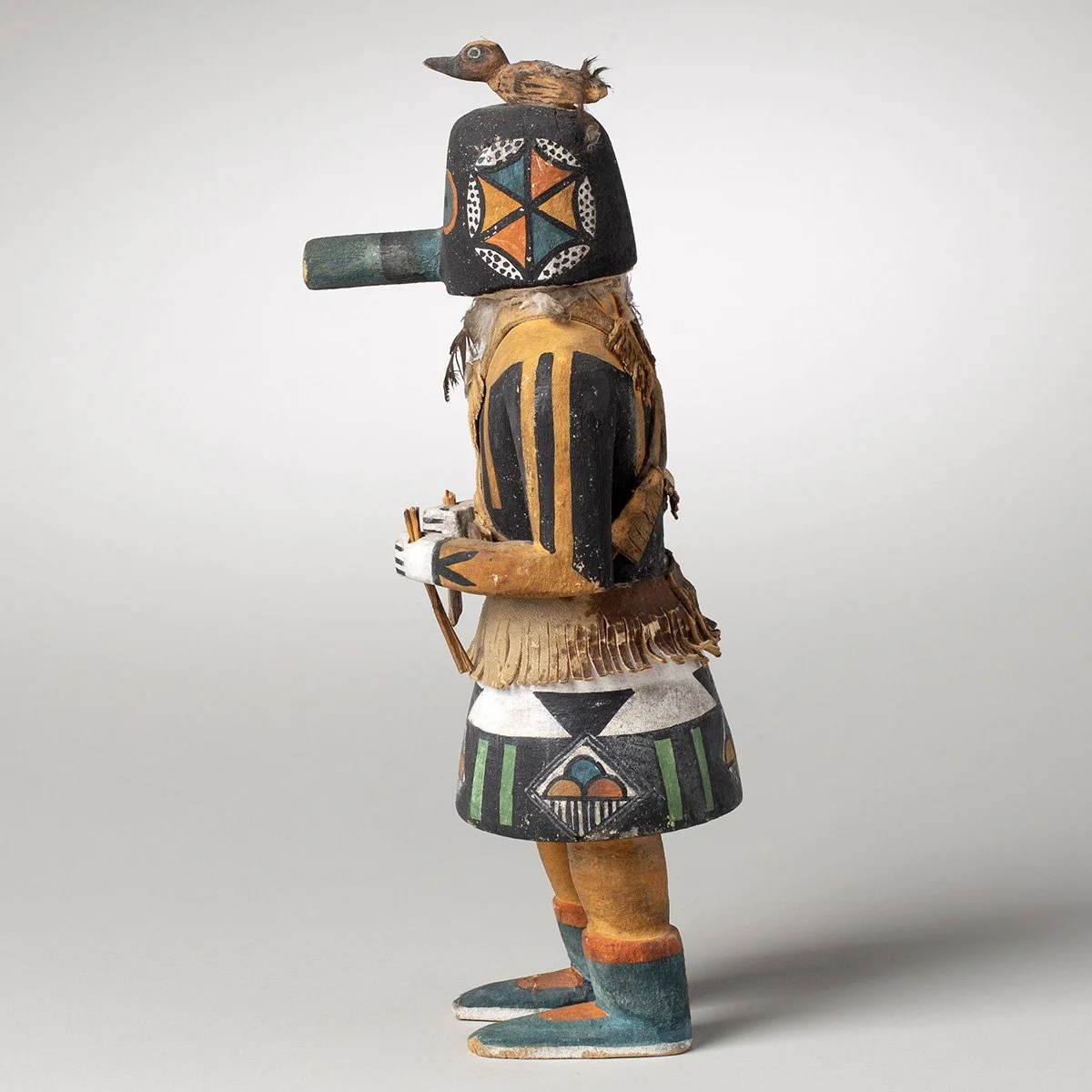 Image 5 of 8
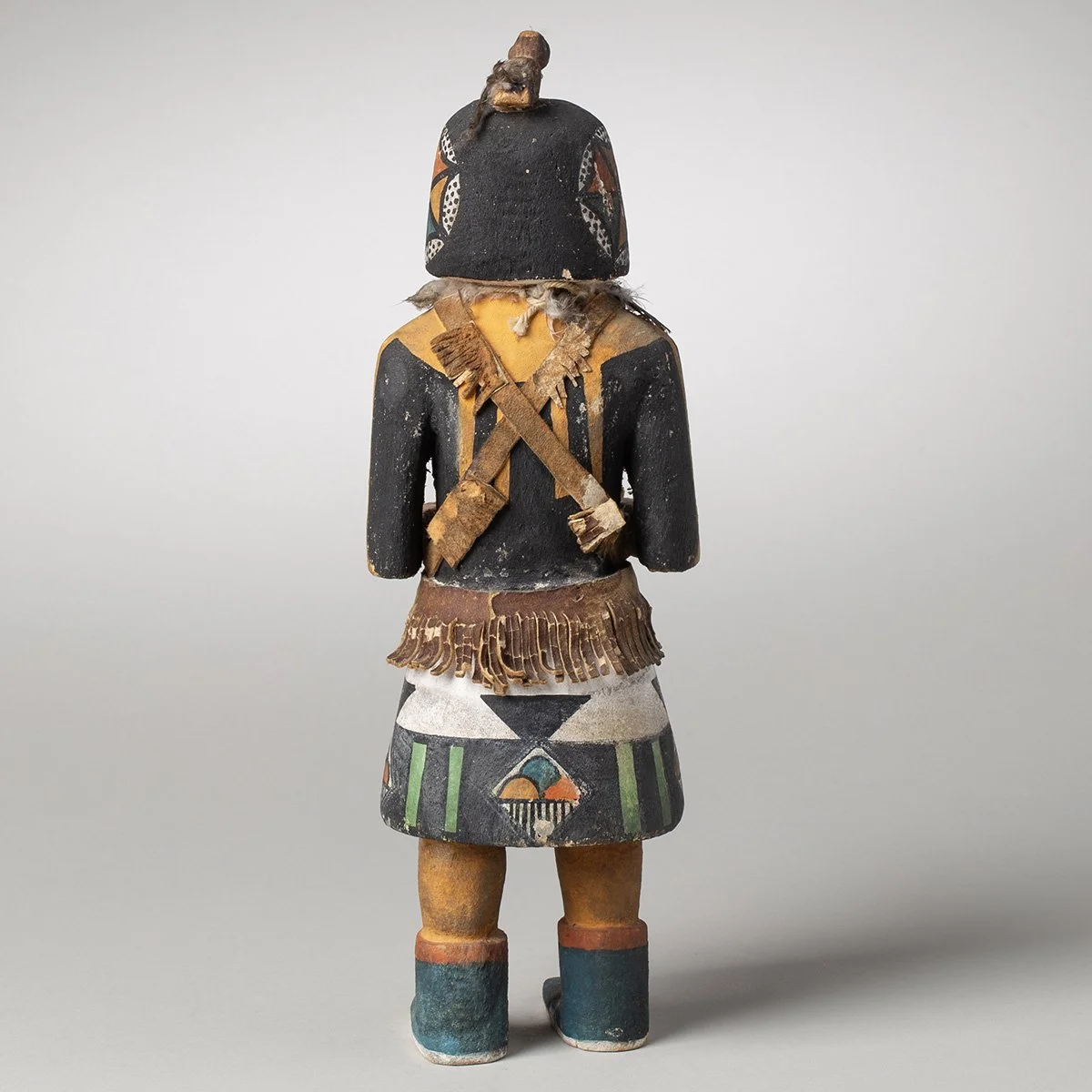 Image 6 of 8
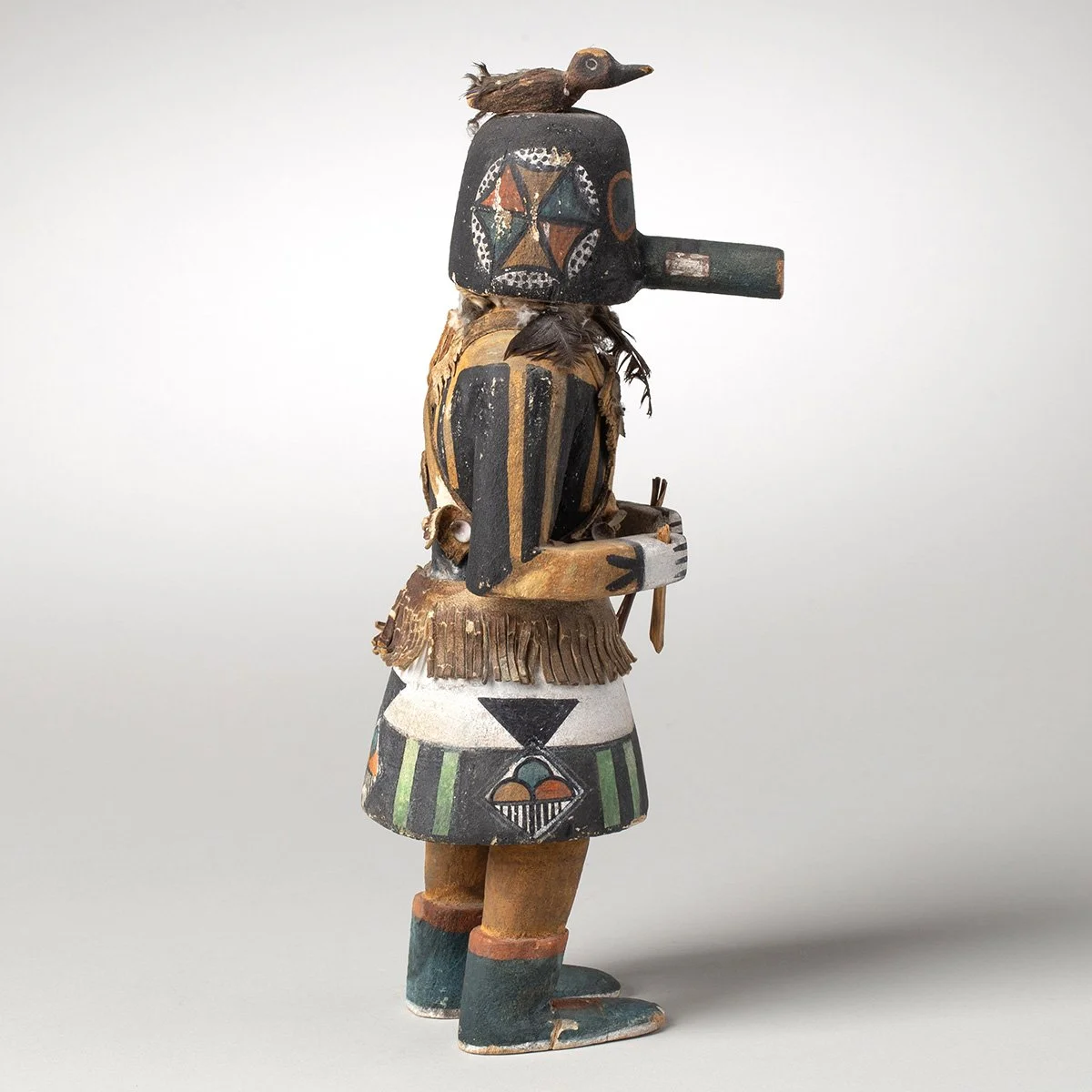 Image 7 of 8
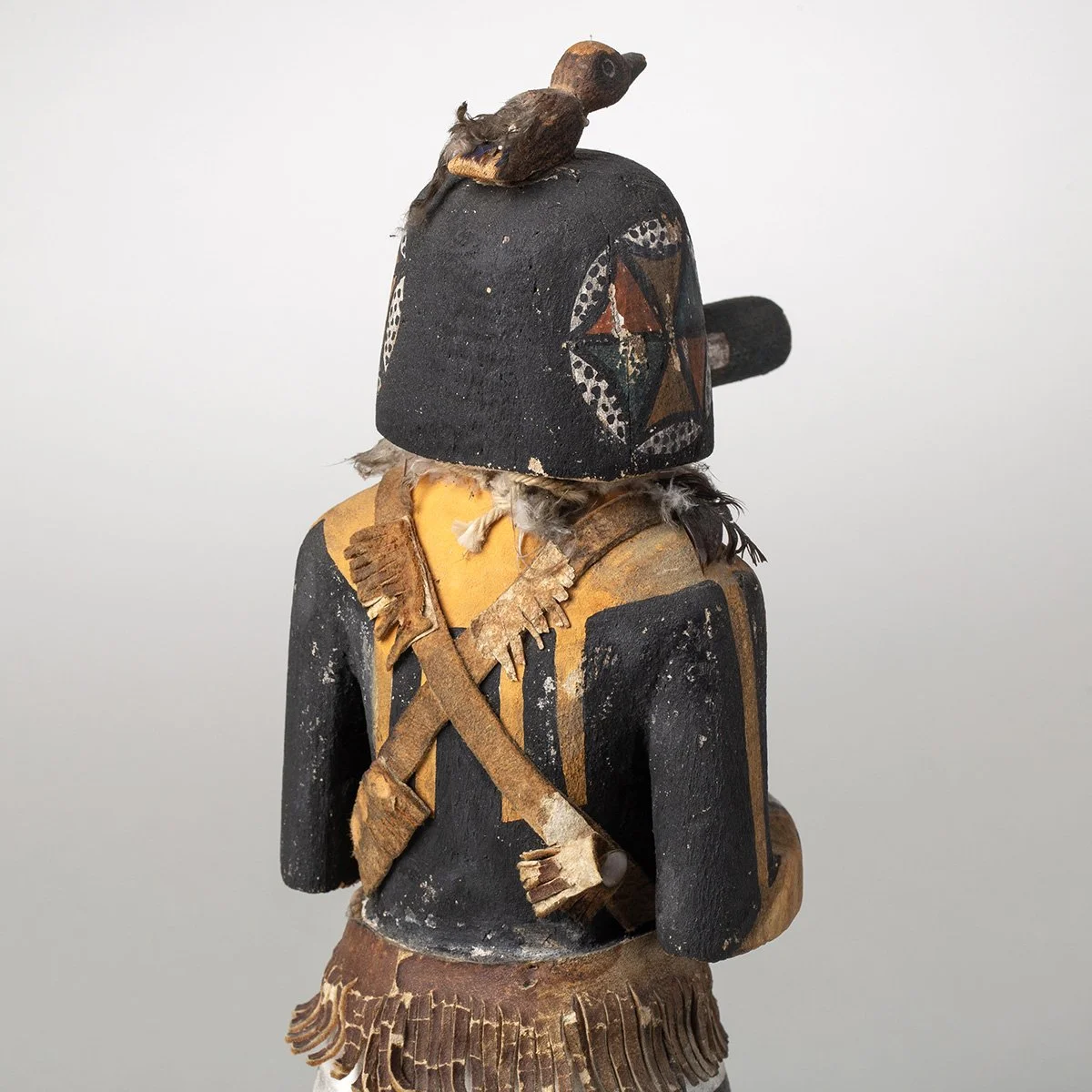 Image 8 of 8