Iatmul culture, Middle Sepik River, Papua New Guinea
Early 20th century
Wood, lime and ocher pigments
Height: 27½ in (69.9 cm)
Provenance: Joseph Butler, Tarrytown, New York; private collection, Sydney; Chris and Anna Thorpe, Sydney, Australia
Suspension hooks, known among the Iatmul as samban, were hung from the rafters of houses to hold bilum bags and baskets containing food and valuables, keeping them safely above the floor and away from pests. Objects of this type were not purely utilitarian — the figurative carving invested them with ancestral presence, connecting the act of storage and provision to the protective power of ancestor figures. The Middle Sepik River was one of the most productive regions of figurative carving in Papua New Guinea, and samban of this quality represent the tradition at a considered level of execution.
The upper terminal is carved as a janiform ancestor figure with raised curvilinear facial forms, wide circular eyes, and traces of lime and ocher pigment retained in the recessed areas of the carving. The body tapers through a waisted shaft into joined legs that terminate in crescent-form hooks, combining functional structure with figurative imagery in a single resolved form. The three-collection Sydney and New York provenance traces a clear path through the specialist market for Sepik material over several decades.
We ship free anywhere in the world, fully insured, packed by hand.
Iatmul culture, Middle Sepik River, Papua New Guinea
Early 20th century
Wood, lime and ocher pigments
Height: 27½ in (69.9 cm)
Provenance: Joseph Butler, Tarrytown, New York; private collection, Sydney; Chris and Anna Thorpe, Sydney, Australia
Suspension hooks, known among the Iatmul as samban, were hung from the rafters of houses to hold bilum bags and baskets containing food and valuables, keeping them safely above the floor and away from pests. Objects of this type were not purely utilitarian — the figurative carving invested them with ancestral presence, connecting the act of storage and provision to the protective power of ancestor figures. The Middle Sepik River was one of the most productive regions of figurative carving in Papua New Guinea, and samban of this quality represent the tradition at a considered level of execution.
The upper terminal is carved as a janiform ancestor figure with raised curvilinear facial forms, wide circular eyes, and traces of lime and ocher pigment retained in the recessed areas of the carving. The body tapers through a waisted shaft into joined legs that terminate in crescent-form hooks, combining functional structure with figurative imagery in a single resolved form. The three-collection Sydney and New York provenance traces a clear path through the specialist market for Sepik material over several decades.
We ship free anywhere in the world, fully insured, packed by hand.


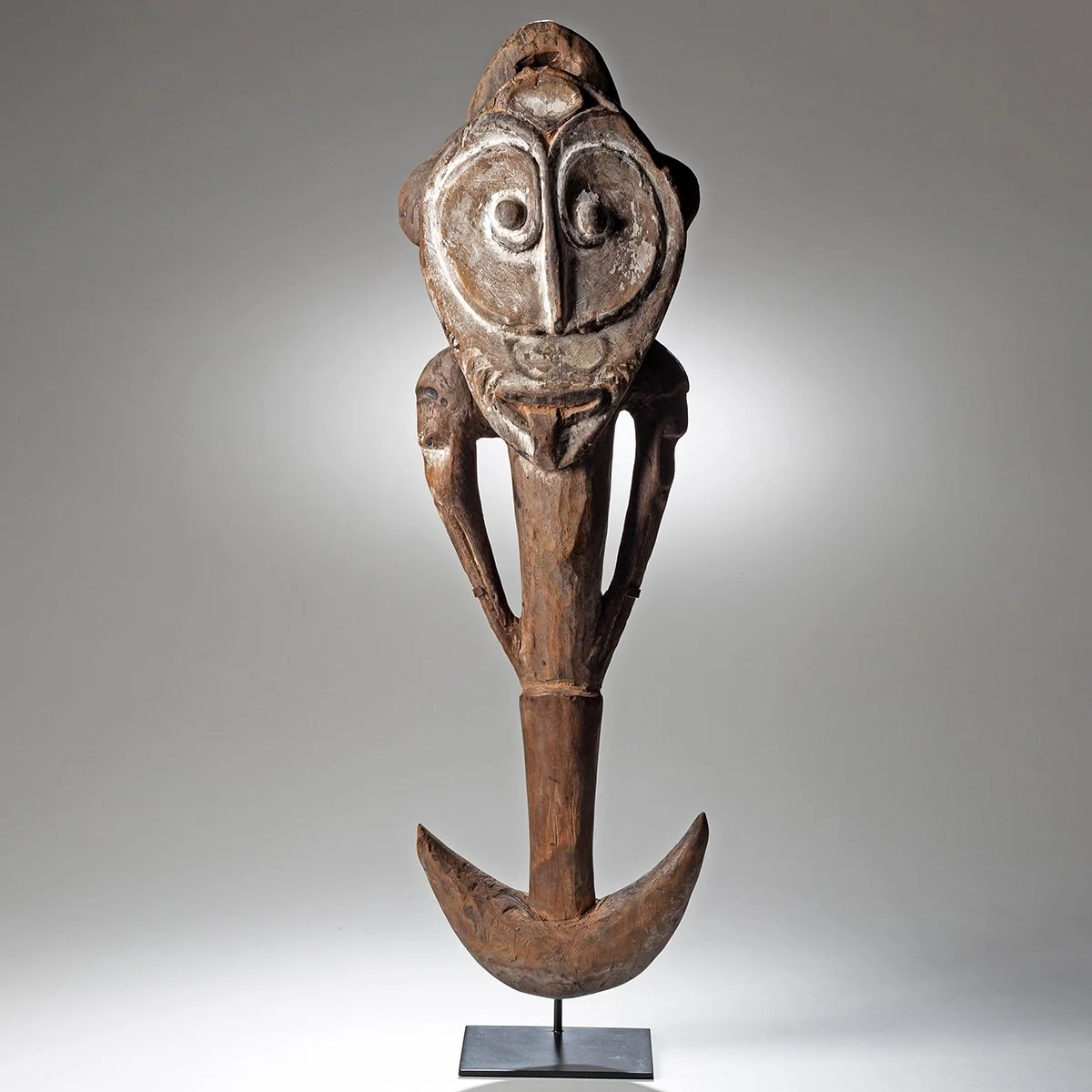 Image 1 of 8
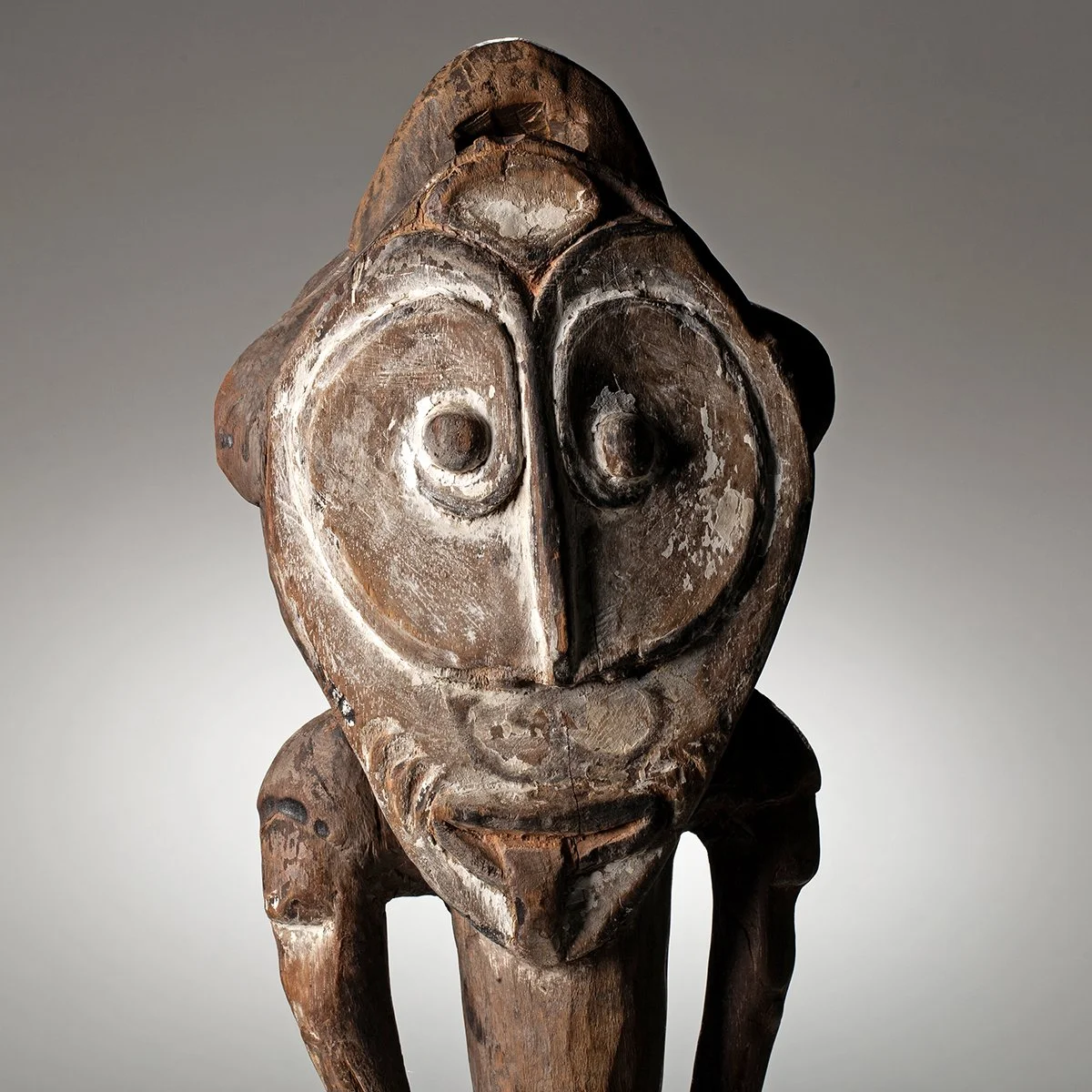 Image 2 of 8
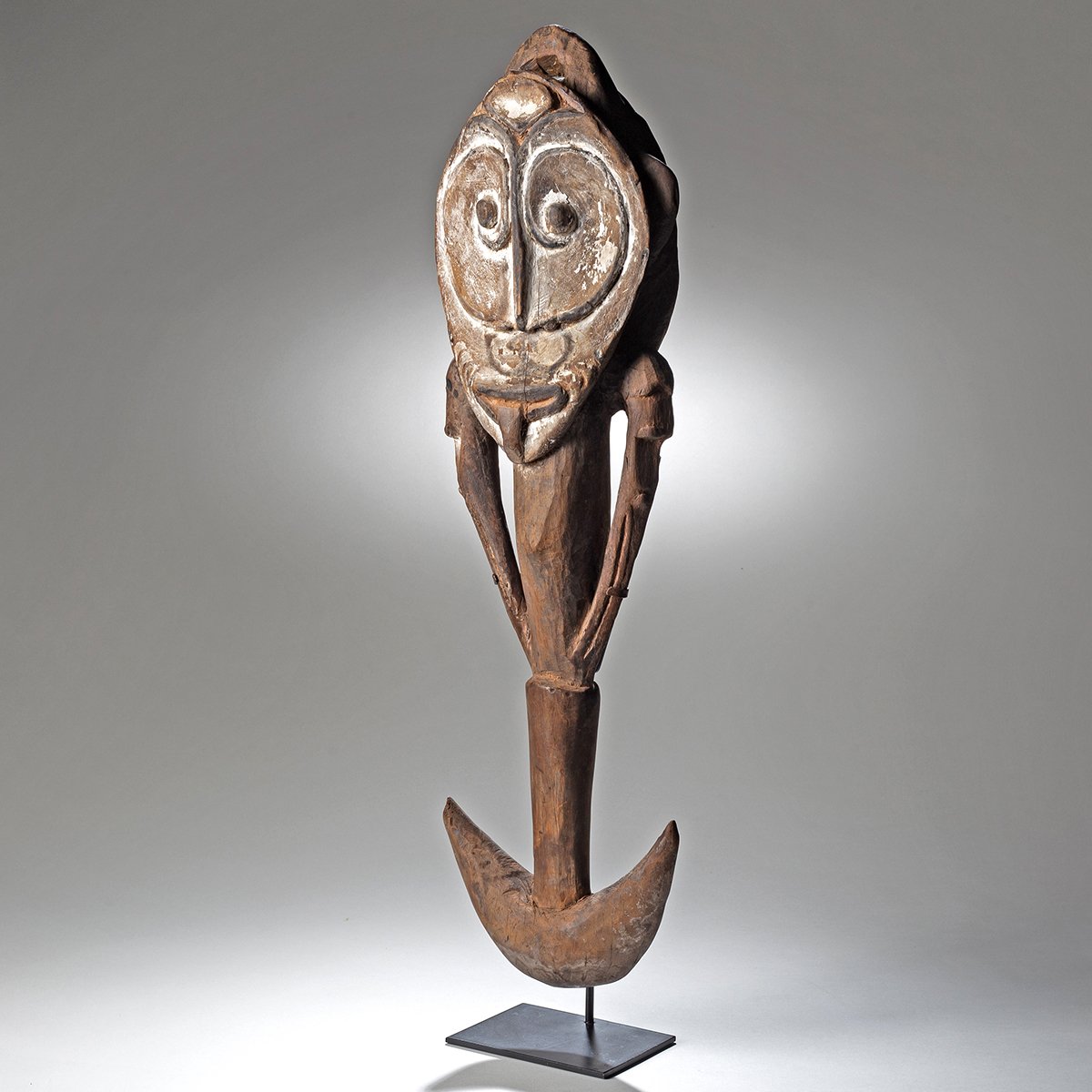 Image 3 of 8
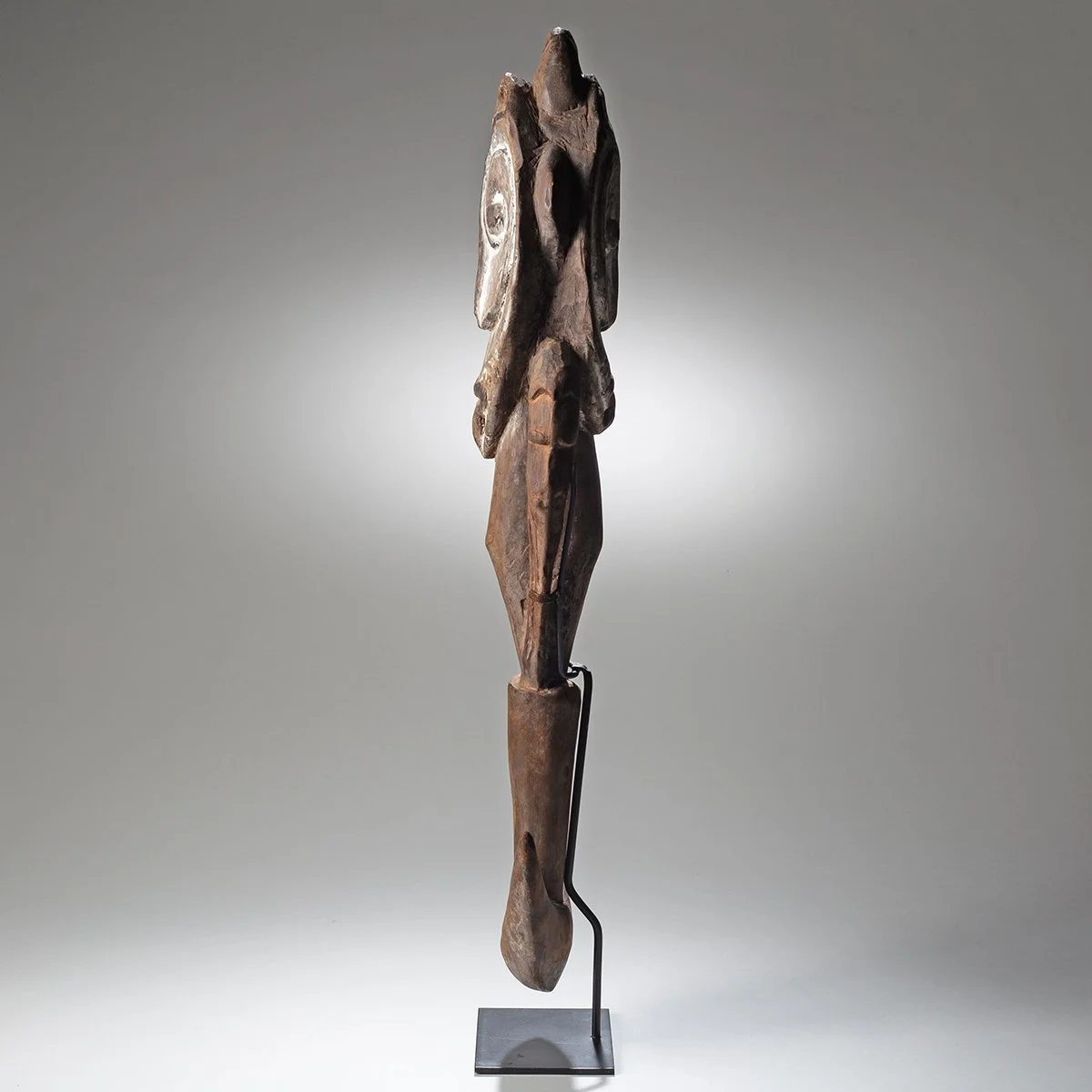 Image 4 of 8
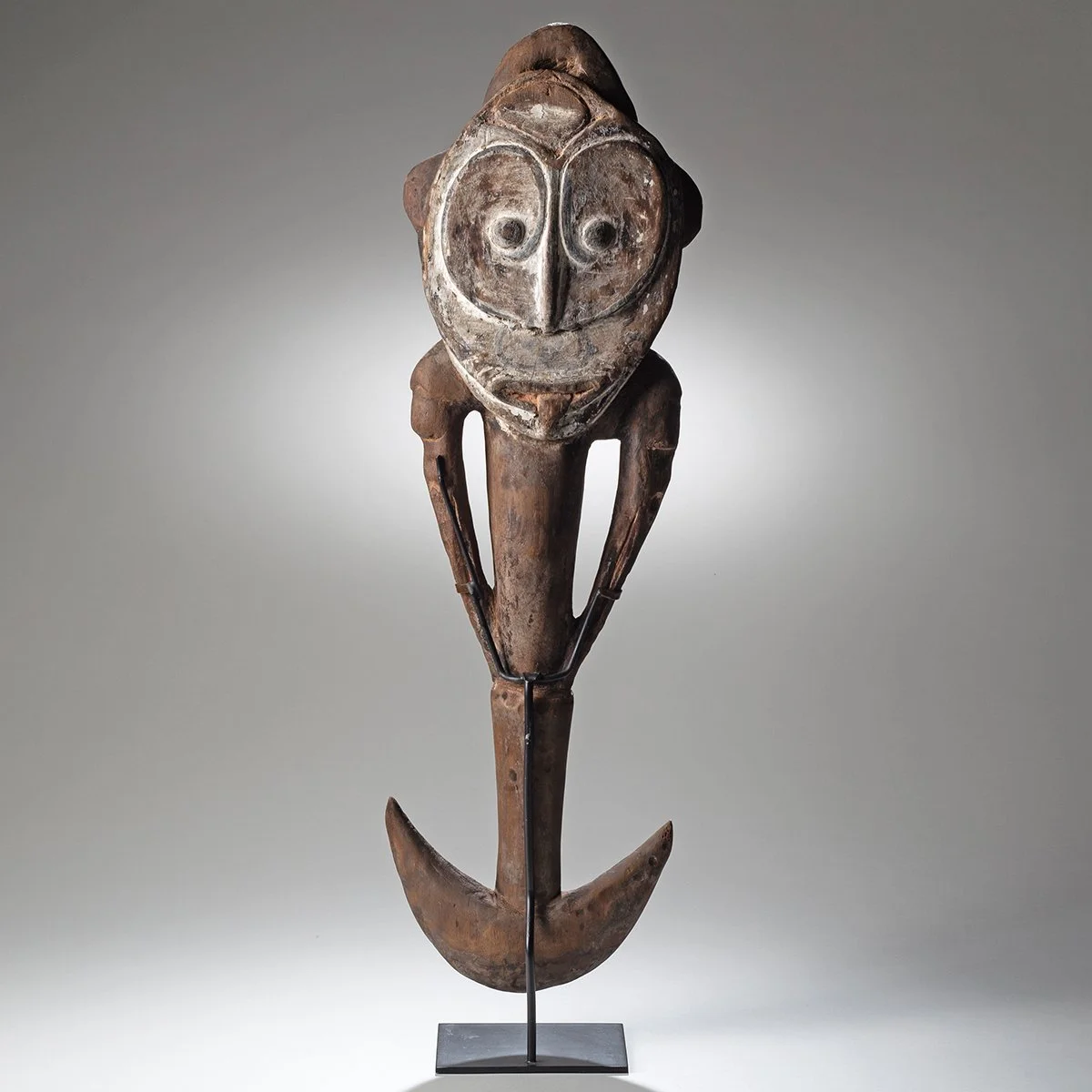 Image 5 of 8
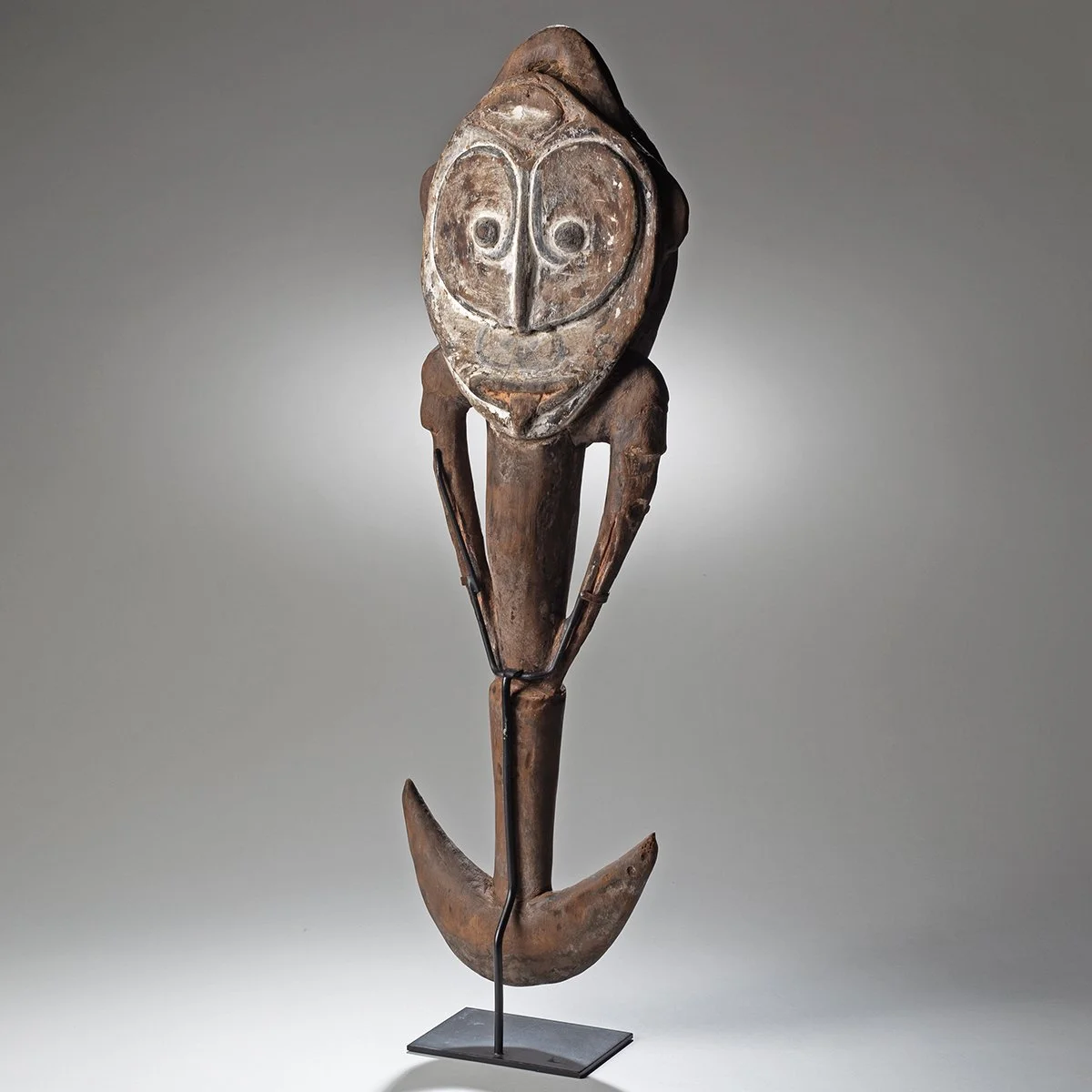 Image 6 of 8
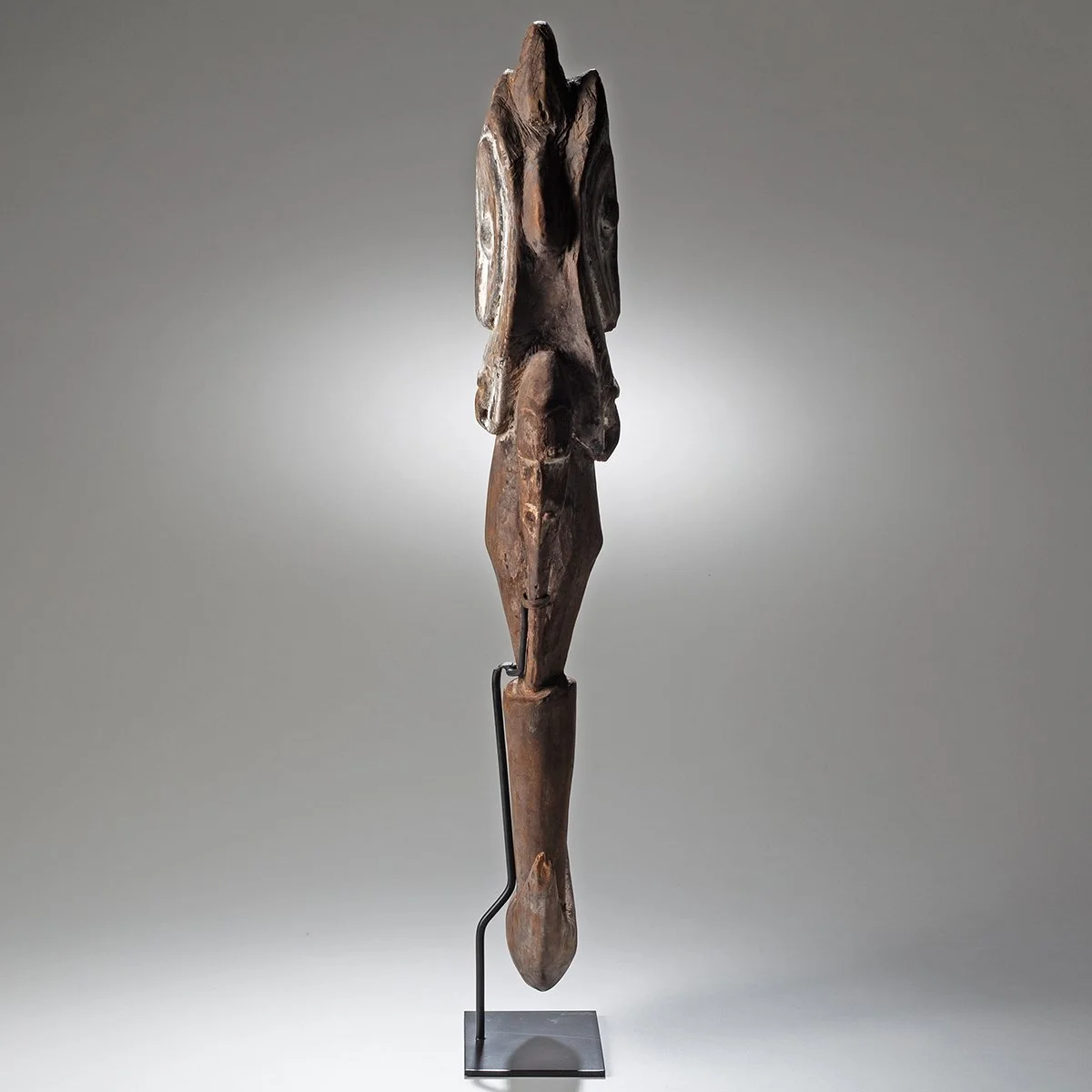 Image 7 of 8
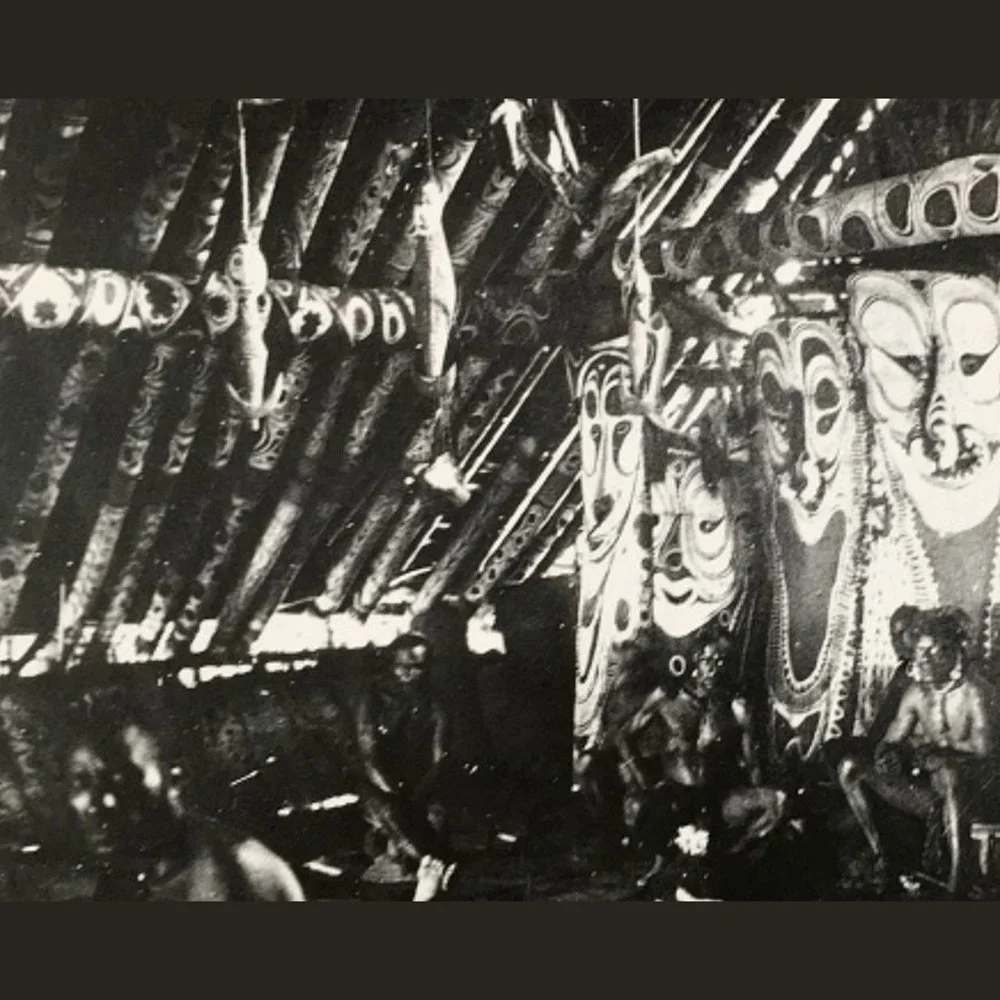 Image 8 of 8