Iatmul culture, Middle Sepik River, Papua New Guinea
1960s
Wood, bamboo, wicker, sago bark panels, vegetal fibers, natural pigments
Dimensions: please confirm before publishing
Provenance: Private collection, Texas; private collection, Albuquerque, New Mexico
The utukwei is a canoe prow shield made by the Iatmul people of the Middle Sepik River, constructed for attachment to the prow of a ceremonial war canoe and centered on a carved ancestral mask form associated with protection and spiritual presence. These objects were not primarily defensive in a physical sense but were used to empower the canoe and its occupants during ceremonies connected with warfare, fertility, and communal ritual. When not in use on a canoe, related examples were displayed on the façade of men's ceremonial houses, where they continued to function as presences rather than objects.
The central mask is carved in the Iatmul tradition, with the characteristic wide brow, circular eyes, and open mouth, flanked by the diverging V-form arms of the prow structure studded with bamboo spines. The construction combines multiple materials — wood, bamboo, wicker, sago bark, and vegetal fiber — in a composite assembly that reflects the Iatmul approach to ceremonial object-making, where layered materials and processes were integral to the object's power. The natural pigments retain their tone across the surface, the overall assembly intact.
We ship free anywhere in the world, fully insured, packed by hand.
Iatmul culture, Middle Sepik River, Papua New Guinea
1960s
Wood, bamboo, wicker, sago bark panels, vegetal fibers, natural pigments
Dimensions: please confirm before publishing
Provenance: Private collection, Texas; private collection, Albuquerque, New Mexico
The utukwei is a canoe prow shield made by the Iatmul people of the Middle Sepik River, constructed for attachment to the prow of a ceremonial war canoe and centered on a carved ancestral mask form associated with protection and spiritual presence. These objects were not primarily defensive in a physical sense but were used to empower the canoe and its occupants during ceremonies connected with warfare, fertility, and communal ritual. When not in use on a canoe, related examples were displayed on the façade of men's ceremonial houses, where they continued to function as presences rather than objects.
The central mask is carved in the Iatmul tradition, with the characteristic wide brow, circular eyes, and open mouth, flanked by the diverging V-form arms of the prow structure studded with bamboo spines. The construction combines multiple materials — wood, bamboo, wicker, sago bark, and vegetal fiber — in a composite assembly that reflects the Iatmul approach to ceremonial object-making, where layered materials and processes were integral to the object's power. The natural pigments retain their tone across the surface, the overall assembly intact.
We ship free anywhere in the world, fully insured, packed by hand.


 Image 1 of 6
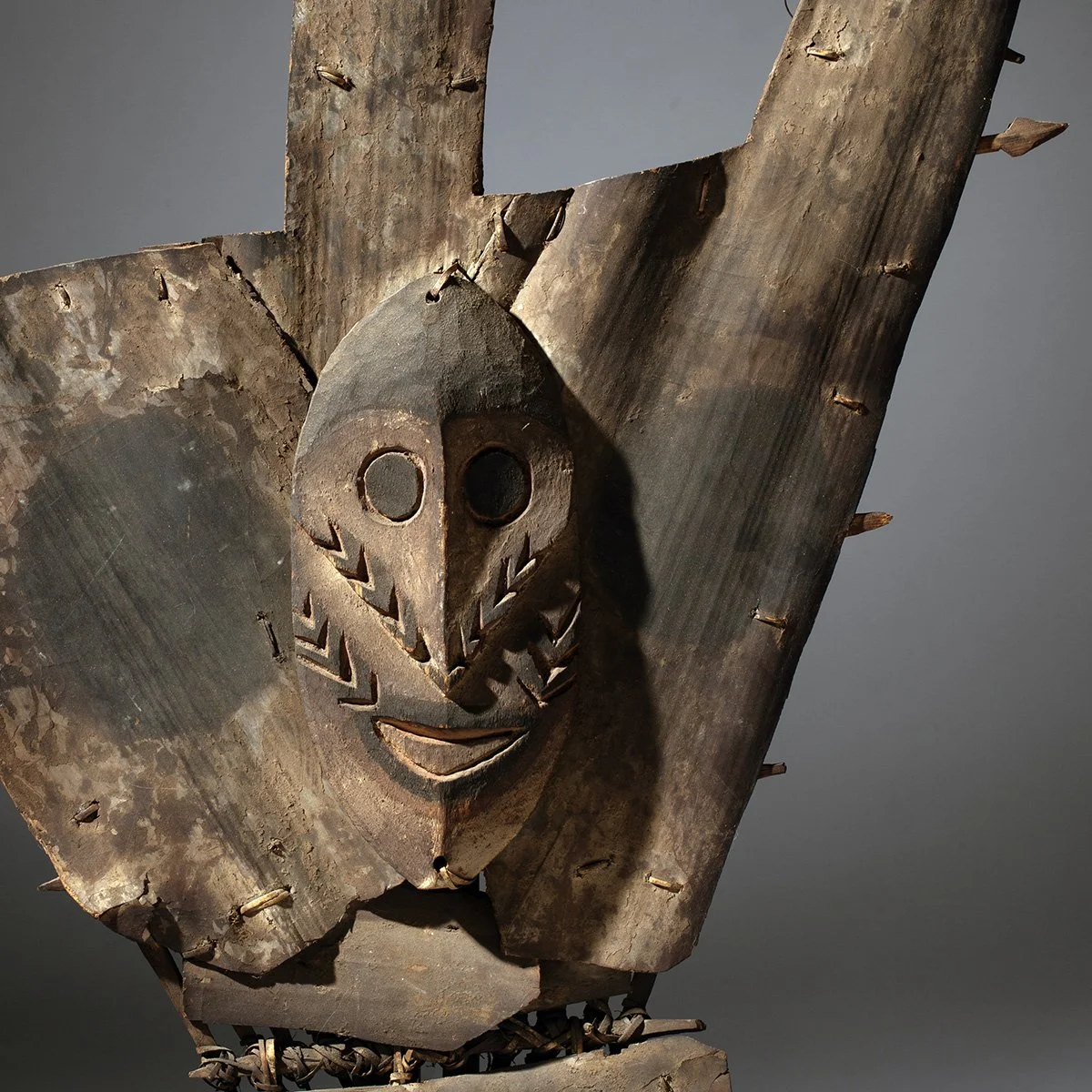 Image 2 of 6
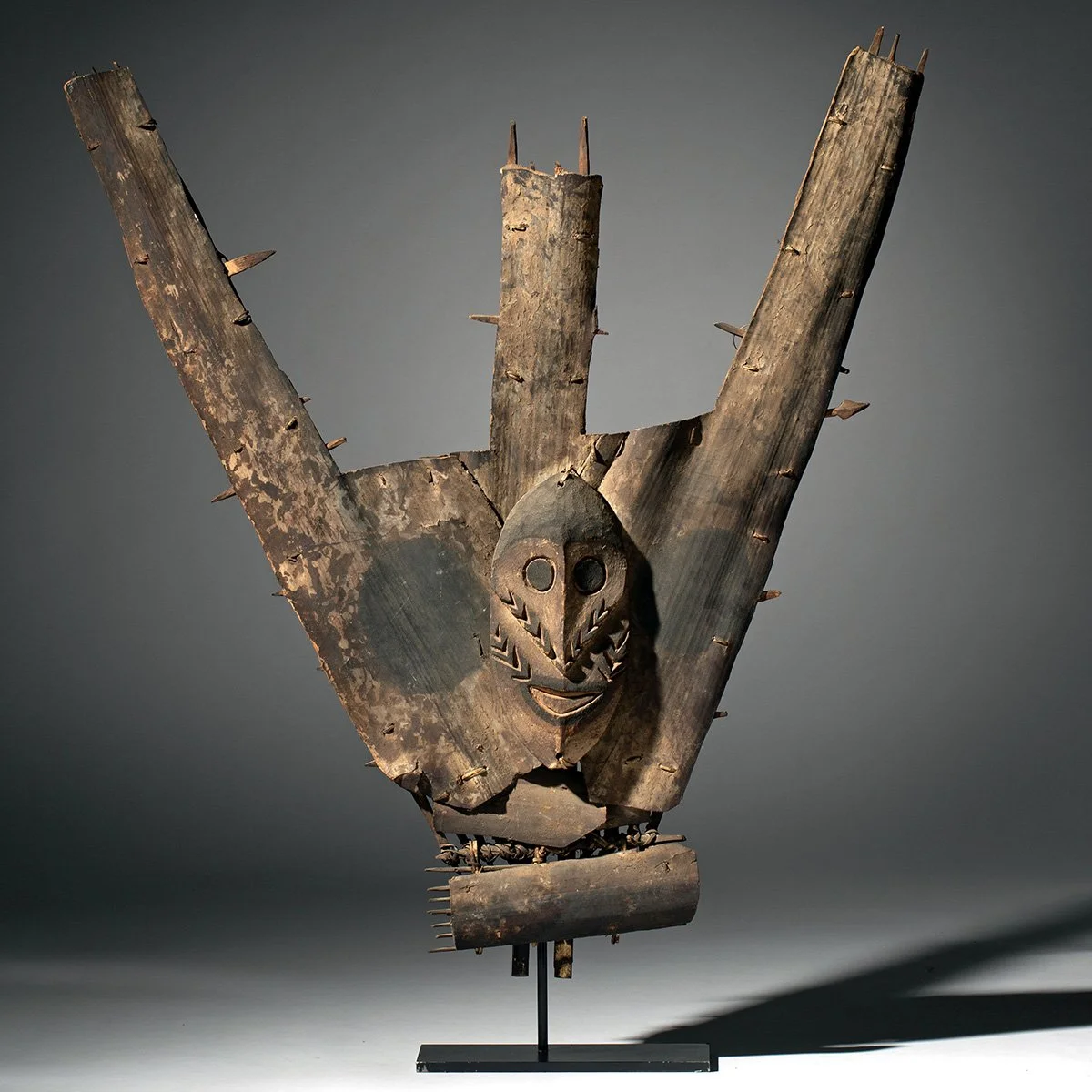 Image 3 of 6
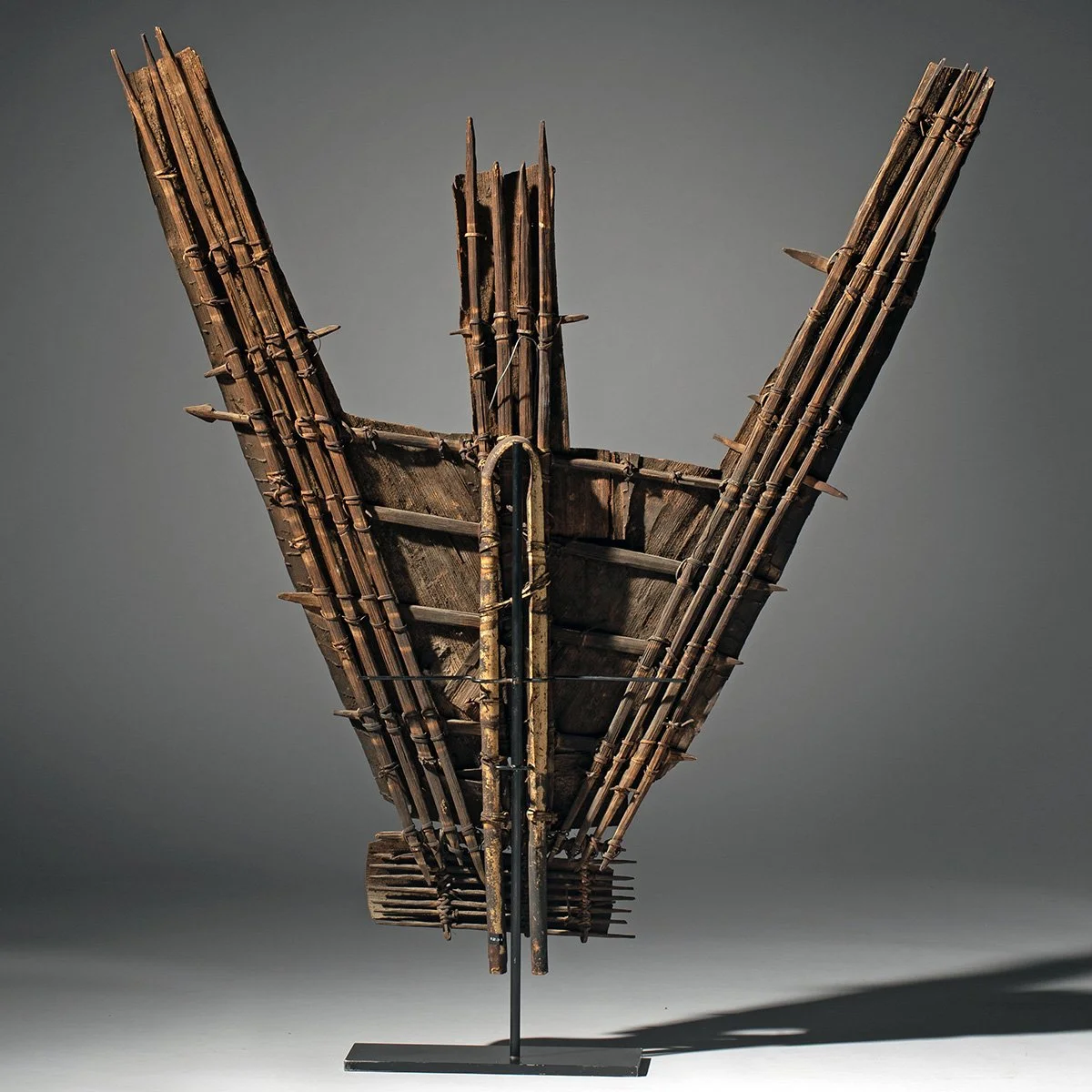 Image 4 of 6
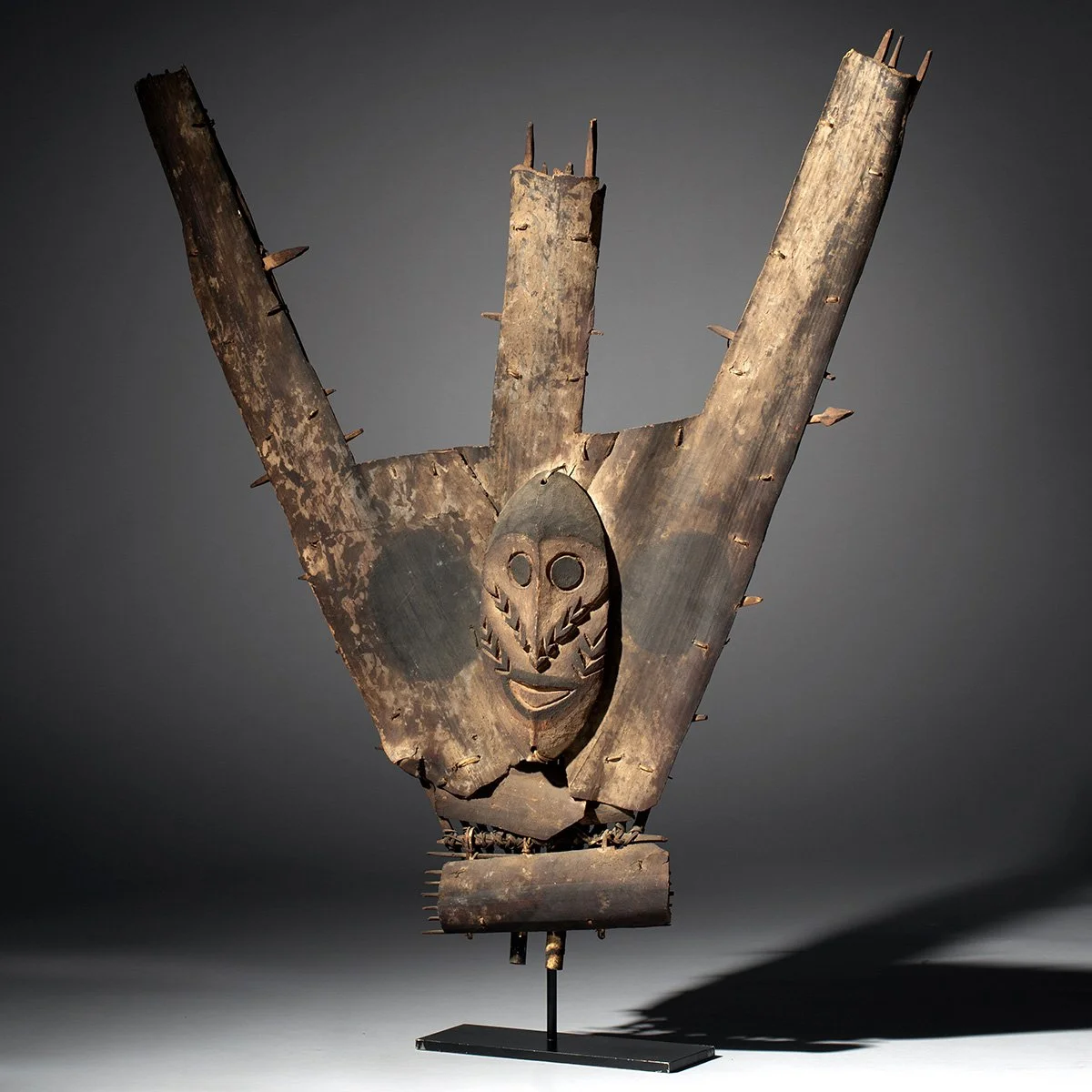 Image 5 of 6
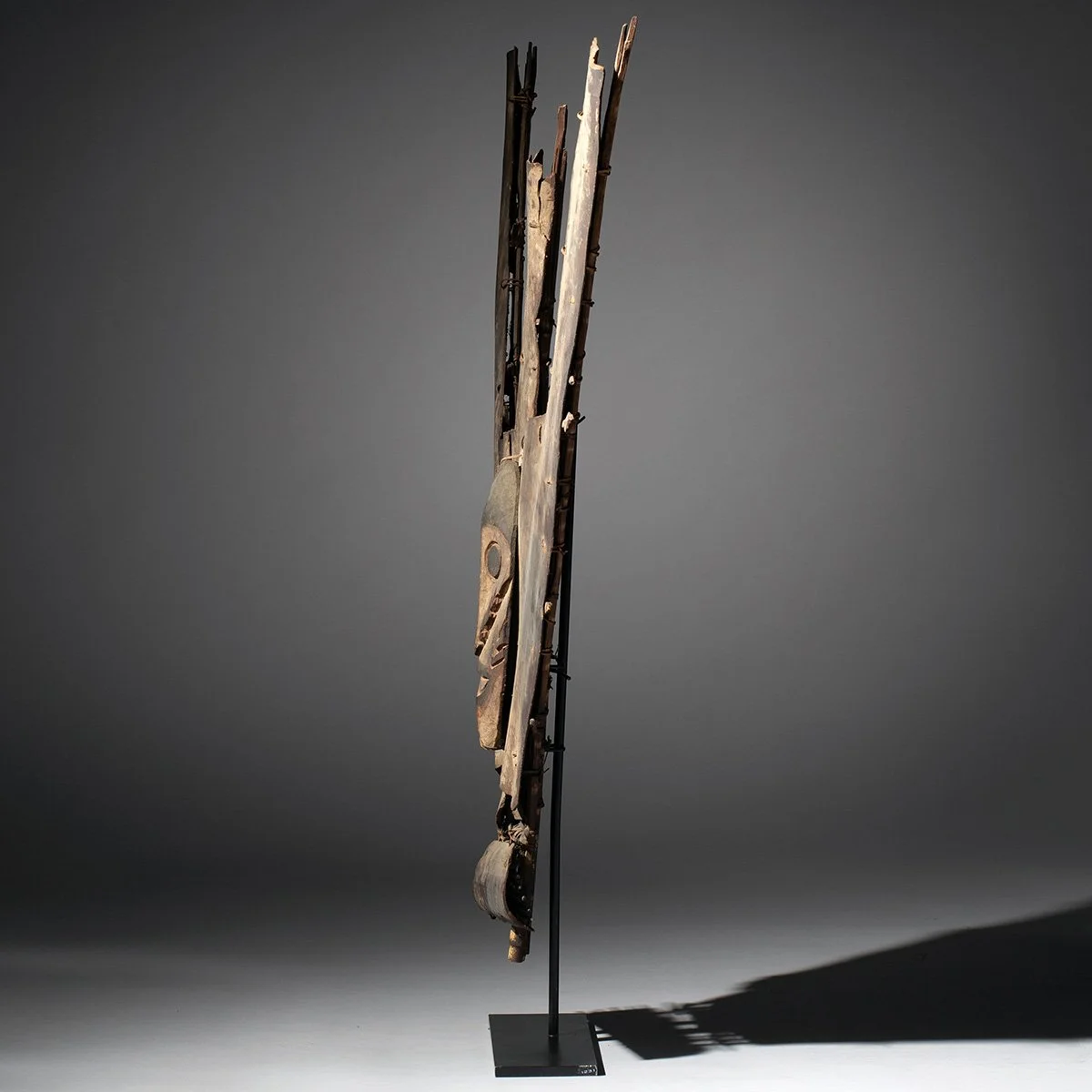 Image 6 of 6