

 Image 1 of 5
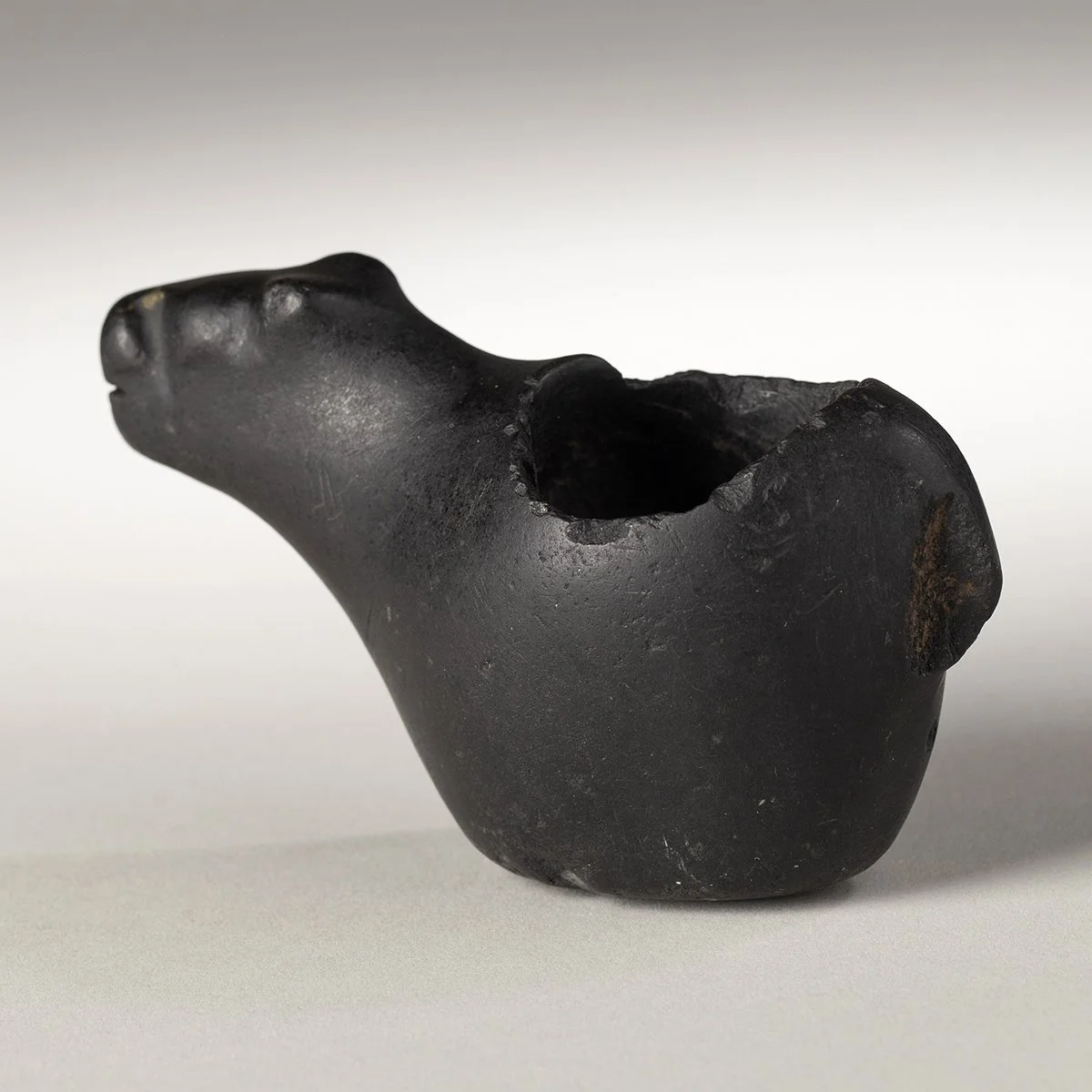 Image 2 of 5
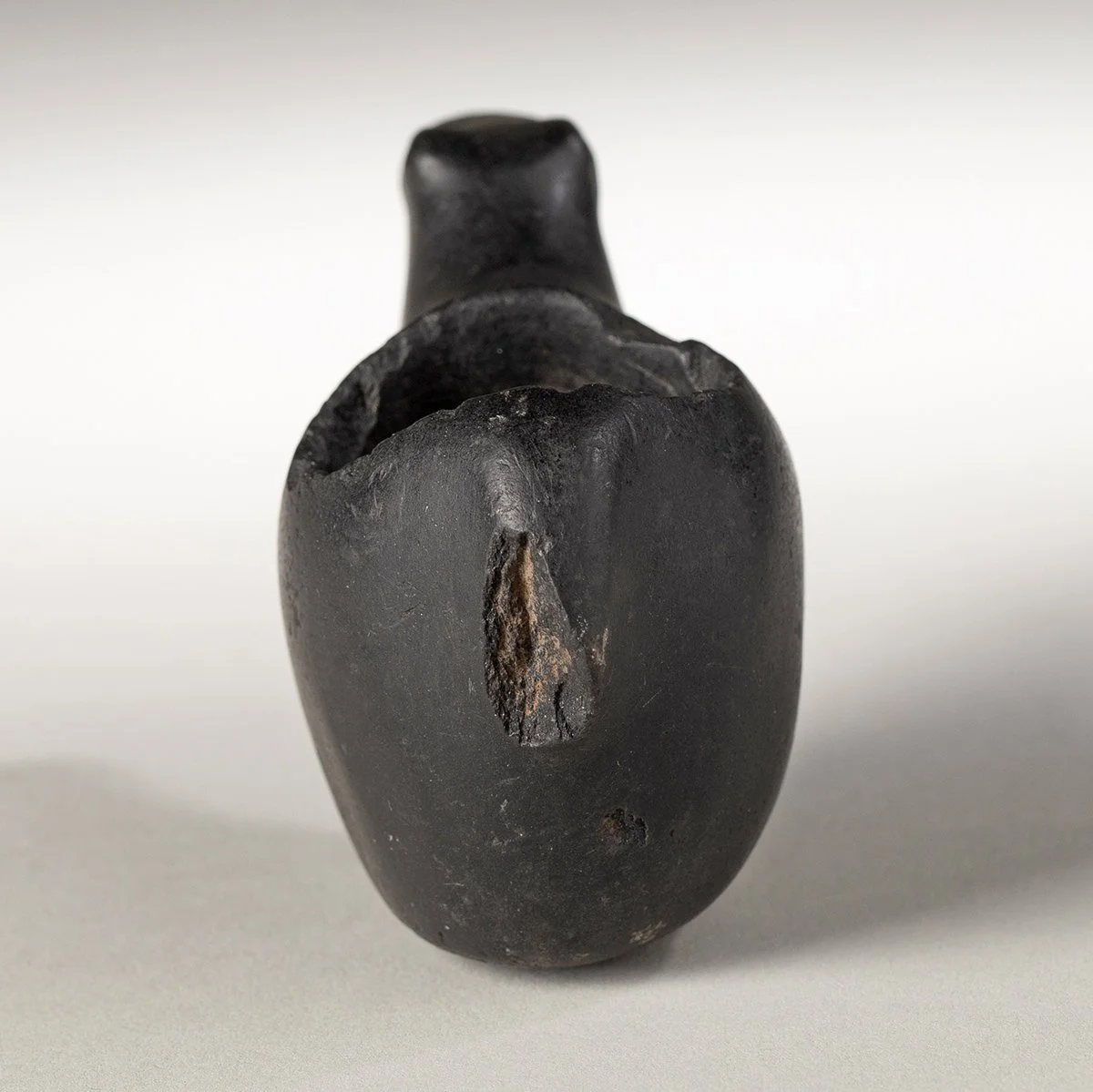 Image 3 of 5
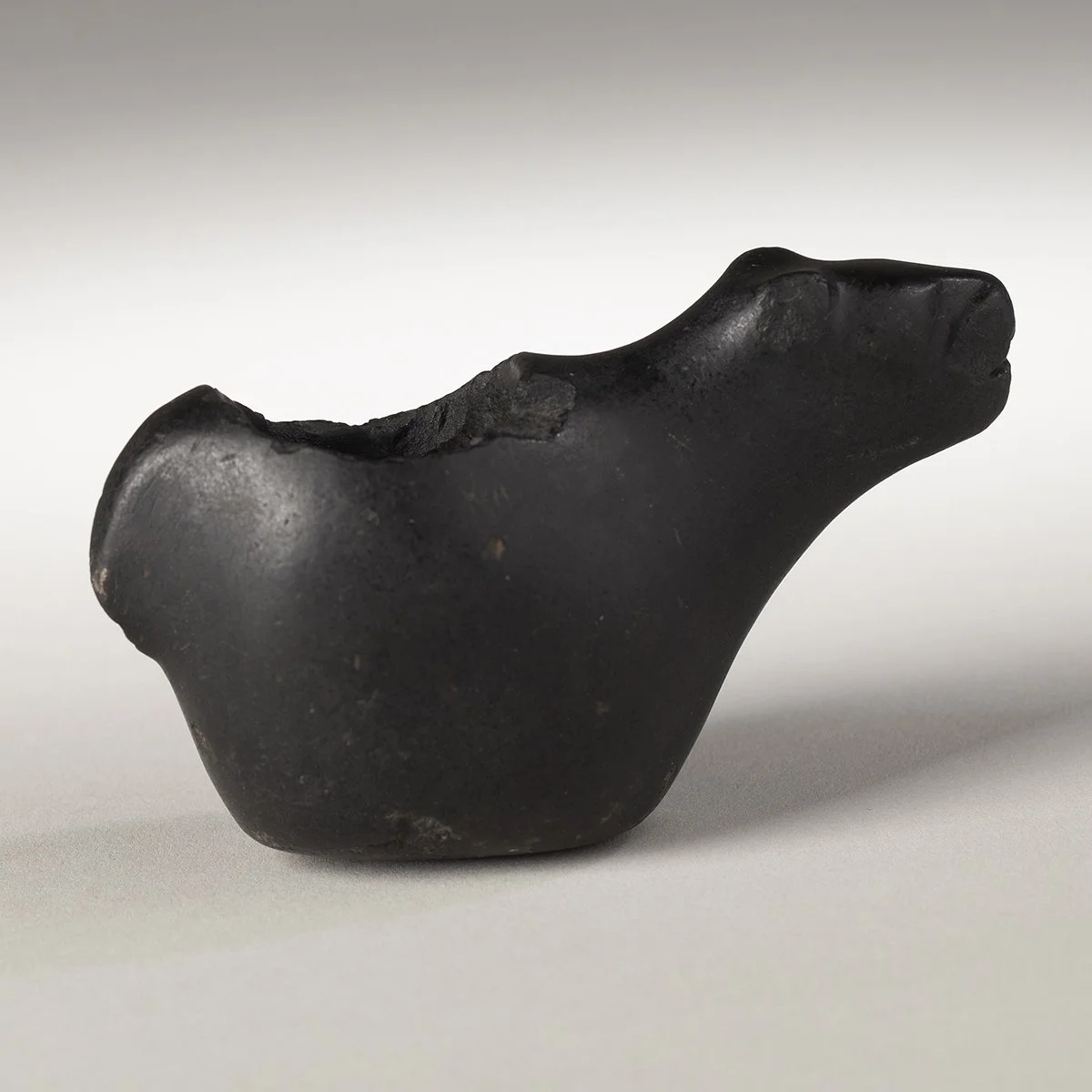 Image 4 of 5
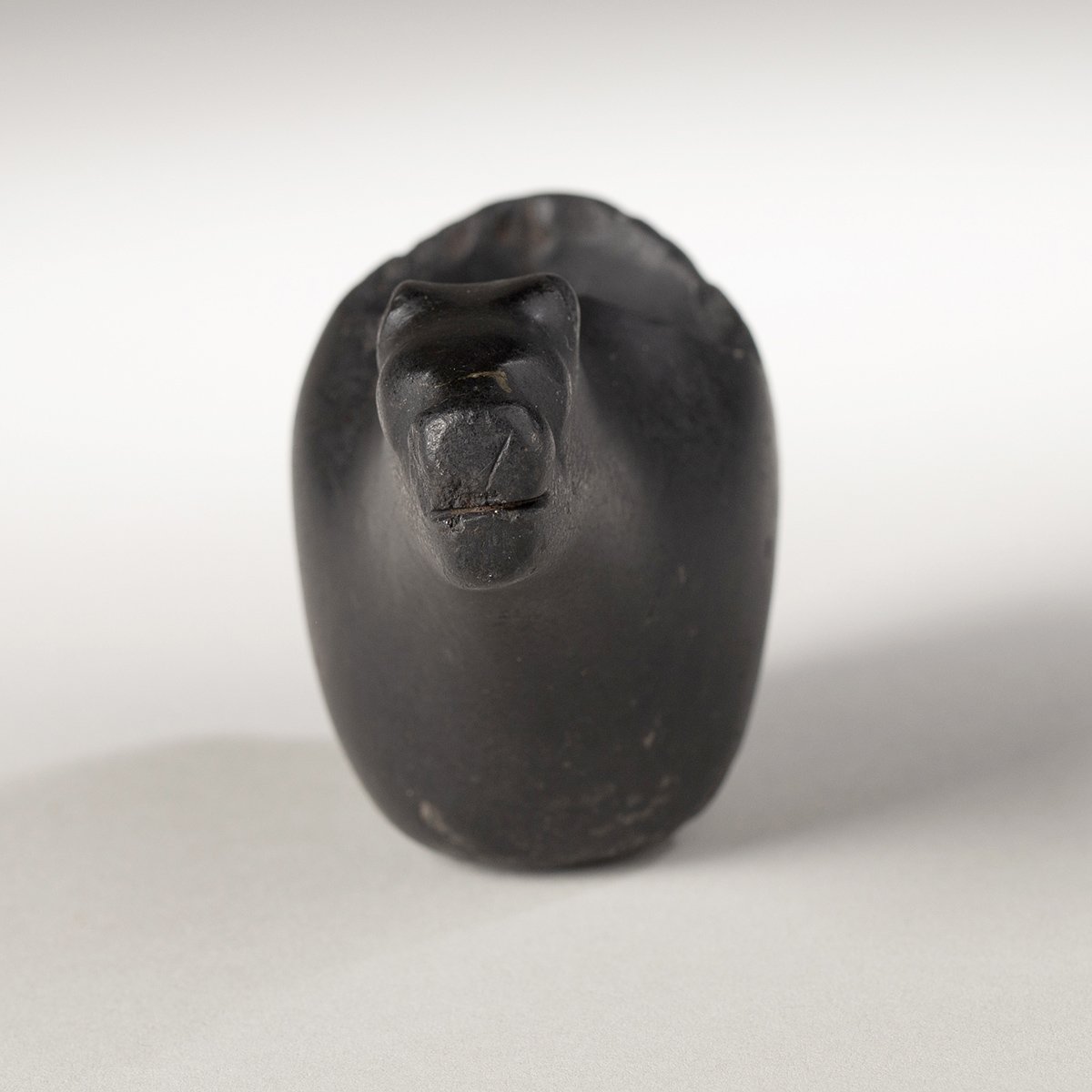 Image 5 of 5
Peru, Inca
500 AD
Black diorite
Height: 2¼ in (5.7 cm), Length: 3¼ in (8.3 cm)
Provenance: London Trade
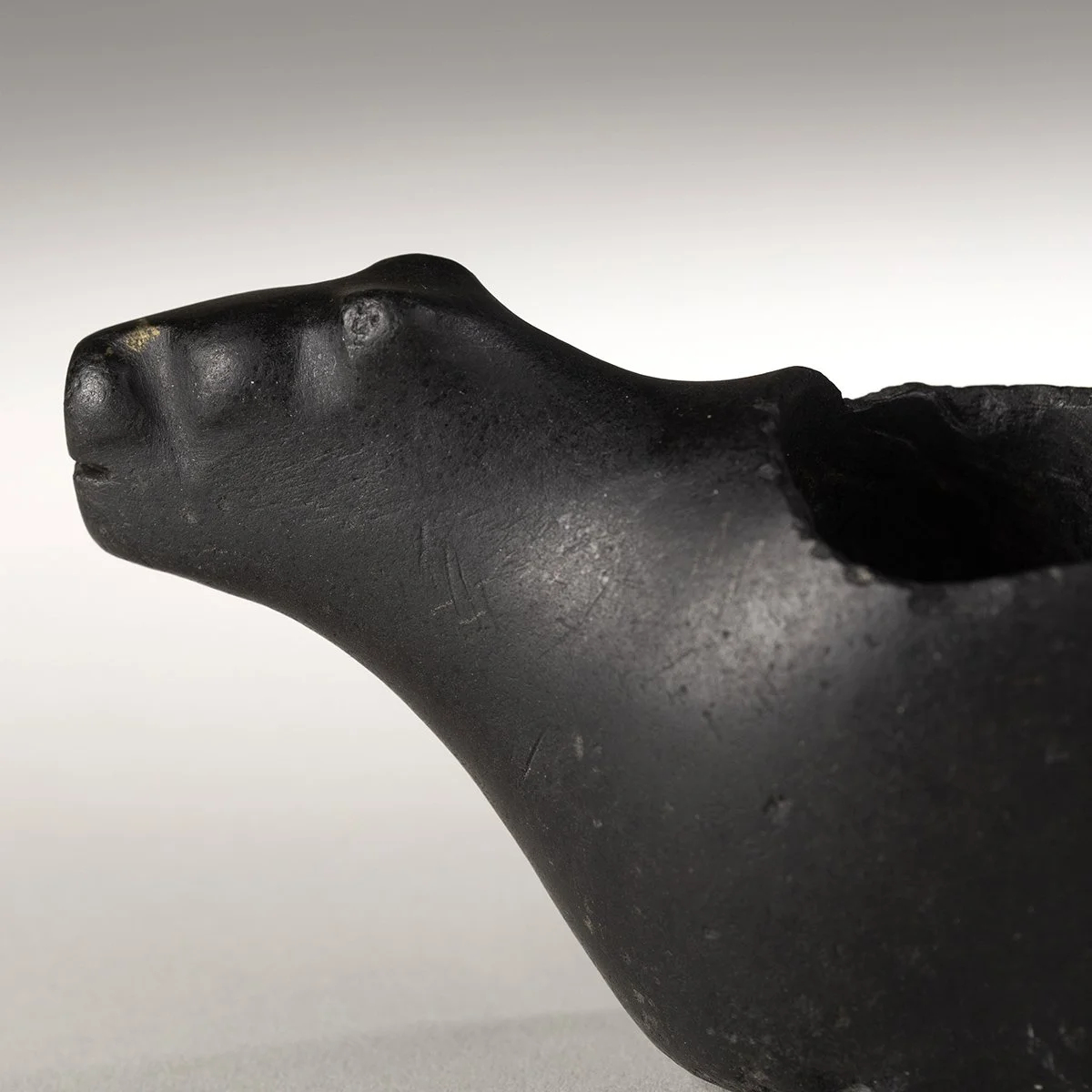
Canopa are Inca ritual containers carved in the form of animals, most commonly llamas, alpacas, and guinea pigs, used to hold offerings of fat, scent, unguent, or resin in agricultural and pastoral ceremonies. The hollow depression drilled into the back of the animal served as the receptacle for these substances, and earthen residue in protected areas of this example is consistent with actual ritual use. Llama canopa were central ritual objects in Inca pastoral culture, where the llama held a central place in both the economy and the ceremonial life of Andean communities.
This example is carved from a dense black diorite with a heavily patinated surface, and retains relief modeling of the eyes, slit mouth, ears, nose, and tail rendered with the economy and precision characteristic of Inca lapidary work. The bilateral symmetry of the carving reflects the controlled delicacy of Inca stone working at small scale. Earthen residue remains in some protected areas, consistent with original use as a ritual offering vessel.
We ship free anywhere in the world, fully insured, packed by hand.
Peru, Inca
500 AD
Black diorite
Height: 2¼ in (5.7 cm), Length: 3¼ in (8.3 cm)
Provenance: London Trade
Canopa are Inca ritual containers carved in the form of animals, most commonly llamas, alpacas, and guinea pigs, used to hold offerings of fat, scent, unguent, or resin in agricultural and pastoral ceremonies. The hollow depression drilled into the back of the animal served as the receptacle for these substances, and earthen residue in protected areas of this example is consistent with actual ritual use. Llama canopa were central ritual objects in Inca pastoral culture, where the llama held a central place in both the economy and the ceremonial life of Andean communities.
This example is carved from a dense black diorite with a heavily patinated surface, and retains relief modeling of the eyes, slit mouth, ears, nose, and tail rendered with the economy and precision characteristic of Inca lapidary work. The bilateral symmetry of the carving reflects the controlled delicacy of Inca stone working at small scale. Earthen residue remains in some protected areas, consistent with original use as a ritual offering vessel.
We ship free anywhere in the world, fully insured, packed by hand.