

 Image 1 of 4
 Image 2 of 4
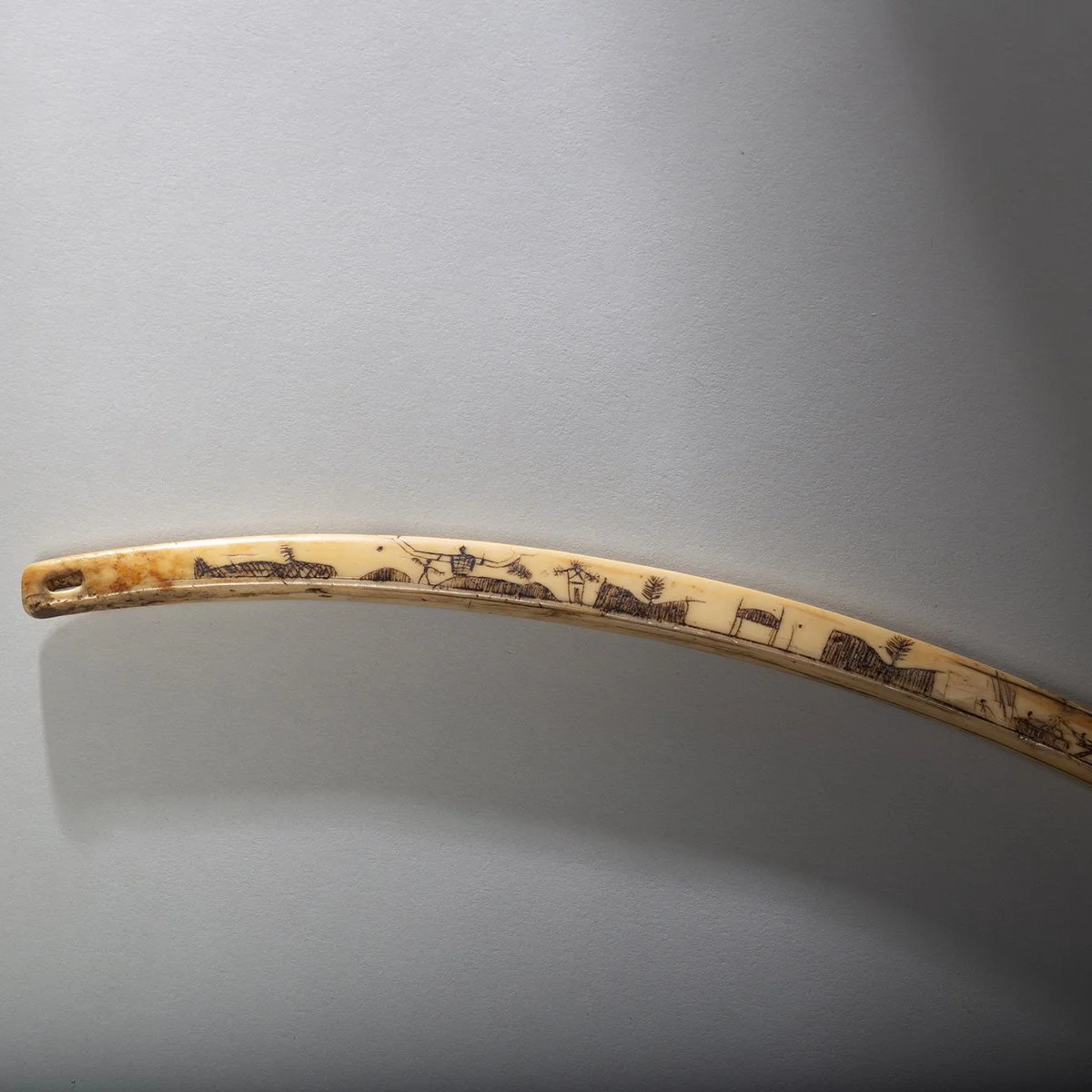 Image 3 of 4
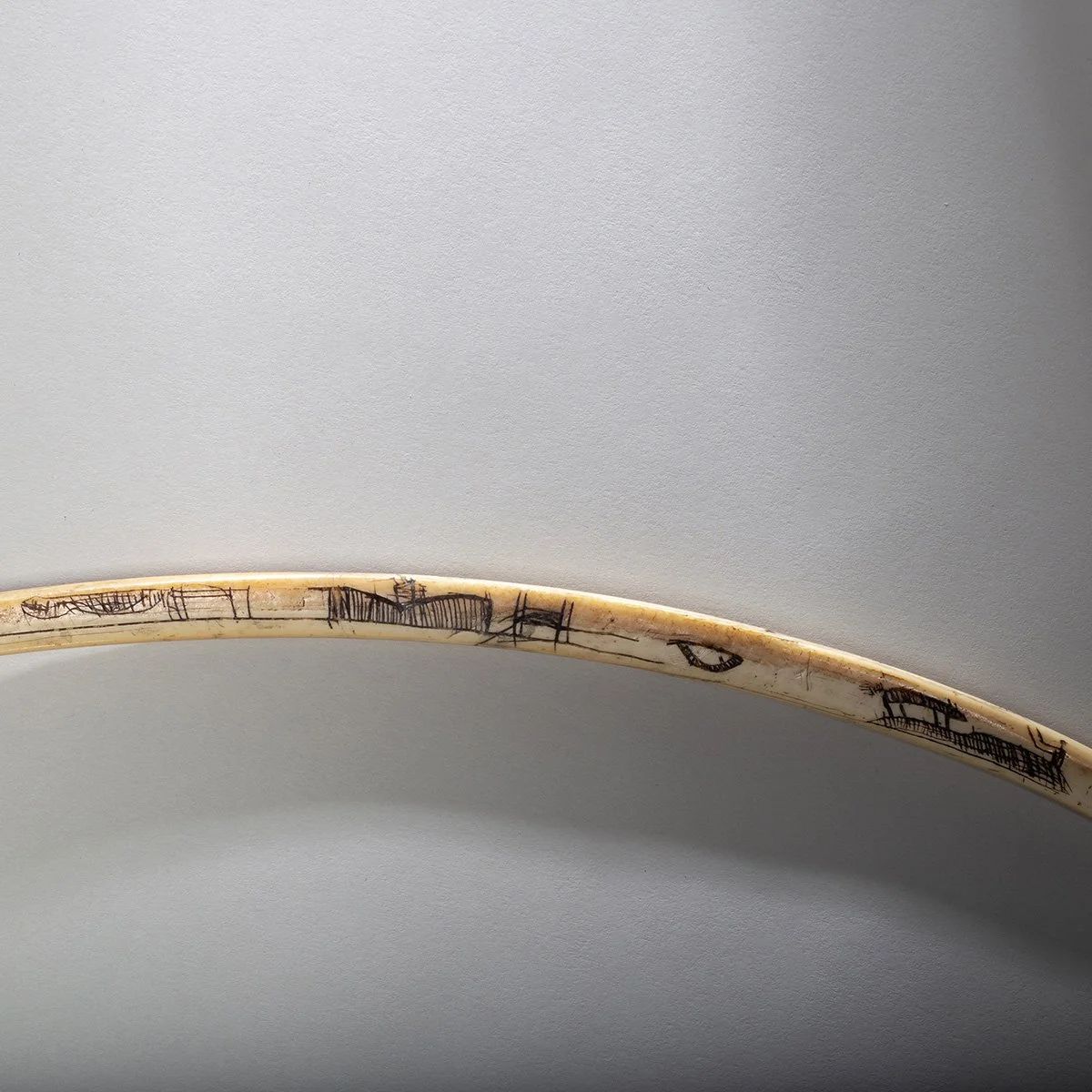 Image 4 of 4
Alaska, Inuit
19th century
Walrus ivory, wood, leather
Length 12 1/4" (31.1 cm)
Provenance: Olympia Washington Trade
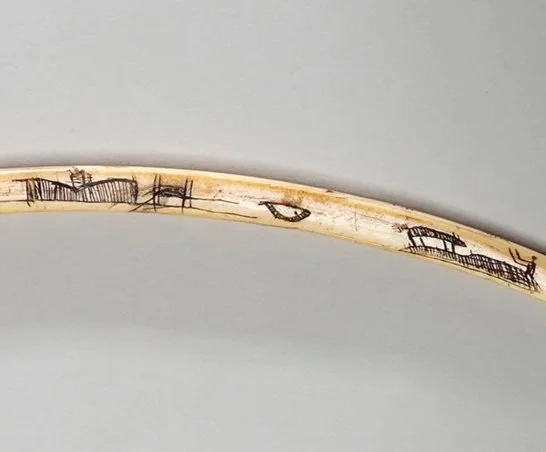
Bow drills were essential tools for Northern Indigenous hunters and craftsmen in the 19th century, the bow itself often receiving the most extensive engraving of any object in a hunter's possession, functioning as a personal record of accomplishments, travels, and encounters with animals and other peoples. Decoration of bow drills was prevalent through the 18th and 19th centuries, providing a detailed visual record of everyday Inuit life as well as the changes brought by increasing European contact. By the late 19th century the practice had largely given way to the production of engraved ivory curios for the tourist trade, making fully decorated working bow drills of this period uncommon.
This bow drill shows extensive engraved decoration across all surfaces, consistent with the journal bow tradition in which individual hunters documented their world in carved and incised scenes. The piece is operated by attaching leather through holes at one end, wrapping it around a wooden shaft that held a pointed drill tip, with the opposite end of the bow held by a mouthpiece or assistant. Provenance traces to Olympia Washington Trade, a documented source for Arctic material on the Pacific Northwest coast.
We ship free within the United States, fully insured, packed by hand.
Alaska, Inuit
19th century
Walrus ivory, wood, leather
Length 12 1/4" (31.1 cm)
Provenance: Olympia Washington Trade
Bow drills were essential tools for Northern Indigenous hunters and craftsmen in the 19th century, the bow itself often receiving the most extensive engraving of any object in a hunter's possession, functioning as a personal record of accomplishments, travels, and encounters with animals and other peoples. Decoration of bow drills was prevalent through the 18th and 19th centuries, providing a detailed visual record of everyday Inuit life as well as the changes brought by increasing European contact. By the late 19th century the practice had largely given way to the production of engraved ivory curios for the tourist trade, making fully decorated working bow drills of this period uncommon.
This bow drill shows extensive engraved decoration across all surfaces, consistent with the journal bow tradition in which individual hunters documented their world in carved and incised scenes. The piece is operated by attaching leather through holes at one end, wrapping it around a wooden shaft that held a pointed drill tip, with the opposite end of the bow held by a mouthpiece or assistant. Provenance traces to Olympia Washington Trade, a documented source for Arctic material on the Pacific Northwest coast.
We ship free within the United States, fully insured, packed by hand.