

 Image 1 of 5
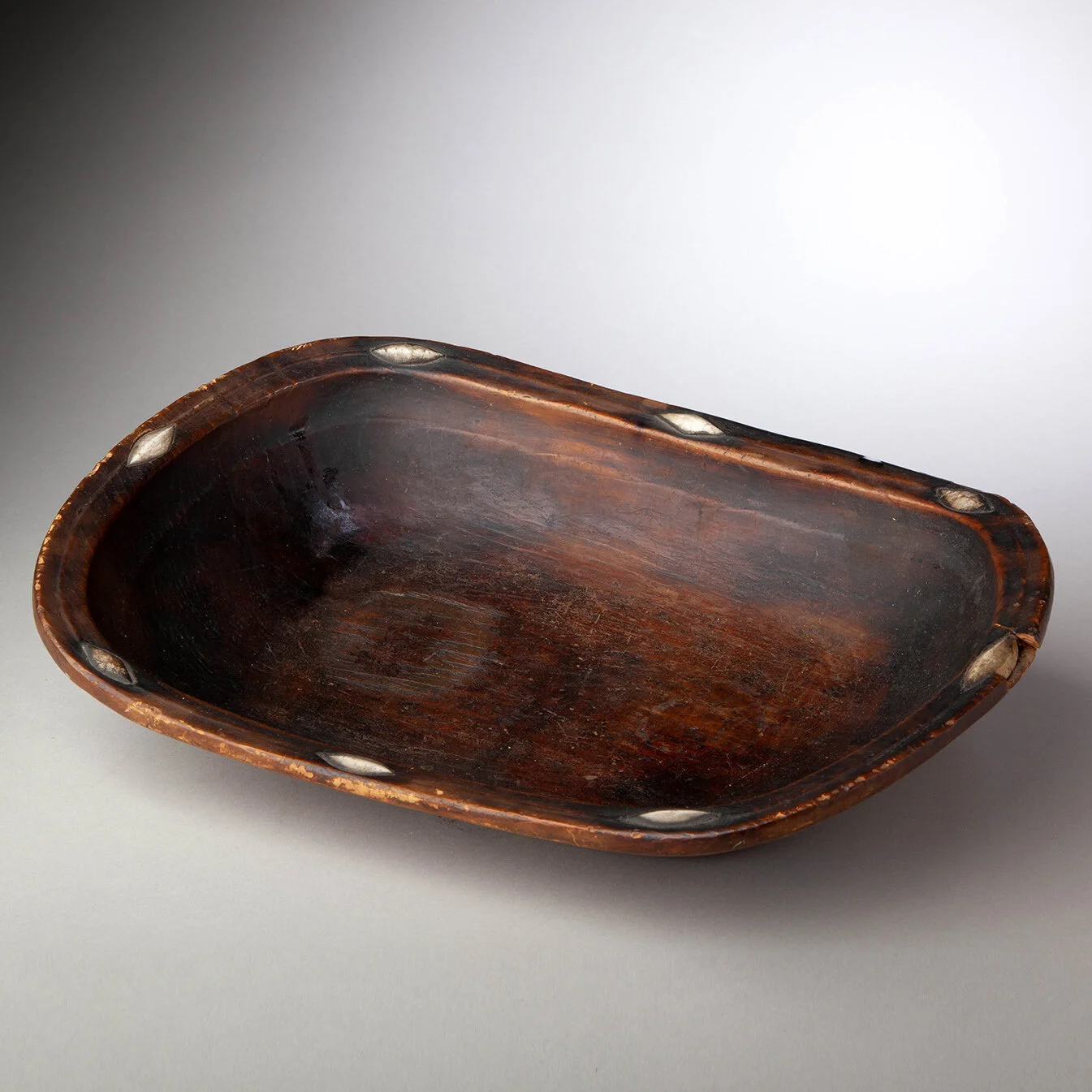 Image 2 of 5
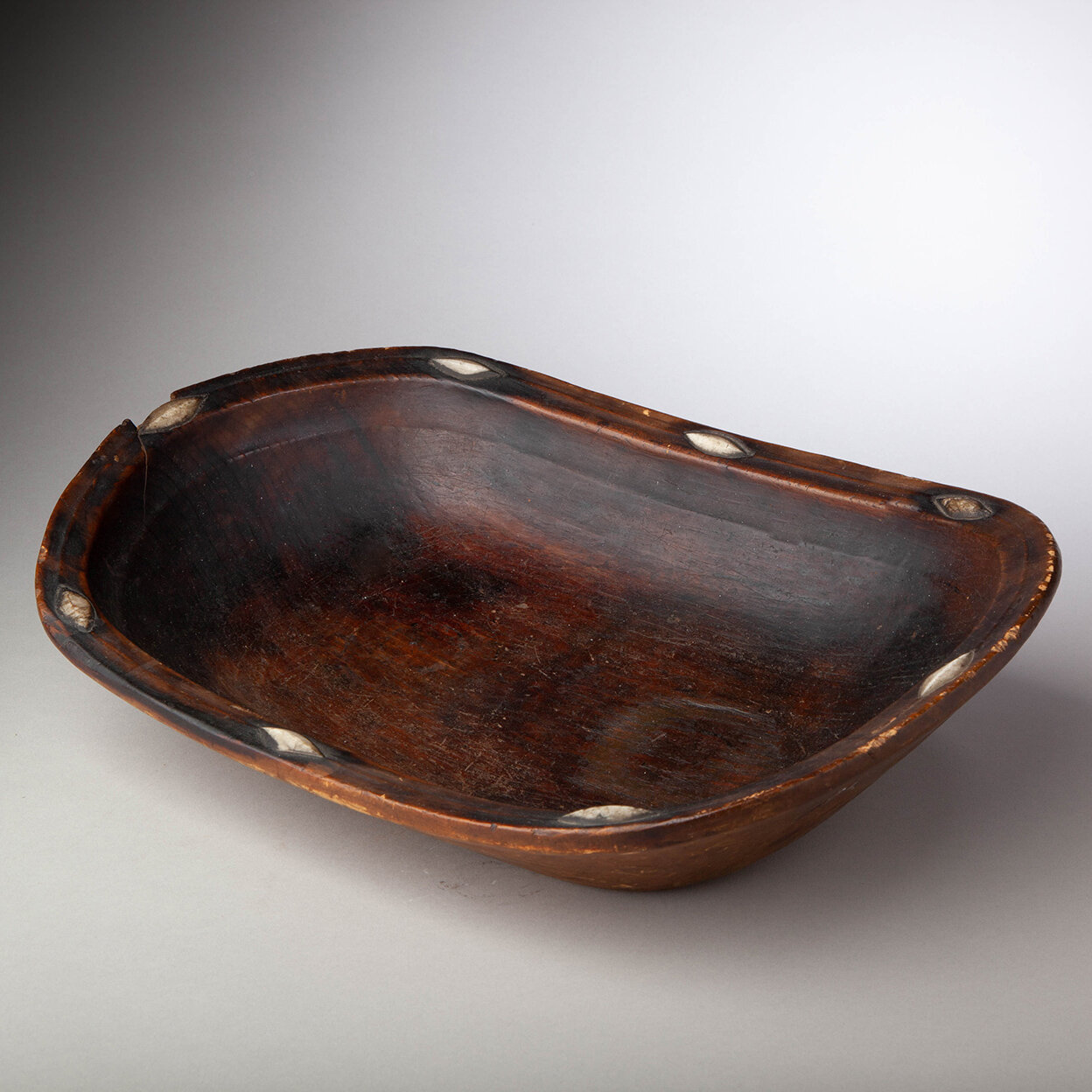 Image 3 of 5
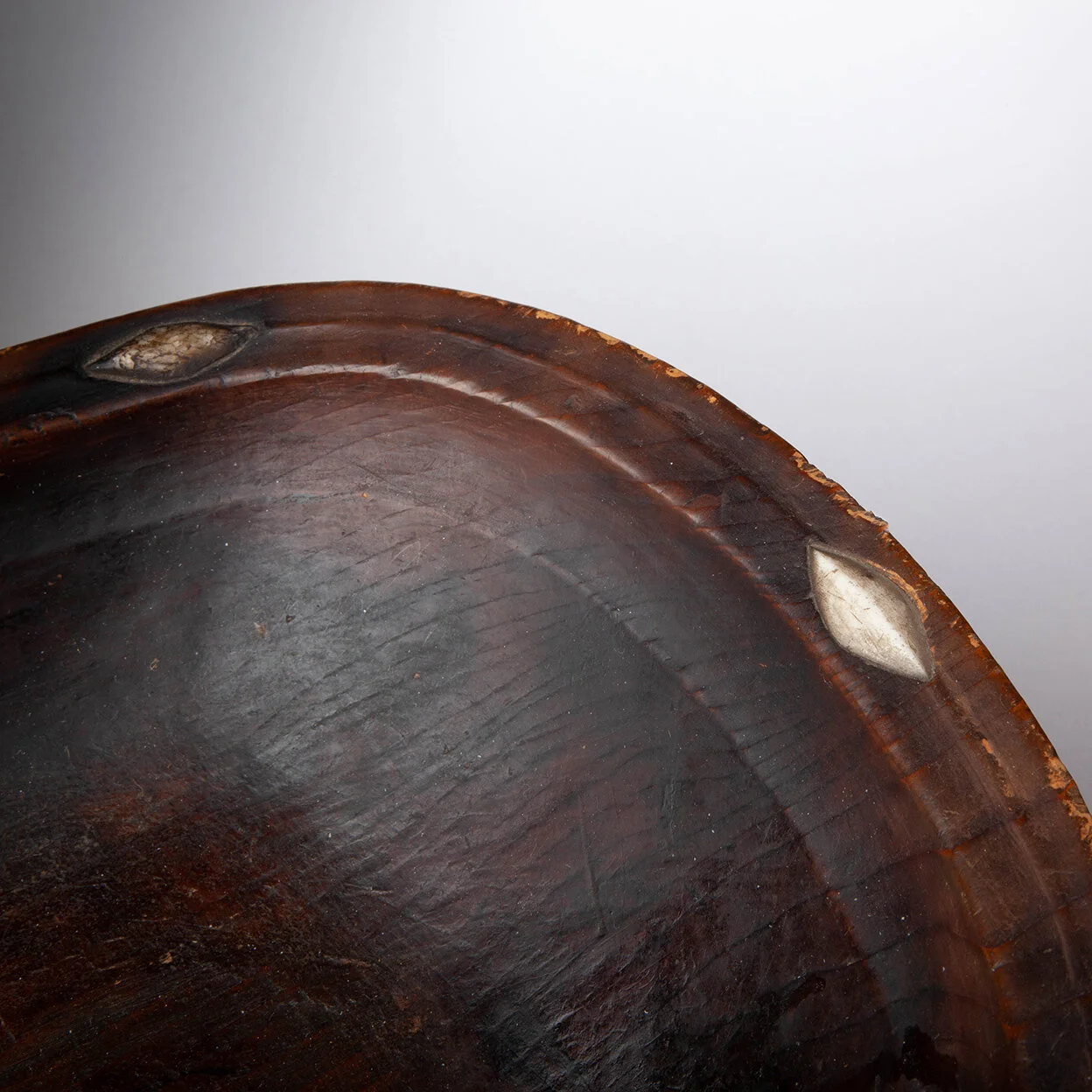 Image 4 of 5
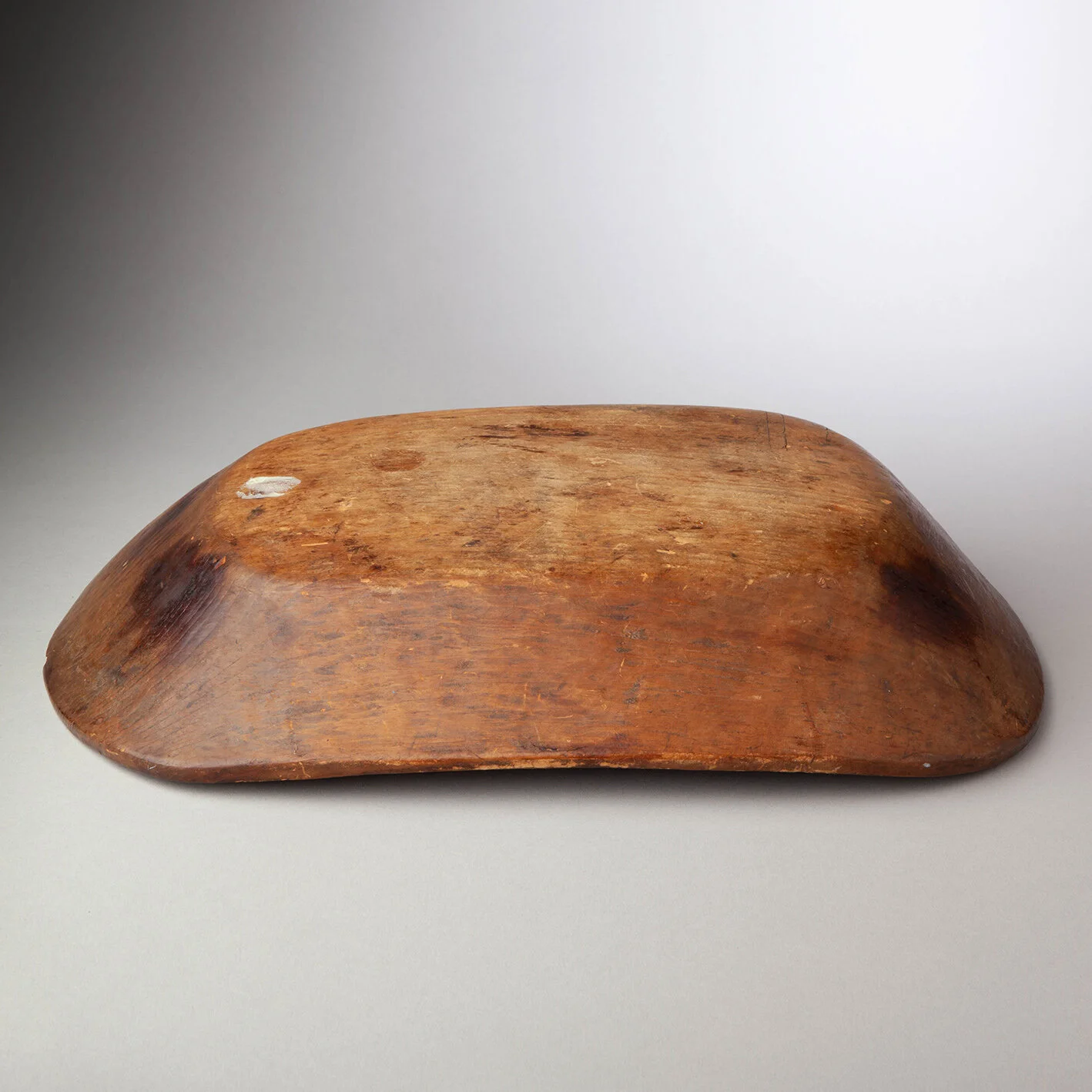 Image 5 of 5
Alaska, Inuit
19th century
Wood, inlay
Height 3" (7.6 cm); length 16" (40.6 cm); width 10" (25.4 cm)
Provenance: Nick Exton, Orcas Island
Grease dishes were essential objects in Inuit domestic life, used to hold oil or animal fat for cooking, lighting, and preservation, the large oval form allowing easy access during daily use. Dishes of this scale and construction, carved from a single piece of wood with inlaid decorative elements, represent a category of Inuit functional object in which domestic utility and considered craftsmanship coexist without contradiction. Objects of this type from the 19th century are increasingly uncommon in the market, most having passed into institutional collections during the early 20th century period of systematic Arctic collecting.
This dish is carved from a single piece of wood with inlaid elements set into the rim or surface, the overall form broad and low with gently rising sides consistent with its function as a grease or food vessel. The surface carries a deep, well-developed patina from sustained use, the dark coloration the result of decades of contact with animal fat and handling. Provenance traces to Nick Exton of Orcas Island, Washington.
We ship free anywhere in the world, fully insured, packed by hand.
Alaska, Inuit
19th century
Wood, inlay
Height 3" (7.6 cm); length 16" (40.6 cm); width 10" (25.4 cm)
Provenance: Nick Exton, Orcas Island
Grease dishes were essential objects in Inuit domestic life, used to hold oil or animal fat for cooking, lighting, and preservation, the large oval form allowing easy access during daily use. Dishes of this scale and construction, carved from a single piece of wood with inlaid decorative elements, represent a category of Inuit functional object in which domestic utility and considered craftsmanship coexist without contradiction. Objects of this type from the 19th century are increasingly uncommon in the market, most having passed into institutional collections during the early 20th century period of systematic Arctic collecting.
This dish is carved from a single piece of wood with inlaid elements set into the rim or surface, the overall form broad and low with gently rising sides consistent with its function as a grease or food vessel. The surface carries a deep, well-developed patina from sustained use, the dark coloration the result of decades of contact with animal fat and handling. Provenance traces to Nick Exton of Orcas Island, Washington.
We ship free anywhere in the world, fully insured, packed by hand.