Alaska, Inuit
19th century
Bone
Height 4 3/4" (12.1 cm)
Provenance: Paul and Mary Thiry, Seattle, WA
Publication: Thiry, Paul and Mary, Eskimo Artifacts Designed For Use, Superior Publishing, Seattle, 1977, p. 189
Prow guards of this type were attached to the frames of umiaks or kayaks, securing through holes near the feet of the carved figure, serving both a protective function and expressing the hunter's relationship to the animals of the Arctic sea. The polar bear was among the most powerful presences in Inuit spiritual and hunting life, and its depiction on a vessel prow carried meaning beyond decoration, invoking the strength and authority of the animal in the context of open-water hunting. Objects of this type are documented in institutional and scholarly collections as functional artifacts of the Bering Strait hunting tradition.
This guard is carved from bone in the form of a polar bear with an elongated neck and inlaid eyes, the form streamlined and functional while retaining clear animal identity. The piece is published in Paul and Mary Thiry's Eskimo Artifacts Designed For Use (Superior Publishing, Seattle, 1977, p. 189), providing both scholarly documentation and a firm provenance within the Thiry collection. The mounting holes at the base confirm its use as an attached vessel fitting rather than a freestanding figure.
We ship free within the United States, fully insured, packed by hand.
Alaska, Inuit
19th century
Bone
Height 4 3/4" (12.1 cm)
Provenance: Paul and Mary Thiry, Seattle, WA
Publication: Thiry, Paul and Mary, Eskimo Artifacts Designed For Use, Superior Publishing, Seattle, 1977, p. 189
Prow guards of this type were attached to the frames of umiaks or kayaks, securing through holes near the feet of the carved figure, serving both a protective function and expressing the hunter's relationship to the animals of the Arctic sea. The polar bear was among the most powerful presences in Inuit spiritual and hunting life, and its depiction on a vessel prow carried meaning beyond decoration, invoking the strength and authority of the animal in the context of open-water hunting. Objects of this type are documented in institutional and scholarly collections as functional artifacts of the Bering Strait hunting tradition.
This guard is carved from bone in the form of a polar bear with an elongated neck and inlaid eyes, the form streamlined and functional while retaining clear animal identity. The piece is published in Paul and Mary Thiry's Eskimo Artifacts Designed For Use (Superior Publishing, Seattle, 1977, p. 189), providing both scholarly documentation and a firm provenance within the Thiry collection. The mounting holes at the base confirm its use as an attached vessel fitting rather than a freestanding figure.
We ship free within the United States, fully insured, packed by hand.


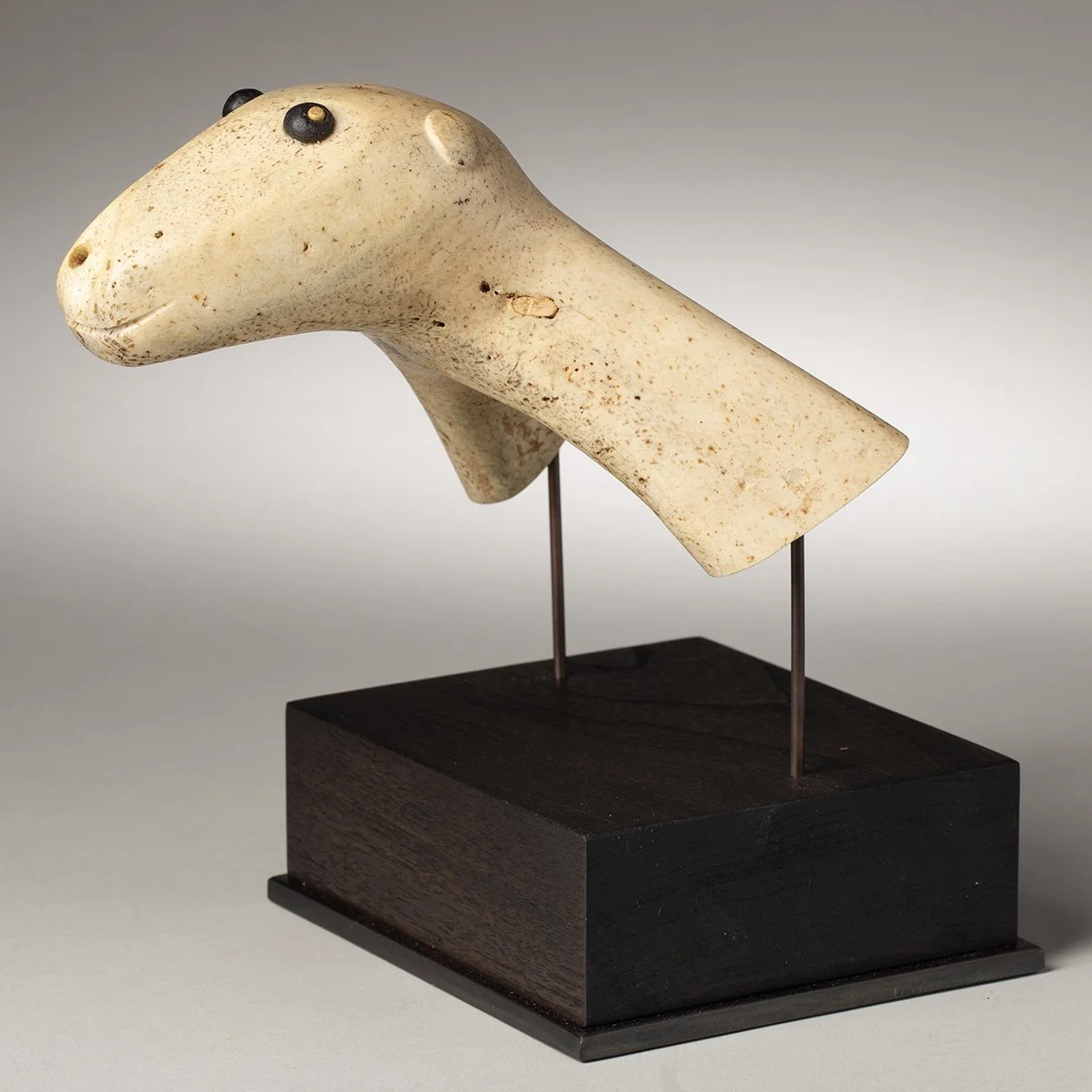 Image 1 of 6
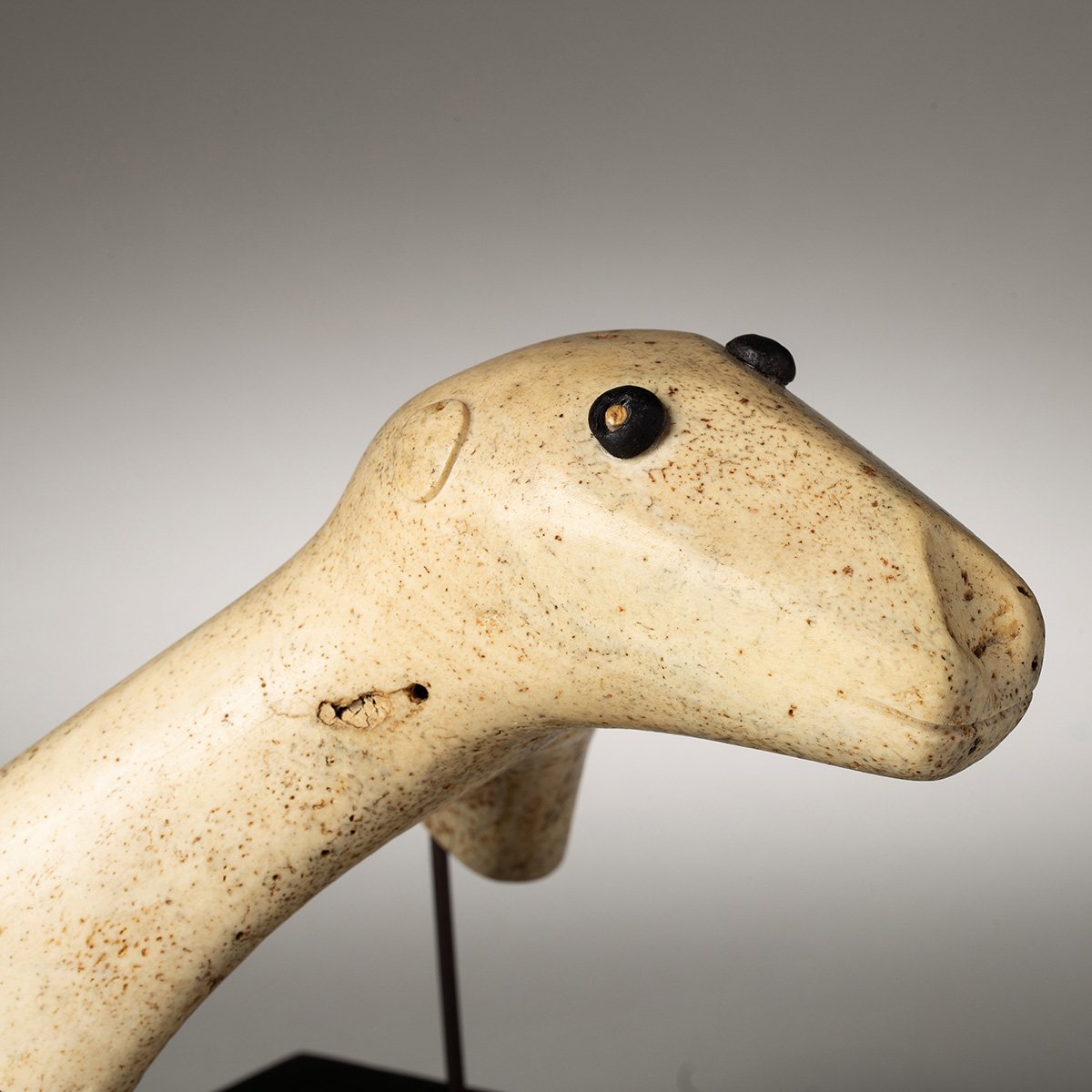 Image 2 of 6
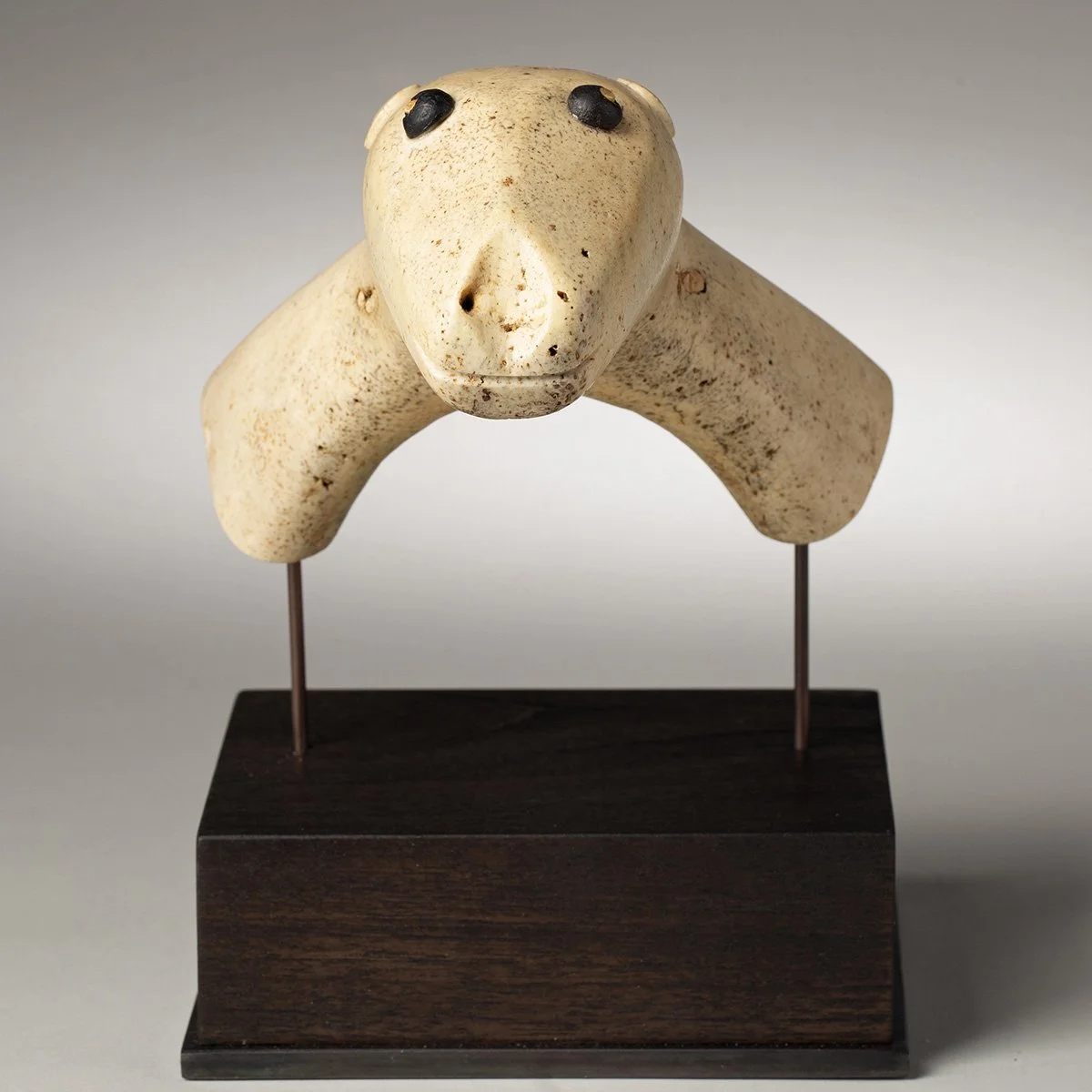 Image 3 of 6
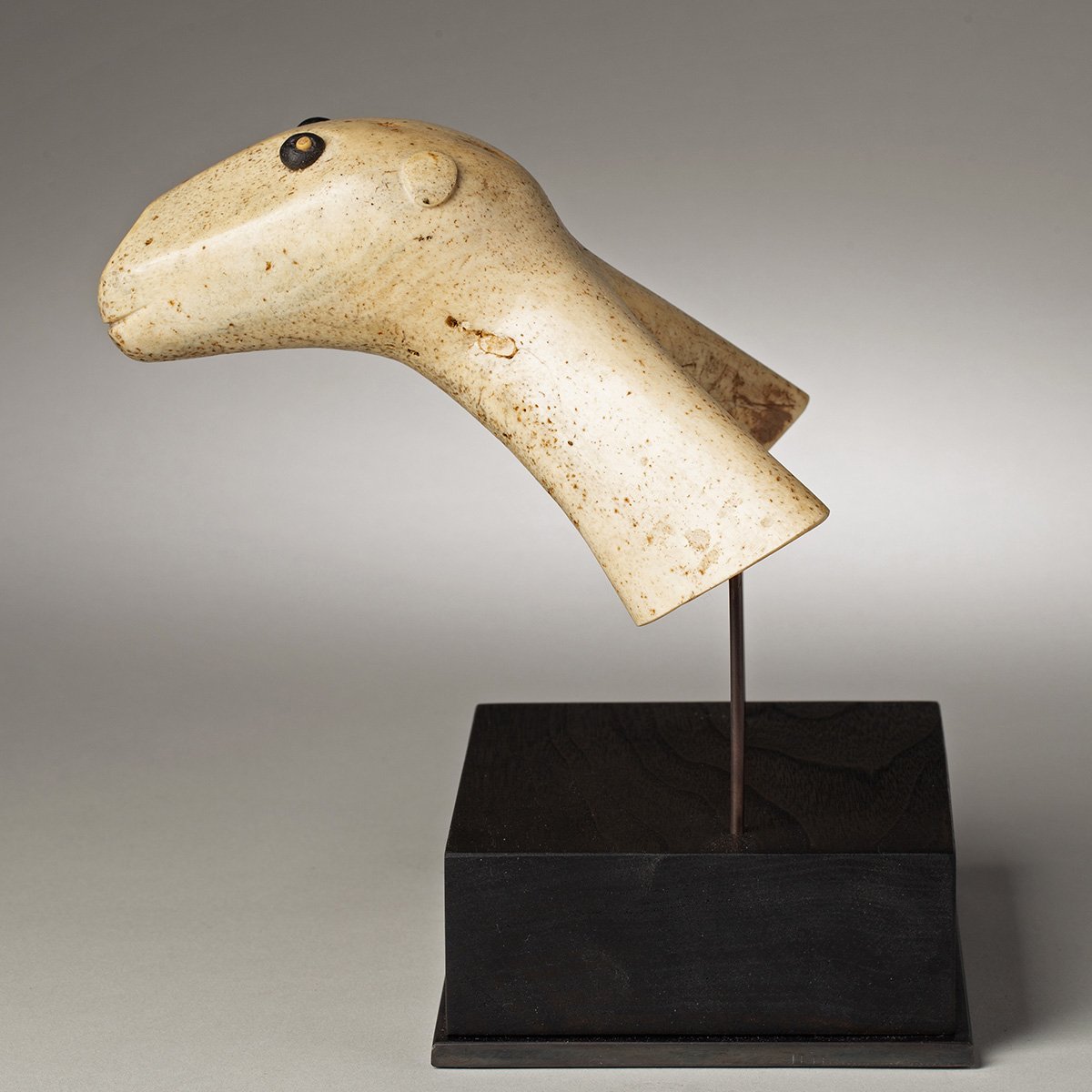 Image 4 of 6
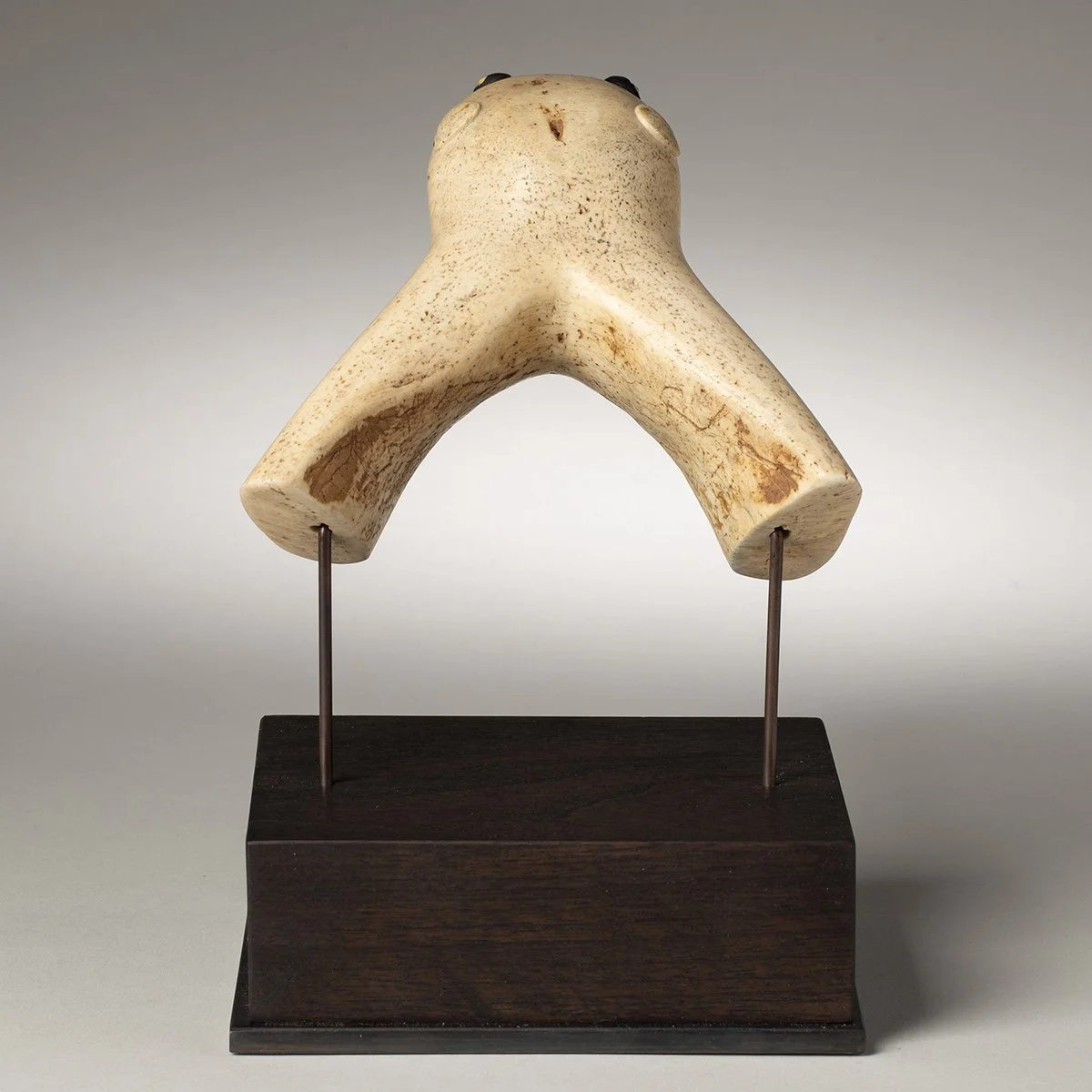 Image 5 of 6
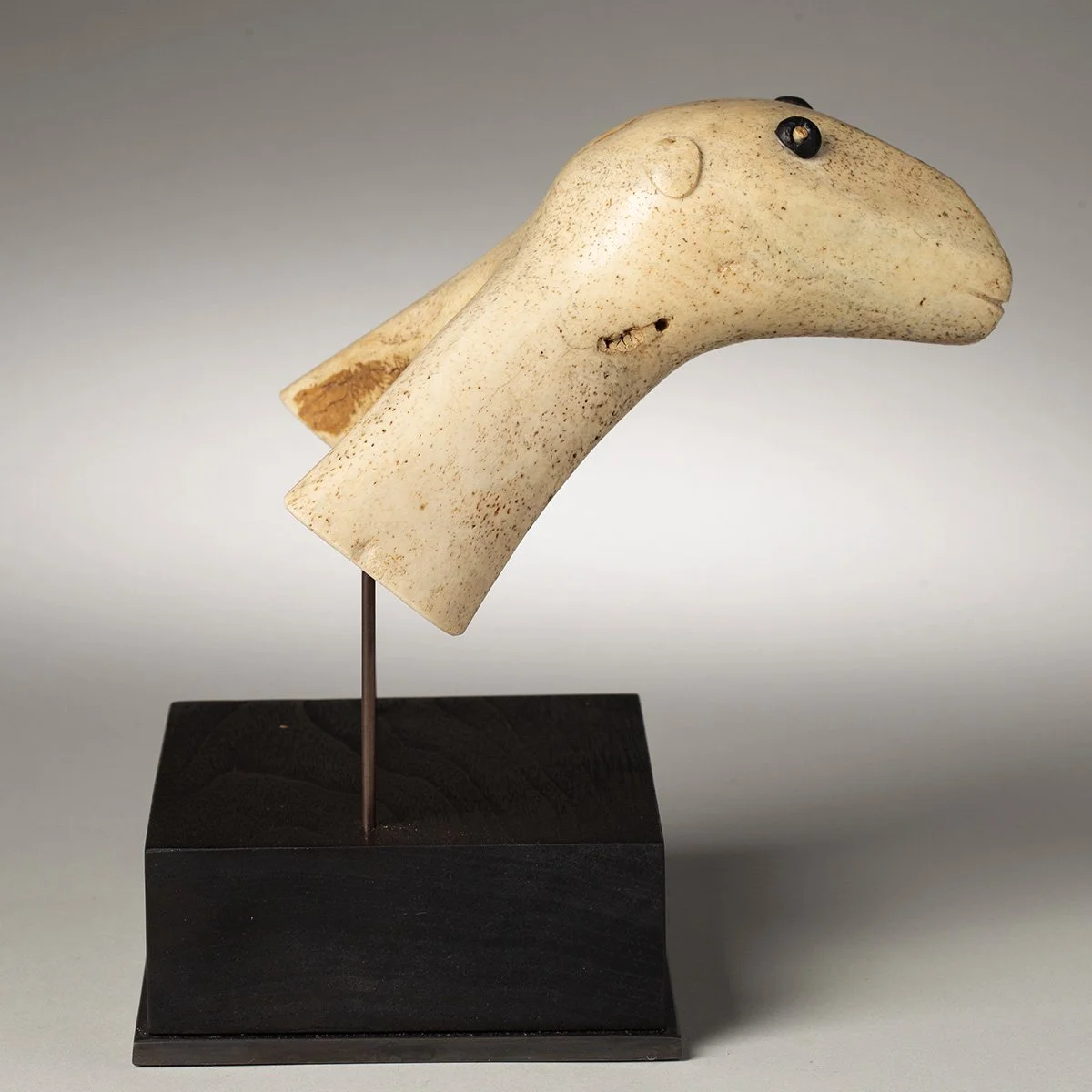 Image 6 of 6