

 Image 1 of 5
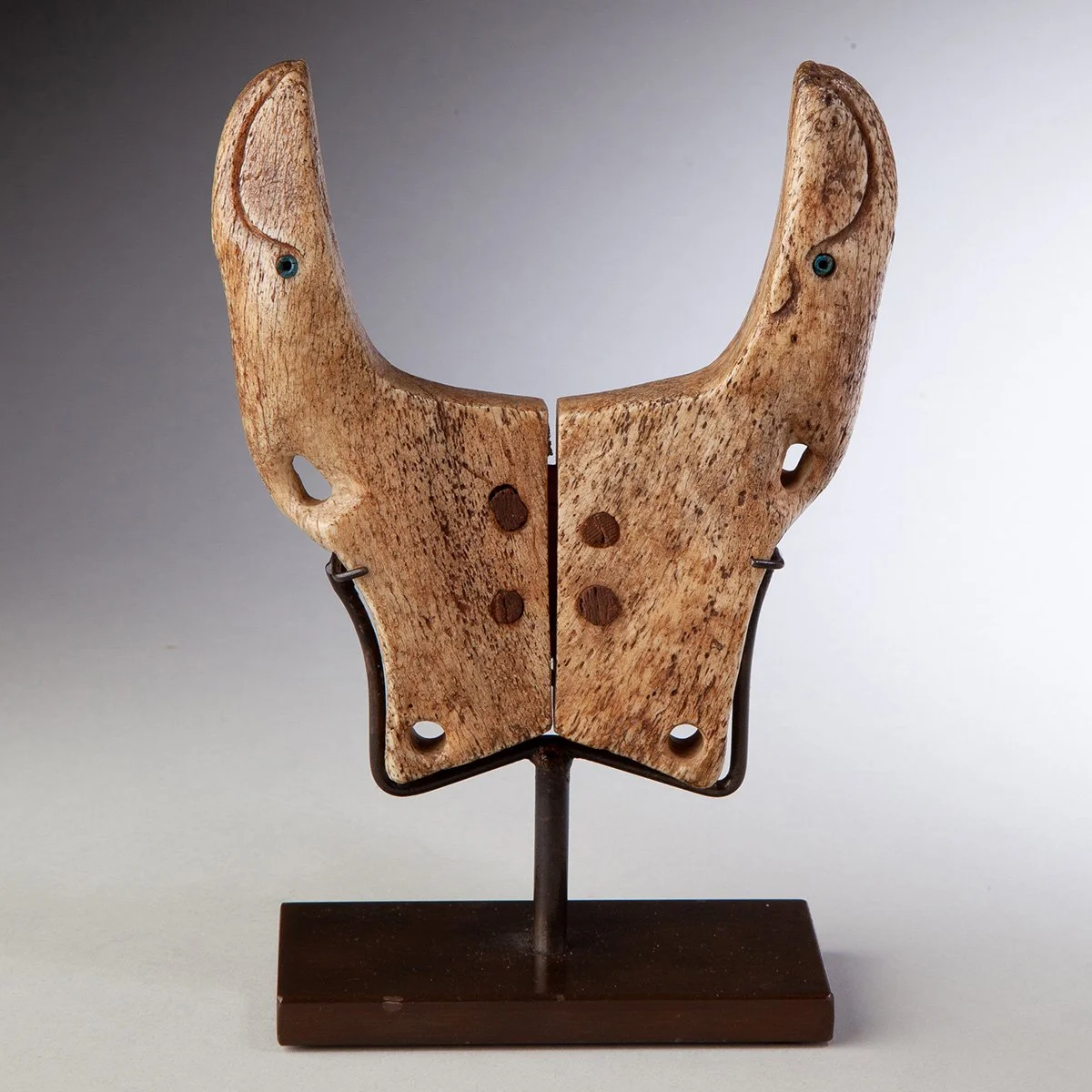 Image 2 of 5
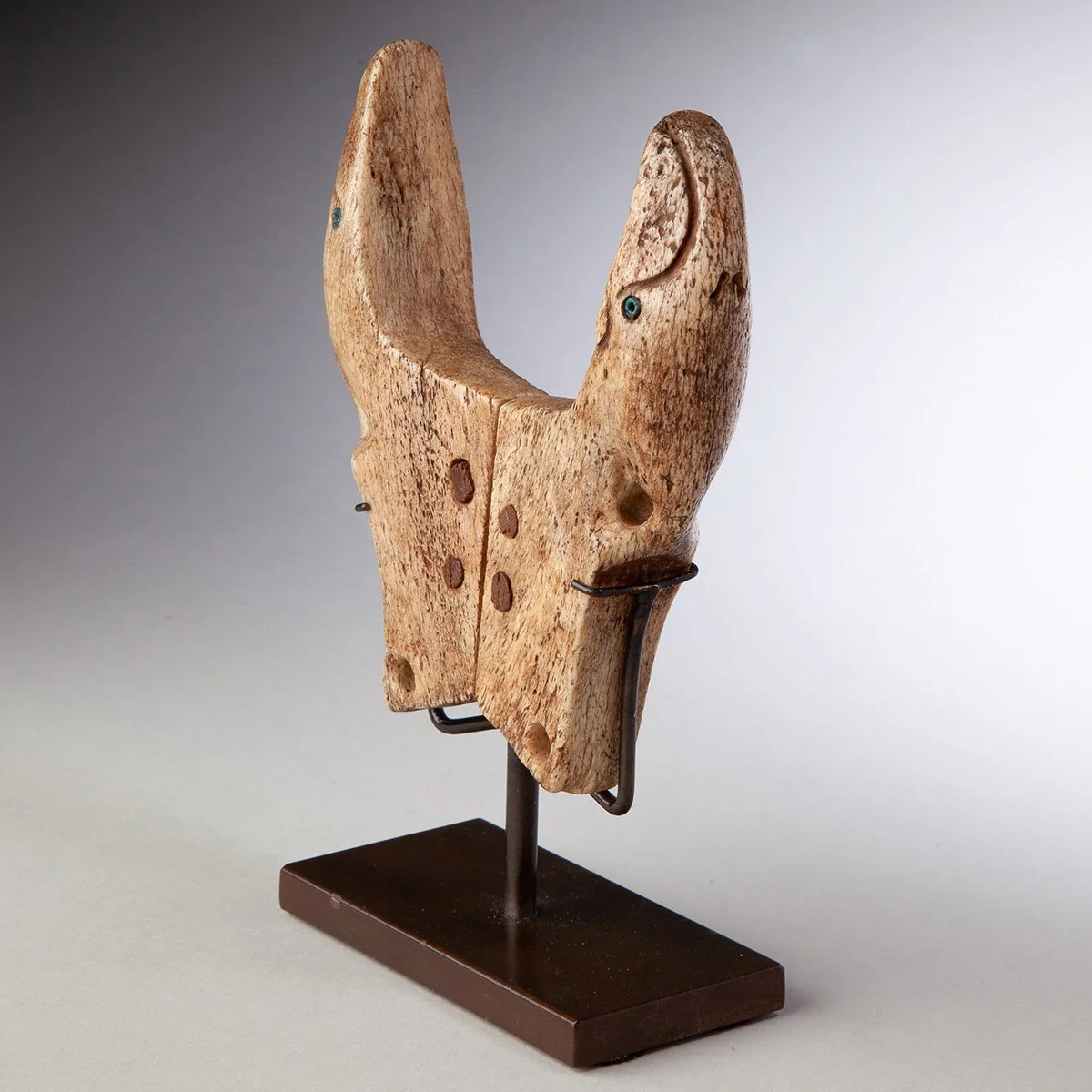 Image 3 of 5
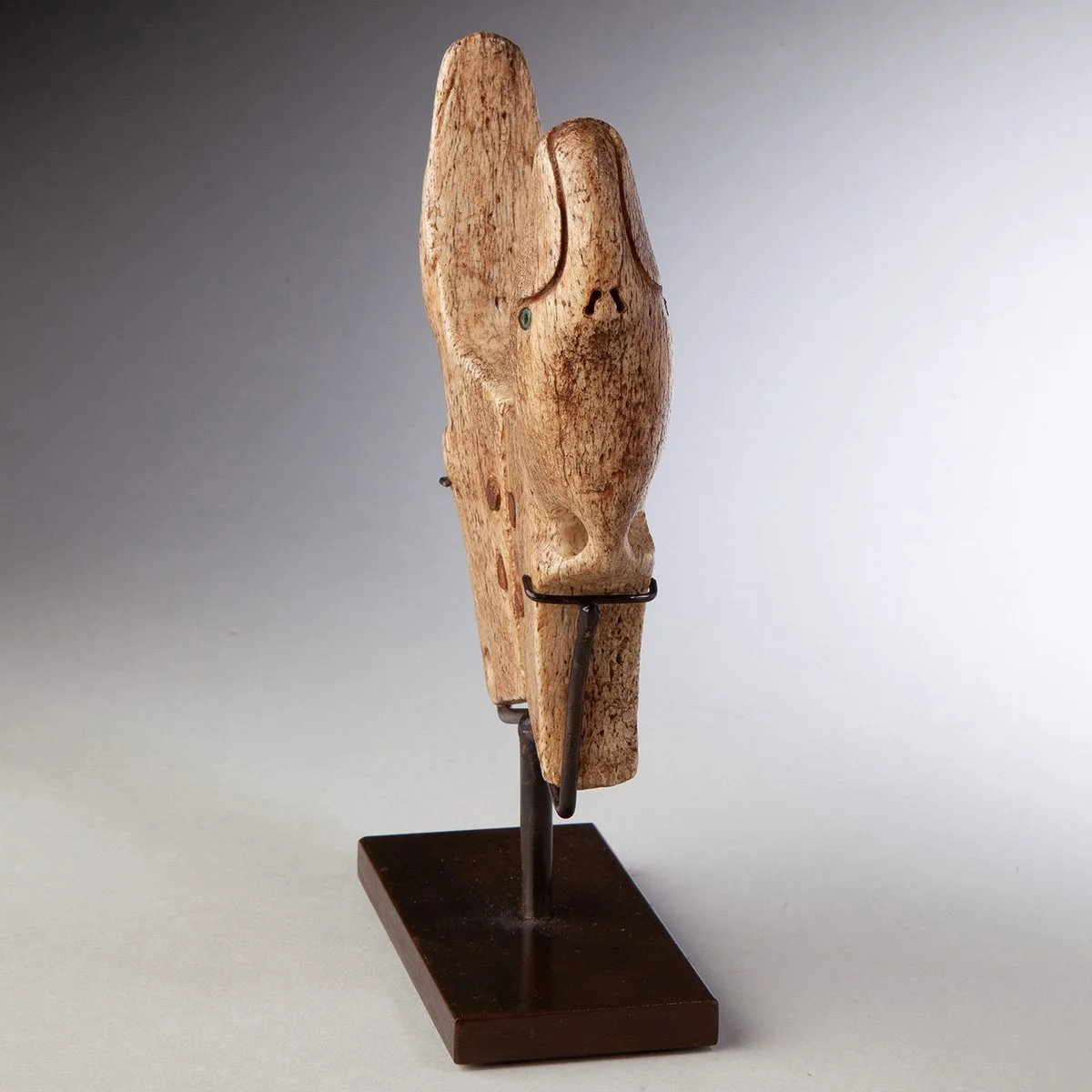 Image 4 of 5
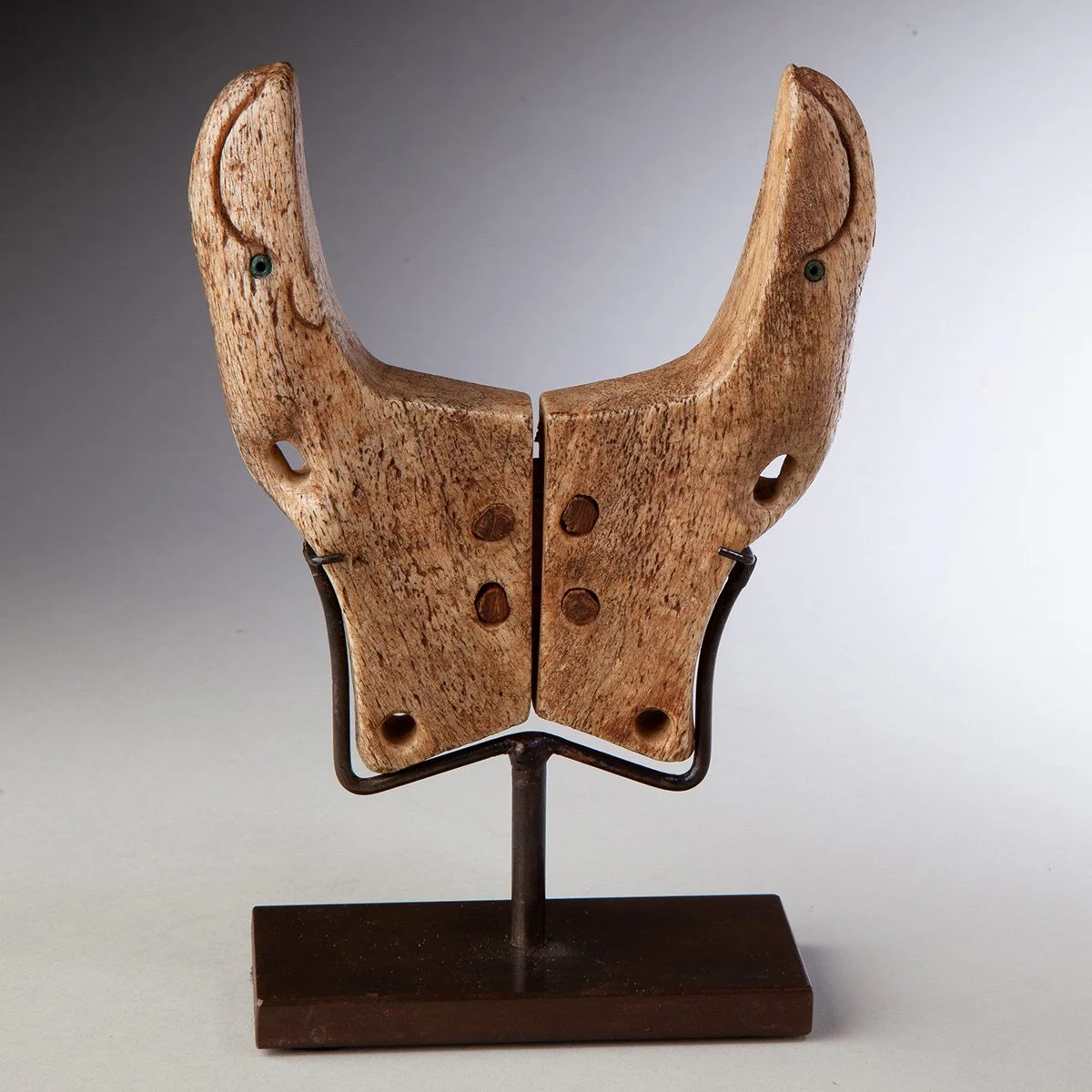 Image 5 of 5
Alaska, Inuit
Circa 1880
Whalebone, blue trade beads
Height 5 1/2" (14 cm); width 4 1/2" (11.4 cm)
Provenance: Flury and Company, Seattle, WA
Harpoon rests were functional objects used to hold the harpoon shaft steady and protected when not in use, carved in animal forms that reflected the hunter's relationship to the creatures of the Arctic sea. The whale was the most significant prey animal in many Inuit communities, its successful hunt sustaining entire villages through the winter months and carrying deep ceremonial meaning beyond its practical importance. Objects that incorporated whale imagery into hunting equipment participated in a broader Inuit practice of invoking animal power within the tools used to pursue it.
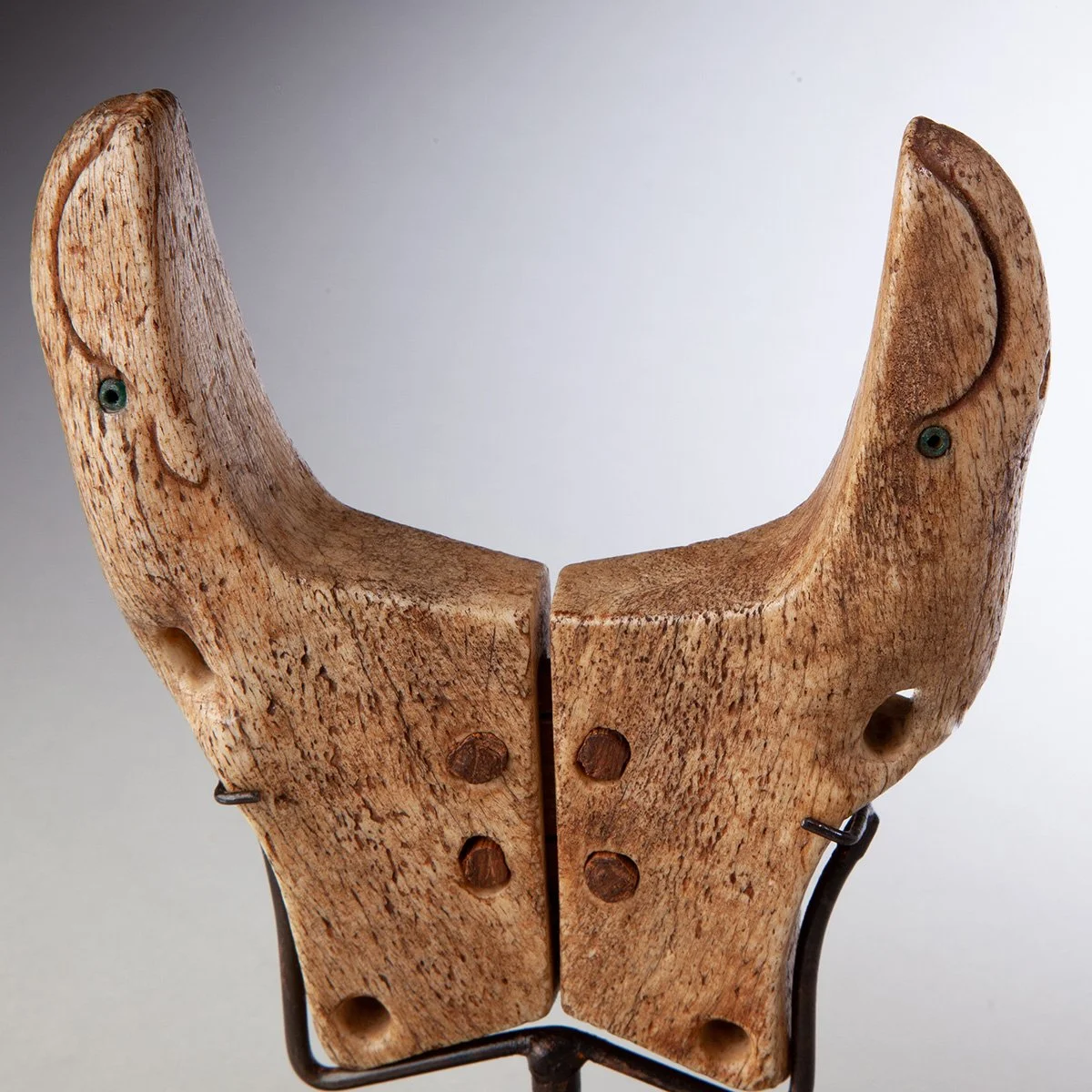
This rest is carved from whalebone in the conjoined form of two whales facing outward, with inlaid blue trade bead eyes set into each figure. The use of whalebone as the primary material adds a layer of material significance to the already whale-centered imagery, and the blue trade beads reflect the incorporation of contact-era materials into traditional carving without displacing its essential form. Provenance traces to Flury and Company of Seattle, Washington, a longstanding and respected dealer in Alaska Native and Northwest Coast material.
This item contains ESA antique exempt ivory and cannot be sold internationally, or to anyone residing in the states of California, Hawaii, Illinois, Nevada, New Hampshire, New Jersey, New York, Oregon, and Washington. We guarantee that it was made prior to 1972. We ship free within the United States, fully insured, packed by hand.
Alaska, Inuit
Circa 1880
Whalebone, blue trade beads
Height 5 1/2" (14 cm); width 4 1/2" (11.4 cm)
Provenance: Flury and Company, Seattle, WA
Harpoon rests were functional objects used to hold the harpoon shaft steady and protected when not in use, carved in animal forms that reflected the hunter's relationship to the creatures of the Arctic sea. The whale was the most significant prey animal in many Inuit communities, its successful hunt sustaining entire villages through the winter months and carrying deep ceremonial meaning beyond its practical importance. Objects that incorporated whale imagery into hunting equipment participated in a broader Inuit practice of invoking animal power within the tools used to pursue it.
This rest is carved from whalebone in the conjoined form of two whales facing outward, with inlaid blue trade bead eyes set into each figure. The use of whalebone as the primary material adds a layer of material significance to the already whale-centered imagery, and the blue trade beads reflect the incorporation of contact-era materials into traditional carving without displacing its essential form. Provenance traces to Flury and Company of Seattle, Washington, a longstanding and respected dealer in Alaska Native and Northwest Coast material.
This item contains ESA antique exempt ivory and cannot be sold internationally, or to anyone residing in the states of California, Hawaii, Illinois, Nevada, New Hampshire, New Jersey, New York, Oregon, and Washington. We guarantee that it was made prior to 1972. We ship free within the United States, fully insured, packed by hand.