Jaina, Campeche, Mexico
Late Classic period, circa AD 550 to 950
Ceramic
Height 8 1/4" (21 cm)
Provenance: Andre Emmerich Inc., New York; acquired from the above 1980; Sotheby's New York, lot 136, May 13, 2011, sold for $25,000
Exhibition: Princeton University Art Museum, Jaina Figurines: A Study of Maya Iconography, May 3 to June 29, 1975
Publication: Mary Ellen Miller, Jaina Figurines: A Study of Maya Iconography, Princeton University Art Museum, 1975, fig. 19, p. 50, illustrated
Jaina Island, off the coast of Campeche in the Gulf of Mexico, was a major Maya burial site during the Late Classic period, and the hollow ceramic figures recovered from its graves represent one of the most carefully studied categories of Maya portable sculpture. These figures document a wide range of Maya social types including warriors, ballplayers, priests, women, and captives, modeled with a specificity of costume and attribute that makes them primary sources for understanding Maya dress, ritual, and social hierarchy. The captive figure is among the most charged subjects in the Jaina corpus, representing the ritual capture of elite prisoners that played a central role in Maya warfare and ceremonial life.
This figure depicts a high-ranking captive in the early stages of ceremonial processing, still clothed in his regal attire of short cape and loincloth, with ear ornaments replaced by long paper and feather elements and a plaited coiffure curling to the front. The figure is suspended from the pierced skin of his back, a specific torture convention documented in Maya monumental art, and retains a composed expression with mustache and nose ornament intact. The retention of status accoutrements before their ritual stripping distinguishes this figure from the more commonly depicted naked and agonized prisoner type in the Jaina corpus.
According to Pre-Columbian art historian David Joralemon, this is the only known figure of its type. The piece was exhibited at Princeton University Art Museum in 1975 and published in Mary Ellen Miller's foundational study of Jaina figurines the same year, giving it a place in the primary scholarly literature on the subject. The Andre Emmerich provenance and the 2011 Sotheby's sale at $25,000 complete a documented ownership and market history spanning over four decades.
CIRAM authentication document available
We ship free anywhere in the world, fully insured, packed by hand.
Jaina, Campeche, Mexico
Late Classic period, circa AD 550 to 950
Ceramic
Height 8 1/4" (21 cm)
Provenance: Andre Emmerich Inc., New York; acquired from the above 1980; Sotheby's New York, lot 136, May 13, 2011, sold for $25,000
Exhibition: Princeton University Art Museum, Jaina Figurines: A Study of Maya Iconography, May 3 to June 29, 1975
Publication: Mary Ellen Miller, Jaina Figurines: A Study of Maya Iconography, Princeton University Art Museum, 1975, fig. 19, p. 50, illustrated
Jaina Island, off the coast of Campeche in the Gulf of Mexico, was a major Maya burial site during the Late Classic period, and the hollow ceramic figures recovered from its graves represent one of the most carefully studied categories of Maya portable sculpture. These figures document a wide range of Maya social types including warriors, ballplayers, priests, women, and captives, modeled with a specificity of costume and attribute that makes them primary sources for understanding Maya dress, ritual, and social hierarchy. The captive figure is among the most charged subjects in the Jaina corpus, representing the ritual capture of elite prisoners that played a central role in Maya warfare and ceremonial life.
This figure depicts a high-ranking captive in the early stages of ceremonial processing, still clothed in his regal attire of short cape and loincloth, with ear ornaments replaced by long paper and feather elements and a plaited coiffure curling to the front. The figure is suspended from the pierced skin of his back, a specific torture convention documented in Maya monumental art, and retains a composed expression with mustache and nose ornament intact. The retention of status accoutrements before their ritual stripping distinguishes this figure from the more commonly depicted naked and agonized prisoner type in the Jaina corpus.
According to Pre-Columbian art historian David Joralemon, this is the only known figure of its type. The piece was exhibited at Princeton University Art Museum in 1975 and published in Mary Ellen Miller's foundational study of Jaina figurines the same year, giving it a place in the primary scholarly literature on the subject. The Andre Emmerich provenance and the 2011 Sotheby's sale at $25,000 complete a documented ownership and market history spanning over four decades.
CIRAM authentication document available
We ship free anywhere in the world, fully insured, packed by hand.


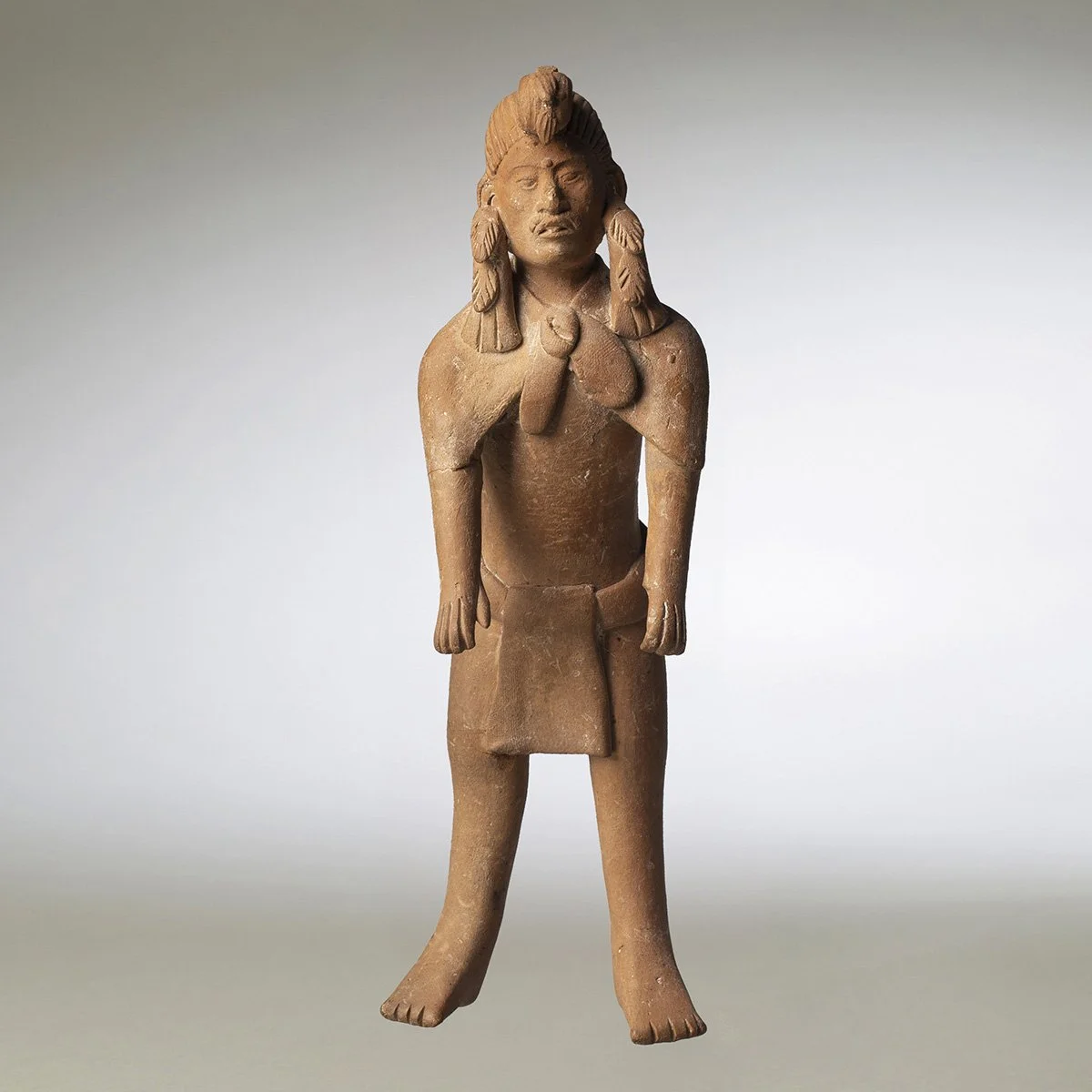 Image 1 of 8
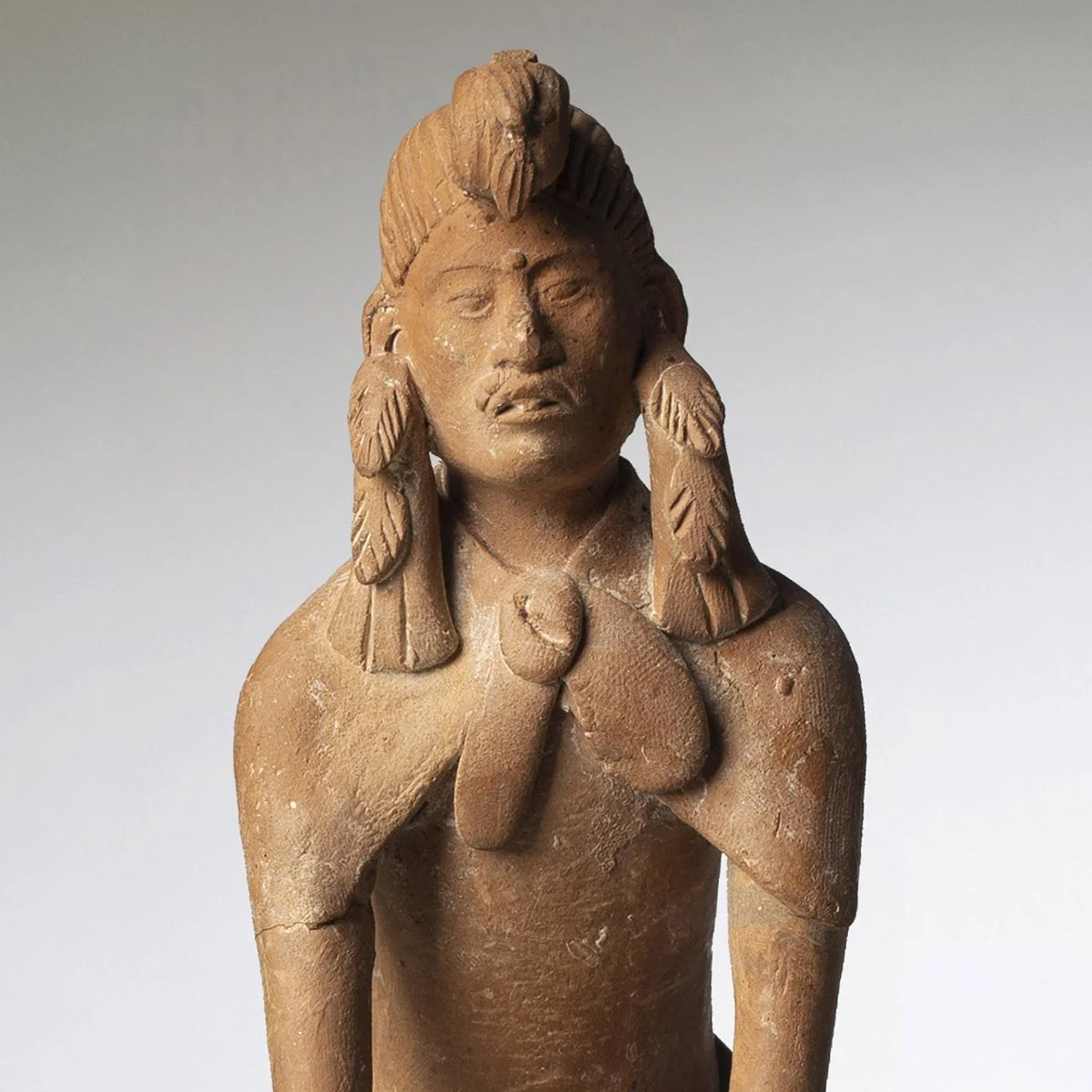 Image 2 of 8
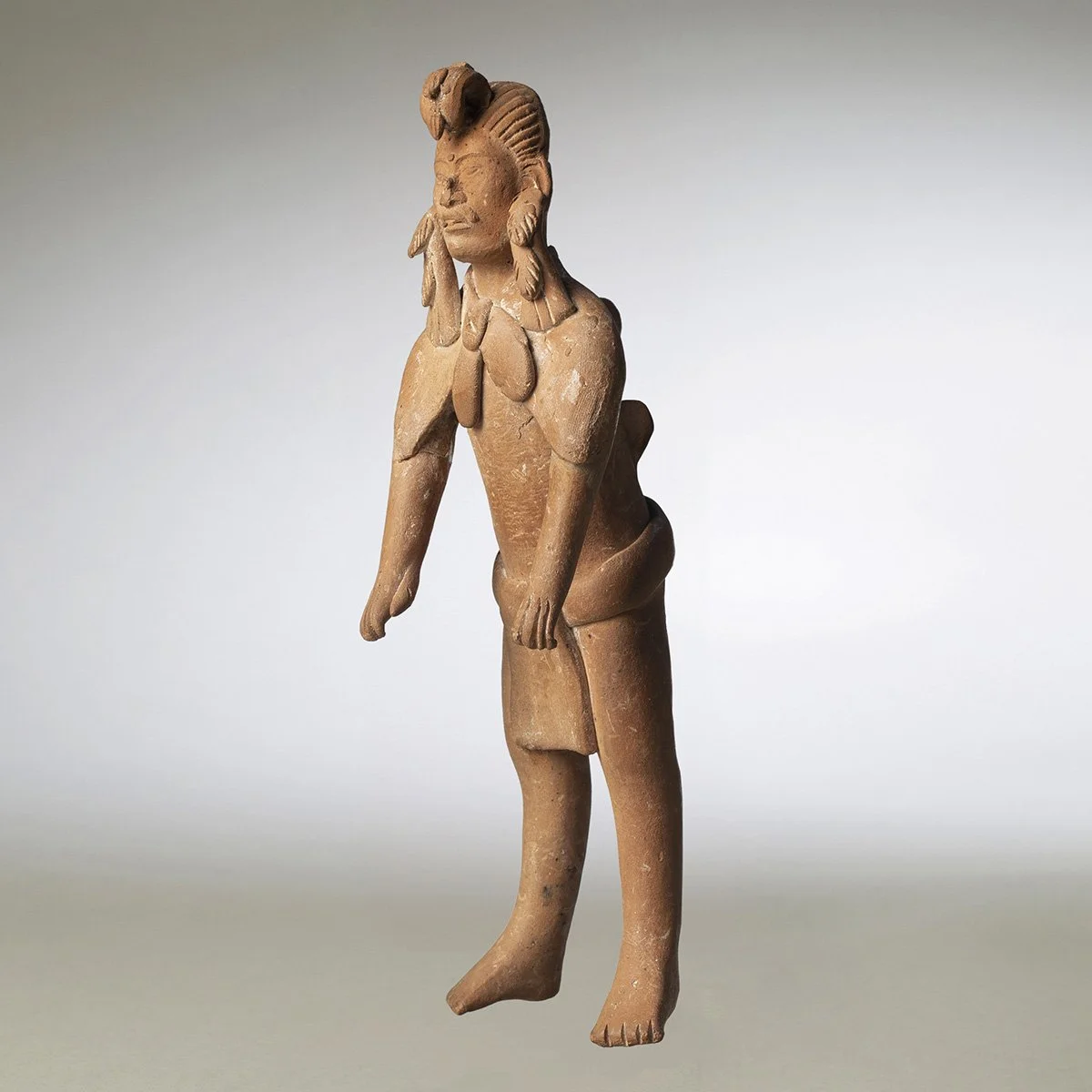 Image 3 of 8
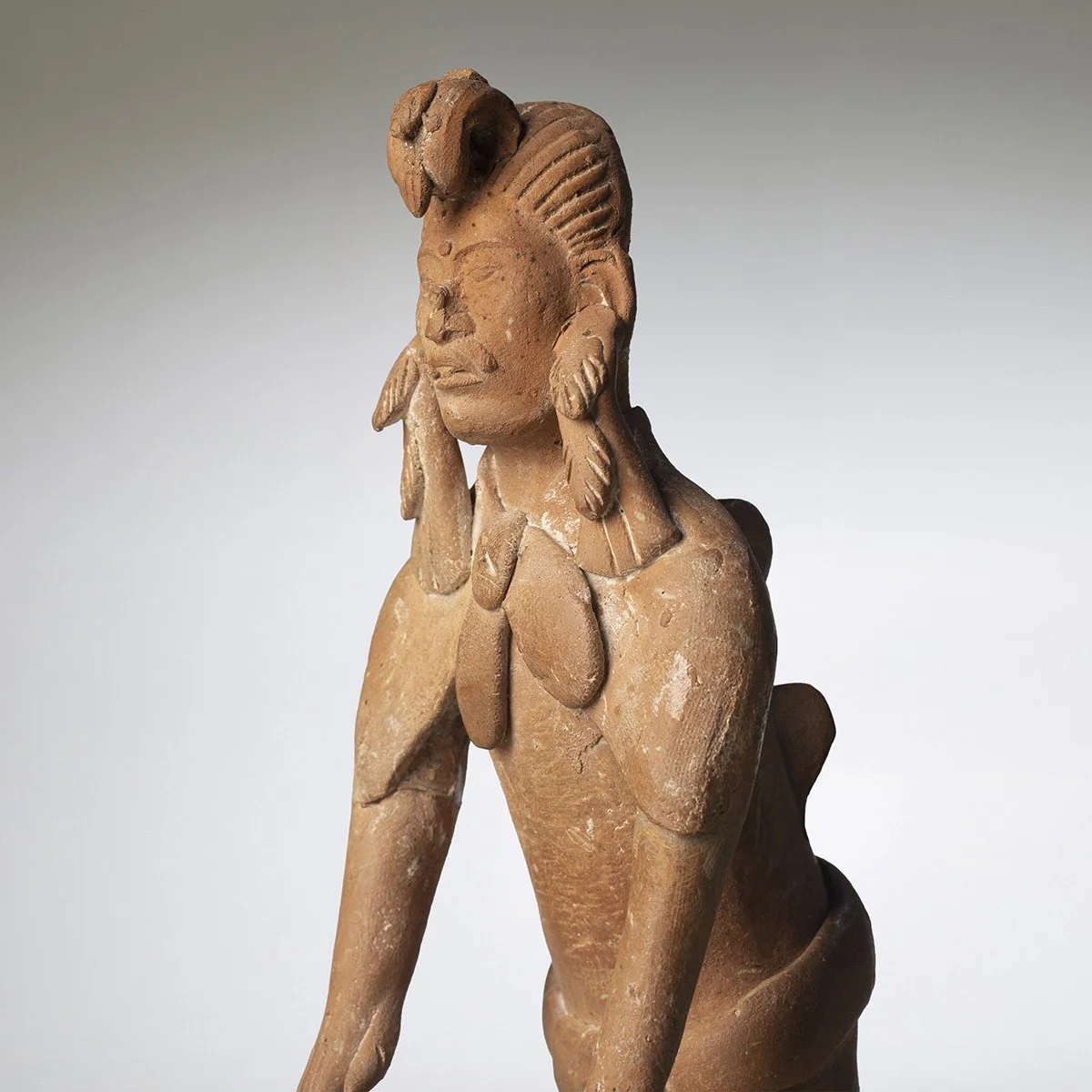 Image 4 of 8
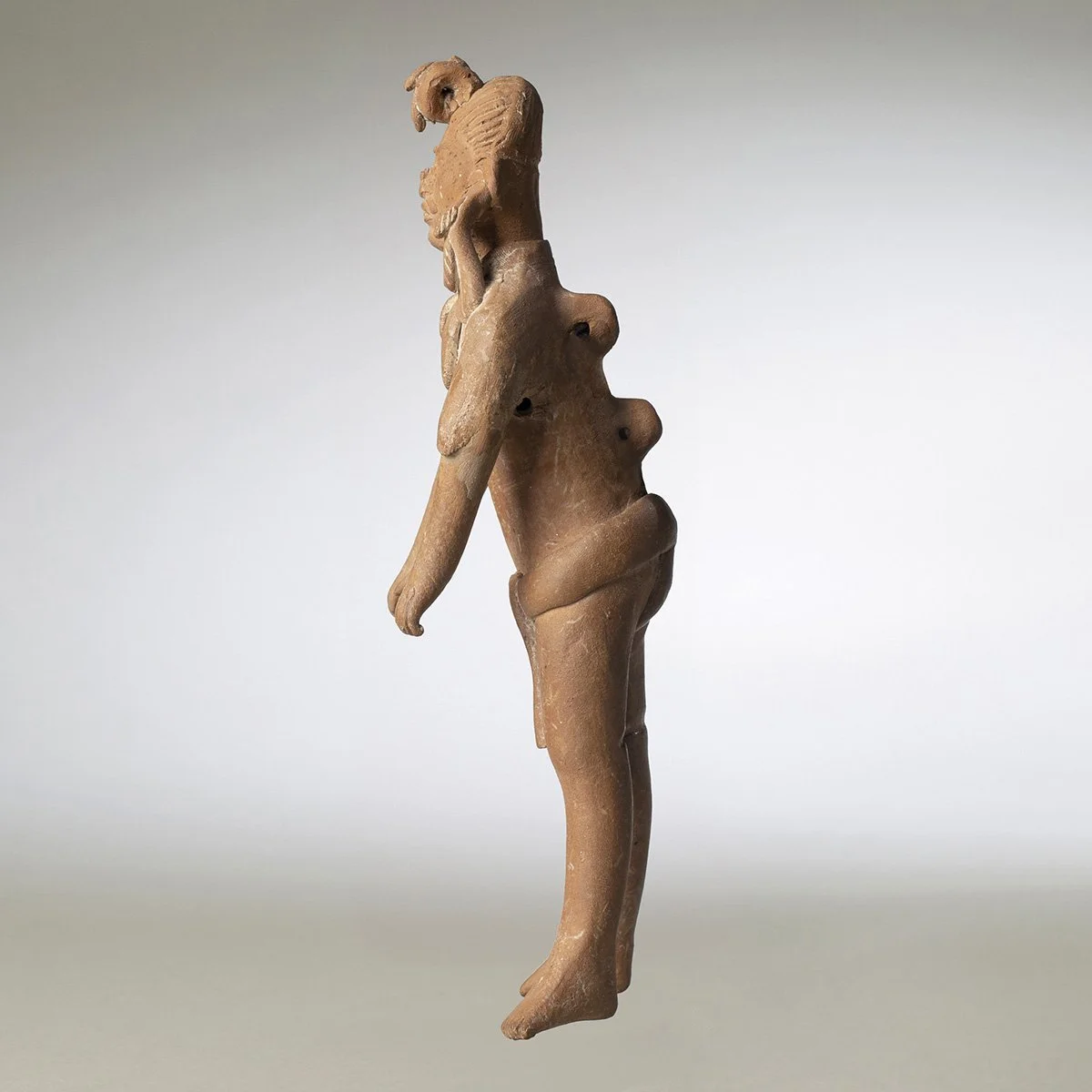 Image 5 of 8
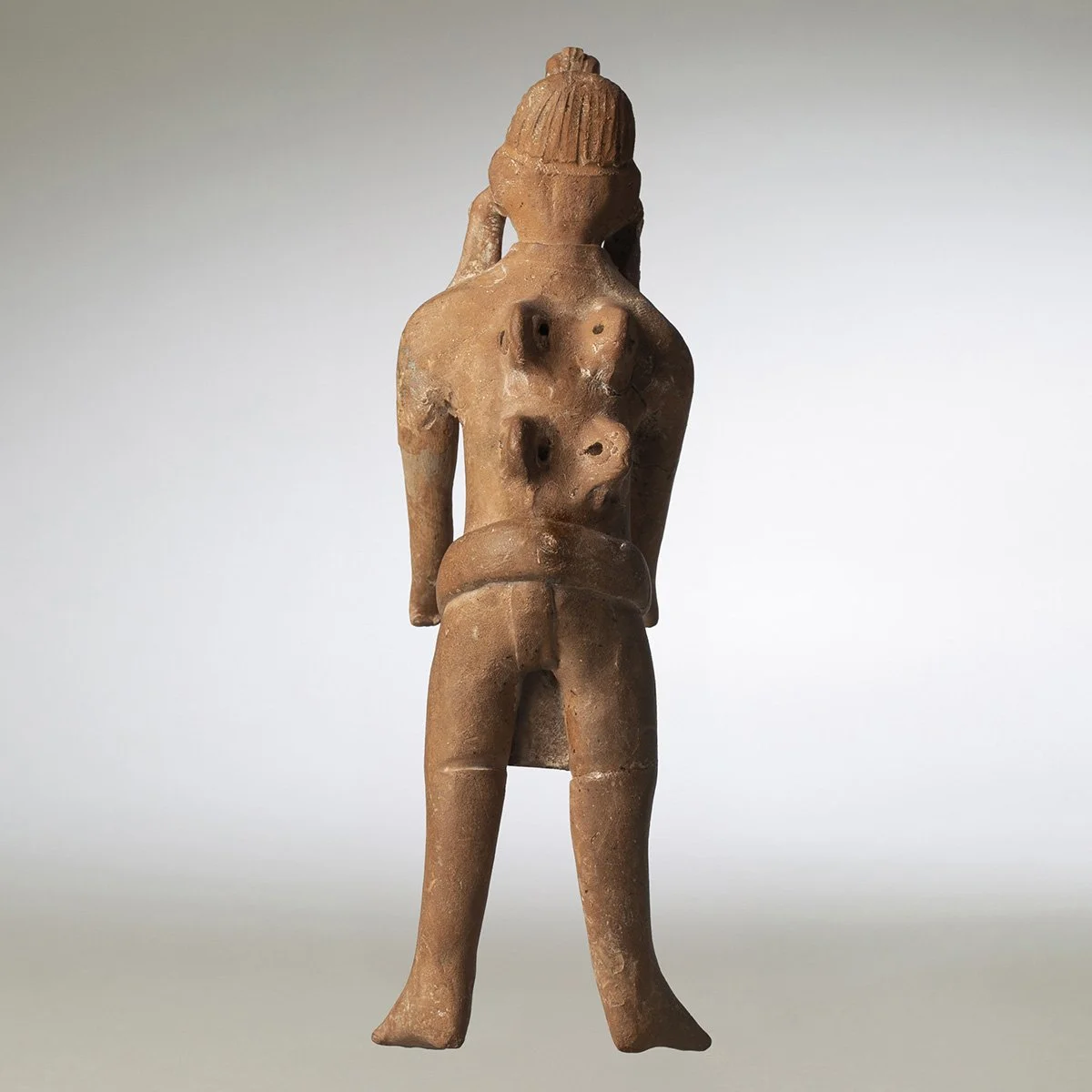 Image 6 of 8
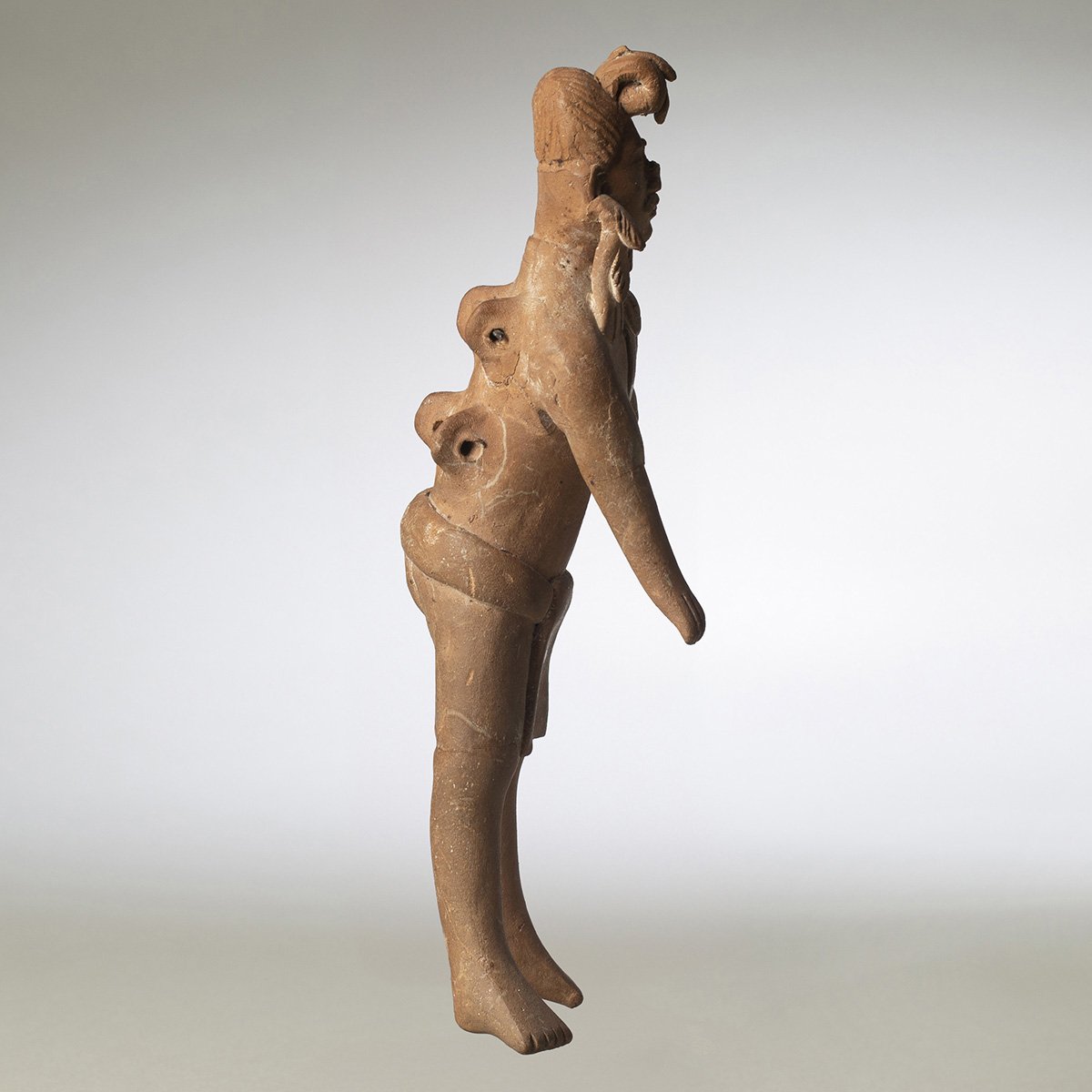 Image 7 of 8
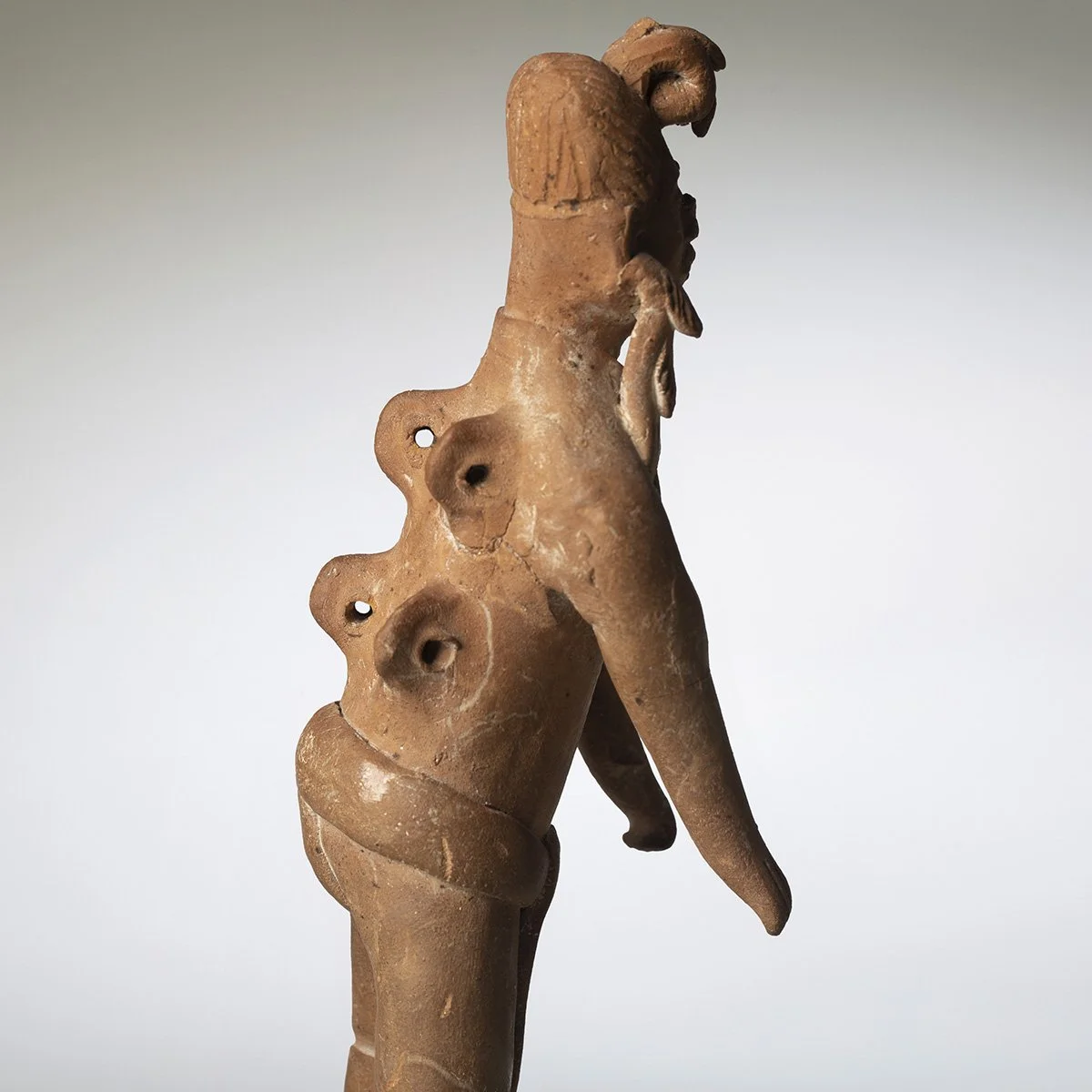 Image 8 of 8