James Wilson, globe maker
Bradford, Vermont
circa 1811 to 1818
Engraved and hand colored gores over papier mâché and plaster, wood stand, brass fittings
13 in diameter
This American terrestrial globe is built up from engraved and hand colored paper gores laid over a papier mâché and plaster core, turning on a brass meridian ring graduated in degrees. It sits in a wooden horizon ring carrying a printed zodiacal circle, supported on four turned legs joined by cross stretchers. The visible hemisphere shows North America and the Pacific, with coastlines, rivers, and place names engraved in fine lettering.
The gores are toned to a deep ochre with age, and losses and staining are present across the surface, heaviest over the northern part of North America and along a run of cracks in the Pacific. The horizon ring shows edge wear and old paint traces along its rim. The globe measures 13 inches in diameter and turns freely on its fittings.
James Wilson (1763 to 1855) was a farmer and blacksmith of Bradford, Vermont, and the first American to manufacture globes commercially. Self taught, he learned geography from an encyclopedia and walked to New Haven to study copperplate engraving under Amos Doolittle, consulting the geographer Jedediah Morse on the problem of laying meridians onto a sphere. He recorded his first globe sale in 1810 and issued his New American Terrestrial Globe from 1811, adding a companion celestial globe the following year. Around 1815 to 1818 the business moved to Albany under the name James Wilson and Company, run with his sons, and continued under Cyrus Lancaster until about 1850. Examples of his early globes are held at the Library of Congress, Yale, Dartmouth, the University of Vermont, and the Osher Map Library.
We ship free anywhere in the world, fully insured, packed by hand.
James Wilson, globe maker
Bradford, Vermont
circa 1811 to 1818
Engraved and hand colored gores over papier mâché and plaster, wood stand, brass fittings
13 in diameter
This American terrestrial globe is built up from engraved and hand colored paper gores laid over a papier mâché and plaster core, turning on a brass meridian ring graduated in degrees. It sits in a wooden horizon ring carrying a printed zodiacal circle, supported on four turned legs joined by cross stretchers. The visible hemisphere shows North America and the Pacific, with coastlines, rivers, and place names engraved in fine lettering.
The gores are toned to a deep ochre with age, and losses and staining are present across the surface, heaviest over the northern part of North America and along a run of cracks in the Pacific. The horizon ring shows edge wear and old paint traces along its rim. The globe measures 13 inches in diameter and turns freely on its fittings.
James Wilson (1763 to 1855) was a farmer and blacksmith of Bradford, Vermont, and the first American to manufacture globes commercially. Self taught, he learned geography from an encyclopedia and walked to New Haven to study copperplate engraving under Amos Doolittle, consulting the geographer Jedediah Morse on the problem of laying meridians onto a sphere. He recorded his first globe sale in 1810 and issued his New American Terrestrial Globe from 1811, adding a companion celestial globe the following year. Around 1815 to 1818 the business moved to Albany under the name James Wilson and Company, run with his sons, and continued under Cyrus Lancaster until about 1850. Examples of his early globes are held at the Library of Congress, Yale, Dartmouth, the University of Vermont, and the Osher Map Library.
We ship free anywhere in the world, fully insured, packed by hand.


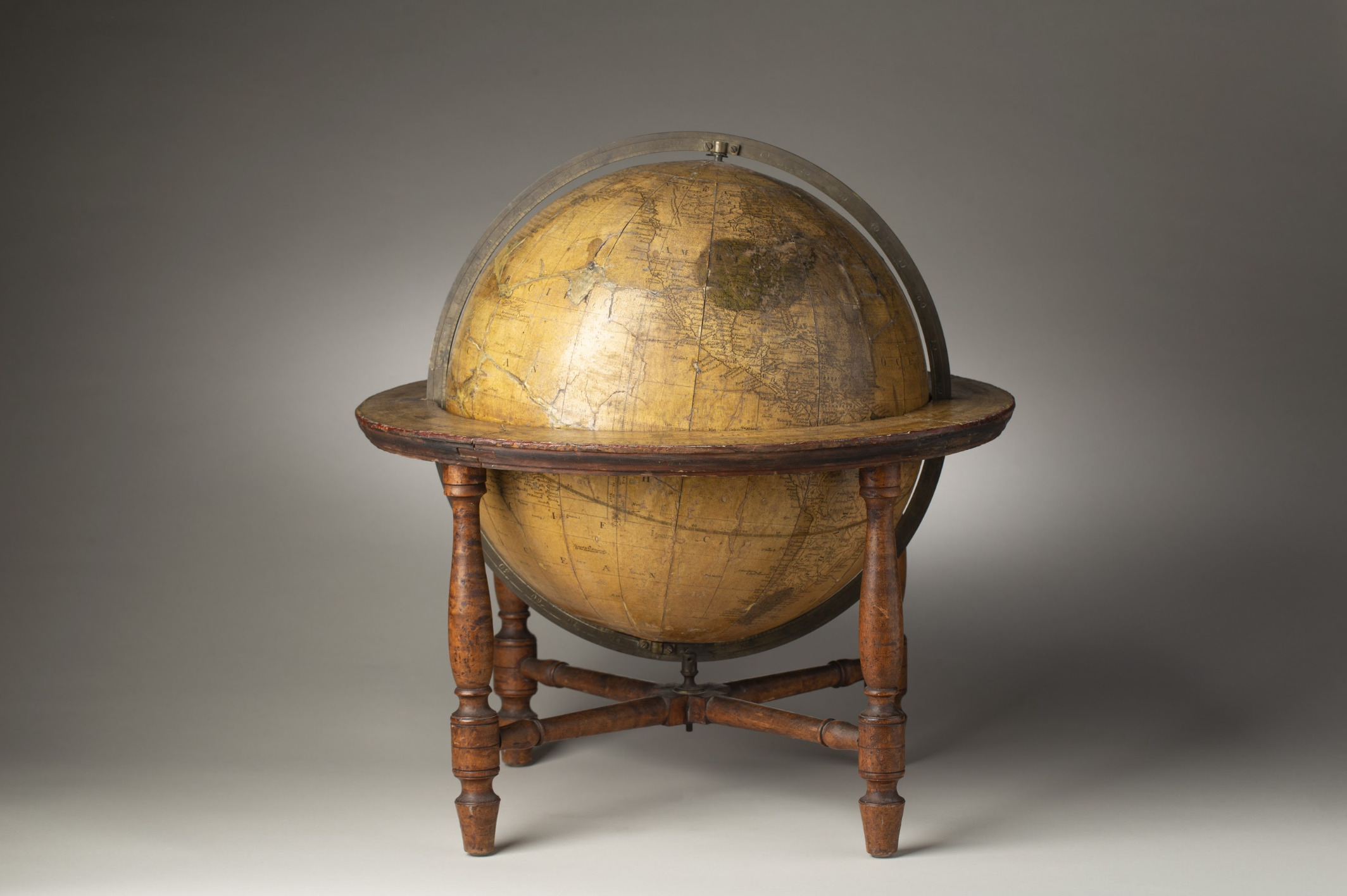 Image 1 of 10
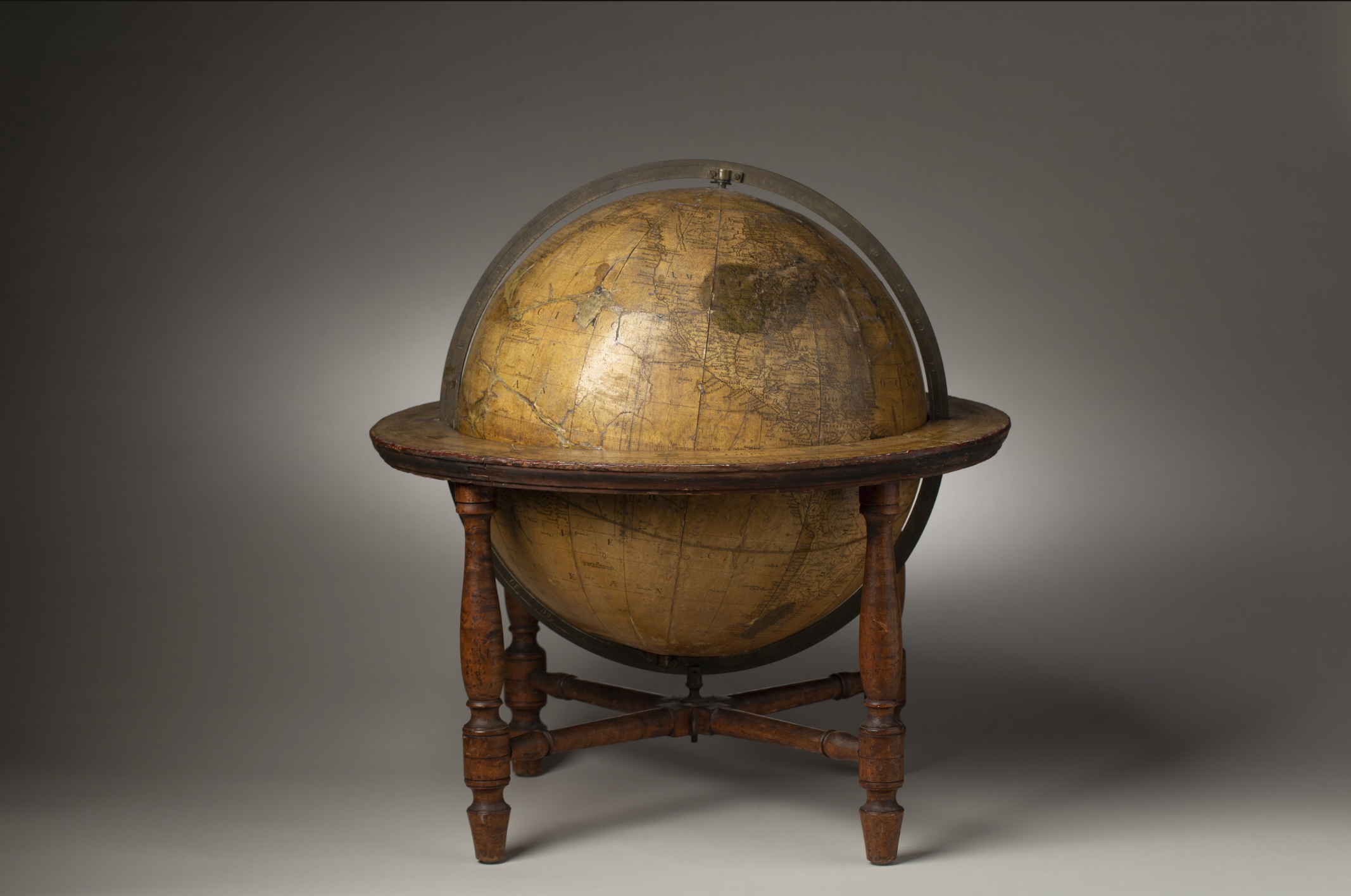 Image 2 of 10
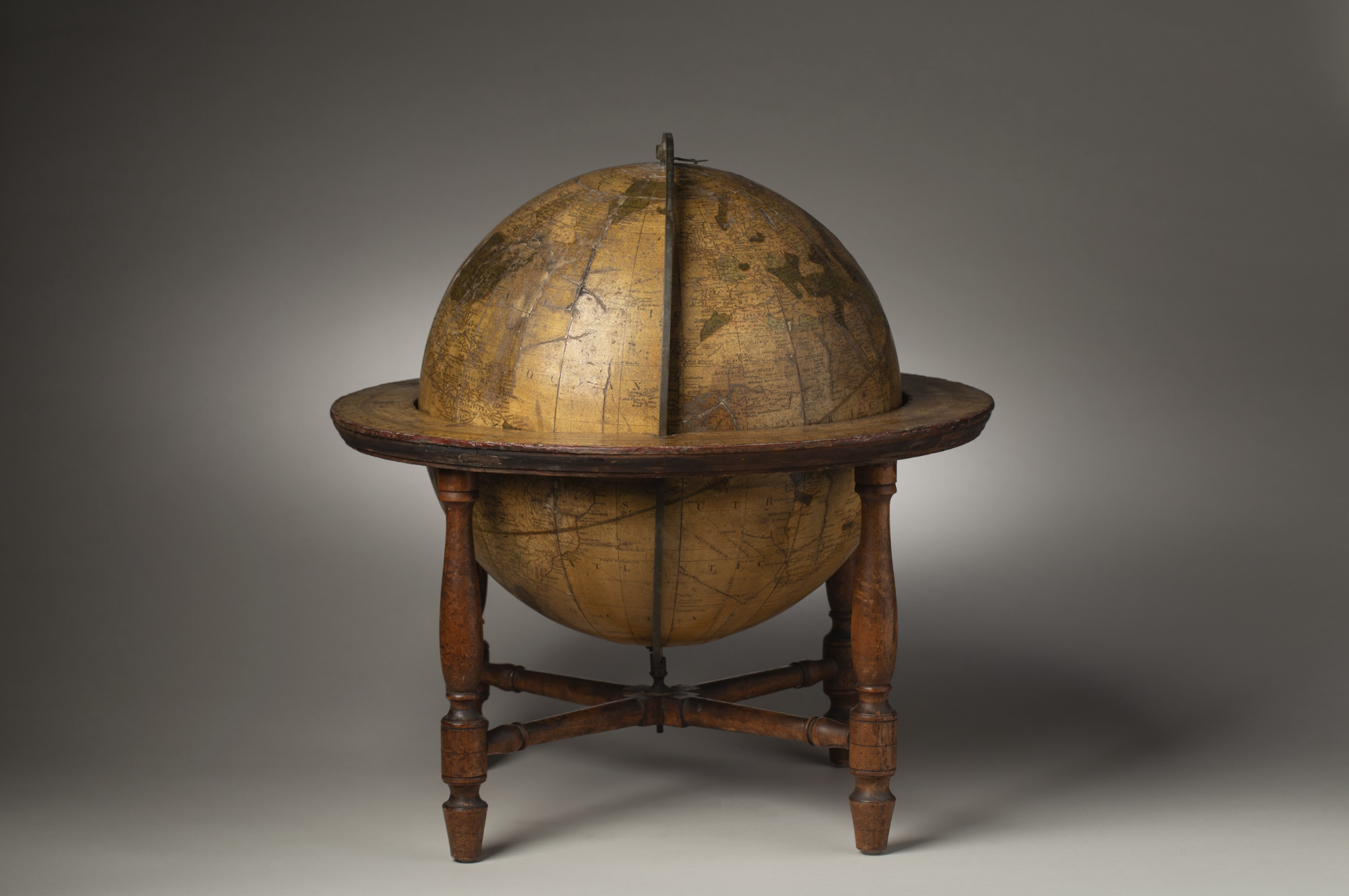 Image 3 of 10
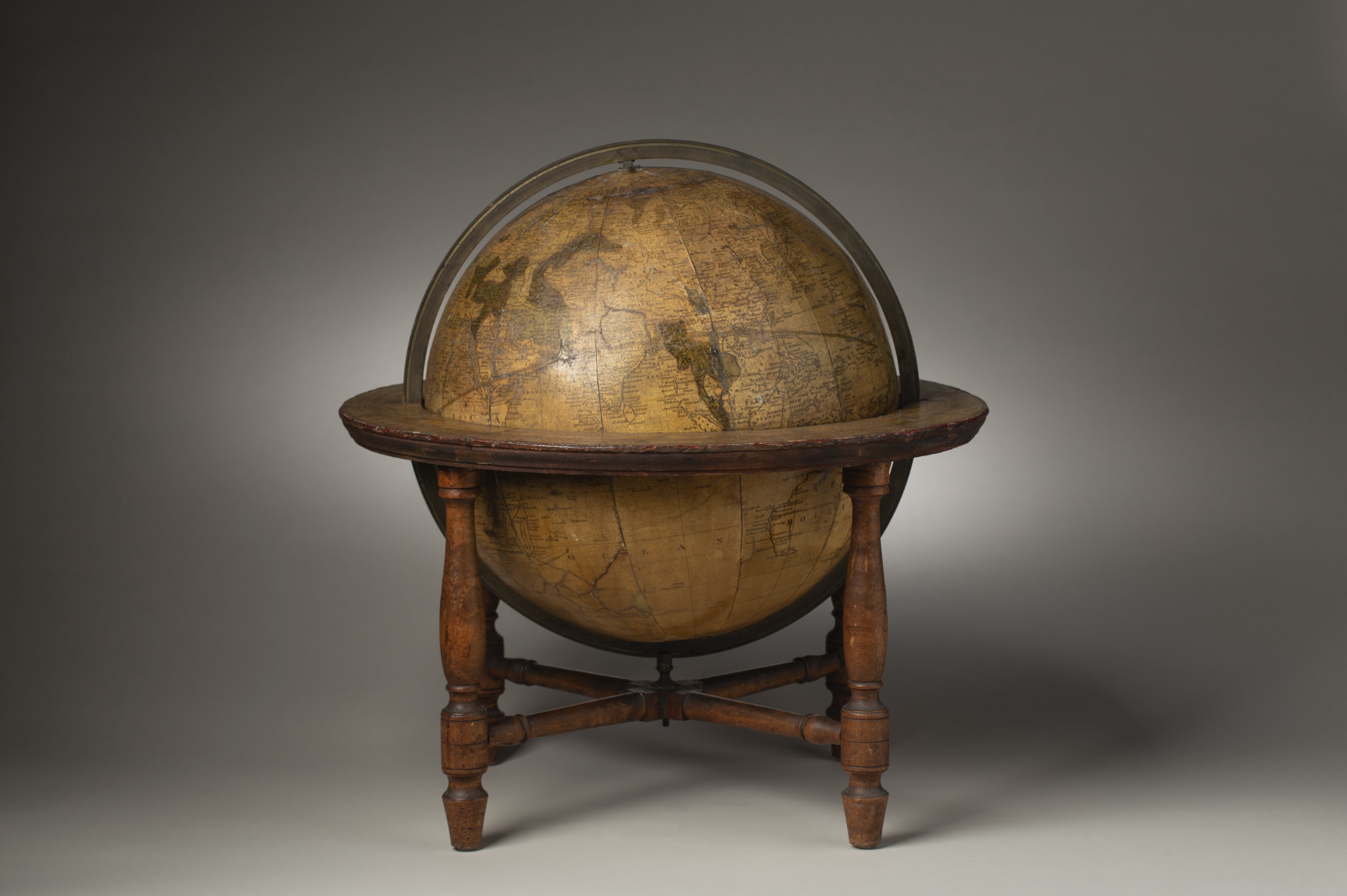 Image 4 of 10
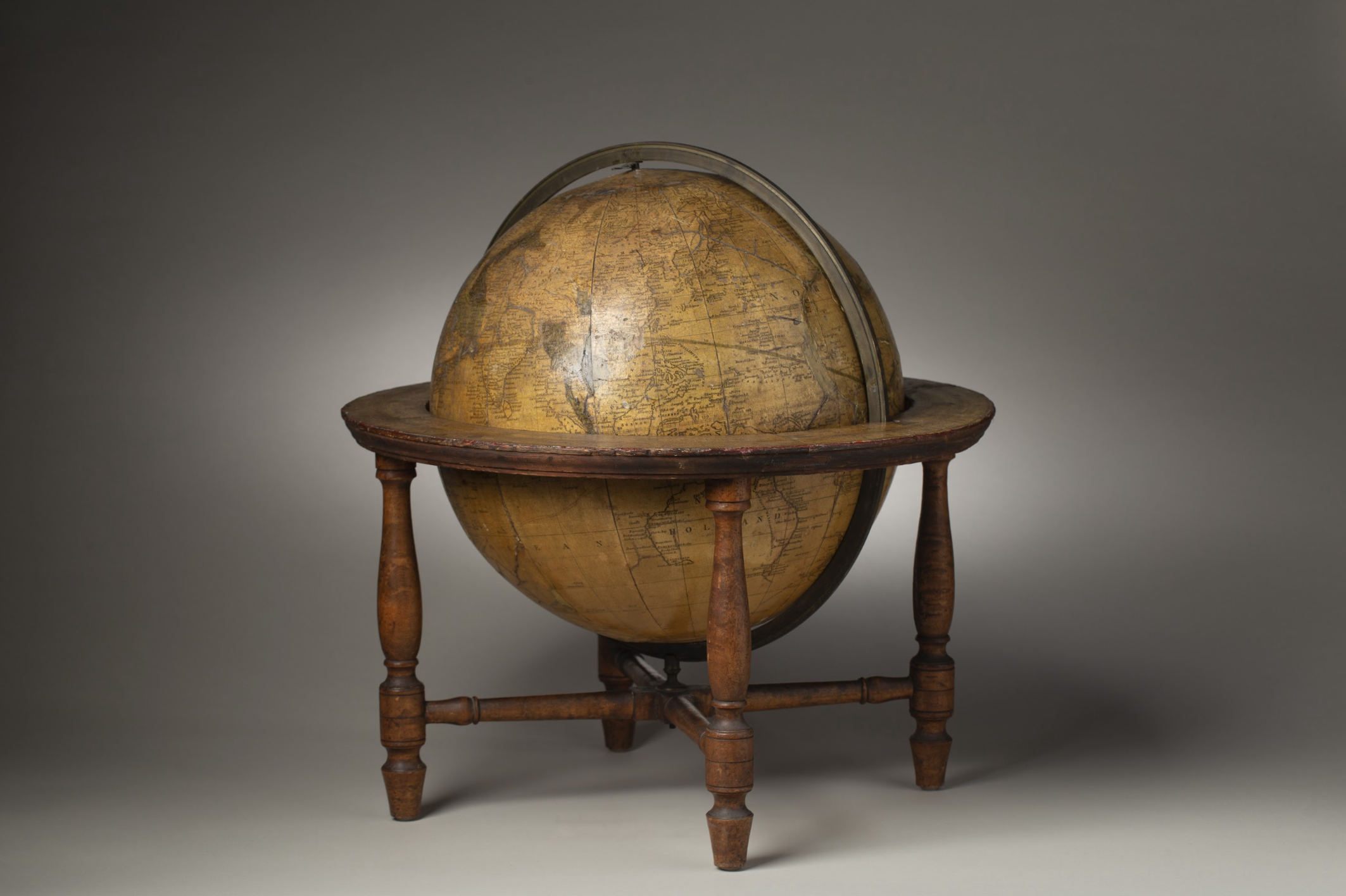 Image 5 of 10
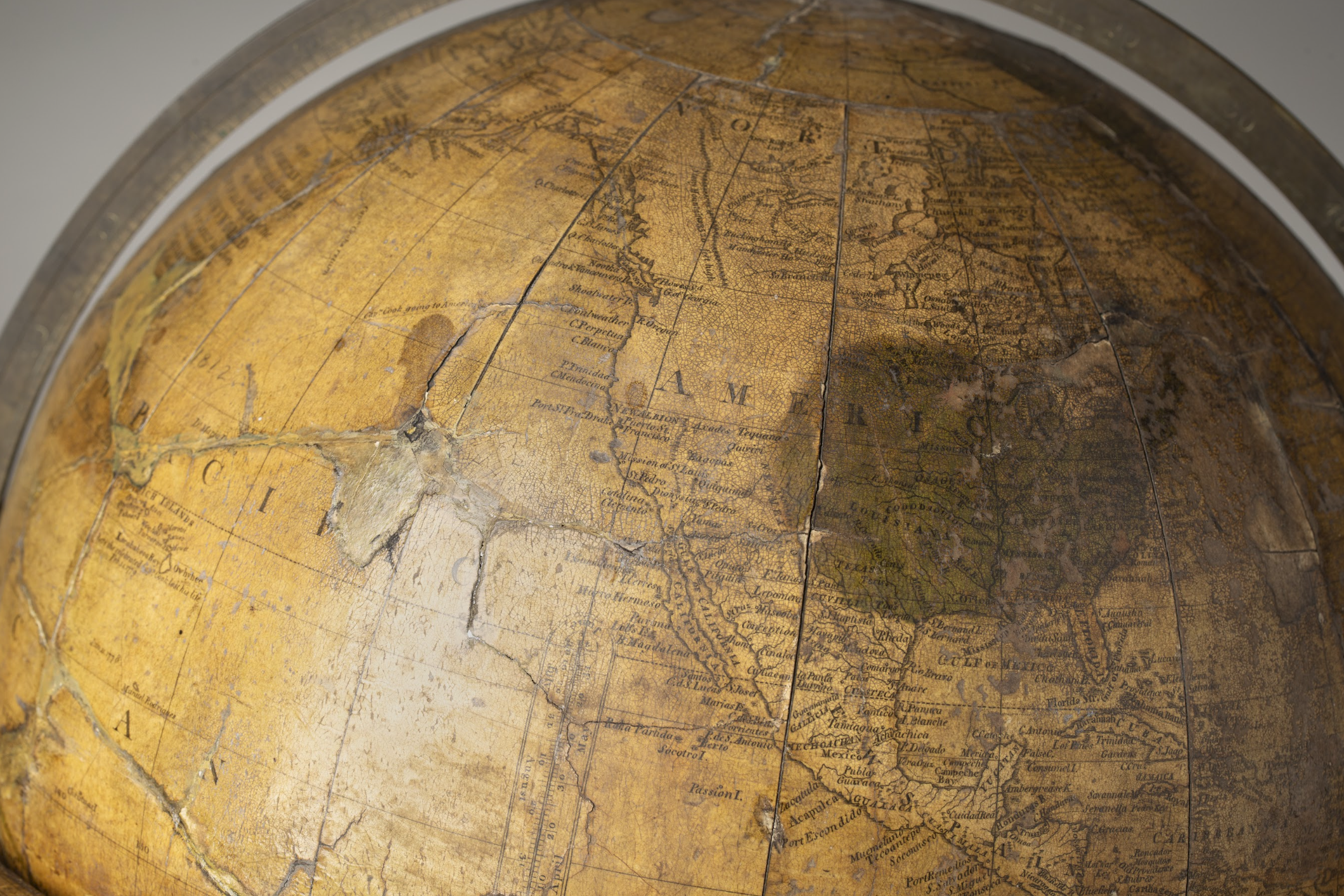 Image 6 of 10
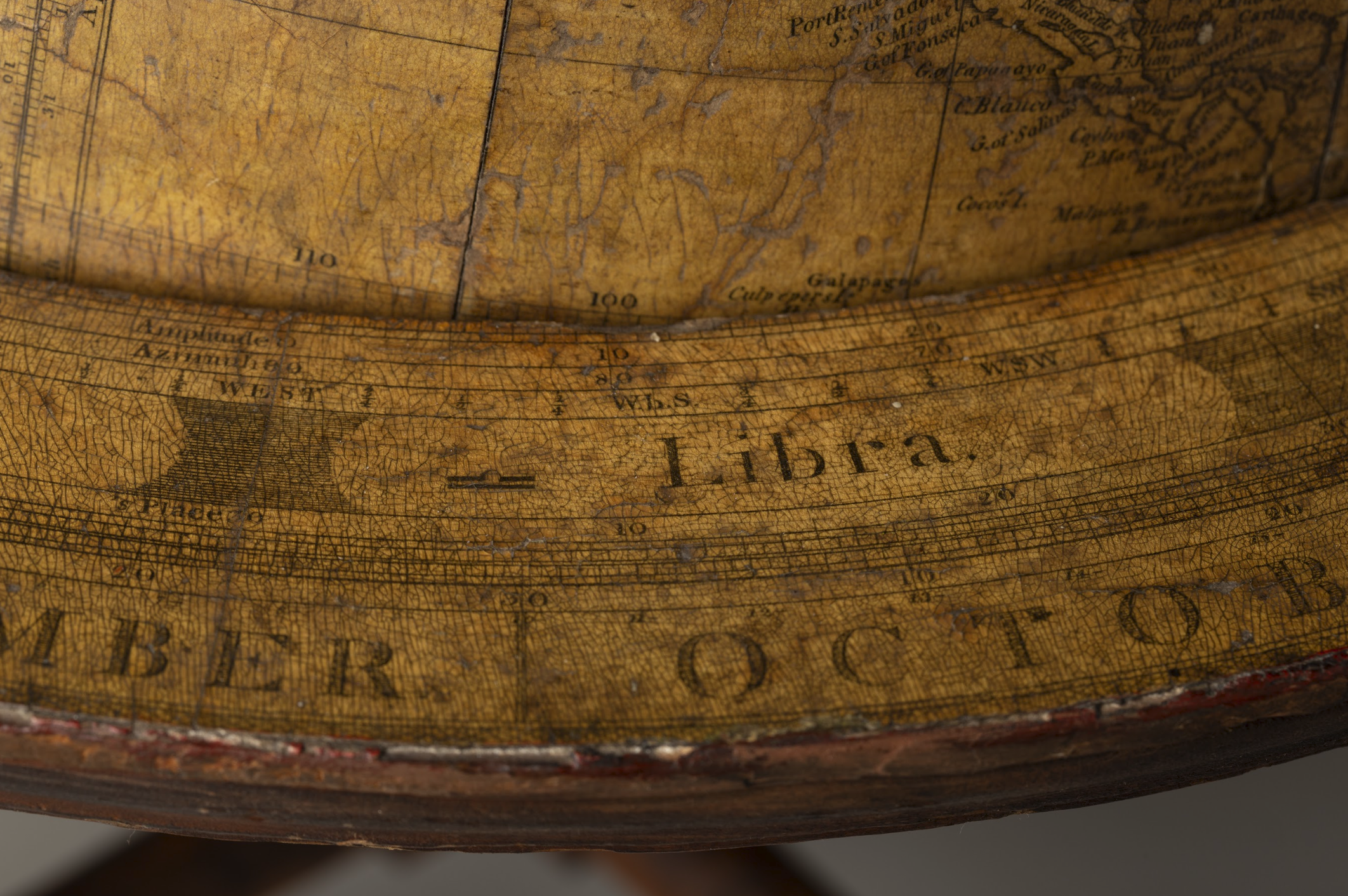 Image 7 of 10
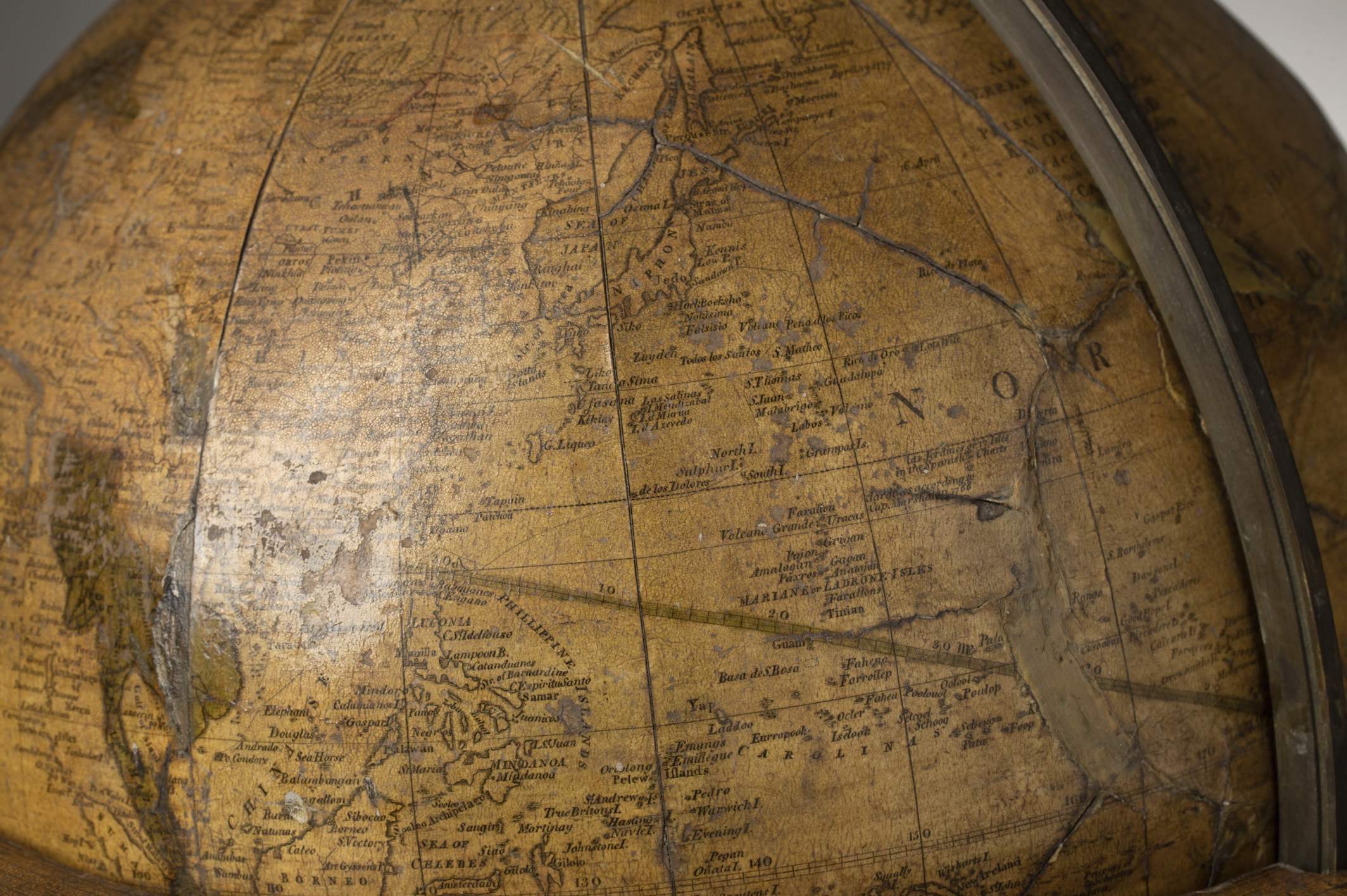 Image 8 of 10
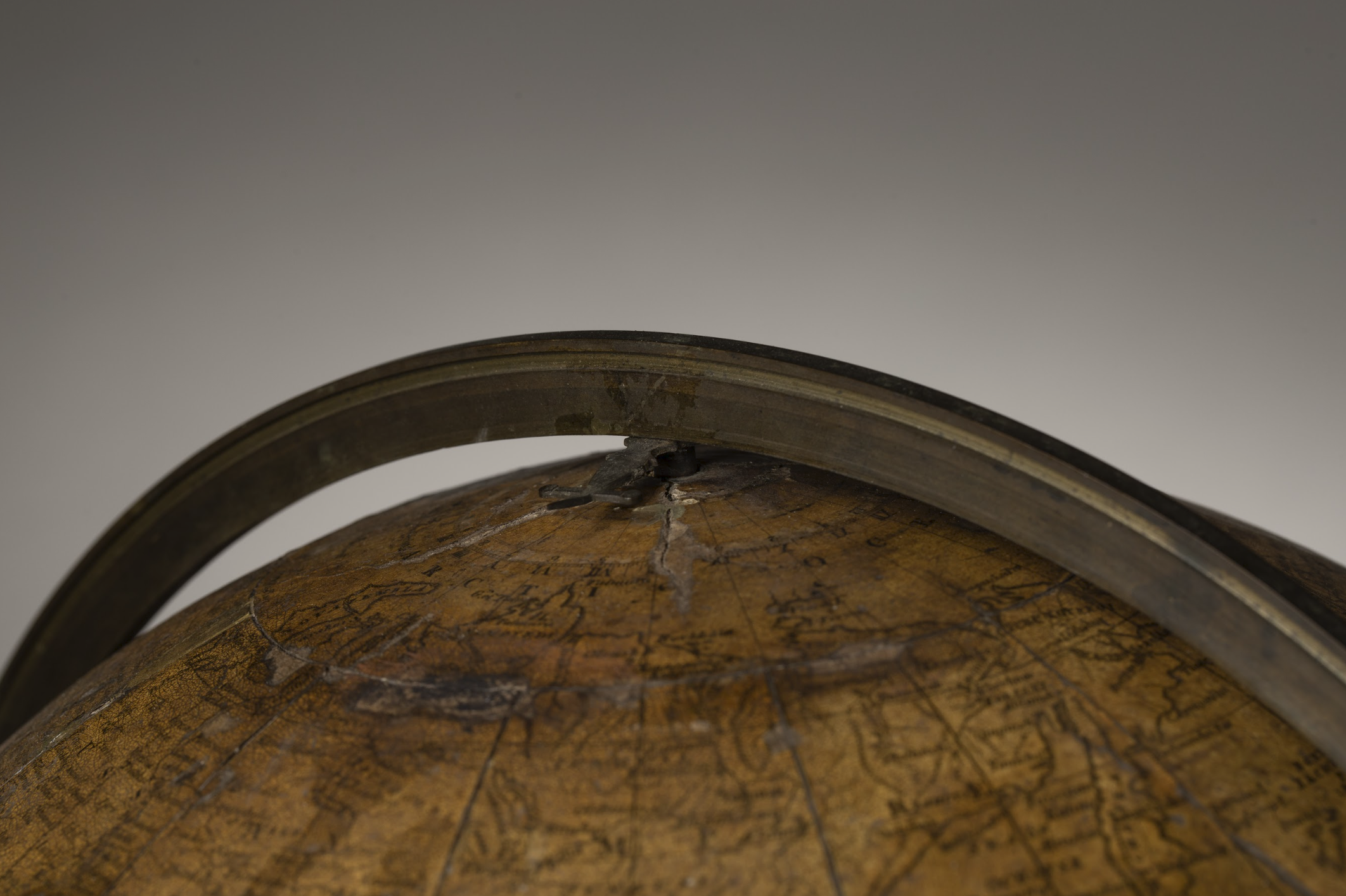 Image 9 of 10
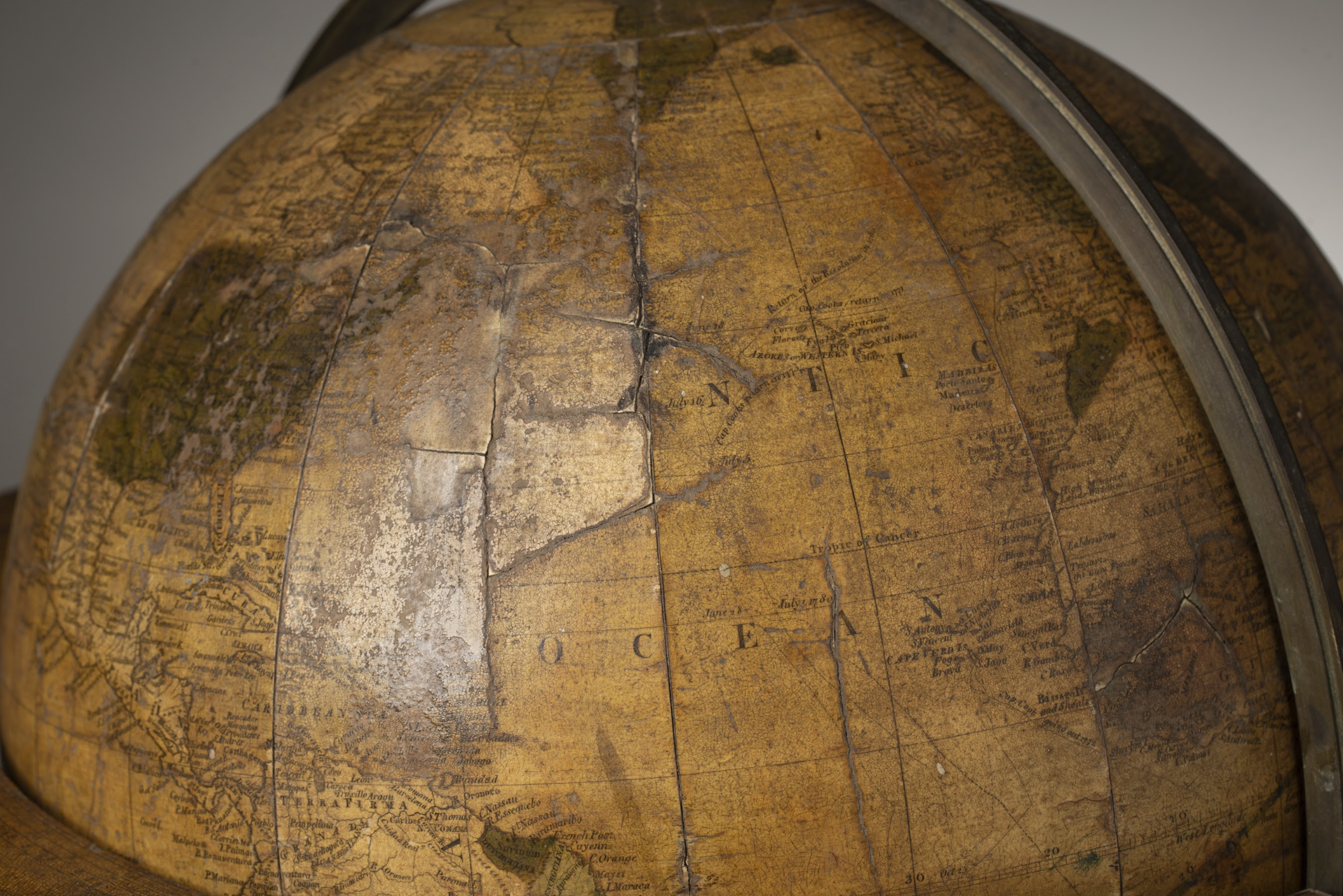 Image 10 of 10