

 Image 1 of 3
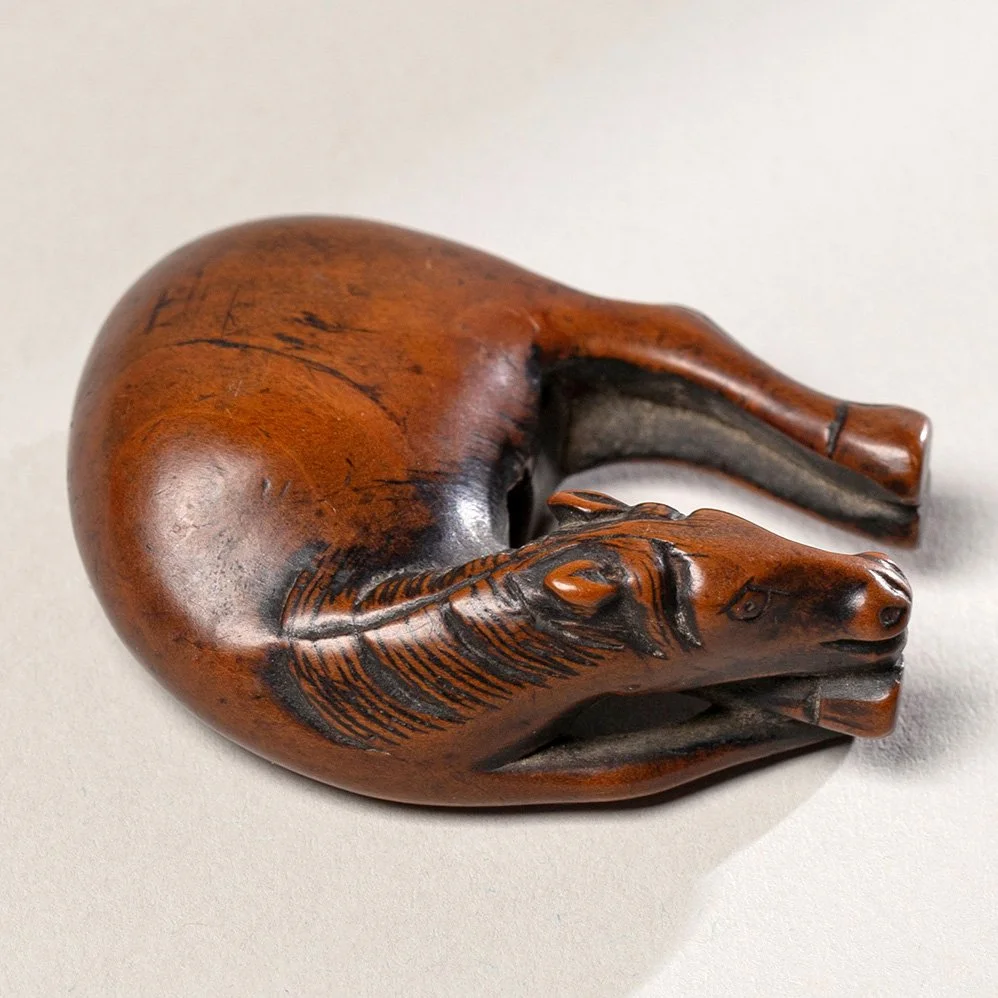 Image 2 of 3
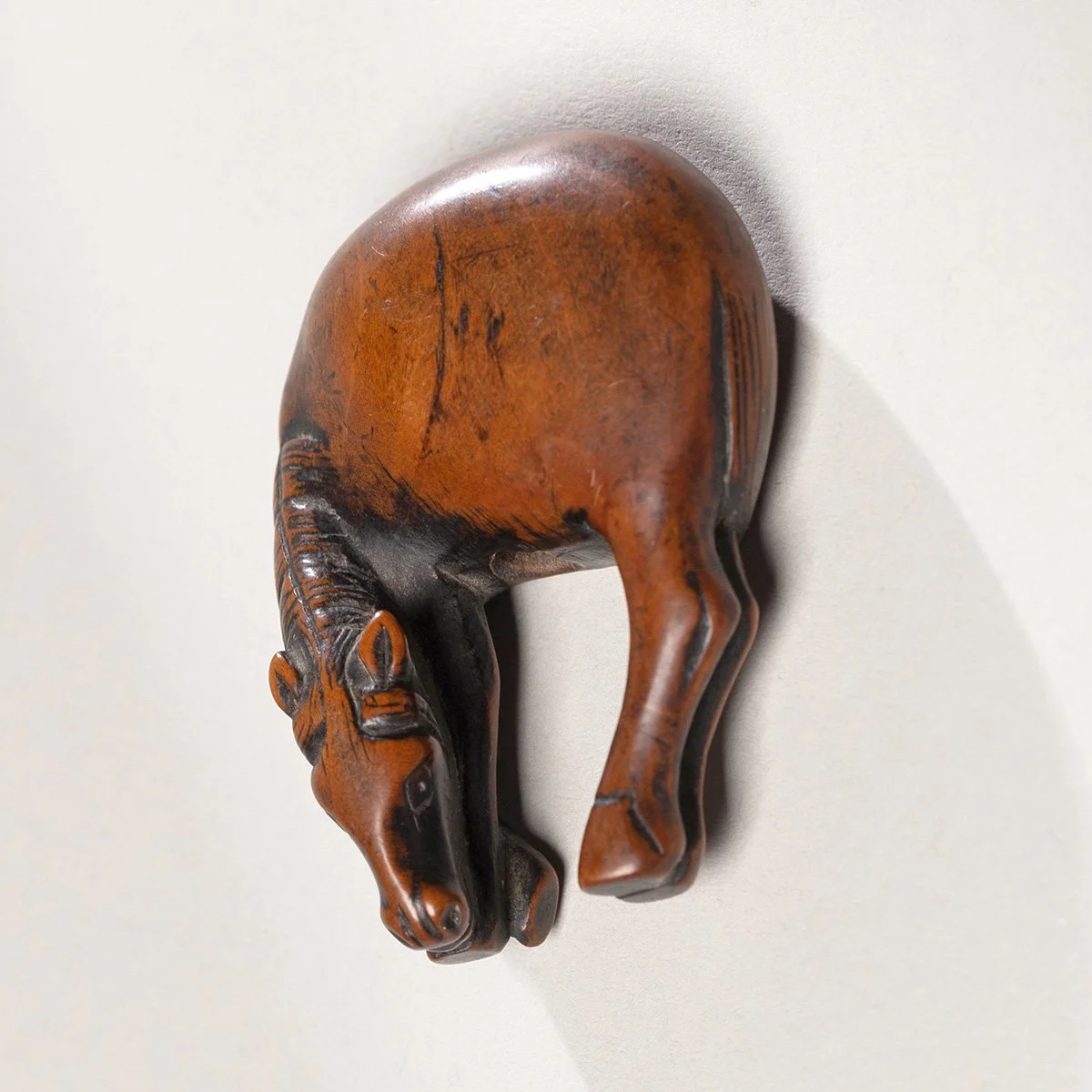 Image 3 of 3
Japan
18th century, Edo period
Boxwood
Height 1 3/4 in (4.4 cm)
Unsigned
Provenance: Gent, Belgium trade
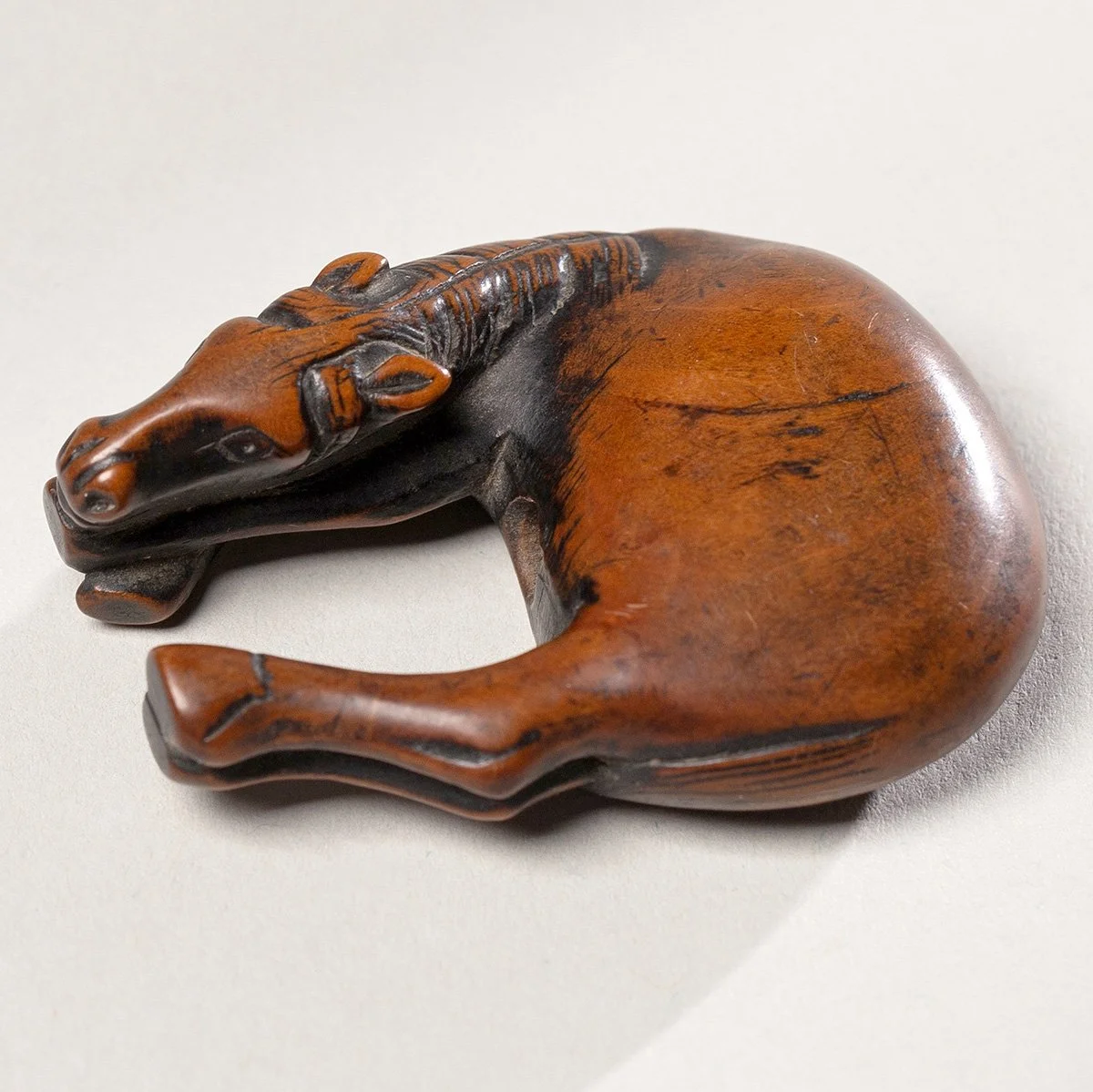
This boxwood netsuke depicts a recumbent horse, its legs folded beneath its body in the compact resting posture that suited the strict functional requirements of the netsuke form. The surface carries a deep, warm patina developed through centuries of handling, the wood worn smooth across the highest points of the composition while retaining crisp detail in the mane, facial features, and musculature. The horse was among the most auspicious subjects in Japanese culture, associated with strength, speed, and divine favor, and equine netsuke were produced by carvers of every period and region.
Boxwood was the preferred material for many of the finest Edo period netsuke carvers, prized for its density, the fineness of its grain, and the amber patina it develops with age and use. This unsigned example is consistent in quality and conception with the work of accomplished carvers active during the eighteenth century, the resting posture allowing the carver to demonstrate control of volume and surface within a single unified form. The Gent, Belgium trade provenance is consistent with the movement of quality Edo period netsuke through European specialist dealers from the late nineteenth century onward.
We ship free anywhere in the world, fully insured, packed by hand.
Japan
18th century, Edo period
Boxwood
Height 1 3/4 in (4.4 cm)
Unsigned
Provenance: Gent, Belgium trade
This boxwood netsuke depicts a recumbent horse, its legs folded beneath its body in the compact resting posture that suited the strict functional requirements of the netsuke form. The surface carries a deep, warm patina developed through centuries of handling, the wood worn smooth across the highest points of the composition while retaining crisp detail in the mane, facial features, and musculature. The horse was among the most auspicious subjects in Japanese culture, associated with strength, speed, and divine favor, and equine netsuke were produced by carvers of every period and region.
Boxwood was the preferred material for many of the finest Edo period netsuke carvers, prized for its density, the fineness of its grain, and the amber patina it develops with age and use. This unsigned example is consistent in quality and conception with the work of accomplished carvers active during the eighteenth century, the resting posture allowing the carver to demonstrate control of volume and surface within a single unified form. The Gent, Belgium trade provenance is consistent with the movement of quality Edo period netsuke through European specialist dealers from the late nineteenth century onward.
We ship free anywhere in the world, fully insured, packed by hand.