

 Image 1 of 3
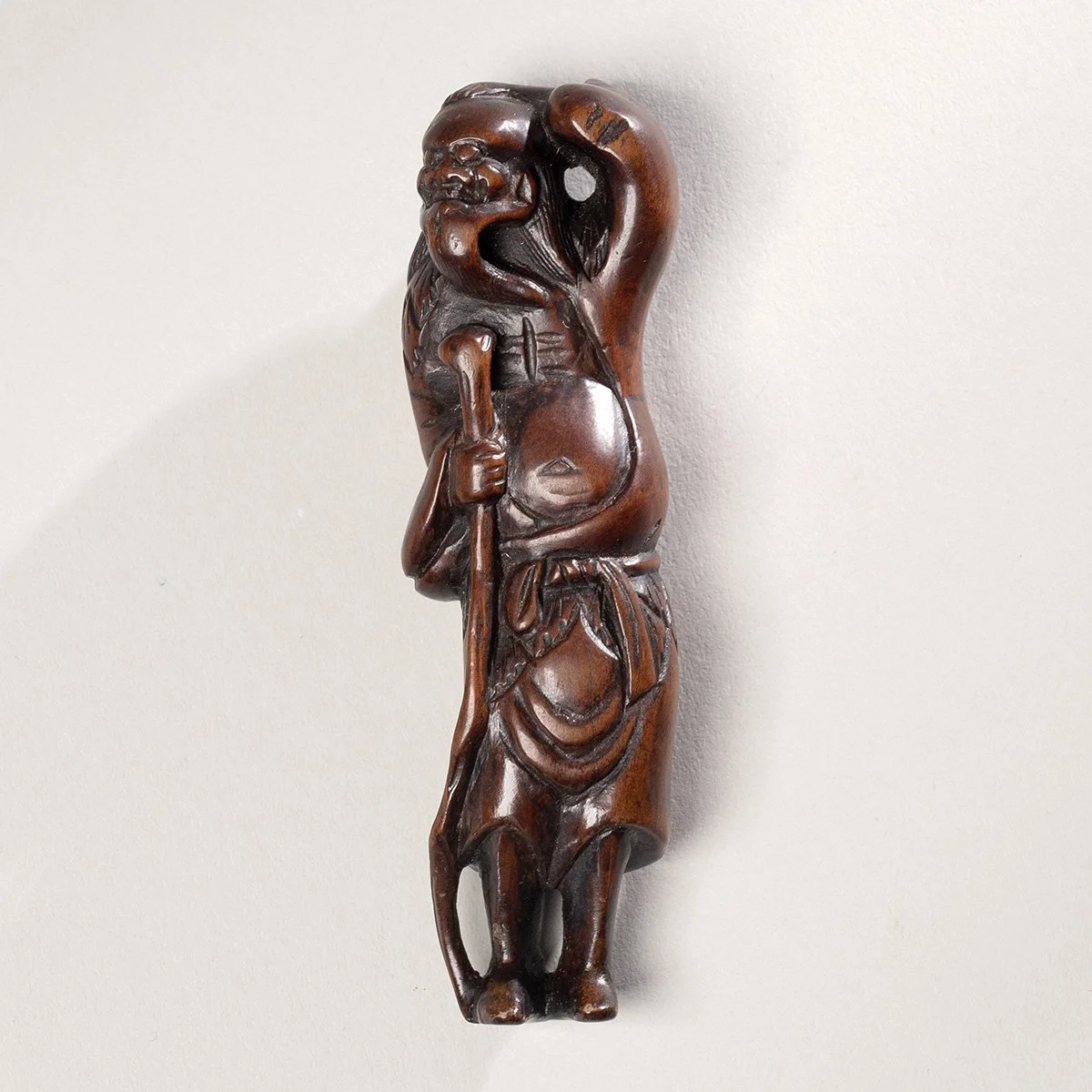 Image 2 of 3
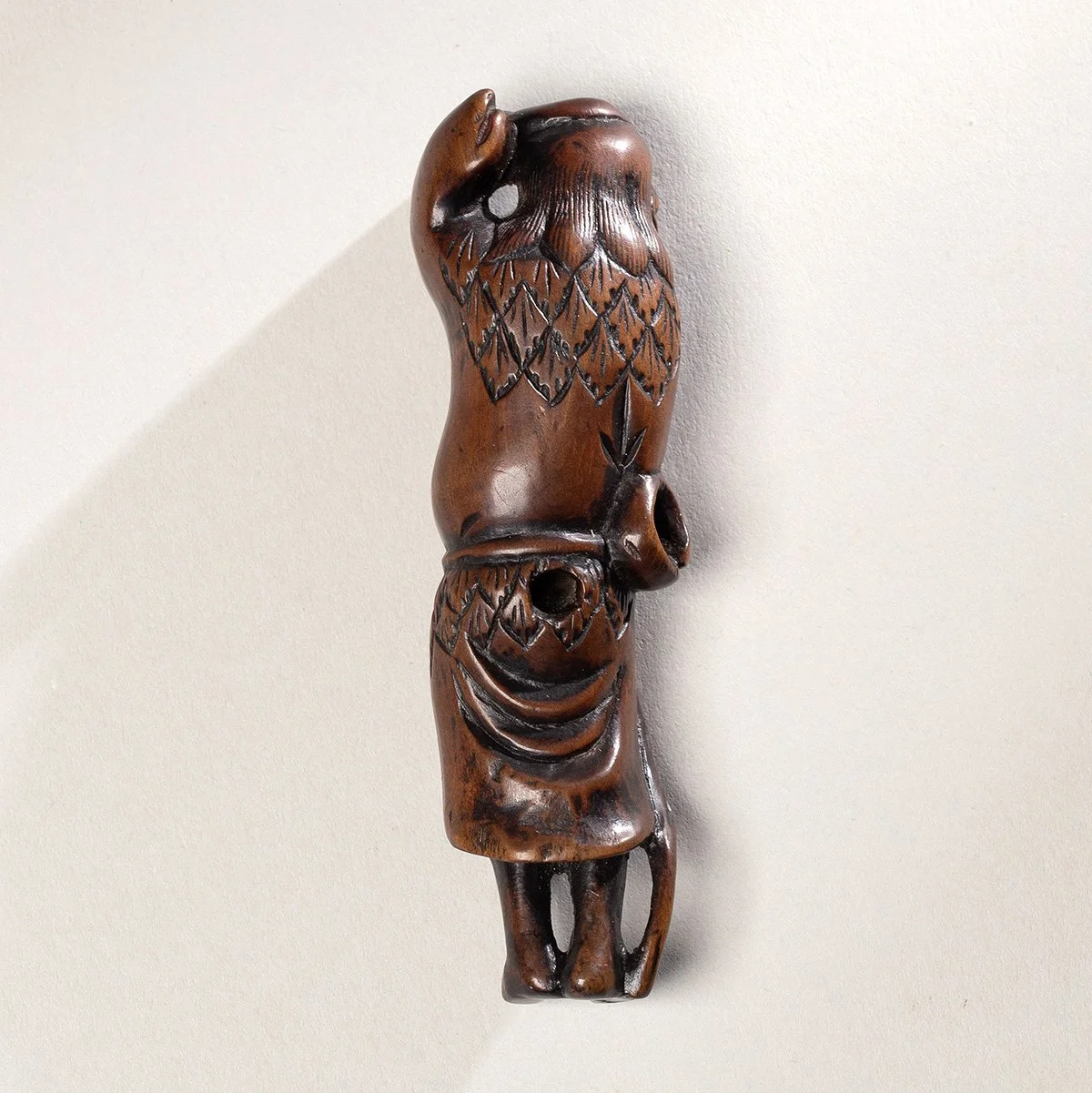 Image 3 of 3
Japan
18th century, Edo period
Boxwood
Height 3 1/2 in (8.9 cm)
Unsigned
Provenance: Gent, Belgium trade
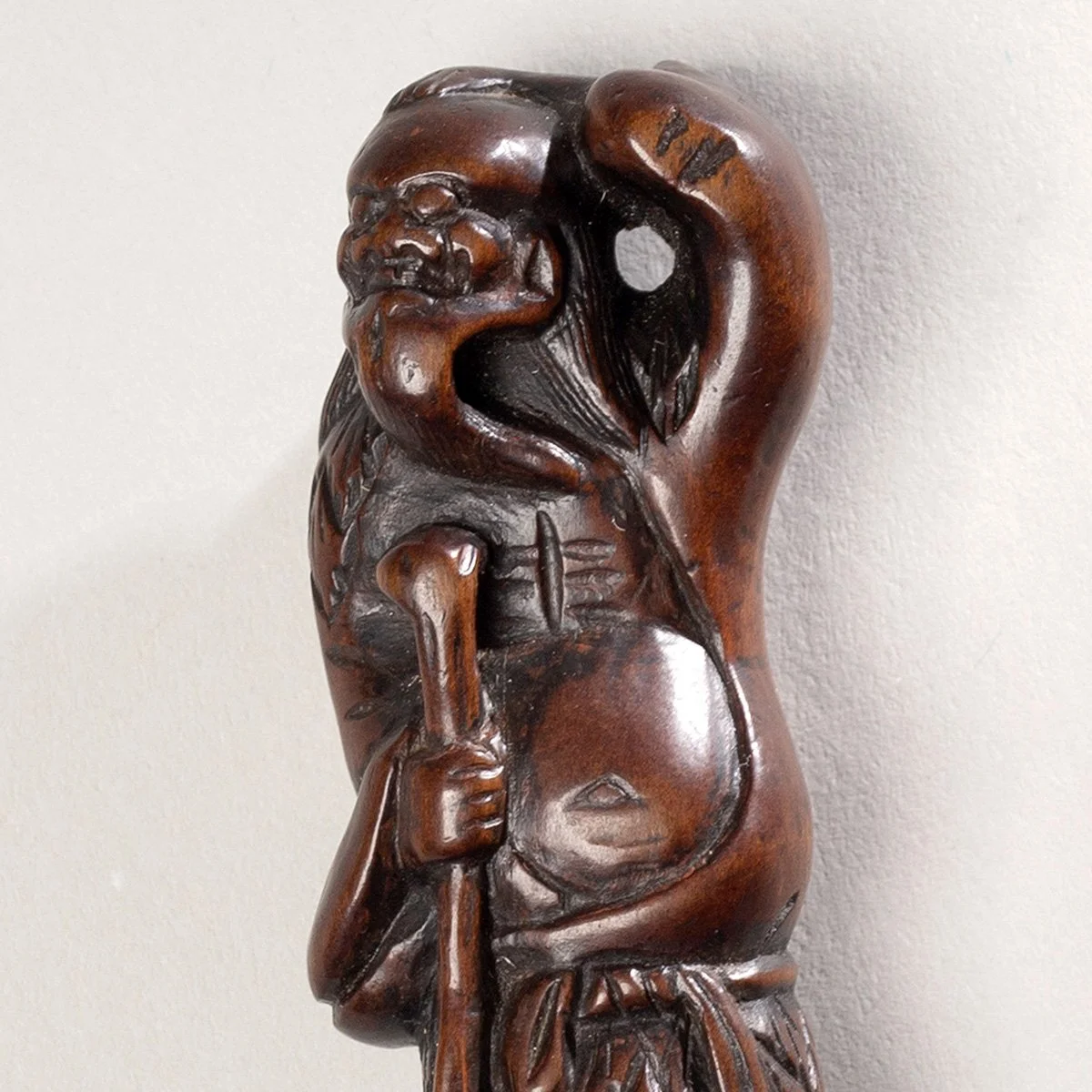
The netsuke depicting an old man is one of the most enduring subjects in the Japanese carver's repertoire, reflecting the Confucian reverence for age and wisdom that permeated Edo period culture. This boxwood figure is carved with close attention to the surface treatment of skin, clothing, and posture, the hunched bearing and expressive face conveying character with economy of means. Boxwood was a preferred material for netsuke carvers of the Edo period due to its density, fine grain, and the warm patina it develops with handling.
Netsuke functioned as toggles suspending the inro, tobacco pouch, and other personal items from the obi sash, and were worn daily by men of all social classes during the Edo period. The quality of carving and the choice of subject reflect the taste of the original owner as well as the skill of the maker. This unsigned example is consistent in quality and subject with the work of accomplished provincial carvers active during the eighteenth century.
We ship free anywhere in the world, fully insured, packed by hand.
Japan
18th century, Edo period
Boxwood
Height 3 1/2 in (8.9 cm)
Unsigned
Provenance: Gent, Belgium trade
The netsuke depicting an old man is one of the most enduring subjects in the Japanese carver's repertoire, reflecting the Confucian reverence for age and wisdom that permeated Edo period culture. This boxwood figure is carved with close attention to the surface treatment of skin, clothing, and posture, the hunched bearing and expressive face conveying character with economy of means. Boxwood was a preferred material for netsuke carvers of the Edo period due to its density, fine grain, and the warm patina it develops with handling.
Netsuke functioned as toggles suspending the inro, tobacco pouch, and other personal items from the obi sash, and were worn daily by men of all social classes during the Edo period. The quality of carving and the choice of subject reflect the taste of the original owner as well as the skill of the maker. This unsigned example is consistent in quality and subject with the work of accomplished provincial carvers active during the eighteenth century.
We ship free anywhere in the world, fully insured, packed by hand.