Japan
Kamakura period, 1185 to 1333
Wood
Height 10 1/2 in (26.7 cm)
Provenance: Private collection, Yokohama, Japan
Shinto kami, the deities and spirits of the Japanese indigenous religion, were not originally represented in human form, being associated instead with natural phenomena and sacred objects. The anthropomorphic depiction of kami began under the strong influence of Buddhism from the Heian period onward, producing a tradition of Shinto deity sculpture that developed alongside and intertwined with Buddhist image making throughout the medieval period. This male Shinto deity figure dates to the Kamakura period, when such figures were portrayed with a quiet naturalism distinct from the more hierarchically differentiated figures of the Buddhist tradition, the calm and non-distinctive facial features reflecting the peaceful, neutral quality considered appropriate for a kami in human guise.
Shinto deity figures of this type were kept within portable shrine cabinets for private worship rather than displayed publicly, their existence known only to those with access to the inner precincts of the shrine or household altar. The heavily weathered and worm-eaten surface of this figure is consistent with great age and the conditions of storage within a wooden shrine structure over many centuries. The Yokohama provenance places this piece within the context of Japanese private collecting, where objects of Shinto ritual significance were occasionally dispersed as shrines were consolidated or reformed during the modern period.
We ship free anywhere in the world, fully insured, packed by hand.
Japan
Kamakura period, 1185 to 1333
Wood
Height 10 1/2 in (26.7 cm)
Provenance: Private collection, Yokohama, Japan
Shinto kami, the deities and spirits of the Japanese indigenous religion, were not originally represented in human form, being associated instead with natural phenomena and sacred objects. The anthropomorphic depiction of kami began under the strong influence of Buddhism from the Heian period onward, producing a tradition of Shinto deity sculpture that developed alongside and intertwined with Buddhist image making throughout the medieval period. This male Shinto deity figure dates to the Kamakura period, when such figures were portrayed with a quiet naturalism distinct from the more hierarchically differentiated figures of the Buddhist tradition, the calm and non-distinctive facial features reflecting the peaceful, neutral quality considered appropriate for a kami in human guise.
Shinto deity figures of this type were kept within portable shrine cabinets for private worship rather than displayed publicly, their existence known only to those with access to the inner precincts of the shrine or household altar. The heavily weathered and worm-eaten surface of this figure is consistent with great age and the conditions of storage within a wooden shrine structure over many centuries. The Yokohama provenance places this piece within the context of Japanese private collecting, where objects of Shinto ritual significance were occasionally dispersed as shrines were consolidated or reformed during the modern period.
We ship free anywhere in the world, fully insured, packed by hand.


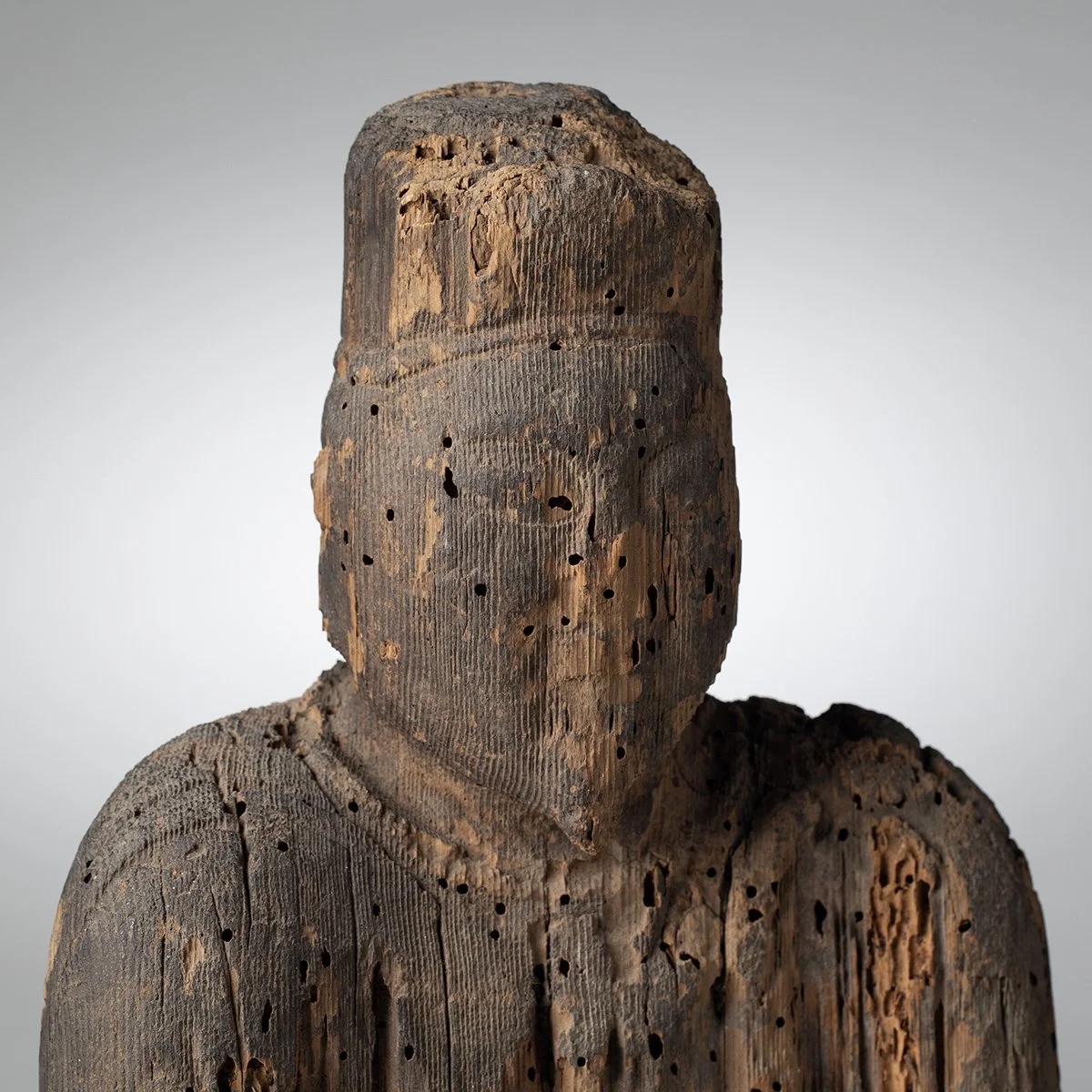 Image 1 of 7
 Image 2 of 7
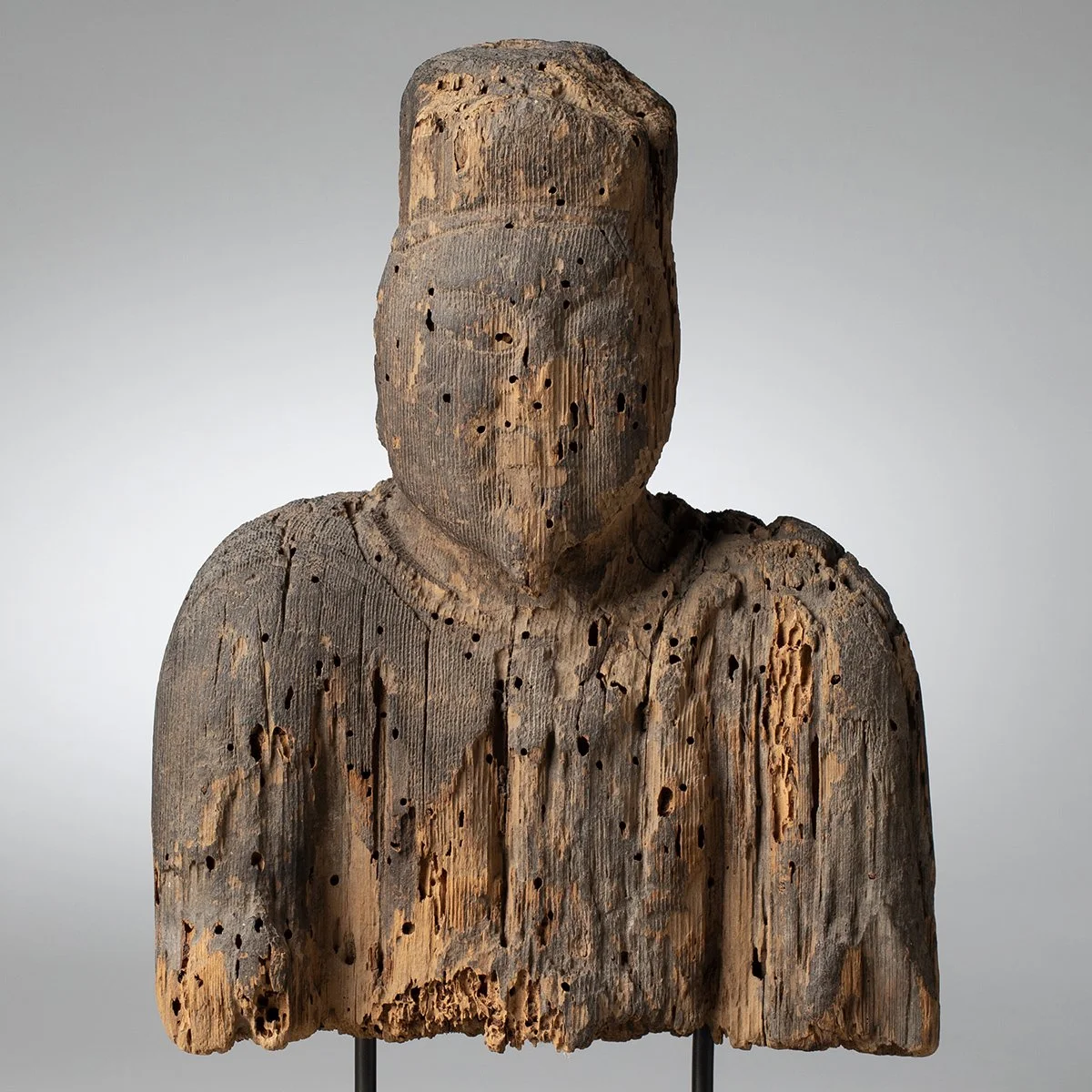 Image 3 of 7
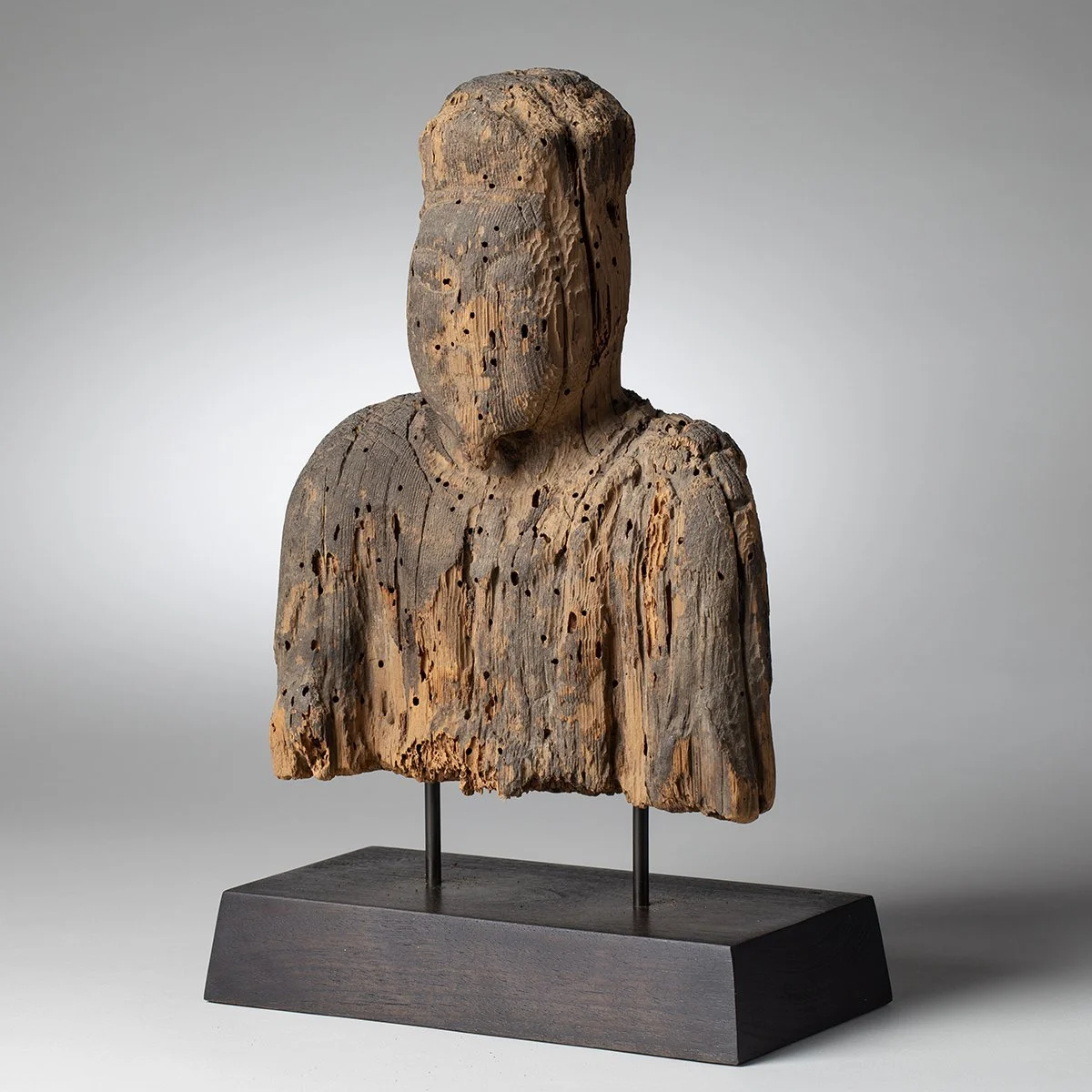 Image 4 of 7
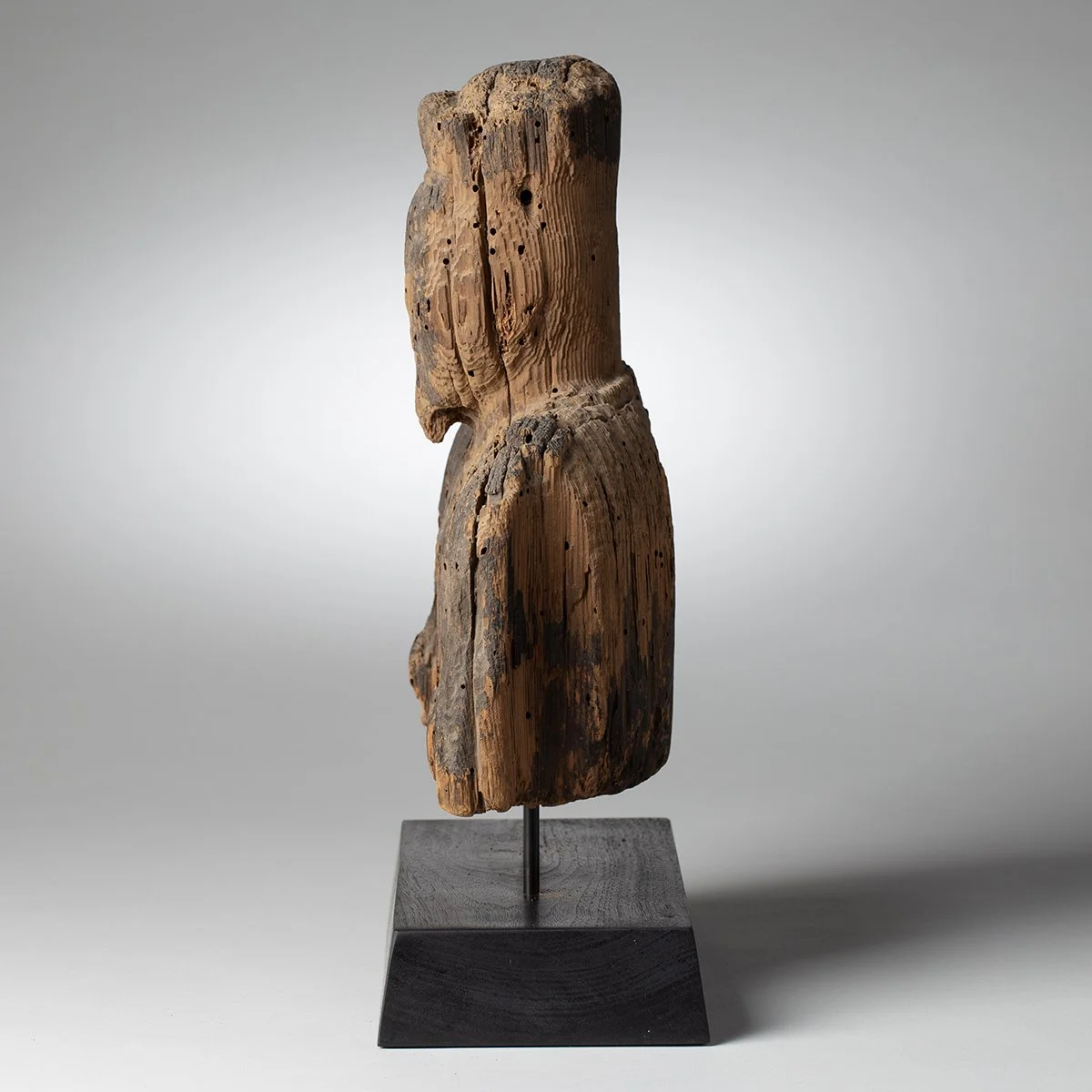 Image 5 of 7
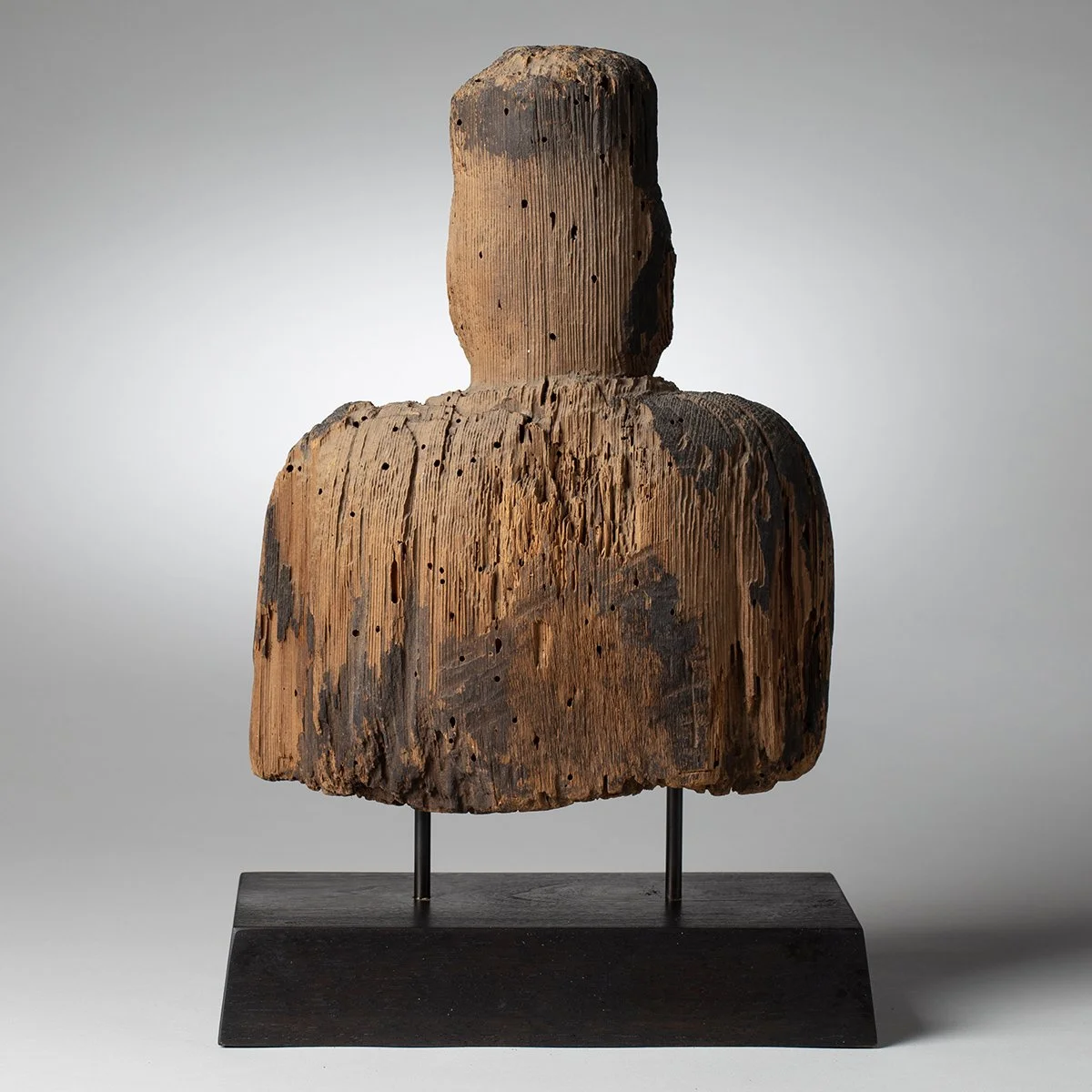 Image 6 of 7
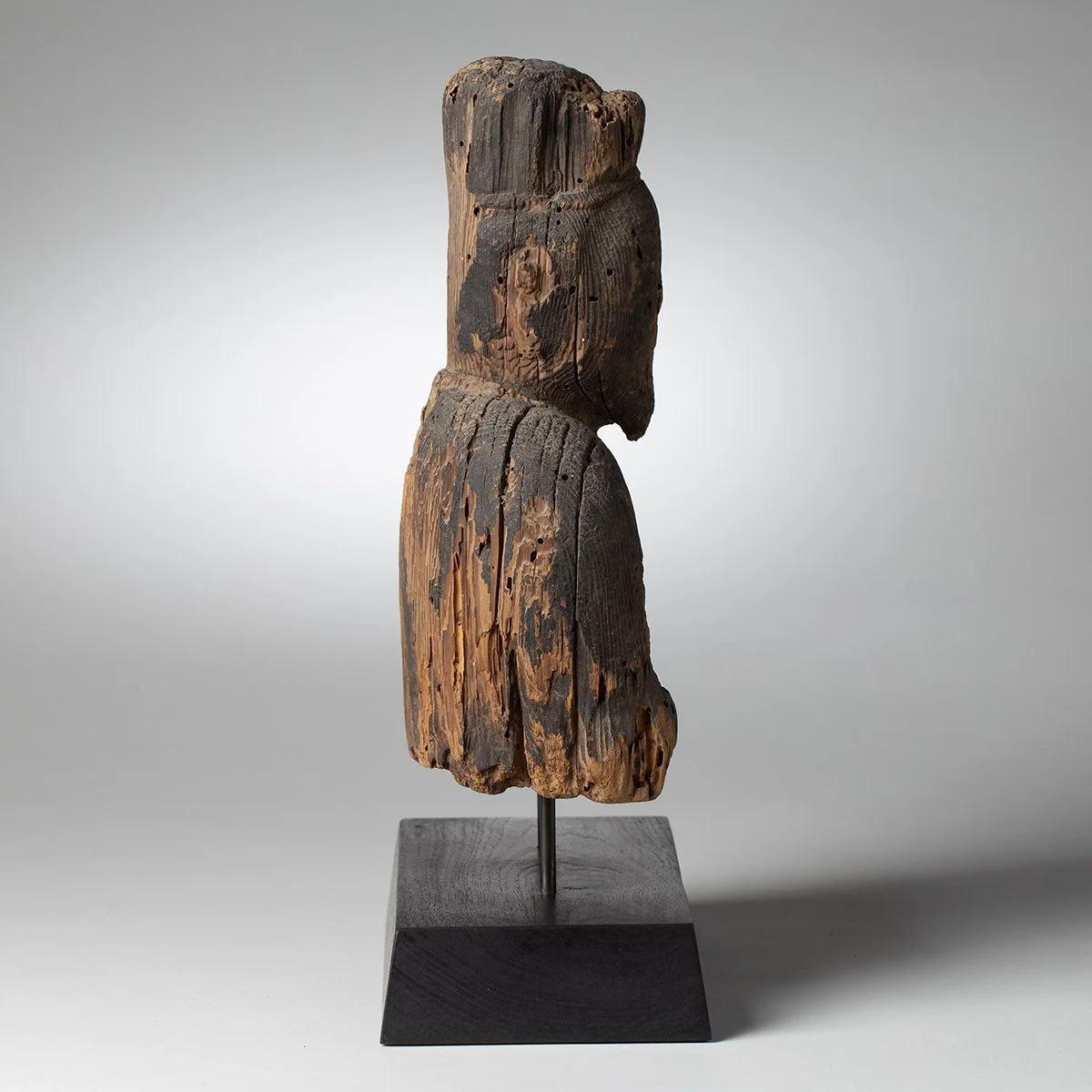 Image 7 of 7