

 Image 1 of 3
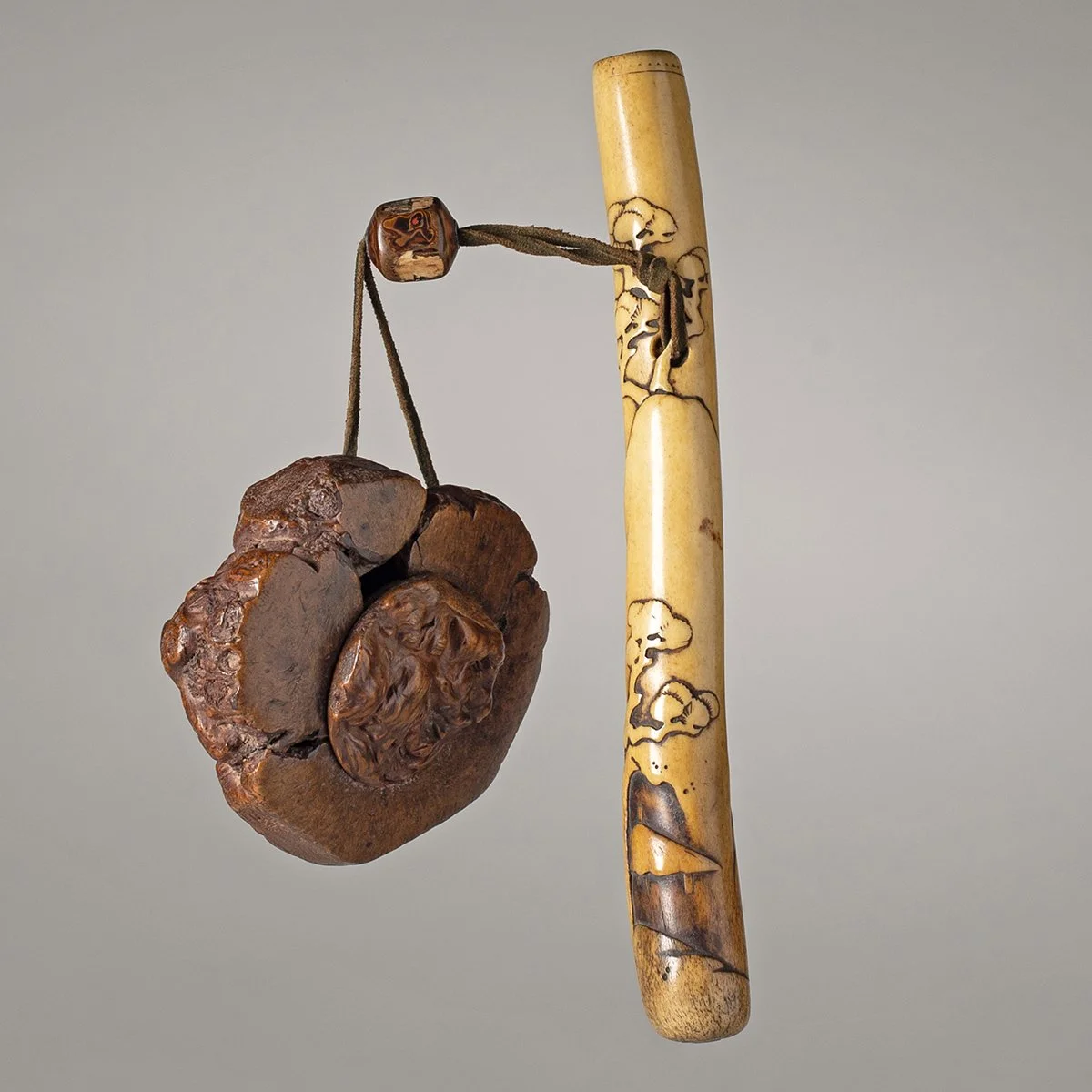 Image 2 of 3
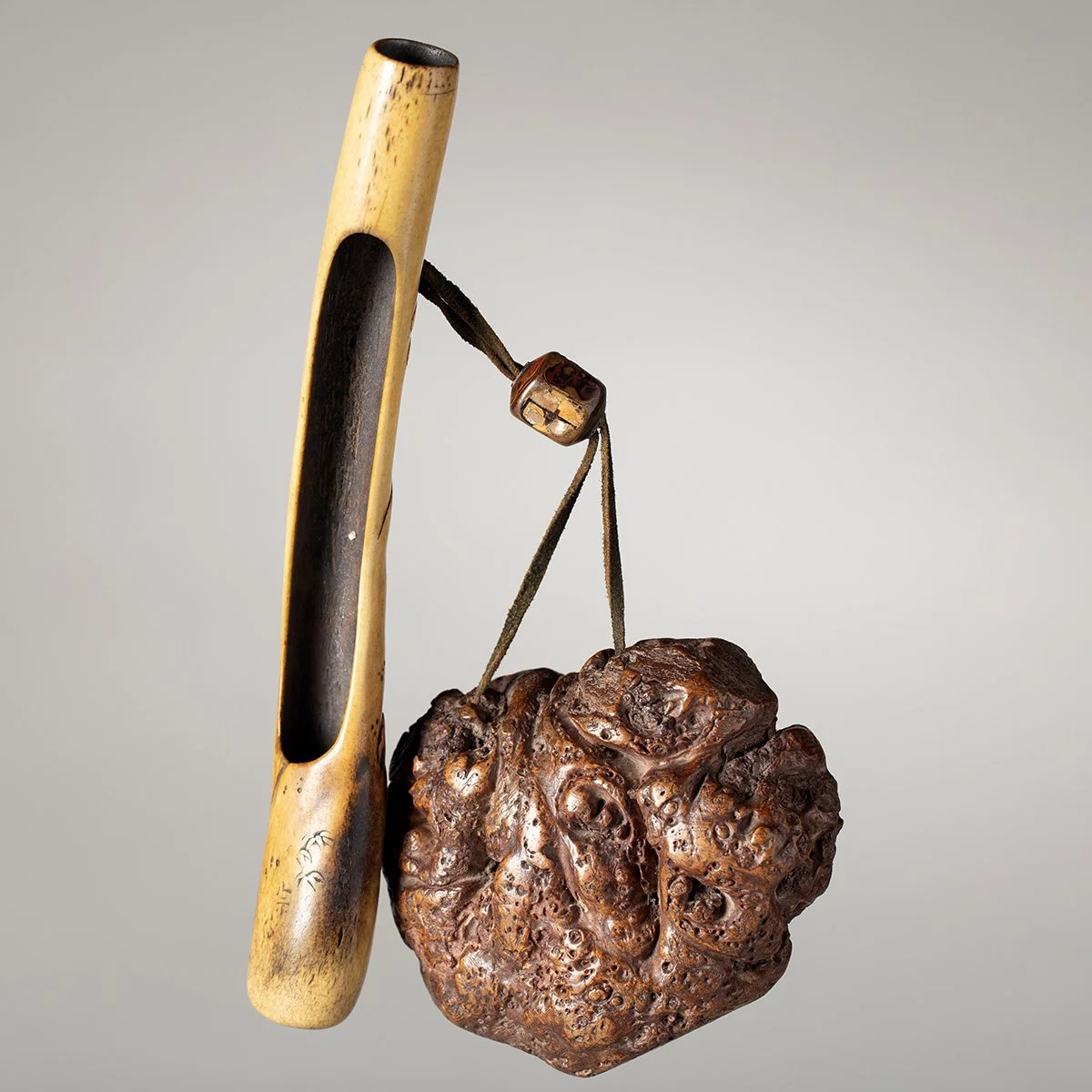 Image 3 of 3
Japan
Meiji era
Bone, wood
Length 7 1/2 in (19.1 cm)
Provenance: Private collection, Kyoto
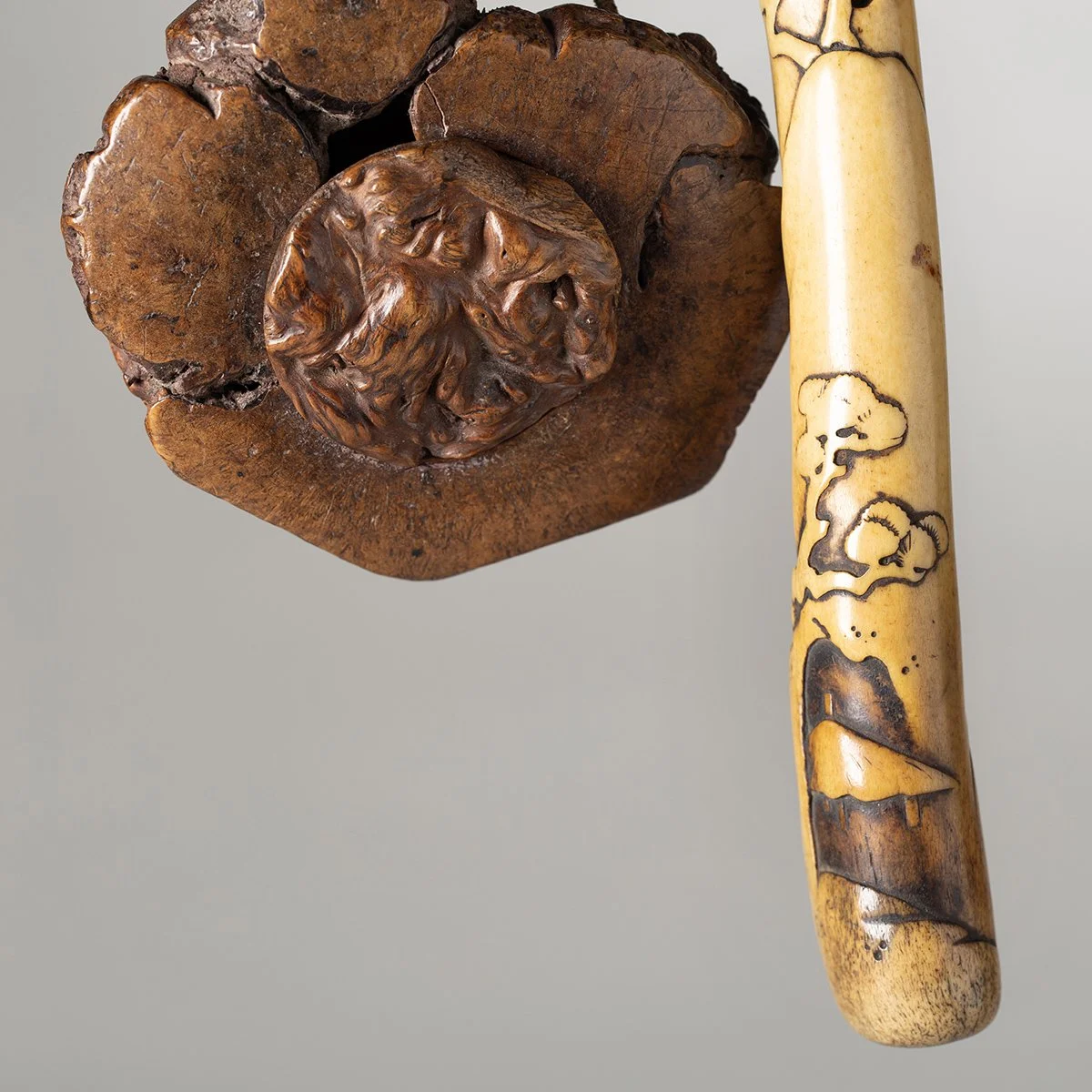
This Japanese opium pipe holder from the Meiji era combines a carved bone pipe with a wood fitting, the bone decorated with incised floral patterning in the manner characteristic of Meiji period decorative objects produced for both domestic use and export. The piece retains a beautiful patina and decades of wear consistent with regular handling over a long period. Kyoto provenance places this object within the cultural capital of Japan, where refined objects of personal use were produced and collected with particular seriousness.
Opium pipe fittings and holders of the Meiji period occupy an interesting position at the intersection of Japanese craft tradition and the broader Asian material culture of opium use that spread through maritime trade networks during the nineteenth century. Objects of this kind were produced with considerable care, the pipe and its fittings treated as personal accessories worthy of the same attention given to tobacco pipes, netsuke, and other objects of daily use. This example, with its Kyoto provenance and well-developed surface, is a well-preserved piece of Meiji period personal material culture.
We ship free anywhere in the world, fully insured, packed by hand.
Japan
Meiji era
Bone, wood
Length 7 1/2 in (19.1 cm)
Provenance: Private collection, Kyoto
This Japanese opium pipe holder from the Meiji era combines a carved bone pipe with a wood fitting, the bone decorated with incised floral patterning in the manner characteristic of Meiji period decorative objects produced for both domestic use and export. The piece retains a beautiful patina and decades of wear consistent with regular handling over a long period. Kyoto provenance places this object within the cultural capital of Japan, where refined objects of personal use were produced and collected with particular seriousness.
Opium pipe fittings and holders of the Meiji period occupy an interesting position at the intersection of Japanese craft tradition and the broader Asian material culture of opium use that spread through maritime trade networks during the nineteenth century. Objects of this kind were produced with considerable care, the pipe and its fittings treated as personal accessories worthy of the same attention given to tobacco pipes, netsuke, and other objects of daily use. This example, with its Kyoto provenance and well-developed surface, is a well-preserved piece of Meiji period personal material culture.
We ship free anywhere in the world, fully insured, packed by hand.