

 Image 1 of 2
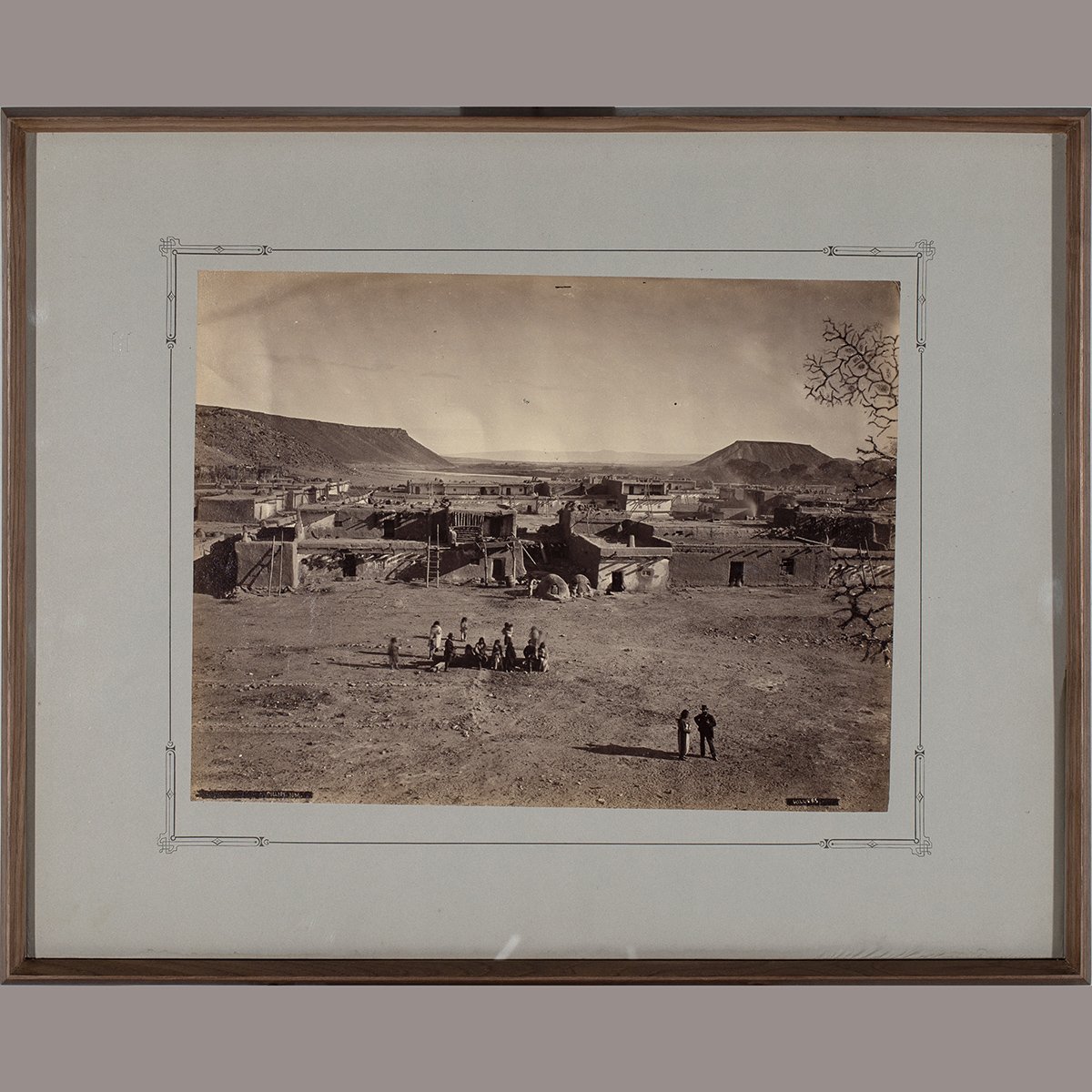 Image 2 of 2
Albumen print on period mount
Height 16.5 in / 41.9 cm including archival frame
Width 20.5 in / 52.1 cm including archival frame
Provenance: Larry Frank, Taos, NM
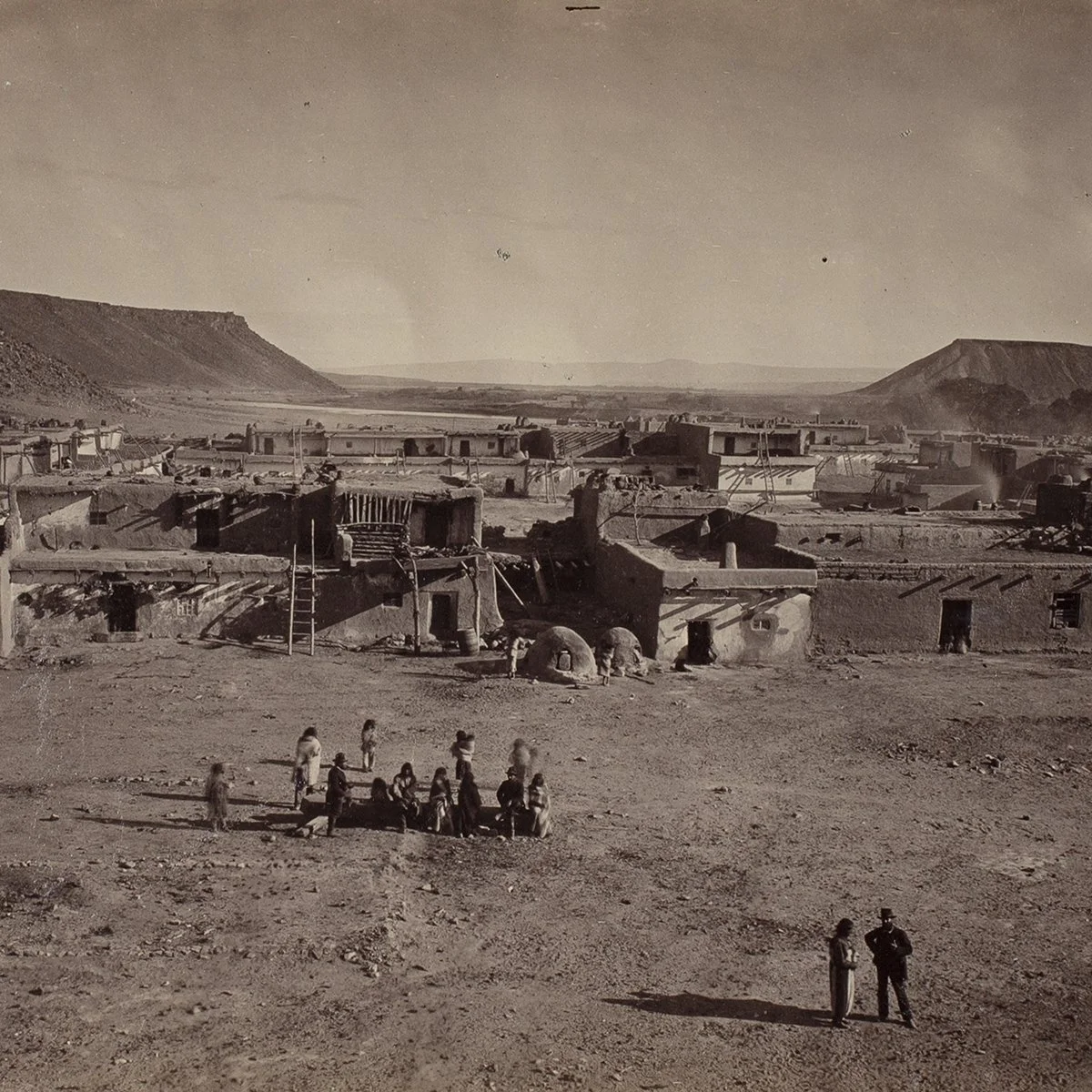
This albumen print by John K. Hillers shows Pillipi, New Mexico, in 1879–1880. Hillers worked as a photographer for the United States Geological Survey and the Bureau of Ethnology, producing some of the earliest photographic records of Pueblo villages, archaeological sites, and Southwestern landscapes. The image presents the settlement from an elevated vantage point, placing the architecture within its wider landform and valley setting.
The albumen process and period mount place the photograph within nineteenth-century survey-era documentation. Hillers’s work is closely associated with the photographic study of Zuni, Hopi, and other Pueblo communities during the early years of institutional ethnographic fieldwork in the Southwest. This example should be described as a New Mexico Pueblo-region view without assigning a more specific cultural attribution unless confirmed by additional documentation.
We ship free anywhere in the world, fully insured, packed by hand.
Albumen print on period mount
Height 16.5 in / 41.9 cm including archival frame
Width 20.5 in / 52.1 cm including archival frame
Provenance: Larry Frank, Taos, NM
This albumen print by John K. Hillers shows Pillipi, New Mexico, in 1879–1880. Hillers worked as a photographer for the United States Geological Survey and the Bureau of Ethnology, producing some of the earliest photographic records of Pueblo villages, archaeological sites, and Southwestern landscapes. The image presents the settlement from an elevated vantage point, placing the architecture within its wider landform and valley setting.
The albumen process and period mount place the photograph within nineteenth-century survey-era documentation. Hillers’s work is closely associated with the photographic study of Zuni, Hopi, and other Pueblo communities during the early years of institutional ethnographic fieldwork in the Southwest. This example should be described as a New Mexico Pueblo-region view without assigning a more specific cultural attribution unless confirmed by additional documentation.
We ship free anywhere in the world, fully insured, packed by hand.