

 Image 1 of 3
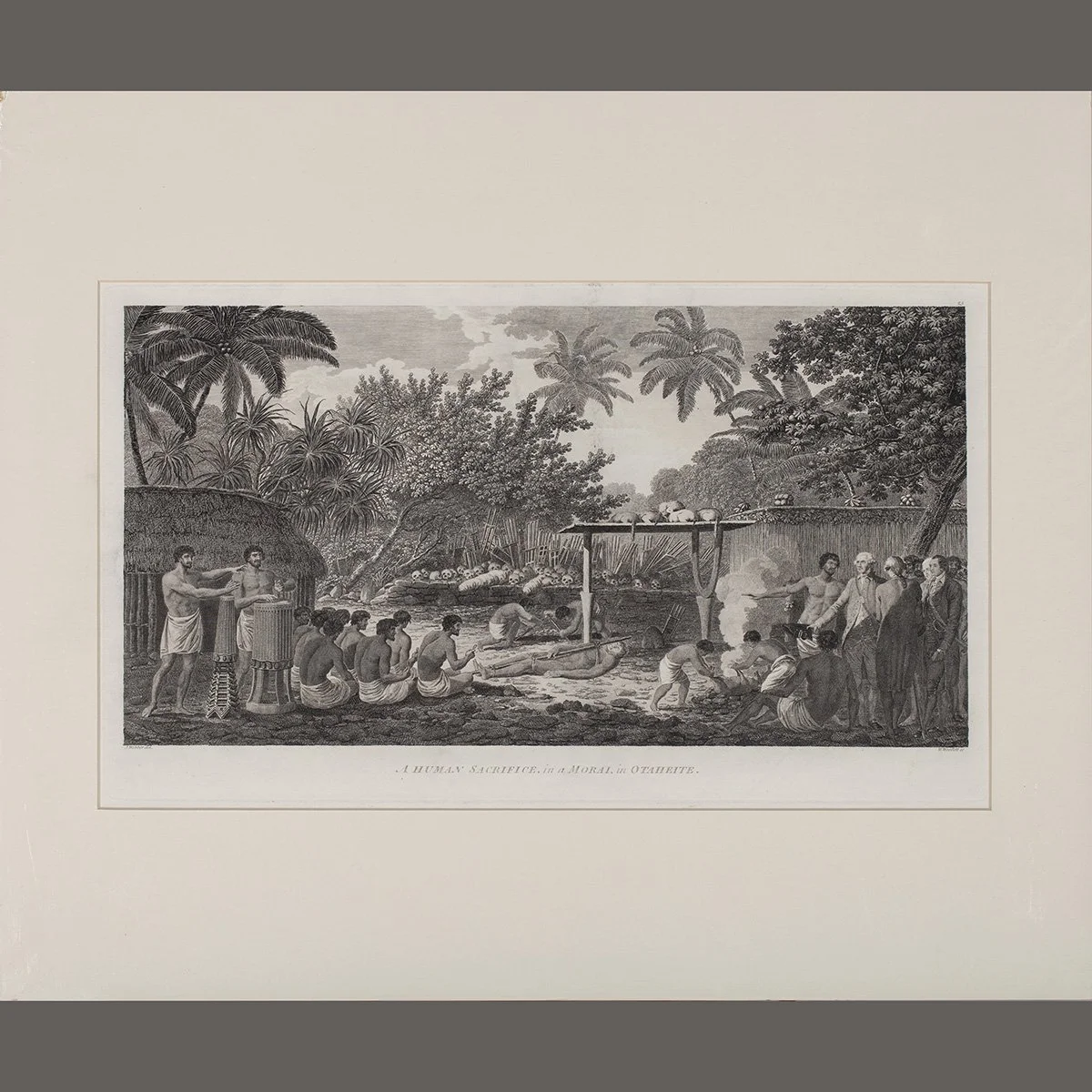 Image 2 of 3
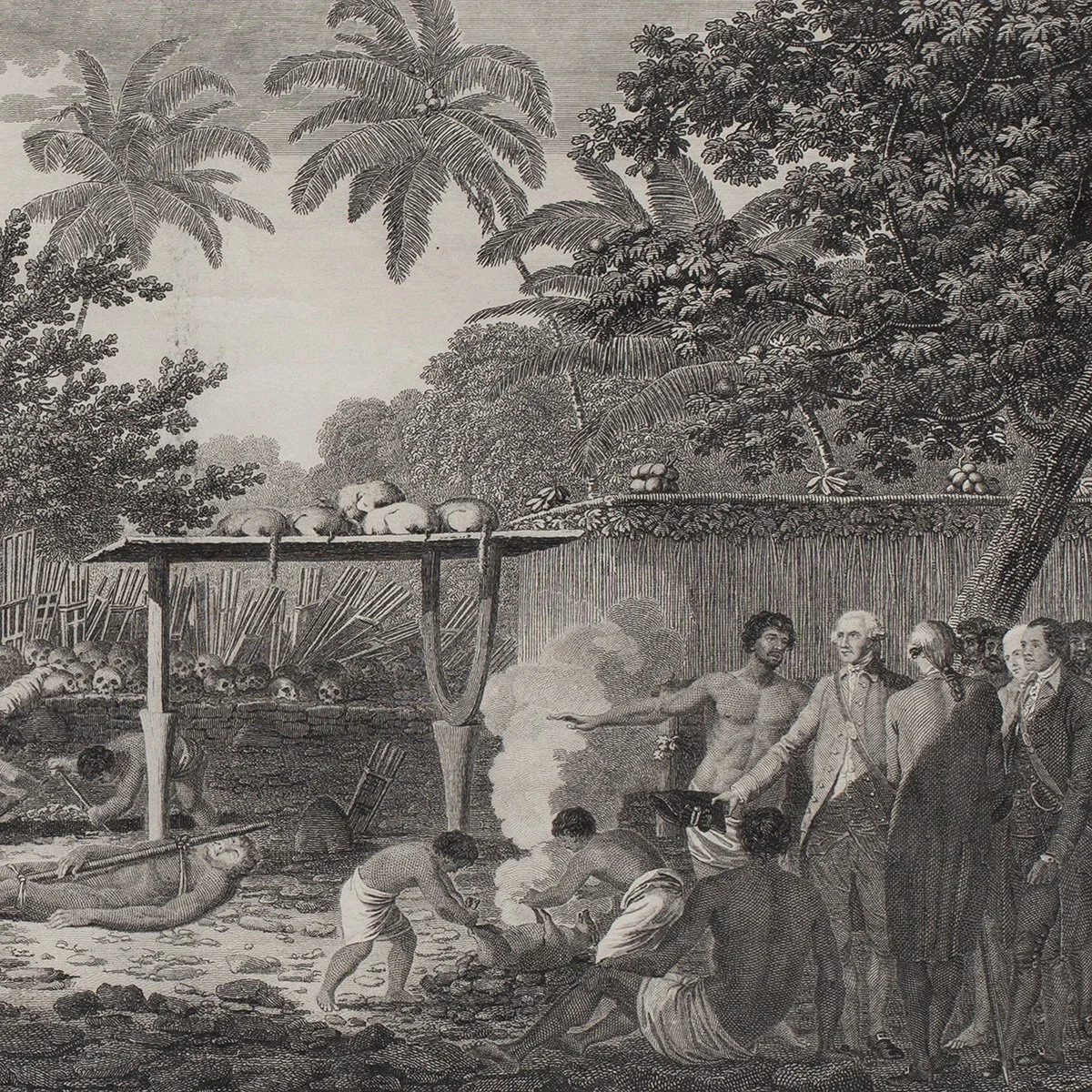 Image 3 of 3
Tahiti / Otaheite, Polynesia
1784, first edition atlas from Captain Cook’s third and final voyage
Copper plate engraving
24 × 20 in. including archival mat (61 × 50.8 cm)
Provenance: Randy Nagatani, Honolulu, HI; Lahaina Printsellers, Maui, HI
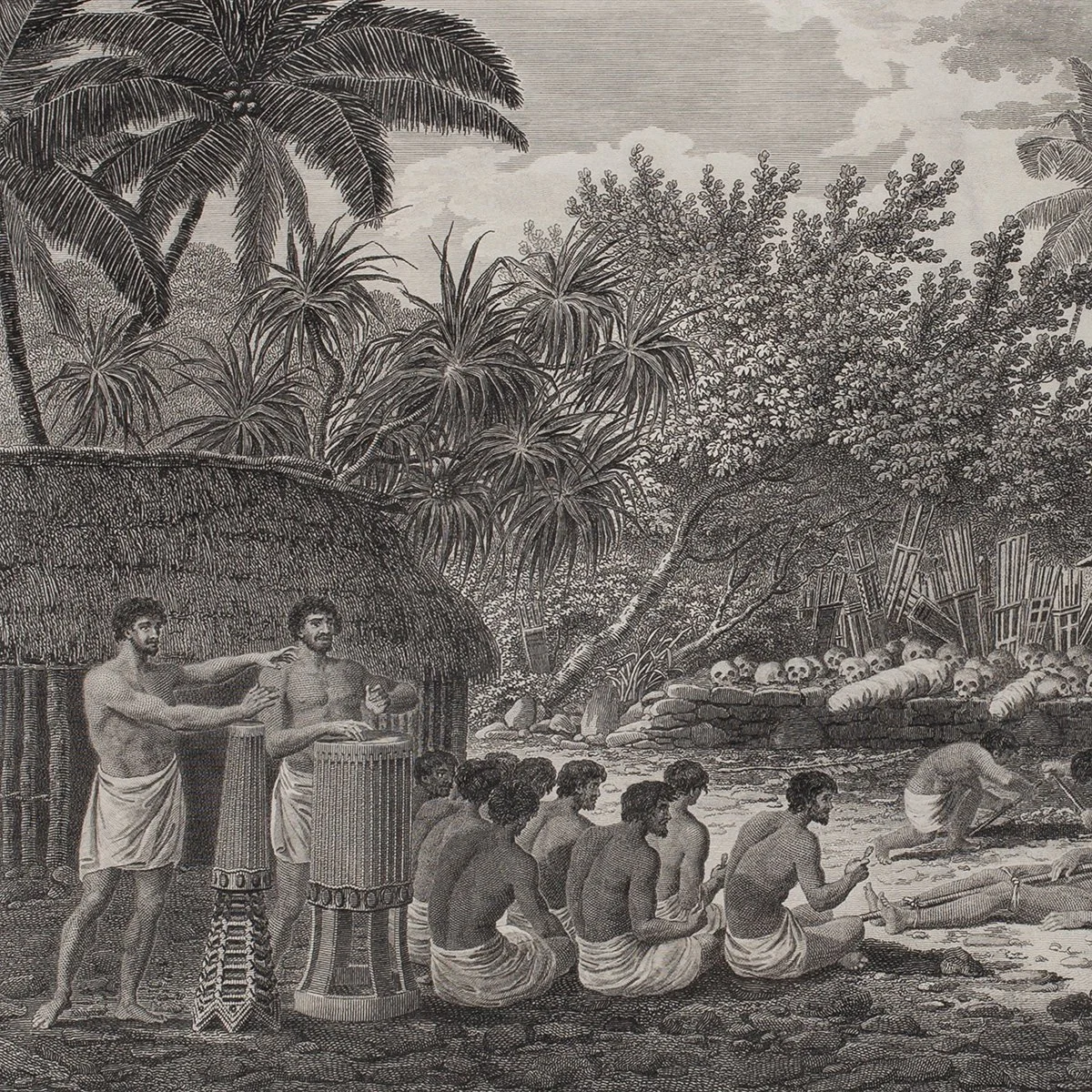
This copper plate engraving after John Webber depicts a human sacrifice in a morai at Otaheite, the historical European name for Tahiti. Published in 1784 in the first edition atlas from Captain Cook’s third and final voyage, the image belongs to the official visual record of Cook’s Pacific expedition. Such engravings shaped European understanding of Tahitian ritual life, while also reflecting the viewpoint and conventions of 18th-century voyage publication.
The scene is composed with figures gathered within a sacred ceremonial setting, with the morai presented as the central place of ritual action. Webber’s original drawings were translated into engraved form for wide circulation, preserving details of landscape, architecture, dress, and ceremony through the printmaking process. As a historical print, the work documents both Tahitian religious practice as recorded by European observers and the production of official voyage imagery in the late 18th century.
We ship free anywhere in the world, fully insured, packed by hand.
Tahiti / Otaheite, Polynesia
1784, first edition atlas from Captain Cook’s third and final voyage
Copper plate engraving
24 × 20 in. including archival mat (61 × 50.8 cm)
Provenance: Randy Nagatani, Honolulu, HI; Lahaina Printsellers, Maui, HI
This copper plate engraving after John Webber depicts a human sacrifice in a morai at Otaheite, the historical European name for Tahiti. Published in 1784 in the first edition atlas from Captain Cook’s third and final voyage, the image belongs to the official visual record of Cook’s Pacific expedition. Such engravings shaped European understanding of Tahitian ritual life, while also reflecting the viewpoint and conventions of 18th-century voyage publication.
The scene is composed with figures gathered within a sacred ceremonial setting, with the morai presented as the central place of ritual action. Webber’s original drawings were translated into engraved form for wide circulation, preserving details of landscape, architecture, dress, and ceremony through the printmaking process. As a historical print, the work documents both Tahitian religious practice as recorded by European observers and the production of official voyage imagery in the late 18th century.
We ship free anywhere in the world, fully insured, packed by hand.