

 Image 1 of 2
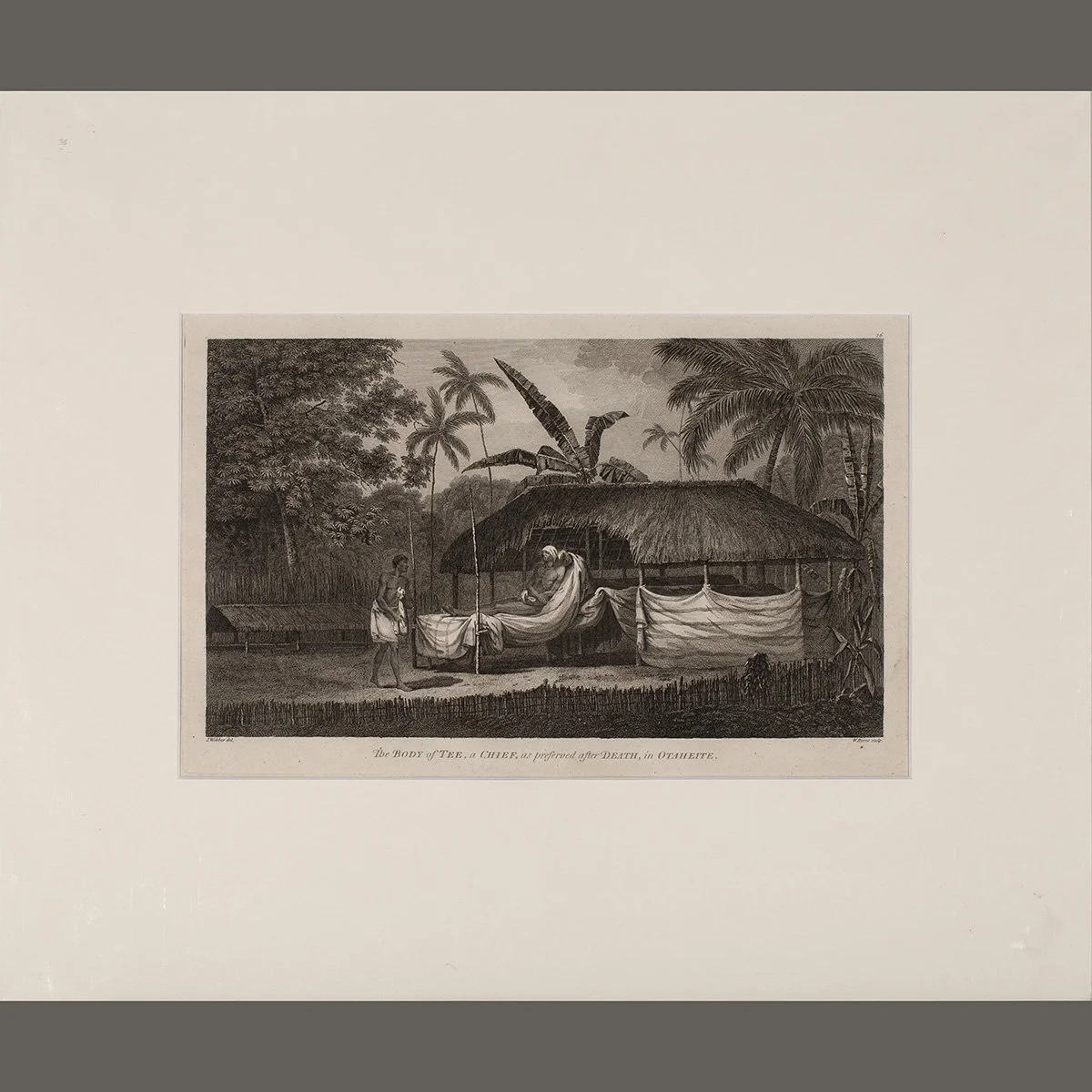 Image 2 of 2
Tahiti / Otaheite, Polynesia
1784, first edition atlas from Captain Cook’s third and final voyage
Copper plate engraving
24 × 20 in. including archival mat (61 × 50.8 cm)
Provenance: Randy Nagatani, Honolulu, HI; Lahaina Printsellers, Maui, HI
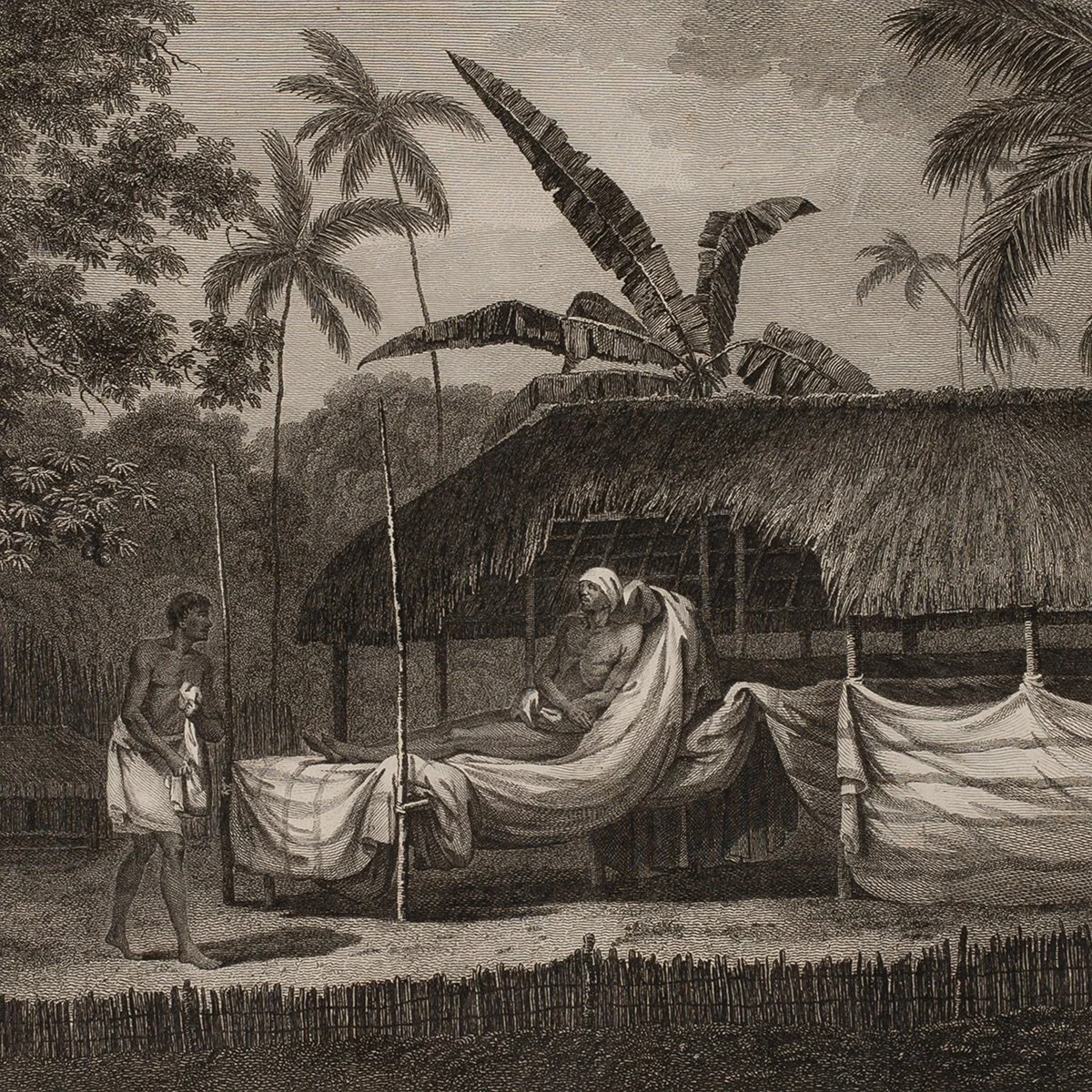
This copper plate engraving after John Webber depicts the body of Tee, a Tahitian chief, as preserved after death in Otaheite. Published in 1784 in the first edition atlas from Captain Cook’s third and final voyage, the image belongs to the official visual record of the expedition. The subject reflects European documentation of Tahitian mortuary practice, filtered through the conventions of 18th-century voyage illustration.
The composition presents the preserved body within a structured ceremonial setting, with figures and architectural elements arranged to describe the ritual context. Webber’s original observations were translated into engraved form for publication, allowing the image to circulate among European readers of Cook’s voyage. As a historical Pacific print, it records both a Tahitian chiefly mortuary subject and the visual language through which Polynesian life was represented in late 18th-century Europe.
We ship free anywhere in the world, fully insured, packed by hand.
Tahiti / Otaheite, Polynesia
1784, first edition atlas from Captain Cook’s third and final voyage
Copper plate engraving
24 × 20 in. including archival mat (61 × 50.8 cm)
Provenance: Randy Nagatani, Honolulu, HI; Lahaina Printsellers, Maui, HI
This copper plate engraving after John Webber depicts the body of Tee, a Tahitian chief, as preserved after death in Otaheite. Published in 1784 in the first edition atlas from Captain Cook’s third and final voyage, the image belongs to the official visual record of the expedition. The subject reflects European documentation of Tahitian mortuary practice, filtered through the conventions of 18th-century voyage illustration.
The composition presents the preserved body within a structured ceremonial setting, with figures and architectural elements arranged to describe the ritual context. Webber’s original observations were translated into engraved form for publication, allowing the image to circulate among European readers of Cook’s voyage. As a historical Pacific print, it records both a Tahitian chiefly mortuary subject and the visual language through which Polynesian life was represented in late 18th-century Europe.
We ship free anywhere in the world, fully insured, packed by hand.