Iran, Kashan
Early 13th century
Faience, turquoise glaze
Height 9 7/8 in (25.1 cm)
Provenance: Private collection of Norman Hurst, Cambridge, MA
Kashan was the preeminent center of faience production in medieval Iran, and ewers of this globular form with single handle and narrow neck represent a standard vessel type produced for domestic use in prosperous Seljuk and early Ilkhanid households. The turquoise glaze, characteristic of Kashan faience, is achieved through the application of copper oxide to a siliceous fritware body, a technology that Kashan workshops refined to a high degree during the 12th and 13th centuries. The mottled surface patina visible across the ewer results from centuries of burial and the interaction of the glaze with soil chemistry over time.
We ship free anywhere in the world, fully insured, packed by hand.
Iran, Kashan
Early 13th century
Faience, turquoise glaze
Height 9 7/8 in (25.1 cm)
Provenance: Private collection of Norman Hurst, Cambridge, MA
Kashan was the preeminent center of faience production in medieval Iran, and ewers of this globular form with single handle and narrow neck represent a standard vessel type produced for domestic use in prosperous Seljuk and early Ilkhanid households. The turquoise glaze, characteristic of Kashan faience, is achieved through the application of copper oxide to a siliceous fritware body, a technology that Kashan workshops refined to a high degree during the 12th and 13th centuries. The mottled surface patina visible across the ewer results from centuries of burial and the interaction of the glaze with soil chemistry over time.
We ship free anywhere in the world, fully insured, packed by hand.


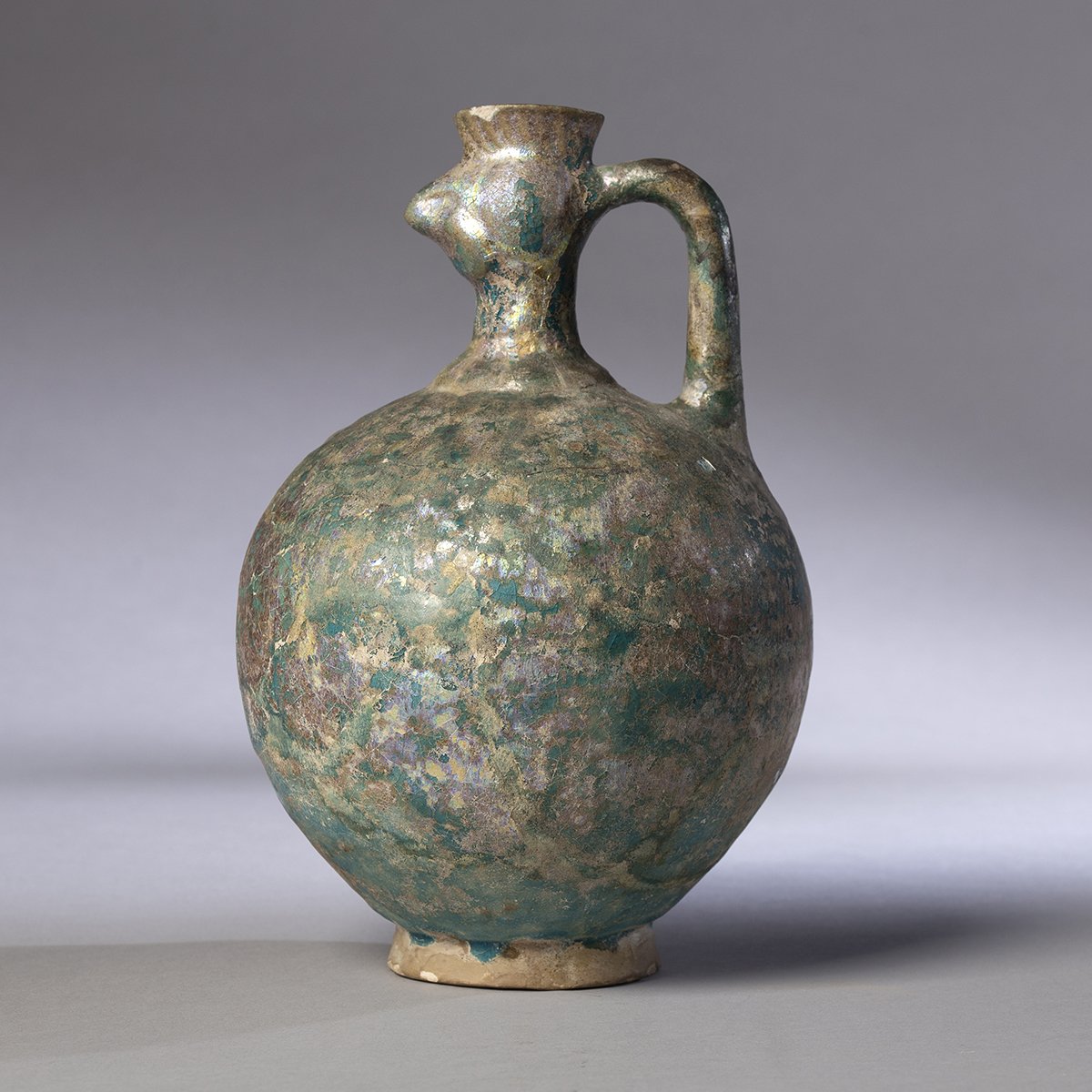 Image 1 of 6
 Image 2 of 6
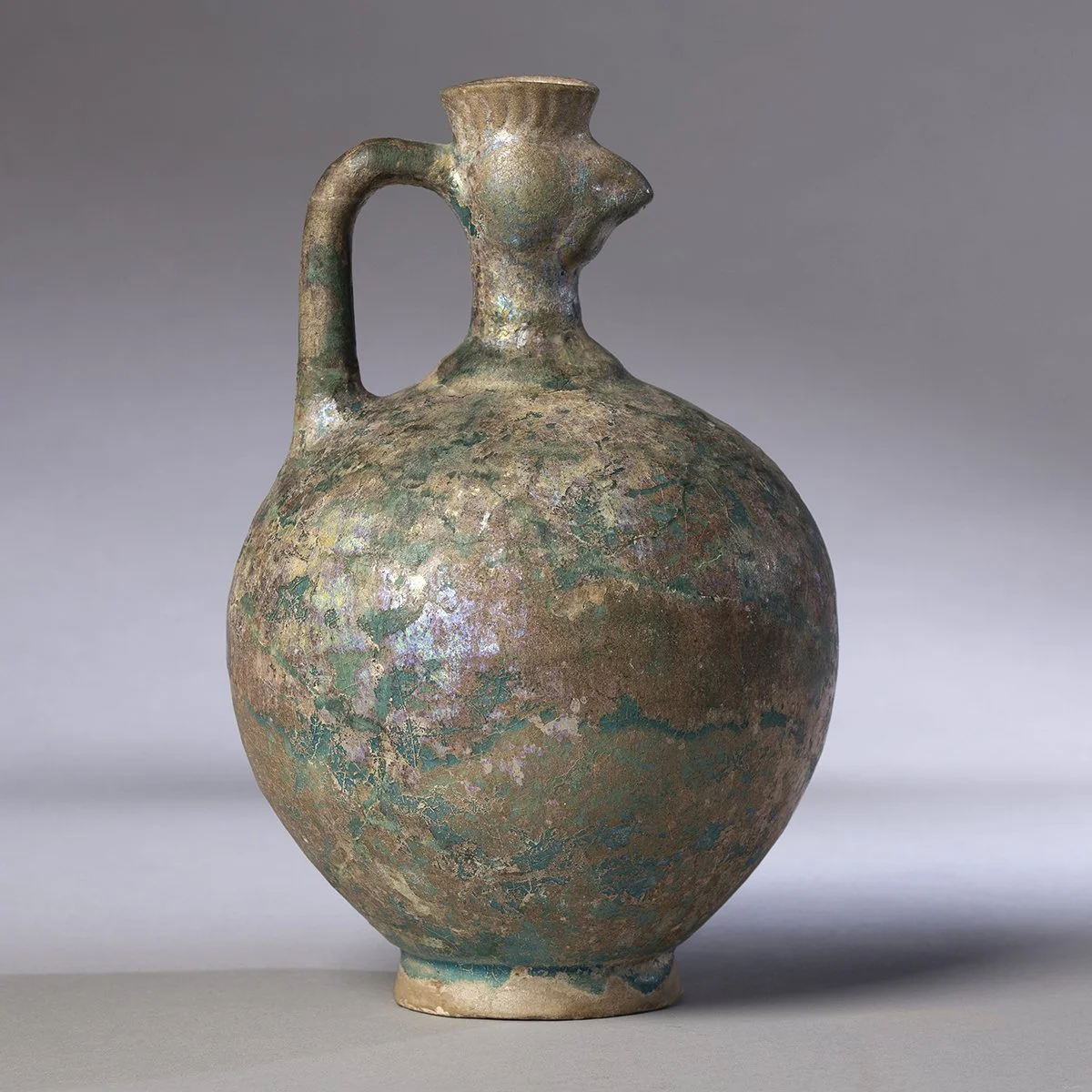 Image 3 of 6
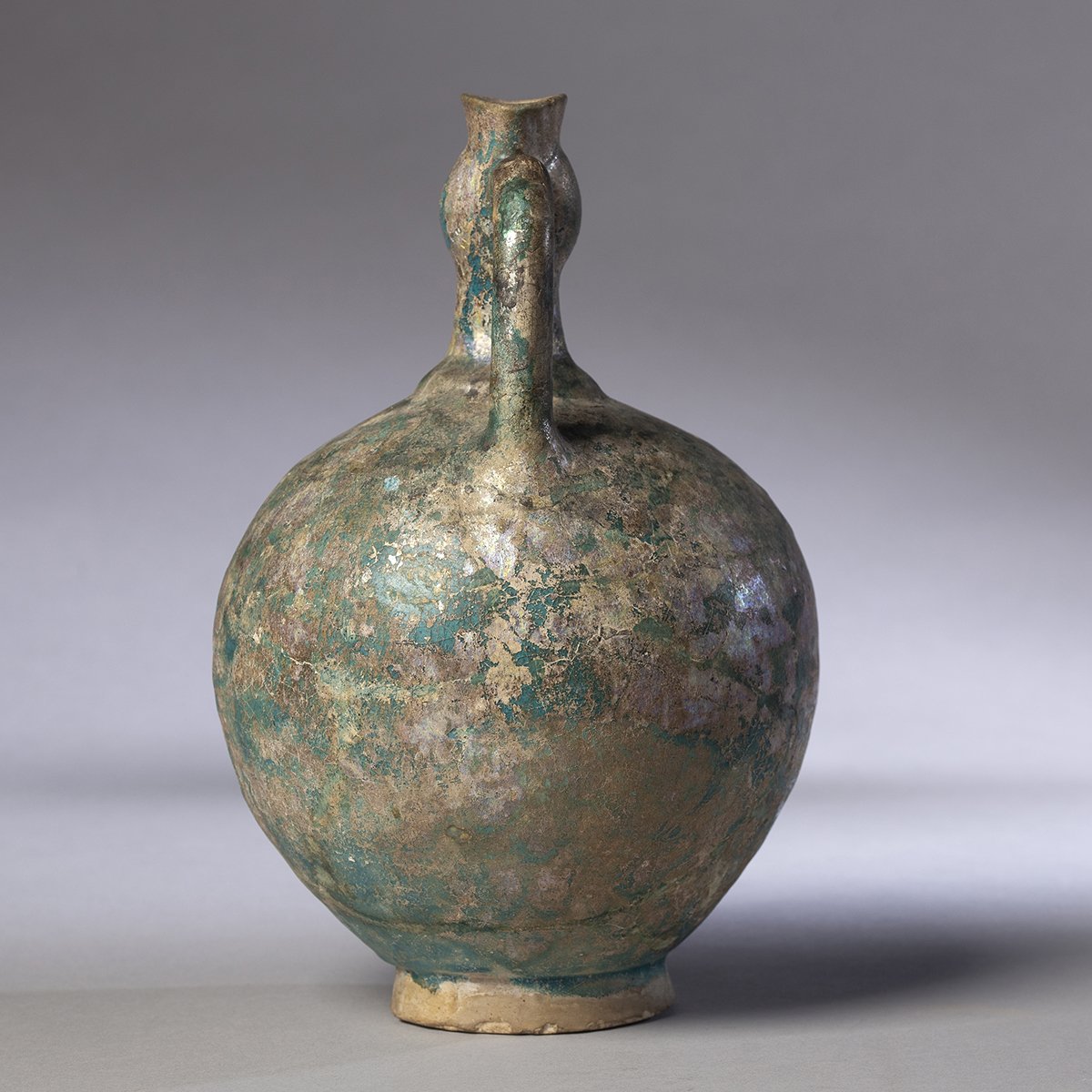 Image 4 of 6
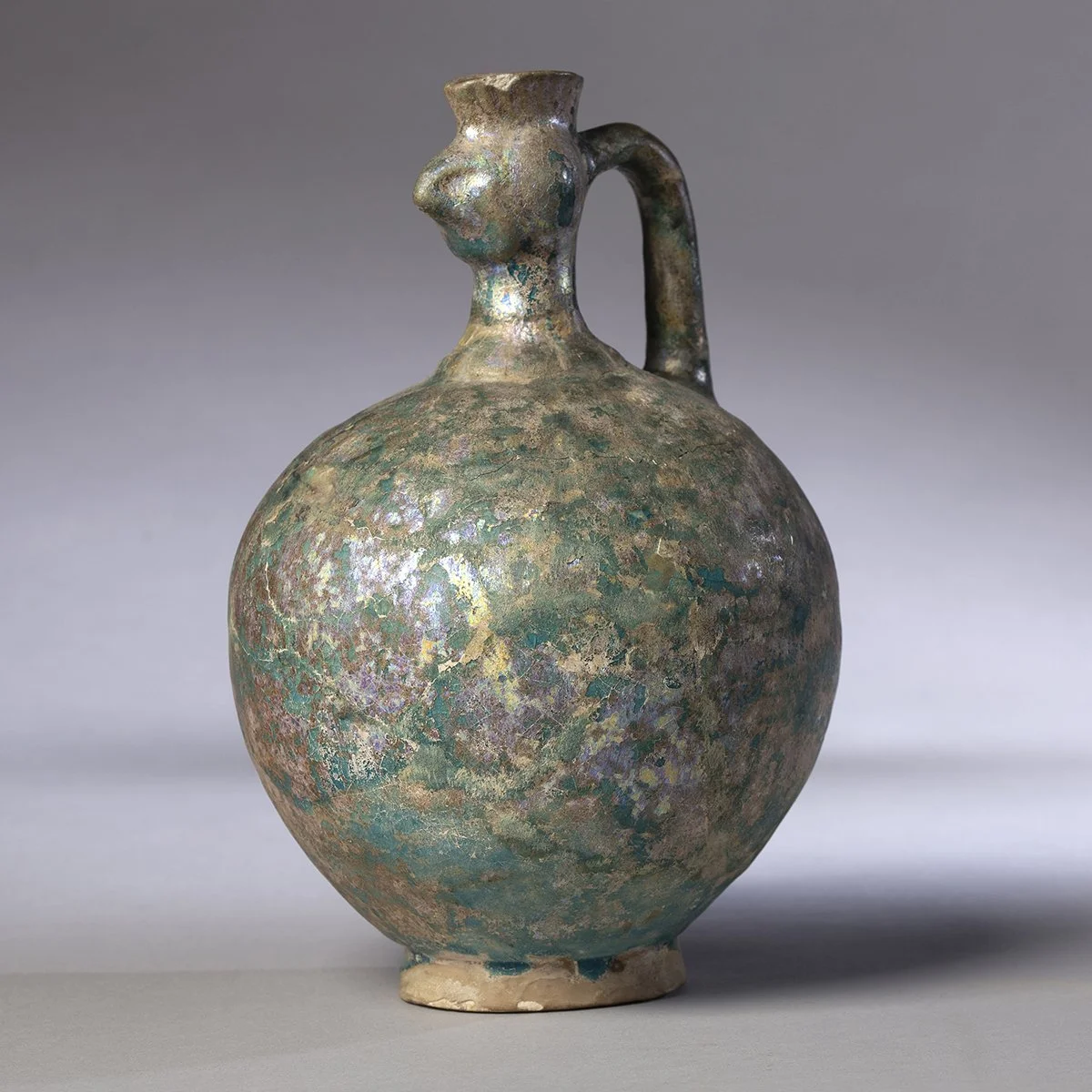 Image 5 of 6
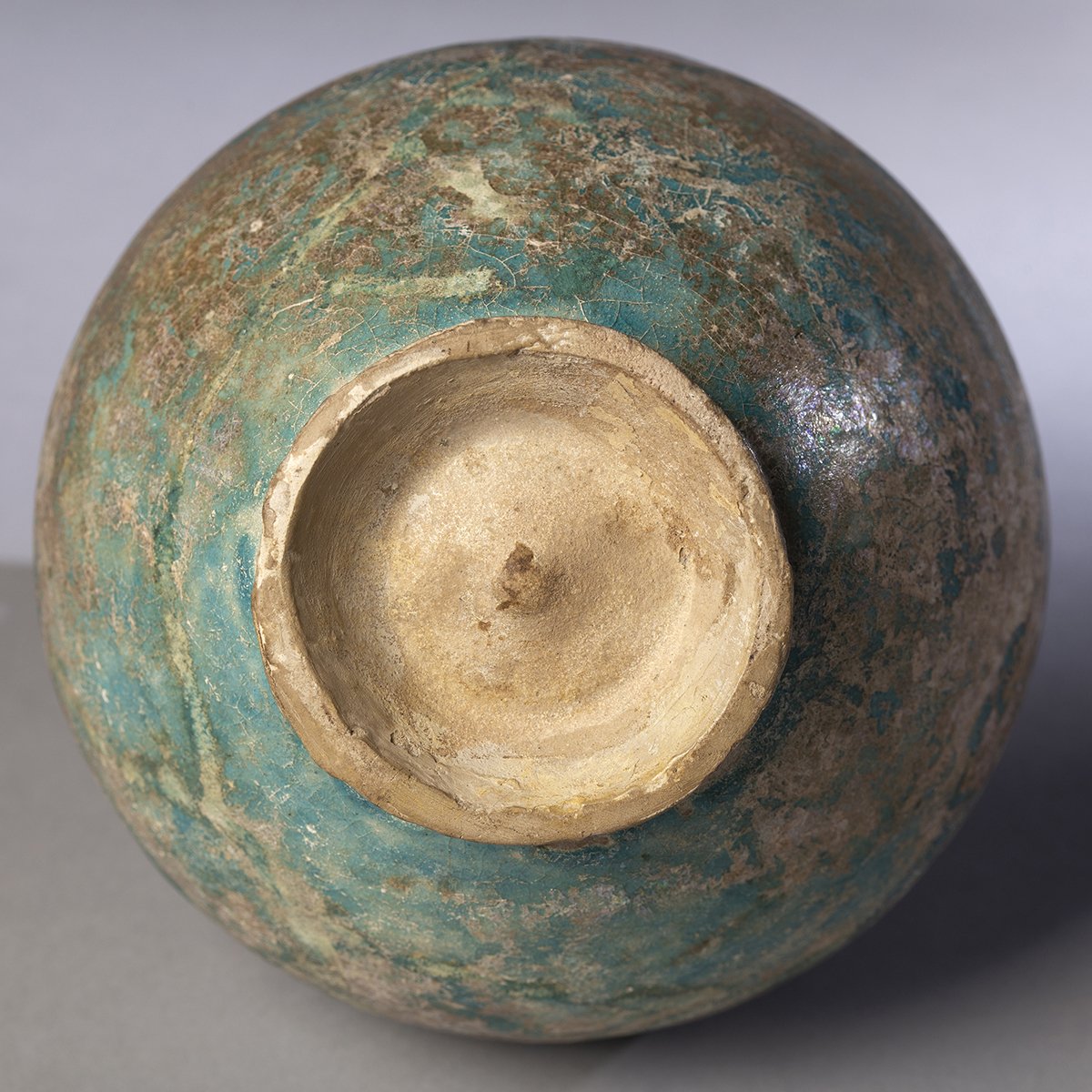 Image 6 of 6