Kuba — Democratic Republic of the Congo
Circa 1930
Wood with glass beads
Height: 7¼ in (18.4 cm); Length: 23¾ in (60.3 cm)
Provenance: London trade; private collection, London
This headrest is carved from a single piece of wood in a form that uses a sculpted head as a counterweight, with the chin resting flat on the floor when positioned for use and the reclining surface extending behind to support the head and upper back. The carved head has rounded facial features, inset eyes, and a strand of blue and green glass beads at the neck. The form combines practical function with figural sculpture, the object working simultaneously as a support and as a figure of visual presence.
Kuba headrests were personal objects that protected elaborate coiffures during sleep, and the carving here places sculptural attention on an item of daily use. The London trade provenance and private London collection history place the piece within the British market for Central African material. A related example is illustrated in Marc Ginzberg, African Forms (2000), p. 28.
We ship free anywhere in the world, fully insured, packed by hand.
Kuba — Democratic Republic of the Congo
Circa 1930
Wood with glass beads
Height: 7¼ in (18.4 cm); Length: 23¾ in (60.3 cm)
Provenance: London trade; private collection, London
This headrest is carved from a single piece of wood in a form that uses a sculpted head as a counterweight, with the chin resting flat on the floor when positioned for use and the reclining surface extending behind to support the head and upper back. The carved head has rounded facial features, inset eyes, and a strand of blue and green glass beads at the neck. The form combines practical function with figural sculpture, the object working simultaneously as a support and as a figure of visual presence.
Kuba headrests were personal objects that protected elaborate coiffures during sleep, and the carving here places sculptural attention on an item of daily use. The London trade provenance and private London collection history place the piece within the British market for Central African material. A related example is illustrated in Marc Ginzberg, African Forms (2000), p. 28.
We ship free anywhere in the world, fully insured, packed by hand.


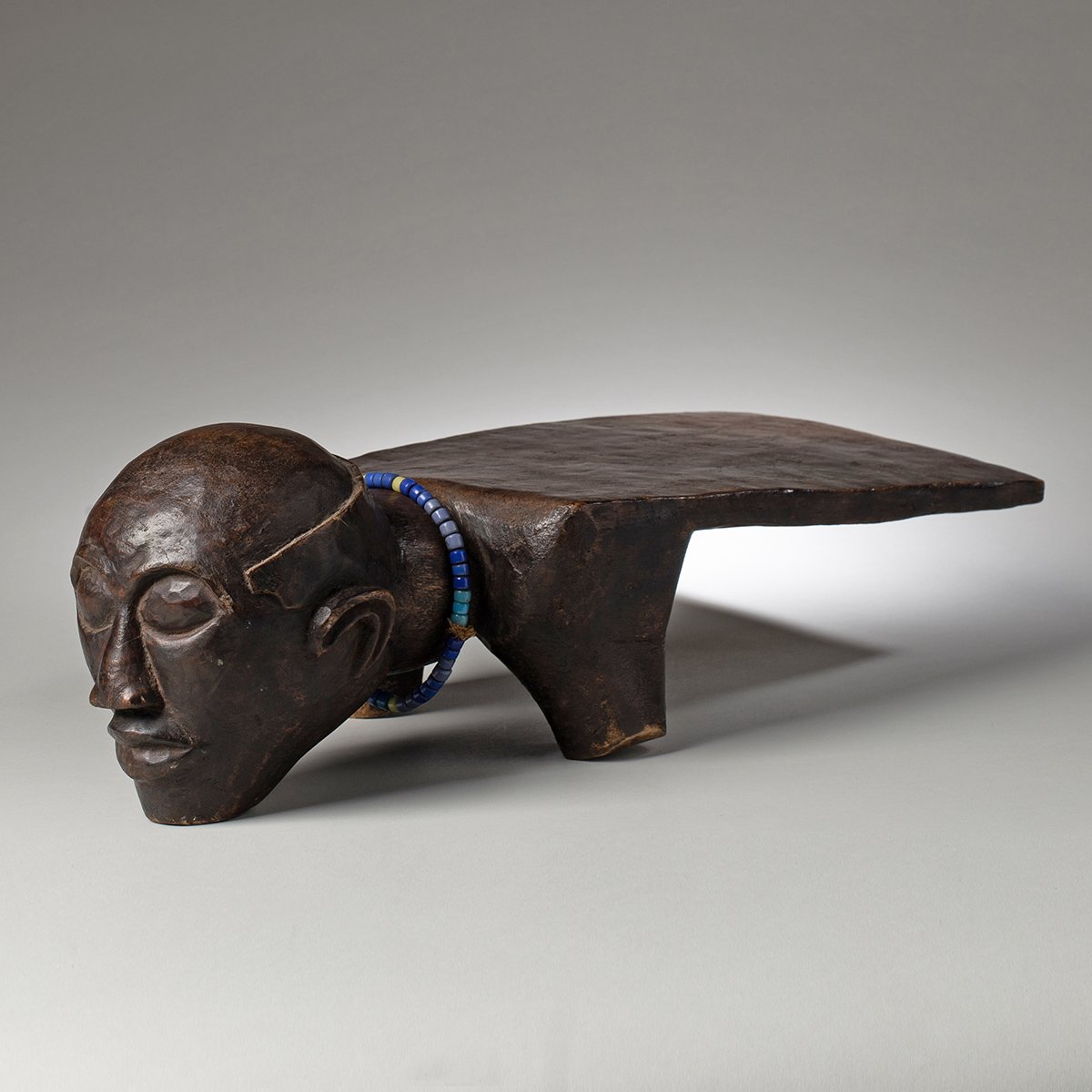 Image 1 of 6
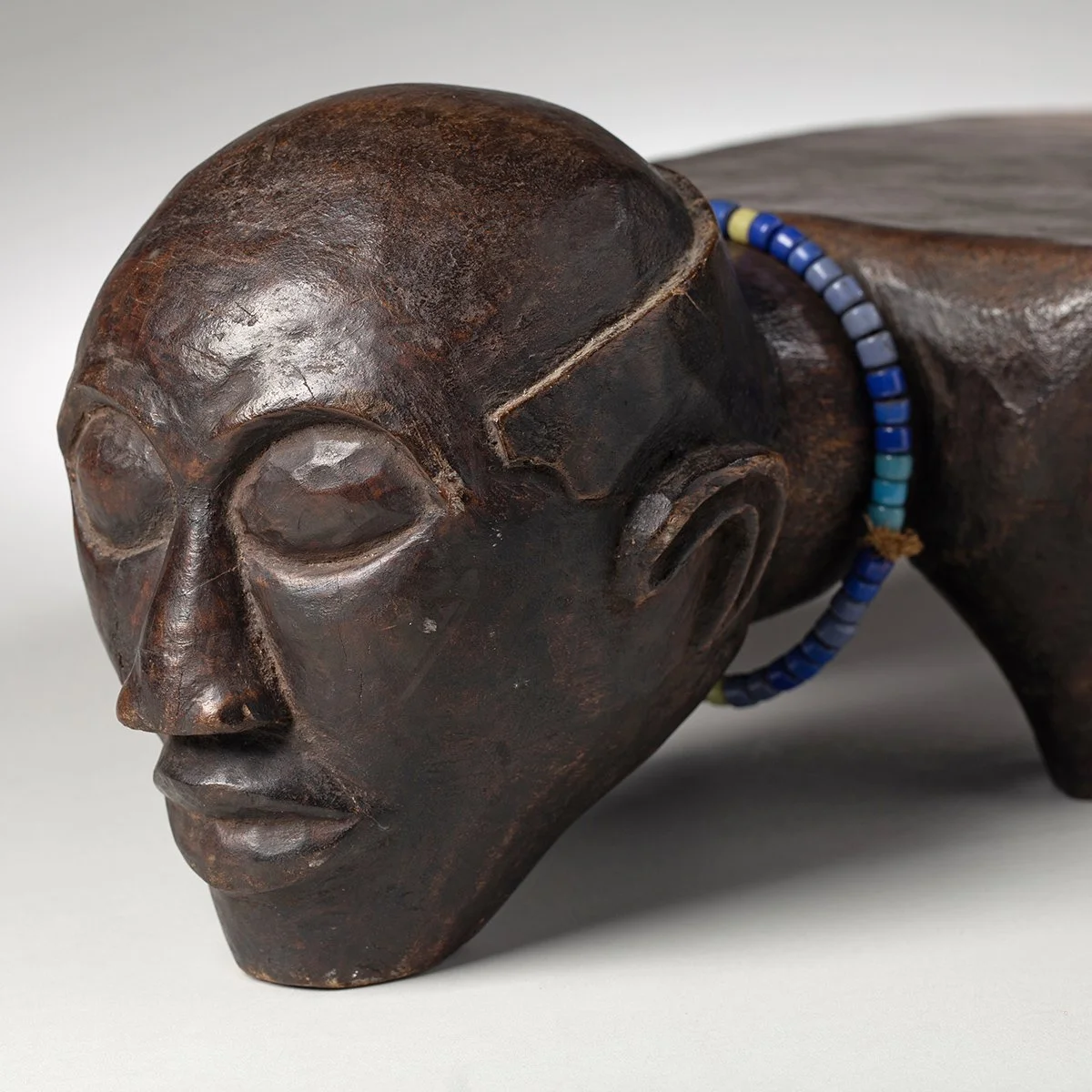 Image 2 of 6
 Image 3 of 6
 Image 4 of 6
 Image 5 of 6
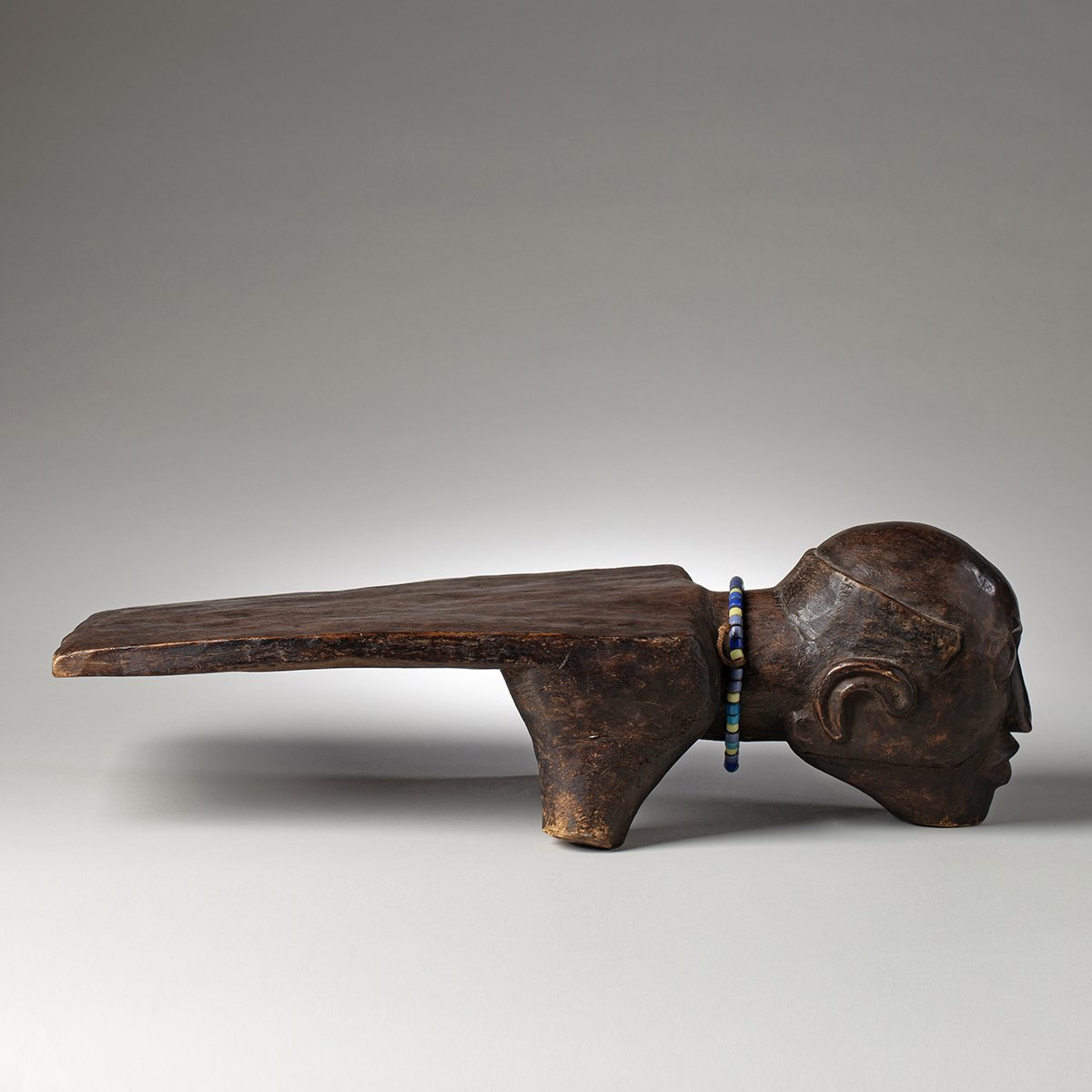 Image 6 of 6