Alert Bay, Cormorant Island, British Columbia, Canada
Circa 1820–1840
Alder wood, bearskin, human hair, horsehair, graphite, vermilion trade pigment
Mask height 10 3/4" (27.3 cm); width 7 3/4" (19.7 cm); total height including hair 18 1/2" (47 cm)
Provenance: Collected in Alert Bay in the late 19th century by French mining engineer Hippolyte Thiry; by descent to his son, architect Paul Thiry (1904–1993), and Mary Thiry, Seattle, Washington
The Kwakwaka'wakw of coastal British Columbia organized their ceremonial life around an elaborate system of transformation narratives, in which ancestral beings moved between human, animal, and spiritual forms, imparting animal crests to their numaym, or lineages. Rank, wealth, and inherited privilege were displayed and transferred through a cycle of summer and winter ceremonies culminating in the potlatch, during which chiefs distributed wealth to guests and reinforced social bonds across clans. Masks were among the most valued objects in this ceremonial world, functioning as embodiments of ancestral spirits that communicated through dance and performance.
Dzunukwa, known among the Kwakwaka'wakw as the Cannibal Giant of the Woods or Wild Woman of the Forest, was one of the most complex and significant figures in their ceremonial tradition, embodying simultaneously wealth and danger, generosity and terror. During winter Tseka ceremonies and potlatch finales, a dancer wearing an oversized Dzunukwa mask and bearskin costume would enact mythological stories before the assembled guests, staggering and narcoleptic, before the chief, wearing a gikamt mask such as this one, rose to speak, extolling his lineage and copper wealth. Franz Boas, who documented Kwakwaka'wakw ceremonial life extensively beginning in 1885, recorded the precise context in which elite gikamt chief's masks were worn at the conclusion of the winter ceremonials.
This gikamt mask was carved from alder wood using indigenous metal tools fashioned from trade iron, with deeply hollowed cheeks, a tubular pursed mouth, and swollen almond-shaped eyes set within large sockets all features evoking Dzunukwa's haunting cry. The forehead bears a bearskin brow secured with wooden pegs, and human hair and horsehair spring from the head; graphite mixed with powdered mica flakes embedded in the black pigment causes the surface to shimmer in shifting light. Bold applications of Chinese vermilion trade pigment, introduced via the fur trade in the 18th century and reserved for the most sacred objects, highlight the mouth, cheeks, and ears, and the mask retains its original arched alder branch used to secure it to the wearer.
We ship free anywhere in the world, fully insured, packed by hand.
INQUIRE HERE
Alert Bay, Cormorant Island, British Columbia, Canada
Circa 1820–1840
Alder wood, bearskin, human hair, horsehair, graphite, vermilion trade pigment
Mask height 10 3/4" (27.3 cm); width 7 3/4" (19.7 cm); total height including hair 18 1/2" (47 cm)
Provenance: Collected in Alert Bay in the late 19th century by French mining engineer Hippolyte Thiry; by descent to his son, architect Paul Thiry (1904–1993), and Mary Thiry, Seattle, Washington
The Kwakwaka'wakw of coastal British Columbia organized their ceremonial life around an elaborate system of transformation narratives, in which ancestral beings moved between human, animal, and spiritual forms, imparting animal crests to their numaym, or lineages. Rank, wealth, and inherited privilege were displayed and transferred through a cycle of summer and winter ceremonies culminating in the potlatch, during which chiefs distributed wealth to guests and reinforced social bonds across clans. Masks were among the most valued objects in this ceremonial world, functioning as embodiments of ancestral spirits that communicated through dance and performance.
Dzunukwa, known among the Kwakwaka'wakw as the Cannibal Giant of the Woods or Wild Woman of the Forest, was one of the most complex and significant figures in their ceremonial tradition, embodying simultaneously wealth and danger, generosity and terror. During winter Tseka ceremonies and potlatch finales, a dancer wearing an oversized Dzunukwa mask and bearskin costume would enact mythological stories before the assembled guests, staggering and narcoleptic, before the chief, wearing a gikamt mask such as this one, rose to speak, extolling his lineage and copper wealth. Franz Boas, who documented Kwakwaka'wakw ceremonial life extensively beginning in 1885, recorded the precise context in which elite gikamt chief's masks were worn at the conclusion of the winter ceremonials.
This gikamt mask was carved from alder wood using indigenous metal tools fashioned from trade iron, with deeply hollowed cheeks, a tubular pursed mouth, and swollen almond-shaped eyes set within large sockets all features evoking Dzunukwa's haunting cry. The forehead bears a bearskin brow secured with wooden pegs, and human hair and horsehair spring from the head; graphite mixed with powdered mica flakes embedded in the black pigment causes the surface to shimmer in shifting light. Bold applications of Chinese vermilion trade pigment, introduced via the fur trade in the 18th century and reserved for the most sacred objects, highlight the mouth, cheeks, and ears, and the mask retains its original arched alder branch used to secure it to the wearer.
We ship free anywhere in the world, fully insured, packed by hand.
INQUIRE HERE


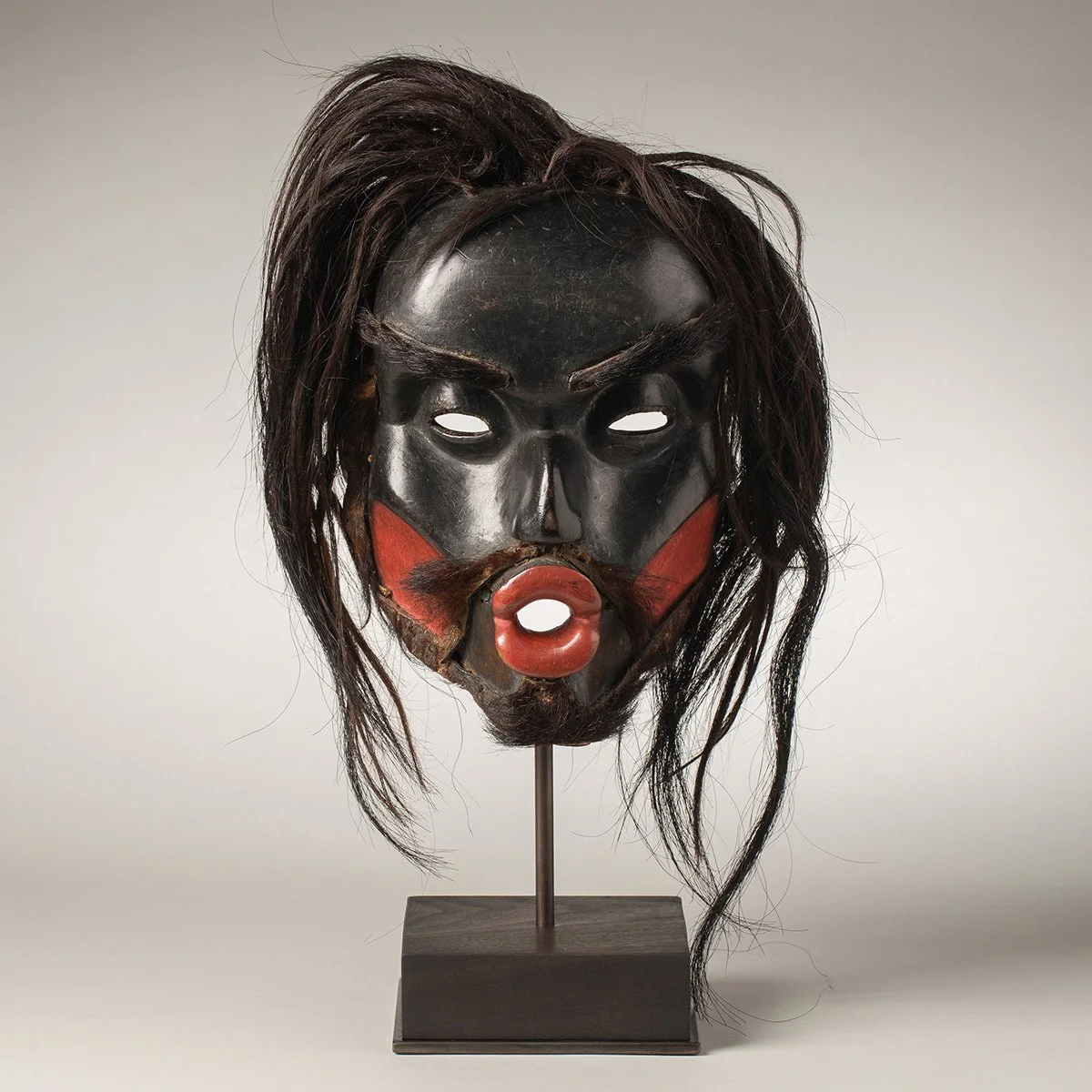 Image 1 of 14
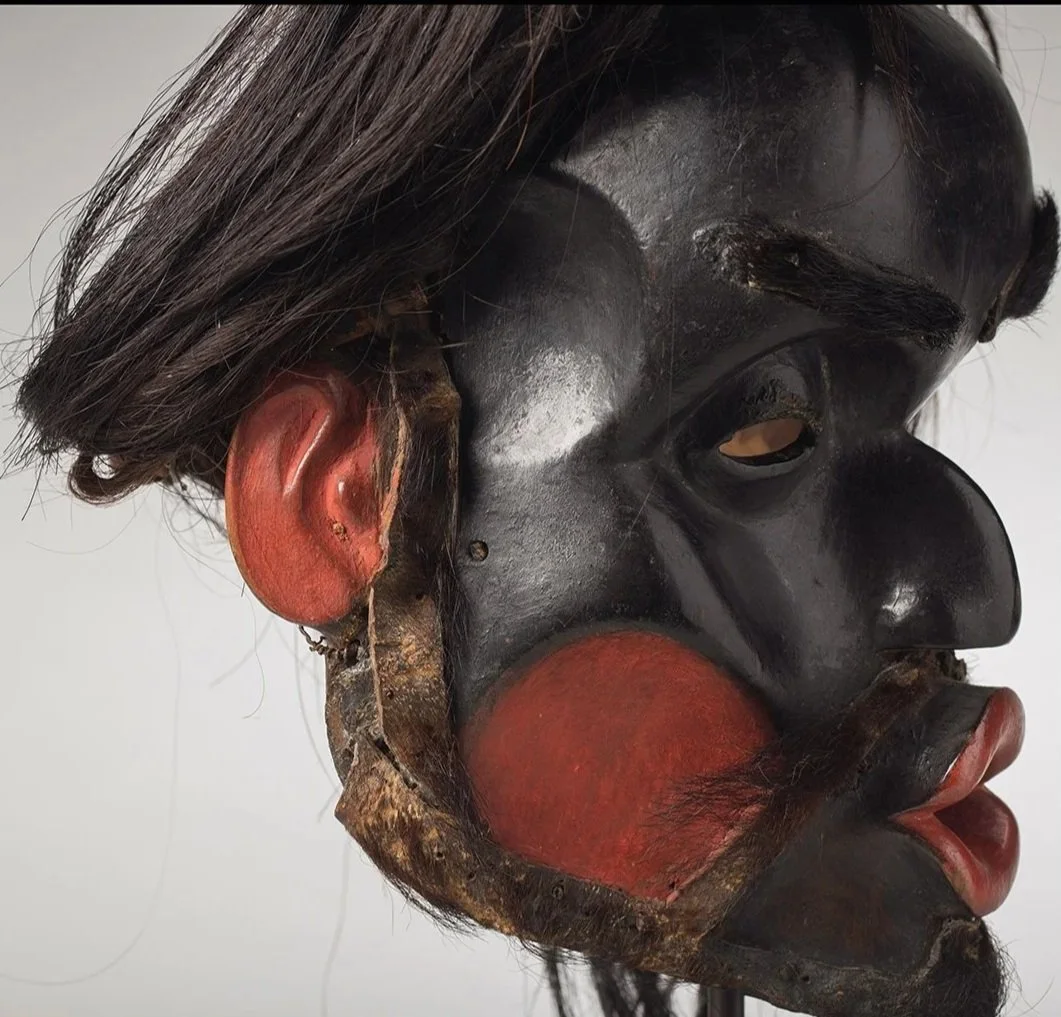 Image 2 of 14
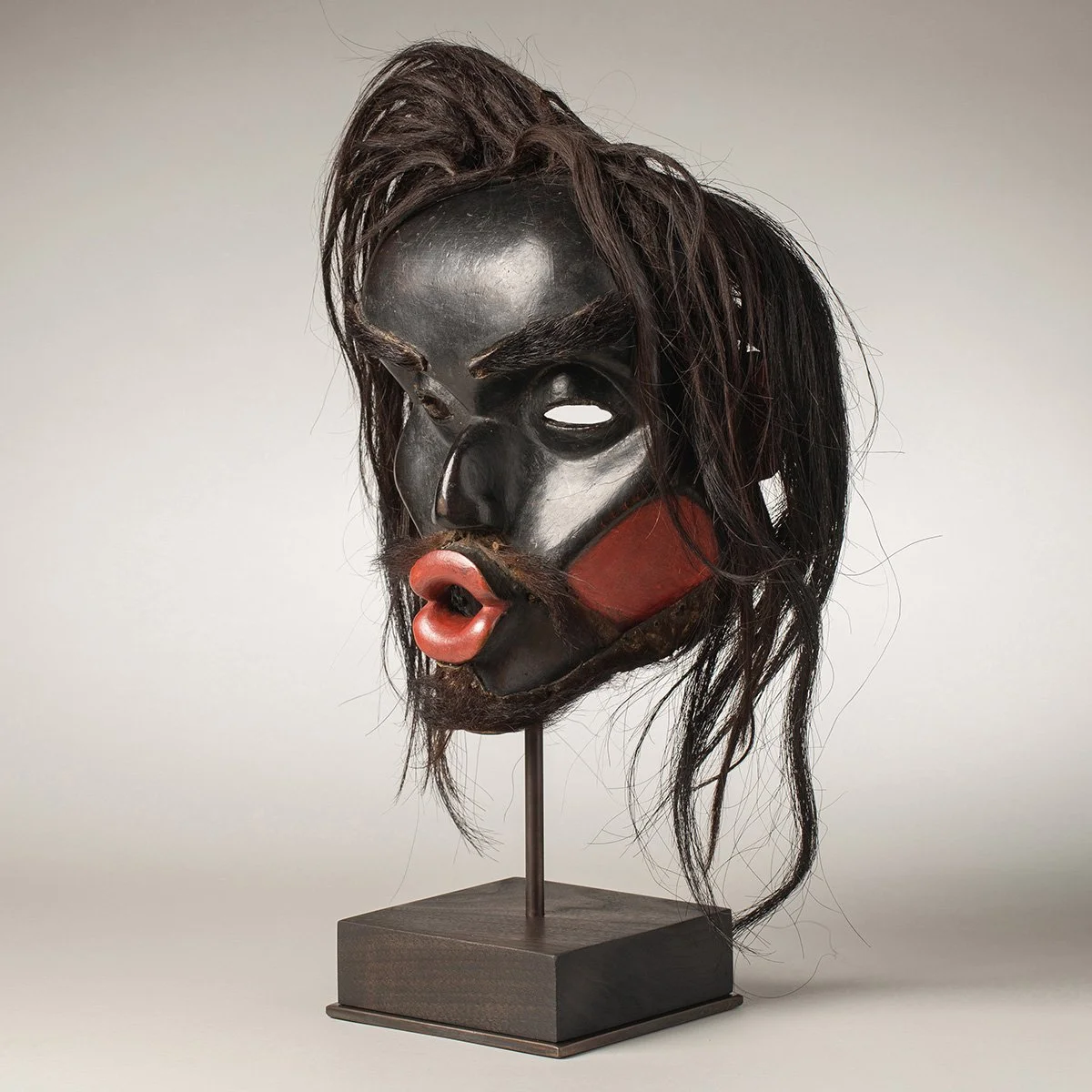 Image 3 of 14
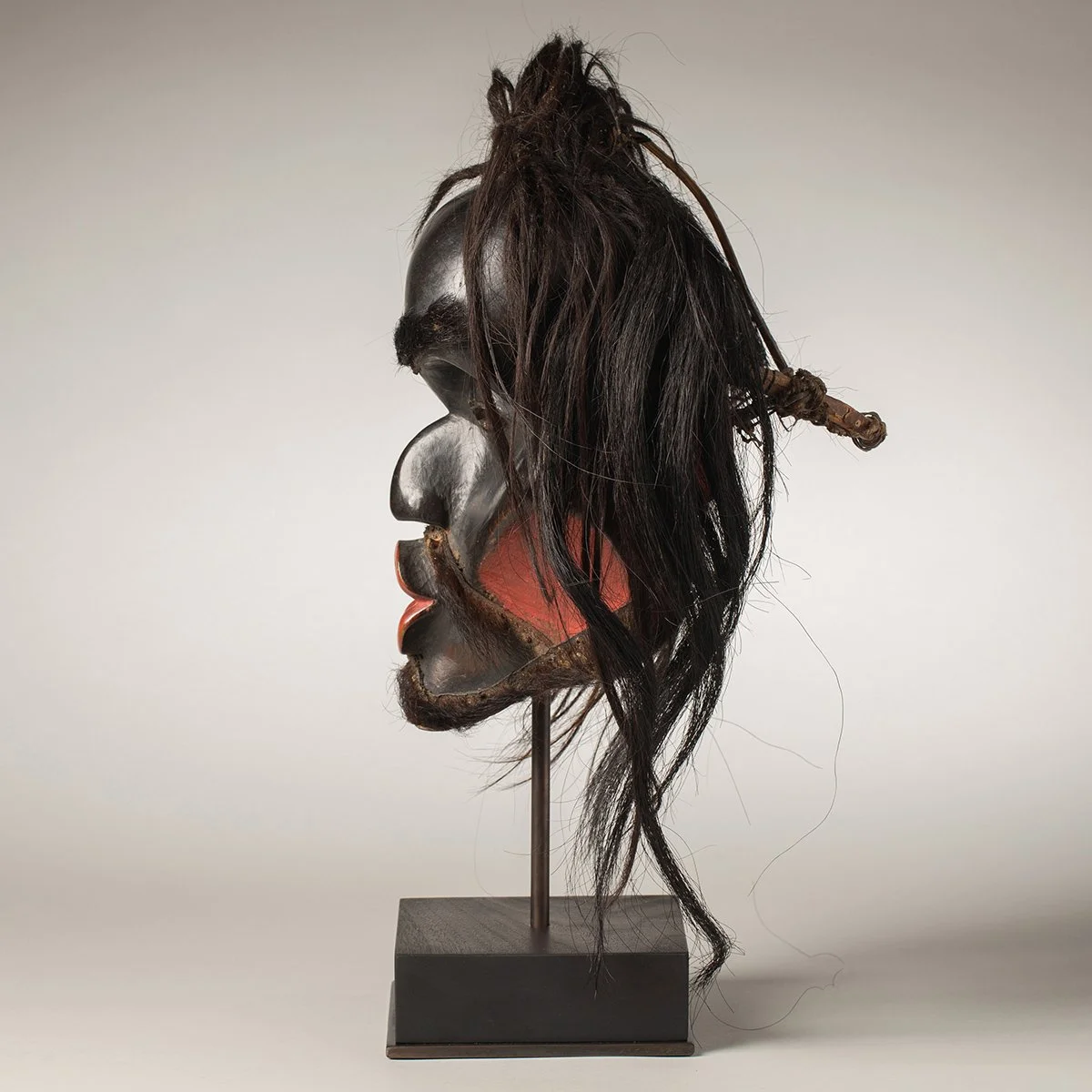 Image 4 of 14
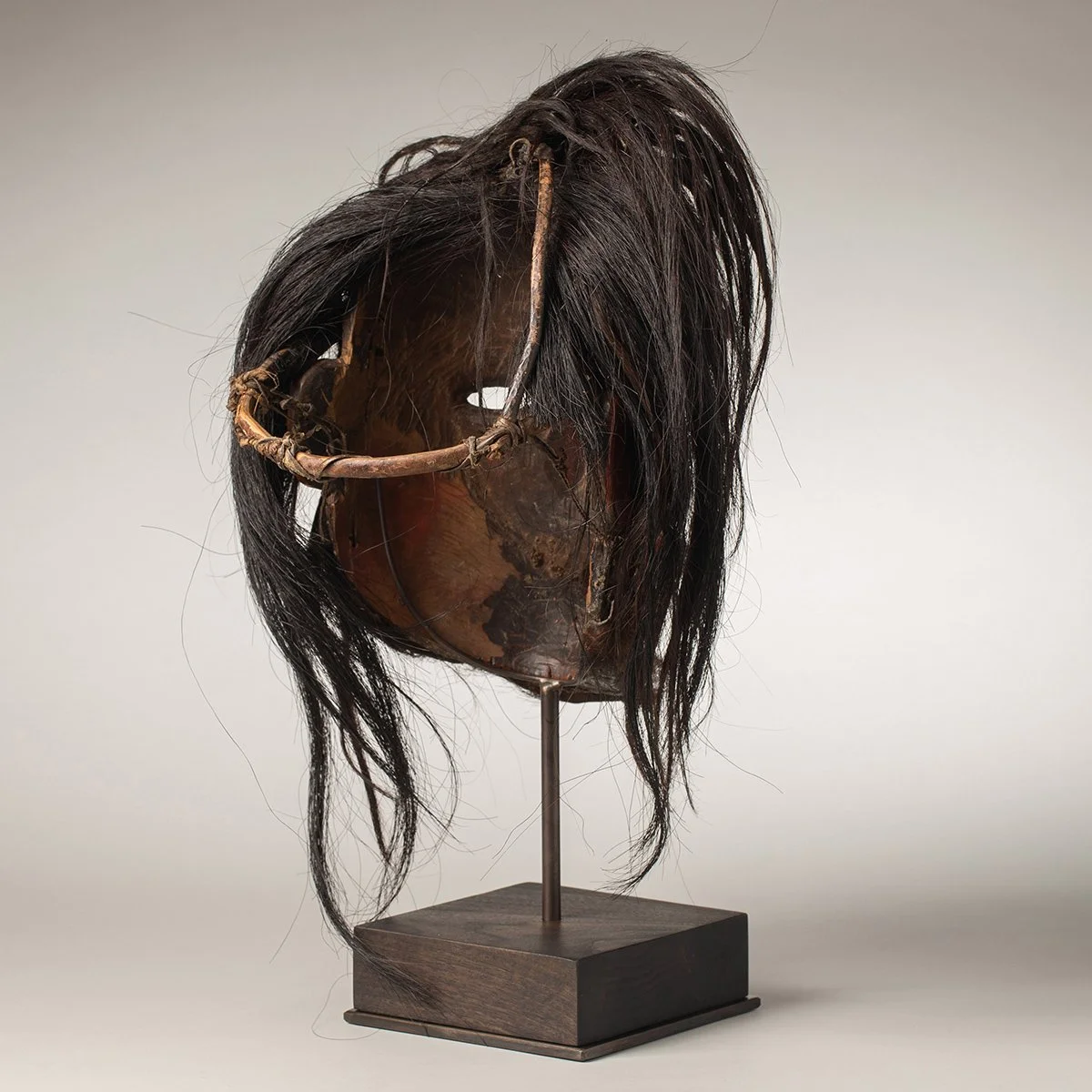 Image 5 of 14
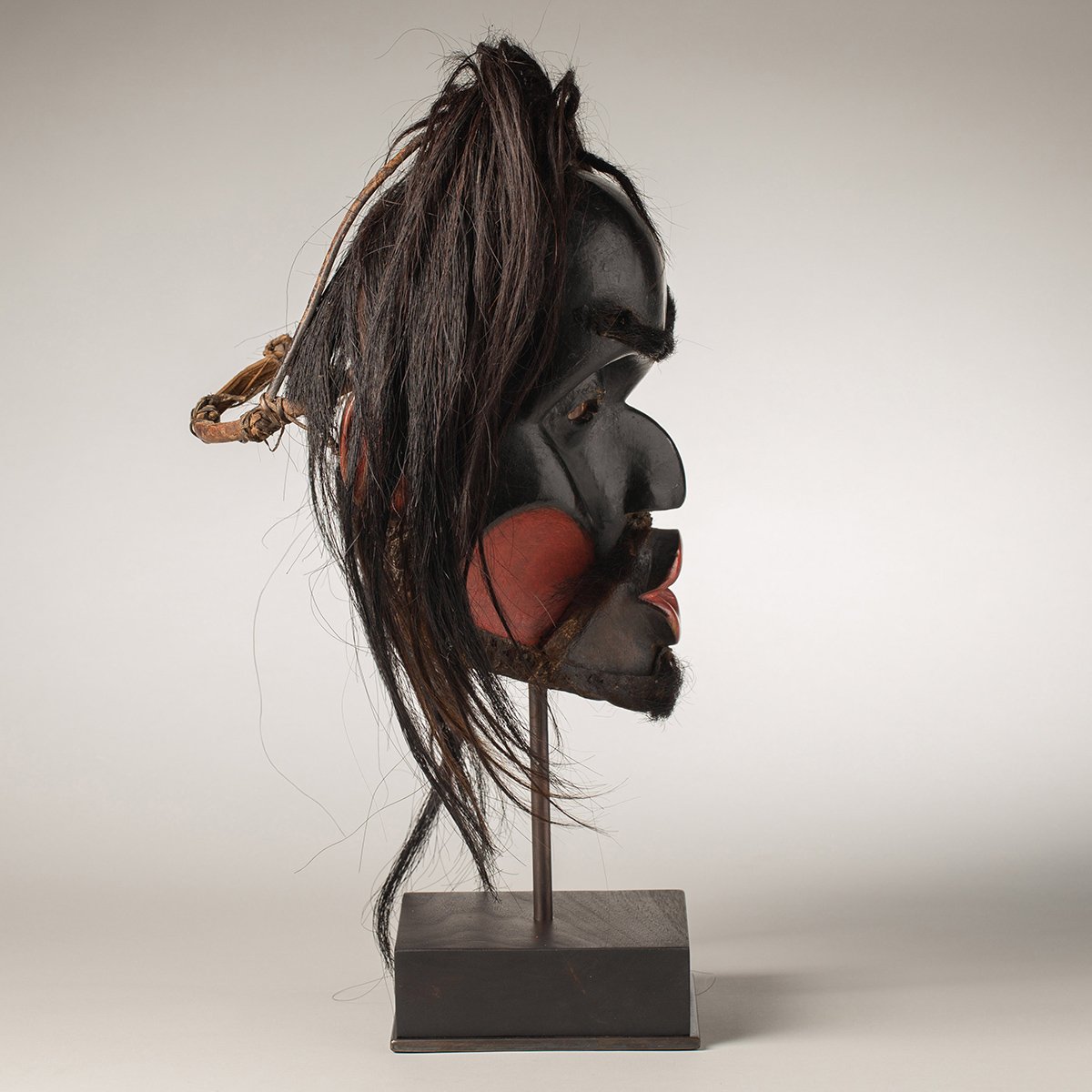 Image 6 of 14
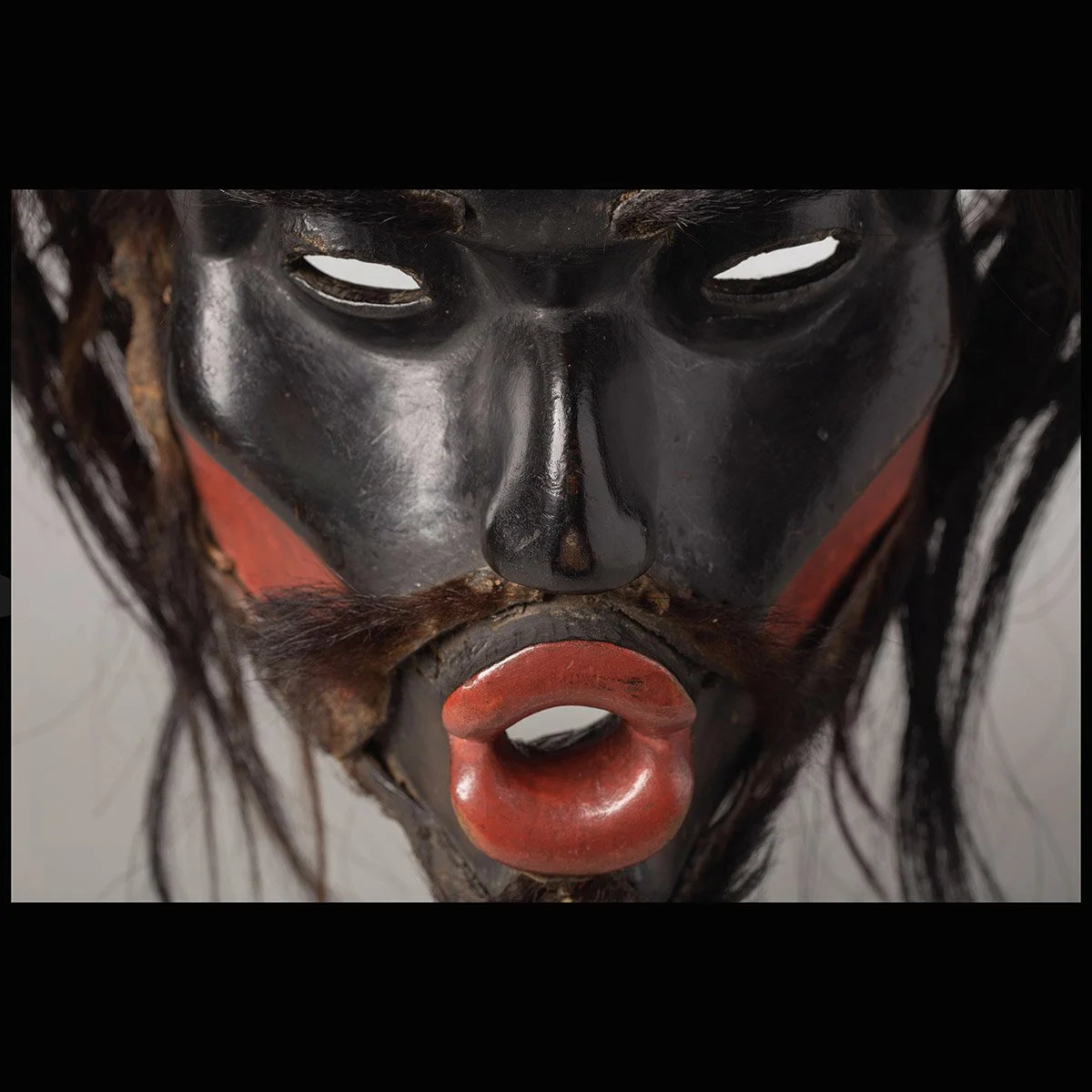 Image 7 of 14
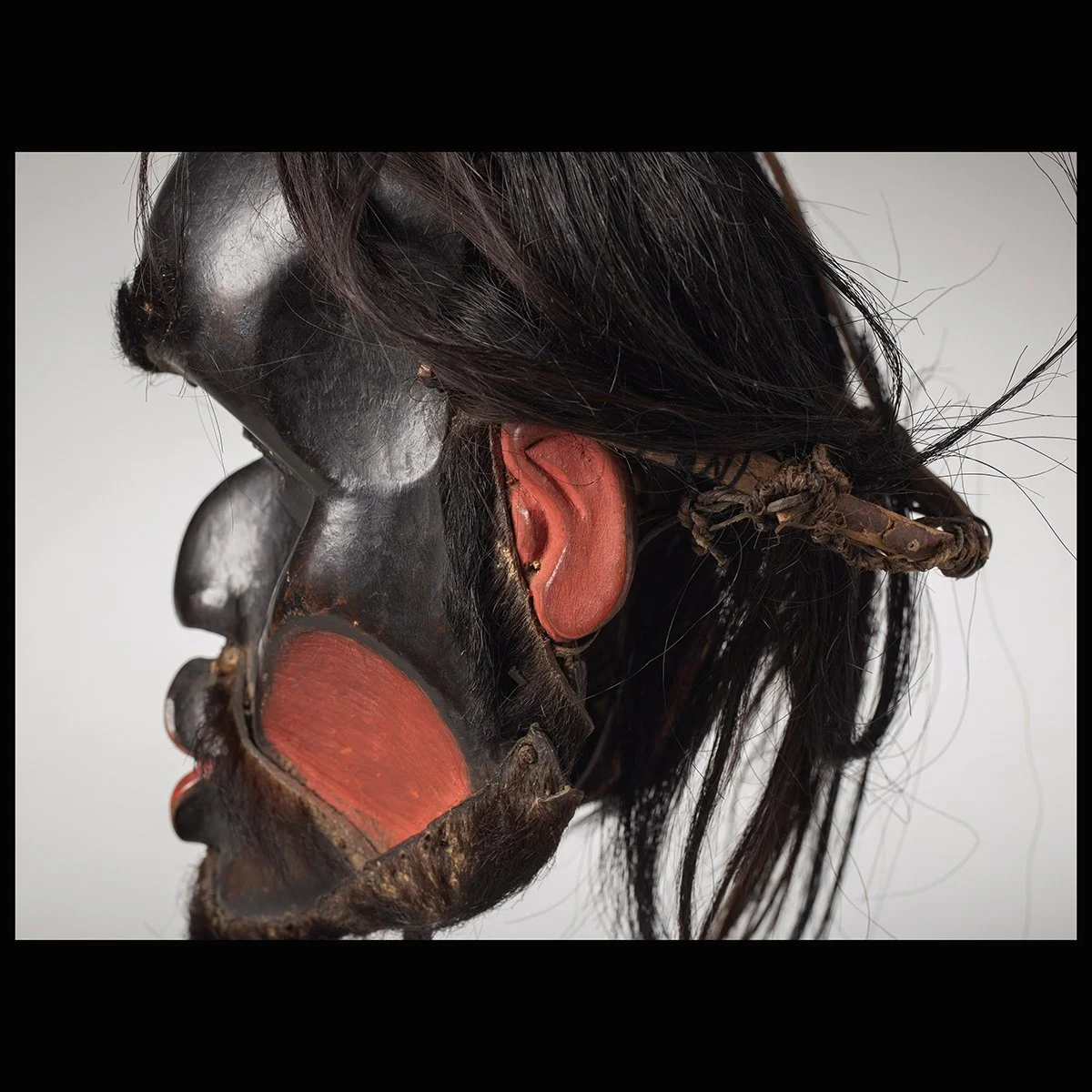 Image 8 of 14
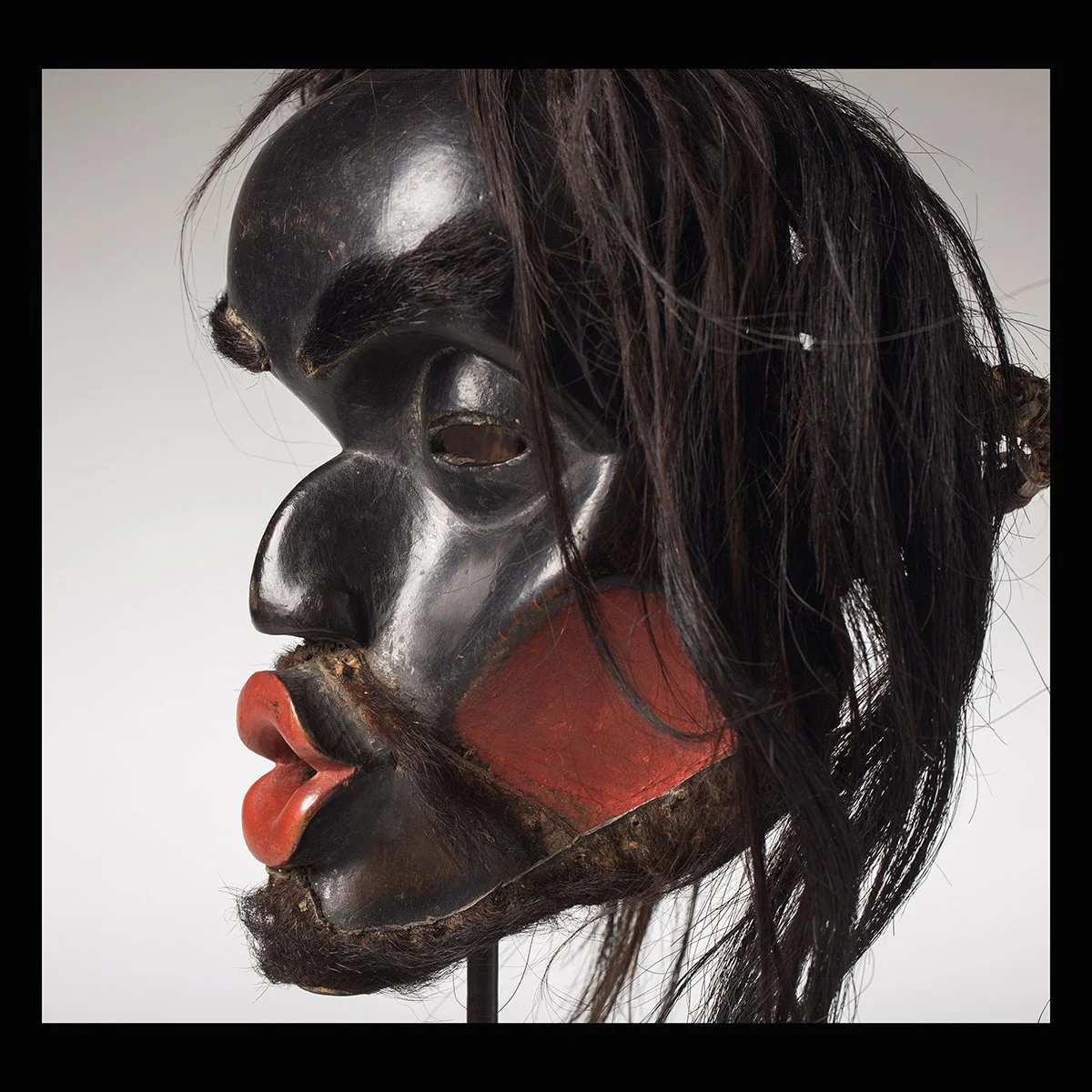 Image 9 of 14
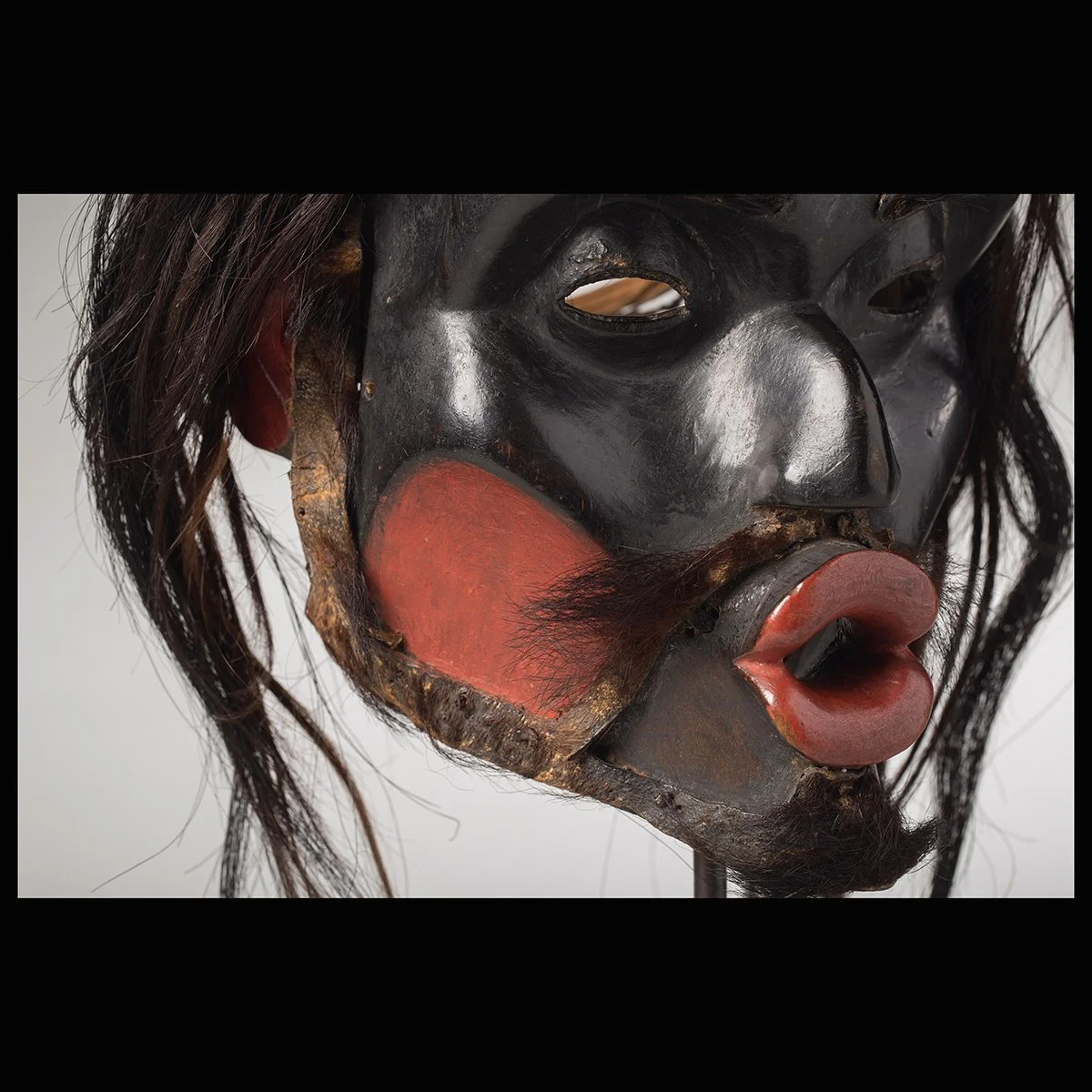 Image 10 of 14
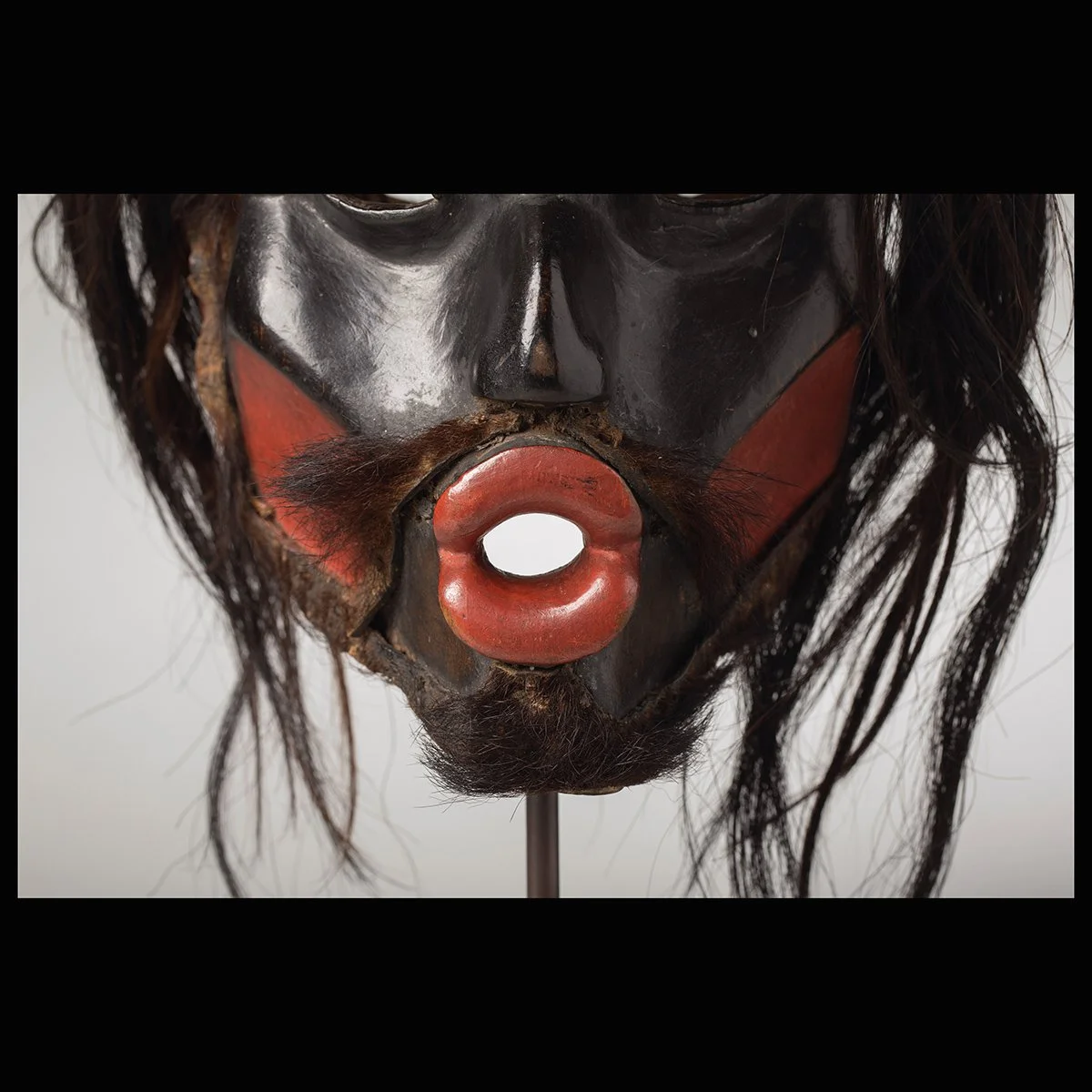 Image 11 of 14
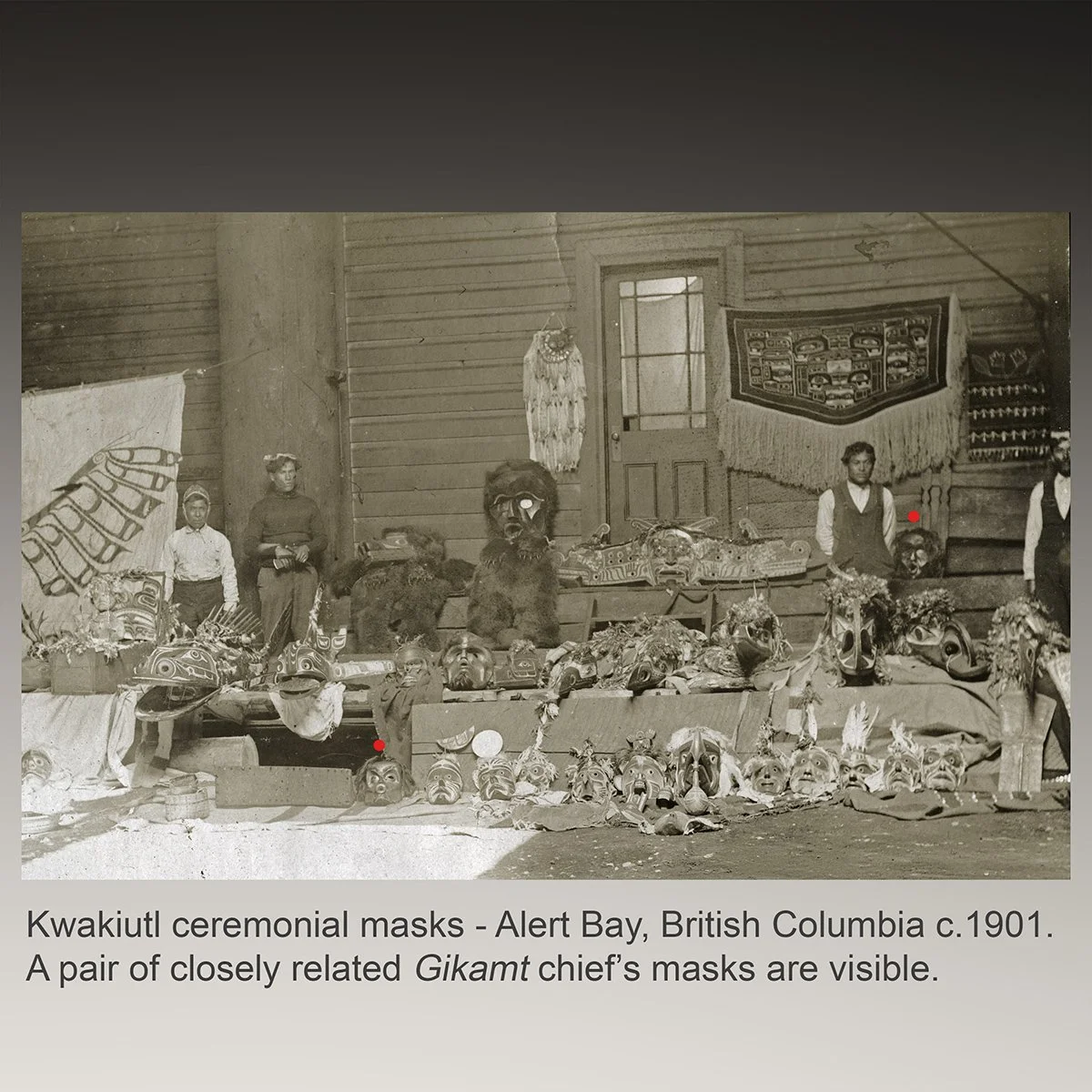 Image 12 of 14
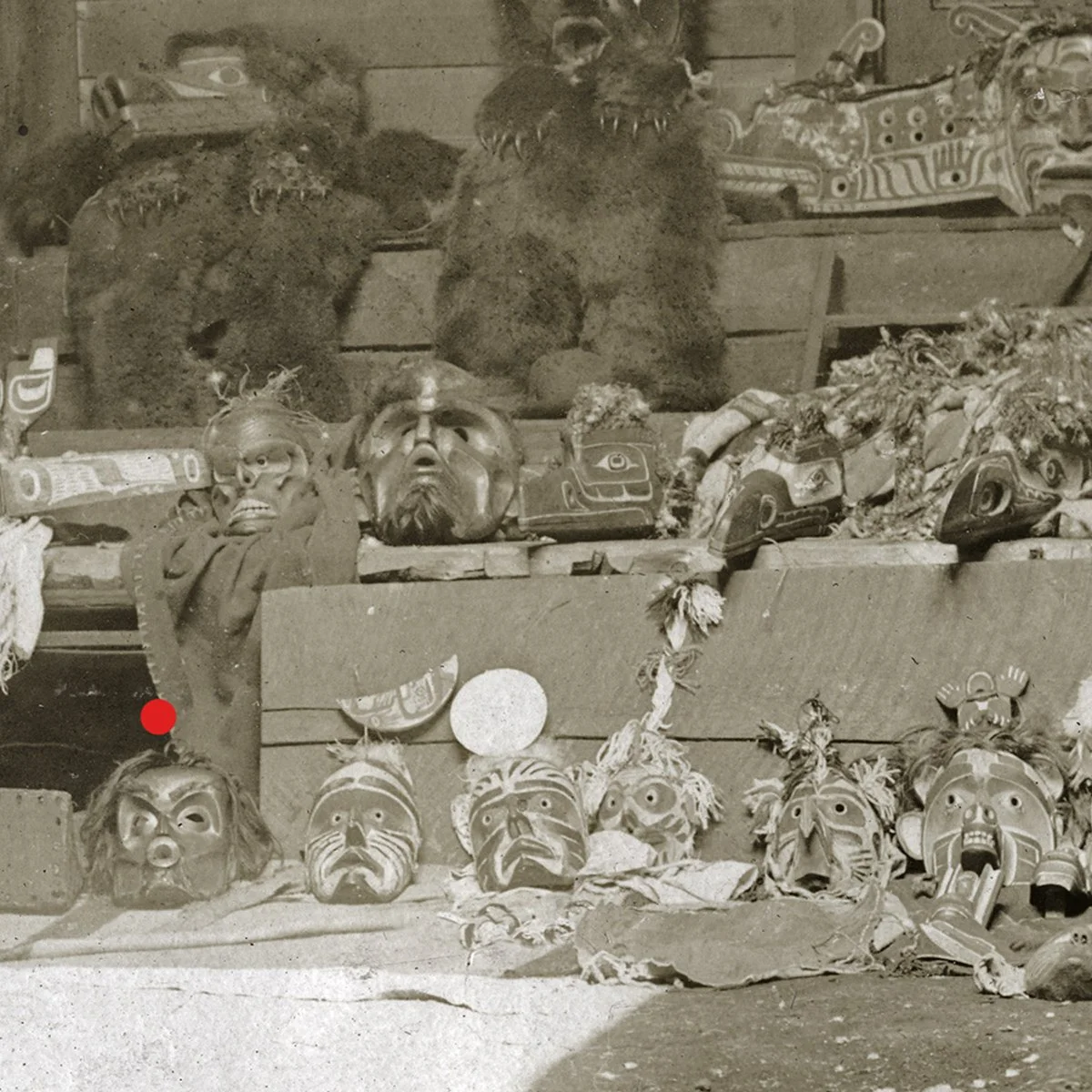 Image 13 of 14