Kwakwaka’wakw / Kwakiutl people
Coastal British Columbia, Canada
Red cedar wood, natural pigments, hand-forged metal bracket
Height: 87 in. (221 cm)
Provenance: Private collection, Santa Barbara, California
Art Loss Register certificate #S00258363
This monumental memorial figure represents an ancestral chief associated with the Killer Whale clan, one of the important crest lineages of the Kwakwaka’wakw people of coastal British Columbia. Kwakwaka’wakw ceremonial life was deeply connected to transformation stories, in which ancestral beings moved between human, animal, and spiritual forms. Such crest imagery identified lineage, rank, and inherited rights within the ceremonial world of the clan house.
Carved from red cedar, the figure holds a speaker’s staff, an emblem of authority used by high-ranking chiefs during formal speeches and potlatch ceremonies. The staff is surmounted by paired horned owl figures, while the chief wears regalia connected to the Killer Whale dance. At the lower edge of the painted cape, two killer whale forms refer to the clan crest and to the powerful marine being understood as a chief in the undersea world.
The mask is rendered in breaching form, with a raised dorsal fin and side elements suggesting the arched body of the killer whale. The face beneath is painted with mineral pigment, with a mustache and beard carved in the traditional style. The scale, crest imagery, ceremonial regalia, and traces of Prussian blue trade pigment make this a major Kwakwaka’wakw sculptural work connected to lineage, status, and ancestral remembrance.
Note: The back of the figure is hollowed, a traditional technique used in large cedar sculpture to reduce stress cracks. The lower section shows age-related erosion, likely from long contact with the floor of a clan house, and the figure was later mounted on a square red cedar base with hand-forged metal brackets.
To read more from Mark about this extraordinary item, please click here.
Kwakwaka’wakw / Kwakiutl people
Coastal British Columbia, Canada
Red cedar wood, natural pigments, hand-forged metal bracket
Height: 87 in. (221 cm)
Provenance: Private collection, Santa Barbara, California
Art Loss Register certificate #S00258363
This monumental memorial figure represents an ancestral chief associated with the Killer Whale clan, one of the important crest lineages of the Kwakwaka’wakw people of coastal British Columbia. Kwakwaka’wakw ceremonial life was deeply connected to transformation stories, in which ancestral beings moved between human, animal, and spiritual forms. Such crest imagery identified lineage, rank, and inherited rights within the ceremonial world of the clan house.
Carved from red cedar, the figure holds a speaker’s staff, an emblem of authority used by high-ranking chiefs during formal speeches and potlatch ceremonies. The staff is surmounted by paired horned owl figures, while the chief wears regalia connected to the Killer Whale dance. At the lower edge of the painted cape, two killer whale forms refer to the clan crest and to the powerful marine being understood as a chief in the undersea world.
The mask is rendered in breaching form, with a raised dorsal fin and side elements suggesting the arched body of the killer whale. The face beneath is painted with mineral pigment, with a mustache and beard carved in the traditional style. The scale, crest imagery, ceremonial regalia, and traces of Prussian blue trade pigment make this a major Kwakwaka’wakw sculptural work connected to lineage, status, and ancestral remembrance.
Note: The back of the figure is hollowed, a traditional technique used in large cedar sculpture to reduce stress cracks. The lower section shows age-related erosion, likely from long contact with the floor of a clan house, and the figure was later mounted on a square red cedar base with hand-forged metal brackets.
To read more from Mark about this extraordinary item, please click here.


 Image 1 of 13
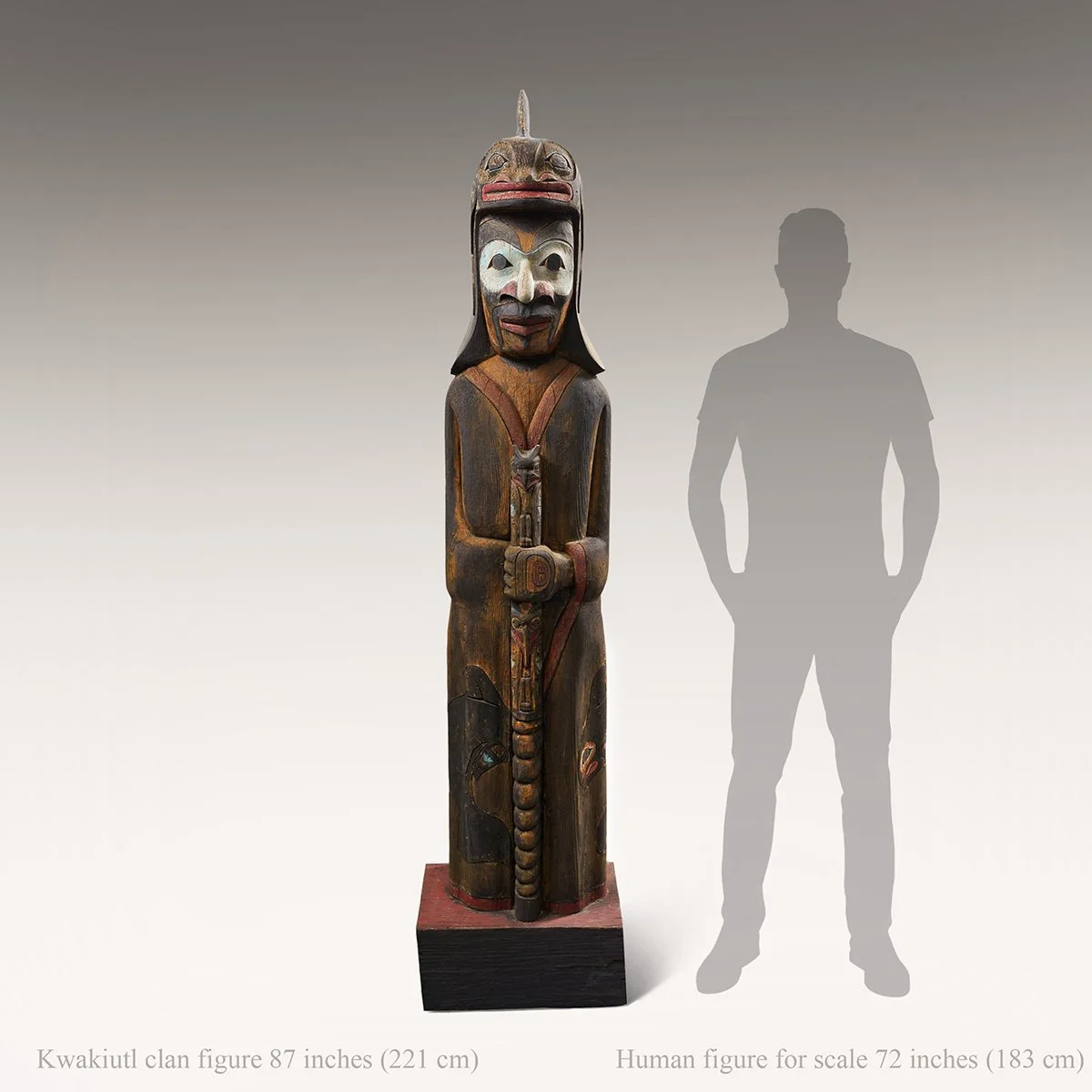 Image 2 of 13
 Image 3 of 13
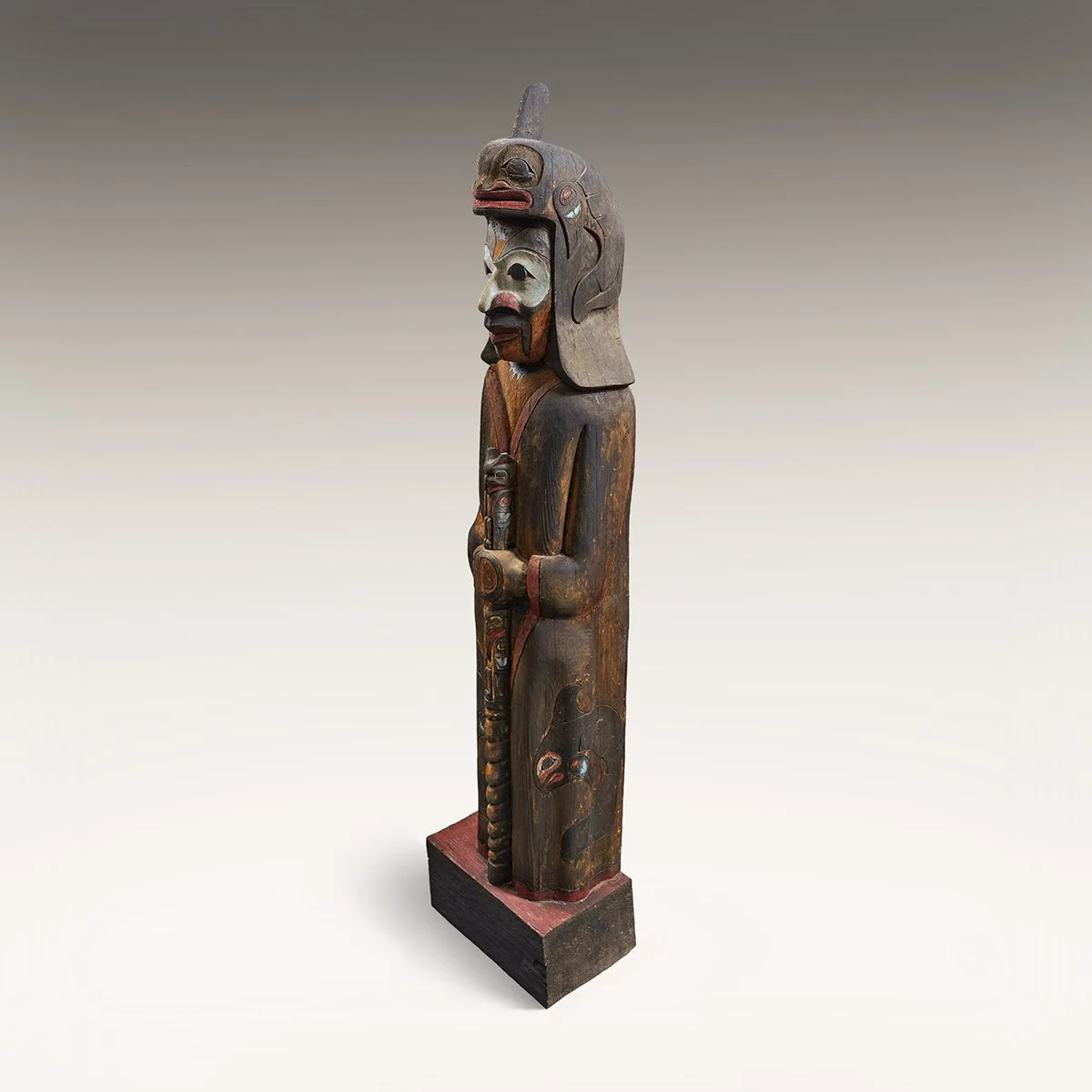 Image 4 of 13
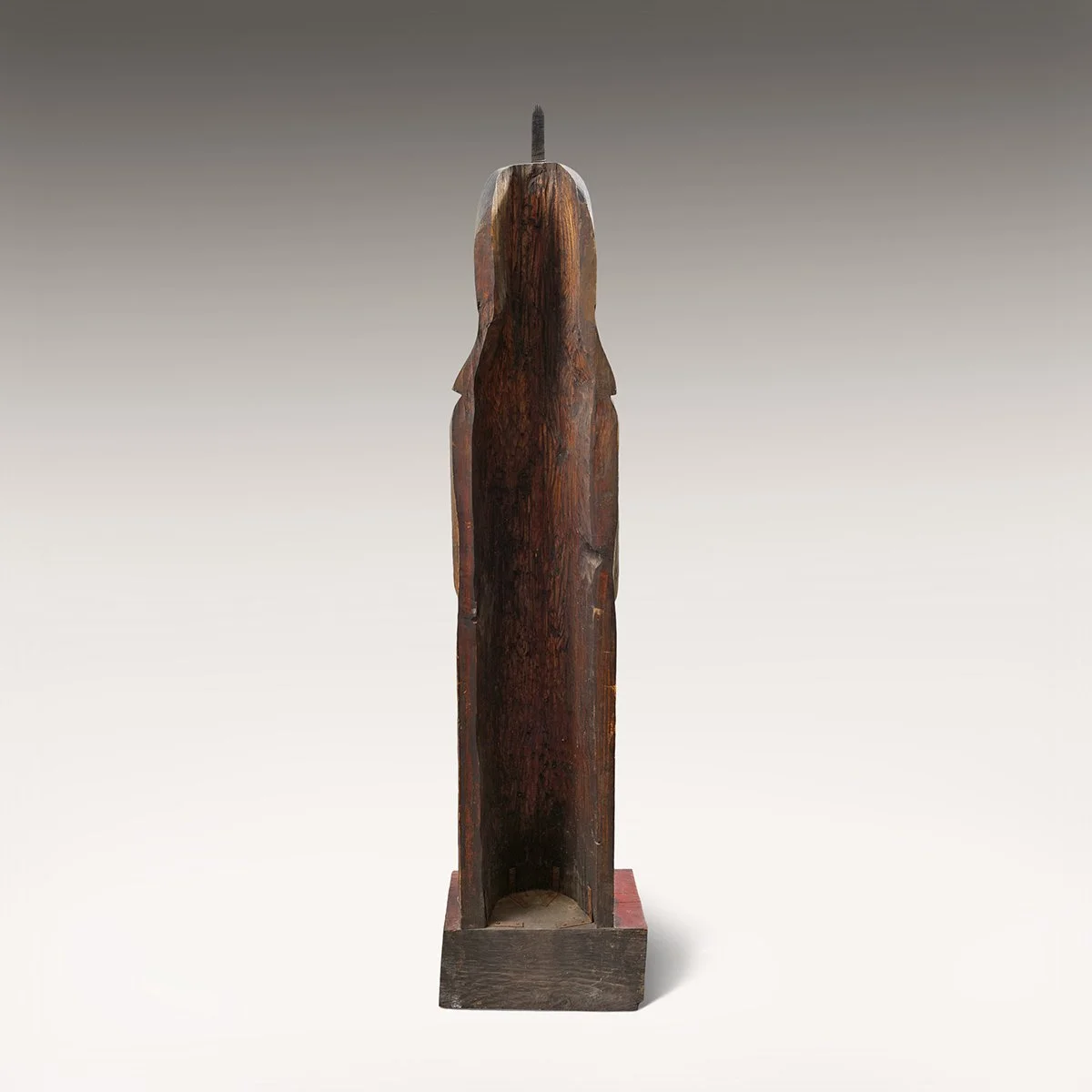 Image 5 of 13
 Image 6 of 13
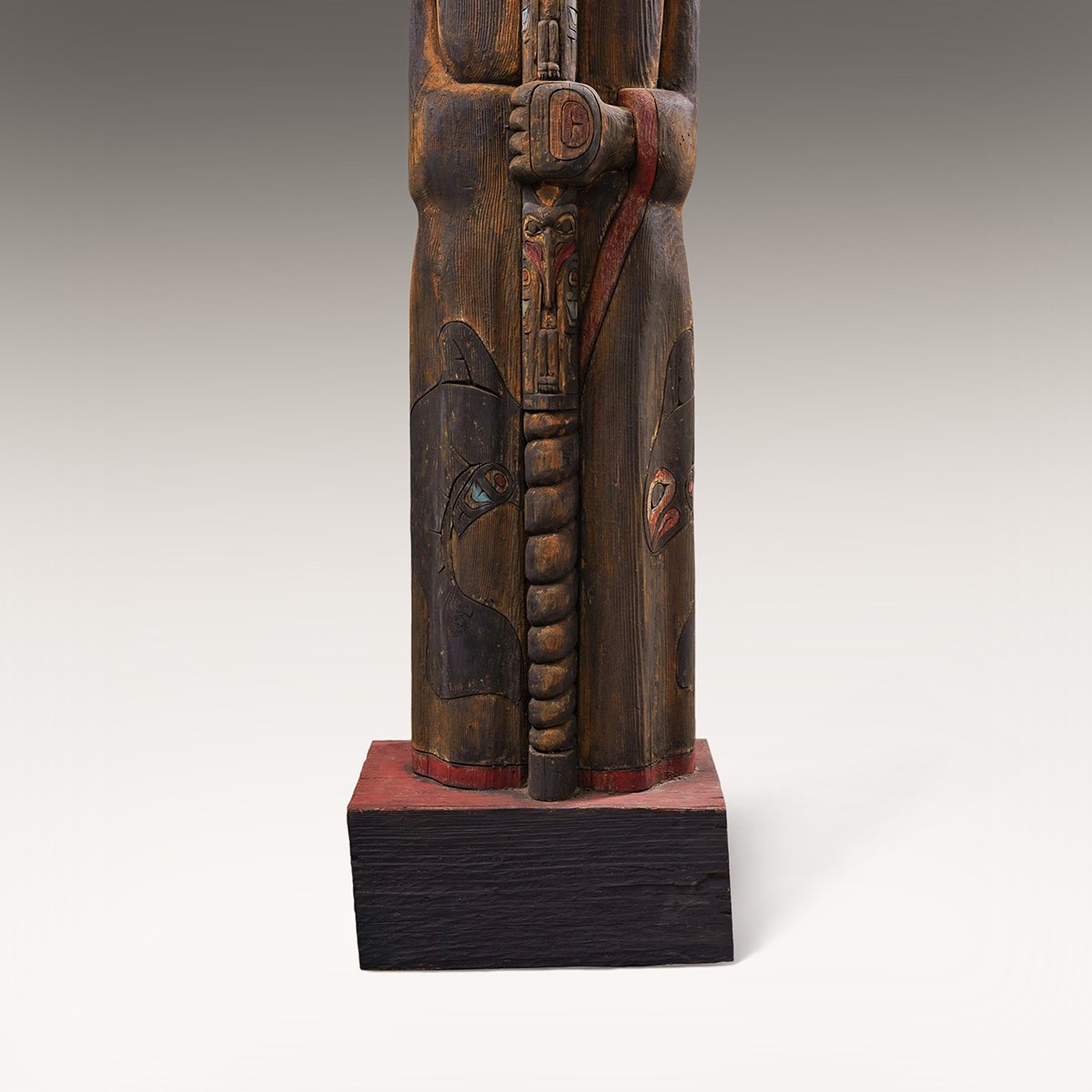 Image 7 of 13
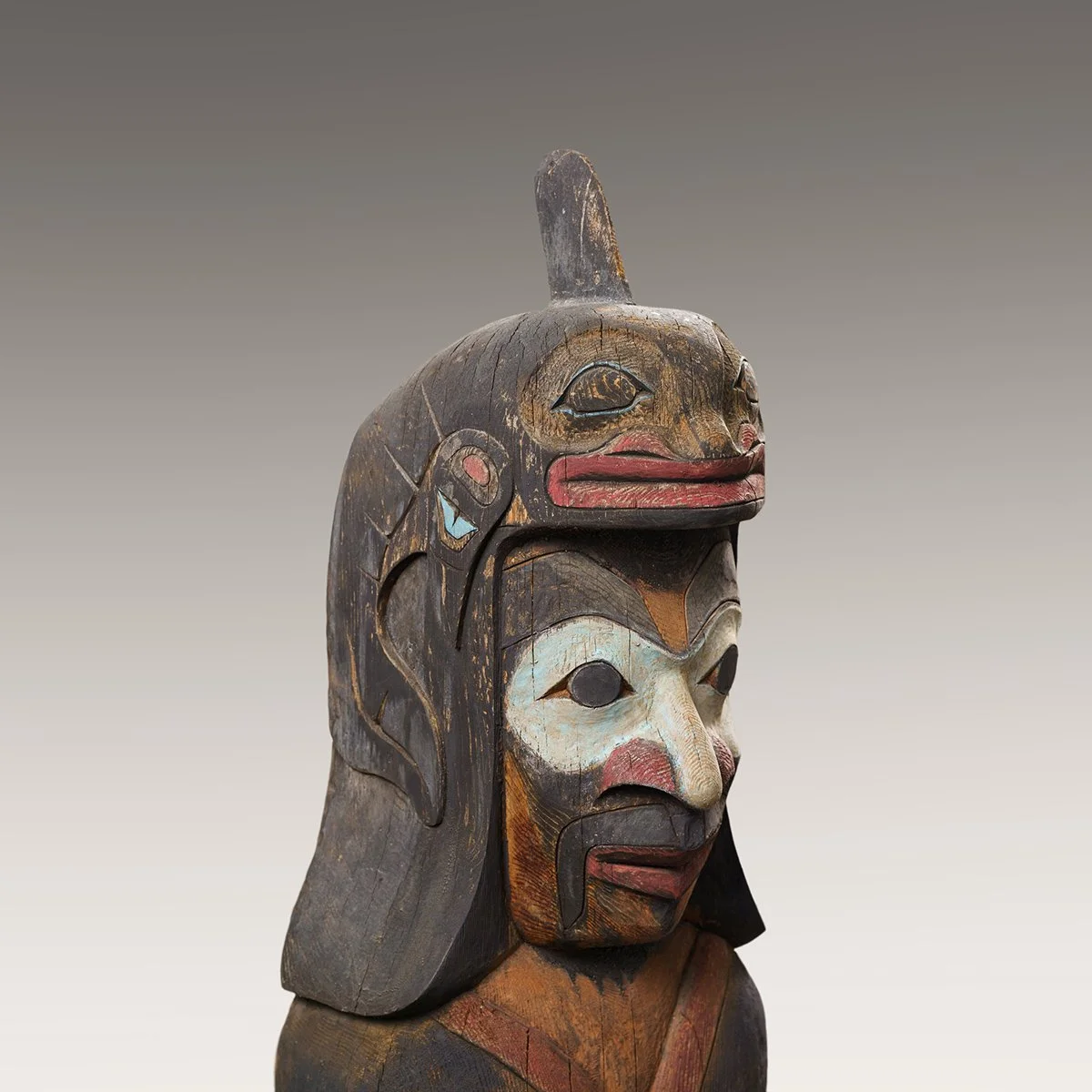 Image 8 of 13
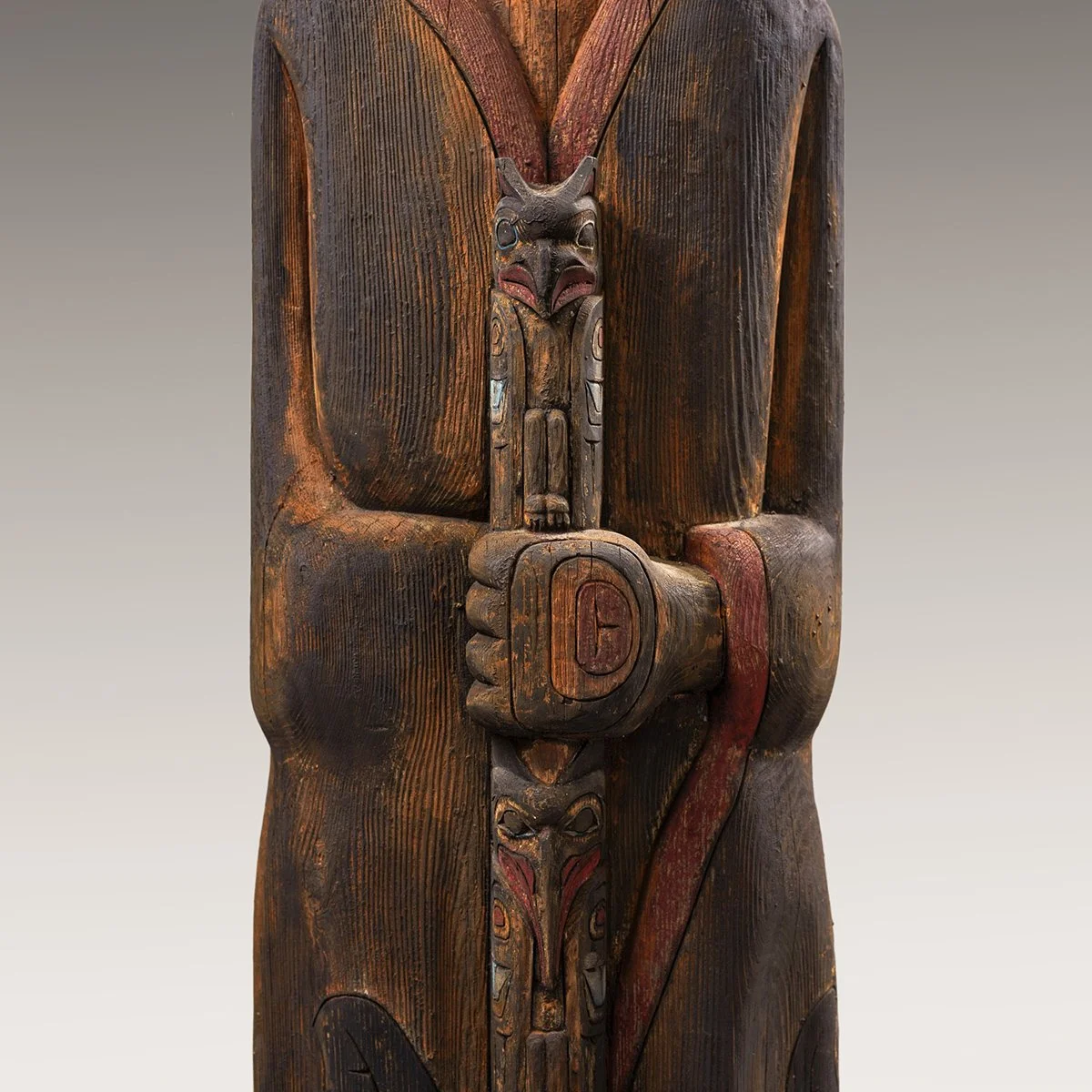 Image 9 of 13
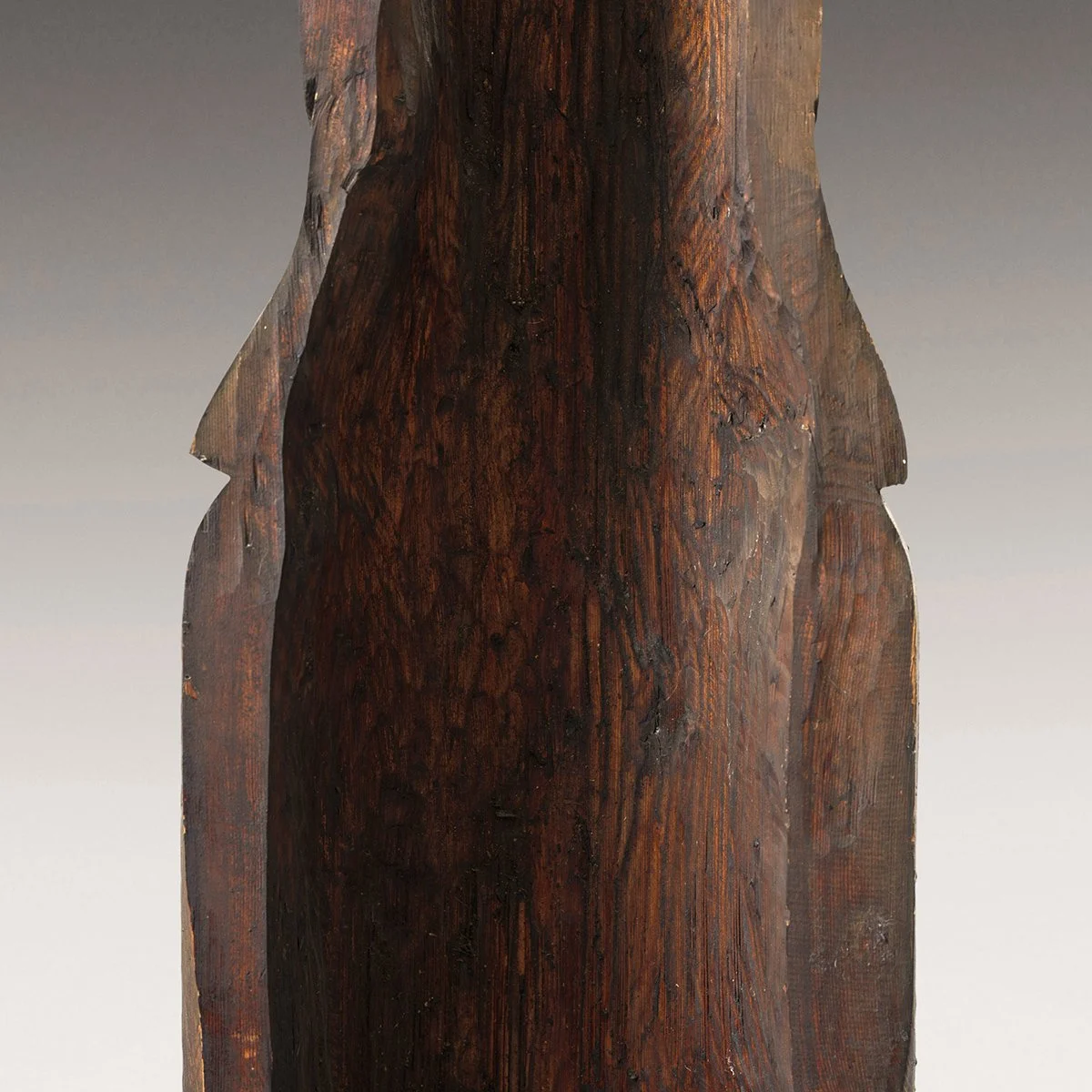 Image 10 of 13
 Image 11 of 13
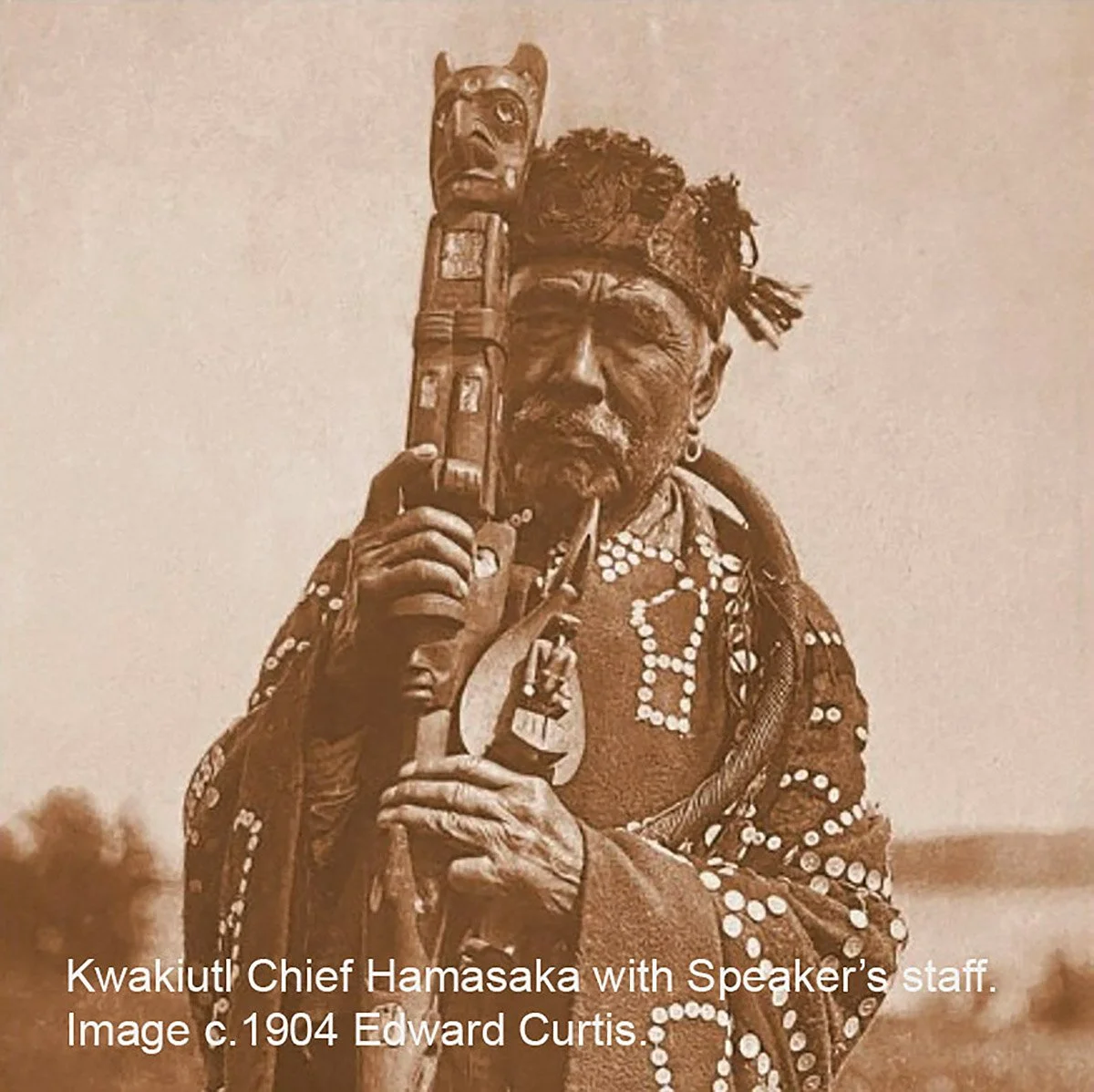 Image 12 of 13
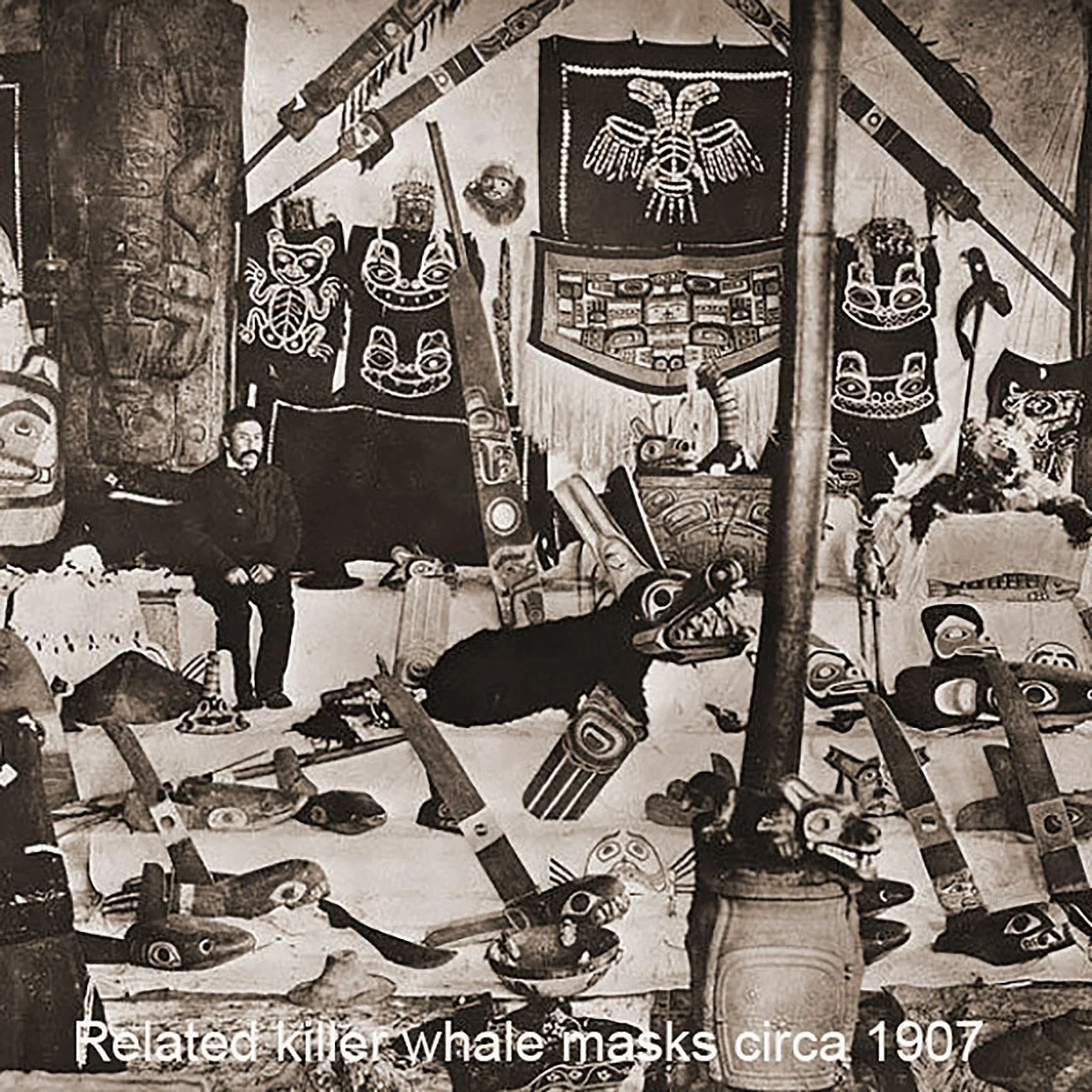 Image 13 of 13