Lake Sentani region, West New Guinea, Papua province, Indonesia
Late 19th to early 20th century
Wood
Height: 29¼ in (74.3 cm); Width: 10¾ in (27.3 cm)
Provenance: Parisian trade; private Dutch collection
A stone-carved example of a Lake Sentani hotè or hoitè platter, made in the elongated shield-like form associated with the region. Comparable museum examples are described as wood or wood with pigments, and are associated with the serving of sago, a palm starch that has long been a staple food in New Guinea. The narrow lenticular shape and vertical presentation give the object a sculptural presence while remaining tied to a functional vessel tradition.
The surface is carved in low relief with curving motifs related to the wider visual language of Lake Sentani. Similar decorative conventions appear across Sentani bark cloth, house elements, drums, paddles, and other carved objects, often drawing on stylized avian and aquatic imagery. Lake Sentani art drew attention from early 20th century European collectors and Surrealist circles, who admired its abstraction and imaginative forms, though their interpretations often differed from the original cultural meanings of the works themselves.
We ship free anywhere in the world, fully insured, packed by hand.
Lake Sentani region, West New Guinea, Papua province, Indonesia
Late 19th to early 20th century
Wood
Height: 29¼ in (74.3 cm); Width: 10¾ in (27.3 cm)
Provenance: Parisian trade; private Dutch collection
A stone-carved example of a Lake Sentani hotè or hoitè platter, made in the elongated shield-like form associated with the region. Comparable museum examples are described as wood or wood with pigments, and are associated with the serving of sago, a palm starch that has long been a staple food in New Guinea. The narrow lenticular shape and vertical presentation give the object a sculptural presence while remaining tied to a functional vessel tradition.
The surface is carved in low relief with curving motifs related to the wider visual language of Lake Sentani. Similar decorative conventions appear across Sentani bark cloth, house elements, drums, paddles, and other carved objects, often drawing on stylized avian and aquatic imagery. Lake Sentani art drew attention from early 20th century European collectors and Surrealist circles, who admired its abstraction and imaginative forms, though their interpretations often differed from the original cultural meanings of the works themselves.
We ship free anywhere in the world, fully insured, packed by hand.


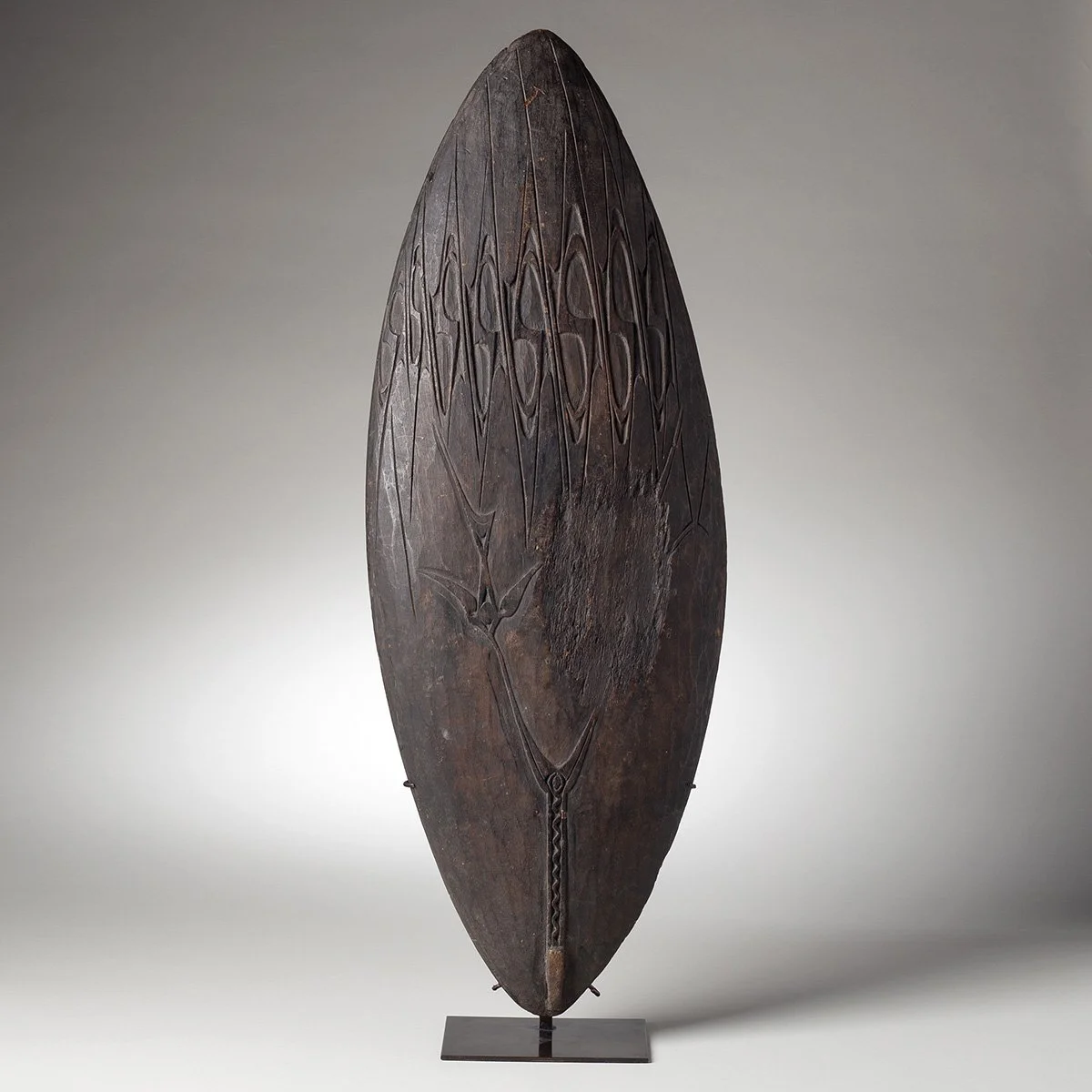 Image 1 of 8
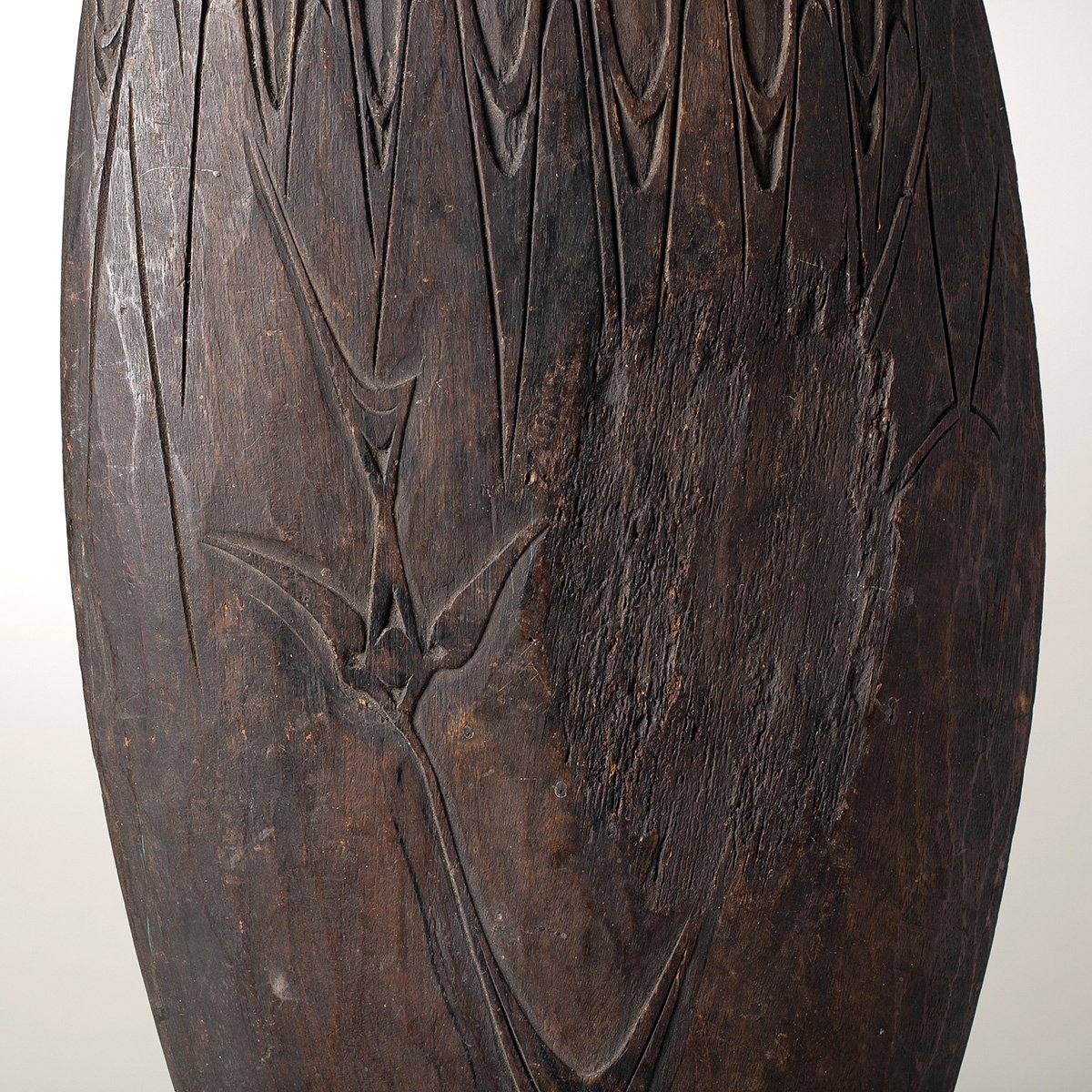 Image 2 of 8
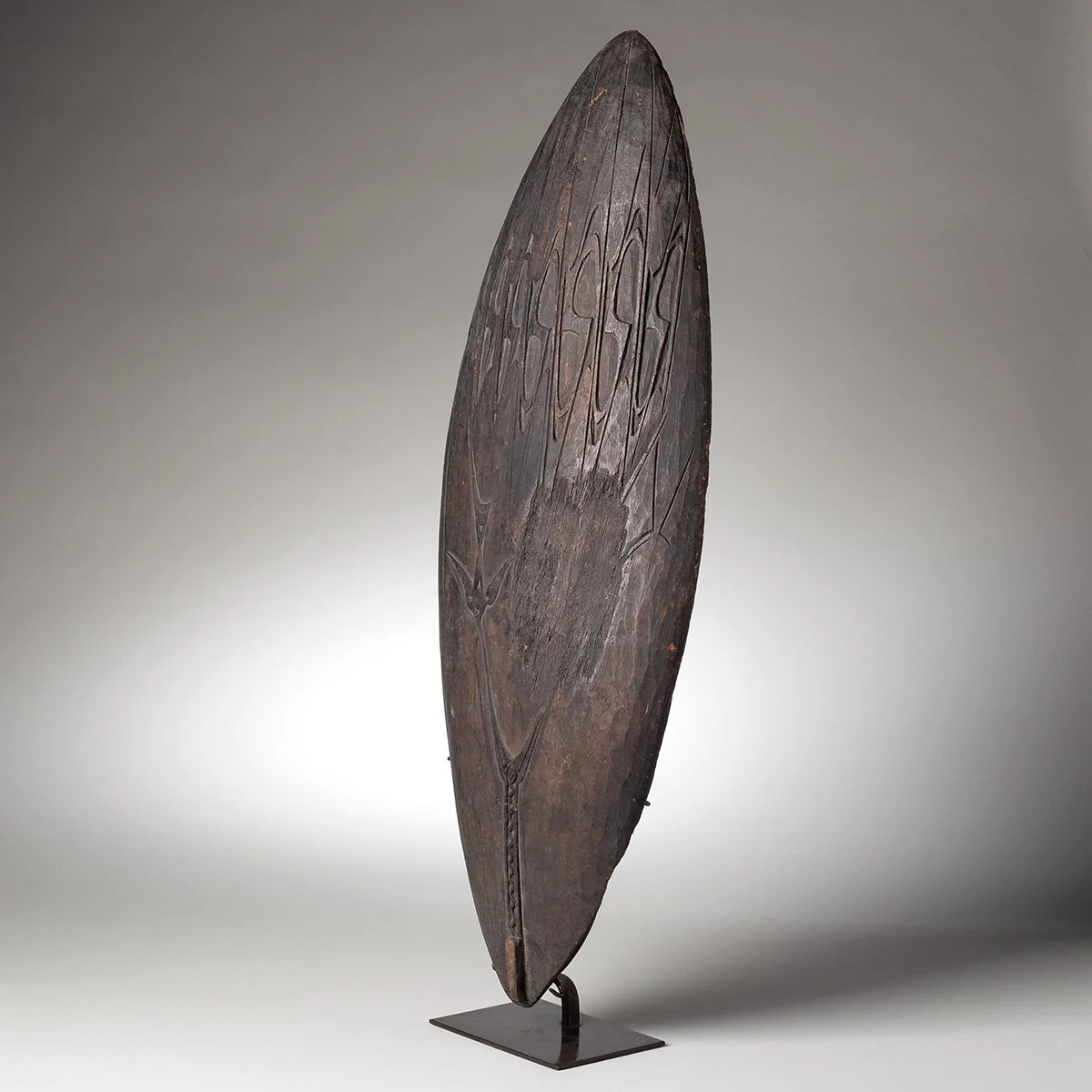 Image 3 of 8
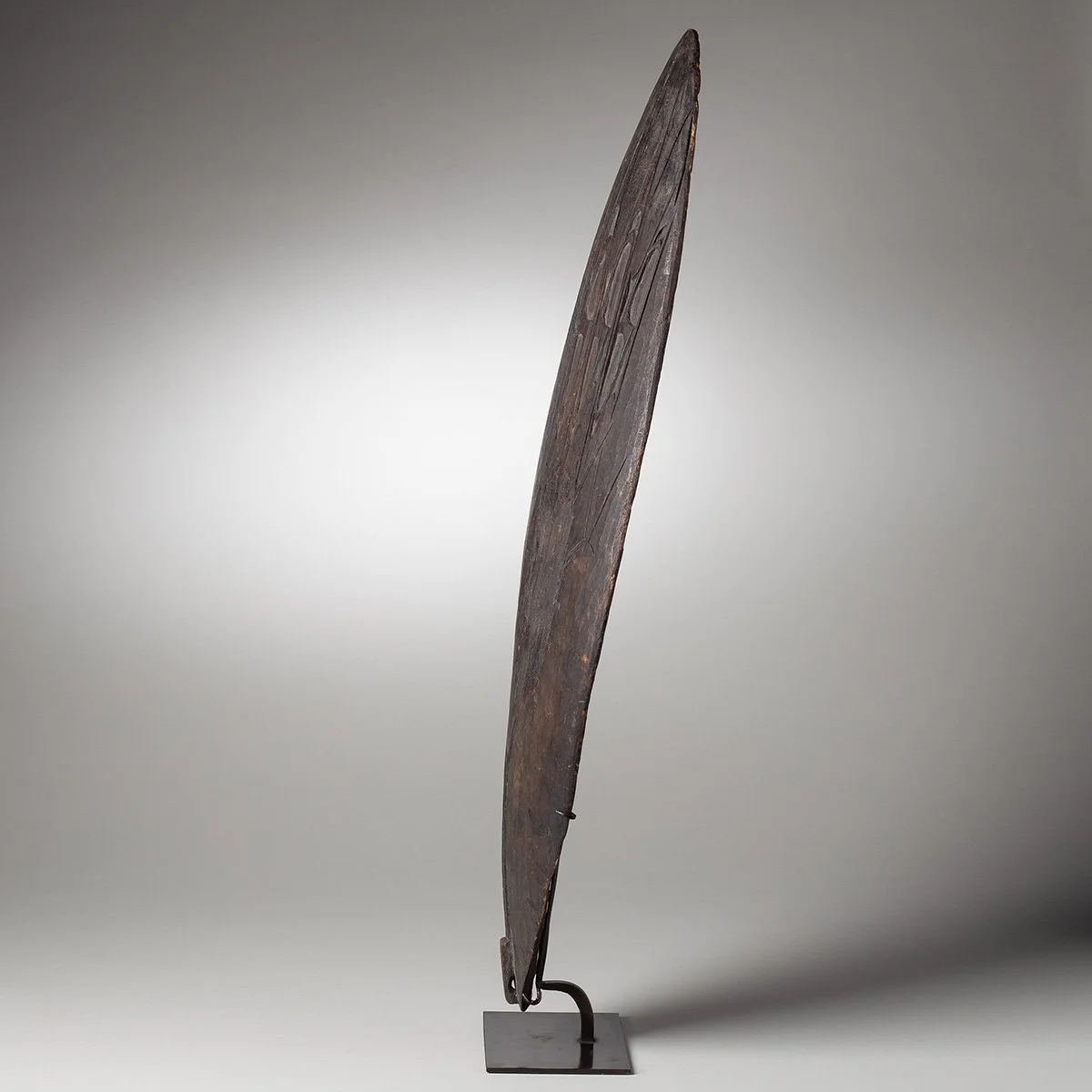 Image 4 of 8
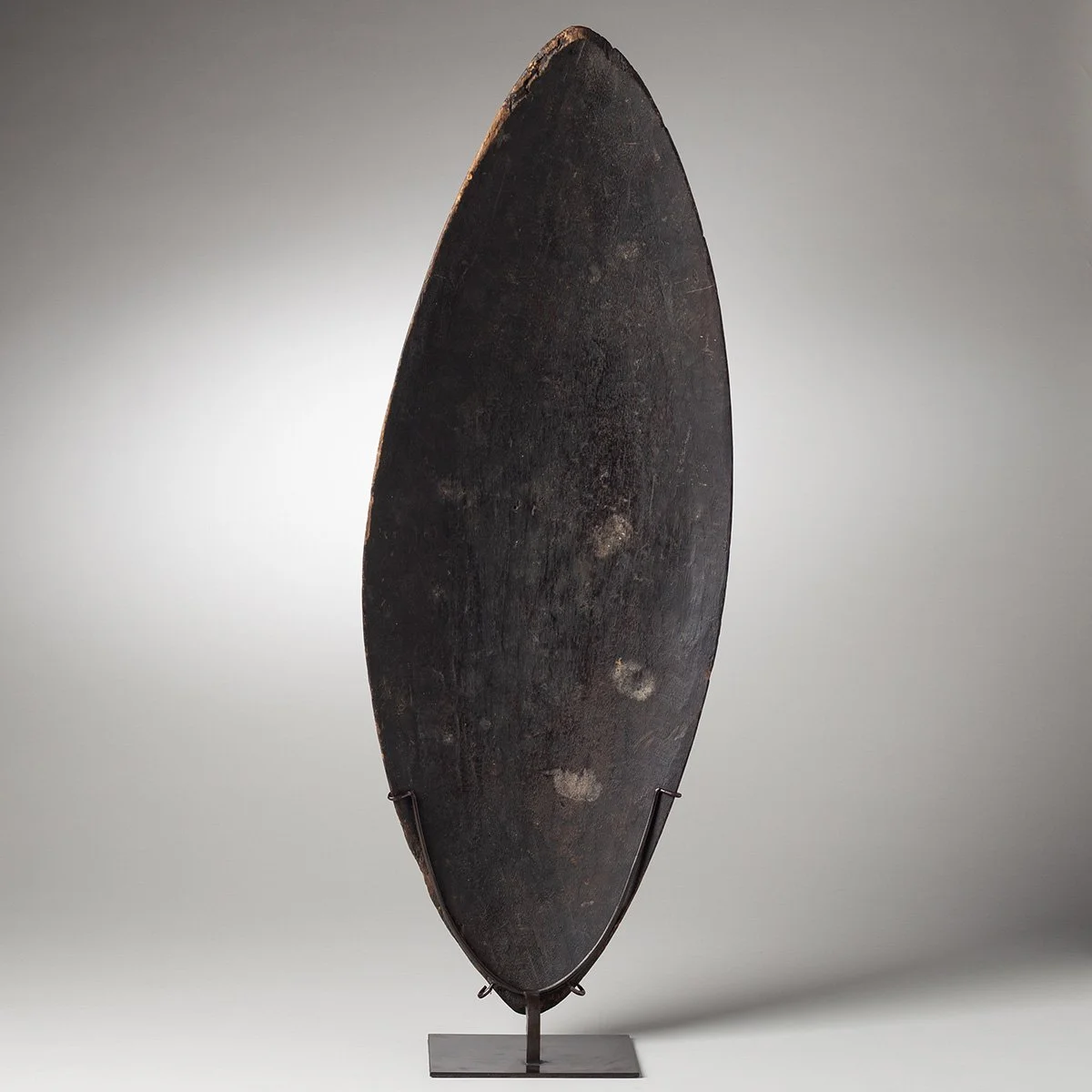 Image 5 of 8
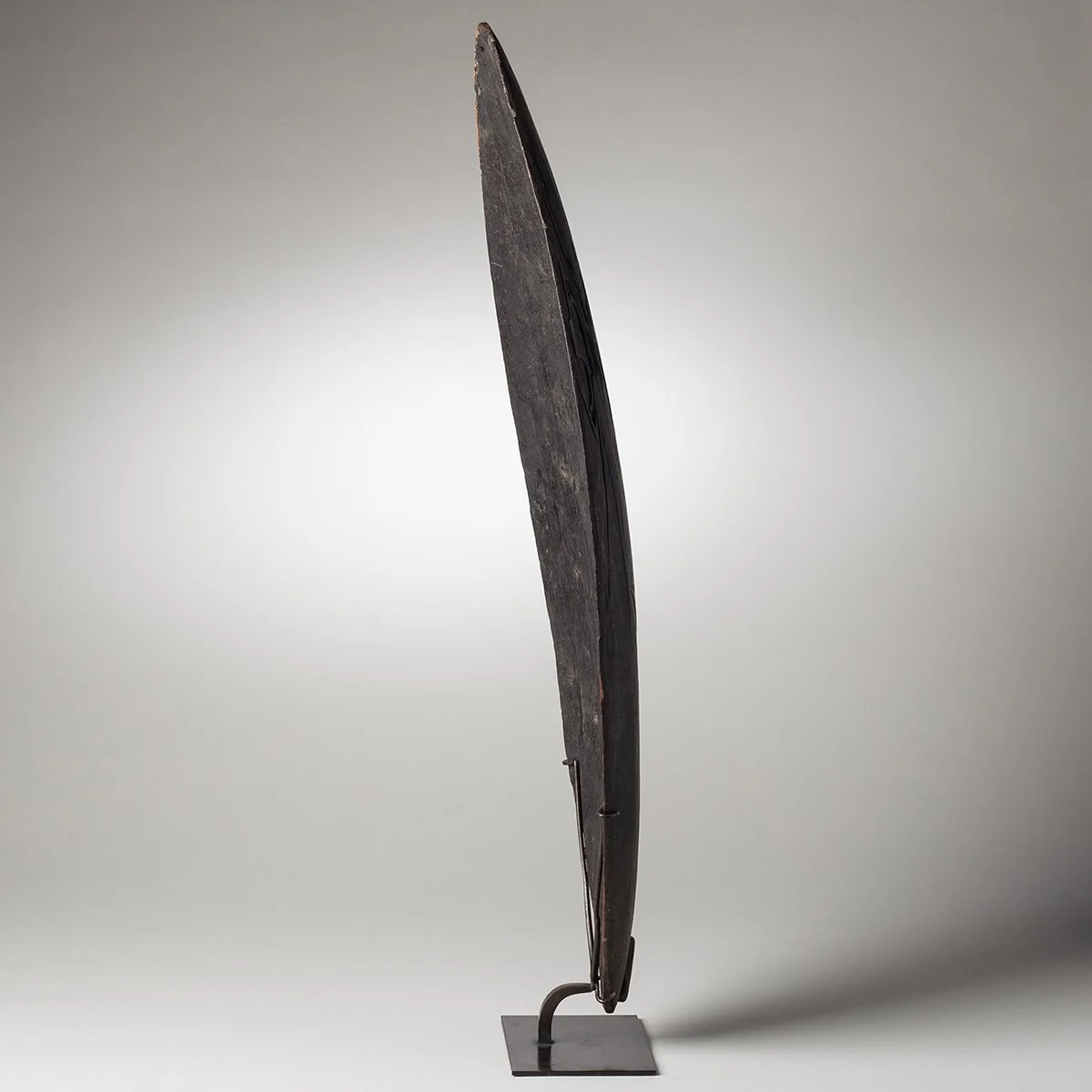 Image 6 of 8
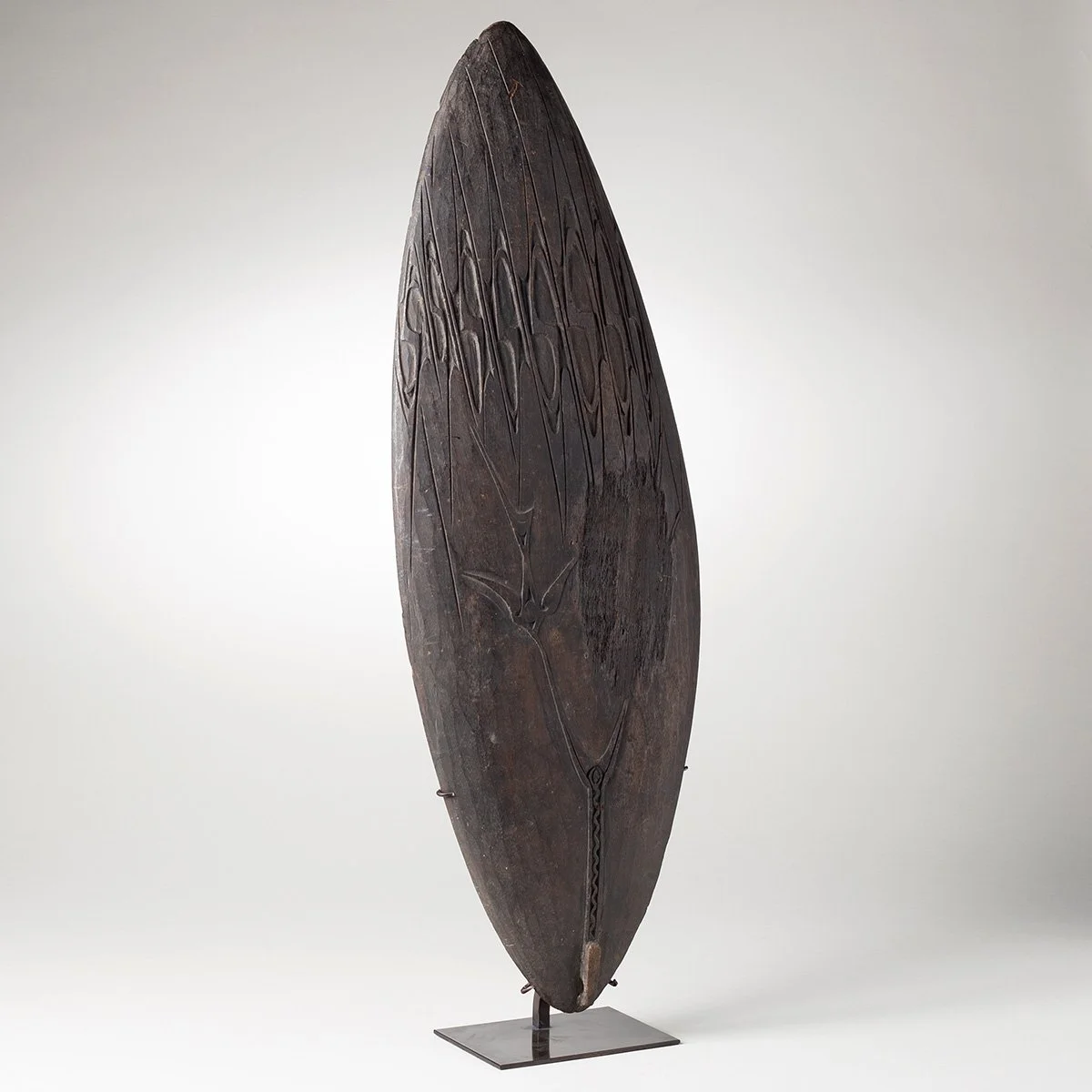 Image 7 of 8
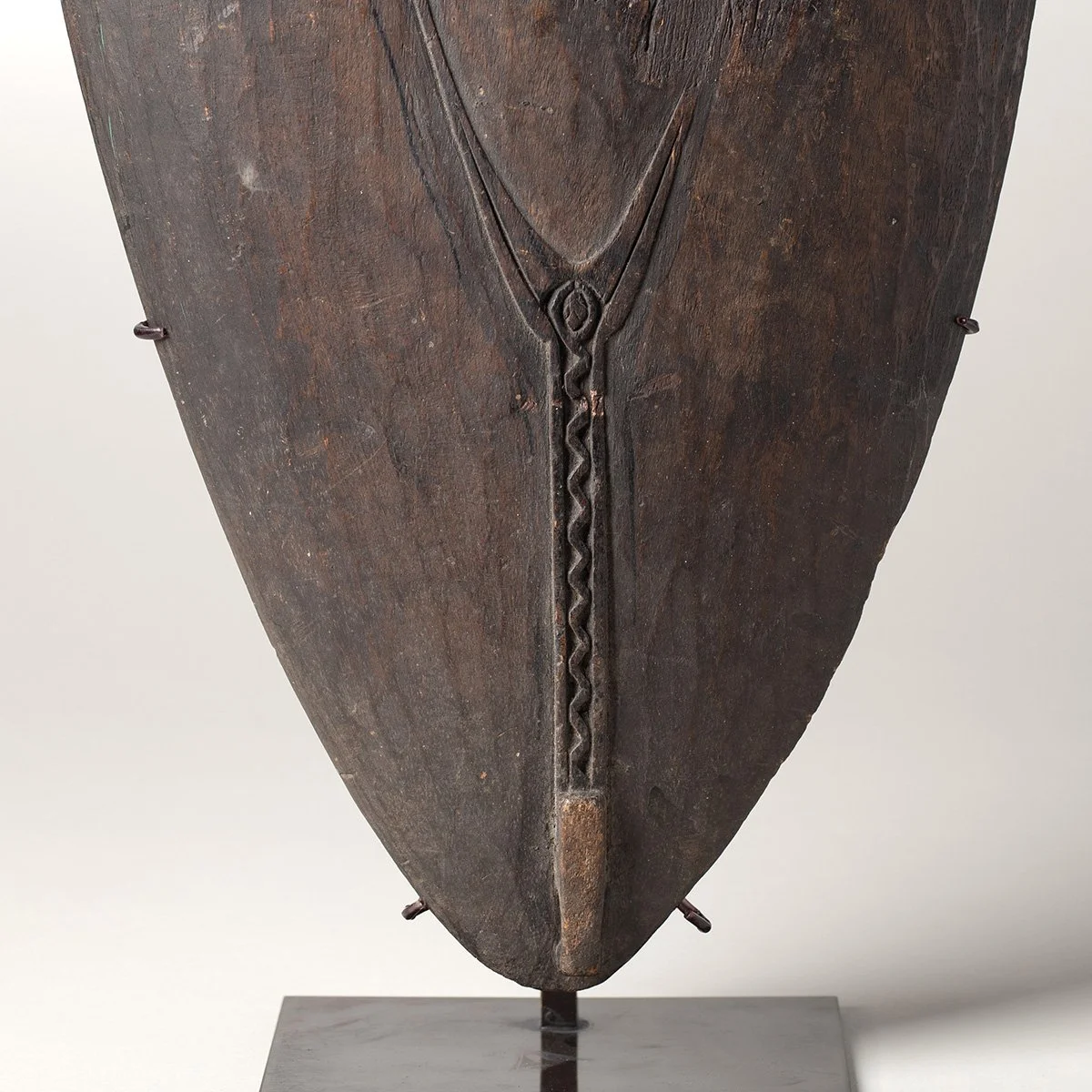 Image 8 of 8