Circa 1100–500 BC
Jade, cinnabar
Height 3 3/4" (9.5 cm)
Provenance: Ron Messick, Santa Fe, NM, 1994; private collection, Connecticut
Olmec jade masks of this type represent some of the earliest monumental lapidary work in Mesoamerica, produced during a period when the Olmec heartland along the Gulf Coast was the dominant cultural and artistic force in the region. The naturalistic facial features reflect an Olmec aesthetic that would influence subsequent Mesoamerican traditions for centuries. Cinnabar applied within the carved recesses was a widespread Olmec practice associated with ritual significance and the sanctity of the object.
The mask's proportions and carving suggest use in funerary or dedicatory contexts, with naturalistic features connected to Olmec beliefs surrounding agriculture, birth, death, and rebirth. Jade held the highest material value in Olmec culture, associated with water, maize, and fertility, and objects of this type were among the most prestigious goods in circulation. The presence of cinnabar further marks this as an object of ceremonial rather than purely decorative intent.
Masks of this scale and material survive in small numbers relative to the broader corpus of Olmec lapidary production, and examples retaining cinnabar deposits are particularly uncommon. The carving of the facial features, including the downturned mouth, almond eyes, and pierced earlobes, follows conventions seen across Olmec portable sculpture and connects this object to a well-documented ceremonial tradition. The provenance traces the mask through two documented collections over three decades.
We ship free anywhere in the world, fully insured, packed by hand.
INQUIRE HERE
Circa 1100–500 BC
Jade, cinnabar
Height 3 3/4" (9.5 cm)
Provenance: Ron Messick, Santa Fe, NM, 1994; private collection, Connecticut
Olmec jade masks of this type represent some of the earliest monumental lapidary work in Mesoamerica, produced during a period when the Olmec heartland along the Gulf Coast was the dominant cultural and artistic force in the region. The naturalistic facial features reflect an Olmec aesthetic that would influence subsequent Mesoamerican traditions for centuries. Cinnabar applied within the carved recesses was a widespread Olmec practice associated with ritual significance and the sanctity of the object.
The mask's proportions and carving suggest use in funerary or dedicatory contexts, with naturalistic features connected to Olmec beliefs surrounding agriculture, birth, death, and rebirth. Jade held the highest material value in Olmec culture, associated with water, maize, and fertility, and objects of this type were among the most prestigious goods in circulation. The presence of cinnabar further marks this as an object of ceremonial rather than purely decorative intent.
Masks of this scale and material survive in small numbers relative to the broader corpus of Olmec lapidary production, and examples retaining cinnabar deposits are particularly uncommon. The carving of the facial features, including the downturned mouth, almond eyes, and pierced earlobes, follows conventions seen across Olmec portable sculpture and connects this object to a well-documented ceremonial tradition. The provenance traces the mask through two documented collections over three decades.
We ship free anywhere in the world, fully insured, packed by hand.
INQUIRE HERE


 Image 1 of 7
 Image 2 of 7
 Image 3 of 7
 Image 4 of 7
 Image 5 of 7
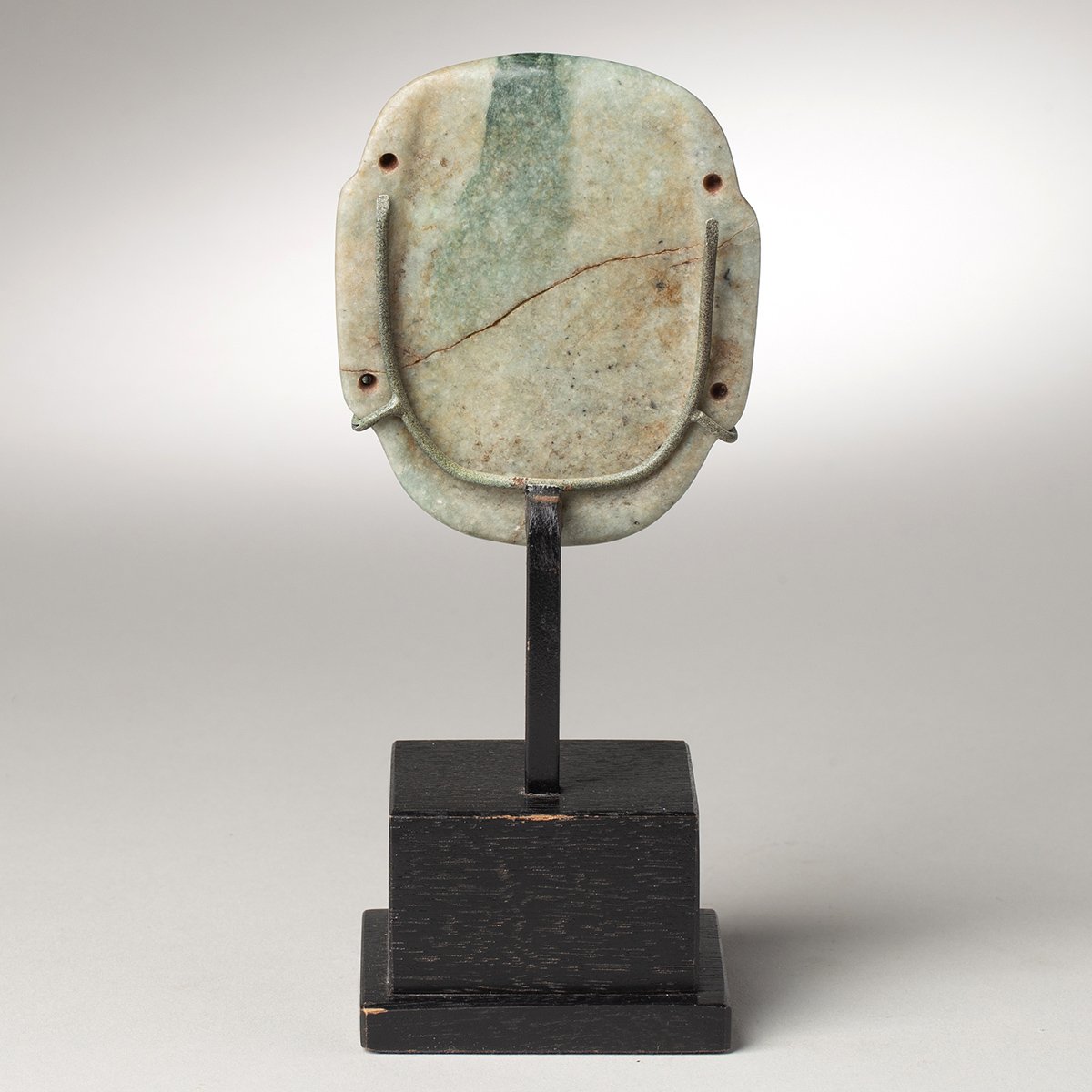 Image 6 of 7
 Image 7 of 7