Lobi, Burkina Faso, 19th century
Cast copper alloy
Length 2 inches (5.1 cm)
Provenance: London trade; Alan Mann, London
The figure sits with the legs extended forward and the feet turned up at the ends, the torso upright and one arm carried out to the side where it swells into a closed circular loop that serves as the suspension. The face is worked as a flat oval with the eyes set as raised lozenges beneath a continuous brow, a small nose, and a wide mouth cut with a horizontal line across full lips, and the head is held slightly back on a short neck. Raised bosses mark the chest and abdomen, the casting is solid with a pitted surface from the original mould, and the metal shows warm yellow at the raised edges against a duller brown in the recesses.
Lobi pendants were worn on the person in southwestern Burkina Faso, cast in small numbers by the lost wax process and kept as protective and personal objects rather than as ornament alone. The seated posture with legs extended is a Lobi convention that also appears in the larger wooden bateba figures, so the pendant carries the same sculptural language at a fraction of the scale. Casting a closed loop as part of the figure rather than adding it afterward is the technically awkward part of a piece this small, and the loop here is intact and unworn through.
We ship free anywhere in the world, fully insured, packed by hand.
Lobi, Burkina Faso, 19th century
Cast copper alloy
Length 2 inches (5.1 cm)
Provenance: London trade; Alan Mann, London
The figure sits with the legs extended forward and the feet turned up at the ends, the torso upright and one arm carried out to the side where it swells into a closed circular loop that serves as the suspension. The face is worked as a flat oval with the eyes set as raised lozenges beneath a continuous brow, a small nose, and a wide mouth cut with a horizontal line across full lips, and the head is held slightly back on a short neck. Raised bosses mark the chest and abdomen, the casting is solid with a pitted surface from the original mould, and the metal shows warm yellow at the raised edges against a duller brown in the recesses.
Lobi pendants were worn on the person in southwestern Burkina Faso, cast in small numbers by the lost wax process and kept as protective and personal objects rather than as ornament alone. The seated posture with legs extended is a Lobi convention that also appears in the larger wooden bateba figures, so the pendant carries the same sculptural language at a fraction of the scale. Casting a closed loop as part of the figure rather than adding it afterward is the technically awkward part of a piece this small, and the loop here is intact and unworn through.
We ship free anywhere in the world, fully insured, packed by hand.


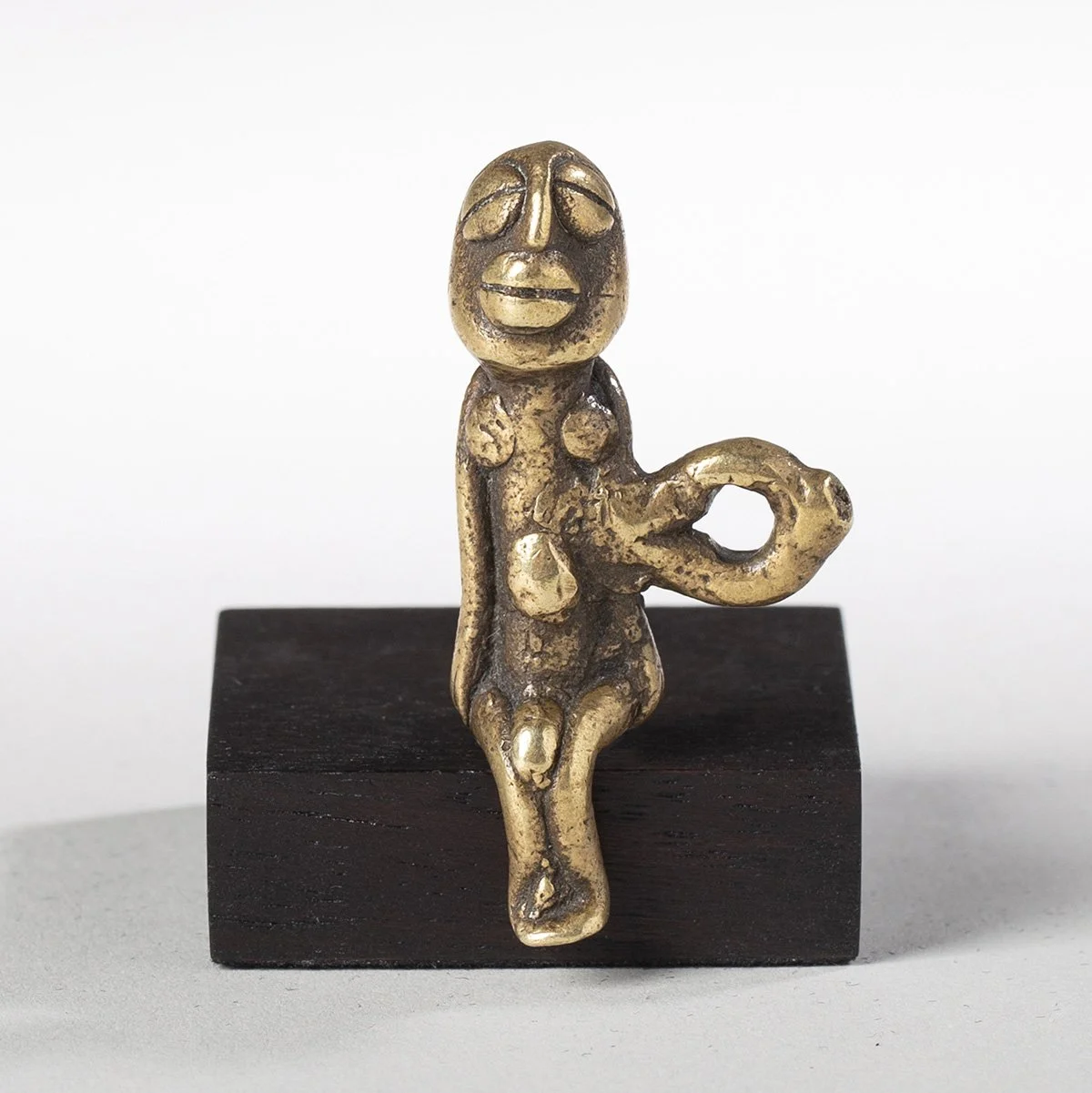 Image 1 of 6
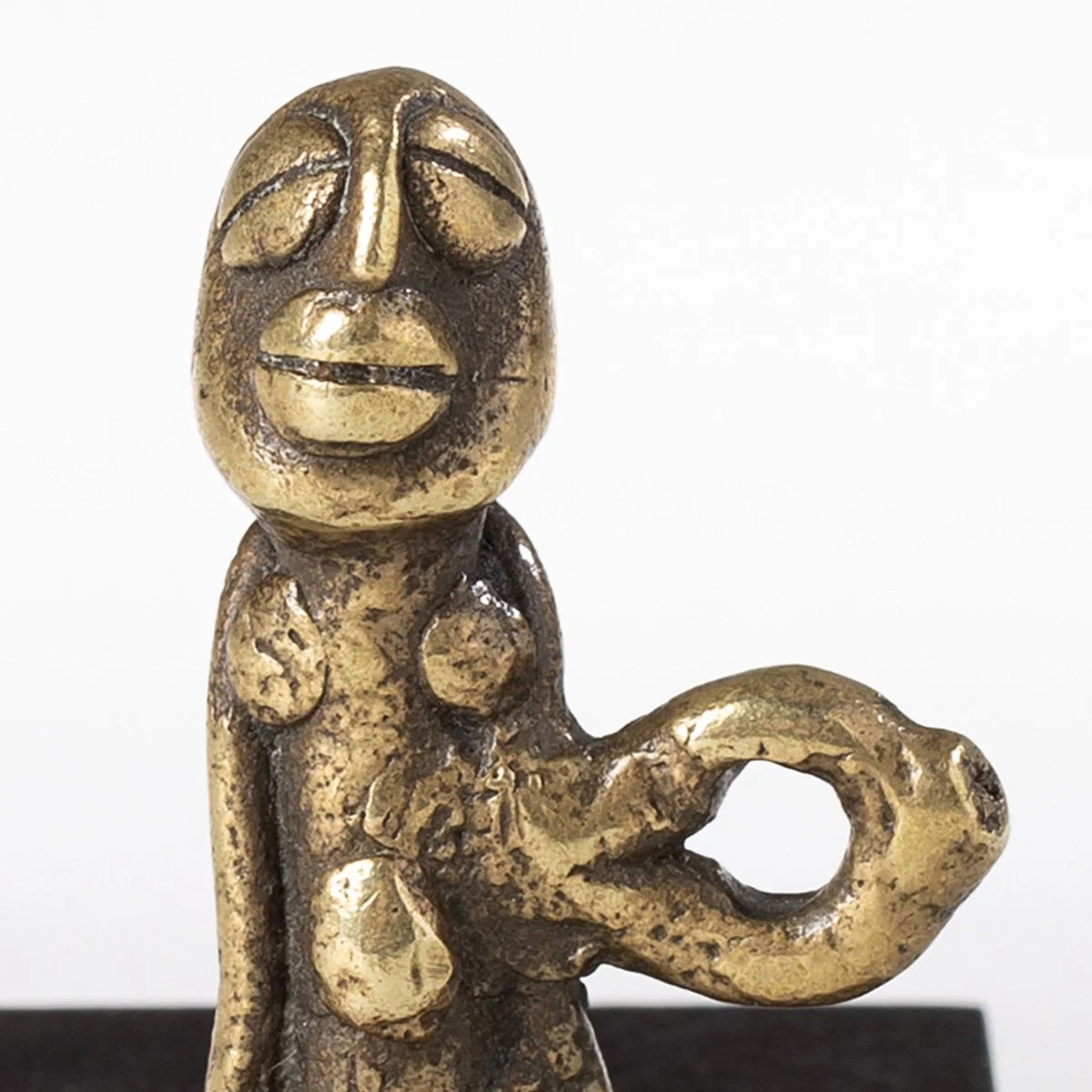 Image 2 of 6
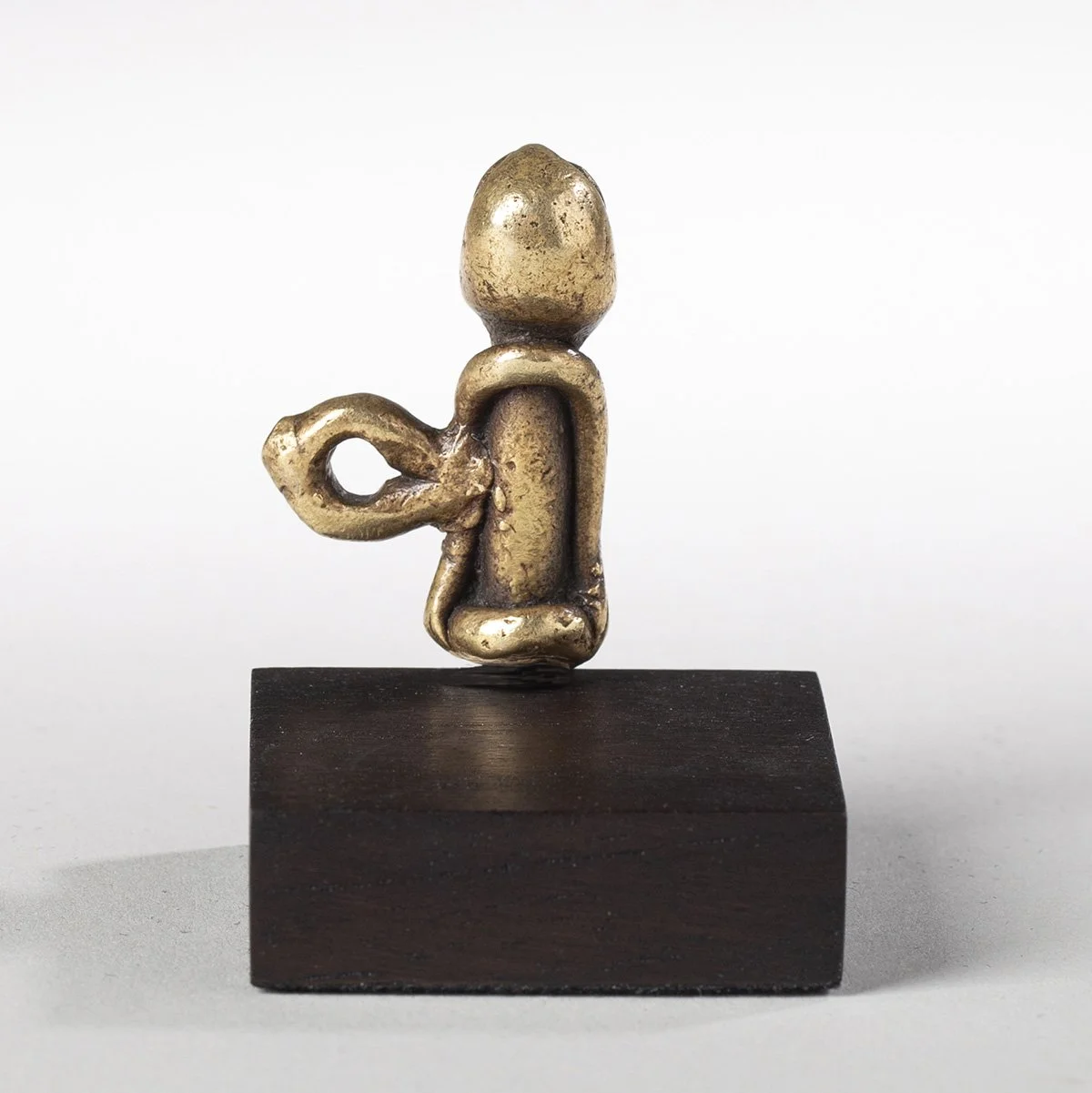 Image 3 of 6
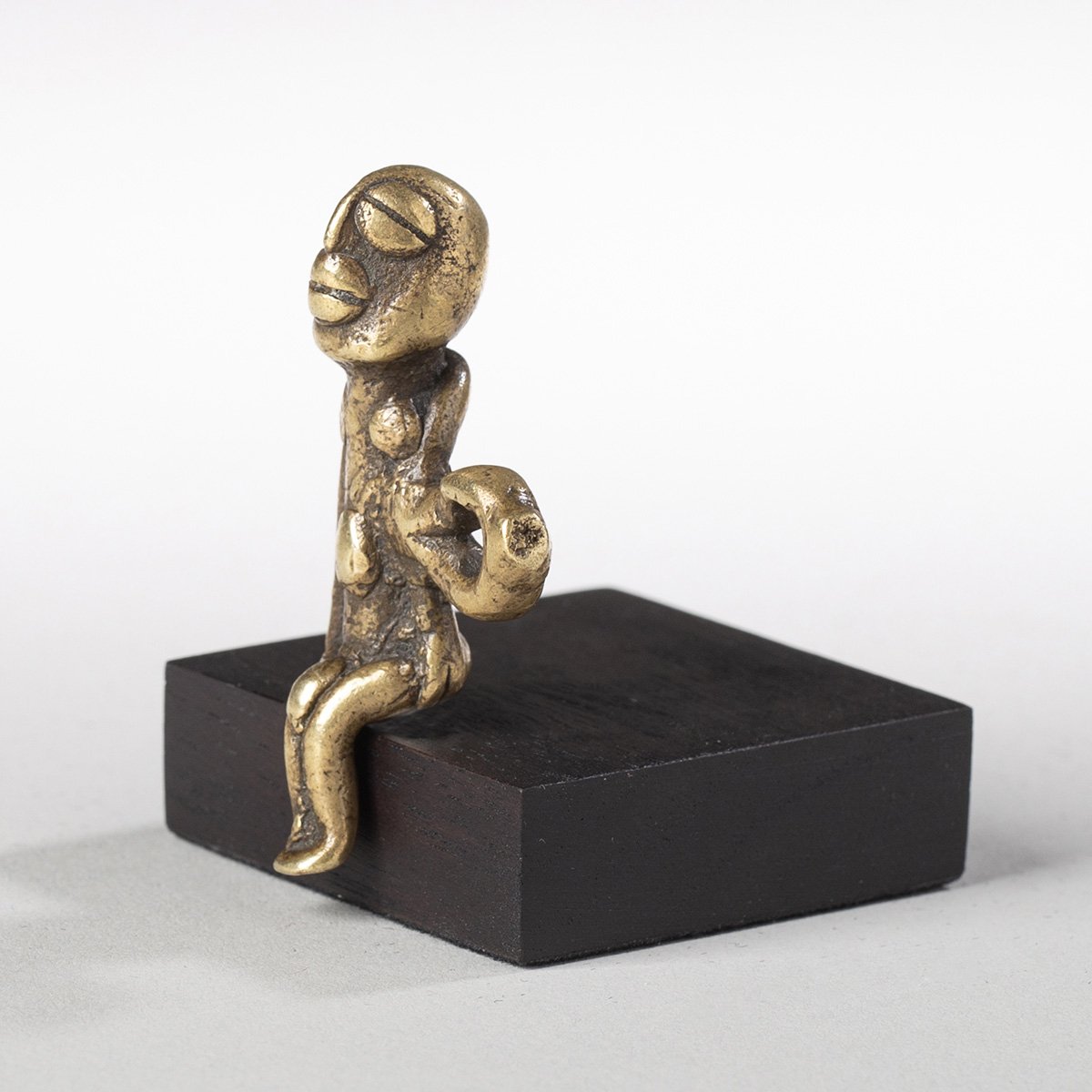 Image 4 of 6
 Image 5 of 6
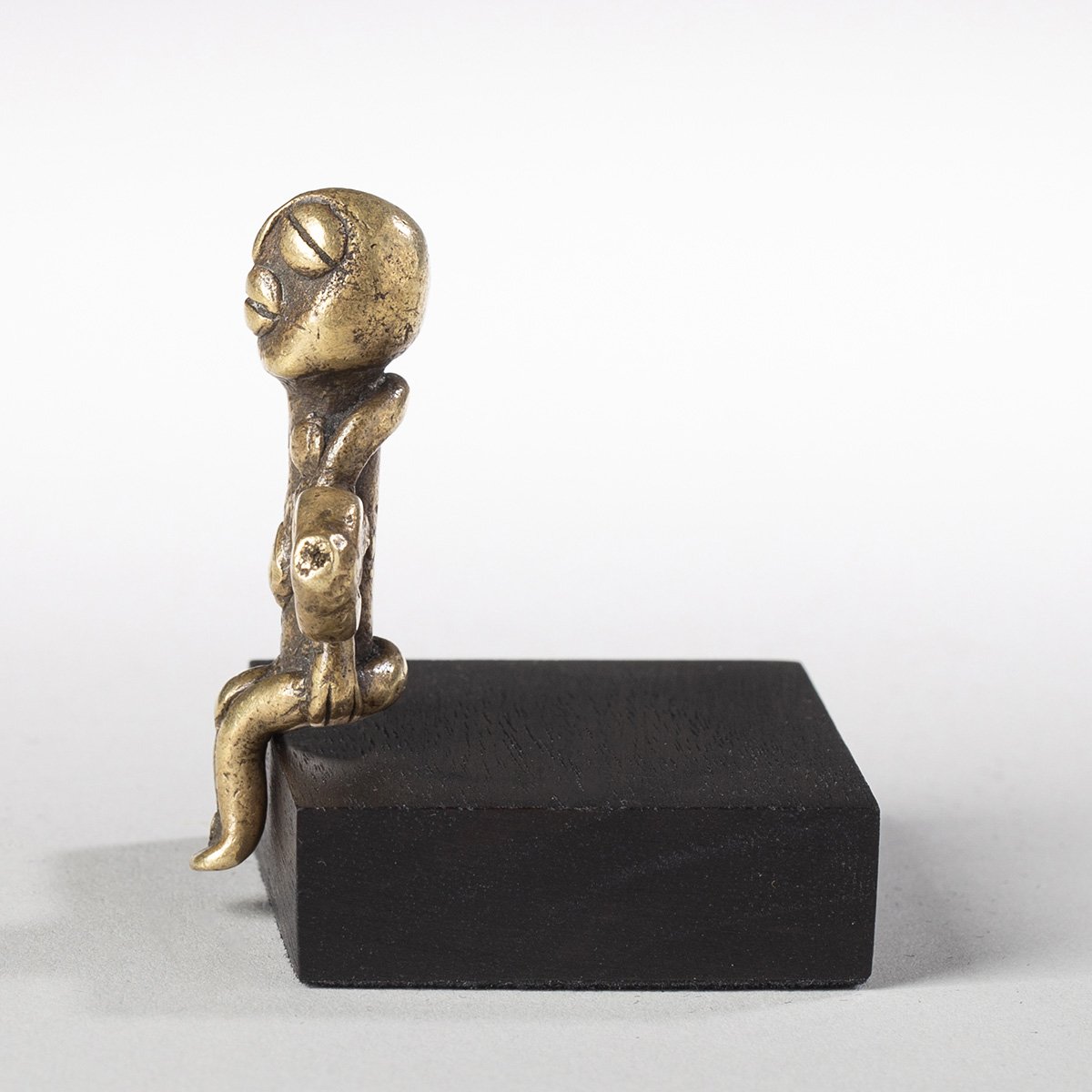 Image 6 of 6