Lozi, Zambia, 1920s
Wood
Length 13 3/4 inches (34.9 cm)
Provenance: London trade; private collection, United Kingdom
The body is a deep oval bowl raised on a short flaring pedestal foot, its walls turned thin and finished to a hard glossy black that carries the light in a single unbroken sweep. A separate lid closes the top and holds the bird form together, rising at one end into a head with a hooked beak and an incised almond eye and running out at the other into a flat squared tail that projects clear of the rim. Head and tail are a warmer reddish brown against the black of the body, and the join between lid and bowl sits tight enough to read as a single carving until the seam is followed round.
Lozi carvers of the Zambezi floodplain in western Zambia made lidded bowls of this type for serving at the royal court, working them in animal forms drawn from the birds and beasts of the surrounding water and grassland. The two part construction is the defining feature, with the bowl hollowed from one block and the lid carved from another to carry the head and tail, so a complete example depends on both halves surviving together. Both are present here and still seat correctly, which is the condition that separates these bowls from the far commoner orphaned bodies.
We ship free anywhere in the world, fully insured, packed by hand.
Lozi, Zambia, 1920s
Wood
Length 13 3/4 inches (34.9 cm)
Provenance: London trade; private collection, United Kingdom
The body is a deep oval bowl raised on a short flaring pedestal foot, its walls turned thin and finished to a hard glossy black that carries the light in a single unbroken sweep. A separate lid closes the top and holds the bird form together, rising at one end into a head with a hooked beak and an incised almond eye and running out at the other into a flat squared tail that projects clear of the rim. Head and tail are a warmer reddish brown against the black of the body, and the join between lid and bowl sits tight enough to read as a single carving until the seam is followed round.
Lozi carvers of the Zambezi floodplain in western Zambia made lidded bowls of this type for serving at the royal court, working them in animal forms drawn from the birds and beasts of the surrounding water and grassland. The two part construction is the defining feature, with the bowl hollowed from one block and the lid carved from another to carry the head and tail, so a complete example depends on both halves surviving together. Both are present here and still seat correctly, which is the condition that separates these bowls from the far commoner orphaned bodies.
We ship free anywhere in the world, fully insured, packed by hand.


 Image 1 of 10
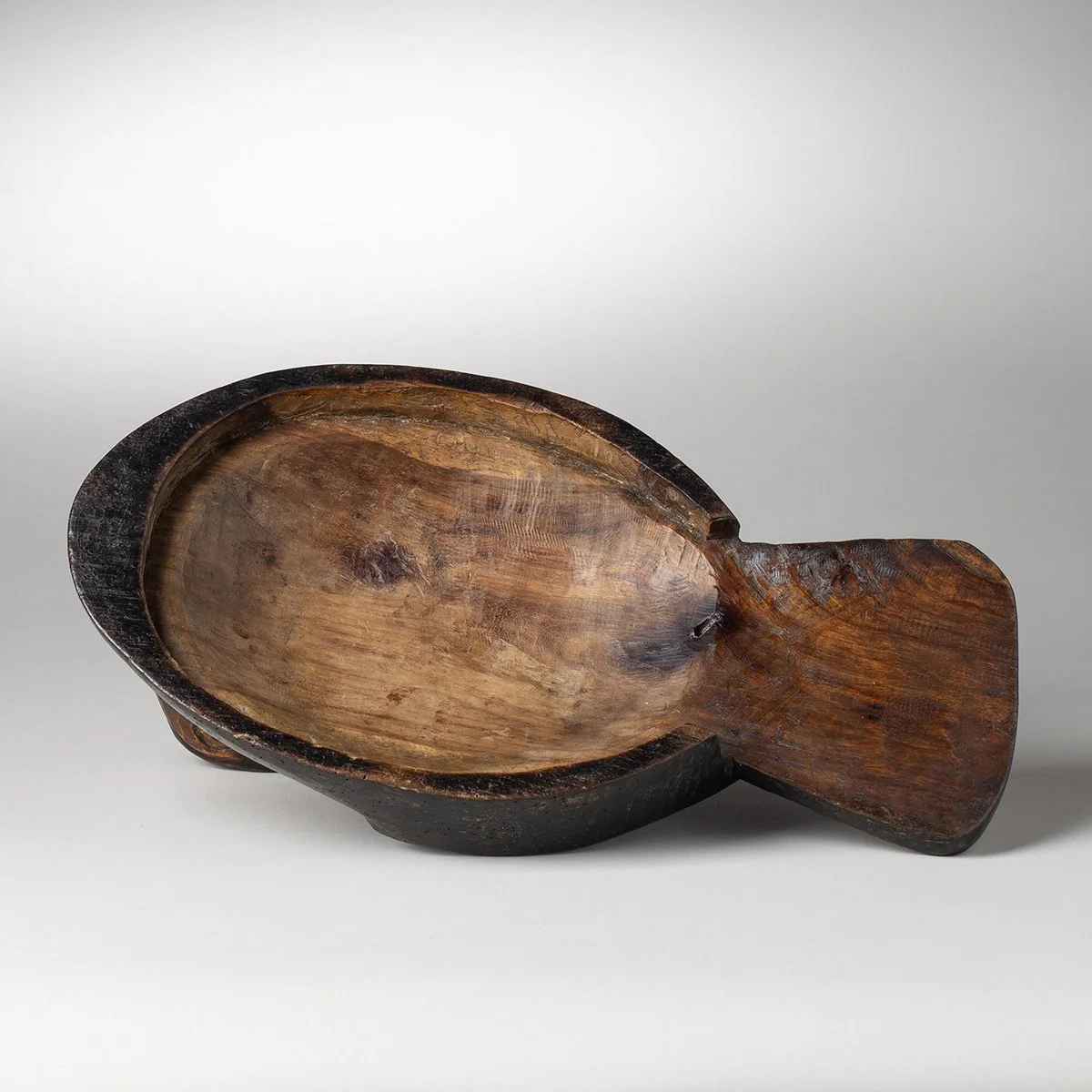 Image 2 of 10
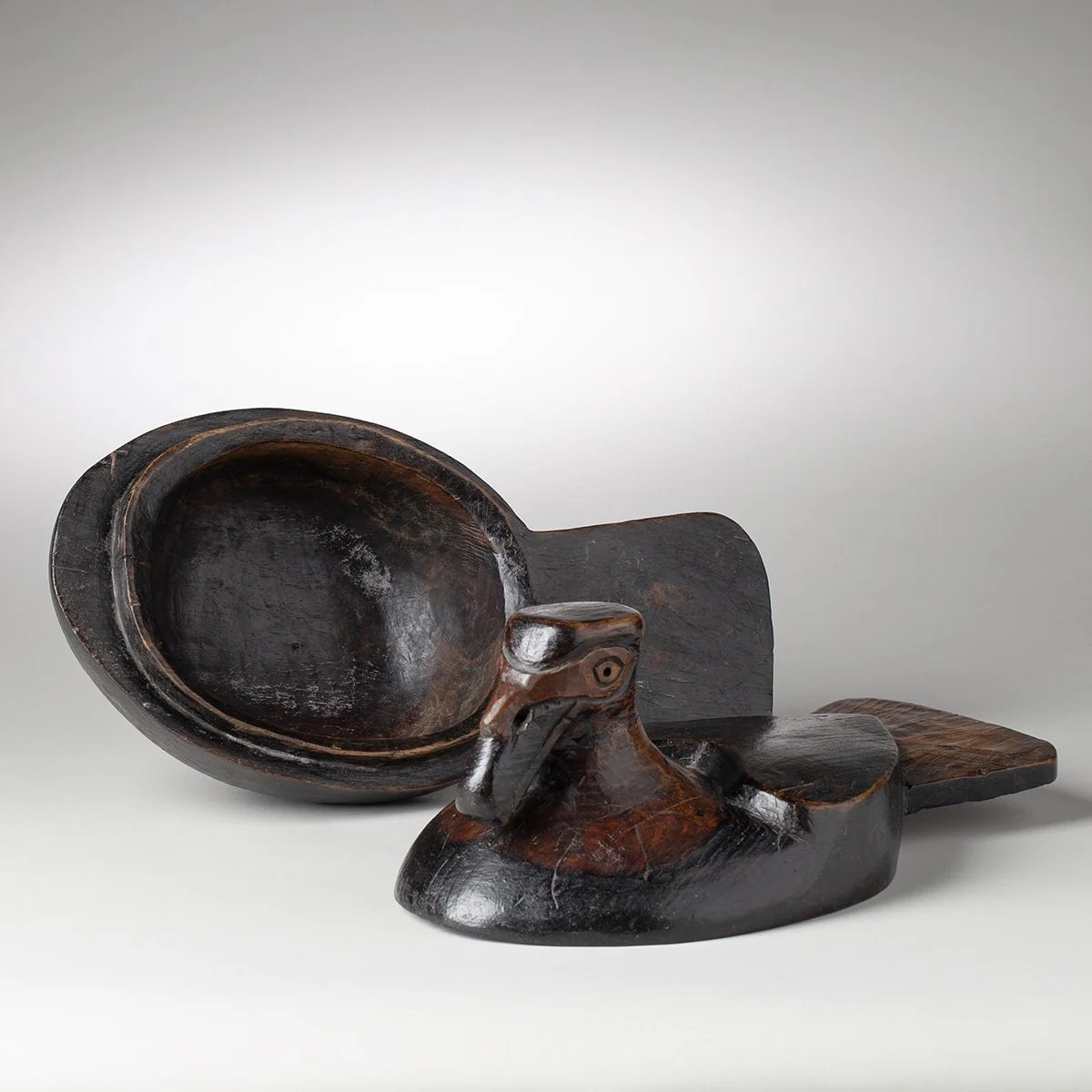 Image 3 of 10
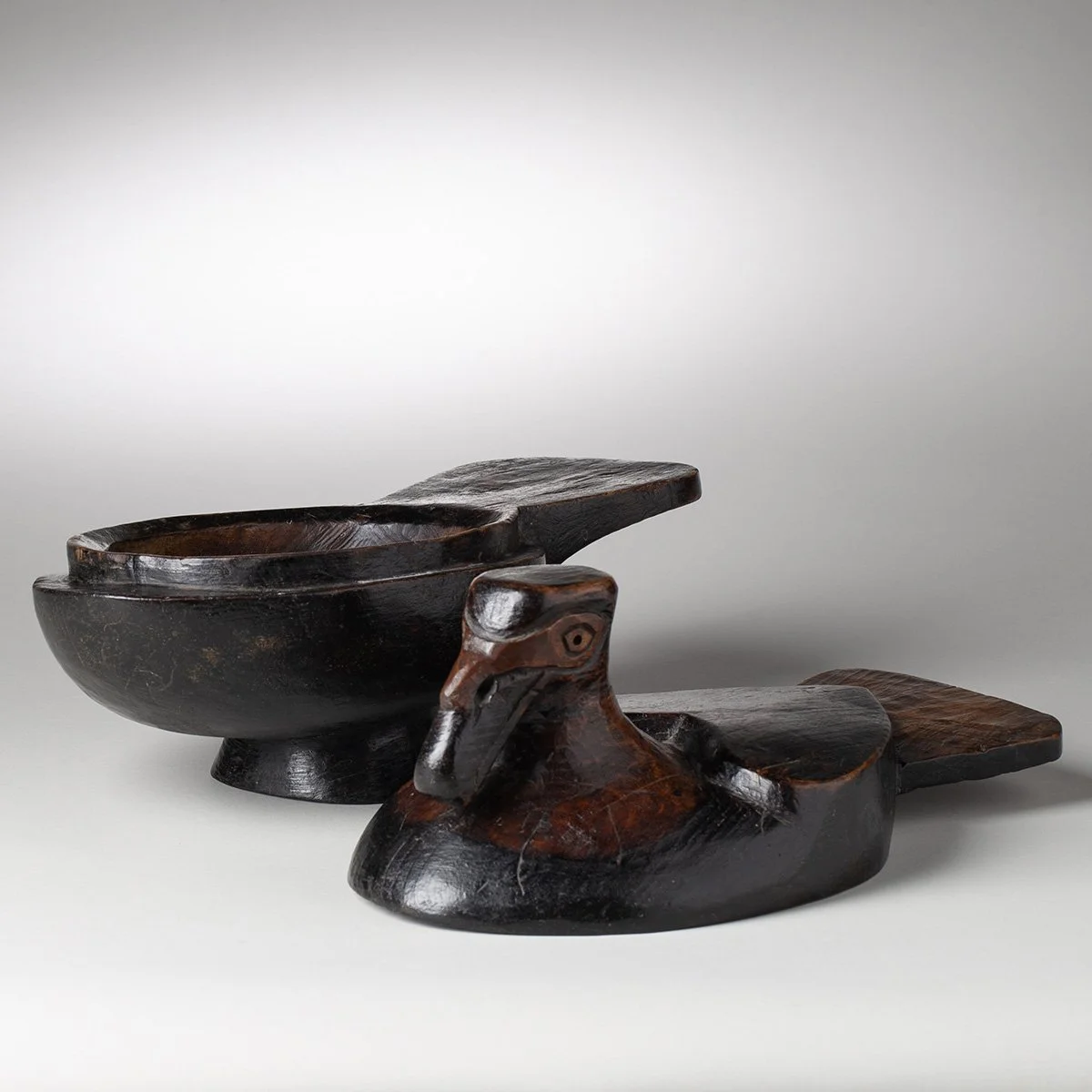 Image 4 of 10
 Image 5 of 10
 Image 6 of 10
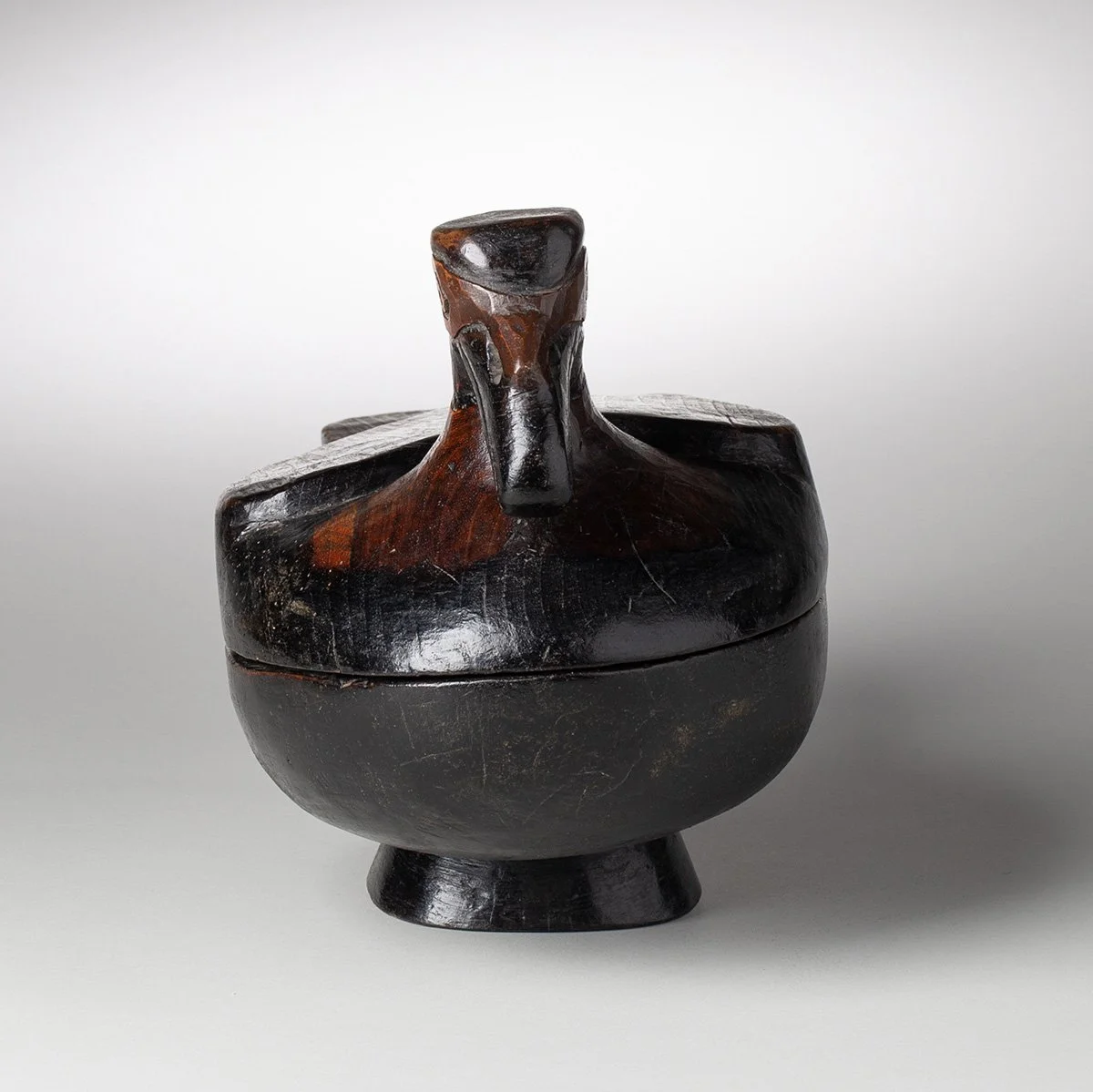 Image 7 of 10
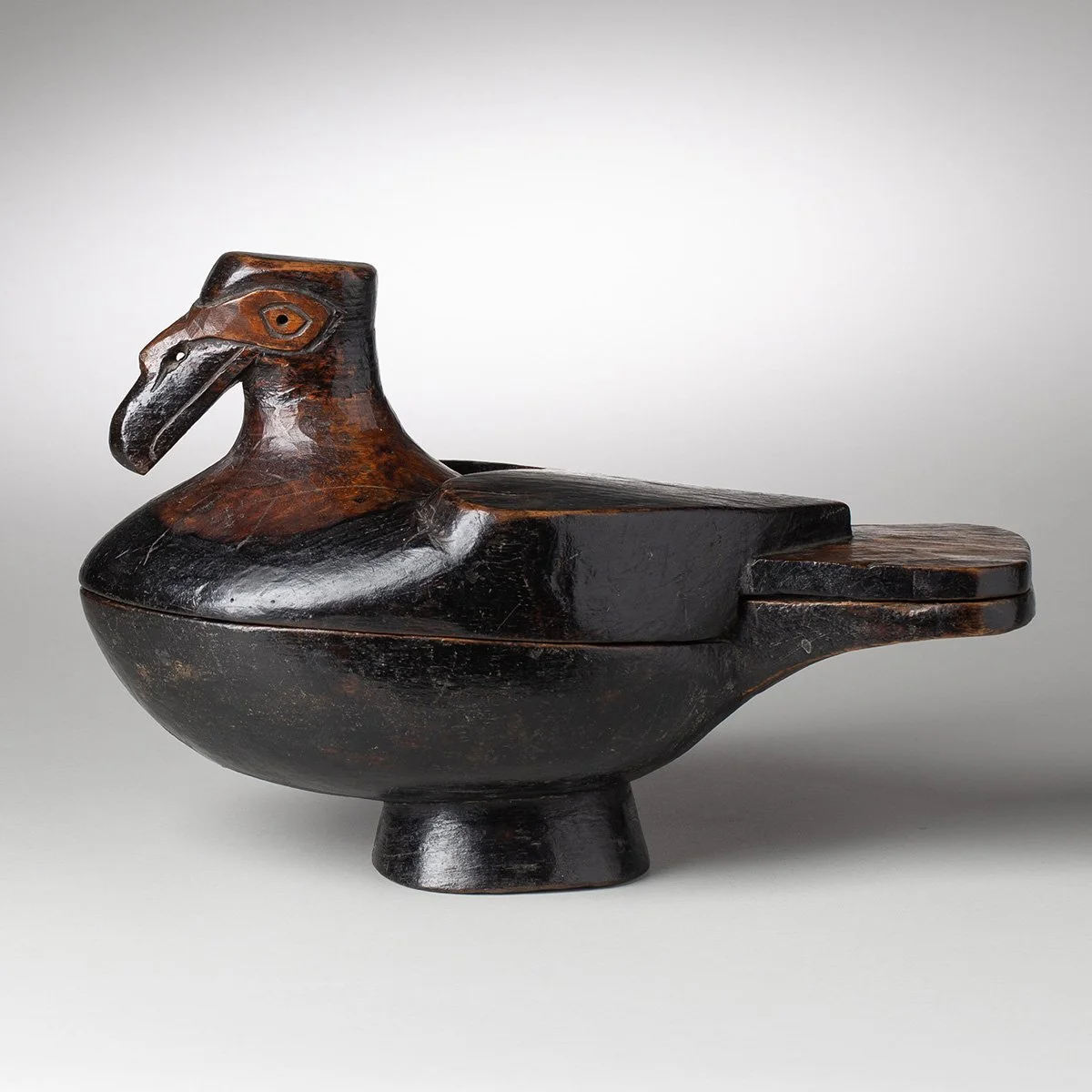 Image 8 of 10
 Image 9 of 10
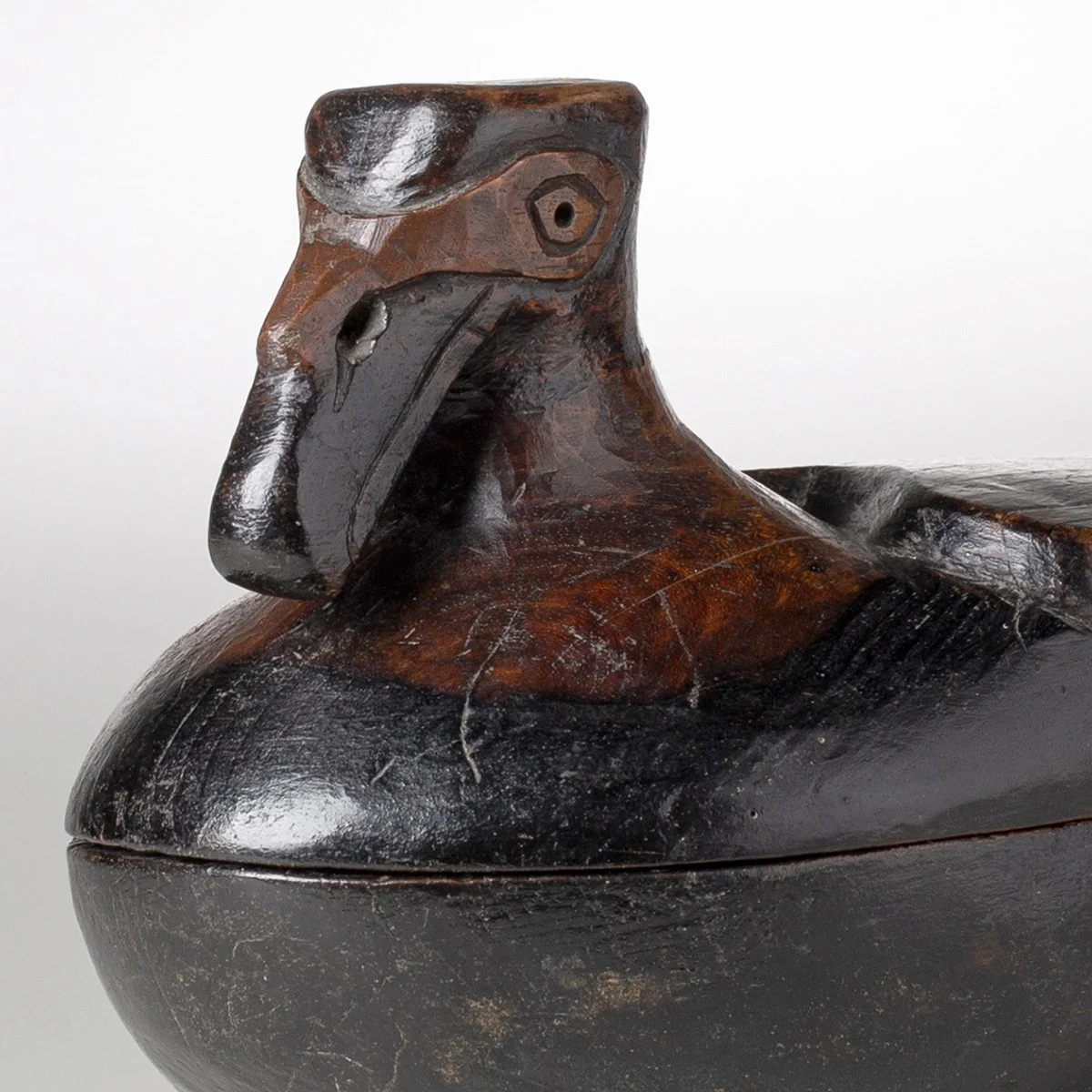 Image 10 of 10