Sudan
19th century
Wood box with tomb relic and coin
Box: Height 2 in (5.1 cm); Length 7½ in (19.1 cm); Width 3 in (7.6 cm); Coin diameter: 1½ in (3.8 cm)
Provenance: Admiral Phipps Hornby, Lordington House, Chichester; Michael Graham Stewart, London
Label inscription: "Piece of the Mahdi's Tomb at Khartoum, in Sudan and one of his coins. The box is made from the wood out of the castle on Faroun Island, Gulf of Akaba, built by 'Saladin' when driven out of Palestine during the Crusades."
This boxed assemblage relates to Muhammad Ahmad, known as the Mahdi, whose movement against Egyptian and British rule shaped Sudanese history in the final decades of the nineteenth century, culminating in the fall of Khartoum. The label identifies the contents as a fragment of the Mahdi's tomb and one of his coins, preserved in a wooden box said to have been made from timber salvaged from the Crusader-era castle on Faroun Island in the Gulf of Aqaba — a claim that layers three distinct historical moments into a single object. The assemblage is best understood as a relic object in the European collecting tradition, where fragments connected to politically and historically charged figures were preserved, labeled, and passed through named collections.
The provenance through Admiral Phipps Hornby of Lordington House, Chichester, and subsequently Michael Graham Stewart, London, gives the piece a documented British collecting history consistent with the period and milieu from which such objects typically emerged. The original label carries much of the object's meaning and should remain with the piece as part of its documentary record.
We ship free anywhere in the world, fully insured, packed by hand.
Sudan
19th century
Wood box with tomb relic and coin
Box: Height 2 in (5.1 cm); Length 7½ in (19.1 cm); Width 3 in (7.6 cm); Coin diameter: 1½ in (3.8 cm)
Provenance: Admiral Phipps Hornby, Lordington House, Chichester; Michael Graham Stewart, London
Label inscription: "Piece of the Mahdi's Tomb at Khartoum, in Sudan and one of his coins. The box is made from the wood out of the castle on Faroun Island, Gulf of Akaba, built by 'Saladin' when driven out of Palestine during the Crusades."
This boxed assemblage relates to Muhammad Ahmad, known as the Mahdi, whose movement against Egyptian and British rule shaped Sudanese history in the final decades of the nineteenth century, culminating in the fall of Khartoum. The label identifies the contents as a fragment of the Mahdi's tomb and one of his coins, preserved in a wooden box said to have been made from timber salvaged from the Crusader-era castle on Faroun Island in the Gulf of Aqaba — a claim that layers three distinct historical moments into a single object. The assemblage is best understood as a relic object in the European collecting tradition, where fragments connected to politically and historically charged figures were preserved, labeled, and passed through named collections.
The provenance through Admiral Phipps Hornby of Lordington House, Chichester, and subsequently Michael Graham Stewart, London, gives the piece a documented British collecting history consistent with the period and milieu from which such objects typically emerged. The original label carries much of the object's meaning and should remain with the piece as part of its documentary record.
We ship free anywhere in the world, fully insured, packed by hand.


 Image 1 of 7
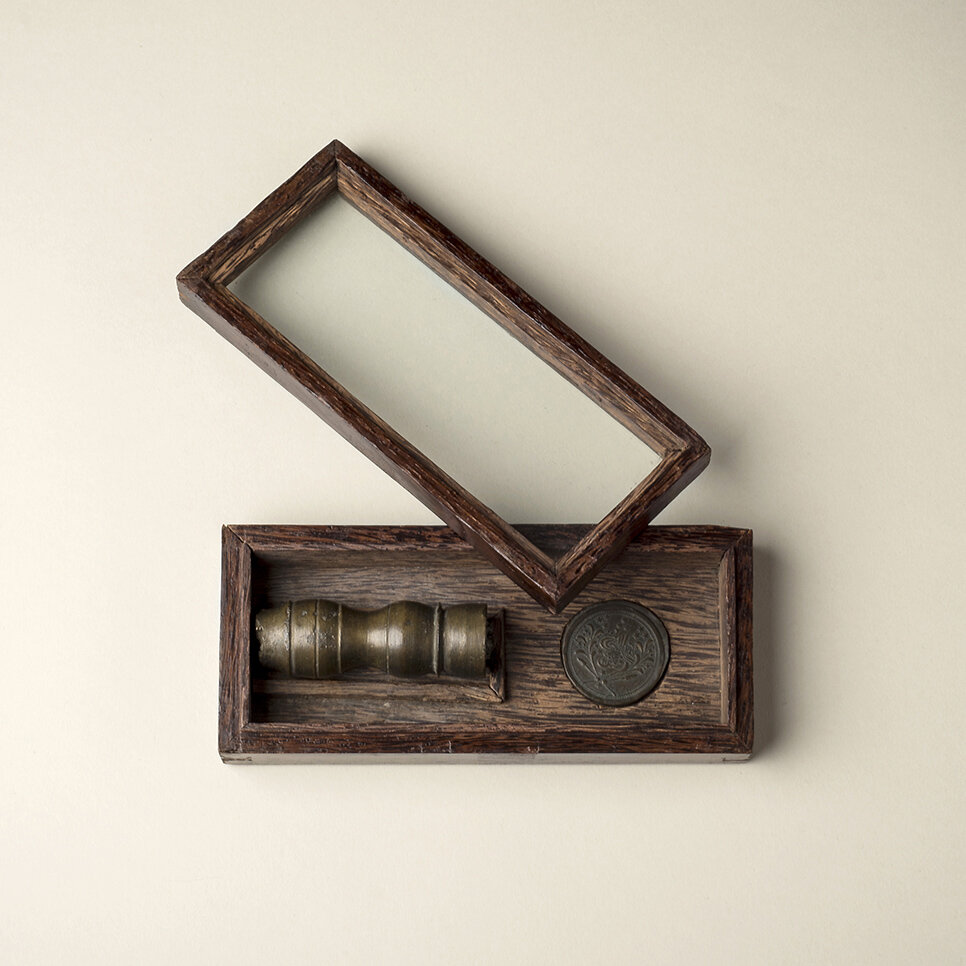 Image 2 of 7
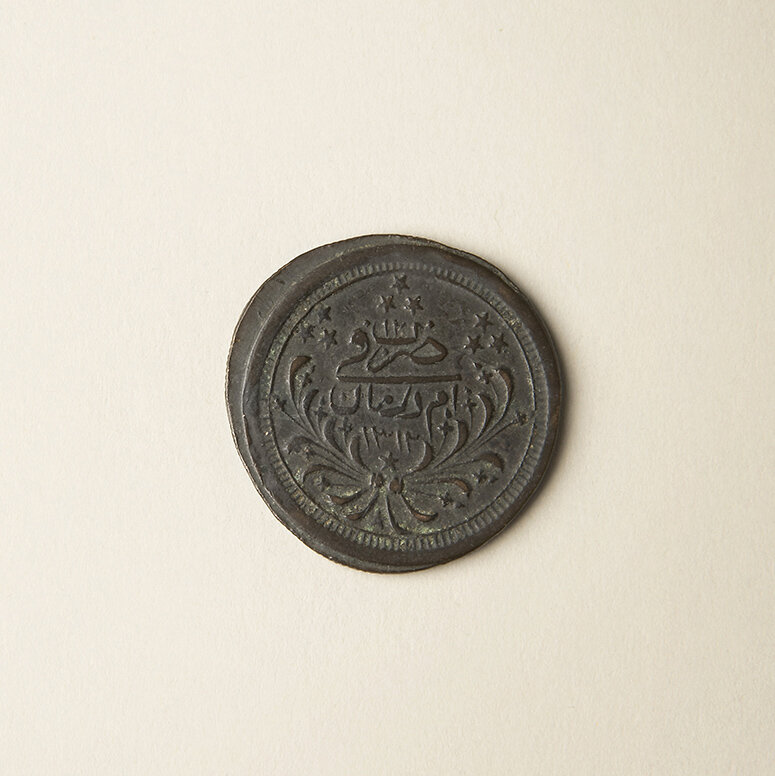 Image 3 of 7
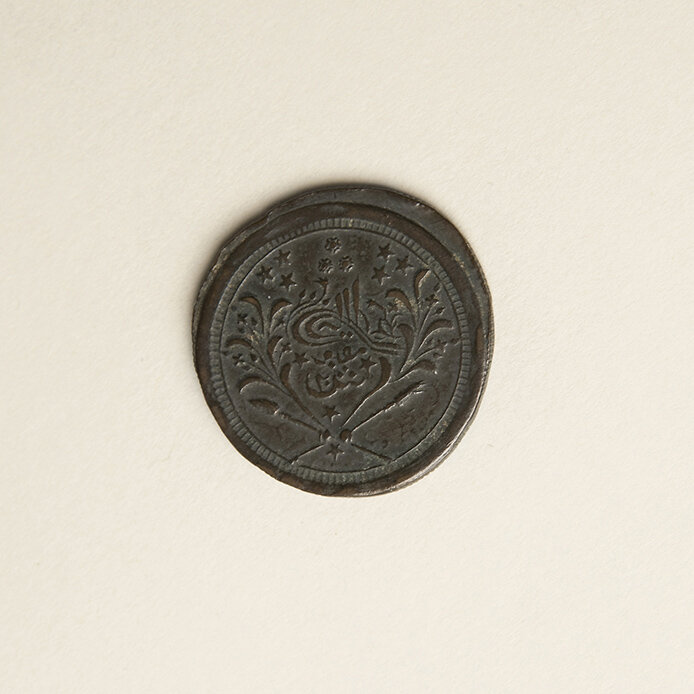 Image 4 of 7
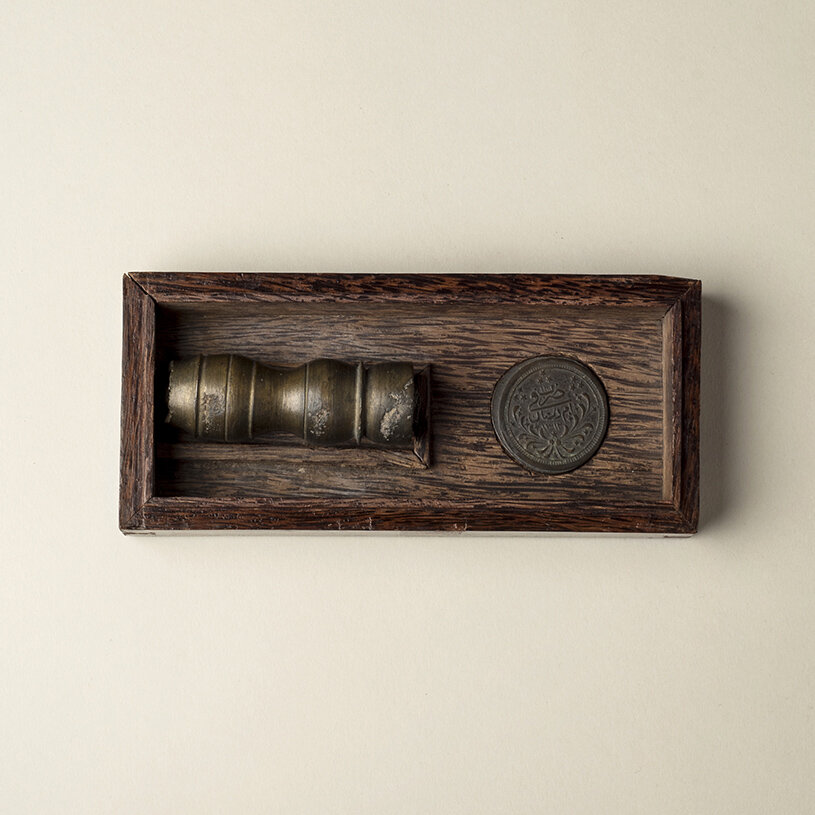 Image 5 of 7
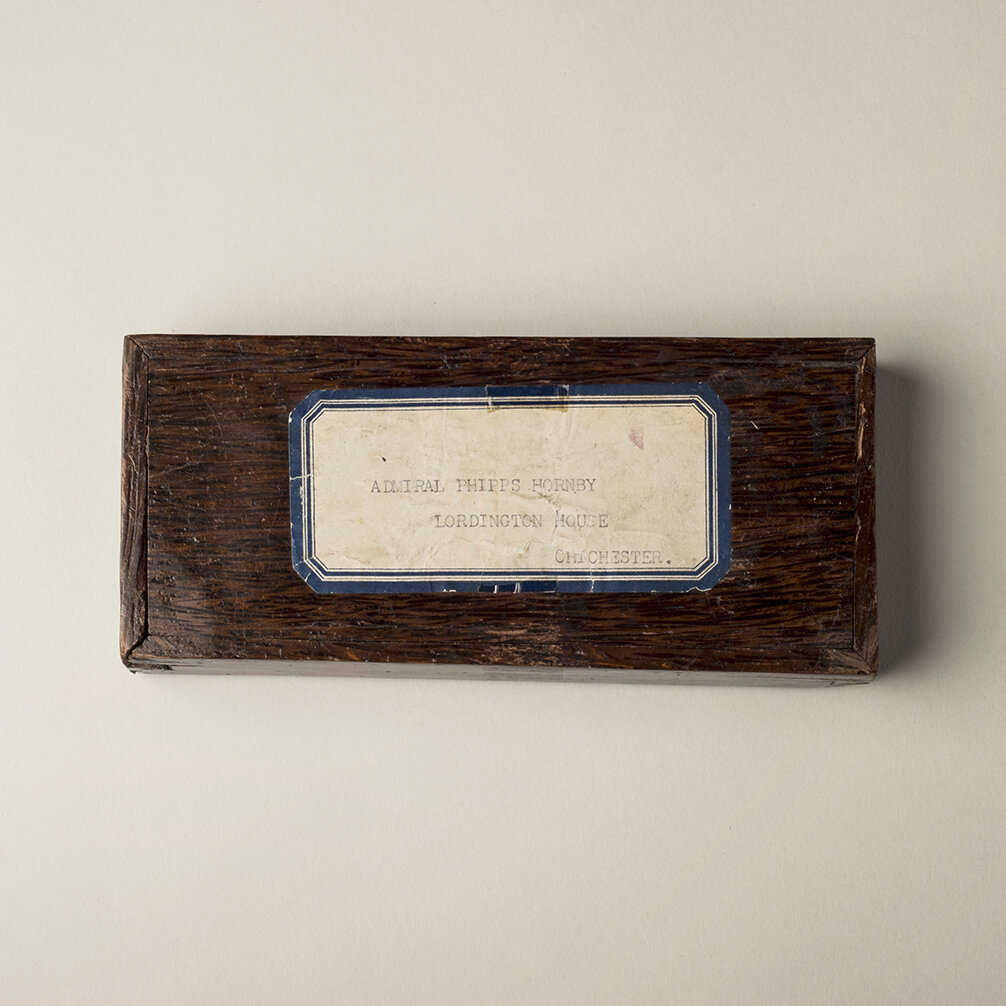 Image 6 of 7
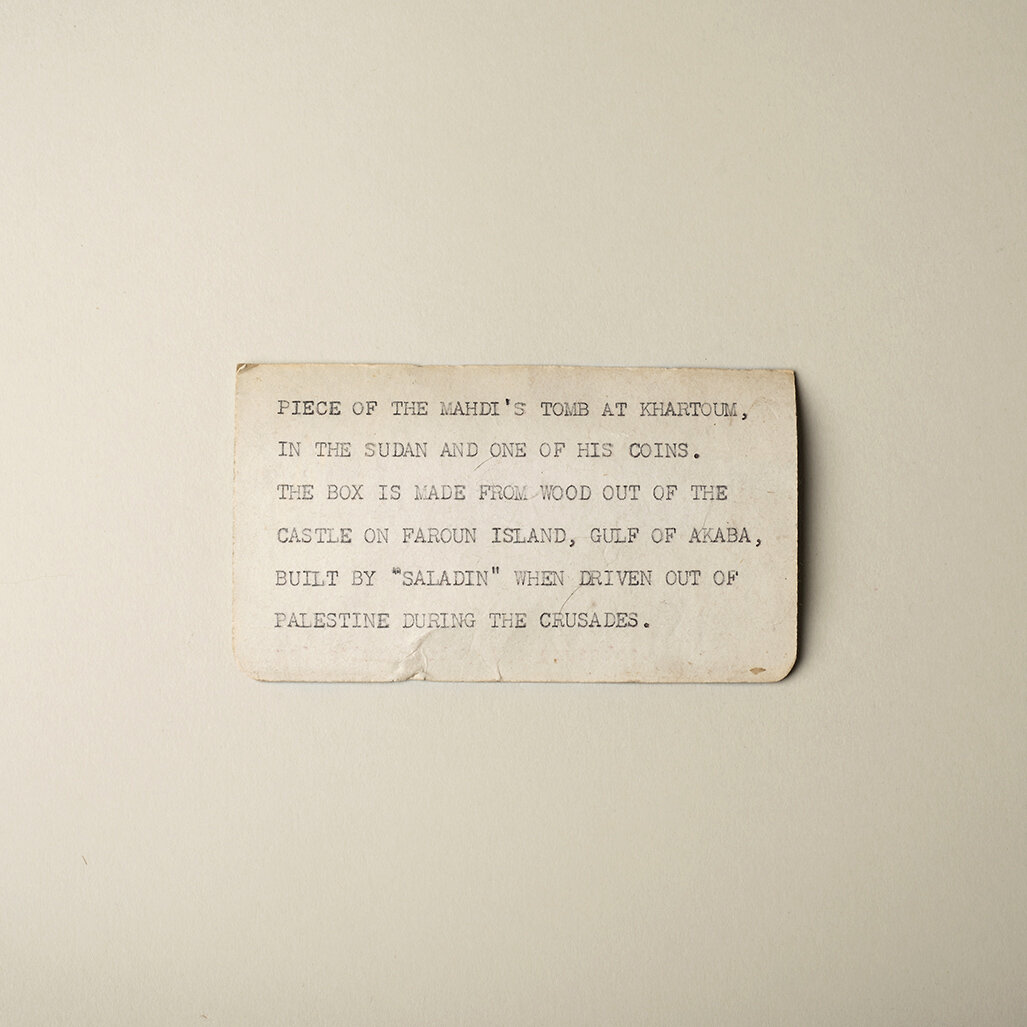 Image 7 of 7