New Zealand, Māori
Circa 1800
Gourd, woven sennit
Height: 15½ in (39.4 cm)
Provenance: English trade; early illegible label present
Gourd containers, known in Māori as hue, were used to store and carry water, oil, and preserved foods, their natural form well suited to the task and their surface treatment a reflection of the maker's skill. The woven sennit cover encircling this example serves both to protect the gourd and to demonstrate the textile knowledge of its maker, the crossing hatch pattern executed with consistency across the near-spherical body. A comparable example is held in the collection of the Museum of New Zealand Te Papa Tongarewa (OL000099.S/1).
The gourd retains its natural spout-like neck opening and the sennit cover remains intact, the fiber darkened to a warm brown through age. The weave is structured in broad diagonal sections that meet at regular intervals, creating a geometric surface that is functional in its grip and considered in its patterning. The early illegible label on the piece suggests it entered English collections during the active period of Pacific trade in the late eighteenth or early nineteenth century.
We ship free anywhere in the world, fully insured, packed by hand.
New Zealand, Māori
Circa 1800
Gourd, woven sennit
Height: 15½ in (39.4 cm)
Provenance: English trade; early illegible label present
Gourd containers, known in Māori as hue, were used to store and carry water, oil, and preserved foods, their natural form well suited to the task and their surface treatment a reflection of the maker's skill. The woven sennit cover encircling this example serves both to protect the gourd and to demonstrate the textile knowledge of its maker, the crossing hatch pattern executed with consistency across the near-spherical body. A comparable example is held in the collection of the Museum of New Zealand Te Papa Tongarewa (OL000099.S/1).
The gourd retains its natural spout-like neck opening and the sennit cover remains intact, the fiber darkened to a warm brown through age. The weave is structured in broad diagonal sections that meet at regular intervals, creating a geometric surface that is functional in its grip and considered in its patterning. The early illegible label on the piece suggests it entered English collections during the active period of Pacific trade in the late eighteenth or early nineteenth century.
We ship free anywhere in the world, fully insured, packed by hand.


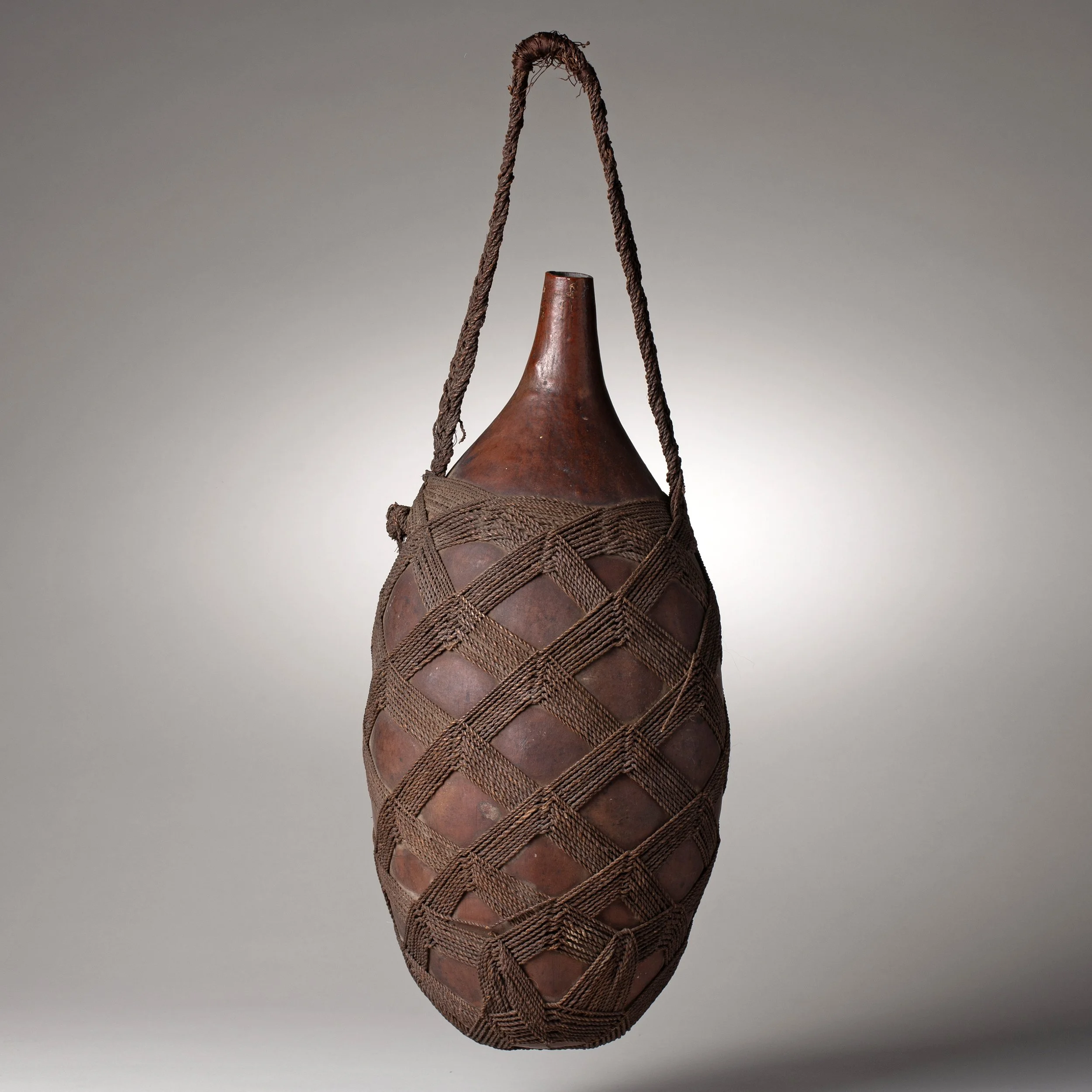 Image 1 of 7
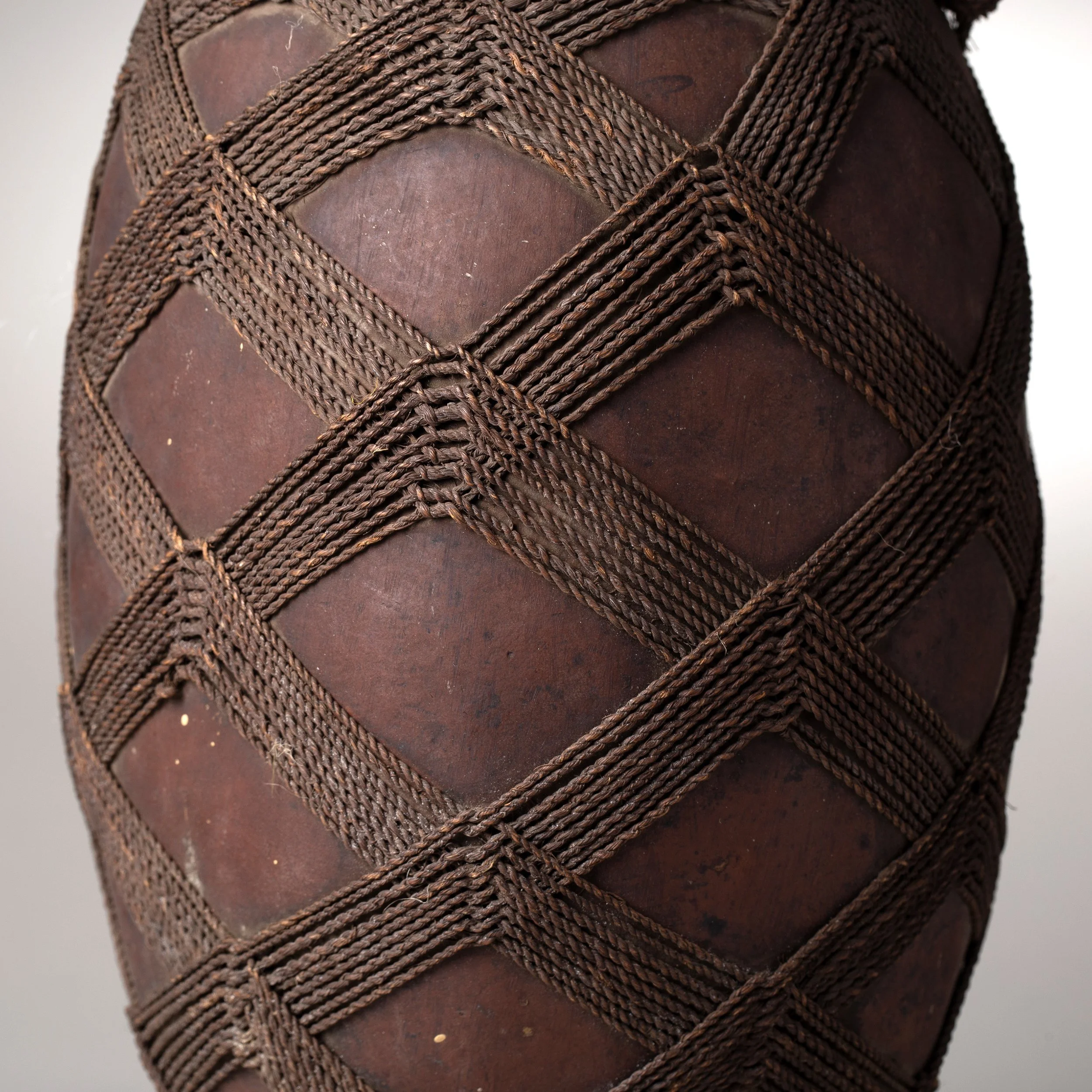 Image 2 of 7
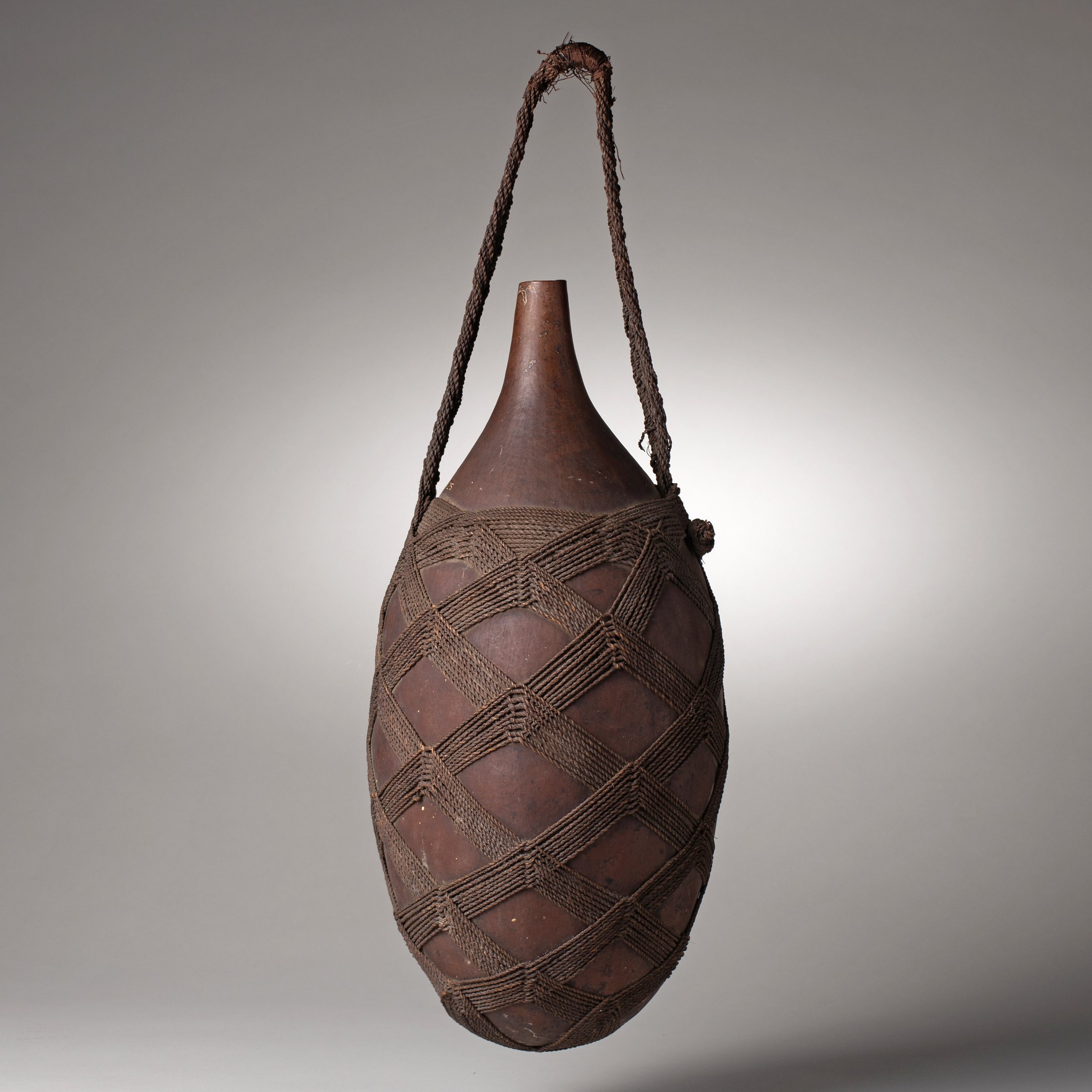 Image 3 of 7
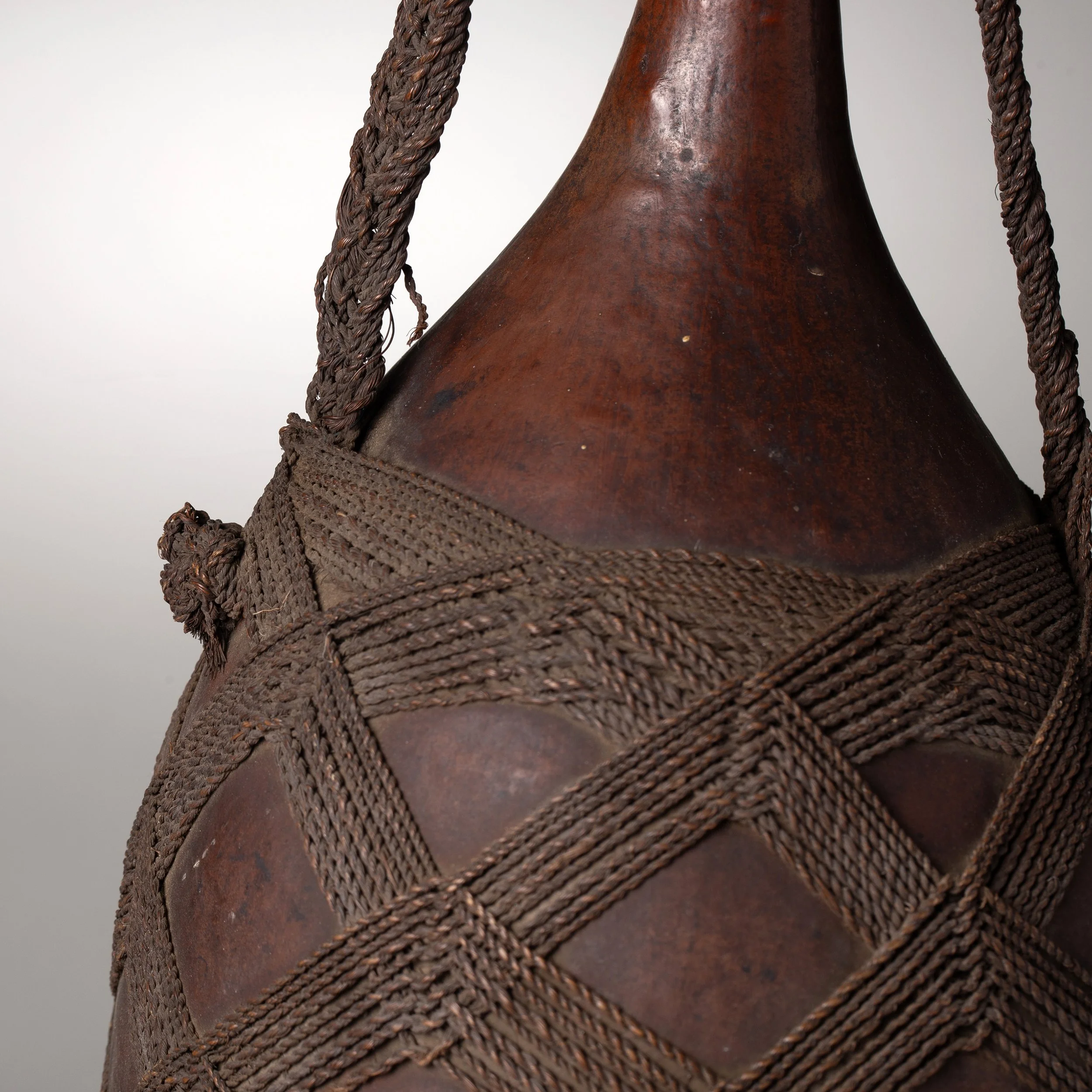 Image 4 of 7
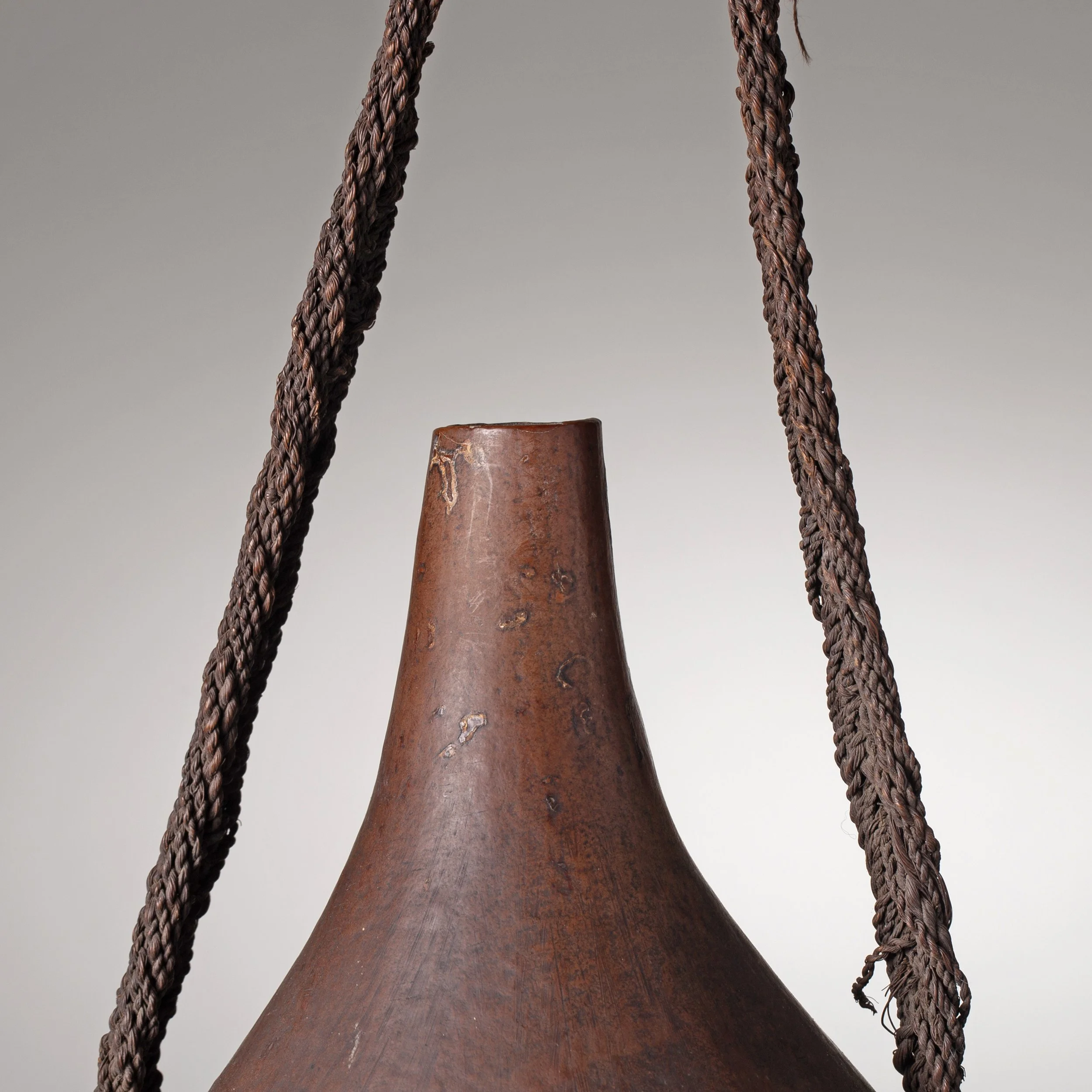 Image 5 of 7
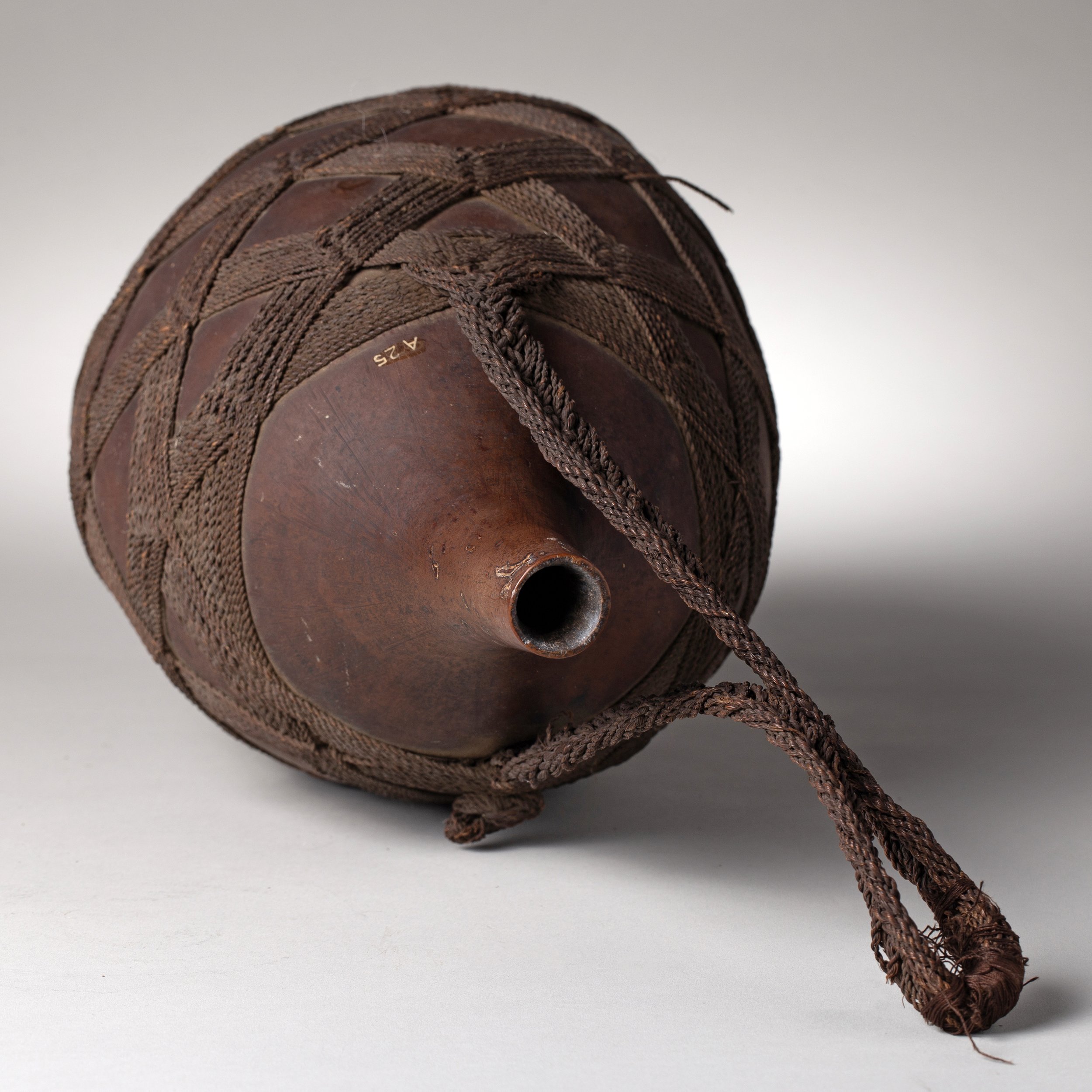 Image 6 of 7
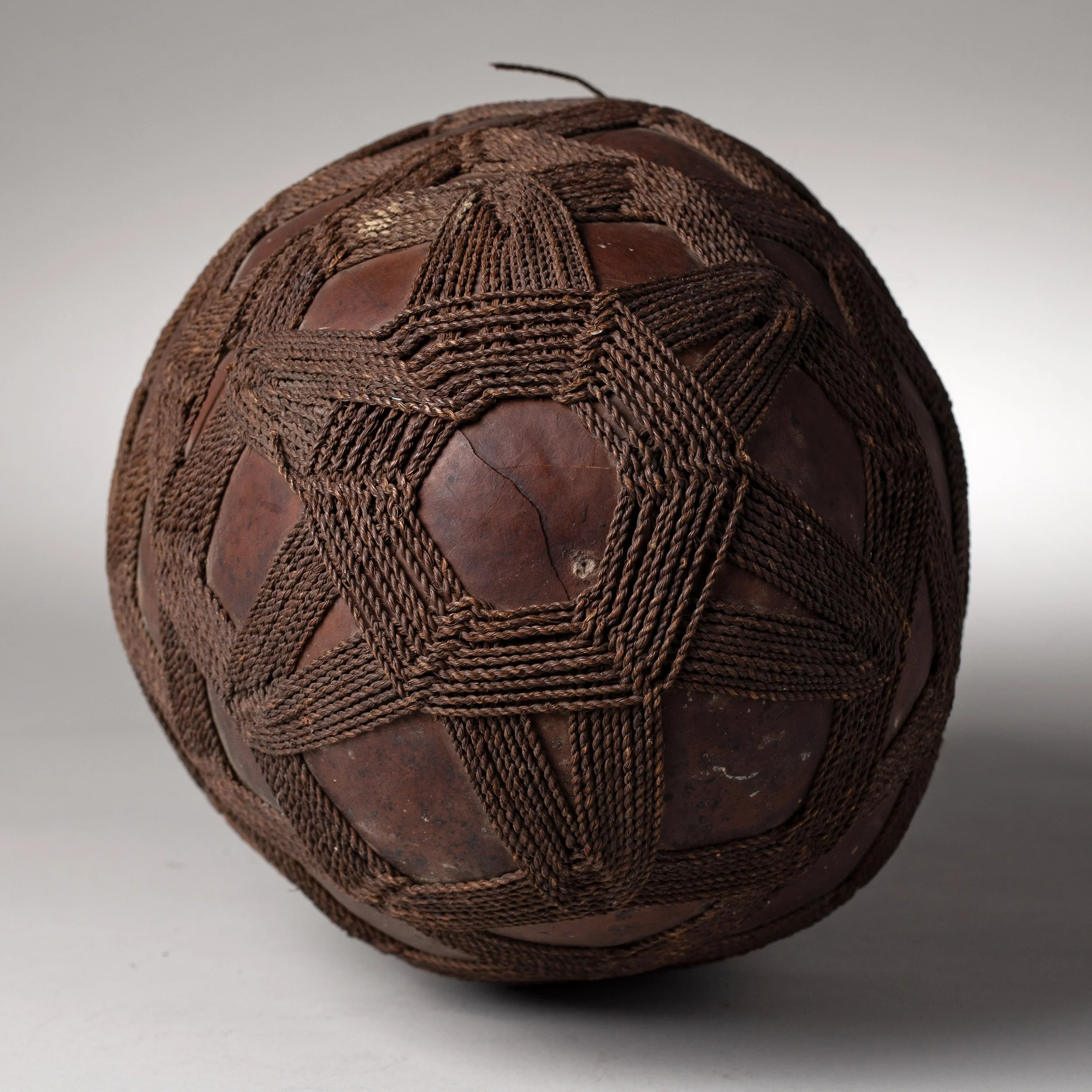 Image 7 of 7