Māori, New Zealand
18th century or earlier
Pounamu (nephrite jade), 18kt gold plaque
Length: 6 1/4 in. (15.9 cm); thickness: to be verified
Provenance: London trade
Pounamu, the nephrite jade found on the South Island of New Zealand, was among the most valued materials in Māori culture, associated with chiefly status, ancestral lineage, and ceremonial exchange. Adze blades of this stone were labor-intensive to produce, shaped through a process of cordage sawing with abrasive sand, traces of which remain visible on this example. The form is consistent with eighteenth-century or earlier Māori adze production, and the piece entered the market through the London trade.
A later 18kt gold plaque inscribed "from Lizzie" was added to the upper face, indicating the blade was subsequently collected and held as a personal keepsake, possibly with the intention of conversion into adornment such as earrings or a hei tiki. The addition of the gold plaque places the piece within a documented collecting tradition of repurposing Māori taonga in European contexts during the nineteenth and early twentieth centuries. The pounamu retains its characteristic deep green coloration with matrix inclusions along the cortex.
We ship free anywhere in the world, fully insured, packed by hand.
Māori, New Zealand
18th century or earlier
Pounamu (nephrite jade), 18kt gold plaque
Length: 6 1/4 in. (15.9 cm); thickness: to be verified
Provenance: London trade
Pounamu, the nephrite jade found on the South Island of New Zealand, was among the most valued materials in Māori culture, associated with chiefly status, ancestral lineage, and ceremonial exchange. Adze blades of this stone were labor-intensive to produce, shaped through a process of cordage sawing with abrasive sand, traces of which remain visible on this example. The form is consistent with eighteenth-century or earlier Māori adze production, and the piece entered the market through the London trade.
A later 18kt gold plaque inscribed "from Lizzie" was added to the upper face, indicating the blade was subsequently collected and held as a personal keepsake, possibly with the intention of conversion into adornment such as earrings or a hei tiki. The addition of the gold plaque places the piece within a documented collecting tradition of repurposing Māori taonga in European contexts during the nineteenth and early twentieth centuries. The pounamu retains its characteristic deep green coloration with matrix inclusions along the cortex.
We ship free anywhere in the world, fully insured, packed by hand.


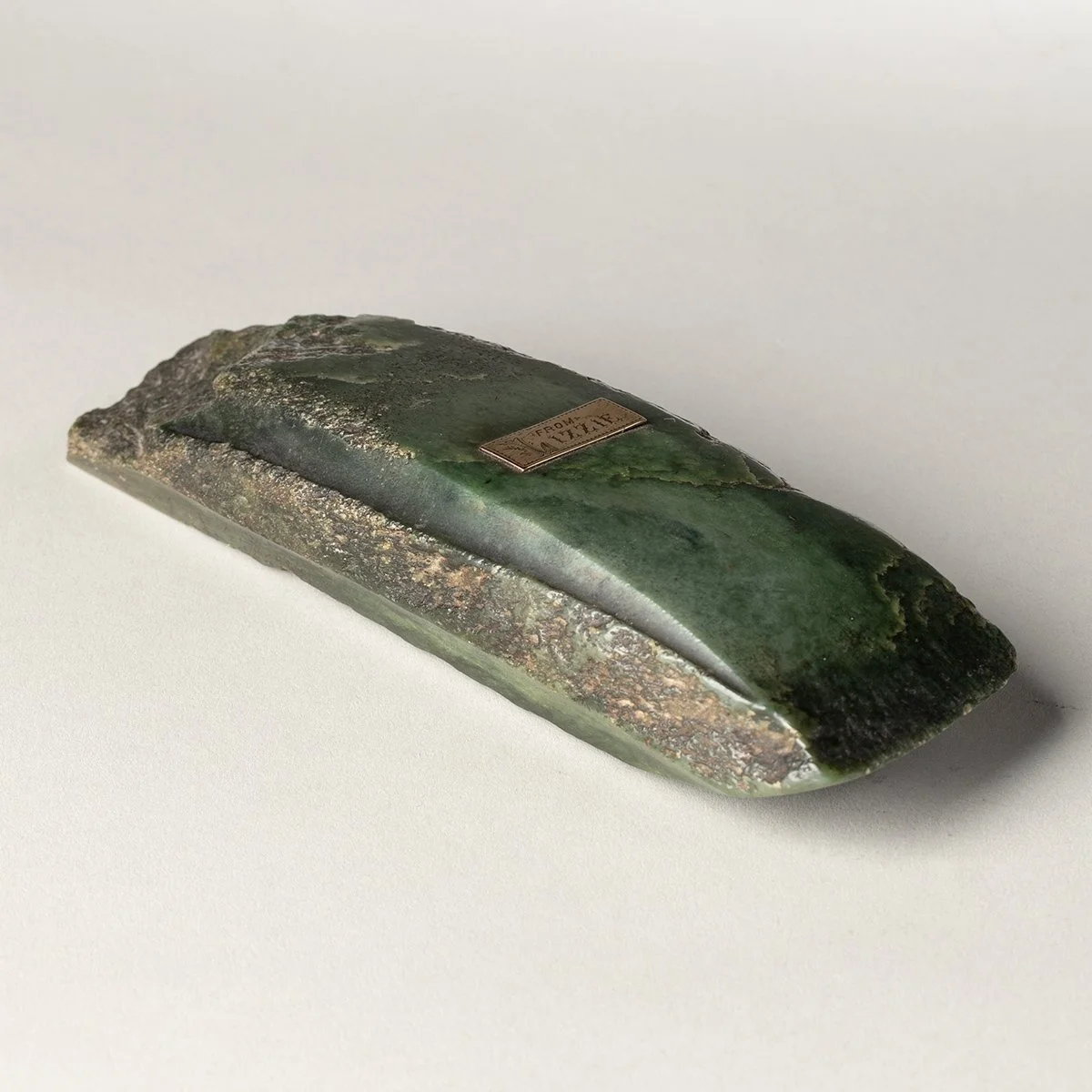 Image 1 of 7
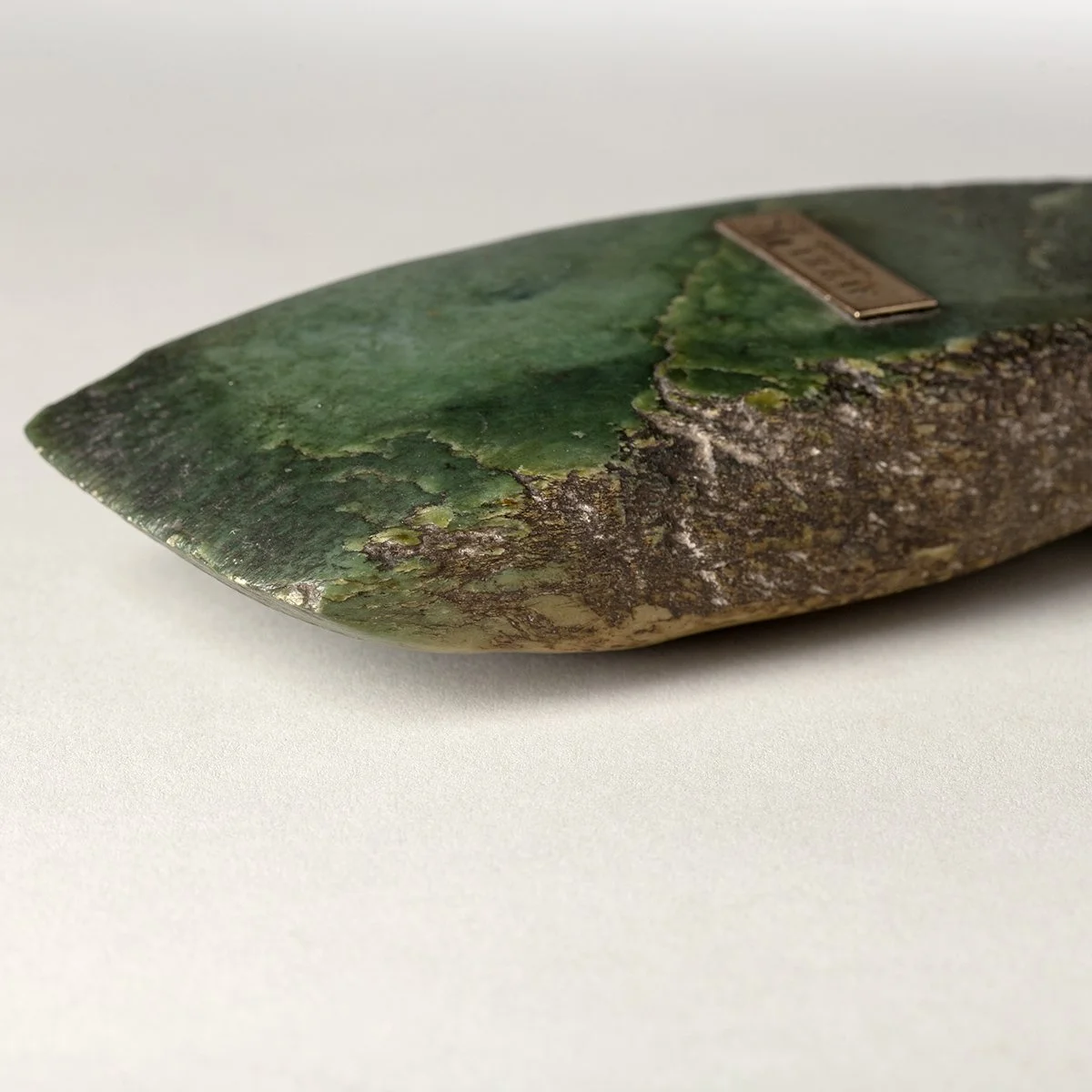 Image 2 of 7
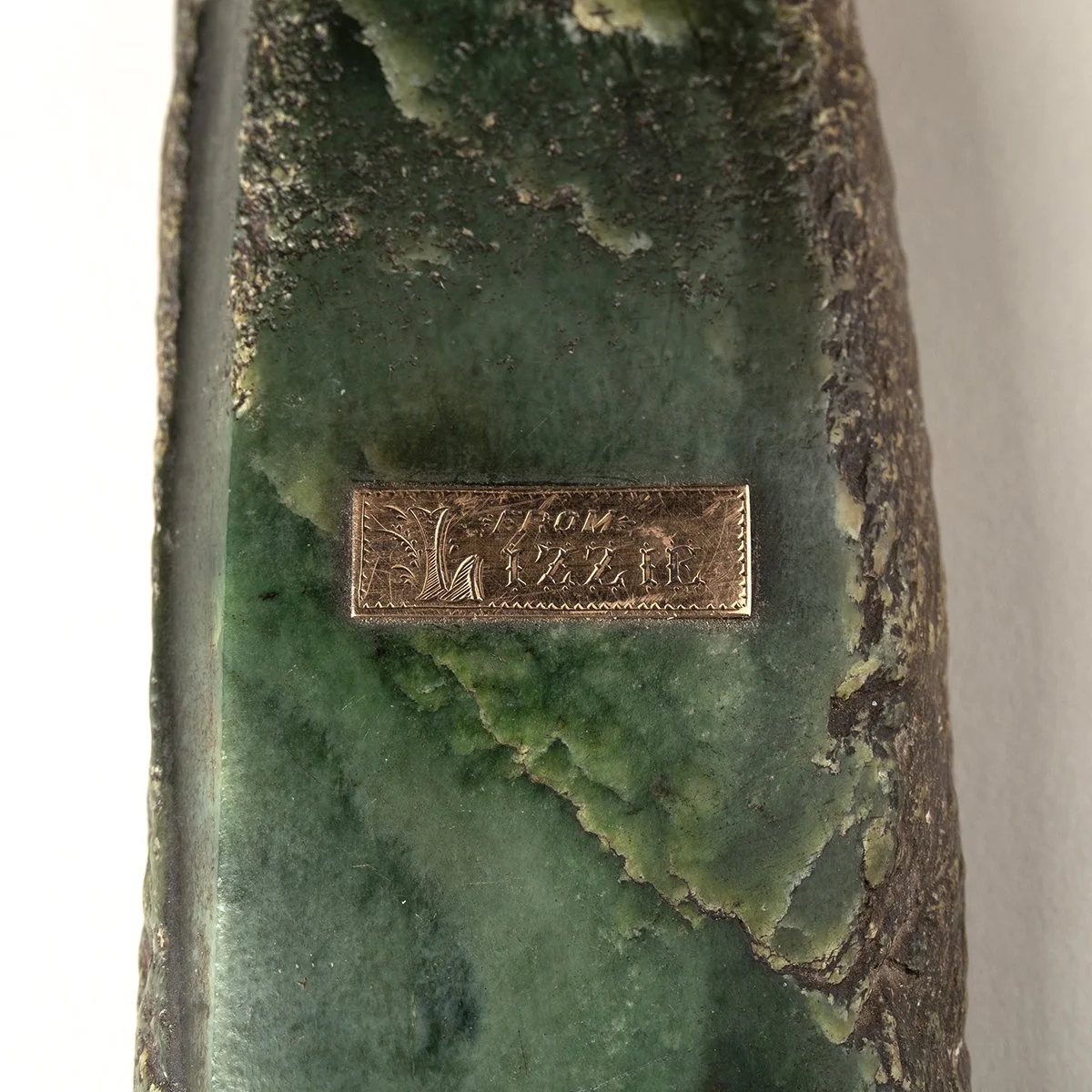 Image 3 of 7
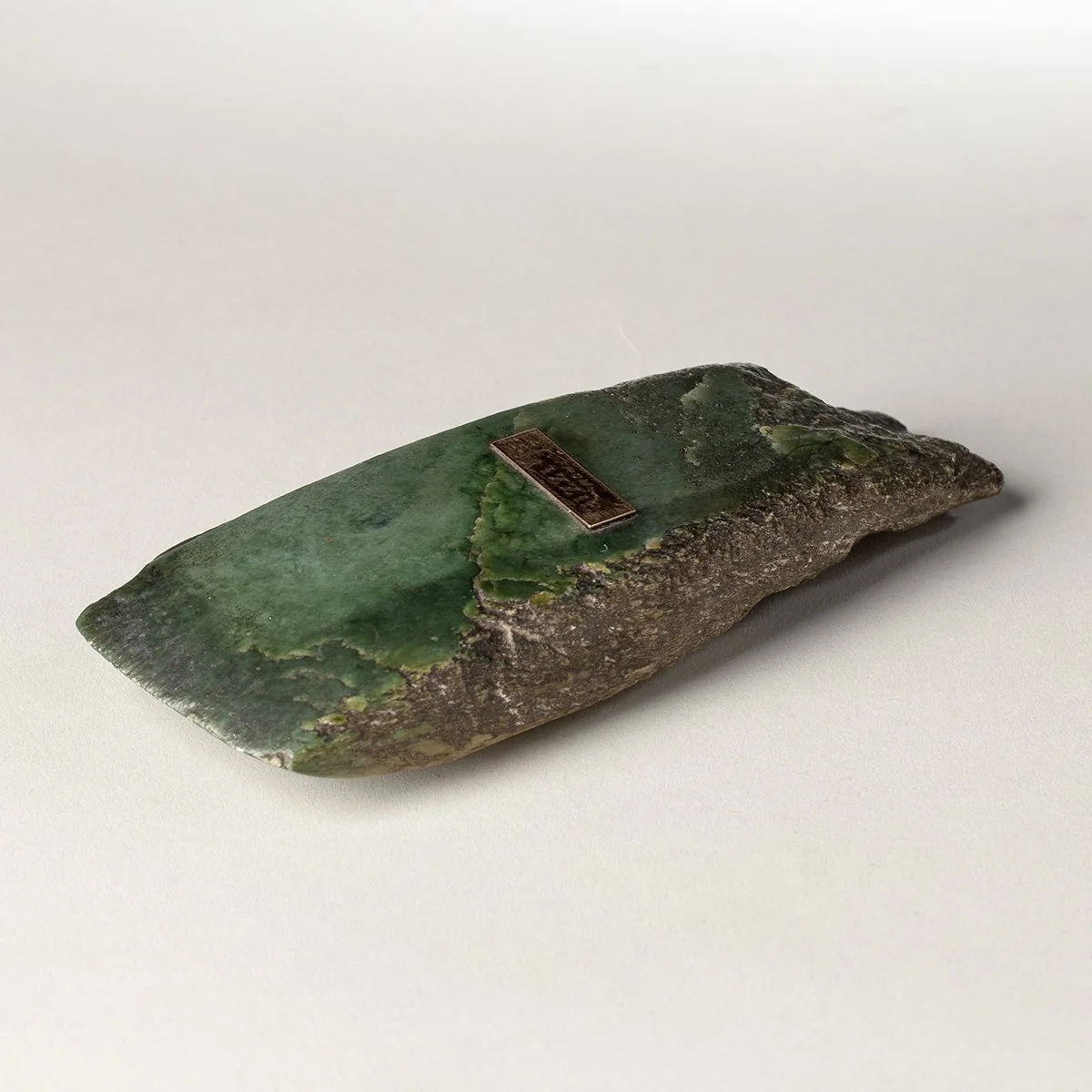 Image 4 of 7
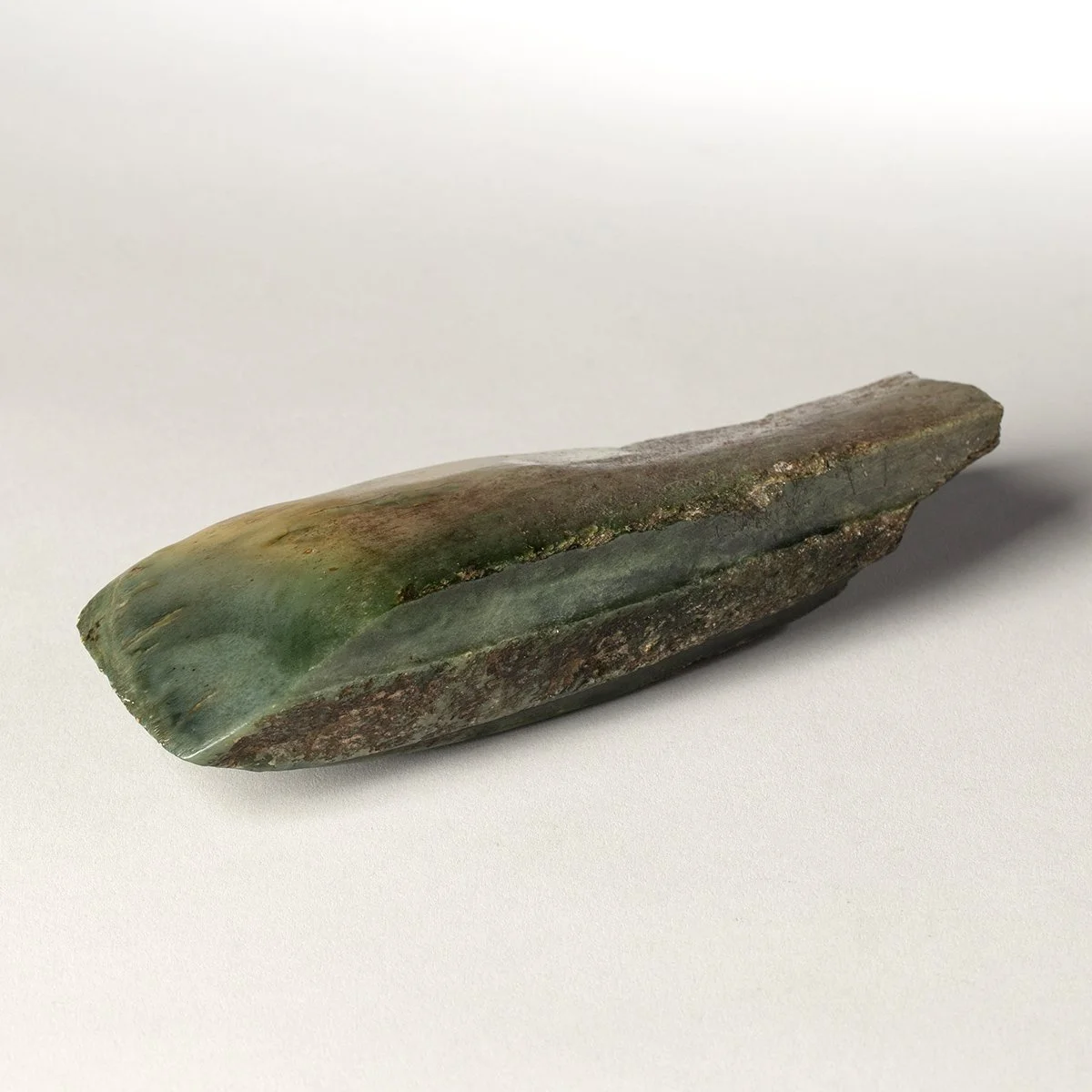 Image 5 of 7
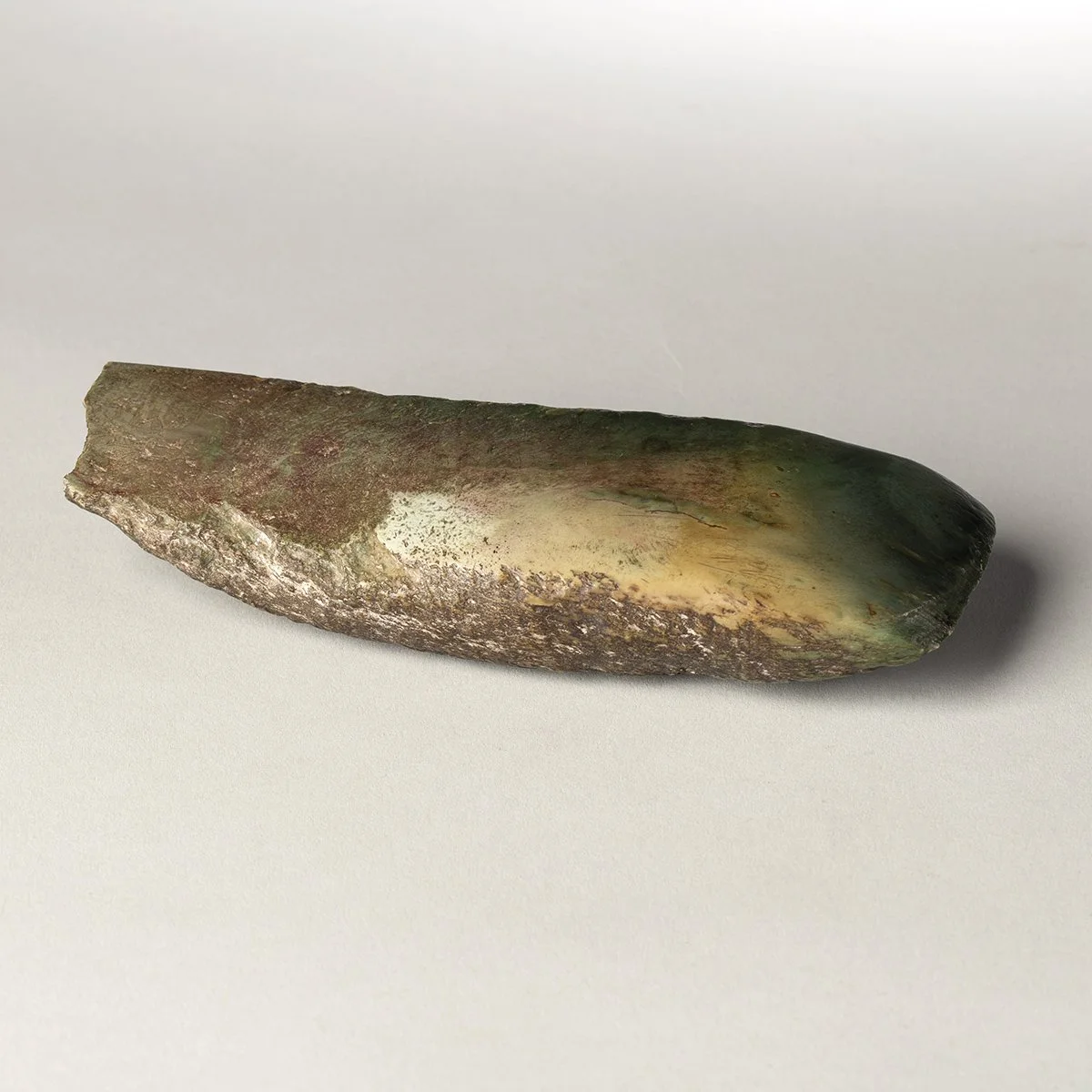 Image 6 of 7
 Image 7 of 7