

 Image 1 of 4
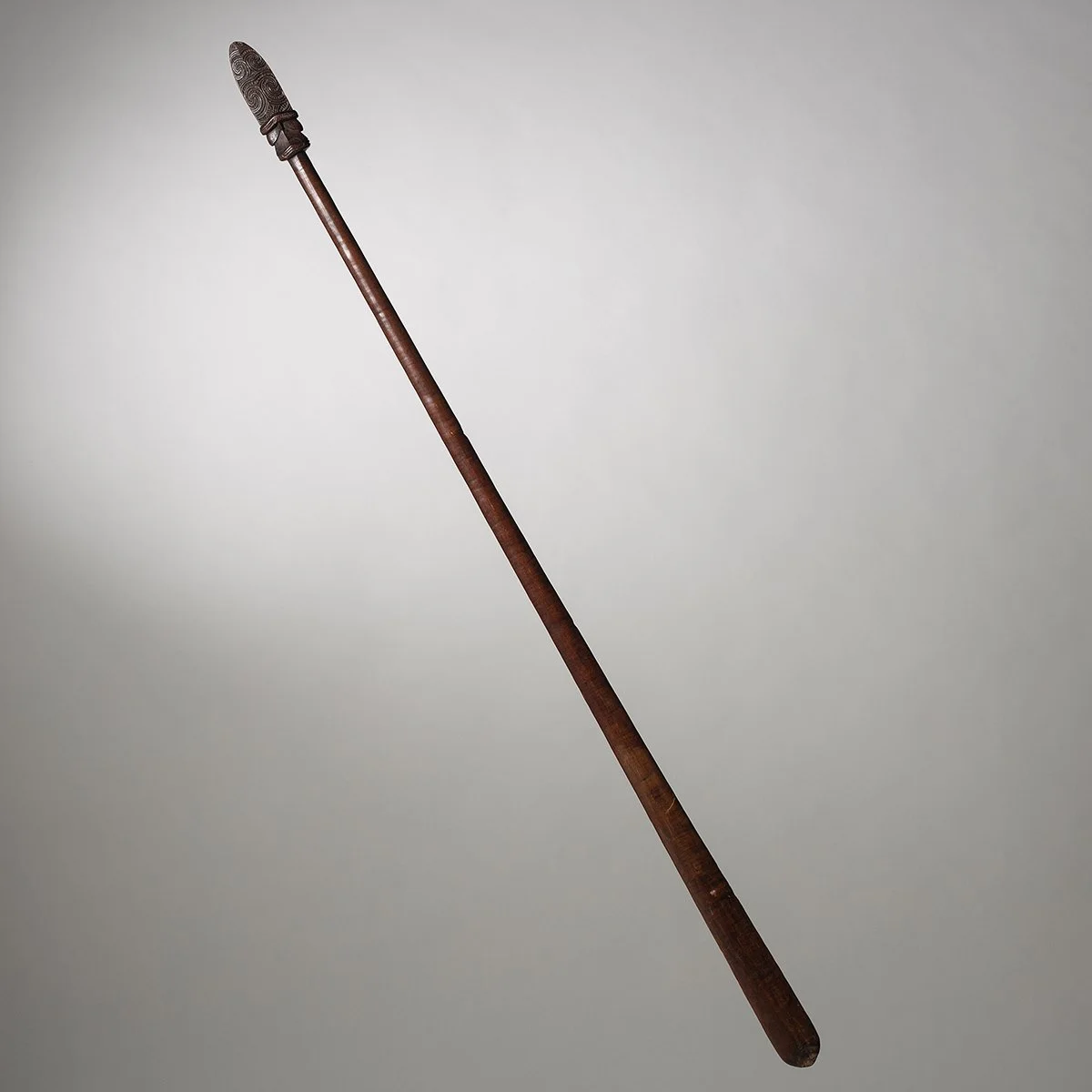 Image 2 of 4
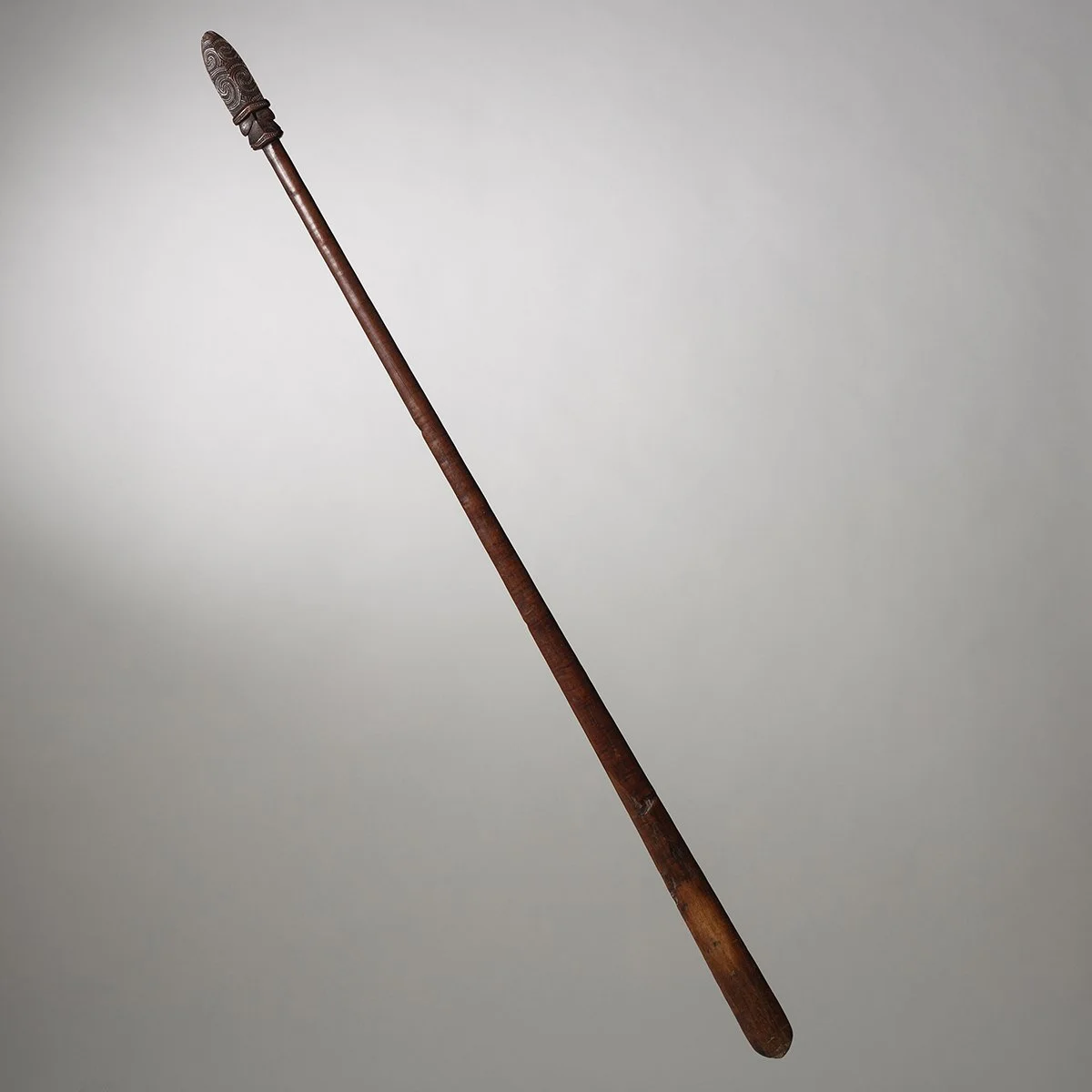 Image 3 of 4
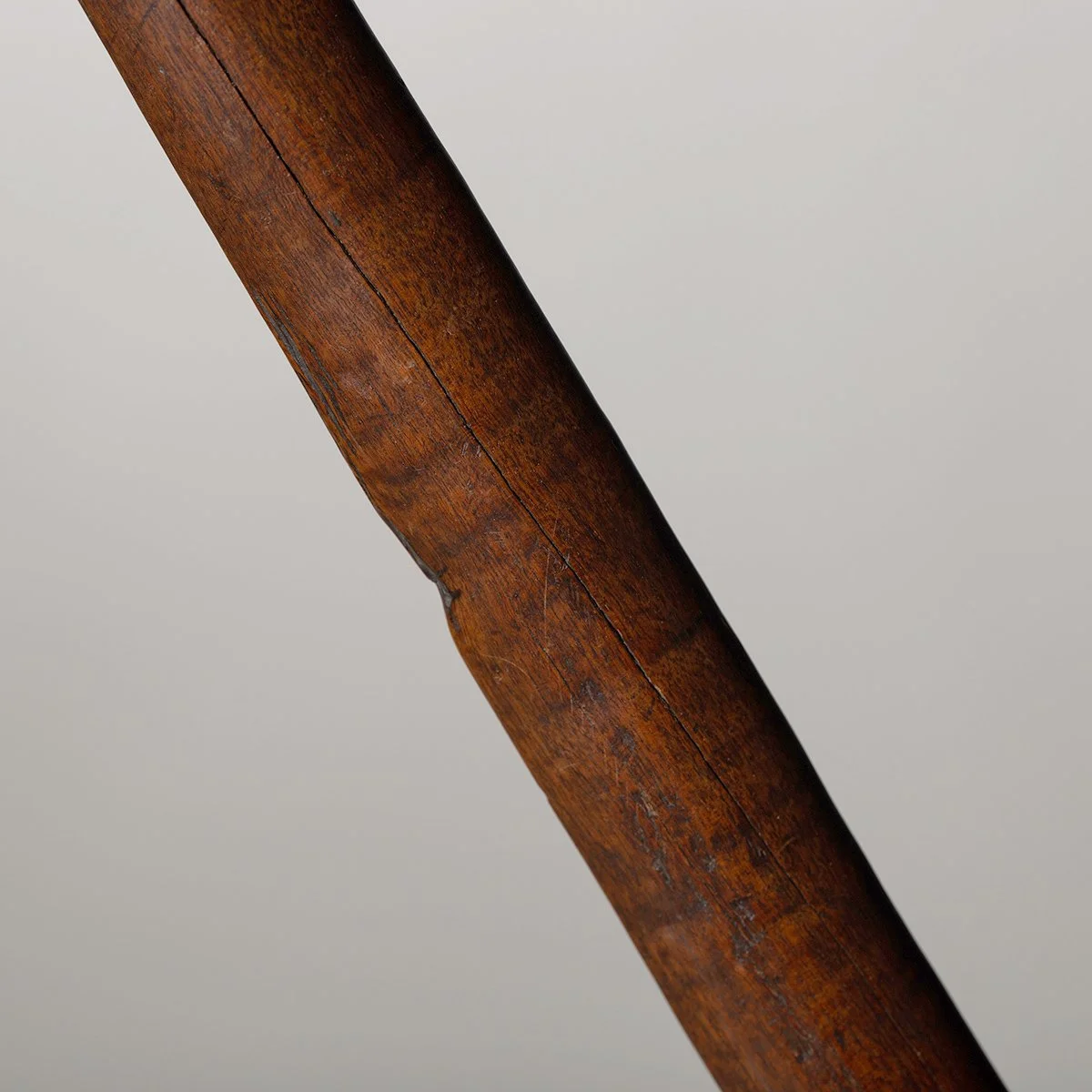 Image 4 of 4
Māori, New Zealand
18th century
Wood, red trade cloth, horsehair
Length: 56 1/2 in. (143.5 cm)
Provenance: Michael Graham Stewart, London
Publication: Polynesia: The Mark and Carolyn Blackburn Collection, Honolulu, 2010, pp. 354, no. 505
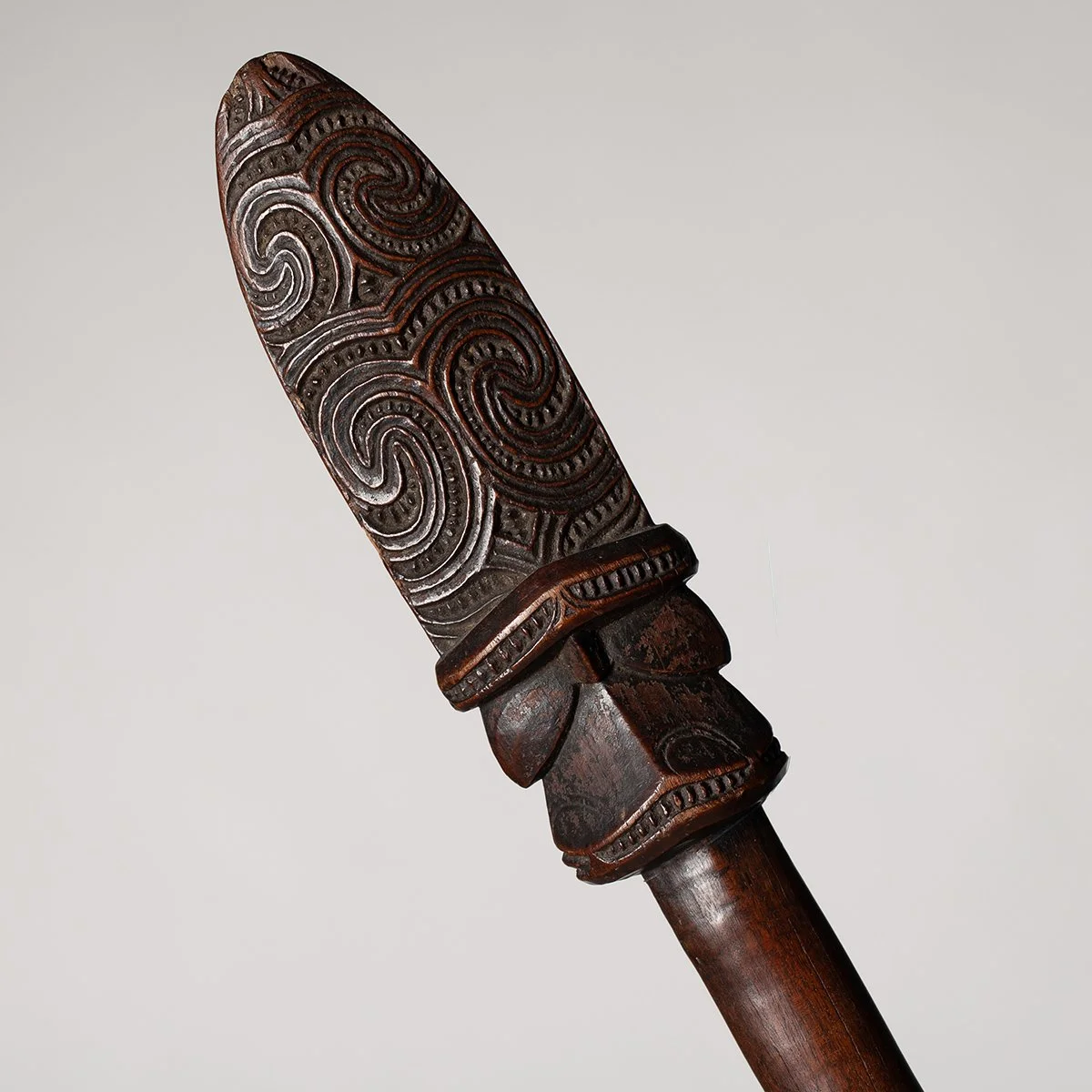
The taiaha is among the most culturally significant weapons in the Māori martial tradition, combining the functions of a thrusting spear and a striking staff in close-quarters combat. Its use was governed by formal training and protocol, and skilled practitioners were held in considerable esteem within Māori society. This example dates to the eighteenth century and carries published provenance through the Blackburn Collection catalogue of 2010.
The upper arero, or tongue end, is carved with koru-based surface ornament and finished with red trade cloth and horsehair, materials that indicate both period and status. The shaft tapers through its full length to a flattened rau blade at the lower end, the form consistent with documented eighteenth-century taiaha in institutional collections. The wood has developed a warm patina across the full surface through age and handling.
We ship free anywhere in the world, fully insured, packed by hand.
Māori, New Zealand
18th century
Wood, red trade cloth, horsehair
Length: 56 1/2 in. (143.5 cm)
Provenance: Michael Graham Stewart, London
Publication: Polynesia: The Mark and Carolyn Blackburn Collection, Honolulu, 2010, pp. 354, no. 505
The taiaha is among the most culturally significant weapons in the Māori martial tradition, combining the functions of a thrusting spear and a striking staff in close-quarters combat. Its use was governed by formal training and protocol, and skilled practitioners were held in considerable esteem within Māori society. This example dates to the eighteenth century and carries published provenance through the Blackburn Collection catalogue of 2010.
The upper arero, or tongue end, is carved with koru-based surface ornament and finished with red trade cloth and horsehair, materials that indicate both period and status. The shaft tapers through its full length to a flattened rau blade at the lower end, the form consistent with documented eighteenth-century taiaha in institutional collections. The wood has developed a warm patina across the full surface through age and handling.
We ship free anywhere in the world, fully insured, packed by hand.