

 Image 1 of 3
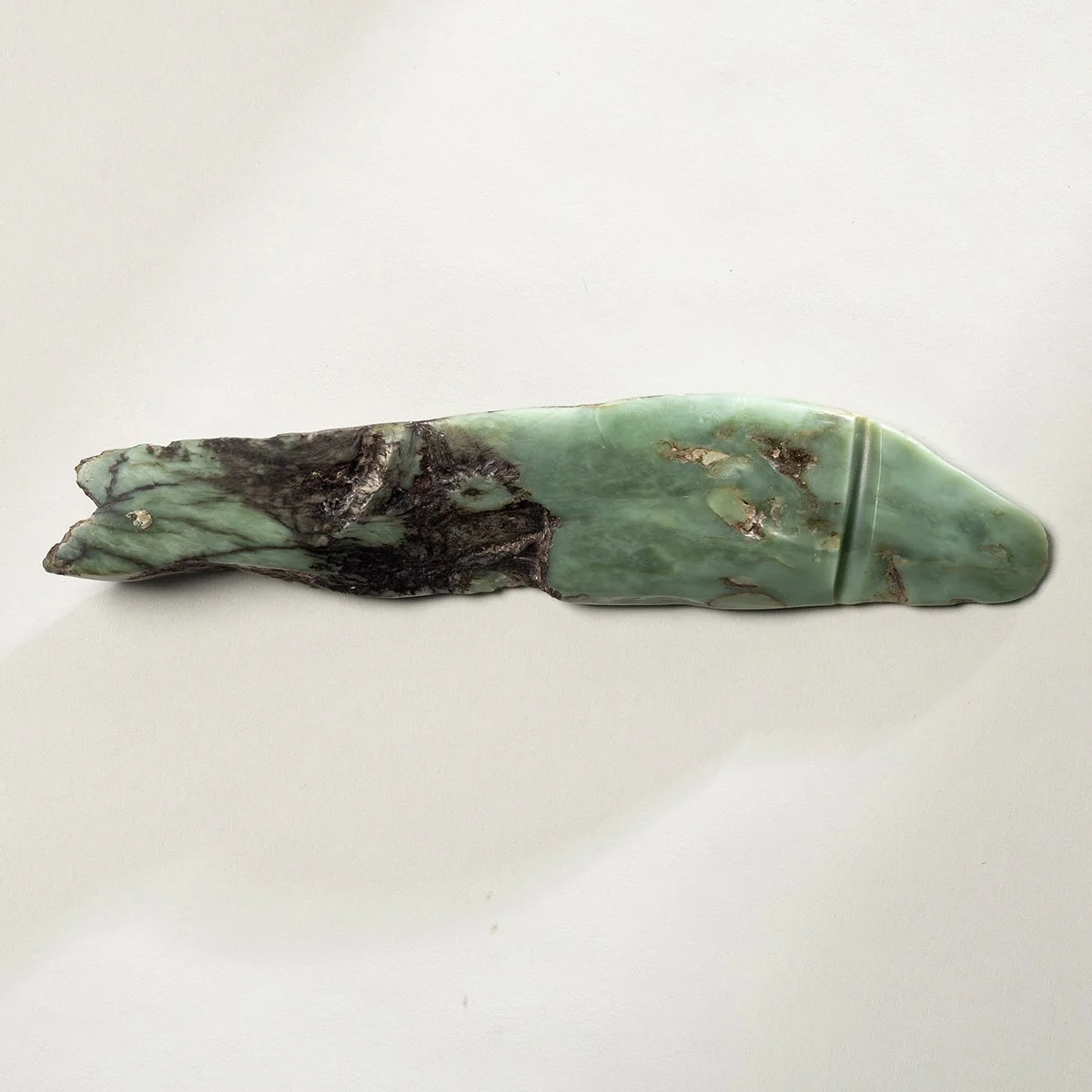 Image 2 of 3
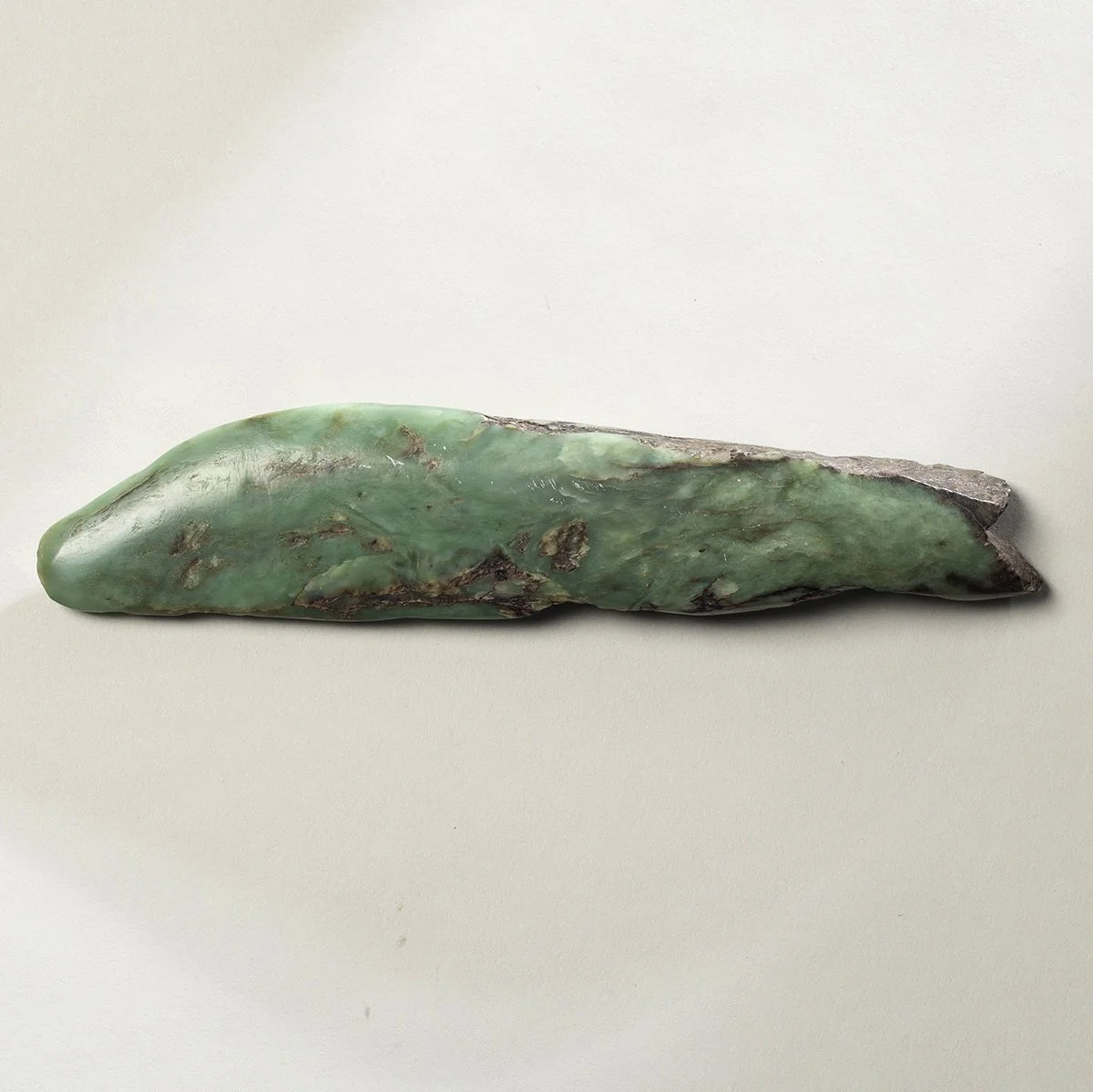 Image 3 of 3
Māori, New Zealand
18th century or earlier
Inanga pounamu (nephrite jade)
Height: 2 in. (5.1 cm); Width: 8 1/2 in. (21.6 cm)
Provenance: Paris trade
Inanga is one of the four named varieties of pounamu recognized by Māori, distinguished by its pale, translucent green coloration with a soft, watery quality that sets it apart from the darker kawakawa and kokopu types. It is considered among the most prized varieties of pounamu within Māori tradition, and objects worked from inanga carry particular cultural weight in contexts of exchange and status. This example, dated to the eighteenth century or earlier, entered the market through the Paris trade.
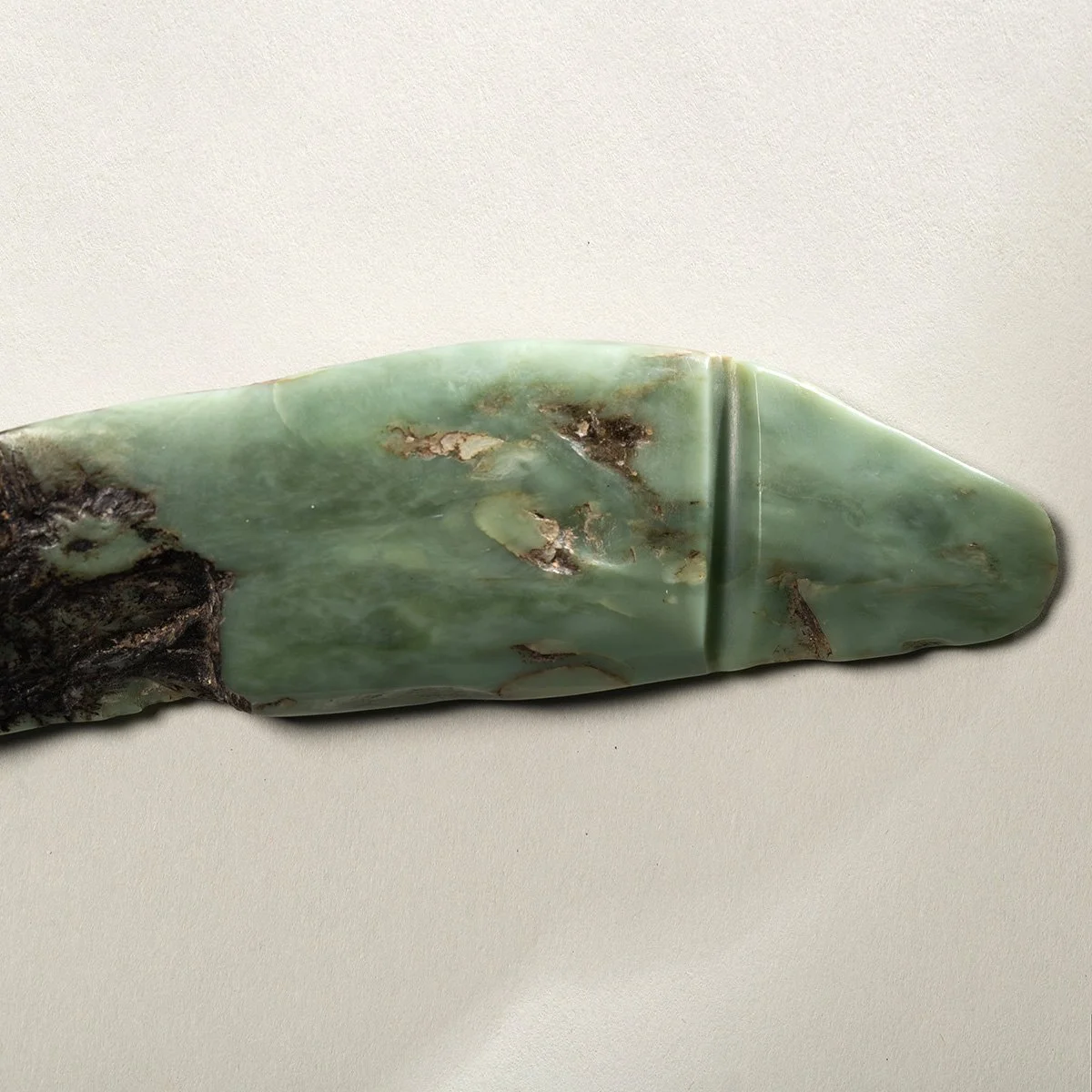
The piece is a worked blade form, partially shaped with evidence of sawing and grinding along the worked edges, the natural cortex retained across portions of the upper surface. The characteristic pale translucent green of inanga is visible across the polished faces, with darker matrix inclusions present where the cortex meets the worked stone. The form and working marks are consistent with pre-contact or early contact period Māori pounamu production.
We ship free anywhere in the world, fully insured, packed by hand.
Māori, New Zealand
18th century or earlier
Inanga pounamu (nephrite jade)
Height: 2 in. (5.1 cm); Width: 8 1/2 in. (21.6 cm)
Provenance: Paris trade
Inanga is one of the four named varieties of pounamu recognized by Māori, distinguished by its pale, translucent green coloration with a soft, watery quality that sets it apart from the darker kawakawa and kokopu types. It is considered among the most prized varieties of pounamu within Māori tradition, and objects worked from inanga carry particular cultural weight in contexts of exchange and status. This example, dated to the eighteenth century or earlier, entered the market through the Paris trade.
The piece is a worked blade form, partially shaped with evidence of sawing and grinding along the worked edges, the natural cortex retained across portions of the upper surface. The characteristic pale translucent green of inanga is visible across the polished faces, with darker matrix inclusions present where the cortex meets the worked stone. The form and working marks are consistent with pre-contact or early contact period Māori pounamu production.
We ship free anywhere in the world, fully insured, packed by hand.