Marquesan, French Polynesia
Mid-19th century
Basalt (volcanic)
Height: 7 1/8 in. (18.1 cm)
Provenance: Robert Grunewald, one of the first directors of the Musée de l'Homme, Paris; collection number inscribed on base
The keʻa tuki popoi is a purpose-made stone pounder used in the preparation of popoi, a fermented breadfruit paste that served as a dietary staple across the Marquesas Islands. Breadfruit processing was a central domestic activity, and pounders of this type were standard household objects produced in quantity across the archipelago. This example dates to the mid-nineteenth century and carries institutional provenance through Robert Grunewald, an early director of the Musée de l'Homme in Paris, with the original collection number retained on the base.
The form is characteristic of Marquesan production: a broad, flared base providing stability during use, a waisted body, and a rounded bifurcated top that fits the hand during pounding. The stone is ground to a consistent surface across the body with no evidence of later reworking. The collection number on the base connects this piece directly to one of the foundational ethnographic collections of twentieth-century France.
We ship free anywhere in the world, fully insured, packed by hand.
Marquesan, French Polynesia
Mid-19th century
Basalt (volcanic)
Height: 7 1/8 in. (18.1 cm)
Provenance: Robert Grunewald, one of the first directors of the Musée de l'Homme, Paris; collection number inscribed on base
The keʻa tuki popoi is a purpose-made stone pounder used in the preparation of popoi, a fermented breadfruit paste that served as a dietary staple across the Marquesas Islands. Breadfruit processing was a central domestic activity, and pounders of this type were standard household objects produced in quantity across the archipelago. This example dates to the mid-nineteenth century and carries institutional provenance through Robert Grunewald, an early director of the Musée de l'Homme in Paris, with the original collection number retained on the base.
The form is characteristic of Marquesan production: a broad, flared base providing stability during use, a waisted body, and a rounded bifurcated top that fits the hand during pounding. The stone is ground to a consistent surface across the body with no evidence of later reworking. The collection number on the base connects this piece directly to one of the foundational ethnographic collections of twentieth-century France.
We ship free anywhere in the world, fully insured, packed by hand.


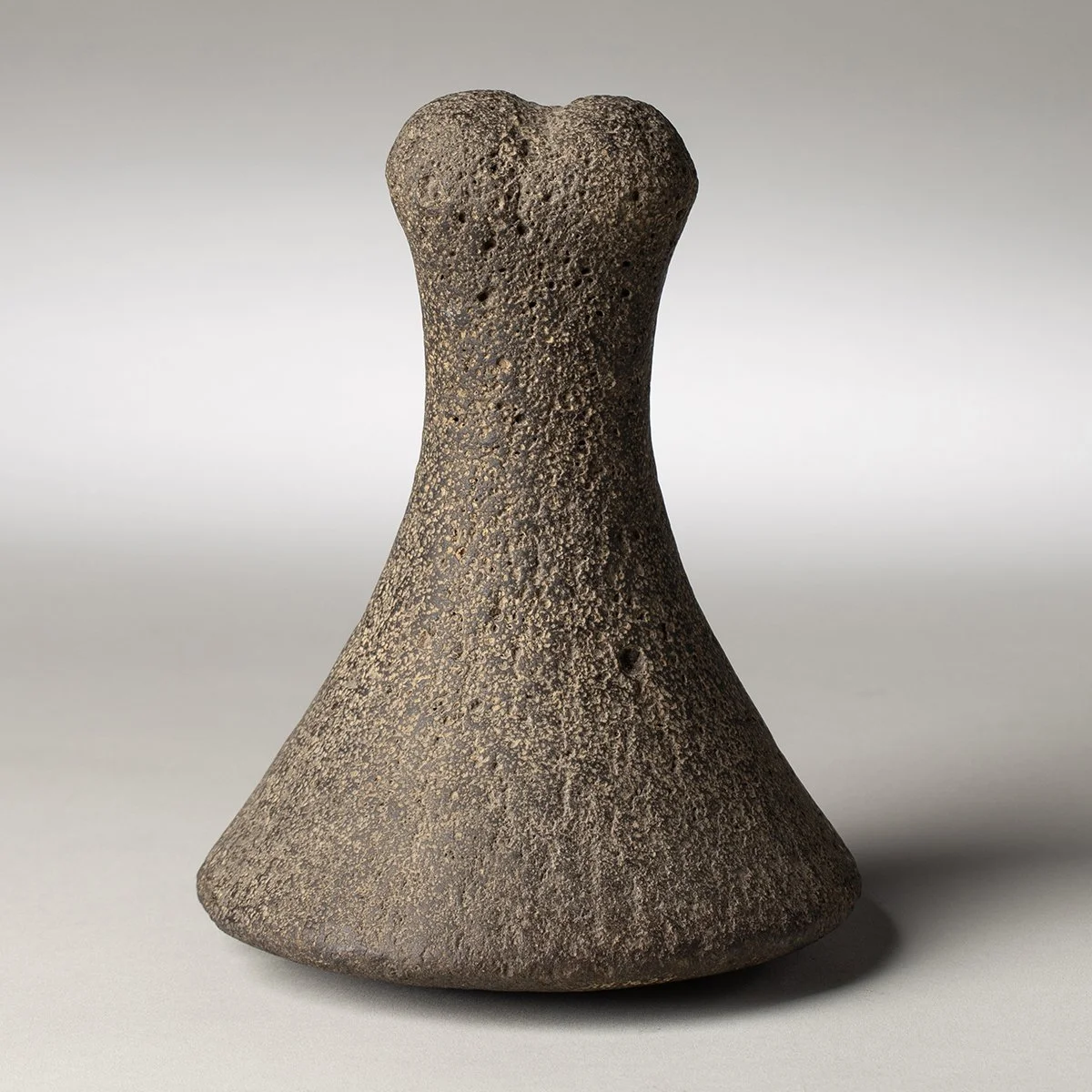 Image 1 of 6
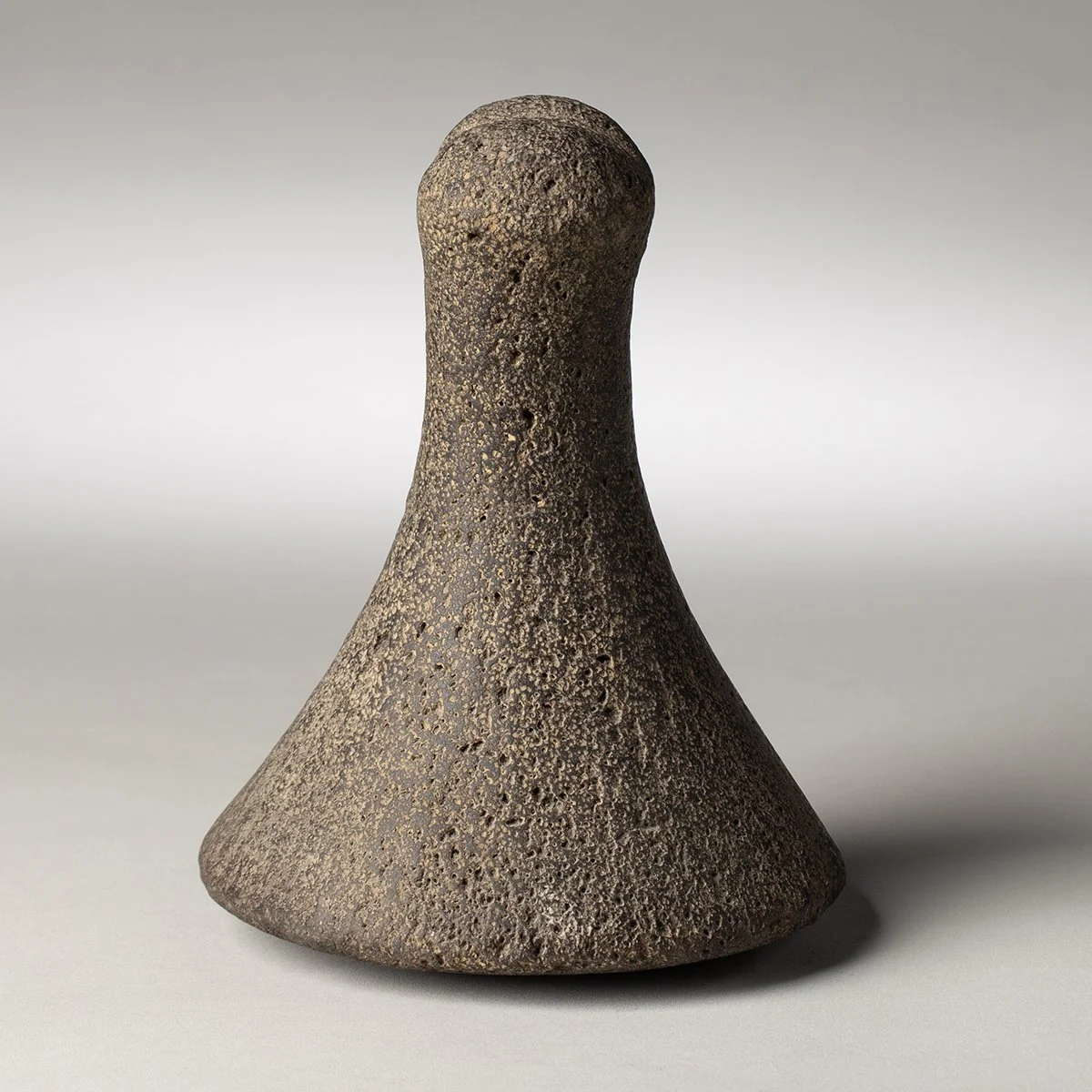 Image 2 of 6
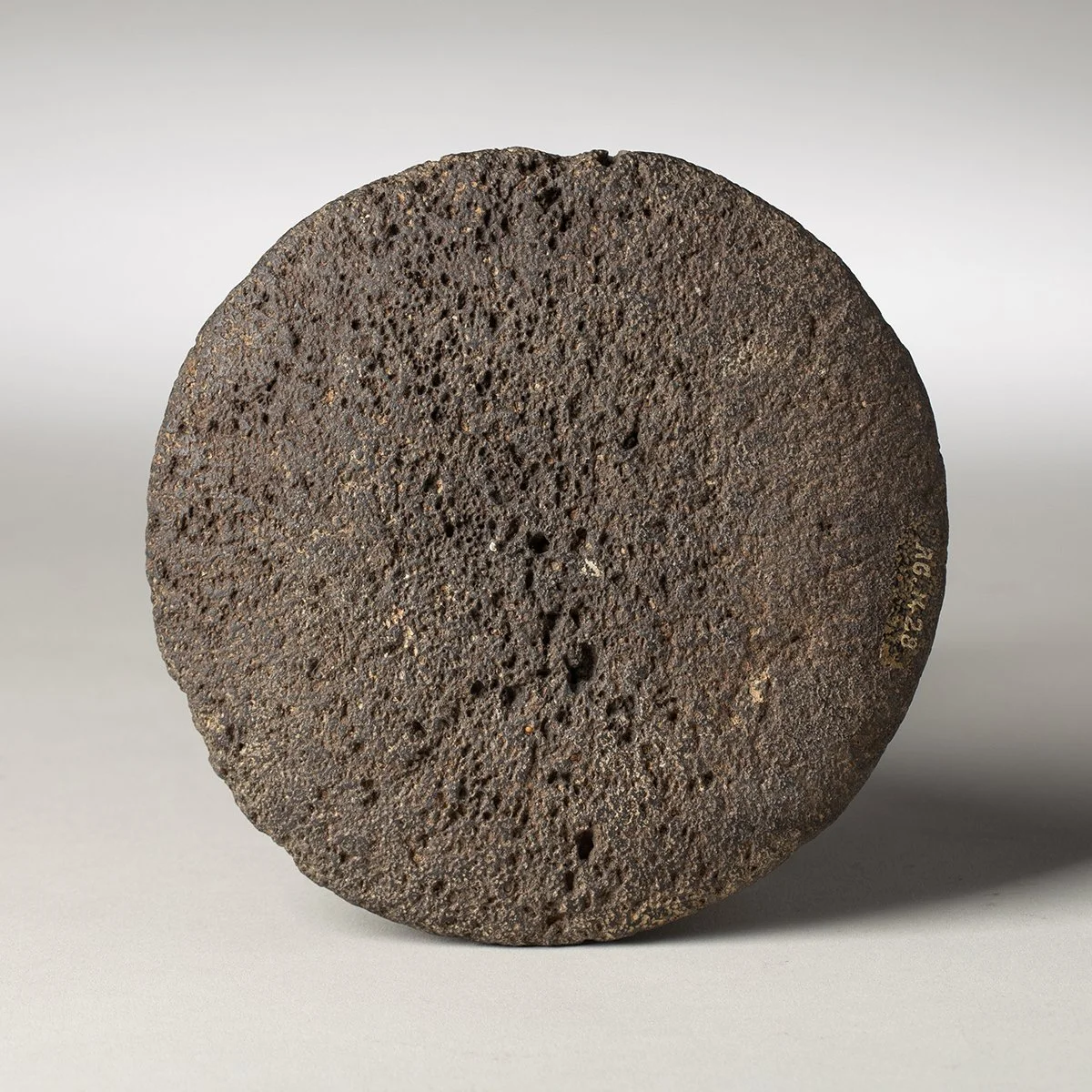 Image 3 of 6
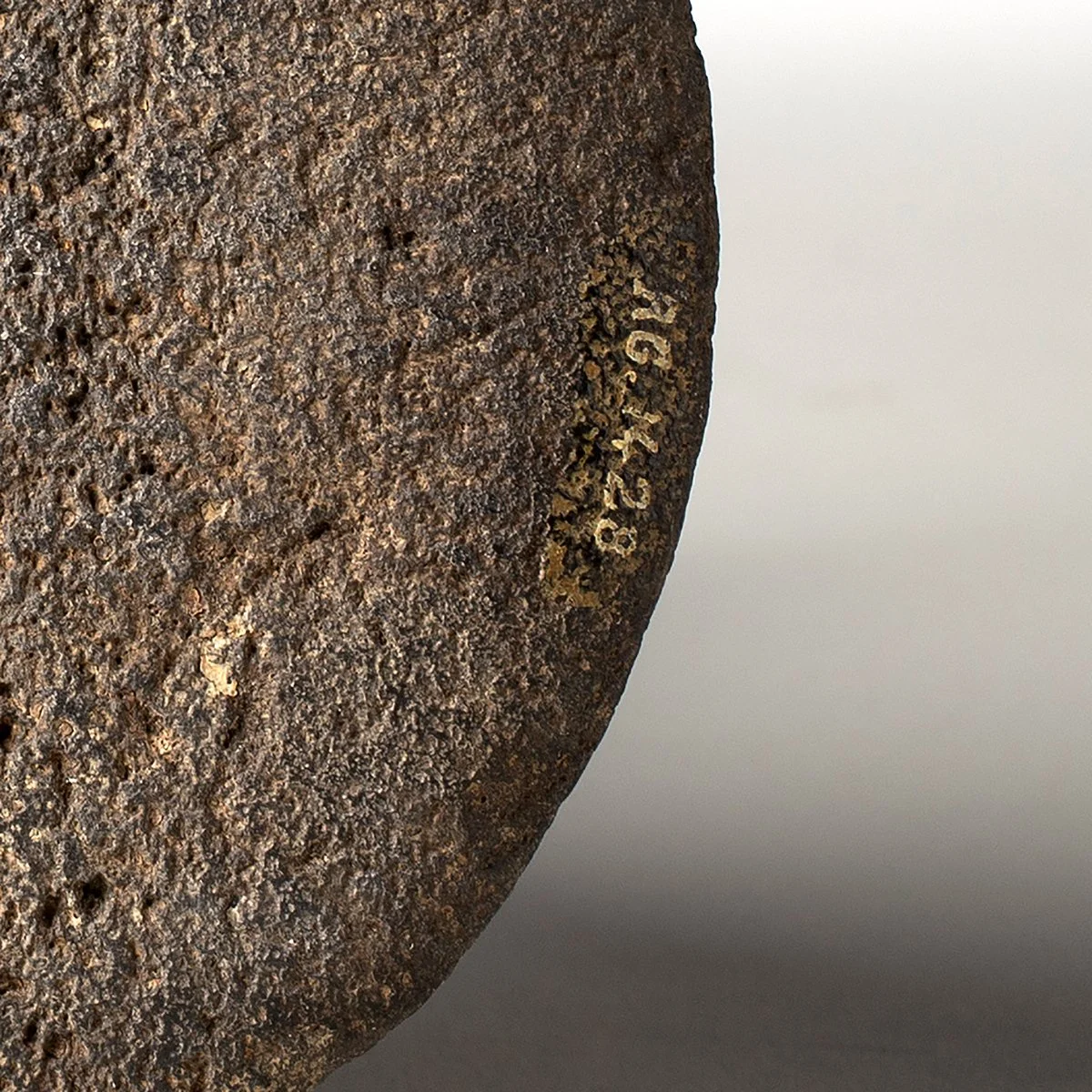 Image 4 of 6
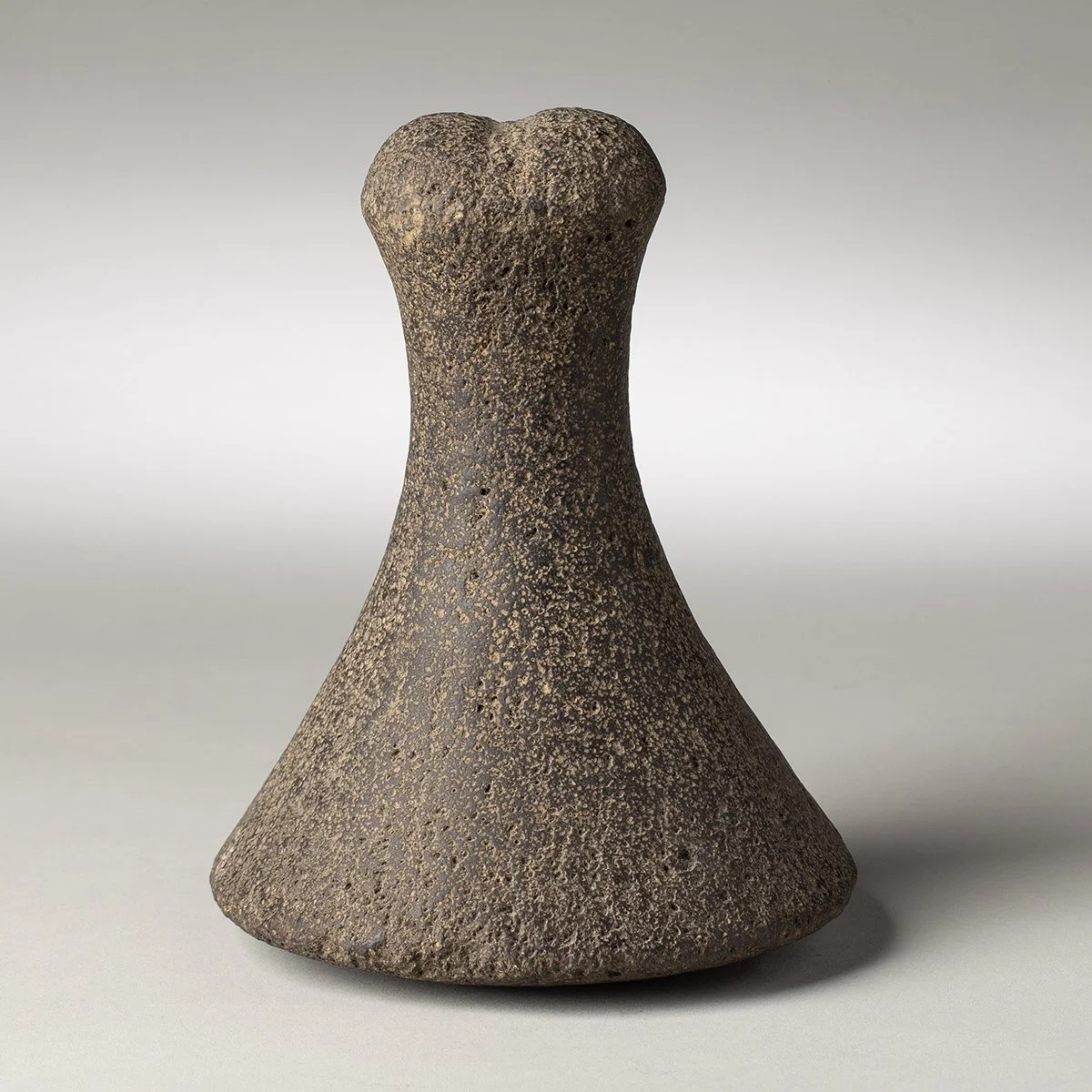 Image 5 of 6
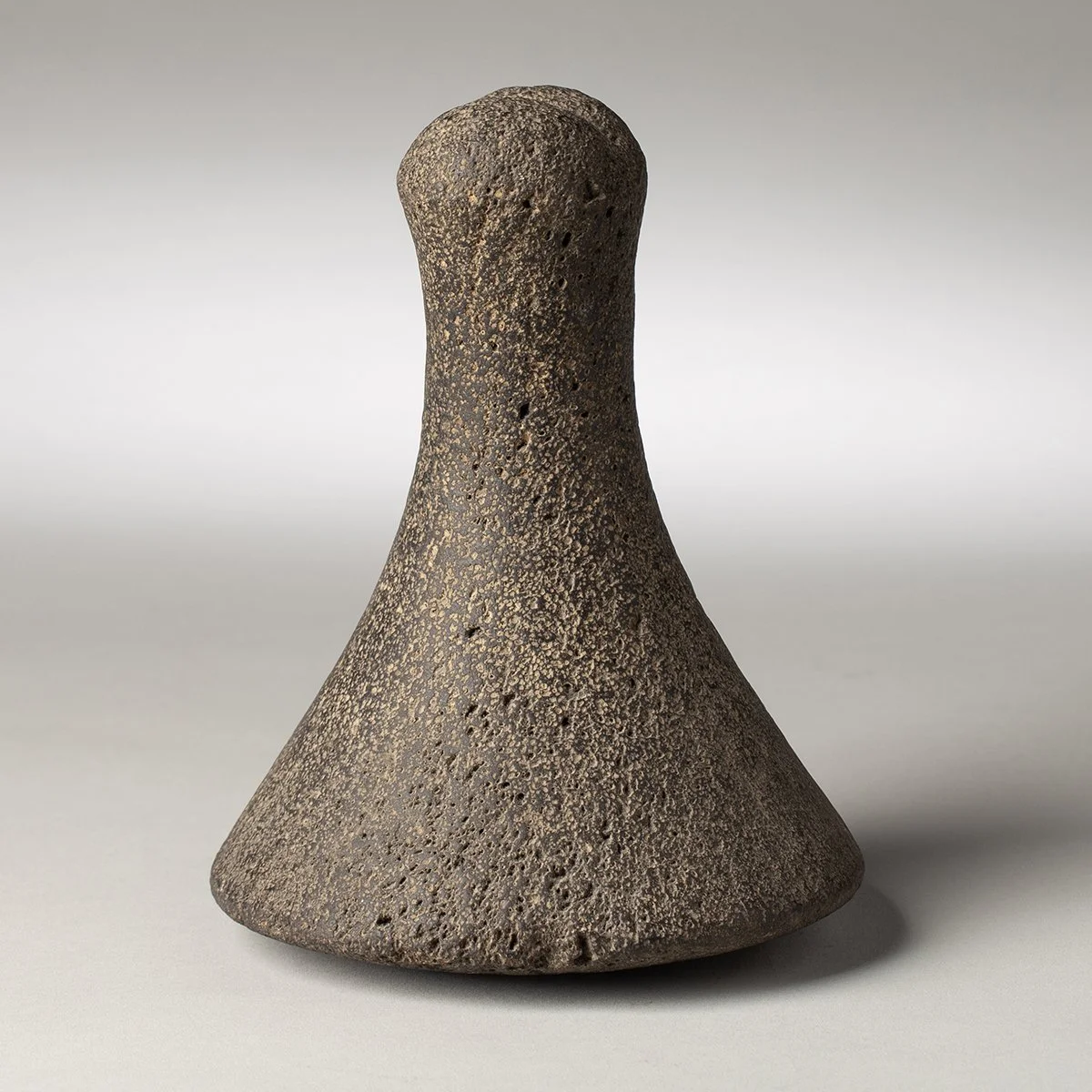 Image 6 of 6