Marquesan, French Polynesia
1820 to 1840
Wood
Height: 12 1/2 in. (31.8 cm)
Provenance: Australia trade
Fans were carried by prominent individuals of both sexes in the Marquesas as marks of social status, displayed at feasts and public gatherings where their visual impact was heightened by the manner in which they were held and presented. The blades were woven from narrow strips of plant fiber around dagger-like wooden handles known as keʻe, sometimes sheathed in bone. The earliest handles were unadorned, but by the early nineteenth century artists were carving them with stacked tiki figures understood to portray deified ancestors.
The handle carries multiple tiki figures arranged in pairs, shown back-to-back and stacked vertically in the manner characteristic of early nineteenth-century Marquesan keʻe production, the figures rendered with the formal vocabulary of eyes, brow ridges, and body proportions consistent with the period. An unusual lizard image appears at the base of the handle, an iconographic element that distinguishes this example from standard tiki-only compositions. The carving is consistently executed with well-defined detail throughout.
The Marquesas Islands produced some of the most formally inventive small-scale carving in Polynesia, with the keʻe representing a category in which functional objects were treated as opportunities for sustained artistic elaboration. The stacked ancestor figures on handles of this type have been interpreted as genealogical statements as well as protective presences for the fan's carrier. This example, dated to 1820 to 1840, entered the market through the Australia trade.
We ship free anywhere in the world, fully insured, packed by hand.
Marquesan, French Polynesia
1820 to 1840
Wood
Height: 12 1/2 in. (31.8 cm)
Provenance: Australia trade
Fans were carried by prominent individuals of both sexes in the Marquesas as marks of social status, displayed at feasts and public gatherings where their visual impact was heightened by the manner in which they were held and presented. The blades were woven from narrow strips of plant fiber around dagger-like wooden handles known as keʻe, sometimes sheathed in bone. The earliest handles were unadorned, but by the early nineteenth century artists were carving them with stacked tiki figures understood to portray deified ancestors.
The handle carries multiple tiki figures arranged in pairs, shown back-to-back and stacked vertically in the manner characteristic of early nineteenth-century Marquesan keʻe production, the figures rendered with the formal vocabulary of eyes, brow ridges, and body proportions consistent with the period. An unusual lizard image appears at the base of the handle, an iconographic element that distinguishes this example from standard tiki-only compositions. The carving is consistently executed with well-defined detail throughout.
The Marquesas Islands produced some of the most formally inventive small-scale carving in Polynesia, with the keʻe representing a category in which functional objects were treated as opportunities for sustained artistic elaboration. The stacked ancestor figures on handles of this type have been interpreted as genealogical statements as well as protective presences for the fan's carrier. This example, dated to 1820 to 1840, entered the market through the Australia trade.
We ship free anywhere in the world, fully insured, packed by hand.


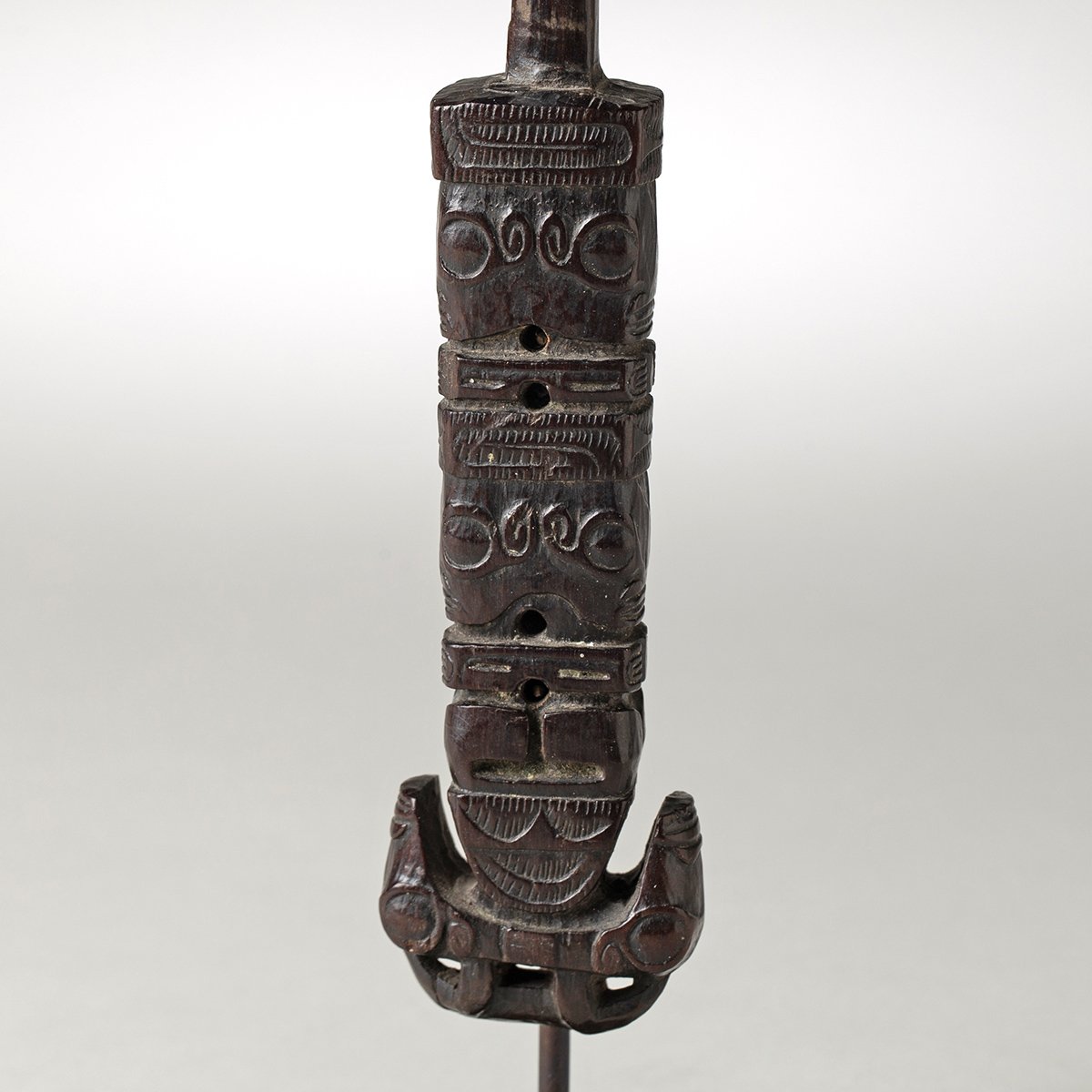 Image 1 of 8
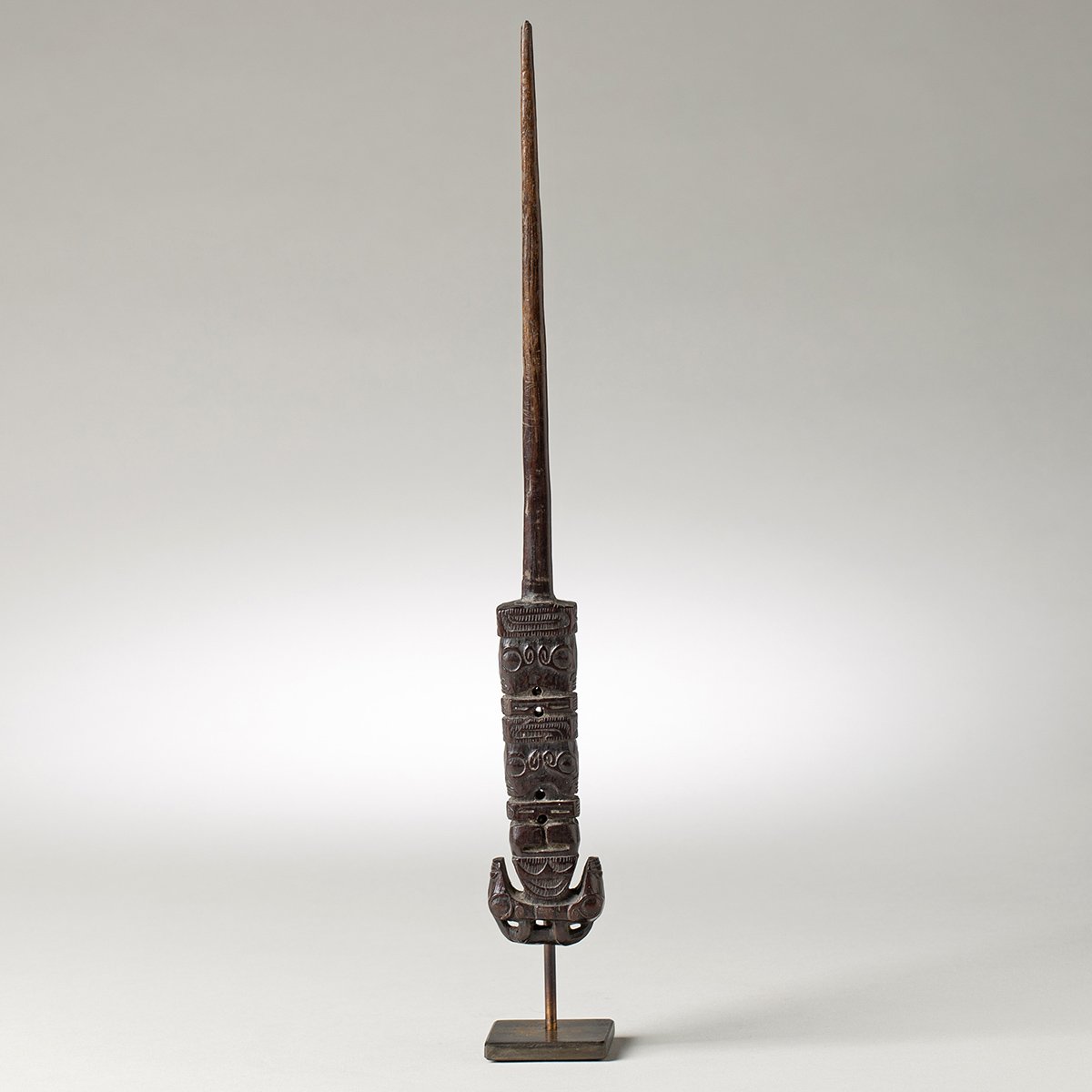 Image 2 of 8
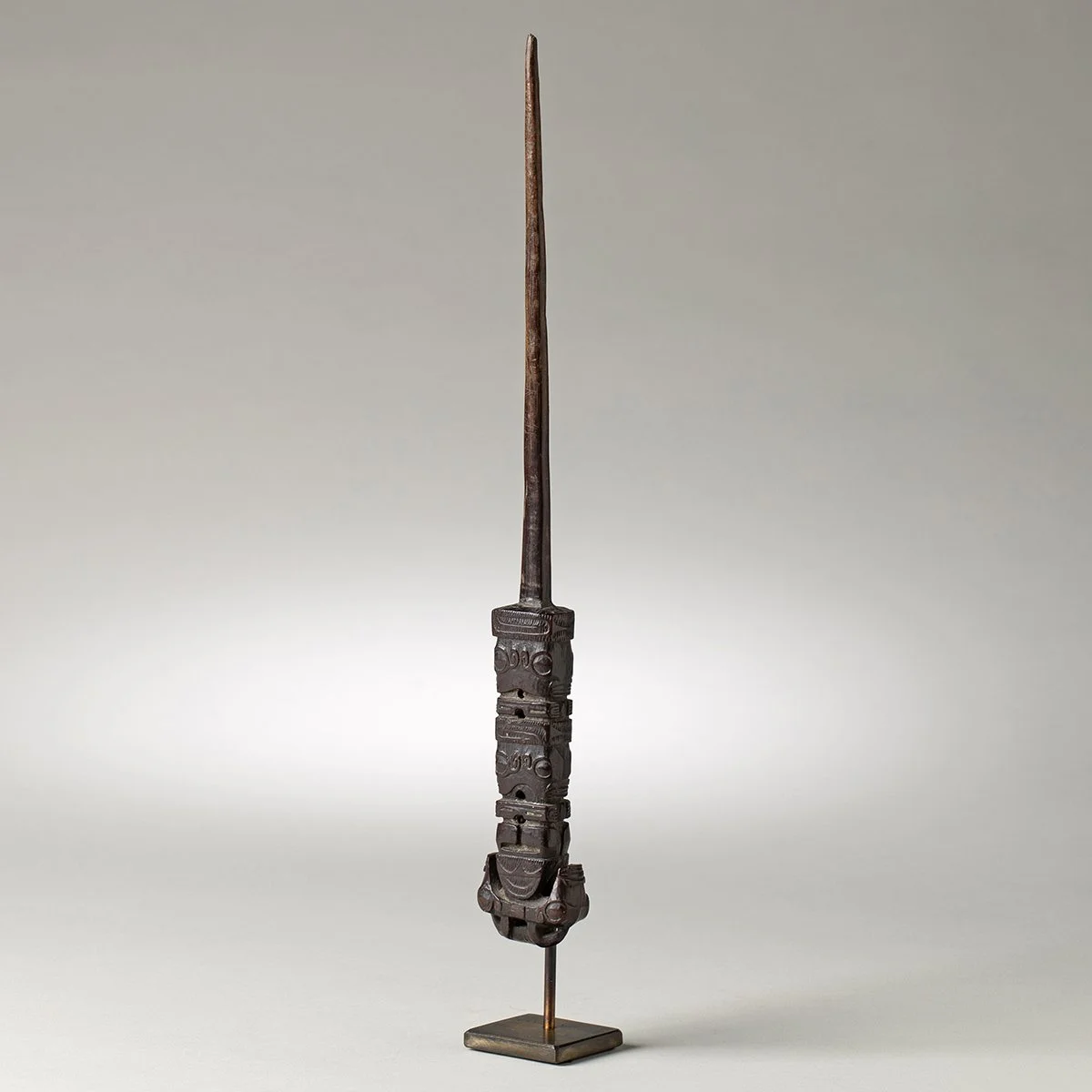 Image 3 of 8
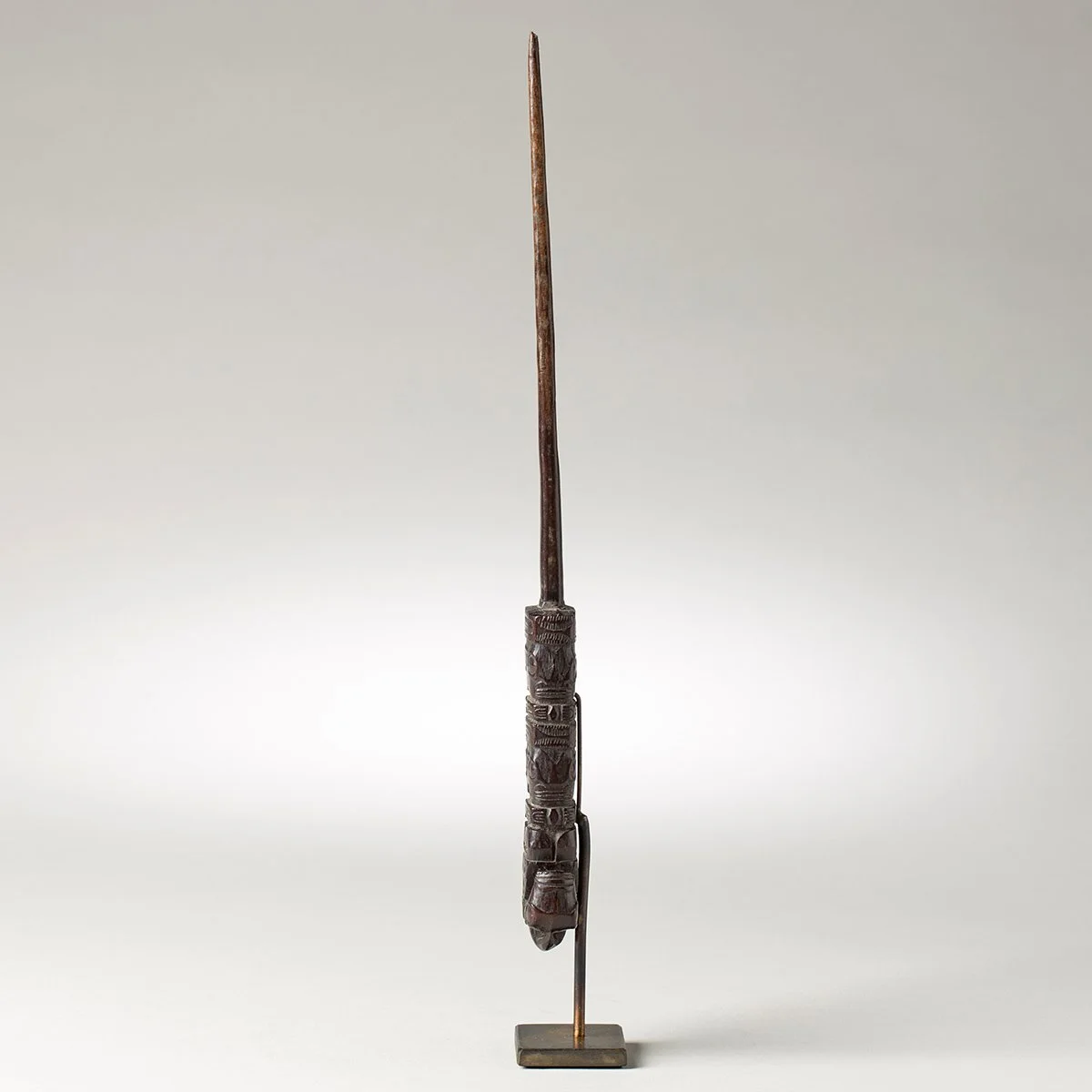 Image 4 of 8
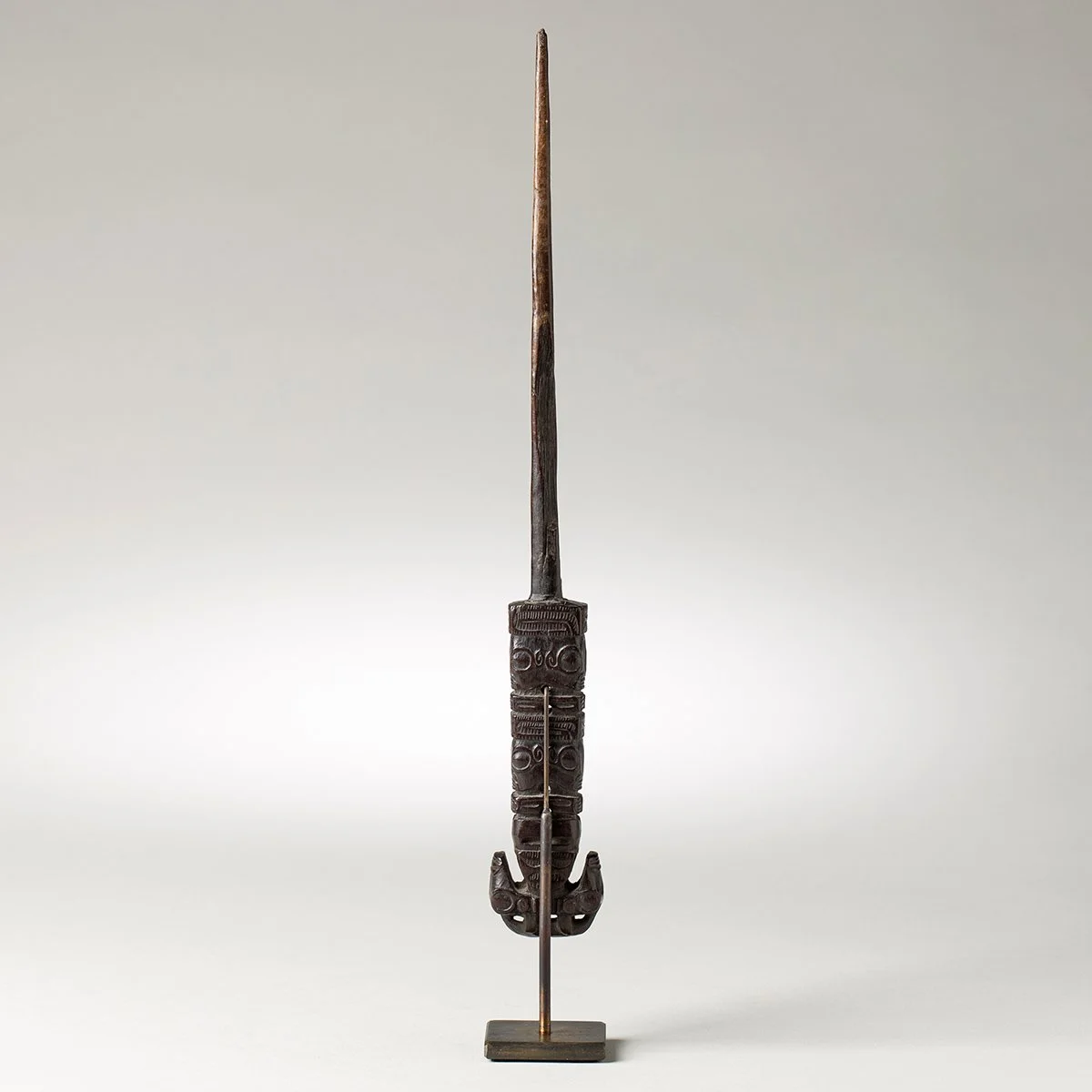 Image 5 of 8
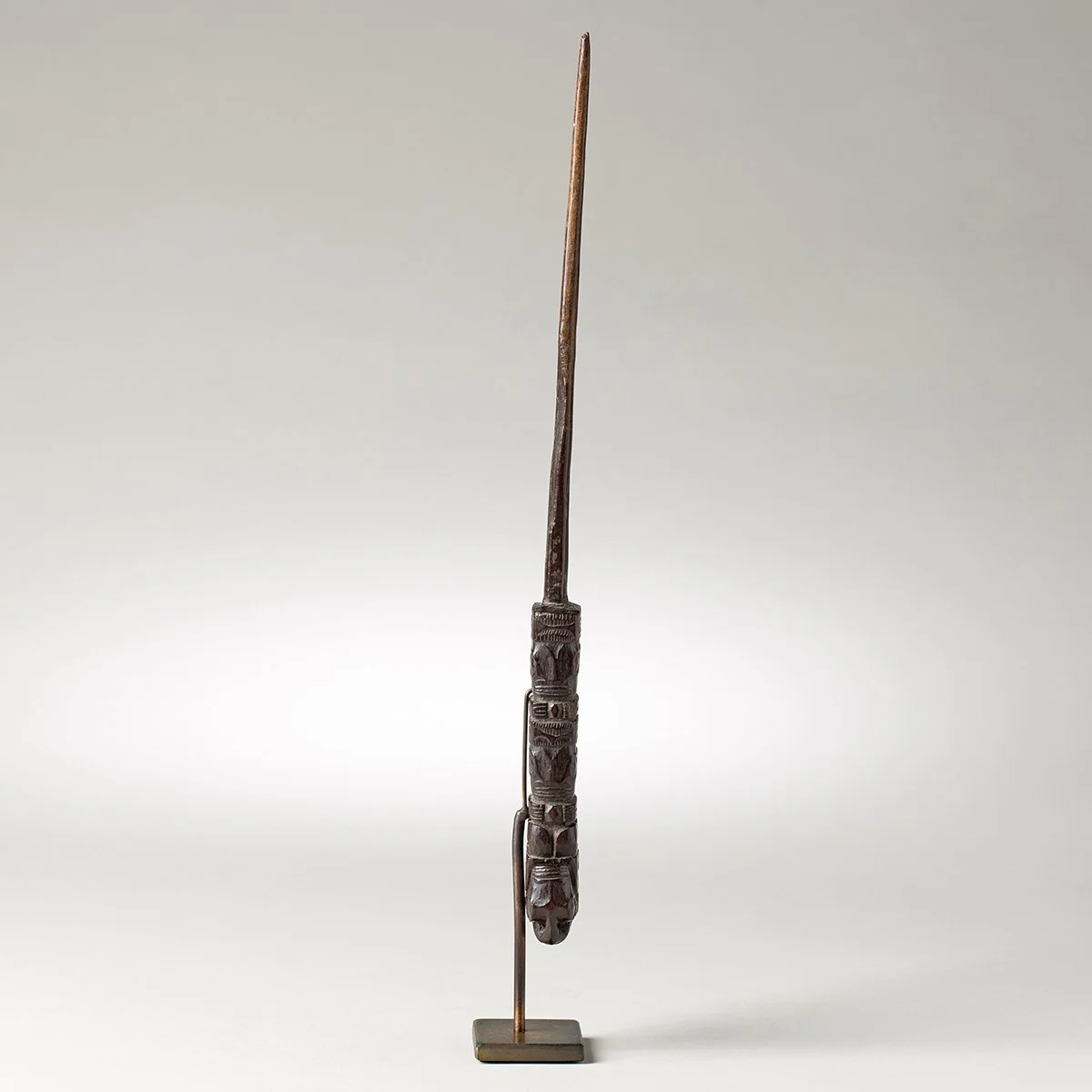 Image 6 of 8
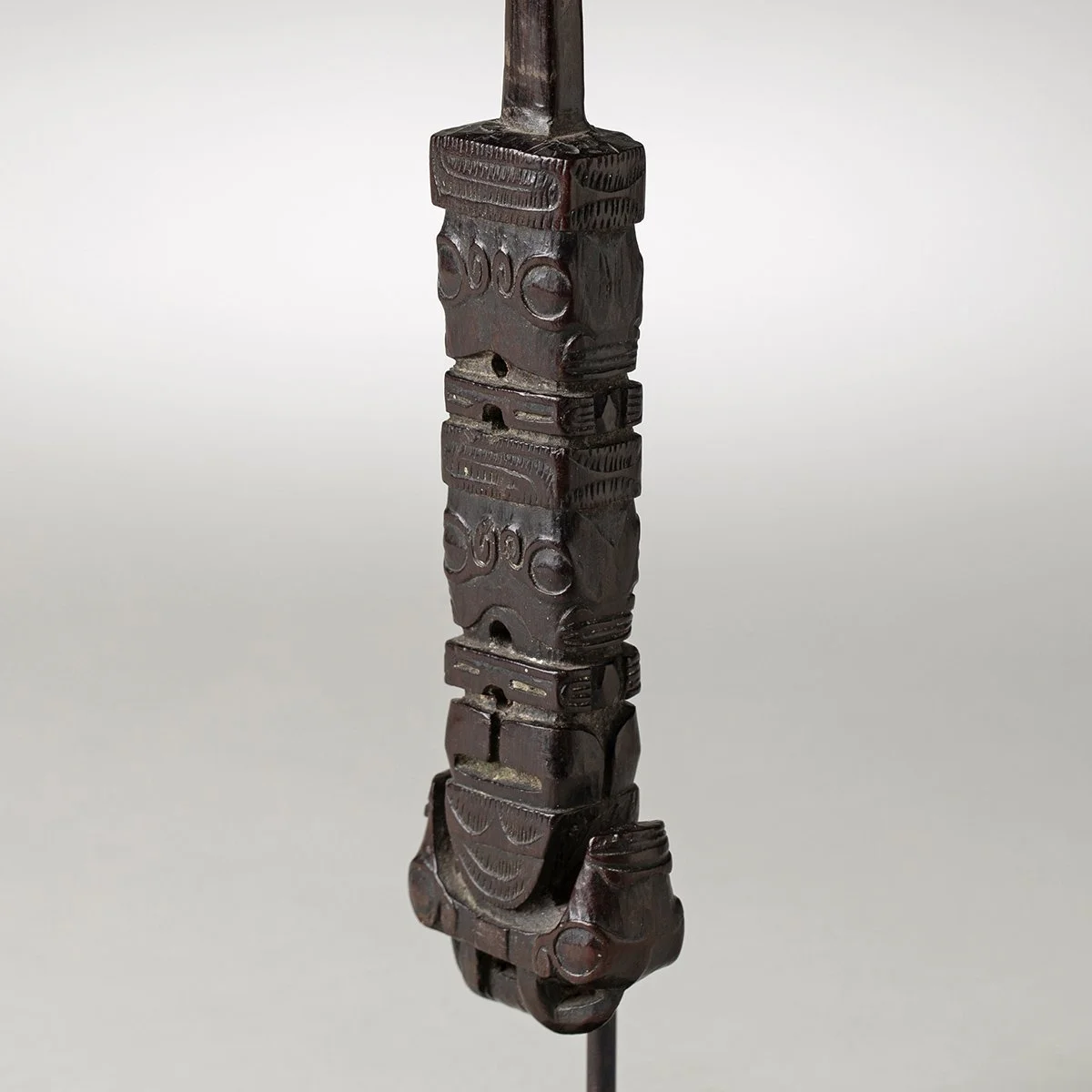 Image 7 of 8
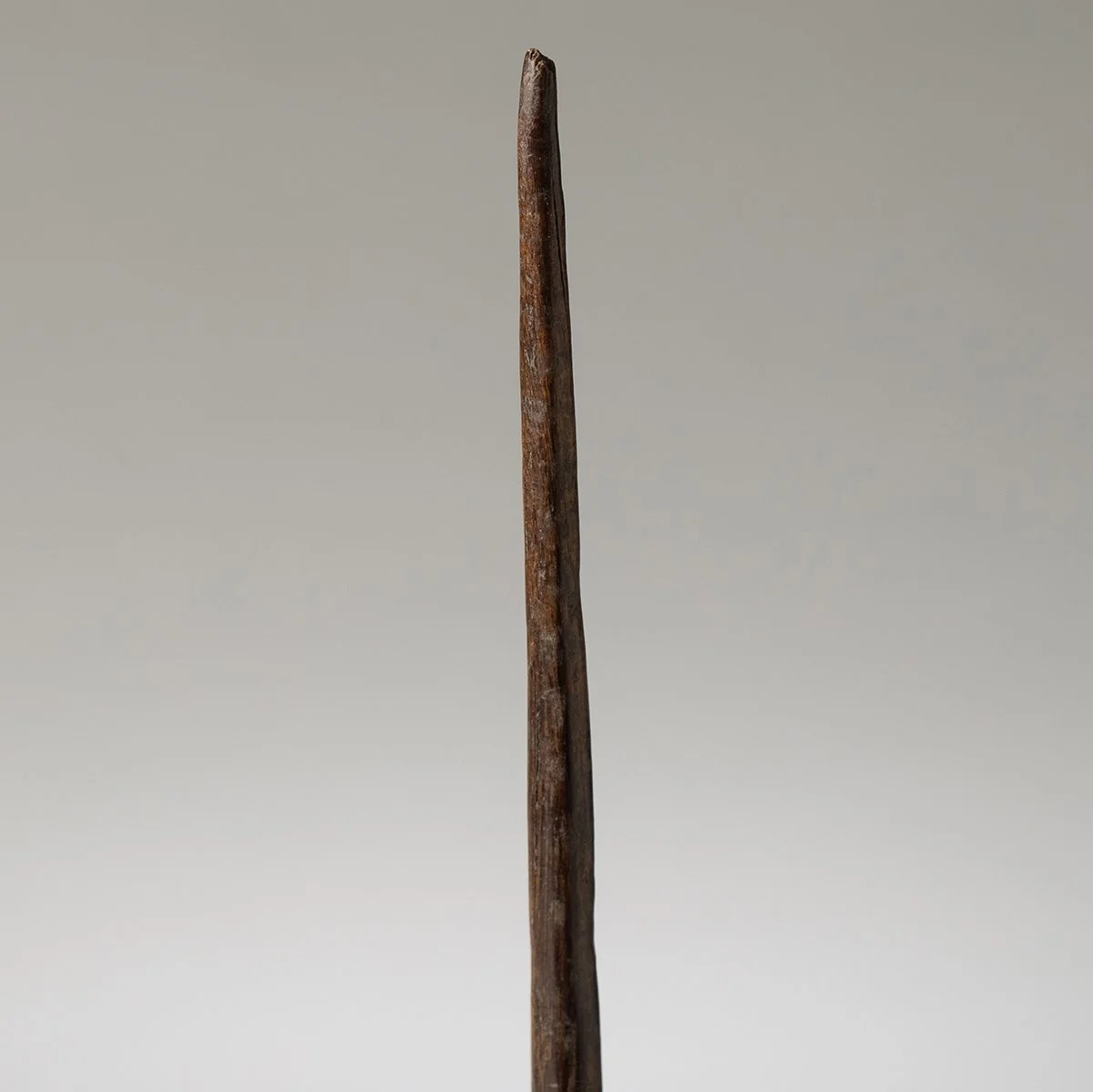 Image 8 of 8