Seneca, Iroquois, northeastern North America
Circa 1880
Basswood, tin, horsehair, cordage
Mask height 9 3/4" (24.8 cm); with hair 27 1/2" (69.9 cm)
Provenance: Private Southern California collection; old label on reverse inscribed "received 6/22/26 pur. from Mrs. Joe Silversmith"; two tobacco bags on reverse
The False Face Society is among the most significant medicine societies within Iroquois ceremonial life, its members wearing carved wooden masks during healing ceremonies to drive away disease-causing spirits and restore health to the community. Masks of this type, known as gagosah in Seneca, were understood as living beings rather than objects, carved from basswood and imbued with spiritual power through their making and use. The Seneca, westernmost nation of the Haudenosaunee Confederacy, maintained one of the most active False Face traditions among the Six Nations peoples of the northeastern woodlands.
This mask retains its tin eye plates, horsehair, and cordage intact, the combination of materials consistent with Seneca False Face production of the late 19th century. The vivid red pigment covering the face indicates it was carved at midday, a Seneca convention that distinguished masks by the time of their carving and encoded specific ceremonial roles. The presence of two tobacco bags on the reverse is particularly significant, as tobacco is the primary ritual offering in Haudenosaunee ceremonial practice, suggesting this mask remained in active ceremonial use.
We ship free anywhere in the world, fully insured, packed by hand.
Seneca, Iroquois, northeastern North America
Circa 1880
Basswood, tin, horsehair, cordage
Mask height 9 3/4" (24.8 cm); with hair 27 1/2" (69.9 cm)
Provenance: Private Southern California collection; old label on reverse inscribed "received 6/22/26 pur. from Mrs. Joe Silversmith"; two tobacco bags on reverse
The False Face Society is among the most significant medicine societies within Iroquois ceremonial life, its members wearing carved wooden masks during healing ceremonies to drive away disease-causing spirits and restore health to the community. Masks of this type, known as gagosah in Seneca, were understood as living beings rather than objects, carved from basswood and imbued with spiritual power through their making and use. The Seneca, westernmost nation of the Haudenosaunee Confederacy, maintained one of the most active False Face traditions among the Six Nations peoples of the northeastern woodlands.
This mask retains its tin eye plates, horsehair, and cordage intact, the combination of materials consistent with Seneca False Face production of the late 19th century. The vivid red pigment covering the face indicates it was carved at midday, a Seneca convention that distinguished masks by the time of their carving and encoded specific ceremonial roles. The presence of two tobacco bags on the reverse is particularly significant, as tobacco is the primary ritual offering in Haudenosaunee ceremonial practice, suggesting this mask remained in active ceremonial use.
We ship free anywhere in the world, fully insured, packed by hand.


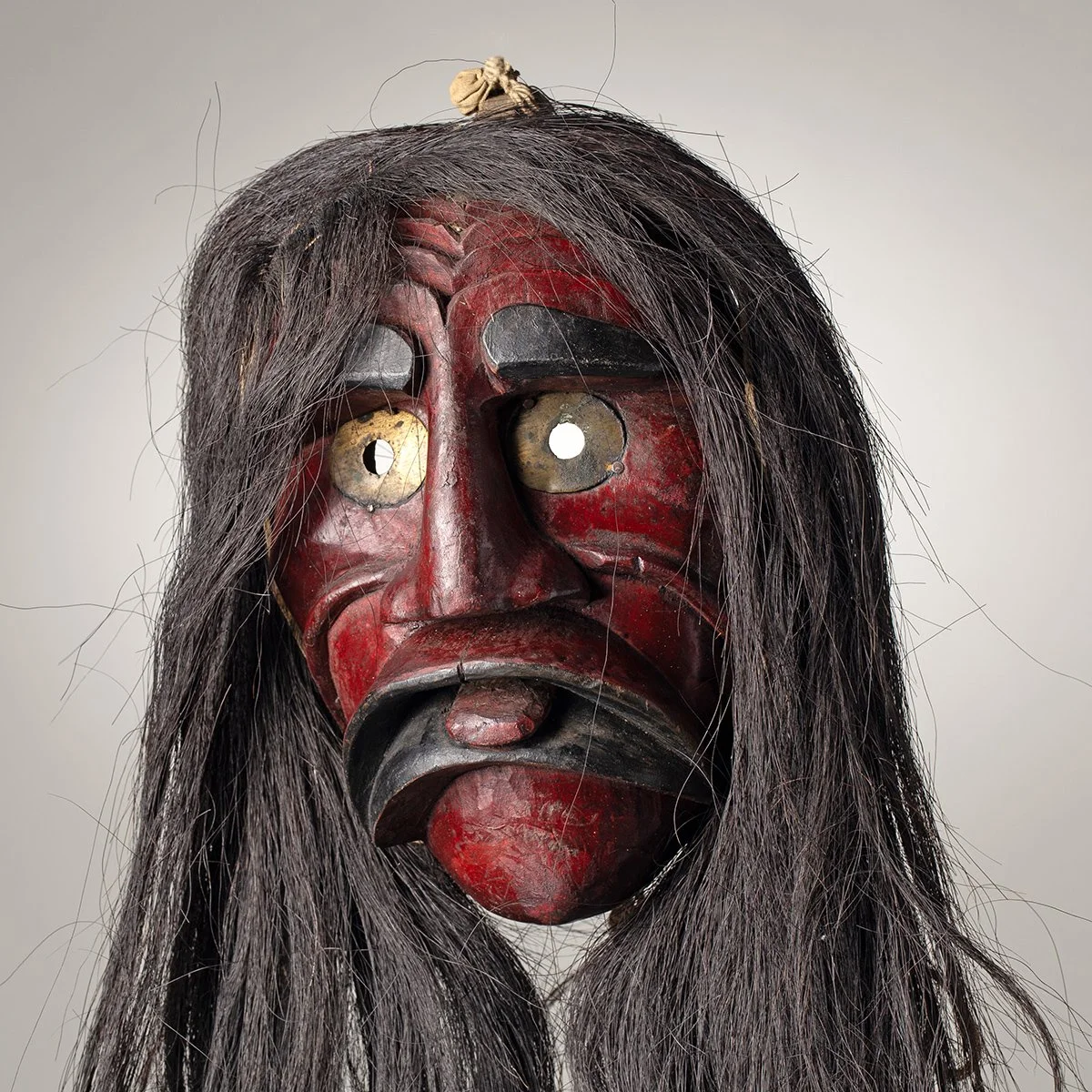 Image 1 of 9
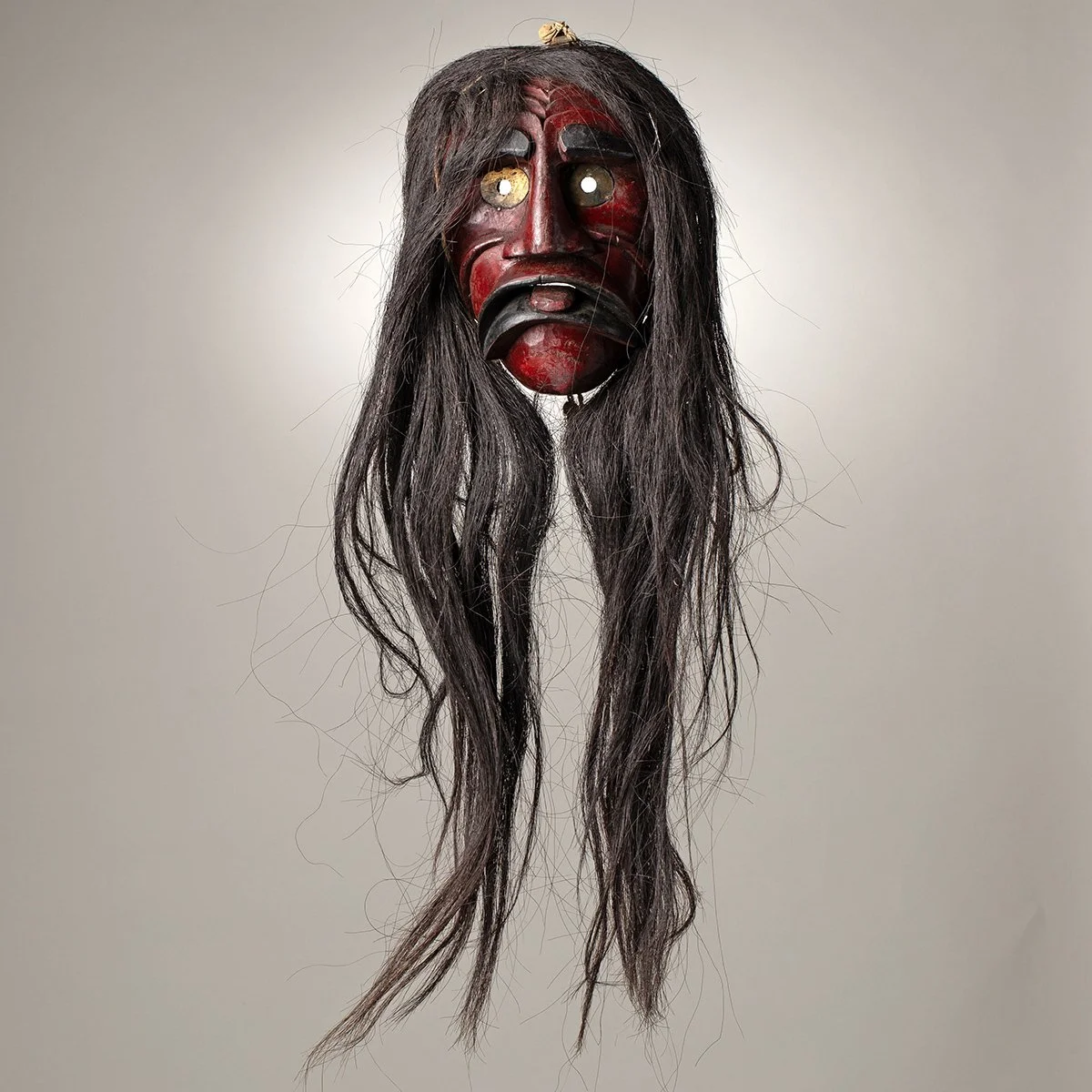 Image 2 of 9
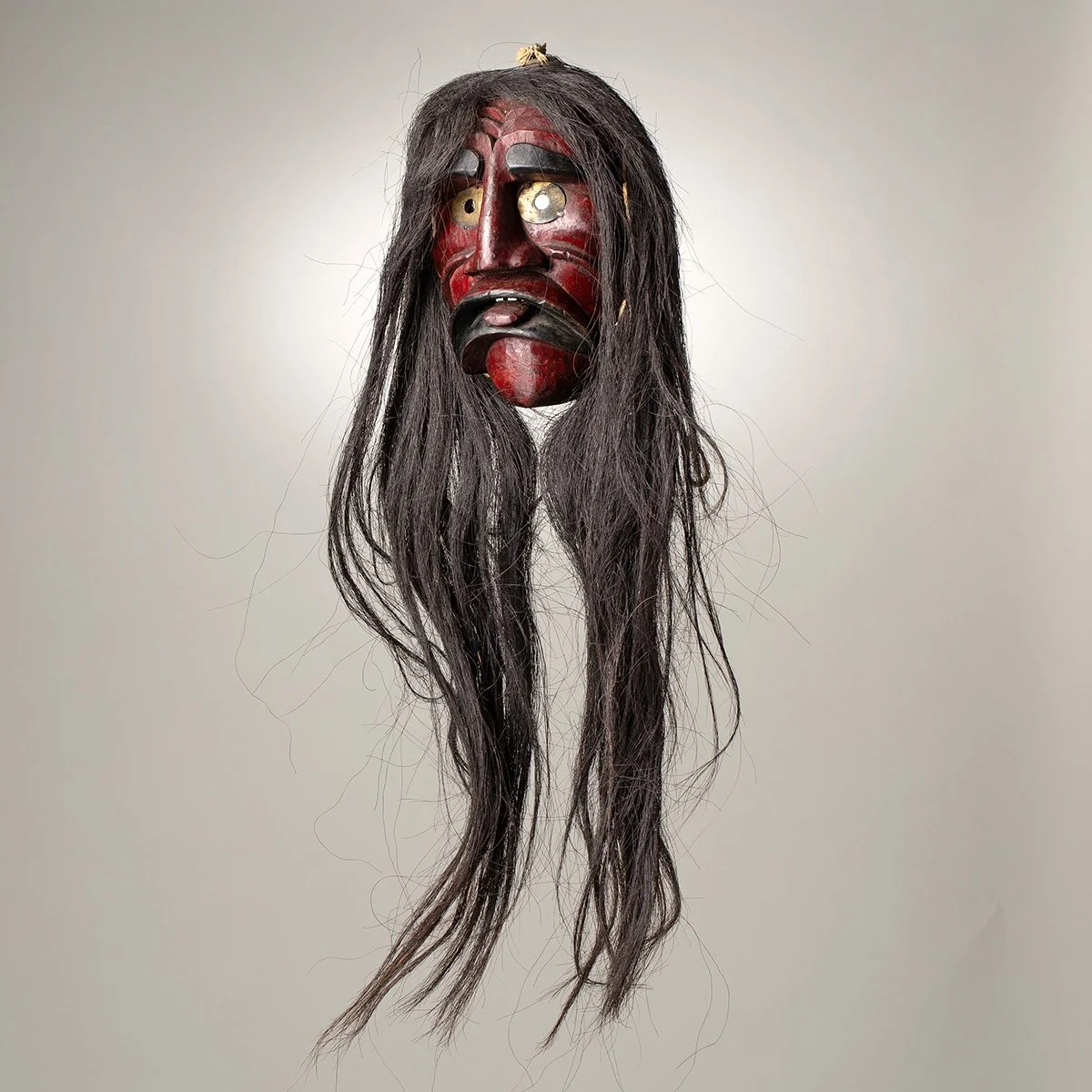 Image 3 of 9
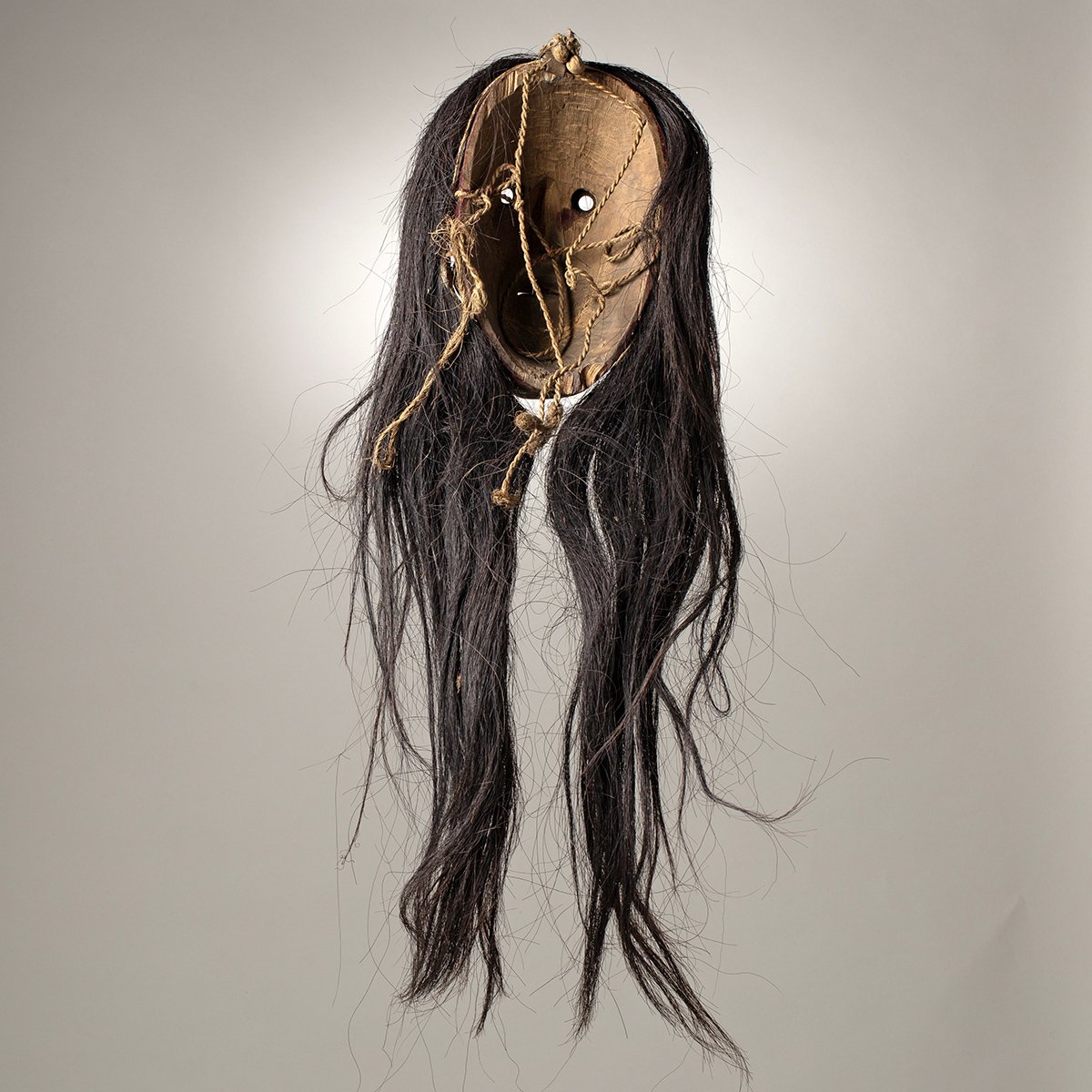 Image 4 of 9
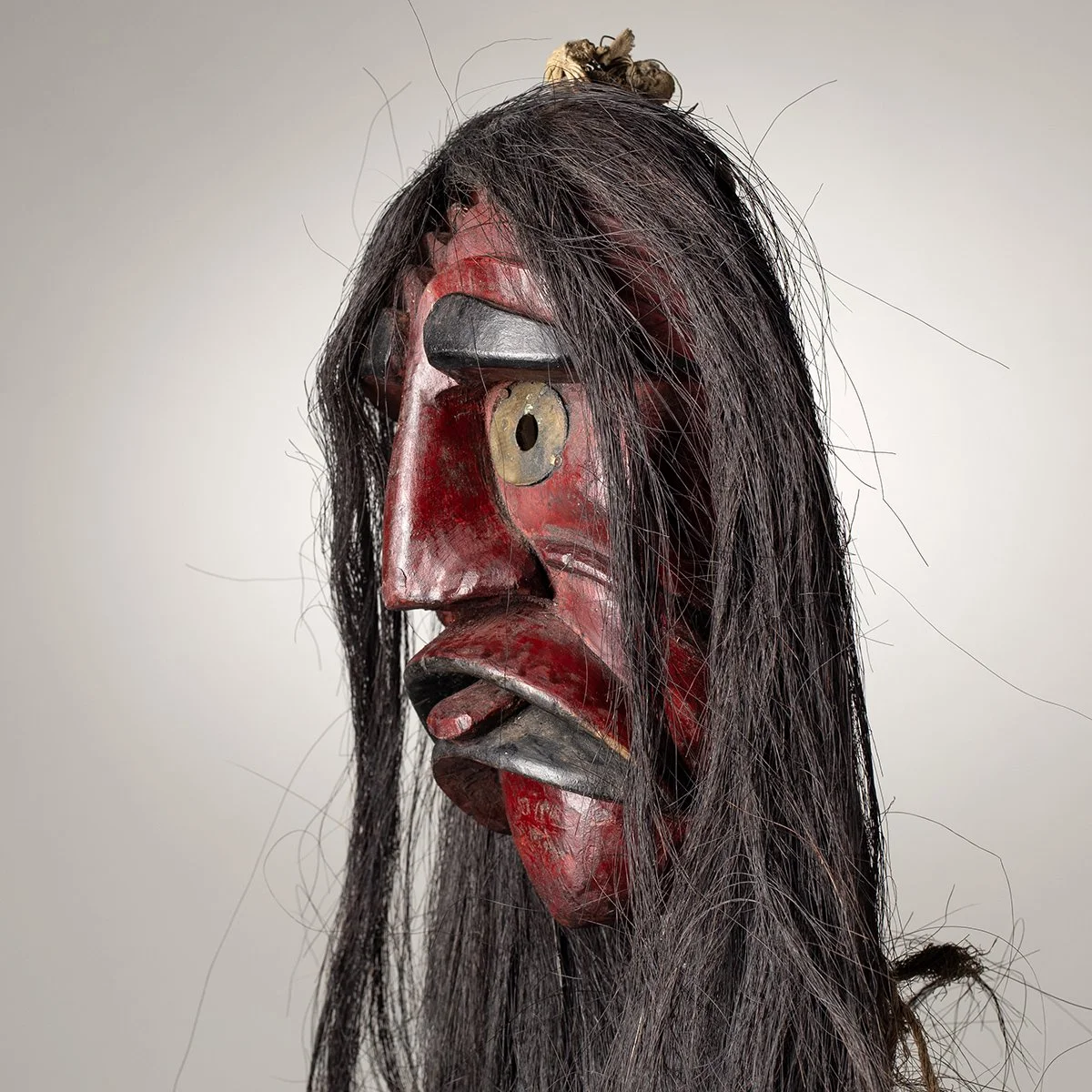 Image 5 of 9
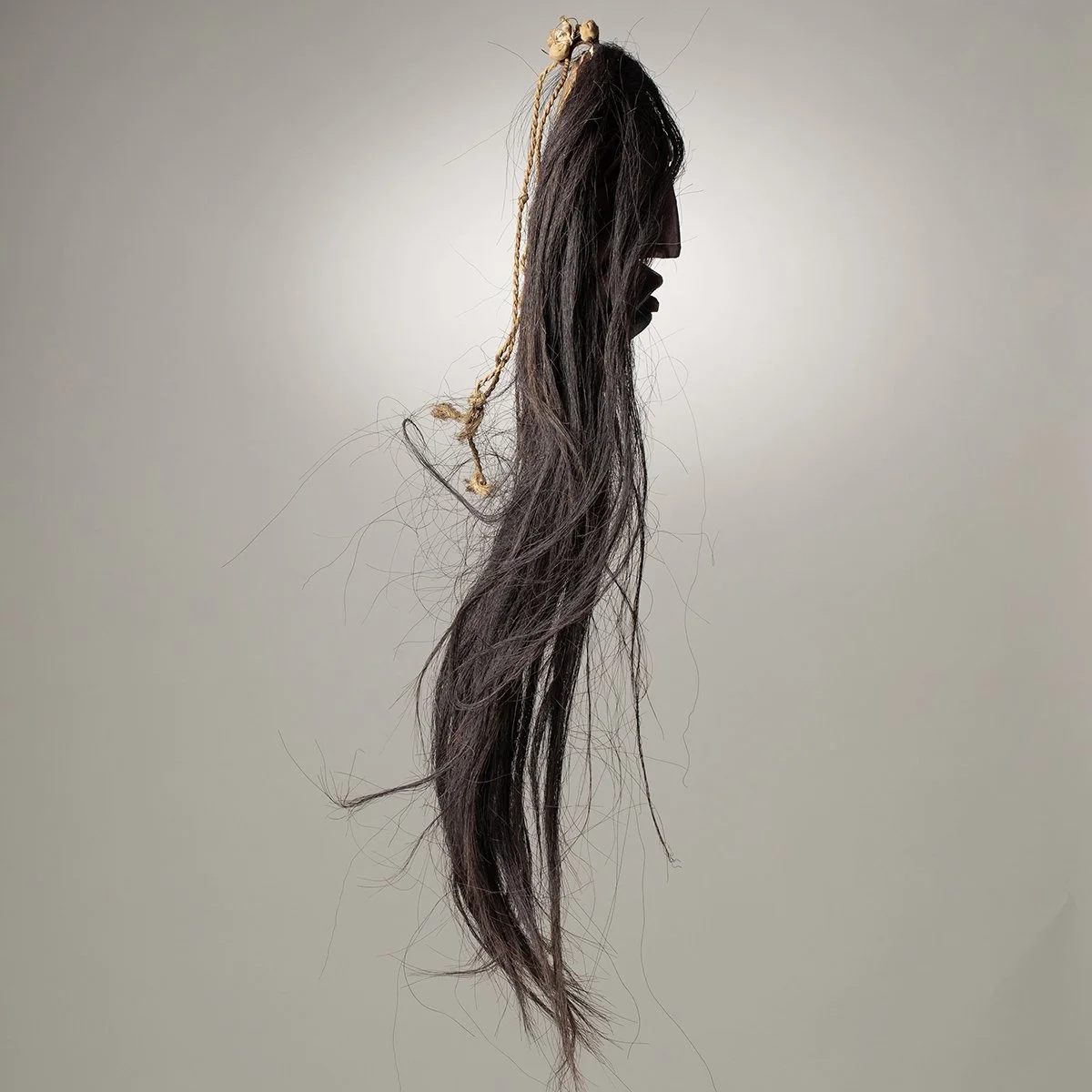 Image 6 of 9
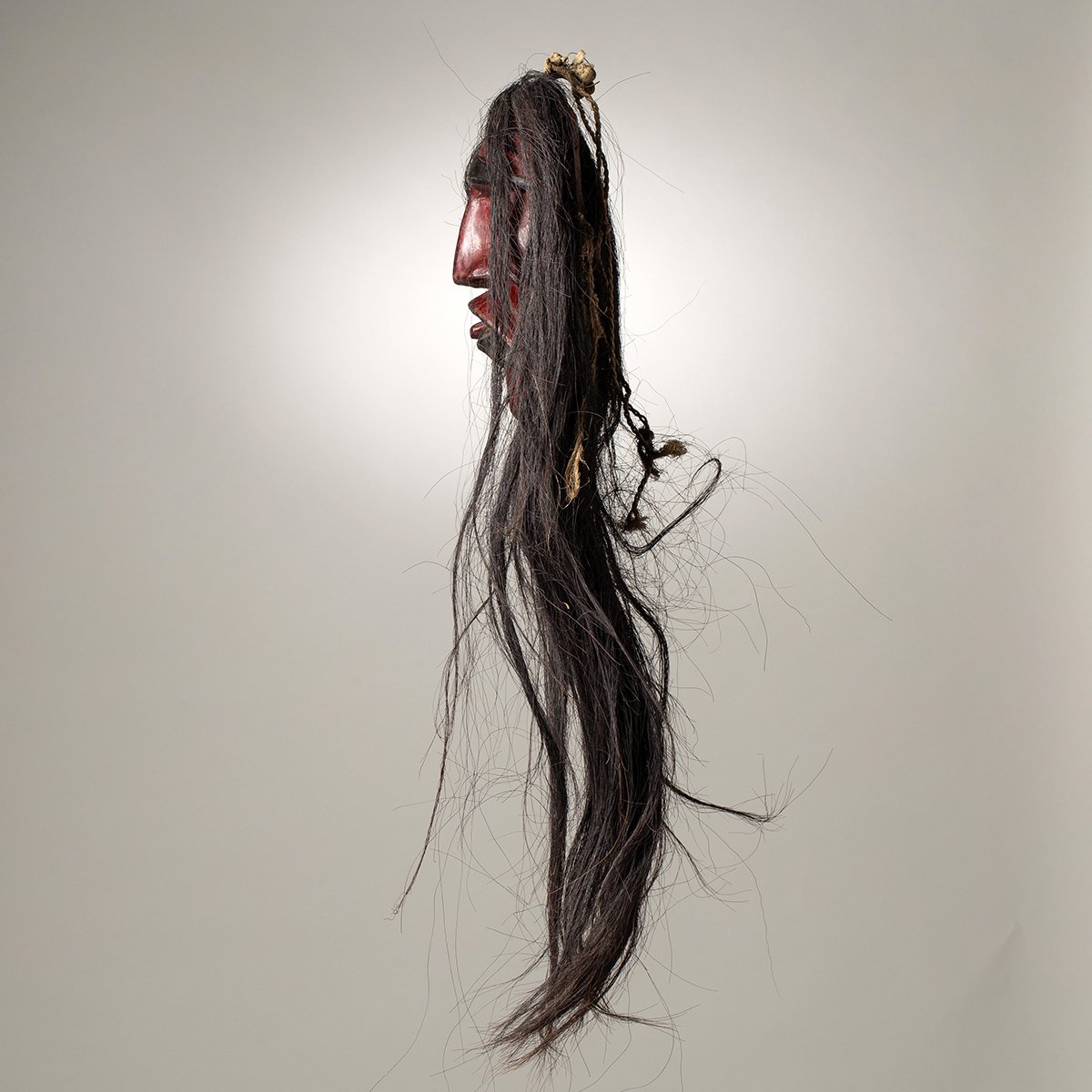 Image 7 of 9
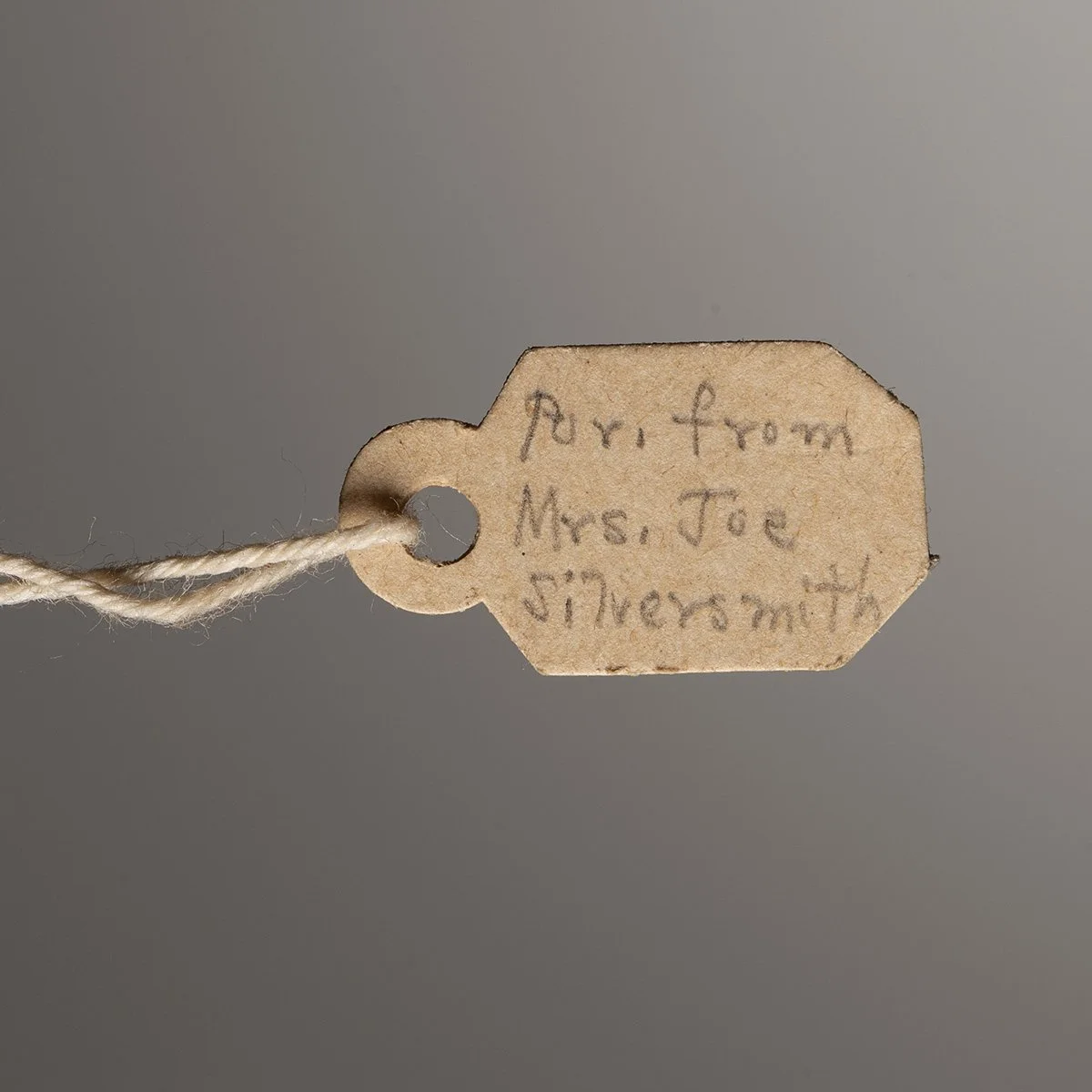 Image 8 of 9
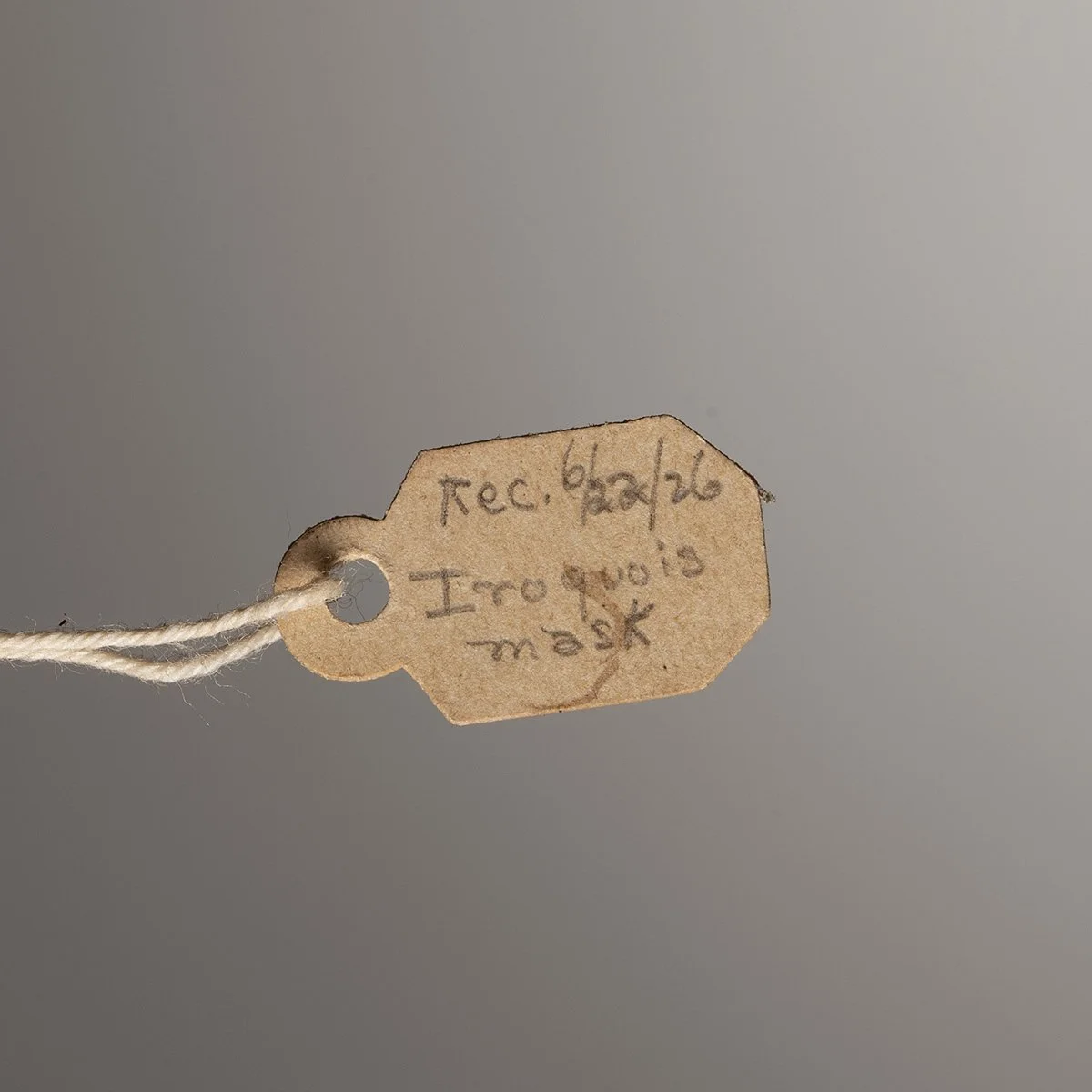 Image 9 of 9