

 Image 1 of 5
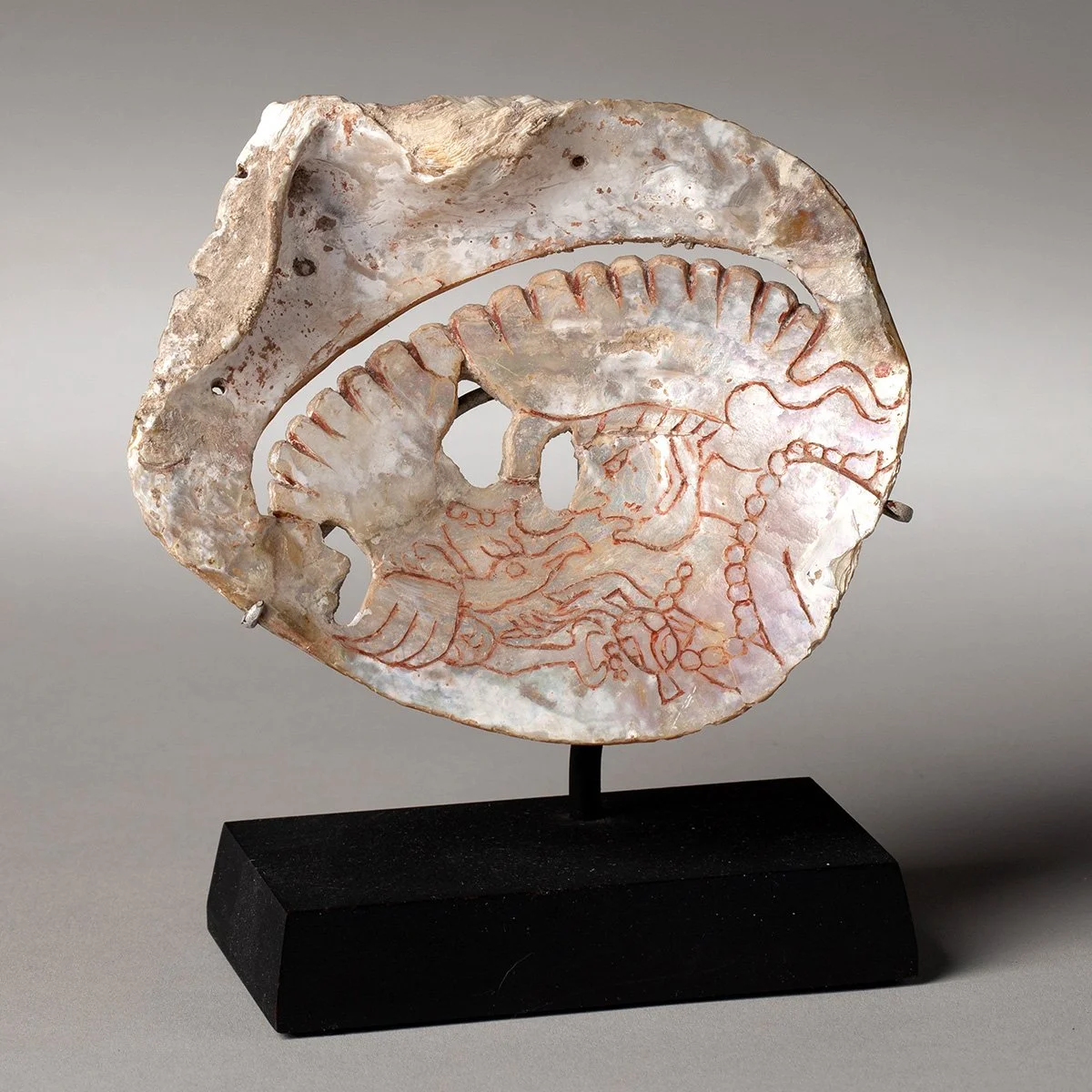 Image 2 of 5
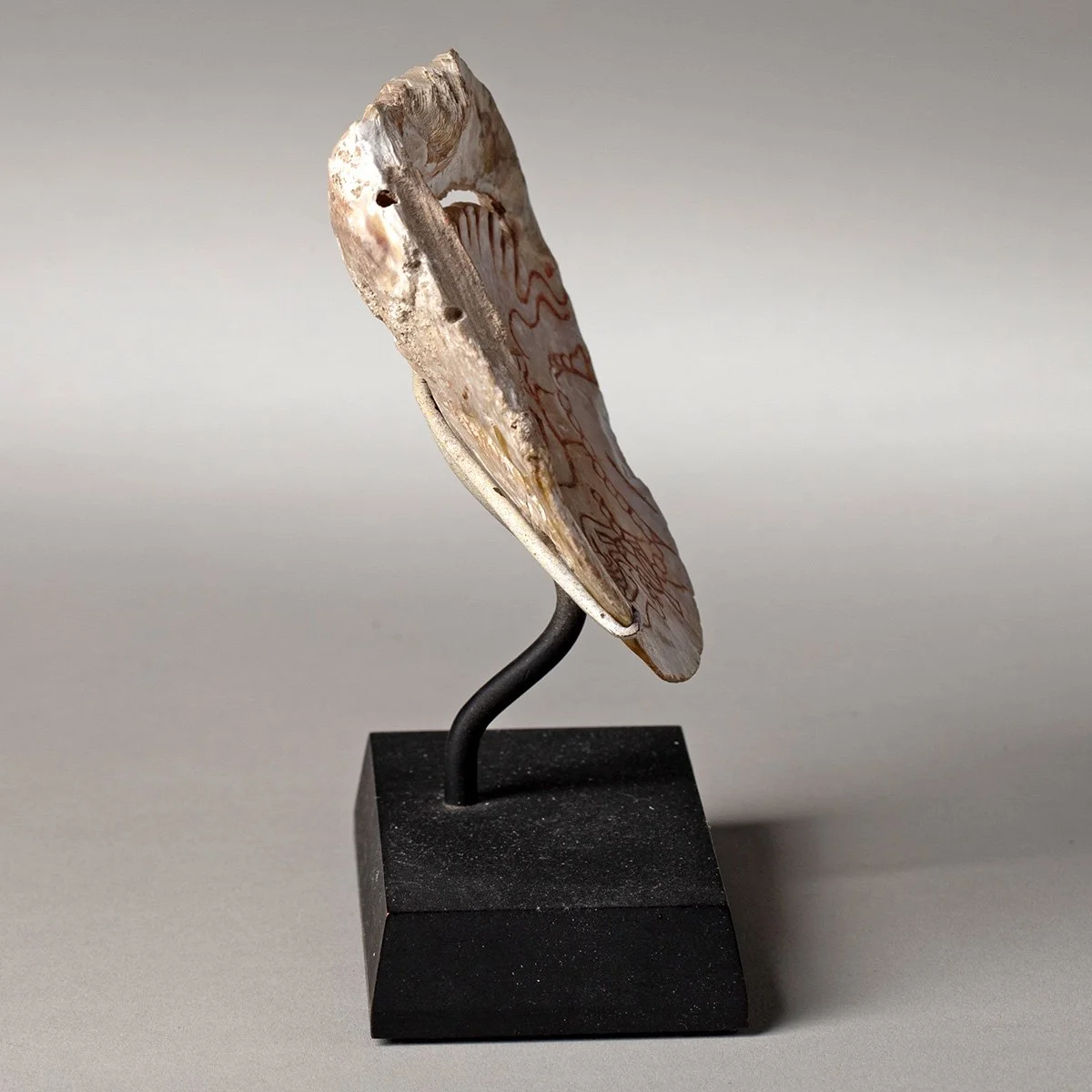 Image 3 of 5
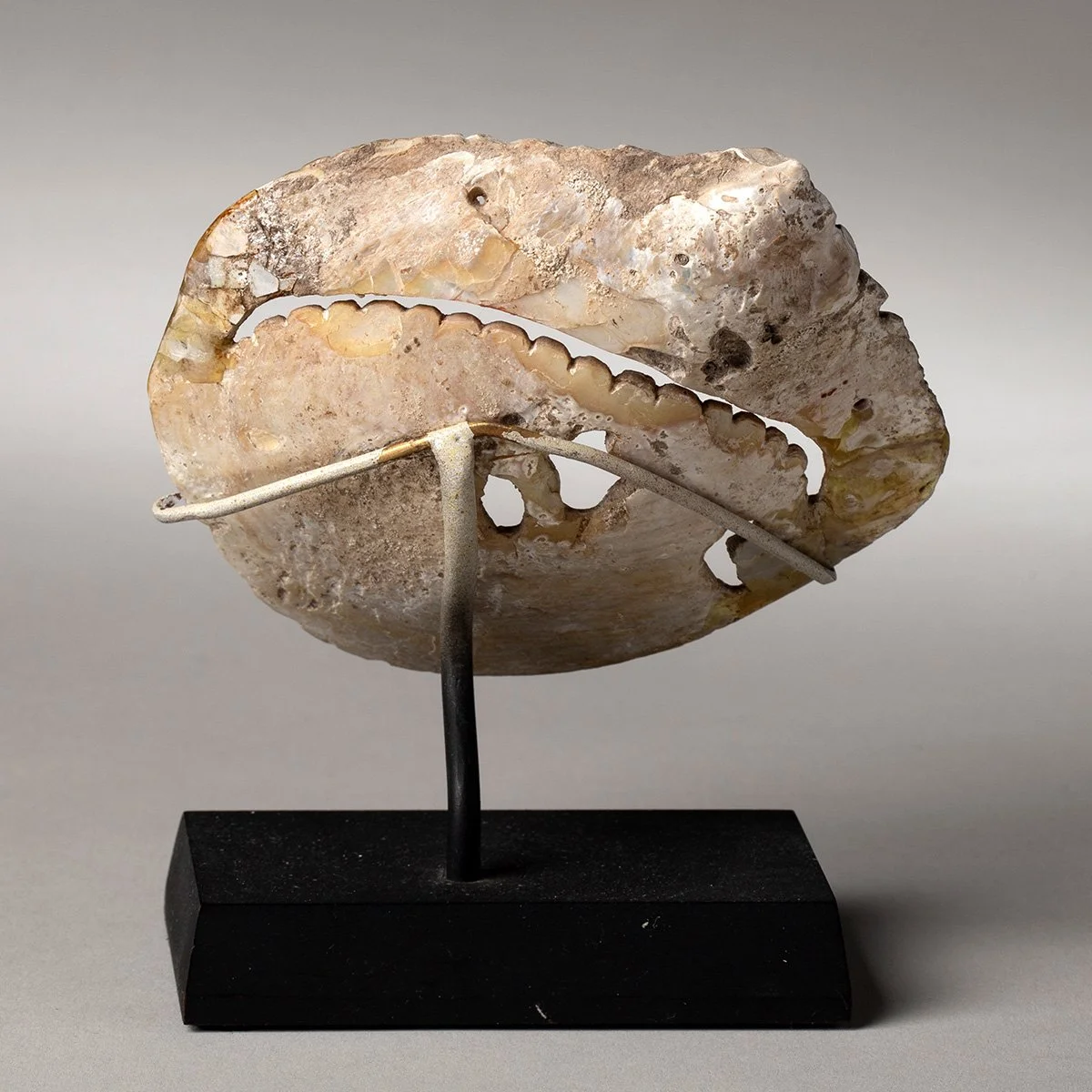 Image 4 of 5
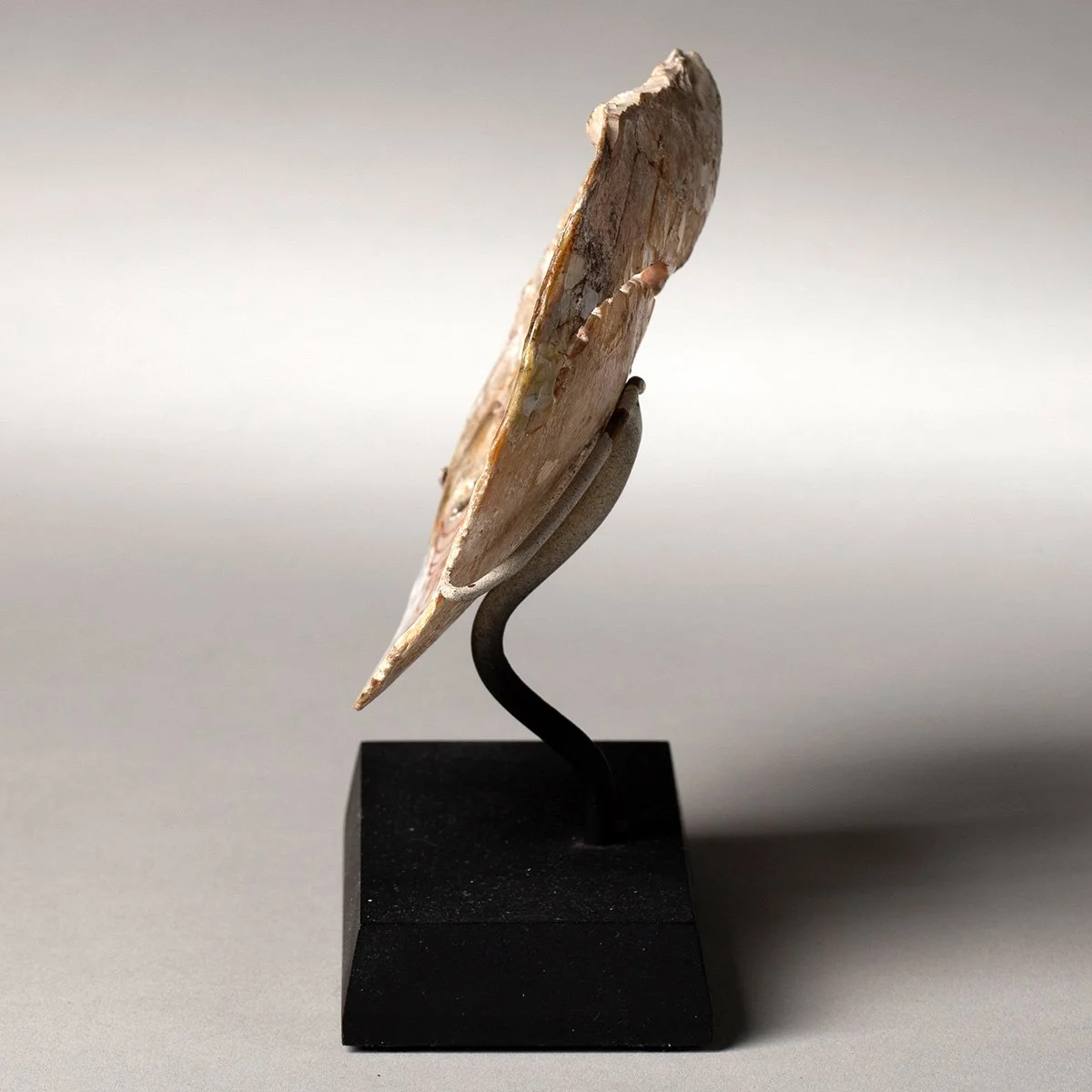 Image 5 of 5
Maya, Mesoamerica
Late Classic period, ca. 550–950 AD
Shell (haliotis) with red pigment
Diameter: 4¾ in (12.1 cm)
Provenance: Sotheby's, New York, November 1999, Lot 70; Private Collection, California
Cf. Easby & Scott (1970: fig. 197) for a comparable example in the Field Museum, Chicago
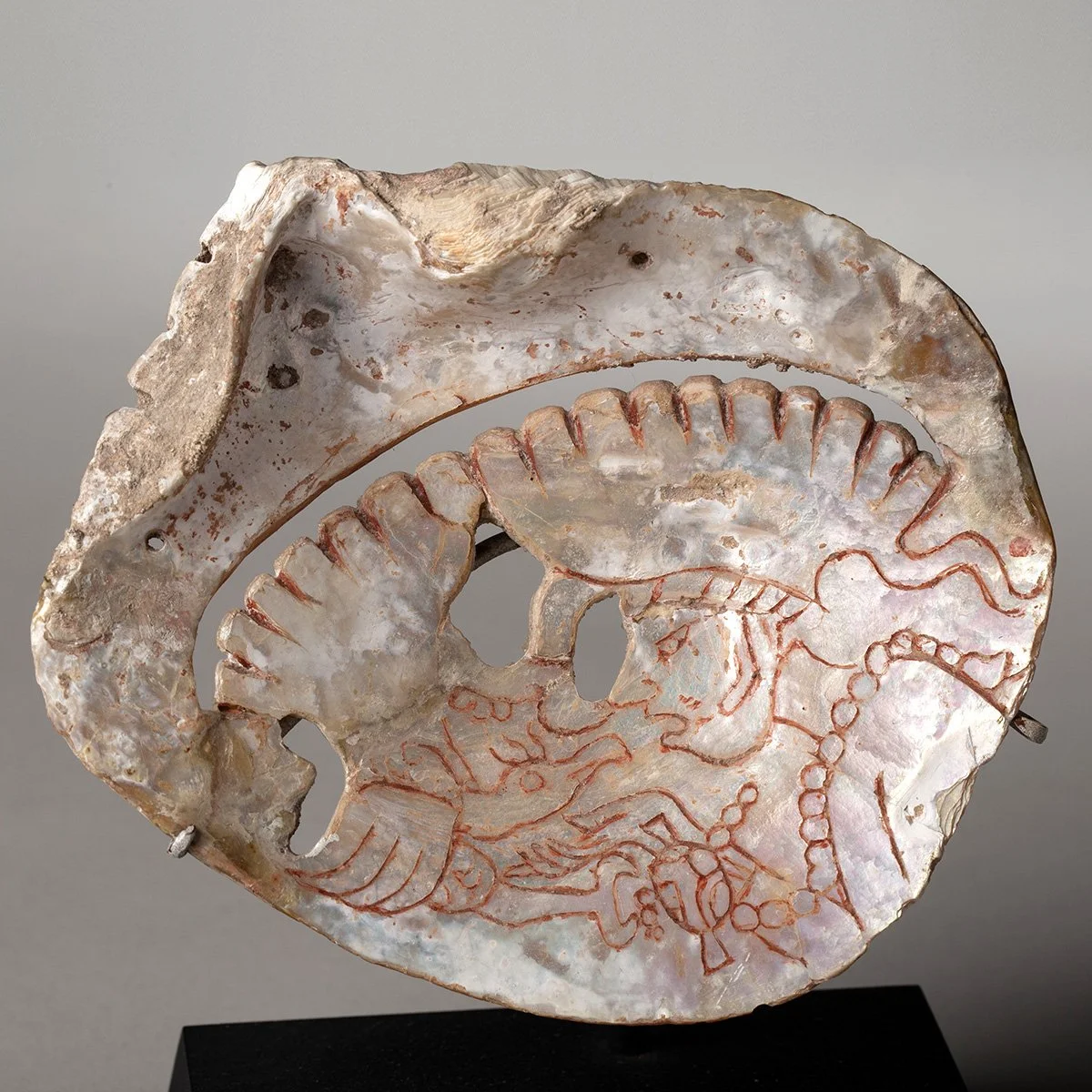
Incised shell ornaments were among the most valued prestige objects in Classic Maya society, combining the inherent rarity of marine shell with the skill of specialist carvers working in a material that required considerable technical control. Haliotis shell, with its natural iridescence, held particular significance in Mesoamerican ritual contexts, where its reflective surface was associated with water, the underworld, and transformation. Large circular pendants of this type were worn as pectoral ornaments by individuals of elevated rank, as documented in Maya monumental painting and sculpture.
This pendant is pierced in openwork design and incised with the profile of a figure wearing a beaded necklace and reaching toward a bird landing on the outstretched arm, a scene consistent with Late Classic Maya iconographic programs related to elite identity and the natural world. Red pigment accentuates the incised lines, heightening the visual contrast of the composition. The Sotheby's 1999 auction provenance and a comparable example published in the Field Museum collection place this pendant within a well-documented scholarly and market context.
We ship free anywhere in the world, fully insured, packed by hand.
Maya, Mesoamerica
Late Classic period, ca. 550–950 AD
Shell (haliotis) with red pigment
Diameter: 4¾ in (12.1 cm)
Provenance: Sotheby's, New York, November 1999, Lot 70; Private Collection, California
Cf. Easby & Scott (1970: fig. 197) for a comparable example in the Field Museum, Chicago
Incised shell ornaments were among the most valued prestige objects in Classic Maya society, combining the inherent rarity of marine shell with the skill of specialist carvers working in a material that required considerable technical control. Haliotis shell, with its natural iridescence, held particular significance in Mesoamerican ritual contexts, where its reflective surface was associated with water, the underworld, and transformation. Large circular pendants of this type were worn as pectoral ornaments by individuals of elevated rank, as documented in Maya monumental painting and sculpture.
This pendant is pierced in openwork design and incised with the profile of a figure wearing a beaded necklace and reaching toward a bird landing on the outstretched arm, a scene consistent with Late Classic Maya iconographic programs related to elite identity and the natural world. Red pigment accentuates the incised lines, heightening the visual contrast of the composition. The Sotheby's 1999 auction provenance and a comparable example published in the Field Museum collection place this pendant within a well-documented scholarly and market context.
We ship free anywhere in the world, fully insured, packed by hand.