Maya
Mesoamerica
200 BC to 200 AD
Alabaster with cinnabar
Height 7 inches, Width 5 inches
Provenance: Paul Scipione, Leominster, Massachusetts, collected 1950s; J. Martinez, San Diego, California
The mask is carved with a heavy brow, deep set eyes, pronounced cheekbones, and visible age lines around the mouth, giving the face an individualized, portrait like quality. The nose is broad and the lips are full, with a slight part suggesting an open mouth. A drilled hole is visible near the right temple, with a matching hole on the reverse side used for attachment.
The stone is a warm brown tone in reflected light, but glows a deep orange red when backlit, with the strongest concentration of color across the cheeks and nose, consistent with cinnabar staining in that area. Two conically drilled holes at the back of the head indicate the mask was designed to be affixed to a separate armature or bundle rather than worn directly. The piece was collected in the 1950s by Paul Scipione of Leominster, Massachusetts, and later held by J. Martinez of San Diego, California.
We ship free anywhere in the world, fully insured, packed by hand.
Maya
Mesoamerica
200 BC to 200 AD
Alabaster with cinnabar
Height 7 inches, Width 5 inches
Provenance: Paul Scipione, Leominster, Massachusetts, collected 1950s; J. Martinez, San Diego, California
The mask is carved with a heavy brow, deep set eyes, pronounced cheekbones, and visible age lines around the mouth, giving the face an individualized, portrait like quality. The nose is broad and the lips are full, with a slight part suggesting an open mouth. A drilled hole is visible near the right temple, with a matching hole on the reverse side used for attachment.
The stone is a warm brown tone in reflected light, but glows a deep orange red when backlit, with the strongest concentration of color across the cheeks and nose, consistent with cinnabar staining in that area. Two conically drilled holes at the back of the head indicate the mask was designed to be affixed to a separate armature or bundle rather than worn directly. The piece was collected in the 1950s by Paul Scipione of Leominster, Massachusetts, and later held by J. Martinez of San Diego, California.
We ship free anywhere in the world, fully insured, packed by hand.


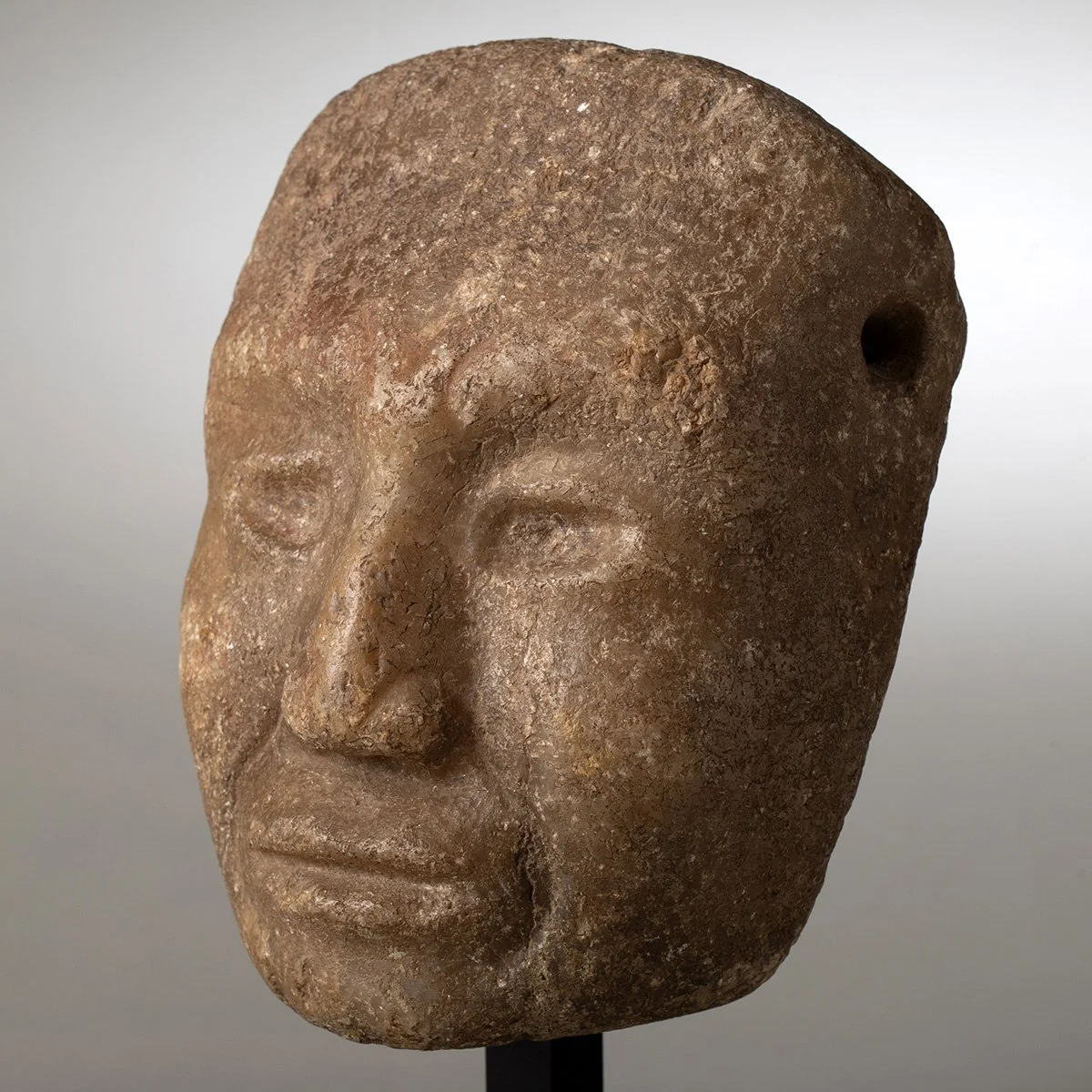 Image 1 of 7
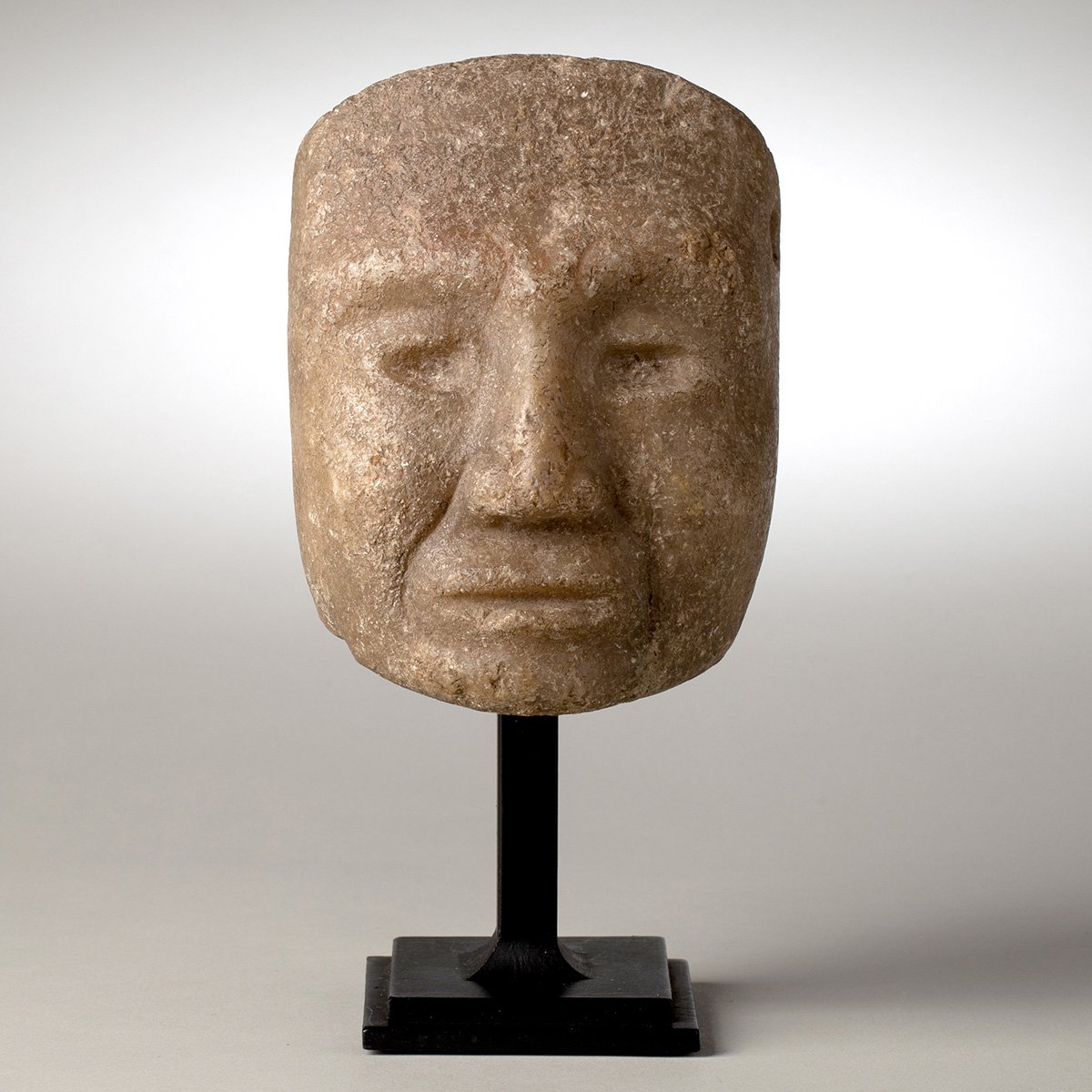 Image 2 of 7
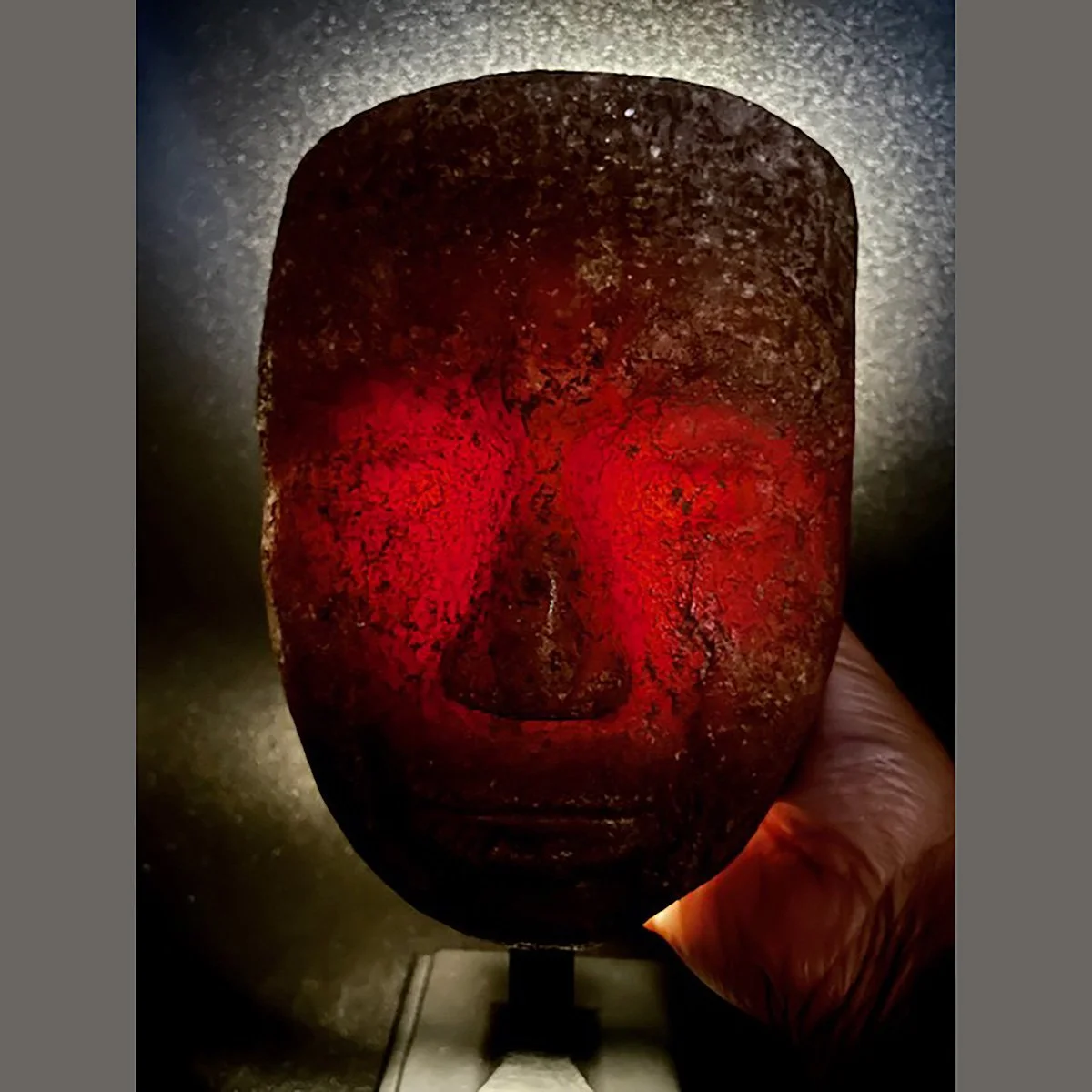 Image 3 of 7
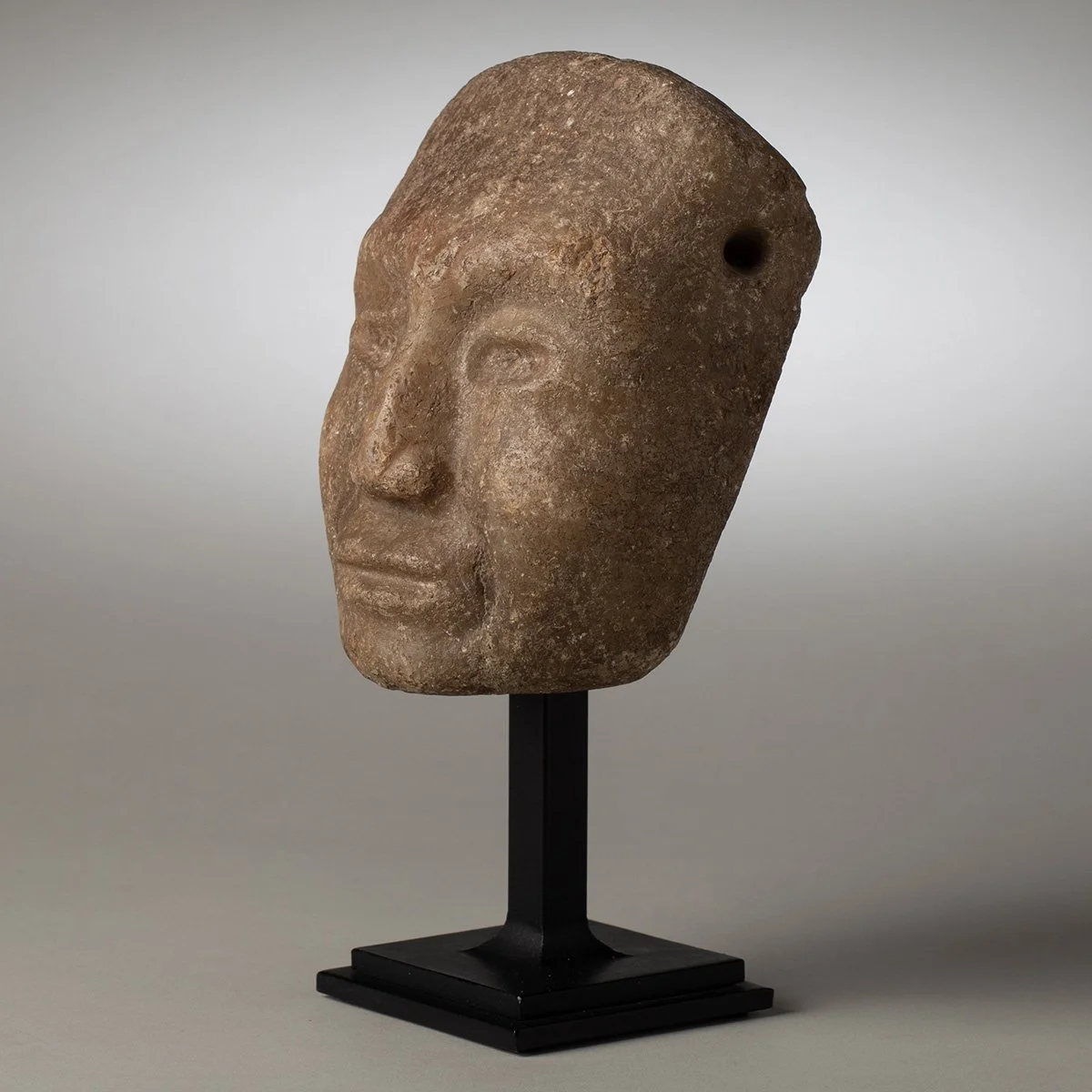 Image 4 of 7
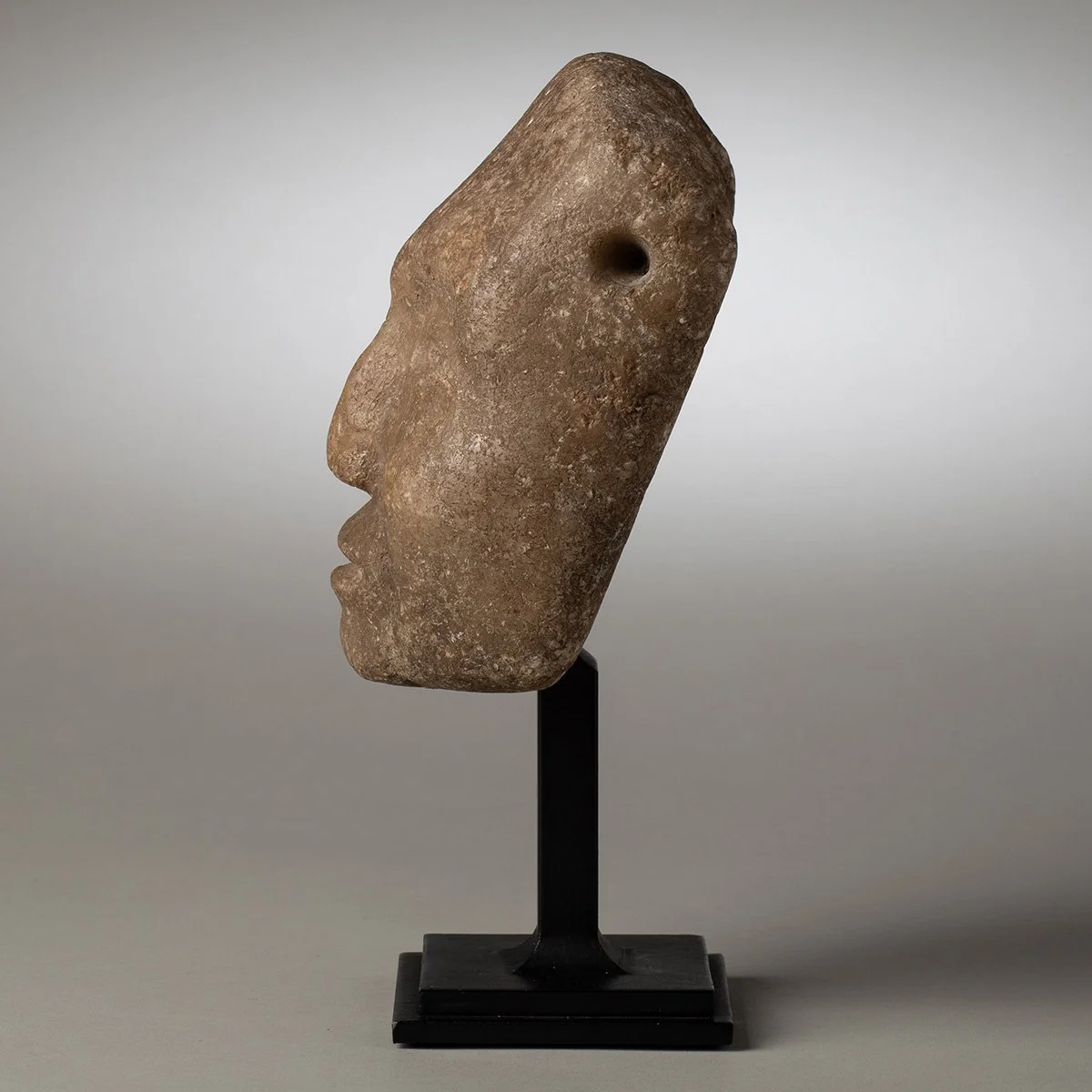 Image 5 of 7
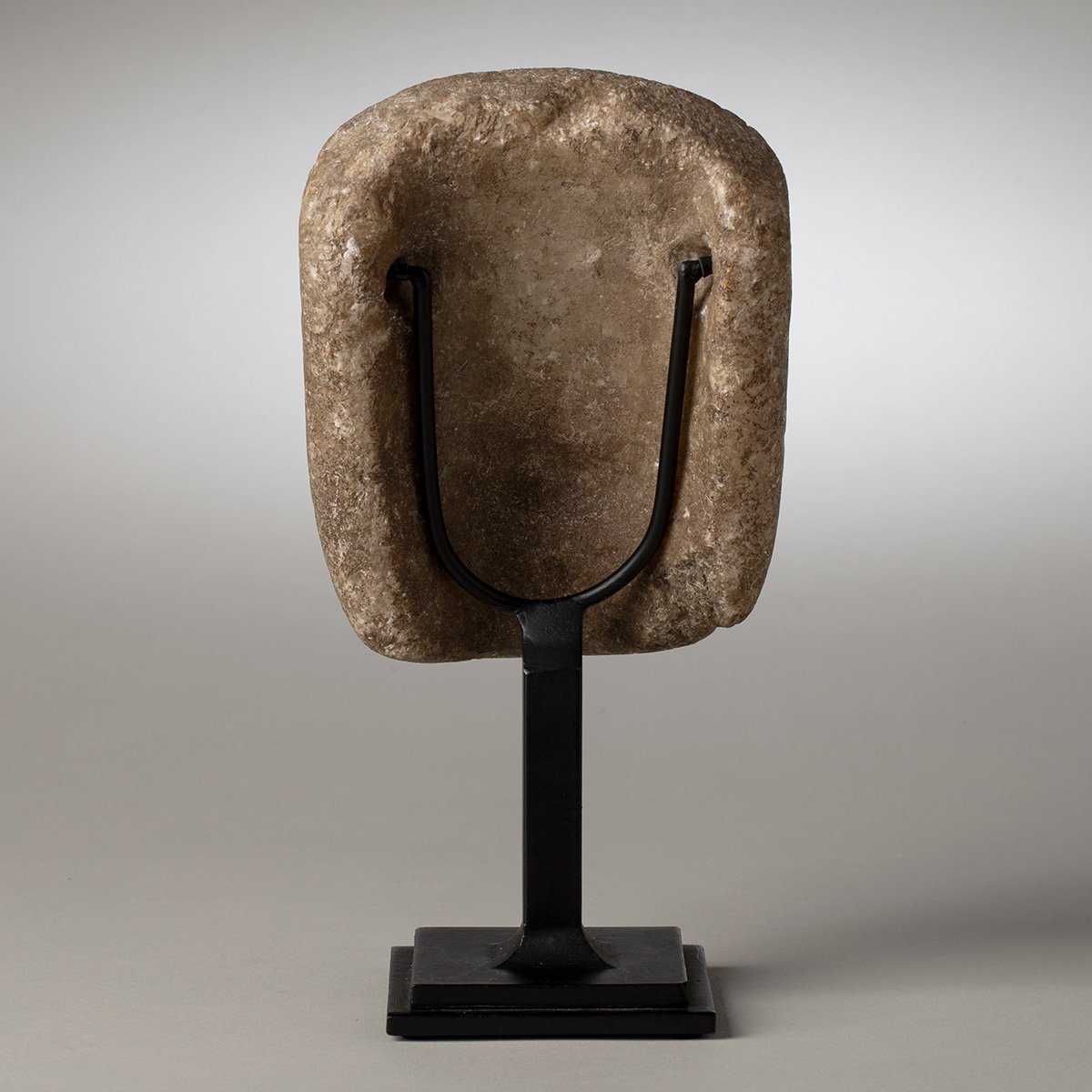 Image 6 of 7
 Image 7 of 7