

 Image 1 of 3
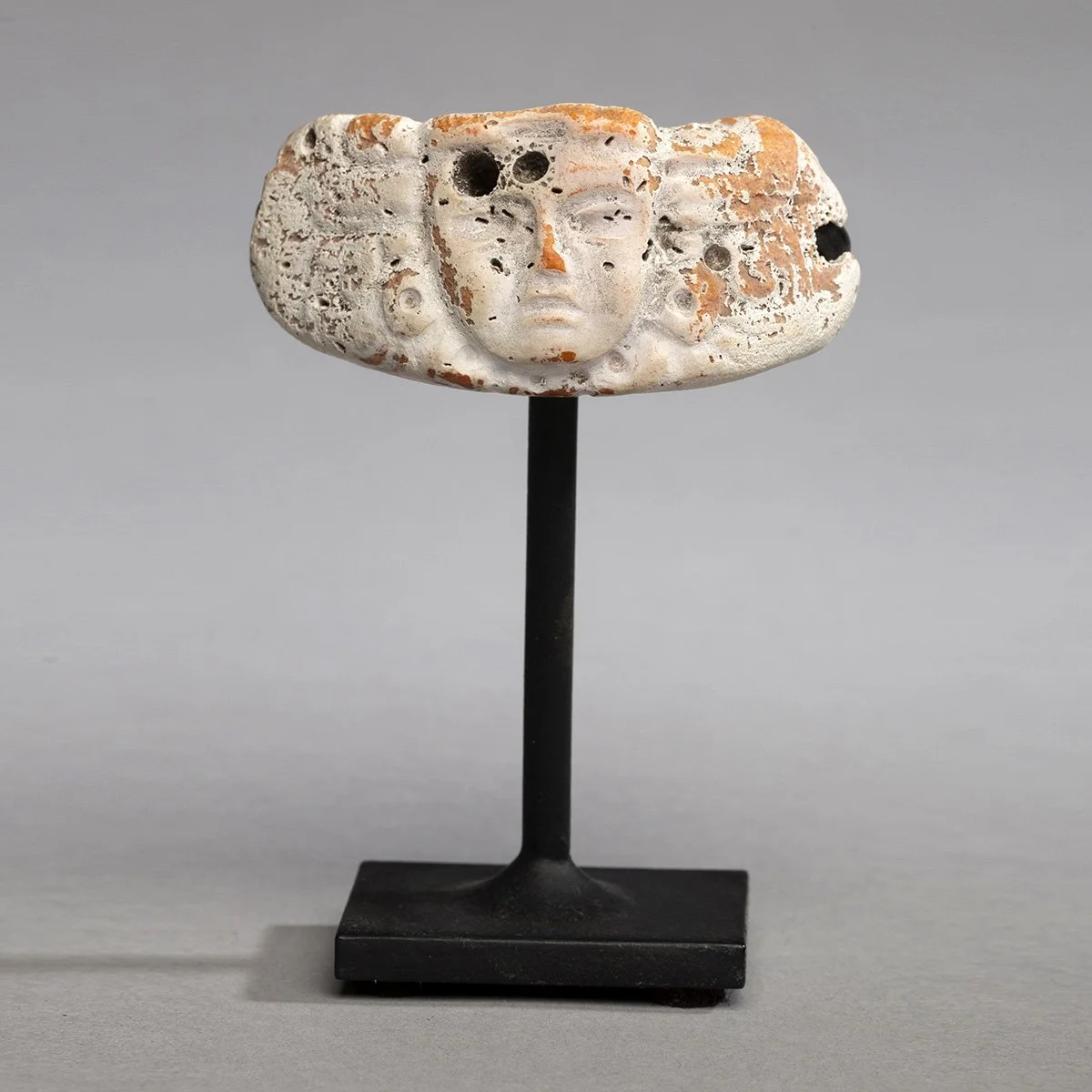 Image 2 of 3
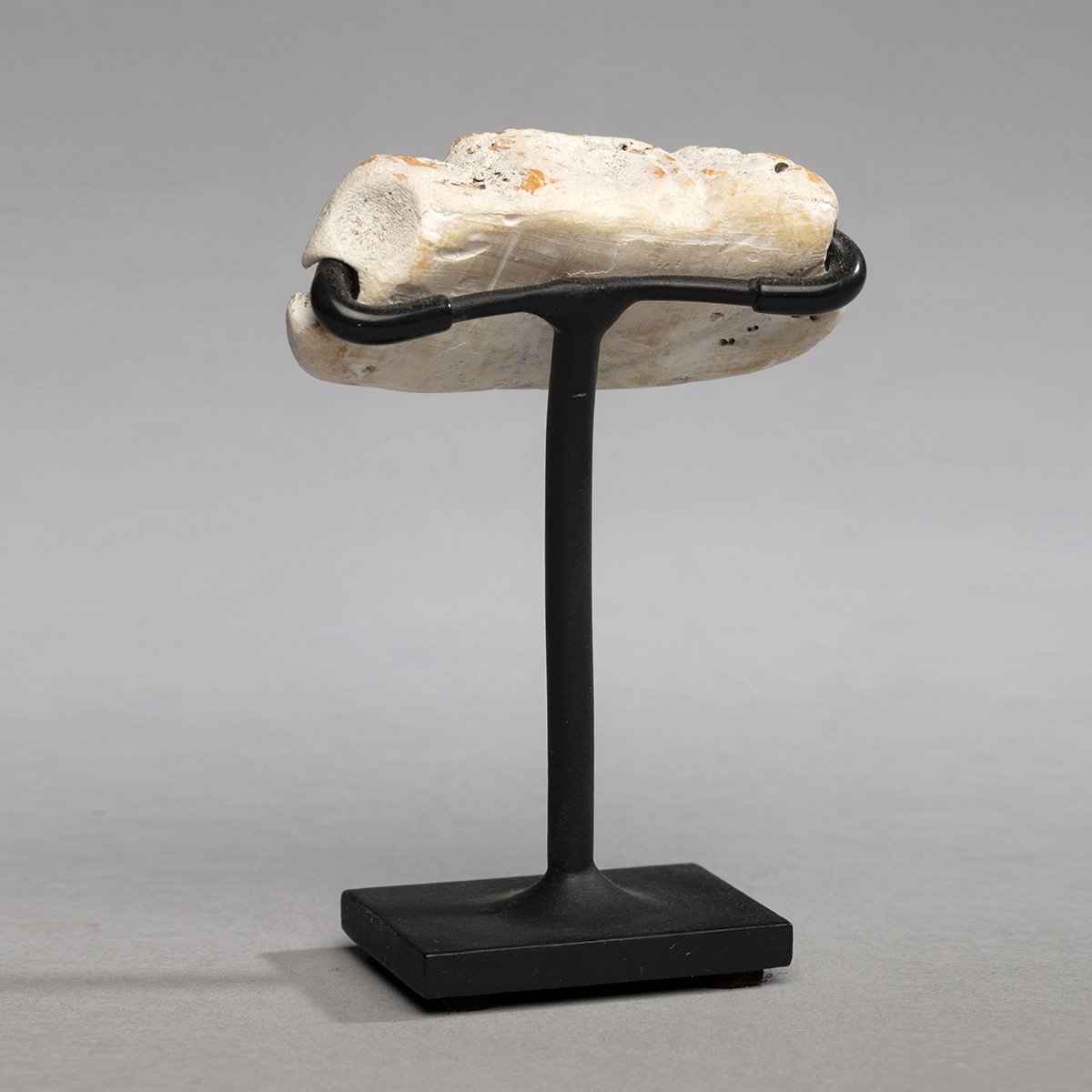 Image 3 of 3
Maya
Guatemala
600 to 800 AD, Classic period
Shell
Height 1.5 inches, Width 3.25 inches
Provenance: Ranching family, Guatemala, 1960; Art restorer, Smithsonian Institution, Washington, DC; Edgar Owen, Lake Hopatcong, New Jersey, acquired June 28, 2013; Private collection, Honolulu, Hawaii
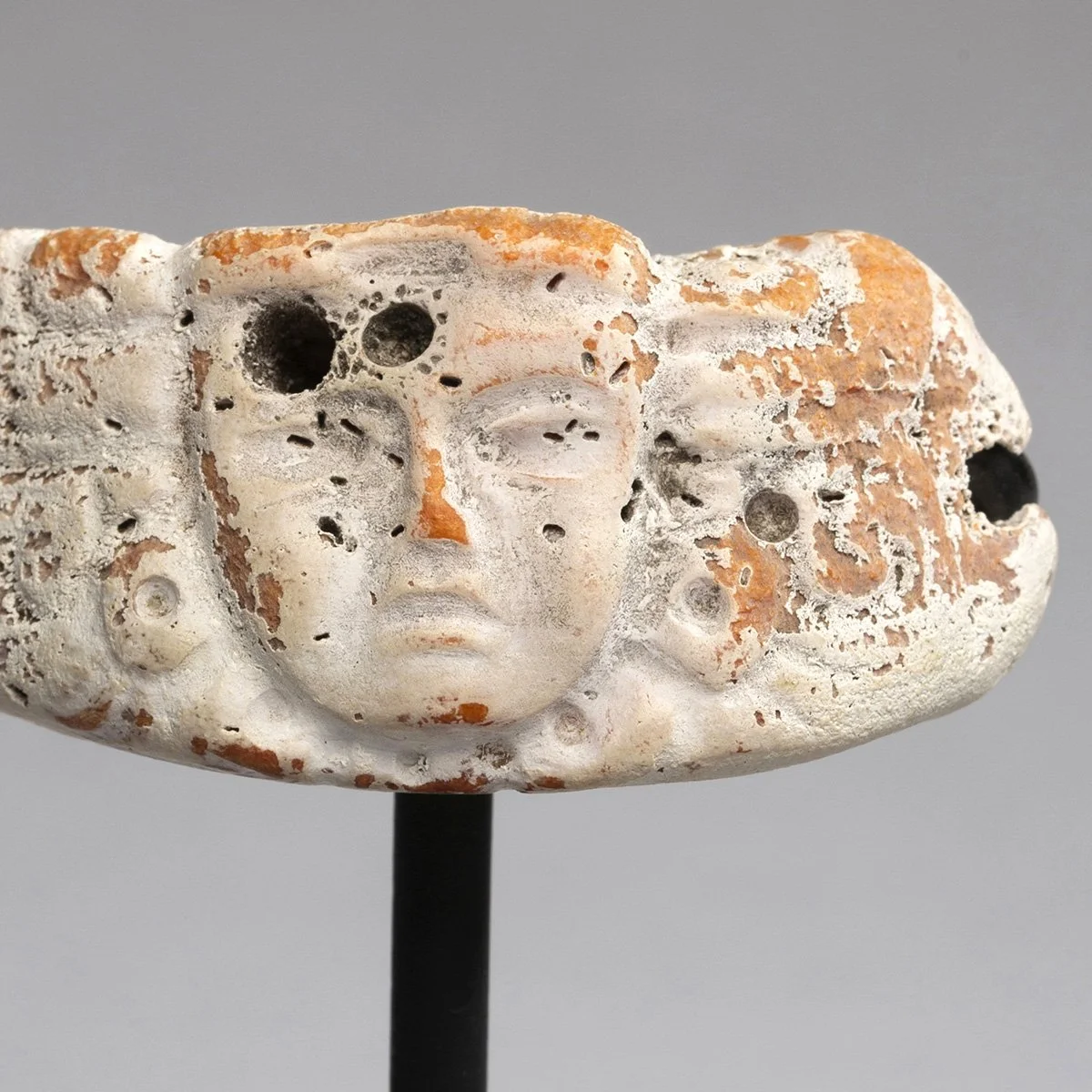
The pectoral is carved from a thick piece of shell, with a facing human head carved in low relief at the center, showing a nose, eyes, and mouth with traces of red pigment nearby. Scroll shaped carved elements flank the face on either side, possibly representing stylized ear ornaments. Numerous small holes are visible across the surface, some of which may be natural to the shell rather than deliberately carved.
The shell is thick and curved, following the natural form of the material, with a rough, weathered surface throughout. The piece traces through a documented ownership sequence beginning with a ranching family in Guatemala in 1960, followed by an art restorer at the Smithsonian Institution, then Edgar Owen of Lake Hopatcong, New Jersey, and a private collection in Honolulu. The 1960 Guatemala origin predates modern cultural property legislation.
We ship free anywhere in the world, fully insured, packed by hand.
Maya
Guatemala
600 to 800 AD, Classic period
Shell
Height 1.5 inches, Width 3.25 inches
Provenance: Ranching family, Guatemala, 1960; Art restorer, Smithsonian Institution, Washington, DC; Edgar Owen, Lake Hopatcong, New Jersey, acquired June 28, 2013; Private collection, Honolulu, Hawaii
The pectoral is carved from a thick piece of shell, with a facing human head carved in low relief at the center, showing a nose, eyes, and mouth with traces of red pigment nearby. Scroll shaped carved elements flank the face on either side, possibly representing stylized ear ornaments. Numerous small holes are visible across the surface, some of which may be natural to the shell rather than deliberately carved.
The shell is thick and curved, following the natural form of the material, with a rough, weathered surface throughout. The piece traces through a documented ownership sequence beginning with a ranching family in Guatemala in 1960, followed by an art restorer at the Smithsonian Institution, then Edgar Owen of Lake Hopatcong, New Jersey, and a private collection in Honolulu. The 1960 Guatemala origin predates modern cultural property legislation.
We ship free anywhere in the world, fully insured, packed by hand.