Maya, Mexico / Guatemala
AD 500 to 800
Stucco
Height 10 1/4" (26 cm); width 8" (20.3 cm)
Provenance: Andre Emmerich Gallery, New York; Maurice Alpert, Atlanta, Georgia, 1974, with copy of original purchase receipt; New York trade; accompanied by 1983 letter from Andre Emmerich confirming importation on or before April 24, 1972, prior to the UNESCO Convention on the Means of Prohibiting and Preventing the Illicit Import, Export and Transfer of Ownership of Cultural Property taking effect in the United States; Emmerich's letter states an estimated value of $15,000 to $25,000 at that time
Stucco for sculpture was used extensively throughout the Maya period in architectural decoration on temple facades, friezes, roof combs, and funerary structures, where modeled heads of deities, ancestors, and rulers were applied in relief or in the round. The material, a lime-based plaster applied over an armature, allowed Maya sculptors to achieve a range of surface detail and three-dimensional modeling not possible in the harder stones used for monumental carving. Heads of this type are a frequently encountered category of Maya portable sculpture in institutional and private collections.
The facial modeling of this example reflects the Maya convention of idealized portraiture, with careful articulation of the brow, eye sockets, and cheekbones characteristic of the period's sculptural production. At 10 1/4 inches in height the piece is at the larger end of the scale for portable stucco heads of this type, giving it a presence consistent with architectural rather than purely funerary use. The surface retains areas of original finish consistent with the documented age of the object.
The provenance documentation accompanying this head is unusually complete for a work of this period and type. The copy of the original 1974 purchase receipt from Maurice Alpert of Atlanta establishes an early documented acquisition, and the 1983 letter from Andre Emmerich of the Andre Emmerich Gallery confirms importation on or before April 24, 1972, establishing clear pre-Convention legal status. Emmerich's contemporaneous valuation of $15,000 to $25,000 in 1983 provides an additional historical market reference for the piece.
We ship free anywhere in the world, fully insured, packed by hand.
Maya, Mexico / Guatemala
AD 500 to 800
Stucco
Height 10 1/4" (26 cm); width 8" (20.3 cm)
Provenance: Andre Emmerich Gallery, New York; Maurice Alpert, Atlanta, Georgia, 1974, with copy of original purchase receipt; New York trade; accompanied by 1983 letter from Andre Emmerich confirming importation on or before April 24, 1972, prior to the UNESCO Convention on the Means of Prohibiting and Preventing the Illicit Import, Export and Transfer of Ownership of Cultural Property taking effect in the United States; Emmerich's letter states an estimated value of $15,000 to $25,000 at that time
Stucco for sculpture was used extensively throughout the Maya period in architectural decoration on temple facades, friezes, roof combs, and funerary structures, where modeled heads of deities, ancestors, and rulers were applied in relief or in the round. The material, a lime-based plaster applied over an armature, allowed Maya sculptors to achieve a range of surface detail and three-dimensional modeling not possible in the harder stones used for monumental carving. Heads of this type are a frequently encountered category of Maya portable sculpture in institutional and private collections.
The facial modeling of this example reflects the Maya convention of idealized portraiture, with careful articulation of the brow, eye sockets, and cheekbones characteristic of the period's sculptural production. At 10 1/4 inches in height the piece is at the larger end of the scale for portable stucco heads of this type, giving it a presence consistent with architectural rather than purely funerary use. The surface retains areas of original finish consistent with the documented age of the object.
The provenance documentation accompanying this head is unusually complete for a work of this period and type. The copy of the original 1974 purchase receipt from Maurice Alpert of Atlanta establishes an early documented acquisition, and the 1983 letter from Andre Emmerich of the Andre Emmerich Gallery confirms importation on or before April 24, 1972, establishing clear pre-Convention legal status. Emmerich's contemporaneous valuation of $15,000 to $25,000 in 1983 provides an additional historical market reference for the piece.
We ship free anywhere in the world, fully insured, packed by hand.


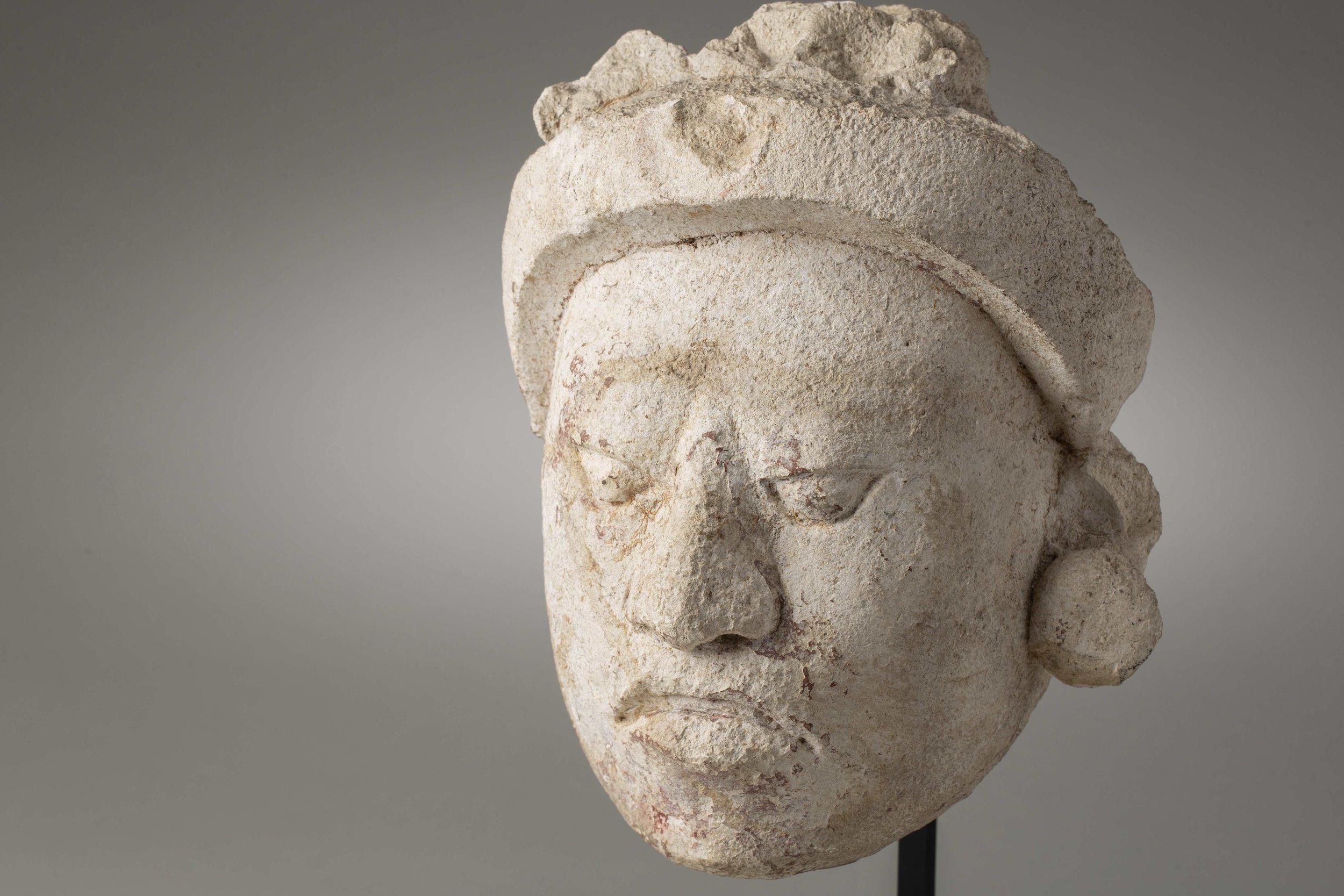 Image 1 of 6
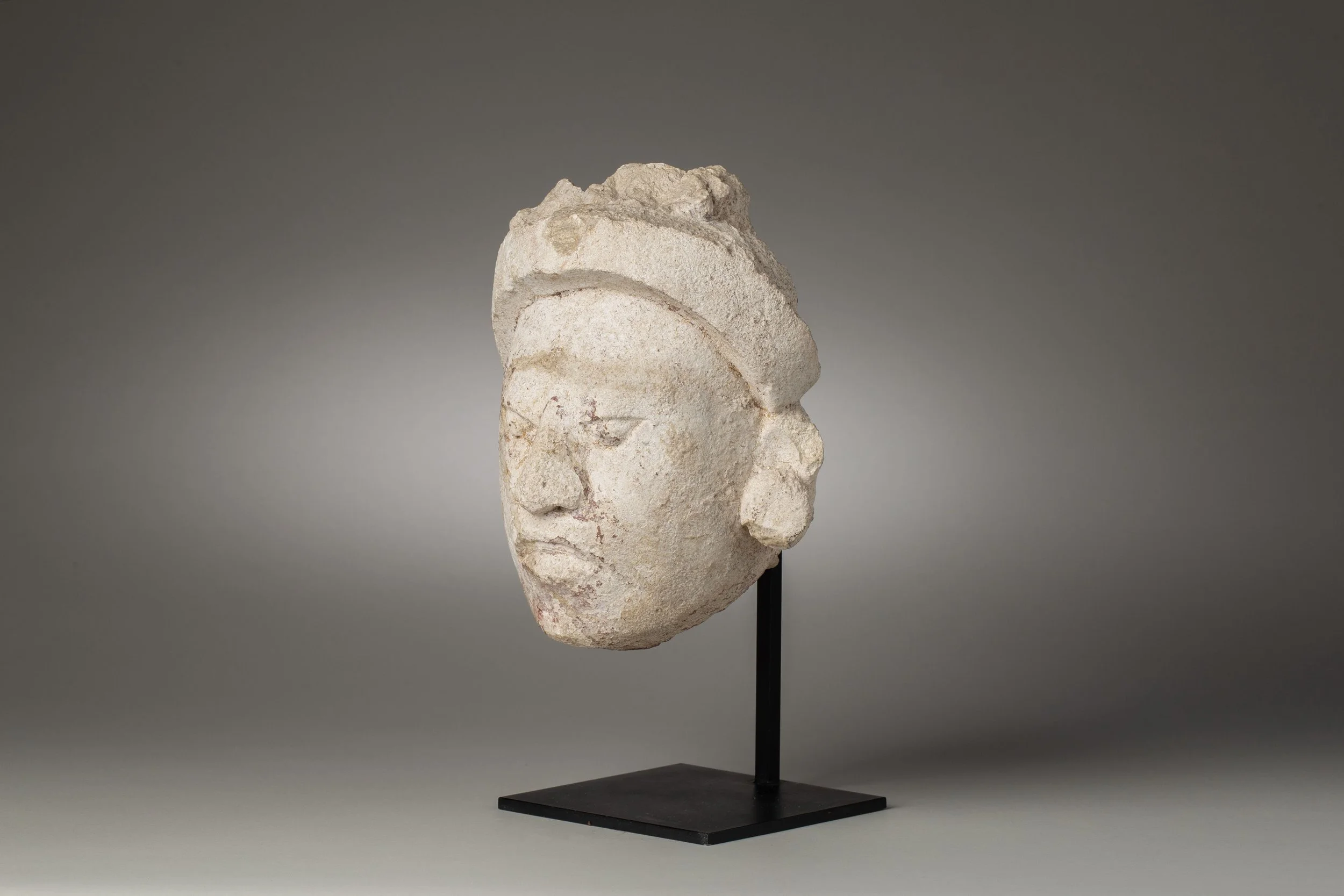 Image 2 of 6
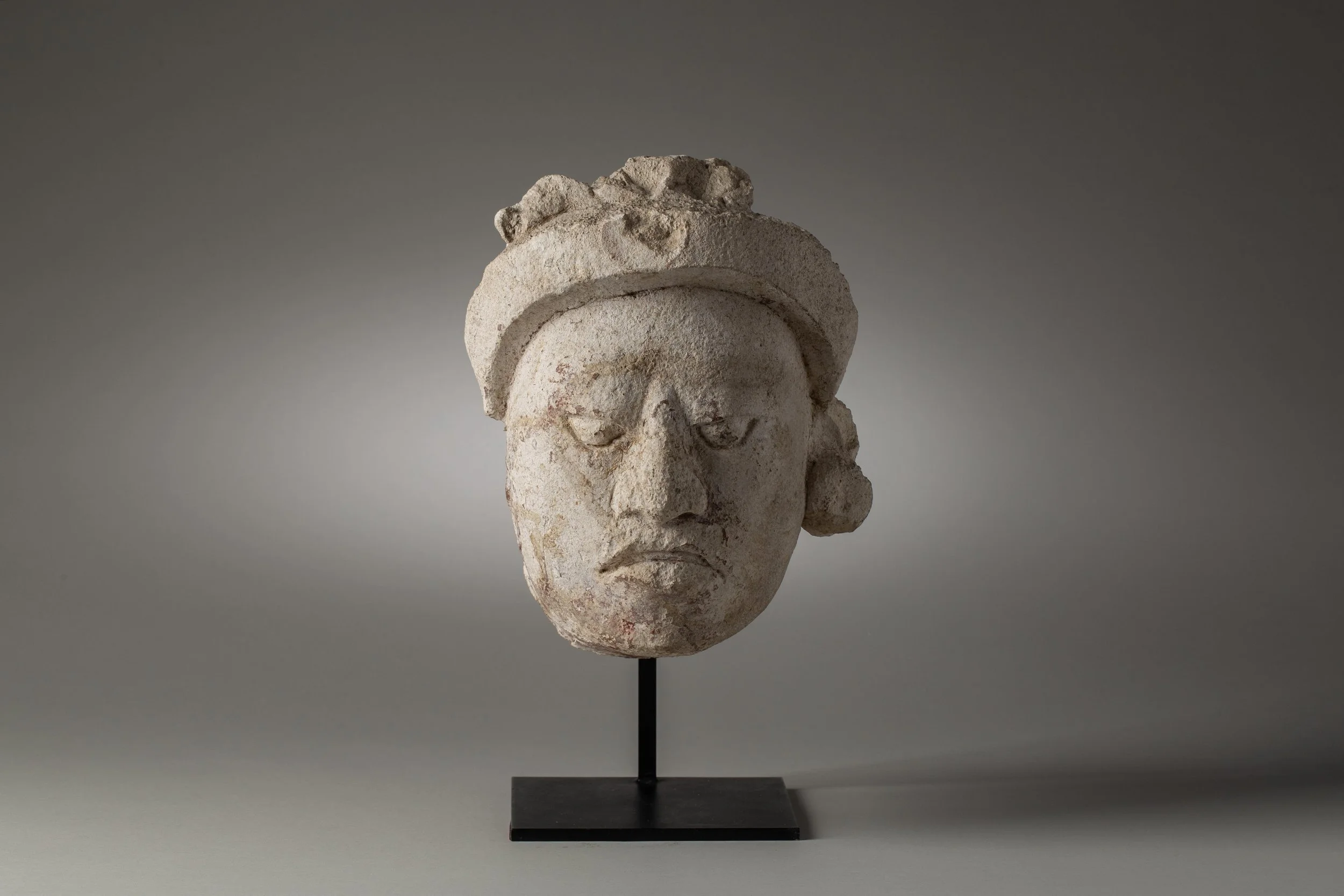 Image 3 of 6
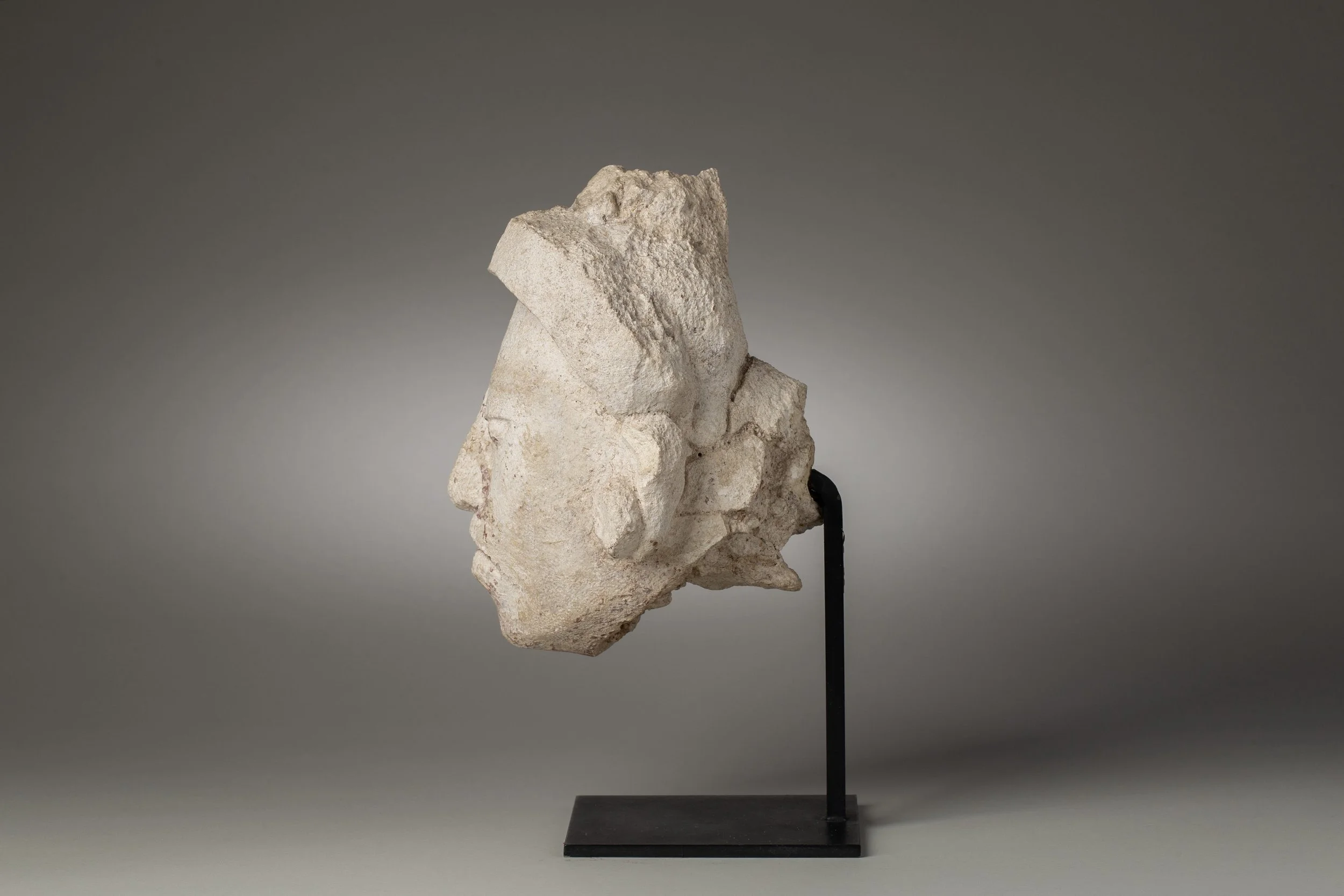 Image 4 of 6
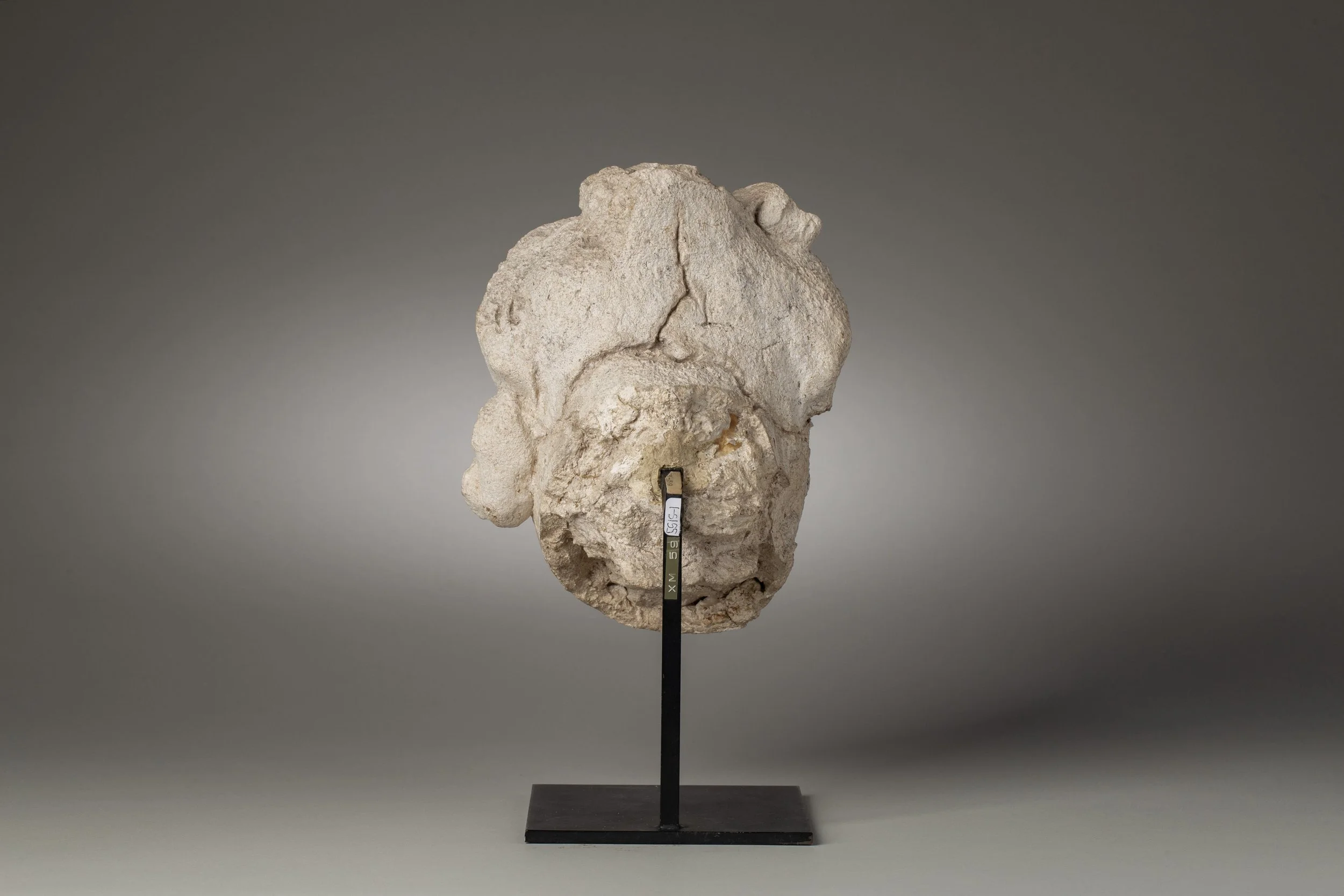 Image 5 of 6
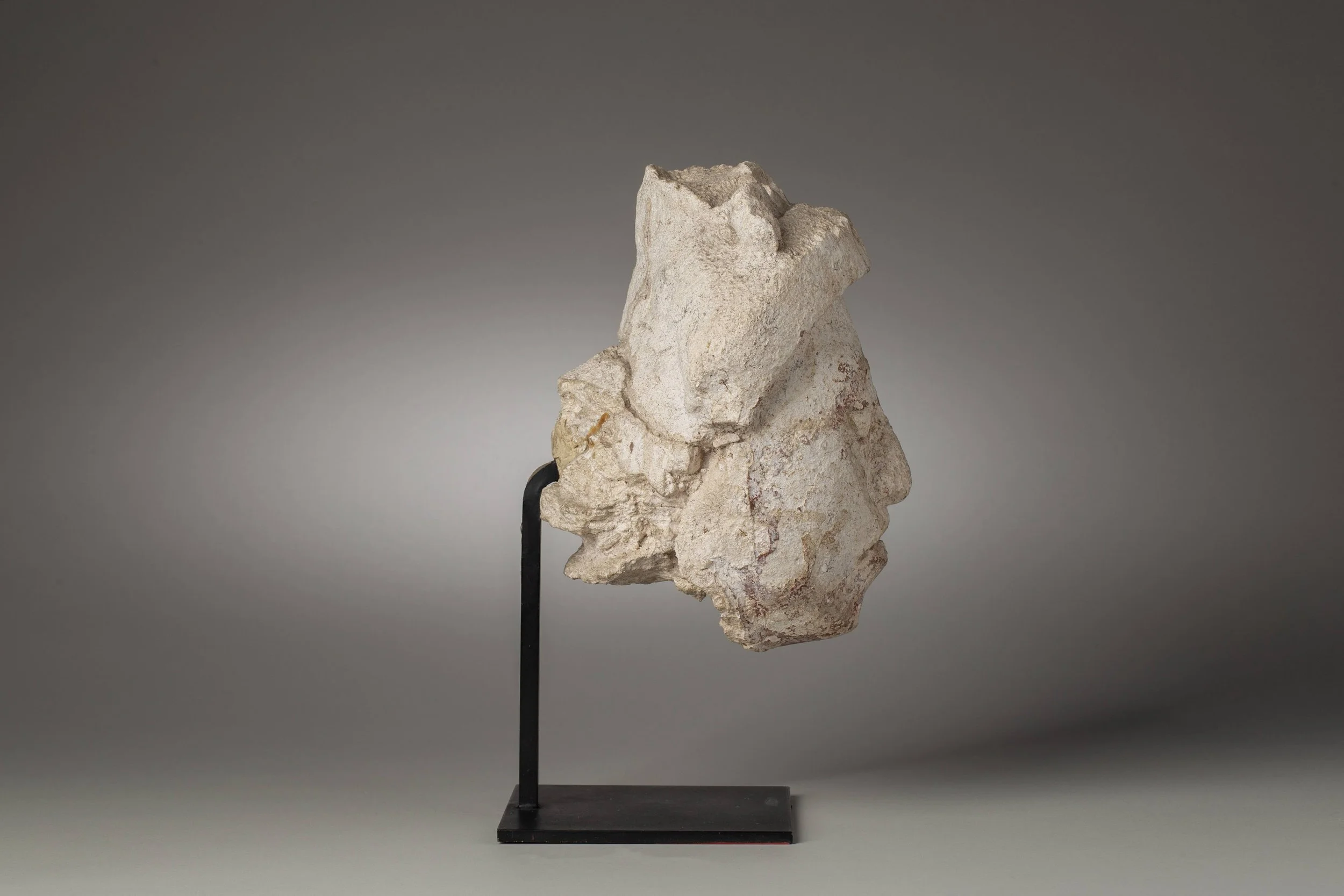 Image 6 of 6