Maya
550–950 AD
Ceramic with traces of blue and white plaster decoration
Height 9⅞ inches (25.1 cm), diameter 5 inches (12.7 cm)
Provenance: Collected in the 1960s by a history professor, San Diego, California
This cylinder vase is embossed with a spider monkey in low relief, a decorative approach uncommon in Mayan ceramic production, where painting was the predominant surface treatment on vessels of this form. The exterior retains traces of blue and white plaster decoration on the lower section, along with extensive root marks that confirm the piece spent considerable time in the ground before collection. The form and firing are consistent with Late Classic or Terminal Classic Maya production.
Spider monkeys appear throughout Mayan iconography as figures associated with scribes, artists, and the arts of writing and music, and their presence on a cylinder vase — a form used in elite drinking ceremonies — connects this piece to the educated and ceremonially active stratum of Classic Maya society. The embossed rather than painted treatment gives the decoration a sculptural quality distinct from the painted vessel tradition. Collection in the 1960s by a history professor in San Diego establishes pre-1970 provenance with a specific academic collector.
We ship free anywhere in the world, fully insured, packed by hand.
Maya
550–950 AD
Ceramic with traces of blue and white plaster decoration
Height 9⅞ inches (25.1 cm), diameter 5 inches (12.7 cm)
Provenance: Collected in the 1960s by a history professor, San Diego, California
This cylinder vase is embossed with a spider monkey in low relief, a decorative approach uncommon in Mayan ceramic production, where painting was the predominant surface treatment on vessels of this form. The exterior retains traces of blue and white plaster decoration on the lower section, along with extensive root marks that confirm the piece spent considerable time in the ground before collection. The form and firing are consistent with Late Classic or Terminal Classic Maya production.
Spider monkeys appear throughout Mayan iconography as figures associated with scribes, artists, and the arts of writing and music, and their presence on a cylinder vase — a form used in elite drinking ceremonies — connects this piece to the educated and ceremonially active stratum of Classic Maya society. The embossed rather than painted treatment gives the decoration a sculptural quality distinct from the painted vessel tradition. Collection in the 1960s by a history professor in San Diego establishes pre-1970 provenance with a specific academic collector.
We ship free anywhere in the world, fully insured, packed by hand.


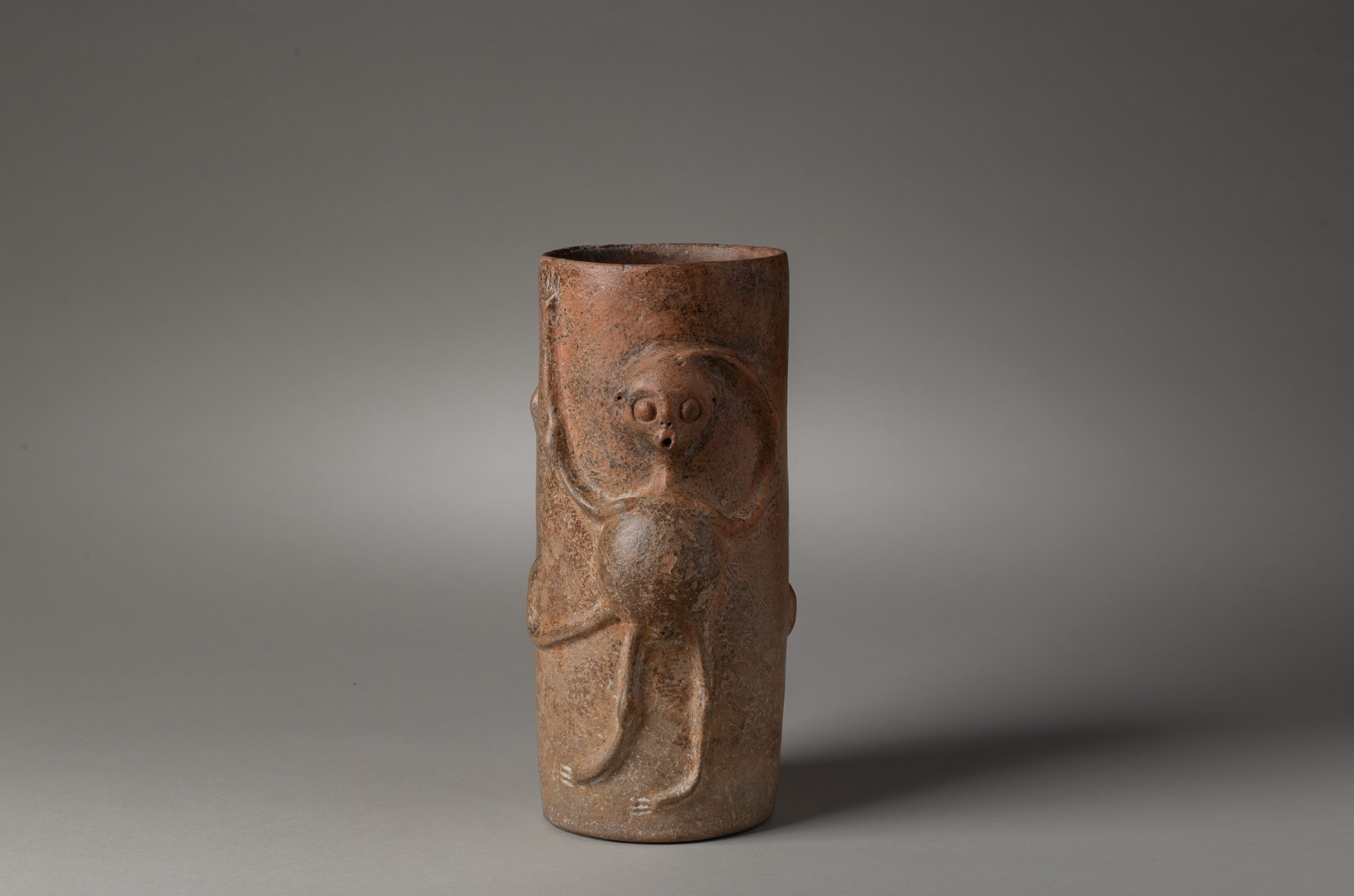 Image 1 of 6
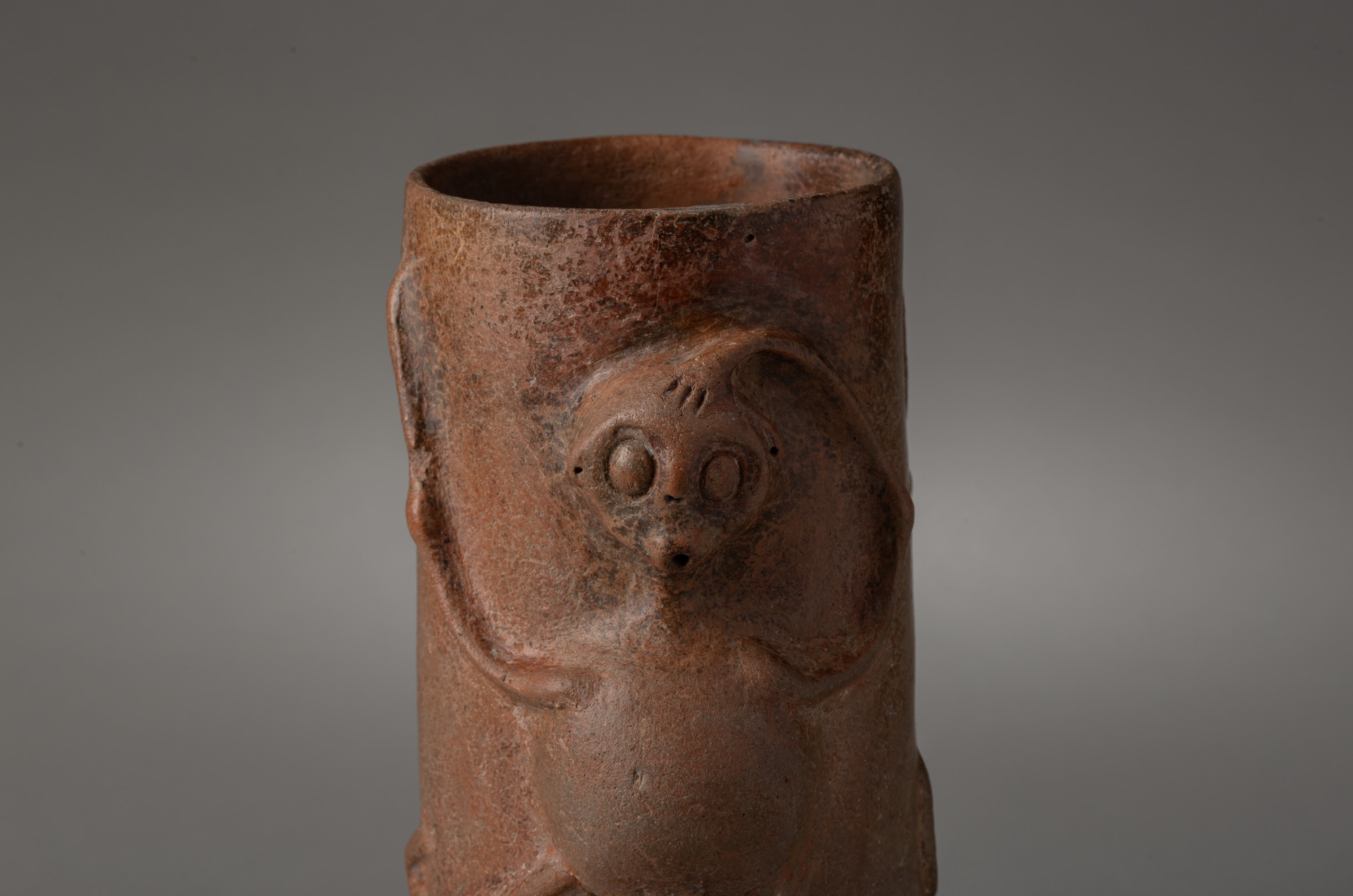 Image 2 of 6
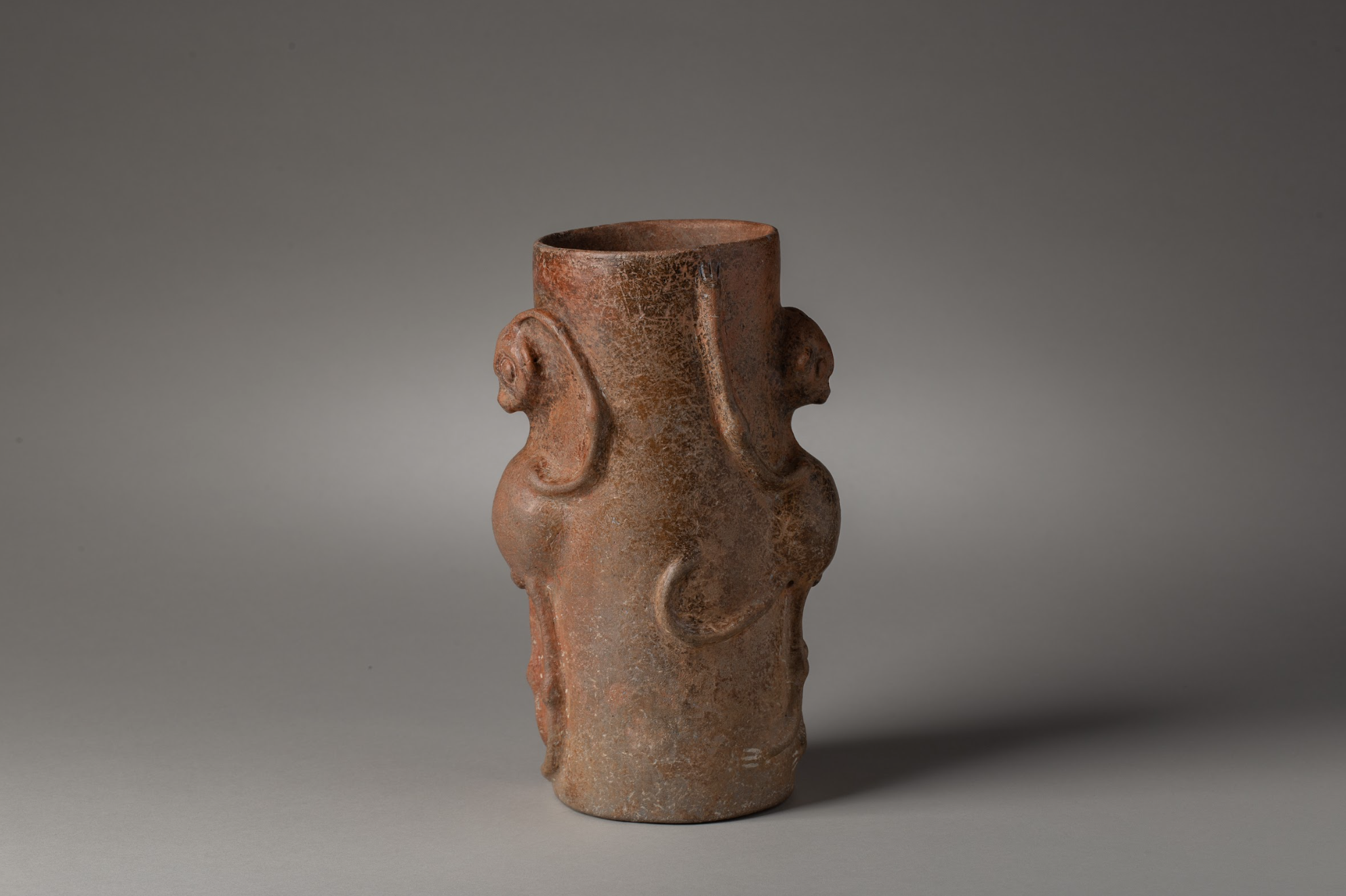 Image 3 of 6
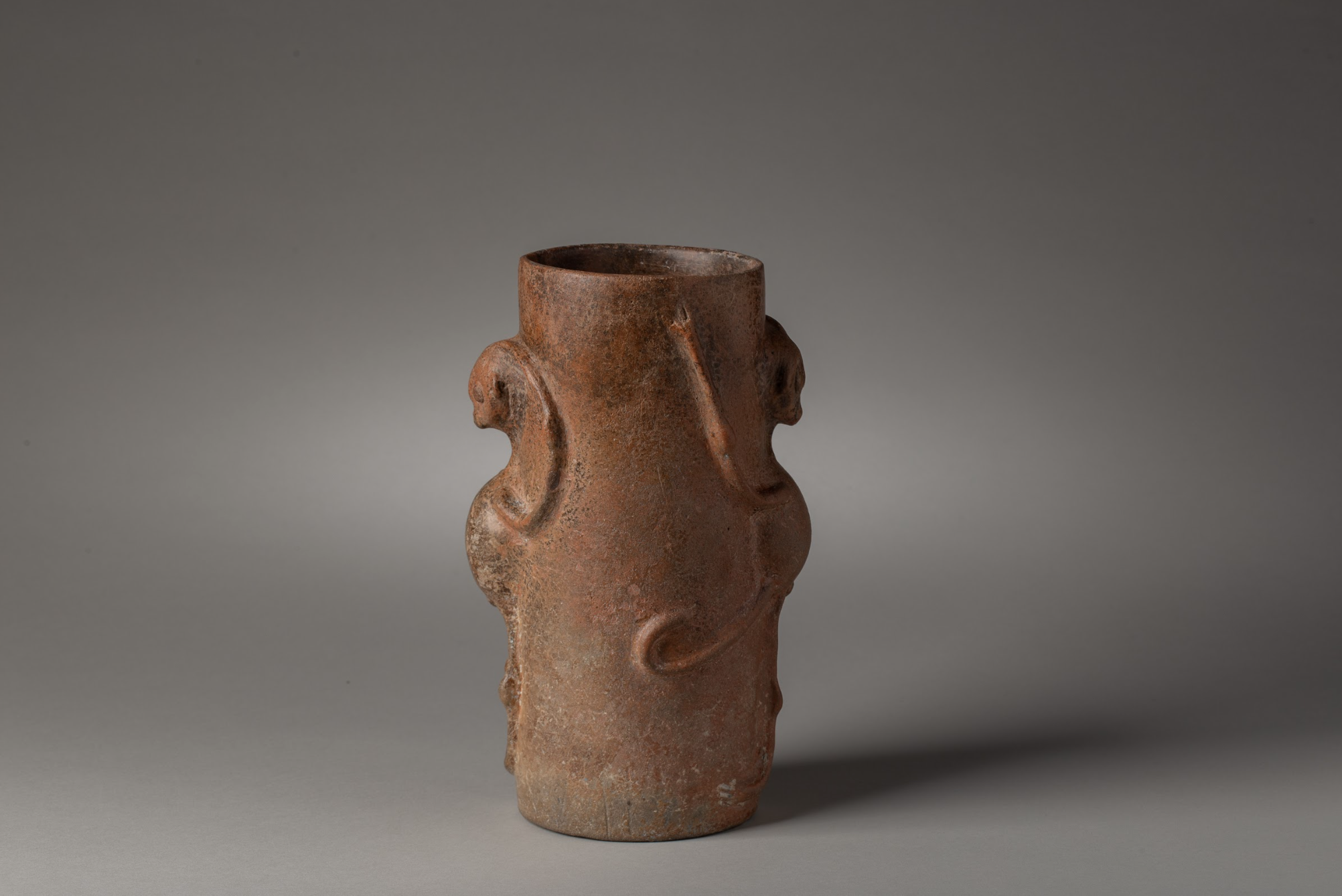 Image 4 of 6
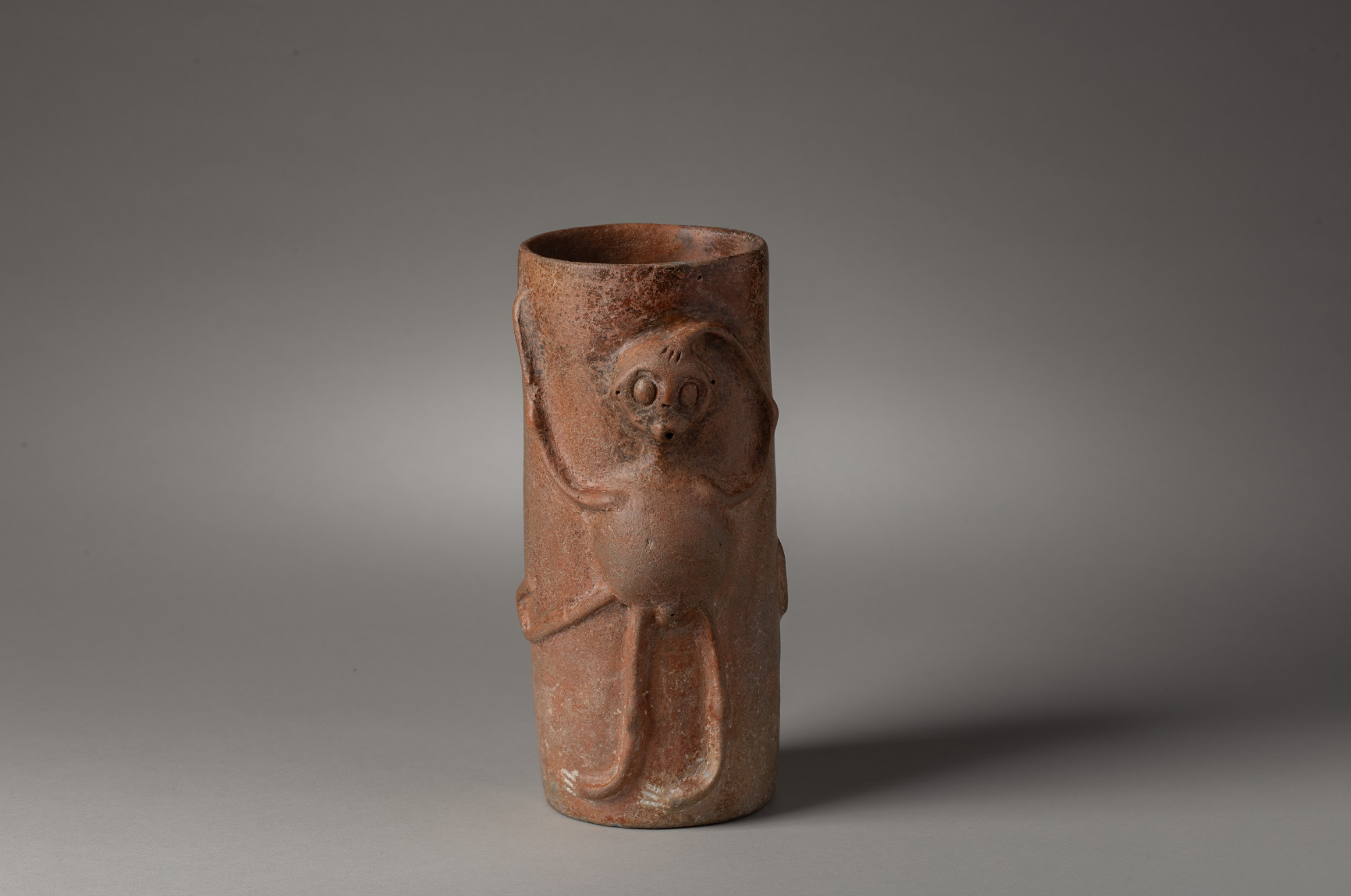 Image 5 of 6
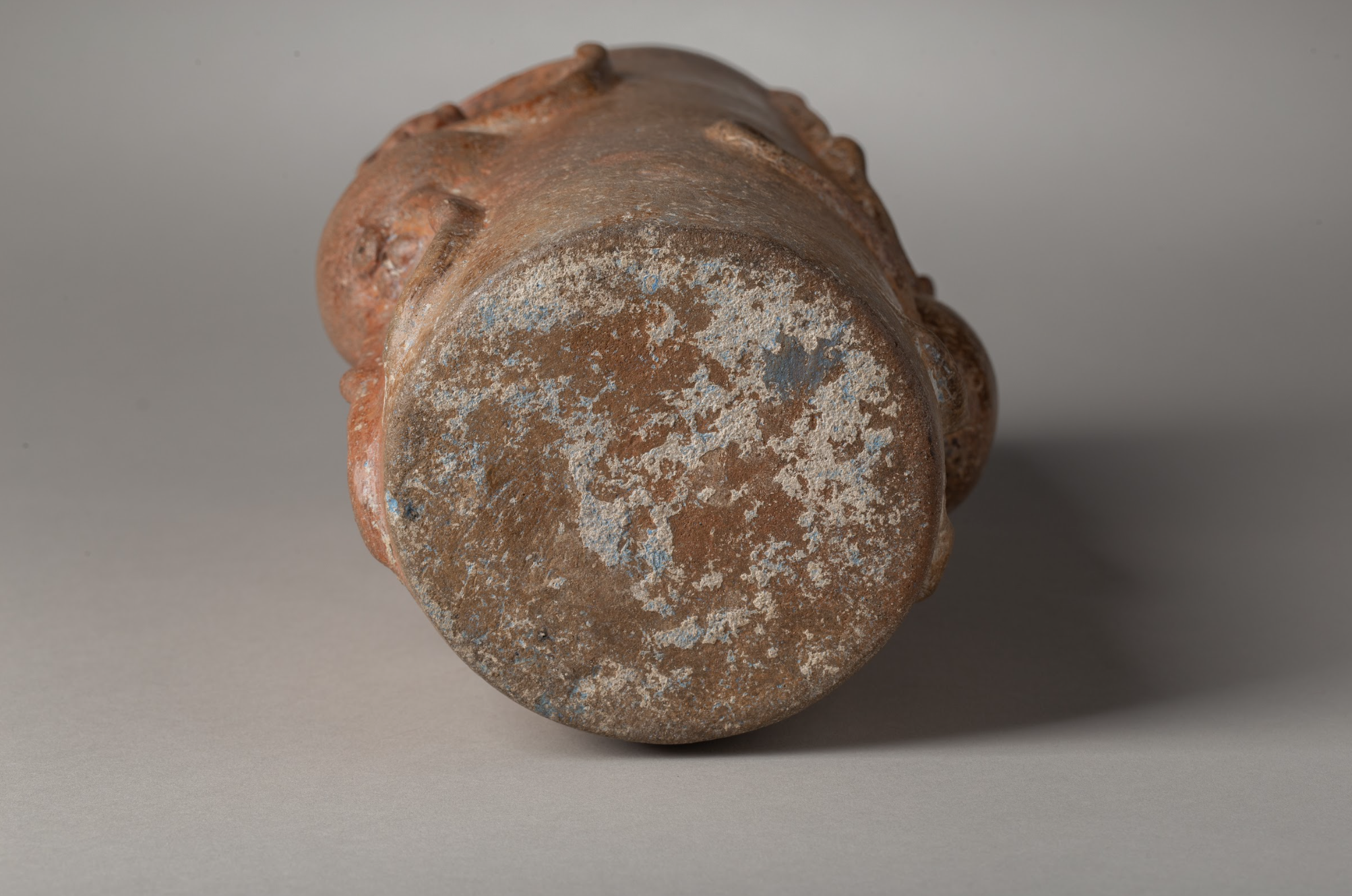 Image 6 of 6