Terracotta with carnelian inlay
2700–2500 BC
Height 9"
Provenance: Joel Greene, San Francisco, CA
This seated female figurine from Period VII of the Mehrgarh site in Balochistan, Pakistan, is modeled with a bald head, incised brows and eyes, and finely detailed hands positioned as if grasping an object. The figure retains its original white slip, applied before firing as a base for pigment, traces of which remain on the surface. Most notably, the carnelian inlays set into both eye sockets are intact, a feature documented at Mehrgarh but rarely preserved in surviving examples. Thermoluminescence testing by CIRAM laboratories confirmed an age of approximately 4,200 years, consistent with the attributed date.
Mehrgarh, excavated by the French Archaeological Mission between 1975 and 2000, has been recognized as the crucial link between early Neolithic settlements of the region and the later urban civilizations of the Indus Valley. Female figurines appear across all phases of the site and are among the oldest ceramic figures in South Asia, with scholars noting their diversity of pose and attribute as evidence of domestic and ritual rather than exclusively religious function. Carnelian was worked at Mehrgarh from at least 4000 BC, primarily for jewelry and personal ornament, and its use here as an inlay material suggests this figure held particular significance within its original context.
CIRAM report included - click here to view
We ship free anywhere in the world, fully insured, packed by hand.
Terracotta with carnelian inlay
2700–2500 BC
Height 9"
Provenance: Joel Greene, San Francisco, CA
This seated female figurine from Period VII of the Mehrgarh site in Balochistan, Pakistan, is modeled with a bald head, incised brows and eyes, and finely detailed hands positioned as if grasping an object. The figure retains its original white slip, applied before firing as a base for pigment, traces of which remain on the surface. Most notably, the carnelian inlays set into both eye sockets are intact, a feature documented at Mehrgarh but rarely preserved in surviving examples. Thermoluminescence testing by CIRAM laboratories confirmed an age of approximately 4,200 years, consistent with the attributed date.
Mehrgarh, excavated by the French Archaeological Mission between 1975 and 2000, has been recognized as the crucial link between early Neolithic settlements of the region and the later urban civilizations of the Indus Valley. Female figurines appear across all phases of the site and are among the oldest ceramic figures in South Asia, with scholars noting their diversity of pose and attribute as evidence of domestic and ritual rather than exclusively religious function. Carnelian was worked at Mehrgarh from at least 4000 BC, primarily for jewelry and personal ornament, and its use here as an inlay material suggests this figure held particular significance within its original context.
CIRAM report included - click here to view
We ship free anywhere in the world, fully insured, packed by hand.


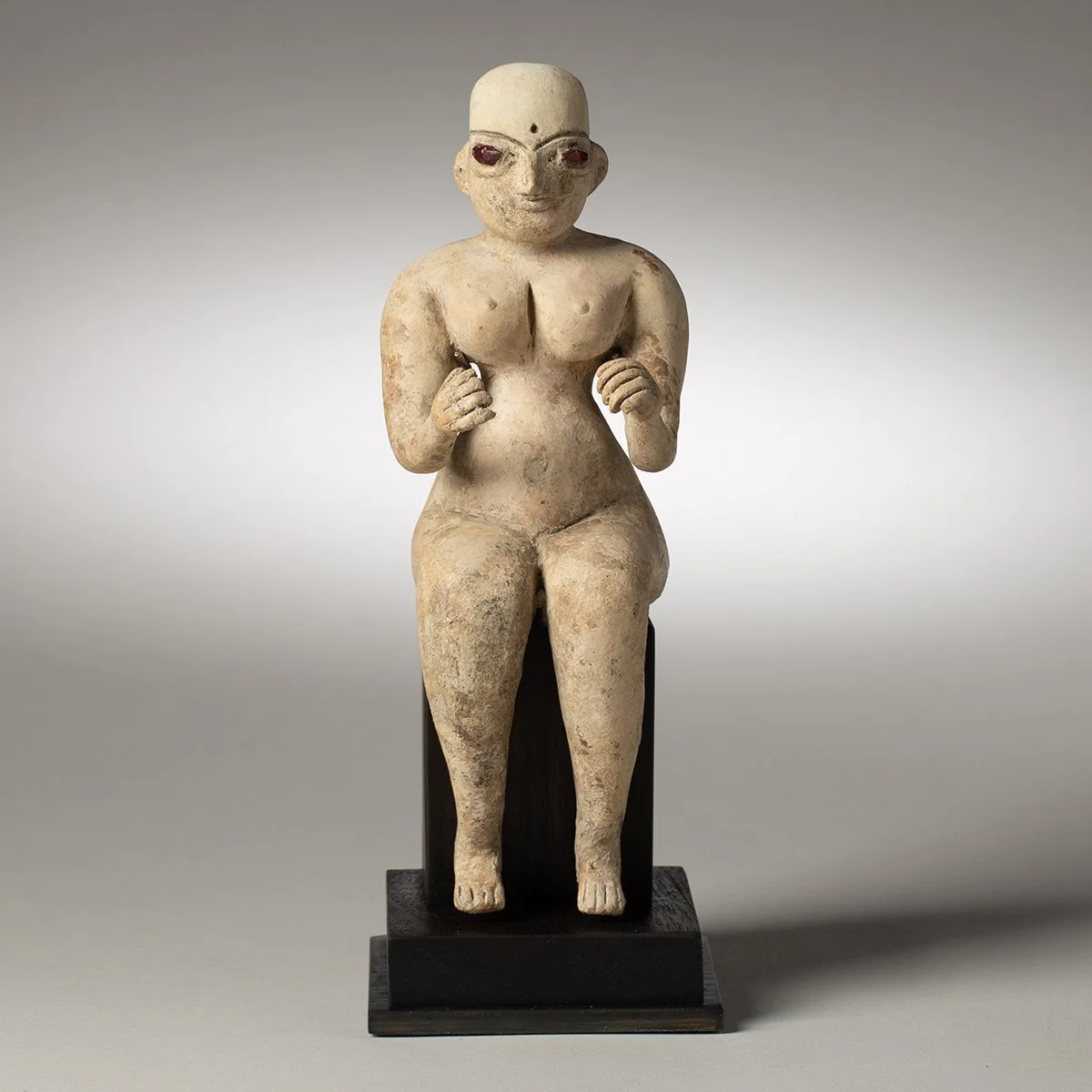 Image 1 of 6
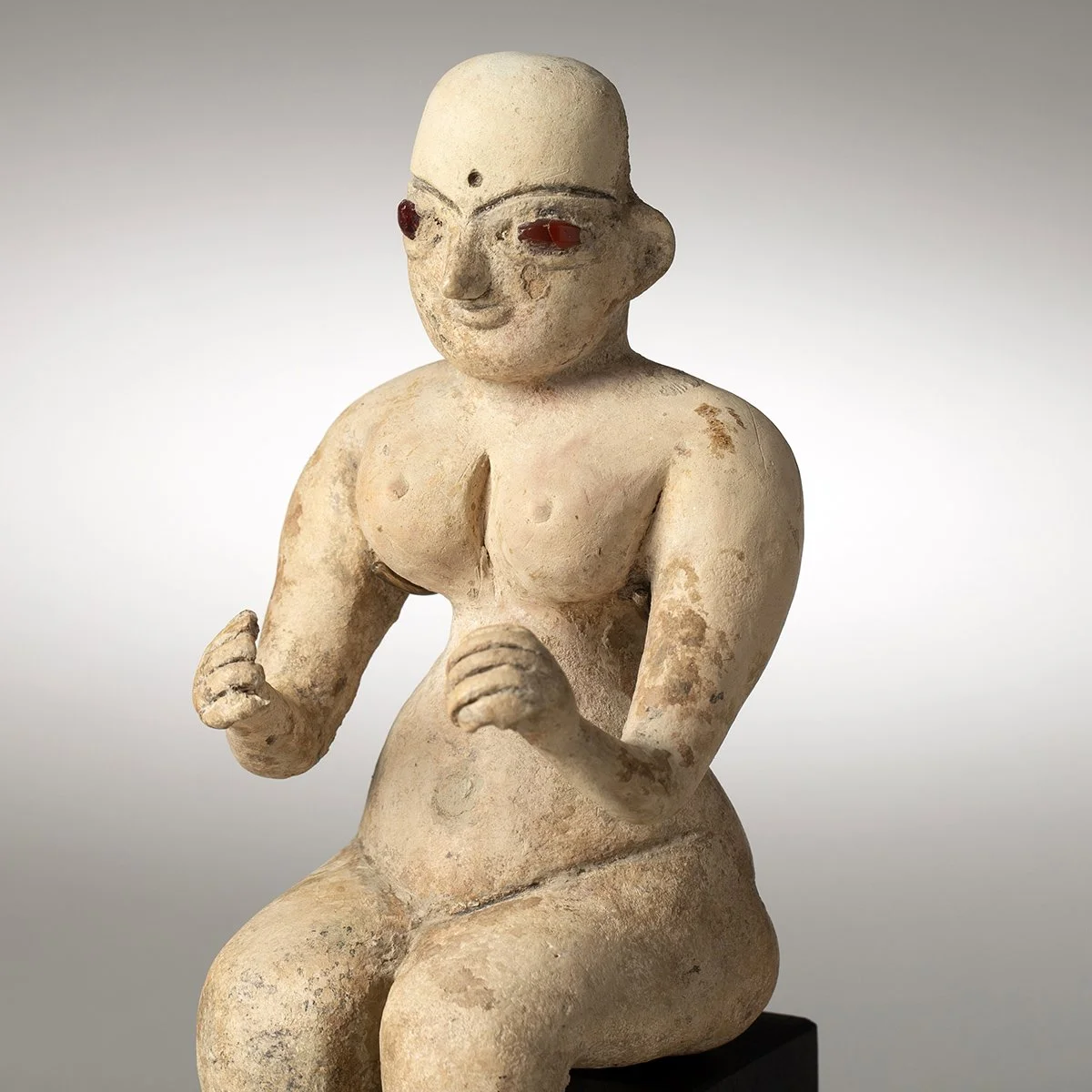 Image 2 of 6
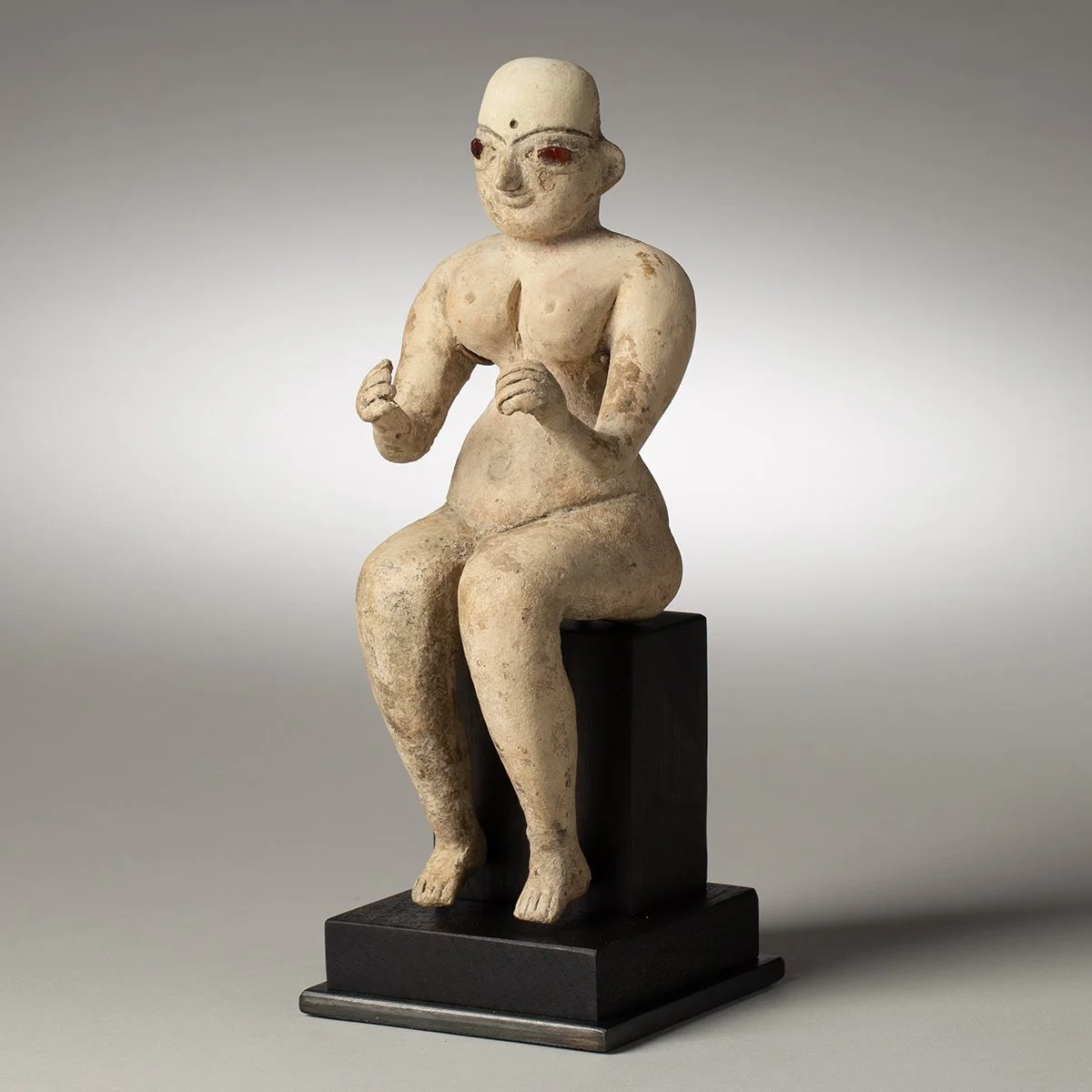 Image 3 of 6
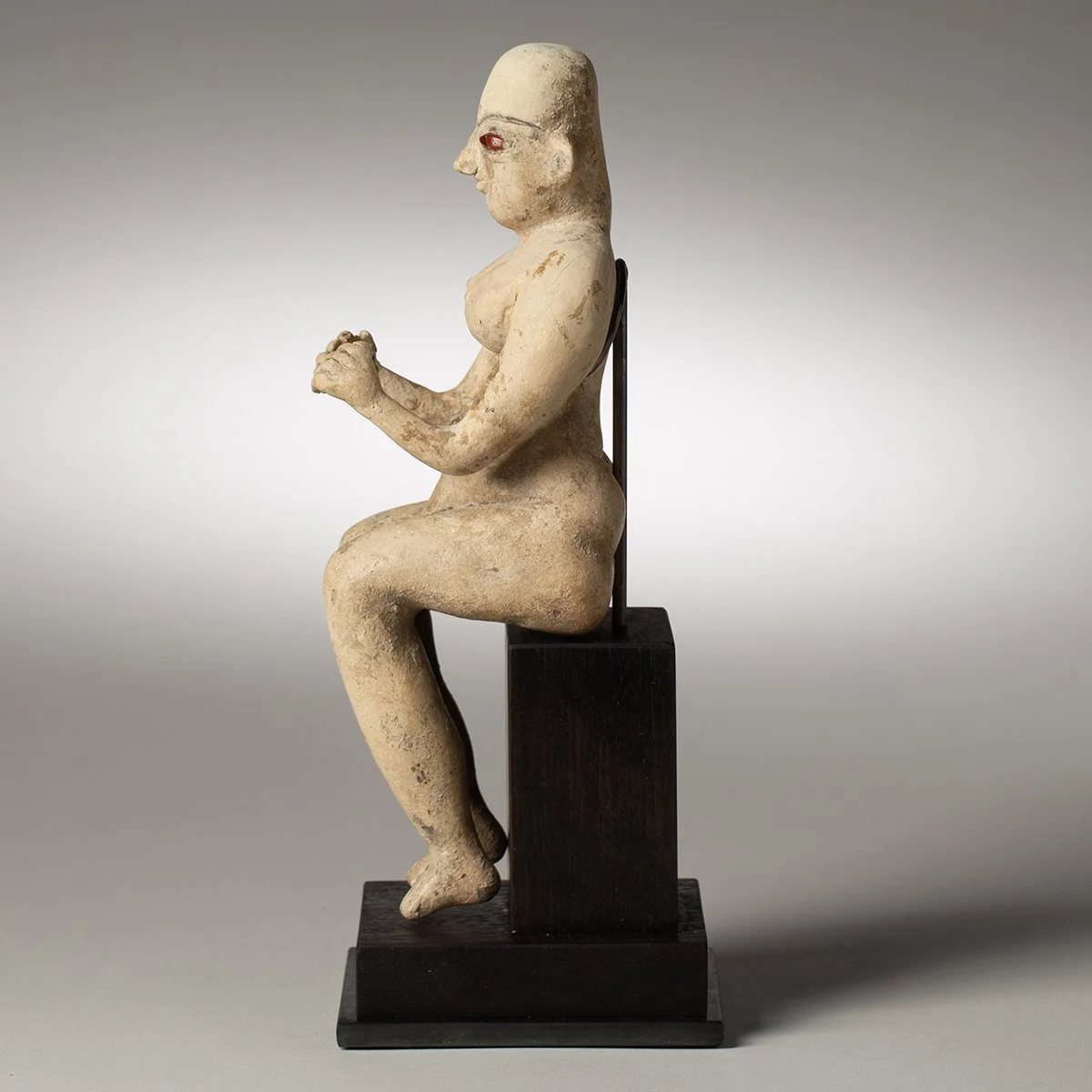 Image 4 of 6
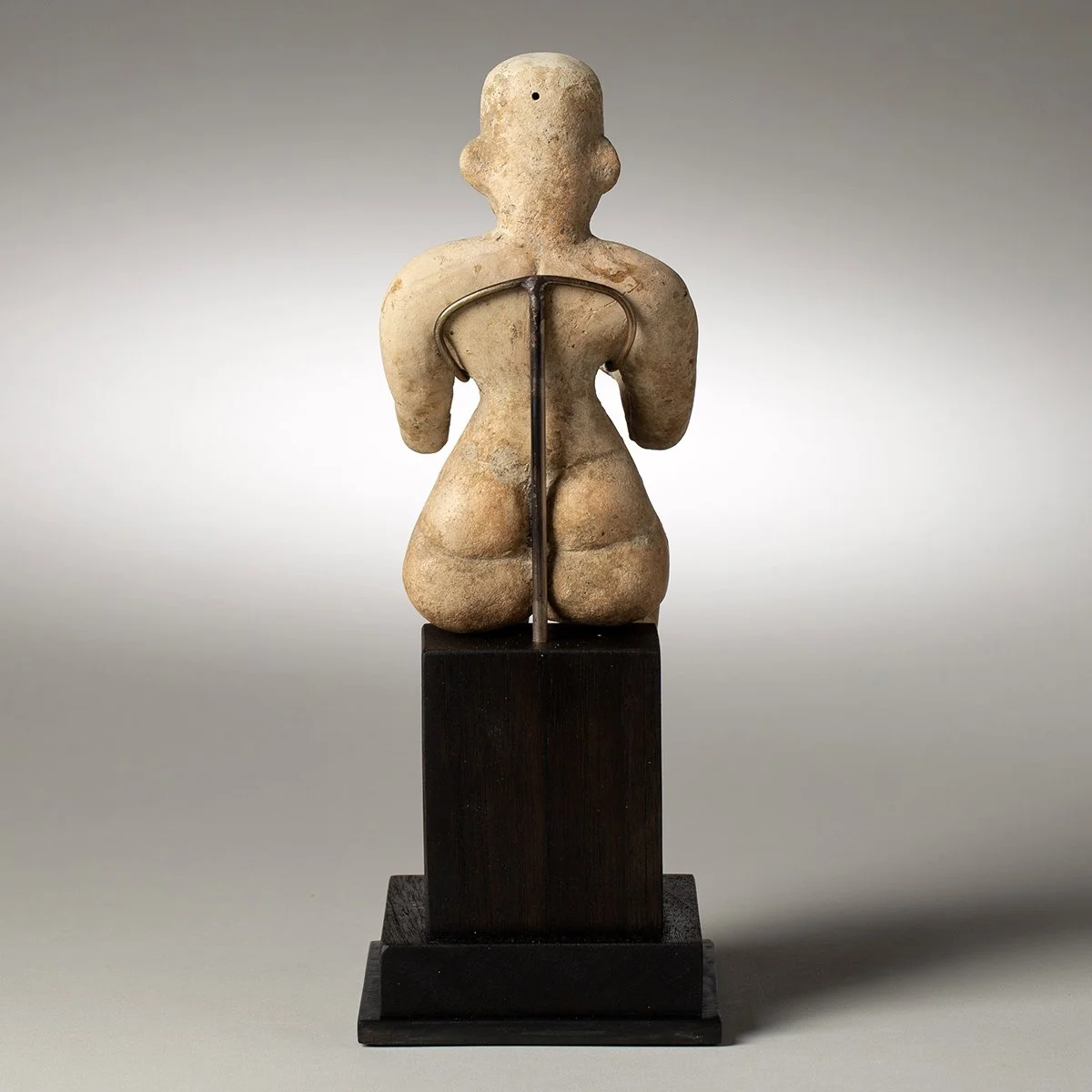 Image 5 of 6
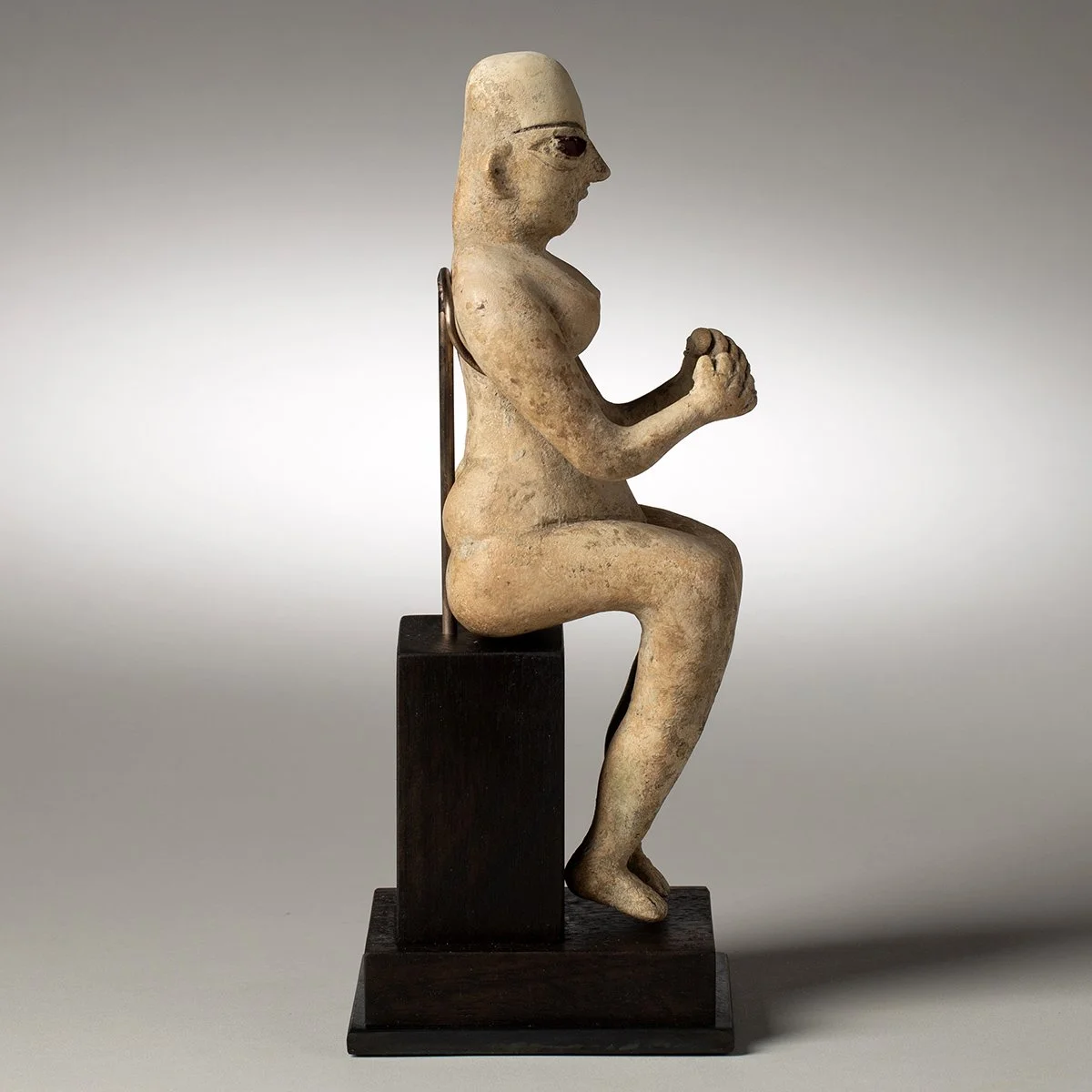 Image 6 of 6