Mexico, Michoacán
400–100 BC
Ceramic
Height: 4⅜ in (11.1 cm), Width: 2½ in (6.4 cm)
Provenance: Monique and Albert J. Grant, New York, acquired 1950s–1960s
Conjoined couple figures are among the most formally inventive ceramic types produced by the Preclassic cultures of West Mexico, with the lateral joining of two figures into a single body understood to represent a relationship of social, ceremonial, or funerary significance. Michoacan examples of this type share formal ground with the Jalisco and Colima shaft tomb traditions while maintaining a regional ceramic character distinguishable by surface texture, figure proportion, and decorative treatment. The large ruffled collar or necklace on this example is a distinctive element not present on all conjoined figures and may indicate status or ritual role.
This pair stands joined at the side, with a male figure wearing a flat-topped cylindrical hat and a female figure with an elaborate coiffure, connected by a prominent multi-strand ruffled collar that encircles both figures at the neck and chest. The facial features of both figures are modeled with directness and individual character, and the surface carries an earth tone patina consistent with burial context. The Grant collection, New York, acquired in the 1950s and 1960s, provides this piece with the same distinguished early American provenance as the companion example in the collection.
We ship free anywhere in the world, fully insured, packed by hand.
Mexico, Michoacán
400–100 BC
Ceramic
Height: 4⅜ in (11.1 cm), Width: 2½ in (6.4 cm)
Provenance: Monique and Albert J. Grant, New York, acquired 1950s–1960s
Conjoined couple figures are among the most formally inventive ceramic types produced by the Preclassic cultures of West Mexico, with the lateral joining of two figures into a single body understood to represent a relationship of social, ceremonial, or funerary significance. Michoacan examples of this type share formal ground with the Jalisco and Colima shaft tomb traditions while maintaining a regional ceramic character distinguishable by surface texture, figure proportion, and decorative treatment. The large ruffled collar or necklace on this example is a distinctive element not present on all conjoined figures and may indicate status or ritual role.
This pair stands joined at the side, with a male figure wearing a flat-topped cylindrical hat and a female figure with an elaborate coiffure, connected by a prominent multi-strand ruffled collar that encircles both figures at the neck and chest. The facial features of both figures are modeled with directness and individual character, and the surface carries an earth tone patina consistent with burial context. The Grant collection, New York, acquired in the 1950s and 1960s, provides this piece with the same distinguished early American provenance as the companion example in the collection.
We ship free anywhere in the world, fully insured, packed by hand.


 Image 1 of 7
 Image 2 of 7
 Image 3 of 7
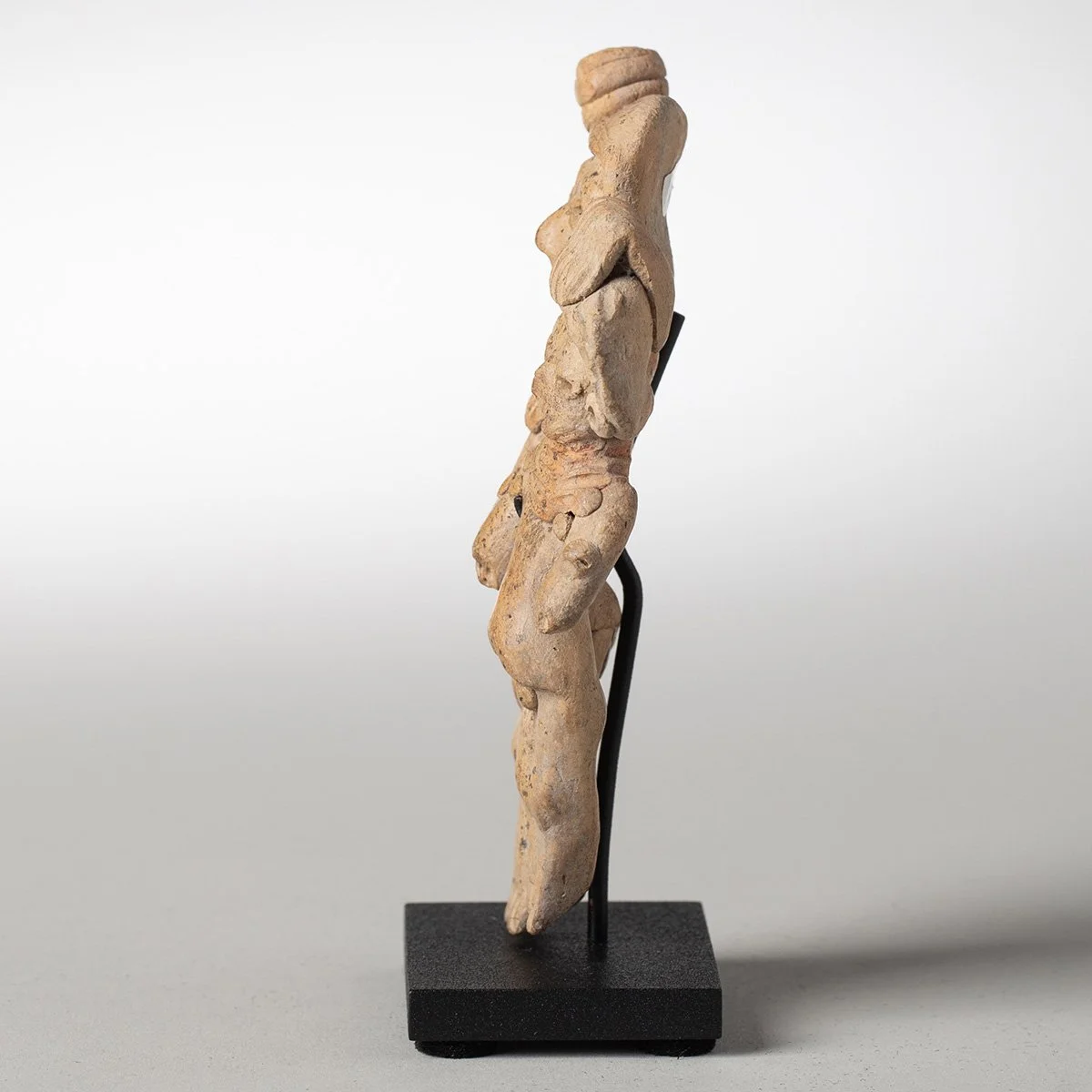 Image 4 of 7
 Image 5 of 7
 Image 6 of 7
 Image 7 of 7