Hopi, First Mesa, Arizona
Last quarter of the 19th century
Ceramic, buff slip, mineral pigment
Height 3¾ in (9.5 cm); width 6¾ in (17.1 cm)
Provenance: Southern California collection
Nampeyo of Hano (1857–1942) is among the most significant figures in the history of American ceramic art, credited with reviving and reinterpreting the ancient Sikyatki Polychrome tradition of the Hopi after encountering ancestral sherds during archaeological excavations on First Mesa in the 1890s. Her approach was grounded in direct engagement with prehistoric forms and painted designs, which she studied, copied, and absorbed before developing her own distinctive visual language rooted in that ancient foundation. This low, wide-shouldered seed jar reflects the early period of her work, when the forms she favored recalled the flattened profiles of Sikyatki vessels rather than the taller ollas produced by her contemporaries.
The decoration features two quail rendered in bold black mineral pigment, their curved topknot crests and body forms drawn with the confident, economical line work characteristic of Nampeyo's early painted style. Geometric framing elements and a dark base band complete the composition, organizing the painted surface with the restraint and clarity that distinguish her work from more decoratively elaborate Pueblo pottery of the same period. The Southern California provenance is consistent with early serious collecting of Hopi material along the West Coast.
We ship free anywhere in the world, fully insured, packed by hand.


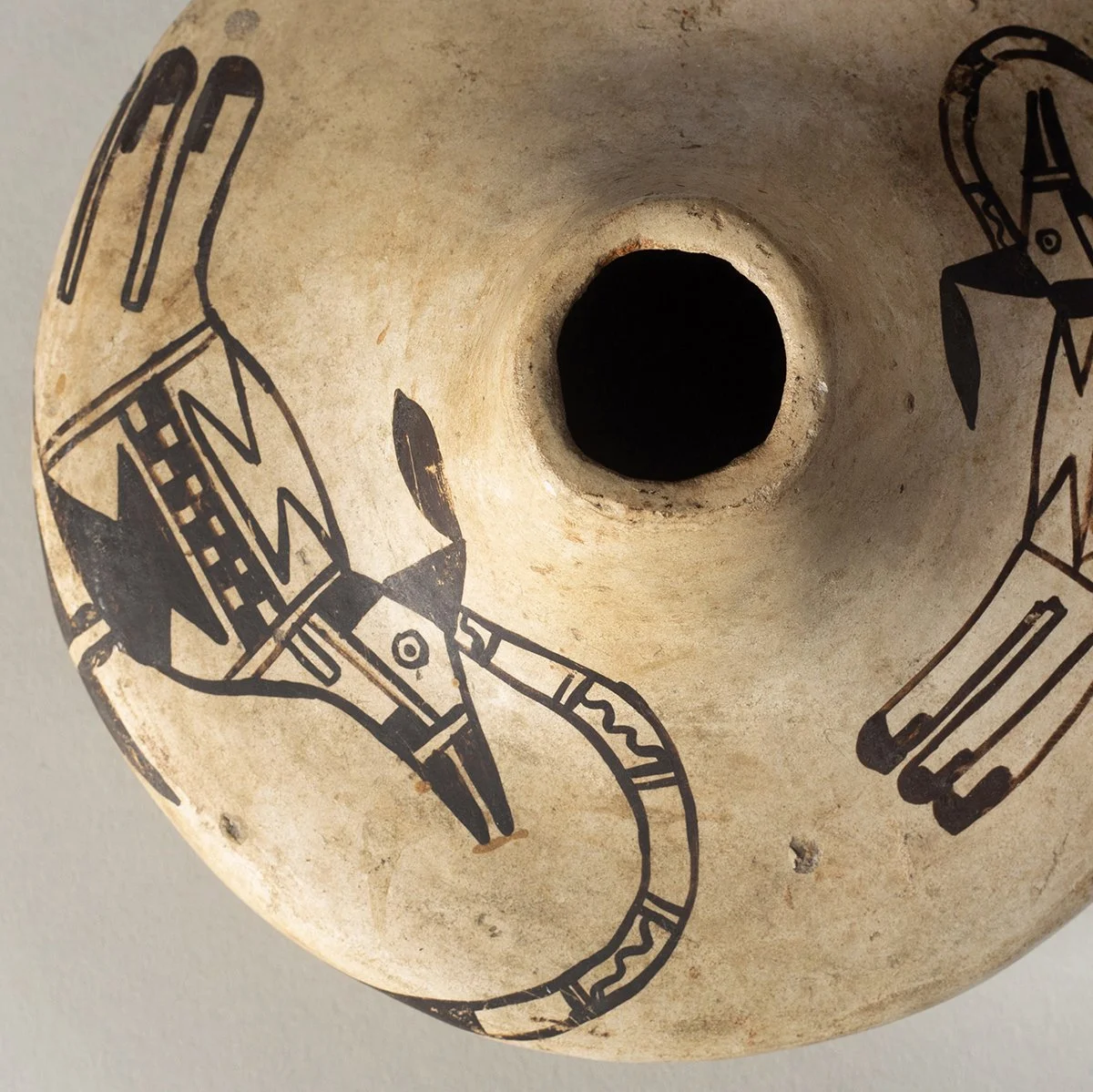 Image 1 of 7
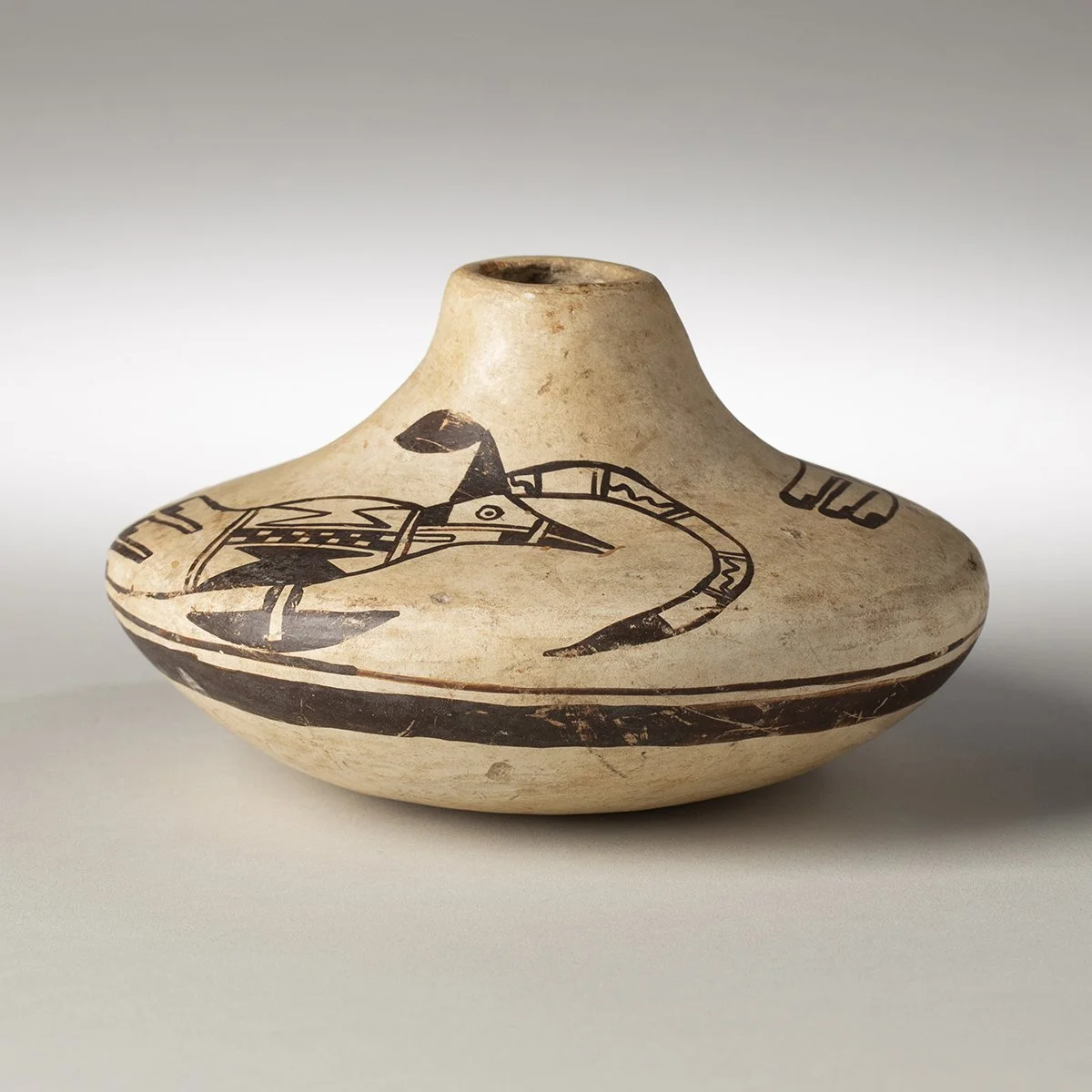 Image 2 of 7
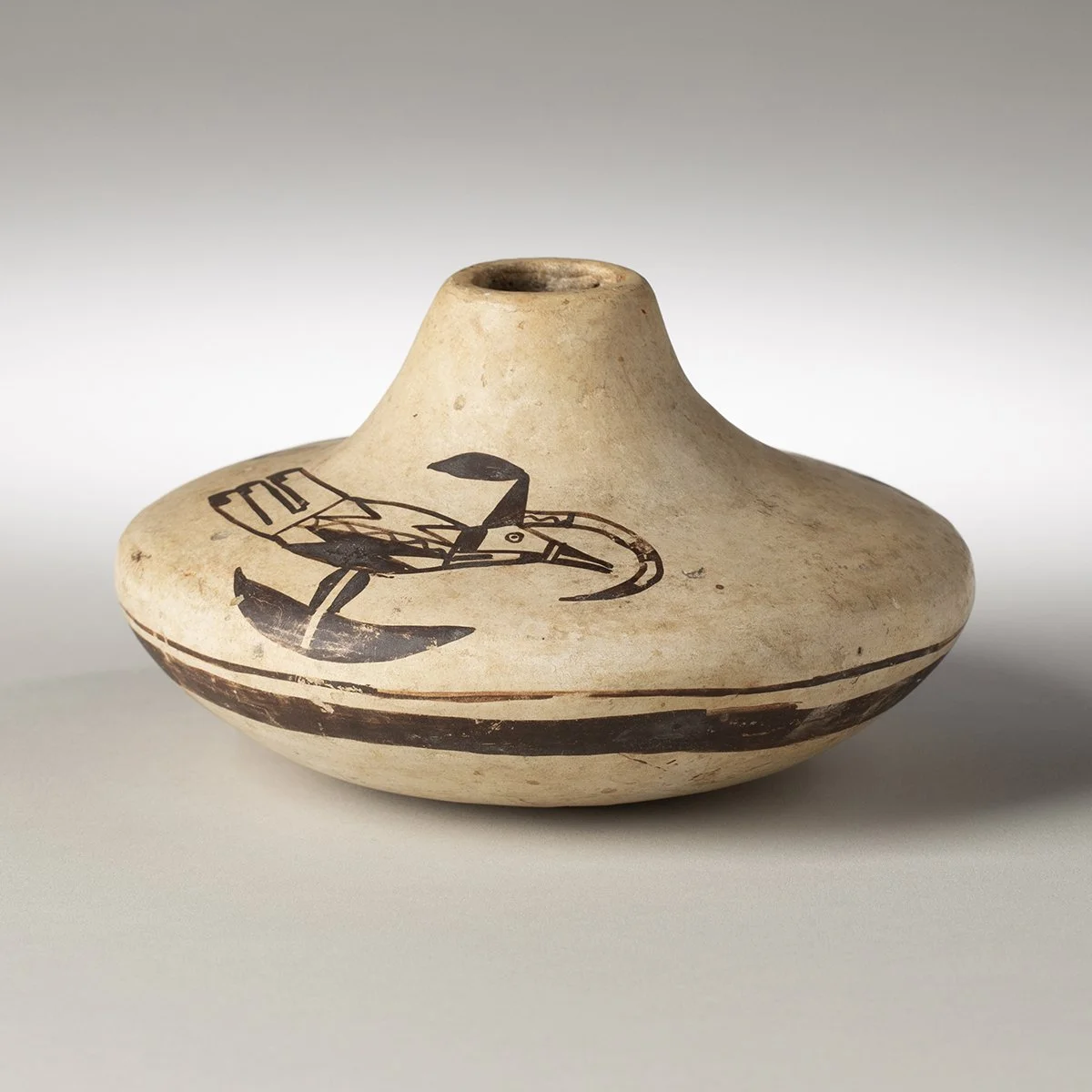 Image 3 of 7
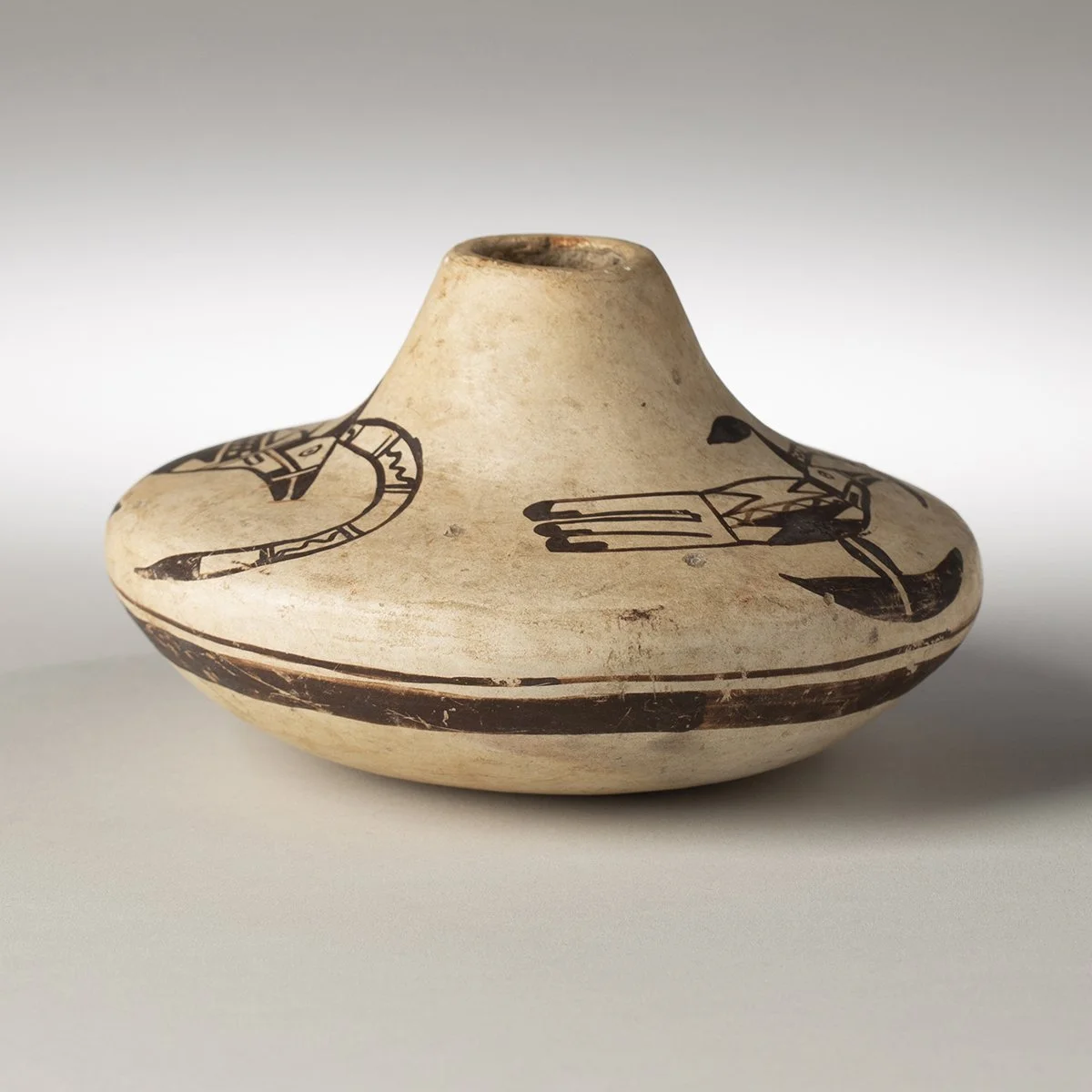 Image 4 of 7
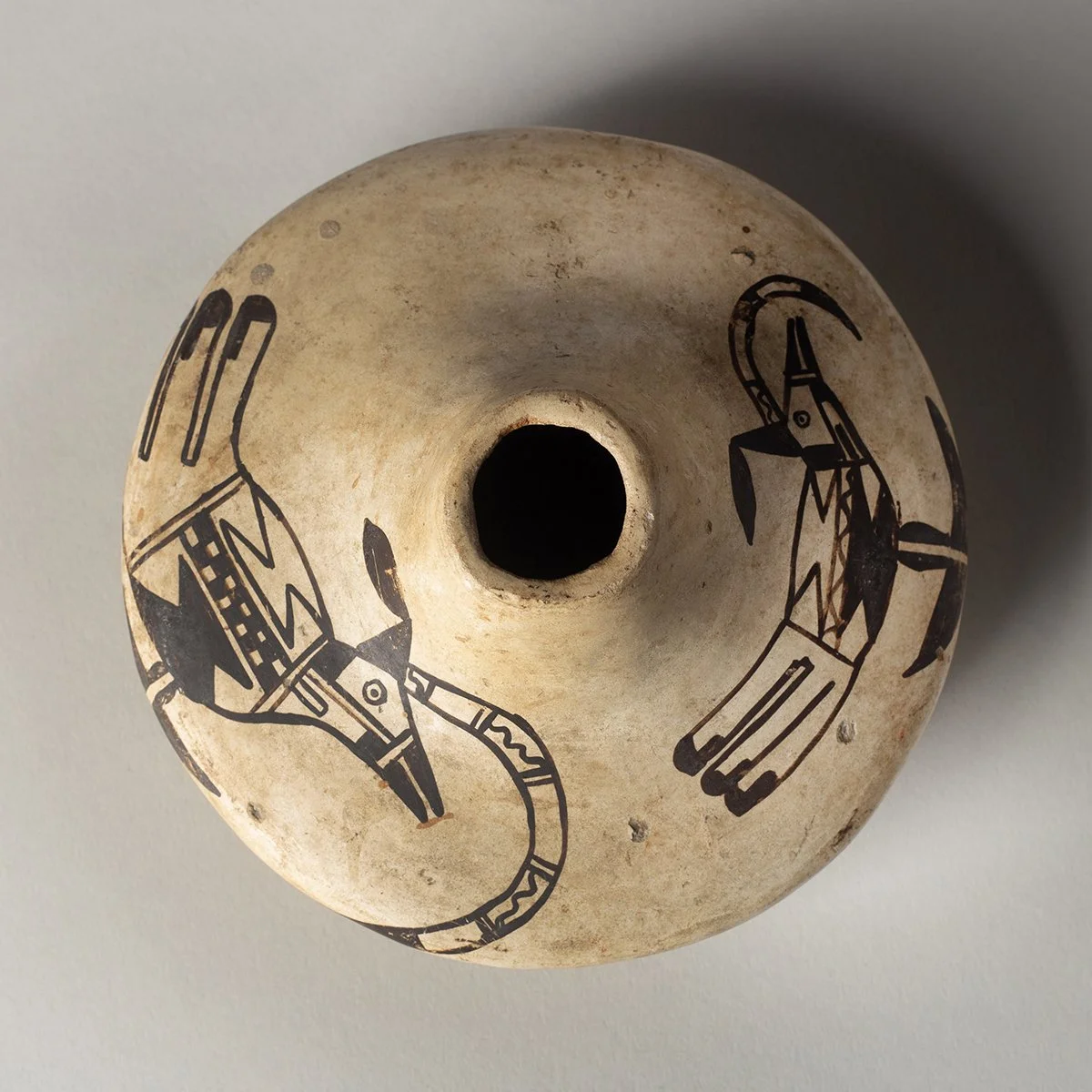 Image 5 of 7
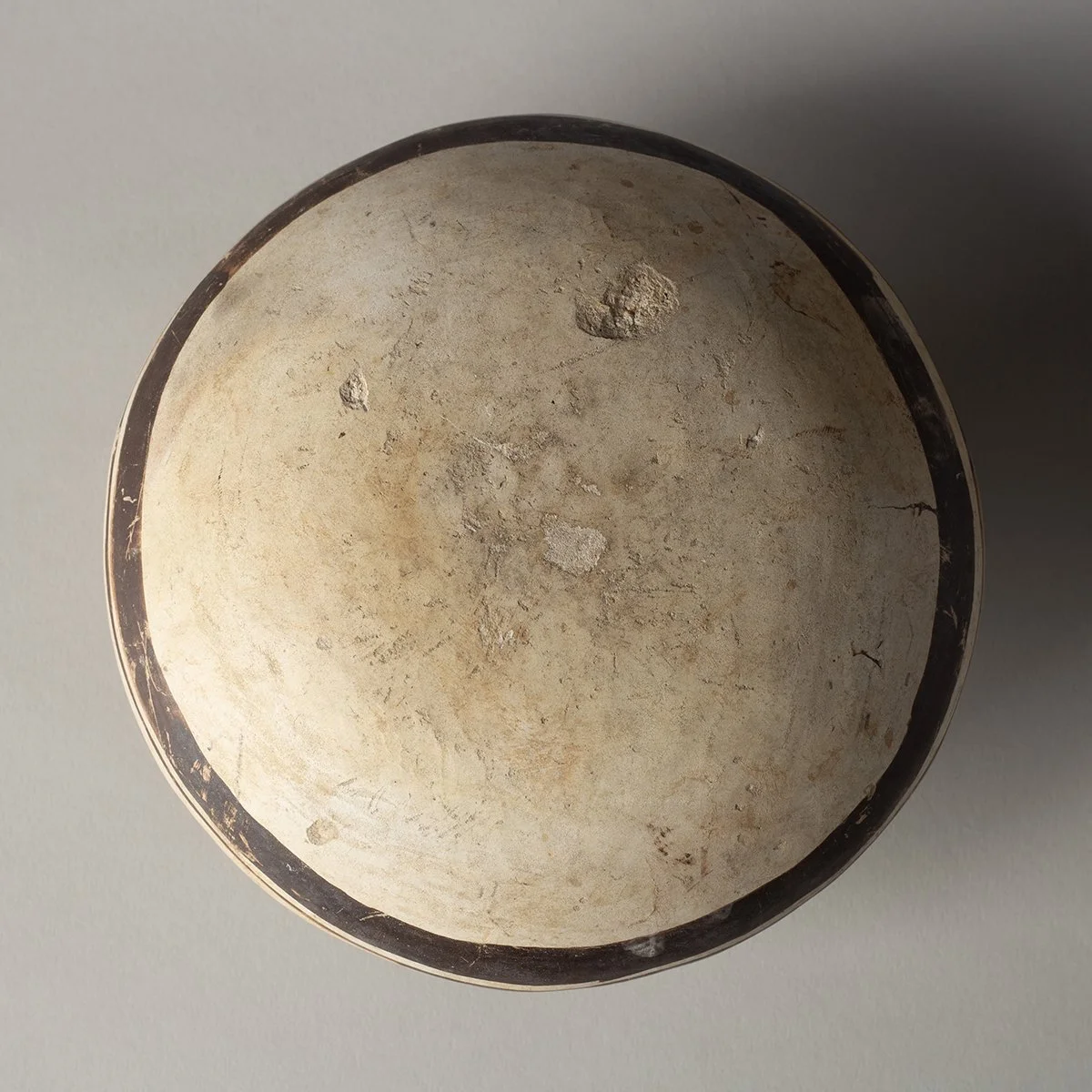 Image 6 of 7
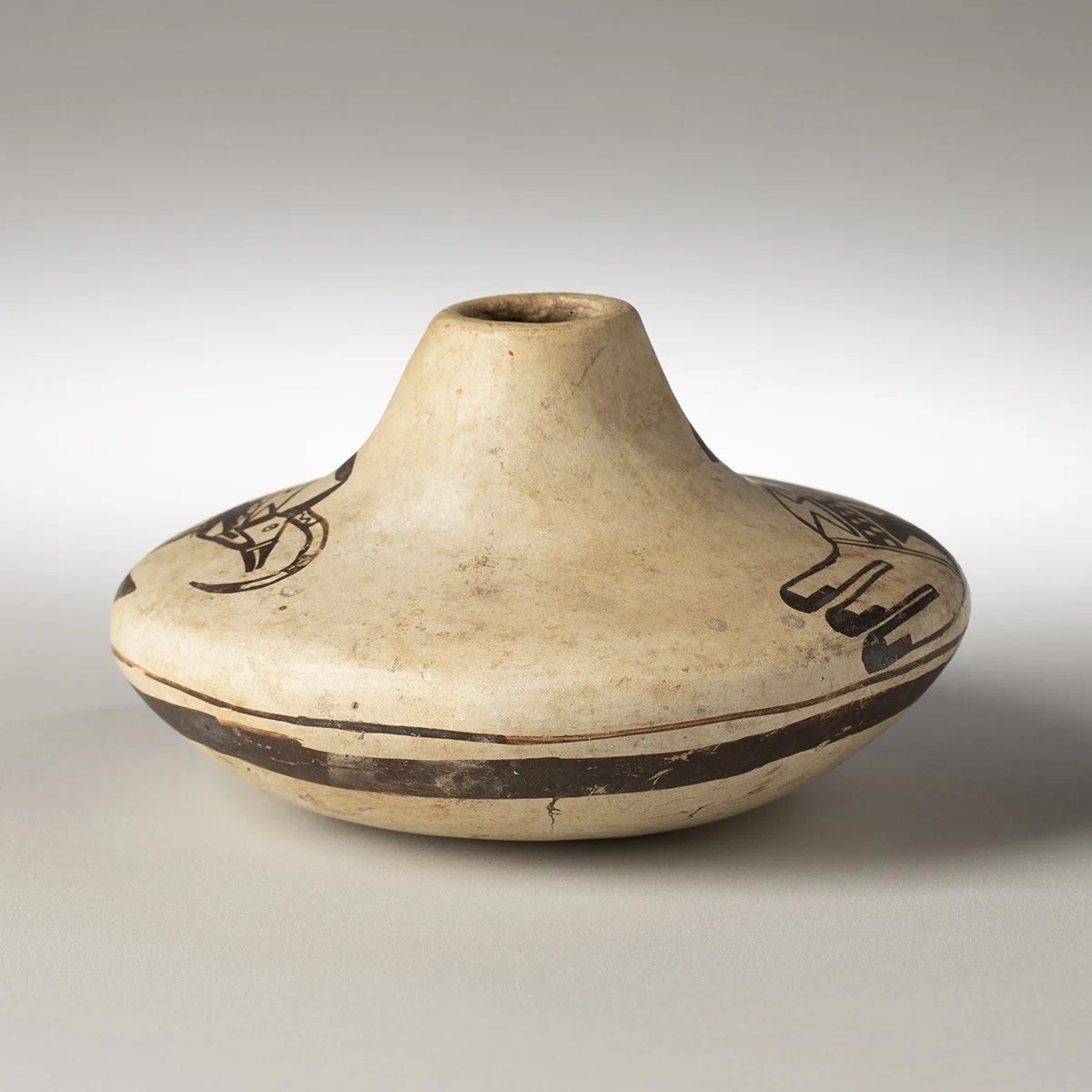 Image 7 of 7