Khabarovsk District, Russian Far East
Nanai people
19th century
Carved wood
Height 4 1/2 in (11.4 cm)
Provenance: Private collection, Helsinki, Finland
Among the Nanai people of the Amur River region in the Russian Far East, edekhe figures represent the first and most intimate category of shamanic spirit helper, understood to arrive through clan kinship rather than through a shaman's personal acquisition. These carved wooden figures gave physical form to the spirit assistant, providing it with a vessel through which it could act on behalf of the shaman and the community in ritual healing and protection contexts. The Nanai tradition of carving spirit helper figures is well documented in ethnographic collections gathered from the Khabarovsk region during the late 19th and early 20th centuries.
This figure follows the schematic vertical form characteristic of Nanai spirit amulets, with a simplified columnar body and a defined head form carved from a single piece of wood. The dark surface patina is consistent with age, handling, and the ritual context in which such figures were used and stored. Its provenance from a Finnish private collection in Helsinki reflects the documented collecting networks connecting Scandinavia and the Russian Far East during the ethnographic collection era.
We ship free anywhere in the world, fully insured, packed by hand.
Khabarovsk District, Russian Far East
Nanai people
19th century
Carved wood
Height 4 1/2 in (11.4 cm)
Provenance: Private collection, Helsinki, Finland
Among the Nanai people of the Amur River region in the Russian Far East, edekhe figures represent the first and most intimate category of shamanic spirit helper, understood to arrive through clan kinship rather than through a shaman's personal acquisition. These carved wooden figures gave physical form to the spirit assistant, providing it with a vessel through which it could act on behalf of the shaman and the community in ritual healing and protection contexts. The Nanai tradition of carving spirit helper figures is well documented in ethnographic collections gathered from the Khabarovsk region during the late 19th and early 20th centuries.
This figure follows the schematic vertical form characteristic of Nanai spirit amulets, with a simplified columnar body and a defined head form carved from a single piece of wood. The dark surface patina is consistent with age, handling, and the ritual context in which such figures were used and stored. Its provenance from a Finnish private collection in Helsinki reflects the documented collecting networks connecting Scandinavia and the Russian Far East during the ethnographic collection era.
We ship free anywhere in the world, fully insured, packed by hand.


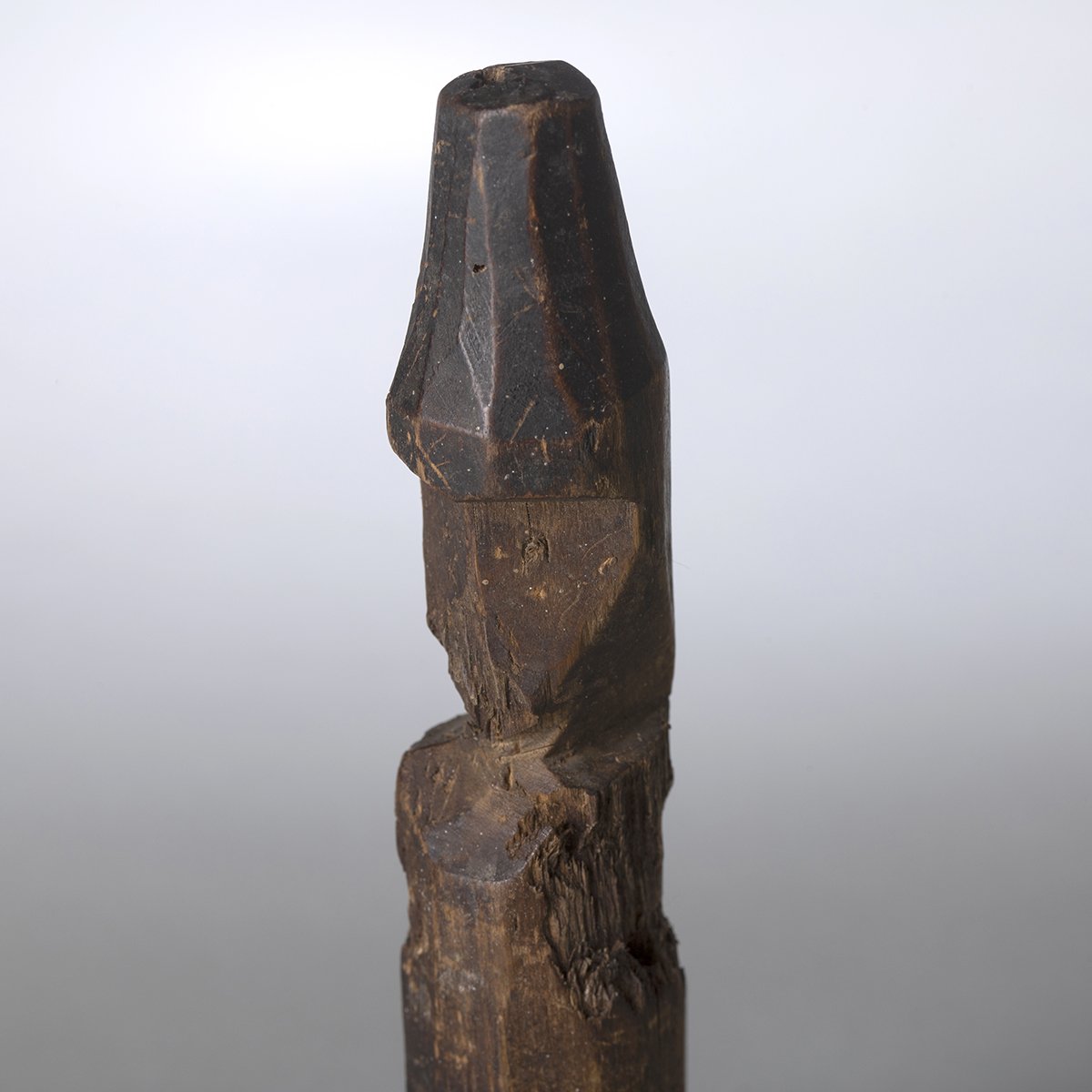 Image 1 of 6
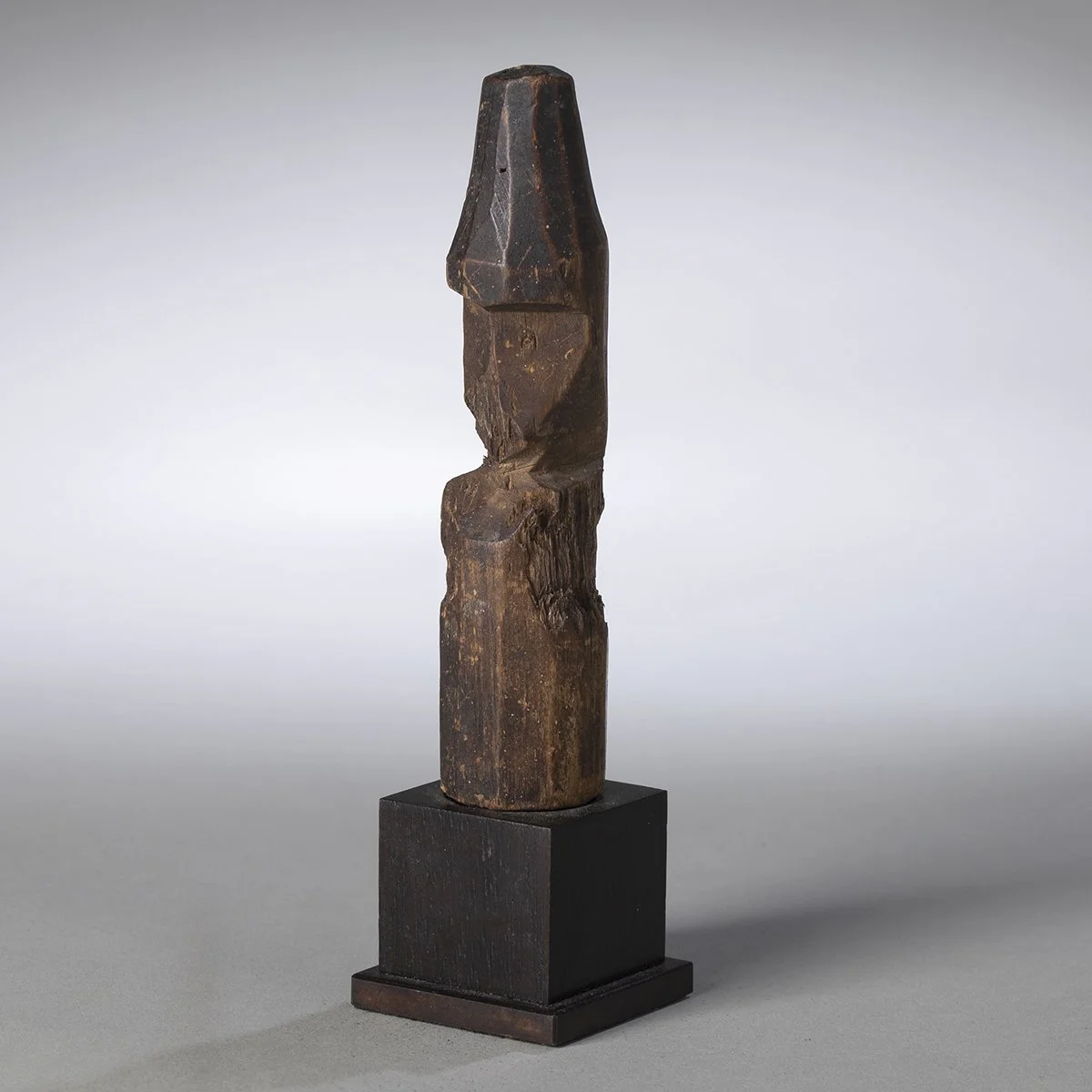 Image 2 of 6
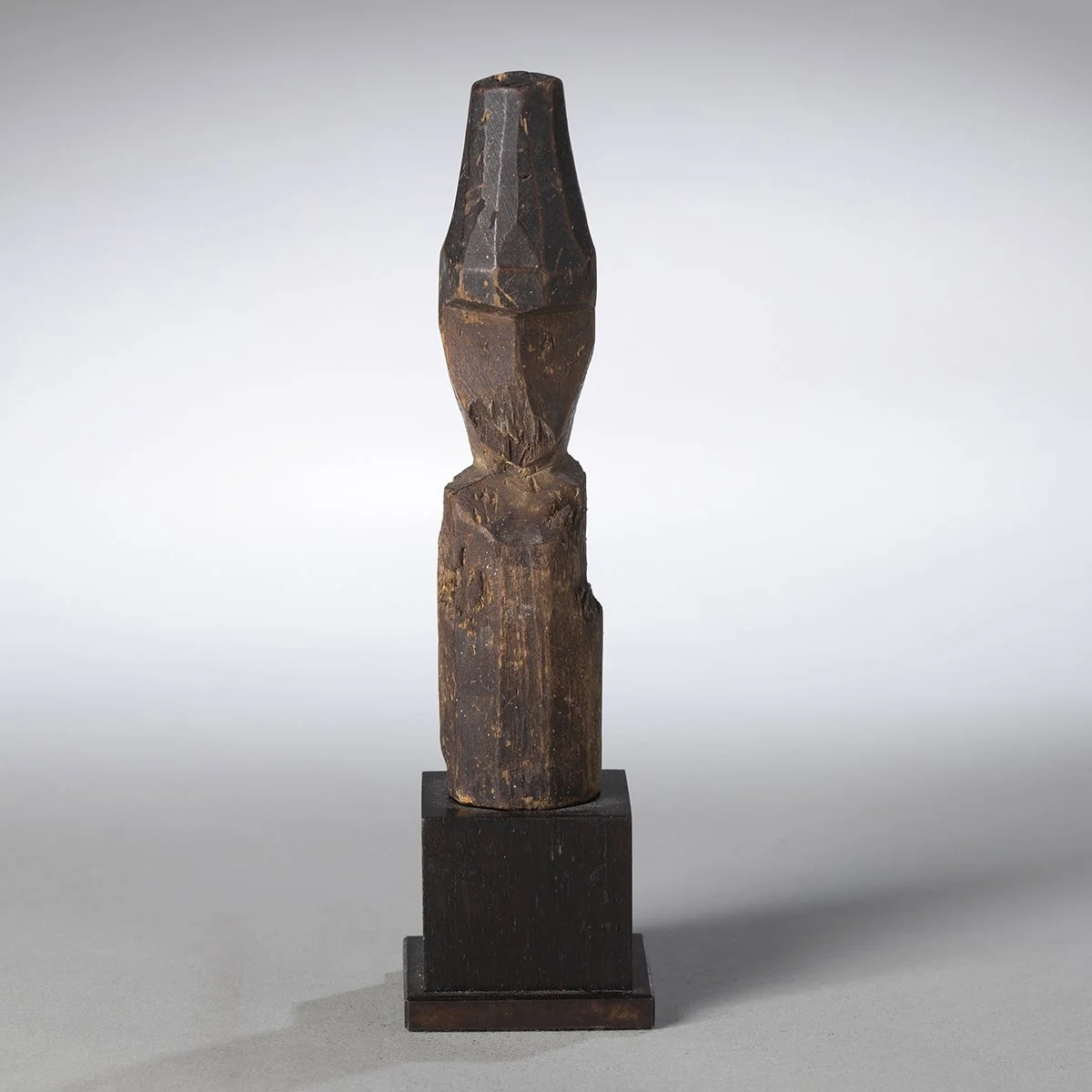 Image 3 of 6
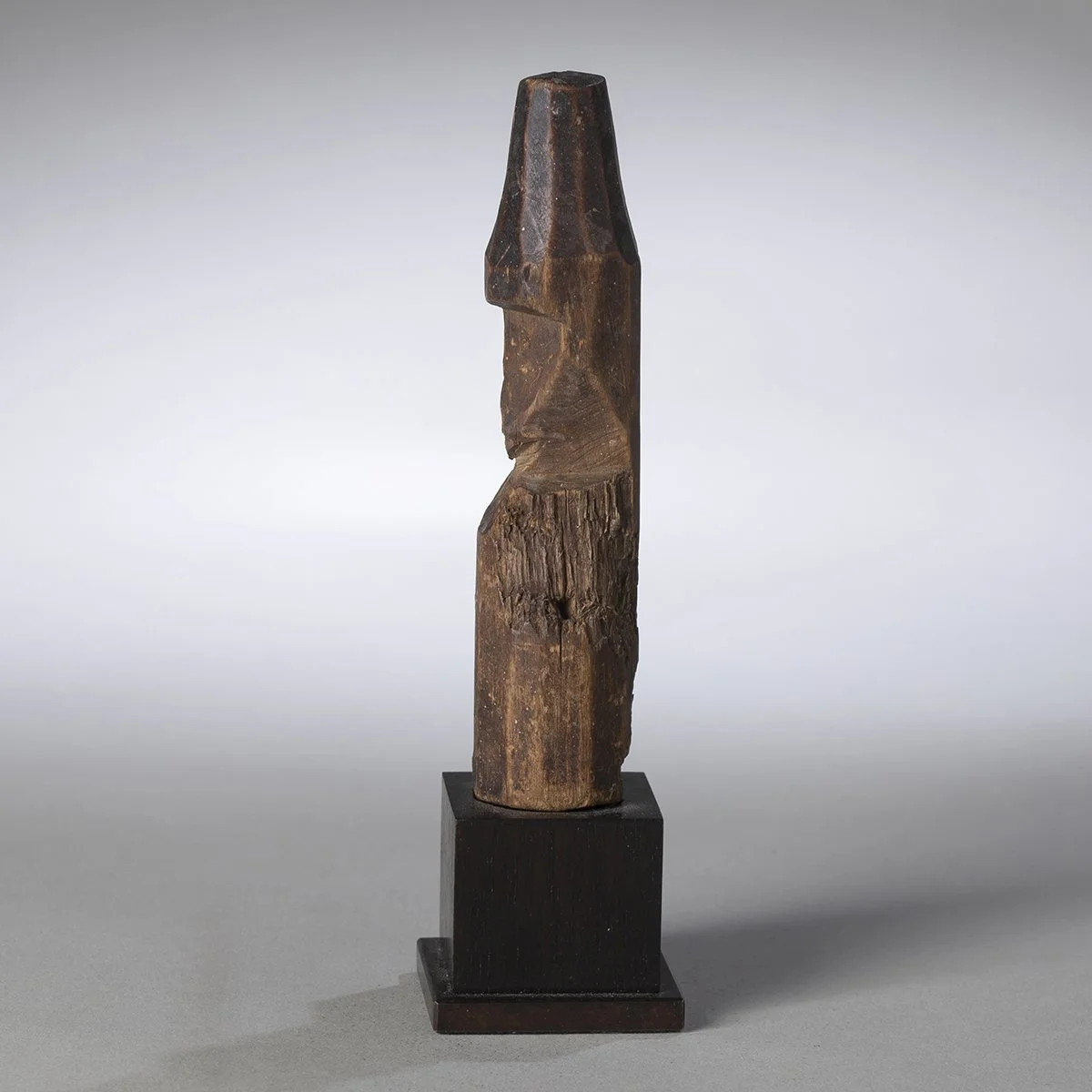 Image 4 of 6
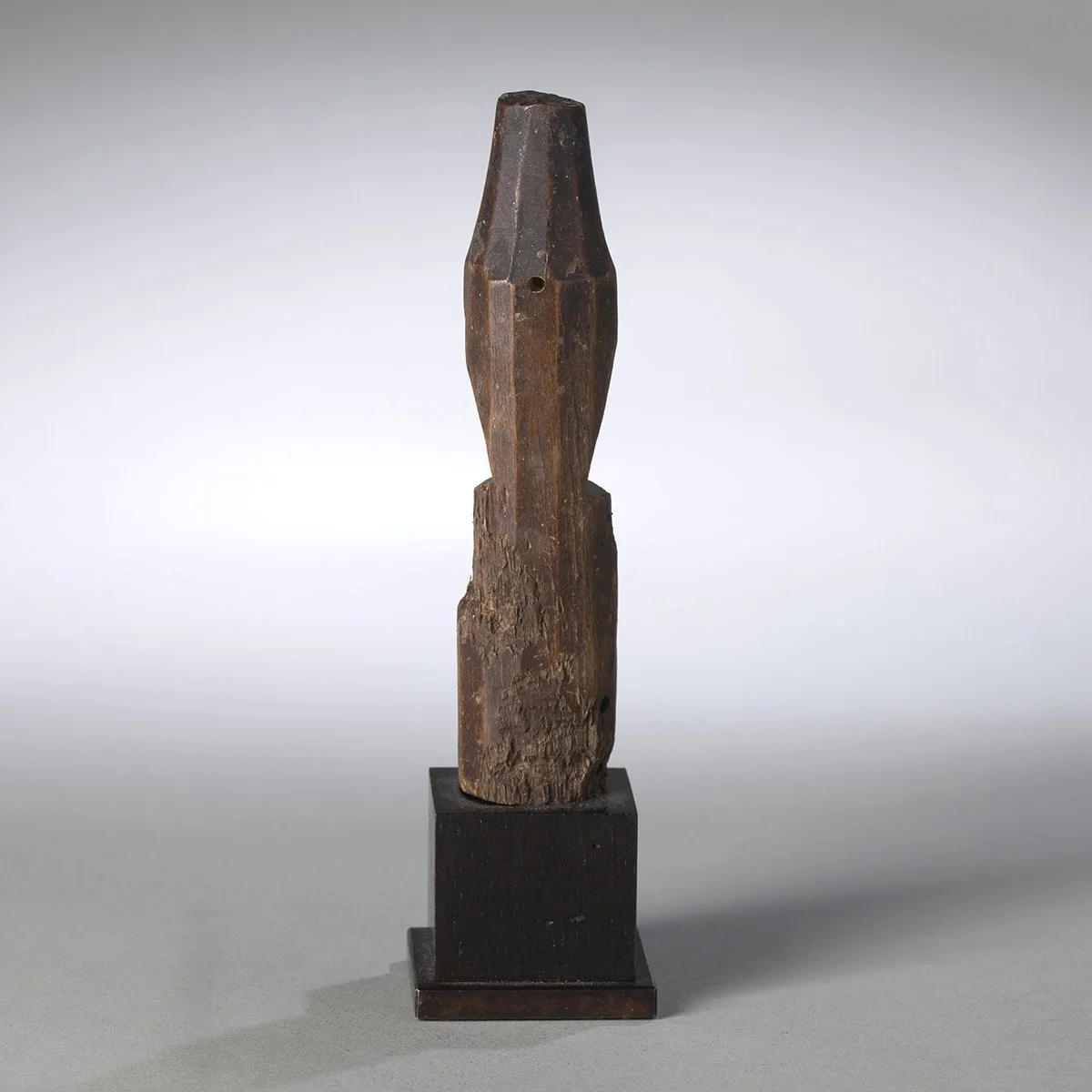 Image 5 of 6
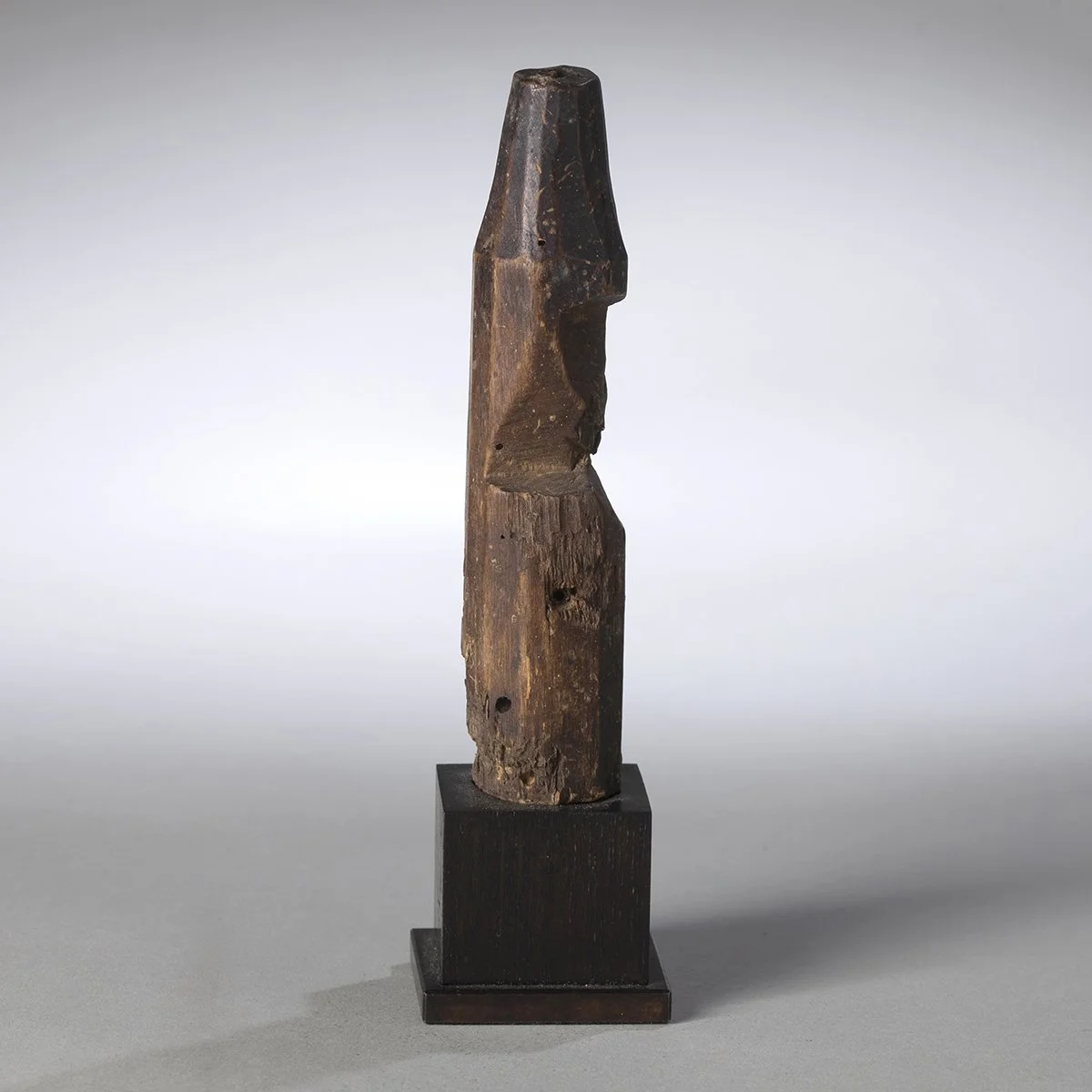 Image 6 of 6